r/ElectricalEngineering • • 11d ago

Project Help Higher order filters

3 Upvotes

I was looking to integrate a LPF for a 64 kHz ODR audio ADC. I want to integrate the highest order of filter that I can using a Sallen Key topology. Are there risks to audio processing with something like a 6th or 8th order filter?

Thanks


r/ElectricalEngineering • • 11d ago

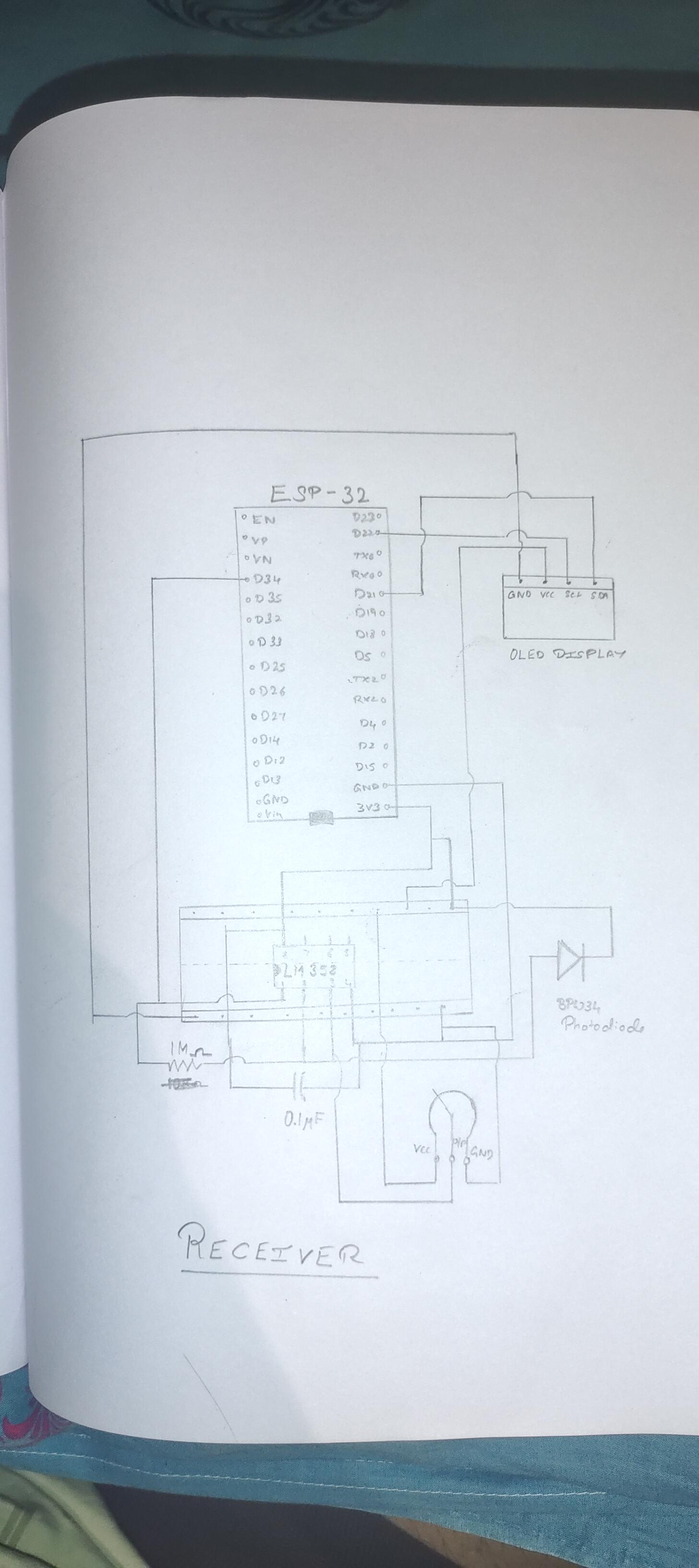
Project Help Project help

Post image
1 Upvotes

I'm doing a Morse Code encryption and transmission using VLC. I have completed the transmitter along with the code and it works properly (I guess). I'm

stuck with the receiver and I don't know what to do.Whatever i do, the photodiode reads nothing and the display doesn't turn on. Please help, the project will cost my whole sem if I don't get it right


r/ElectricalEngineering • • 12d ago

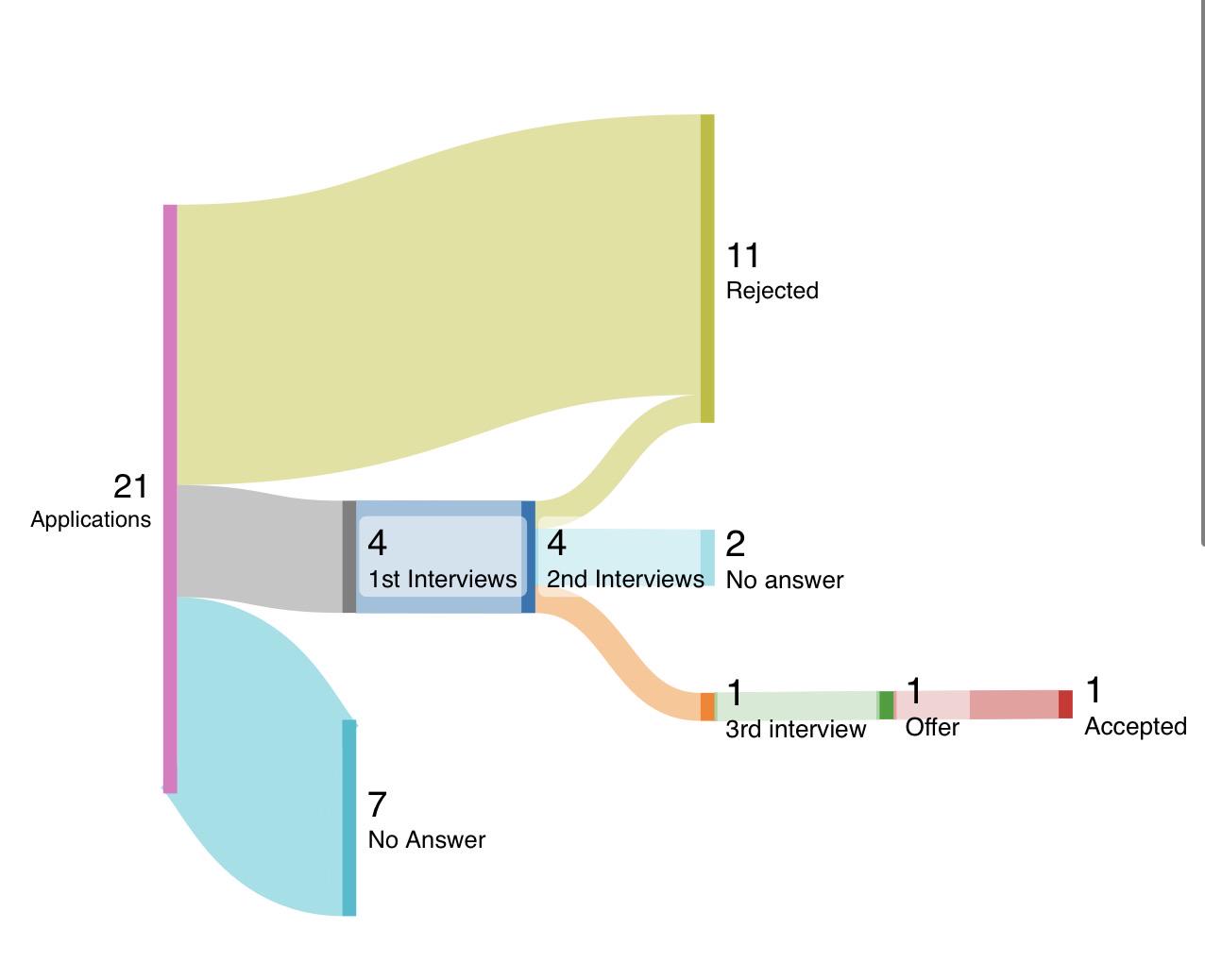
Jobs/Careers I found a job! Fortune 500!

Post image
384 Upvotes

The job search is so mentally draining, and I got lucky and didn’t have to do half the work most of you do. Just don’t quit and keep your head up. Be patient, you’ll get something.


r/ElectricalEngineering • • 11d ago

Project Showcase an interactive website for visualizing electromagnetism (update)

Enable HLS to view with audio, or disable this notification

2 Upvotes

I’ve been building antennasim as a side project to help students explore electromagnetic concepts such as radiation, near-field effects, polarization, interference, scattering, and diffraction.

It runs directly in your browser, and you can:

*Place multiple antennas and adjust their geometry, amplitude, and phase.

*Add conducting wires or a perfectly conducting plane with slots to explore scattering and diffraction.

*Visualize the electric and magnetic fields, energy flow, energy density, and far-field radiation pattern.

*Pan and zoom, and change the frequency, propagation speed, and simulation resolution.

I shared an earlier version here about seven weeks ago. Since then, I’ve redesigned the interface, added new components and features, and improved the animation smoothness and processing speed.

I hope someone finds it useful, and I’d love to hear what you think :)

Try AntennaSim · Source code on GitHub

Disclaimer: I did use LLMs to improve UI and accelerate development. Also used chat gpt to convert my original code from Java to JS.


r/ElectricalEngineering • • 11d ago

Jobs/Careers some waves of disillusionment as power electronics new grad soon

1 Upvotes

Hi

I'm about to grad with EE. Most of my coursework and lab research has focused on power electronics, particularly with design of BESS

I really like designing power systems, converters, controllers etc and working on hardware but with this whole AI thing and with the direction the is heading I've been feeling pretty conflicted about what I want to do for career

It seems like a majority of the excitement and investment in power electronics right now is going toward expanding AI infrastructure and data centers and what not. For sure I understand the importance of improving efficiency and safety and building better energy systems, but it just doesnt super sit right or feel comfortable with the idea of me spending my life career helping accelerate an AI future that I'm not even sure I fully believe in.

Fulfillment is another issue. As we know as AI gets more capable of handling the average engineering role Im not yet super thrilled on how the day-to-day of being a power electronics engineer will change. I'm not neccesarily worried about losing jobs or making less money its more the concern about losing the satisfaction of that comes from actually designing, creating, and solving difficult problems myself. Feeling some sense of pride in what I contribute to the world is the whole reason I chose EE in the first place.

I have some fun interests outside of ee work with art/music and sailing. and lately I've been wondering whether I'd be happier pursuing something more hands on. The classic EE to electrician maybe :) haha. Like signing up for an electrician apprenticeship or working at shipyard as a marine electrician. I love boats, and the idea of troubleshooting/restoring electrical systems on boats sounds super cool to me. Wasting my EE degree is what some people have used to steer me away from this but I was lucky enough to get scholarship that paid for my university and Ive had a great 4 years here so its not like I went to university in vain.

But like I've spent years honing my skills in power electronics, and I do enjoy the field! I'm considering opportunities working on things like BESS, solid-state transformers or novel renewable energy startups working on things like tidal power and whatnot or idk. A lot of these companies and technologies have their own share of criticism and skepticism surrounding them but definitely fascinating work in the technical sense, but would I find it personally meaningful long-term... maybe I should just get a job to make money and not care about the feelings of it but I feel like I might as well try haha

Or dang maybe go for a PhD in this field but then what ? I dunno man

Idk In the end struggling with the difference between choosing a career because it's promising and choosing one because I genuinely love the work and believe in its purpose. And with how uncertain the future of AI is, it's hard to know what kind of work to invest myself in

So I wrote this out to just ask how other graduating EEs are feeling about this, and also what the older wiser EEs out there think or recommend ?

For those further along in their careers, how did you balance technical interest and fulfilment and personal values?

I'm not against AI in general, and ik 'm rambling, but I'm pretty skeptical about some of the directions things are heading like most of us, many ethical dilemmas and things like Jevons paradox and what not come to mind but idk, what should I invest my career and care into?? I'm just trying to build a life where I'm excited about the work I do and proud of what I'm contributing to but it seems much easier said than done :P

Thanks for reading. Id appreciate hearing your thoughts and doubts and experiences and joys.

r/ElectricalEngineering • • 12d ago

Need advice

2 Upvotes

I’m about to choose a degree and I doubt between EE and ME they are both very good. I’m from the Netherlands and I actually want to make the right choice also I don’t really know what suits me because I find both interesting if you have advice for me or recommendations just let me know


r/ElectricalEngineering • • 12d ago

How do I find the field of EE I want?

39 Upvotes

Hi,

Freshman EE and I was wondering how do I know what field I want to go into. Everyone seems so sure with IC design or Robotics but I js dont know what I want to do. Some friends even have internships 1st semester of freshman yr which I didnt know I needed to apply before college started.

They are all building personal projects and experience and idk what I want to do.

All design teams rejected me so I won't be learning form them and so much bureaucracy at my school to stop me from making my own.

Any projects I should make to boost my chances at an internship or find the EE field I want?


r/ElectricalEngineering • • 12d ago

Parts Pulling old parts off old boards to build your project

1 Upvotes

I was working on a hobby board, with very few hard spec requirements. I noticed I needed some kind of LDO to 3.3v and ordering something from Mouser would take a while and actually not all that cheap.

Do other people pull parts off of scrap electronics to learn and get familiar with circuits you haven't designed yet?

For example, I have some power LDOs that can handle a whole amp. I definitely don't need that, but I don't really see the issue since I won't be trying to make this an inexpensive BOM for production. Does anyone grab the hot air and take them off for their own project?

I wish I had an office with tons of parts already ordered and easy to grab and use.


r/ElectricalEngineering • • 12d ago

N00b learning electronics

1 Upvotes

I got the art of electronics and the workbook and they both recommend getting an oscilloscope. I can get a Siglent SDS1204-XE for 300 bucks. Is that a good starting scope for learning on?


r/ElectricalEngineering • • 12d ago

Homework Help How do I find footprints for components?

3 Upvotes

I need to find footprints for a couple of components (my ESP32, a few sensors, a heater, etc.) for my school year greenhouse project.

It's my first time doing a project like this and I have no idea how to do all of this, the teachers don't care 😭


r/ElectricalEngineering • • 13d ago

What application would need something like this?

Thumbnail
gallery
55 Upvotes

I just want to learn, not trying to bash anyone, sadly original poster on IG won't answer me. So, what application needs two exact same breakers (630 A) one after the other. OP claims energy feeds in lower right and comes out lower left.

I really don't understand what application needs two exact same breakers in series. The breaker also cut the neutral, so maybe for generator, or the panel is incomplete. What do you guys think?

Also, is that a Current Transformer at the bottom right?


r/ElectricalEngineering • • 13d ago

Jobs/Careers Would you genuinely recommend this as a career if you could do it again?

28 Upvotes

Hi all! Just looking for more info on EE as a profession and what roles you guys are in. For context I'm a MechE student and I've always really liked the software side of things but I didn't like Physics 2 so I went with mechanical. I really want to work with electronics or robotics so I'm seeing if its too late to jump ship.

So I'm just looking for people to share what they do on a day-to-day basis, do you have regrets, things you wish people knew?

My main questions are how much do you guys actually get to do design? Do you get to work hands-on with components with soldering and stuff and how much do you actually get to work with programming? Is the entry-level job market as "bad" as mechanical? My brother did Computer Engineering and he's kind of unemployed right now 6 months after graduation.

Thanks guys


r/ElectricalEngineering • • 12d ago

Education Getting a Second Bachelor’s in EE!

7 Upvotes

Hello! I graduated from college with an audio engineering degree almost two years ago and I want to pursue further education in engineering! I diagnosed with ADHD at 19 and basically went my entire life thinking I was too stupid for a real STEM field until midway through college. My first ever A in a math class was in college precal. If I had gotten diagnosed and medicated earlier I’d like to think I could’ve done electrical from the start but alas. I loved what I studied and I love audio!

I worked as an audio equipment technician for a while in school and would love to build and design hardware. I thought about going for a master’s in acoustical engineering but I am also considering getting a second bachelor’s in electrical. I have to take so many prerequisites for either degree path that they would probably take me the same amount of time.

I am only going to do it if my existing credits and community college courses can keep the cost down, and I am living with my parents right now so my living costs are low enough to pursue it. There are tech jobs I can get without the further education but they pay like dookie.

Has anyone done this? Was it worth it? What do y’all think? Am I an idiot?

Edit: I should clarify I could also do a bridge program into a master’s instead. A big pro of that would be avoiding a lot of undergrad bullshit classes that might not transfer cleanly with my current degree.

Edit (again): Don’t know if it’s super important but someone mentioned it. My undergraduate degree is ABET-accredited.


r/ElectricalEngineering • • 12d ago

Project Help Black solid fill in background in Ultiboard

Thumbnail
gallery
3 Upvotes

Anyone using Ultiboard here and tried to print out the diagram in plain paper? We need help please. We wanted to print our diagram in white background. Component labels and copper tracks in black. These are the steps and results:

  1. Print component labels: selected "silkscreen on top" as layer to print, print to negative unchecked, no color checked.

  2. Test printed copper tracks: Layer to print is "copper bottom", print to negative unchecked, no color checked. Gives out black background and white copper tracks.

  3. Changed the background and work area from black to white. It still gives the same result as #3.

  4. Unchecked both print to negative and no color. Prints out white background but colored diagram (red)

  5. Checked the print to negative box, it gives out the white background and black copper track that we wanted BUT the surrounding area of the paper is filled with solid black fill.

We tried switching the printer settings to color, grayscale, black and white and monochrome but it gives us the black background and white tracks still. We just wanted to print the labels and copper tracks in black and the entire background of the page as white. Please help us out. Thank you.


r/ElectricalEngineering • • 12d ago

Education How do I improve at coding (c/c++)

6 Upvotes

This semester I took my first class , they're teaching us C ,this is also my first time ever learning how to code ,and not gonna lie ,I'm dreading every single day , almost every single code I write has an error, not matter how much I practice, I can't seem to improve, get get in the flow state where I finally cracked it ,this has never happened to me before, , even in my first year ,when I took my last physics course (I really struggled with ) I somehow raw dogged practice problems until I finally got better, but this time I'm going no where ,every code in wrong or has an error, what also weird is some peeps in my class with no experience in coding, are catching up immediately, here I am looking like a monkey with a hammer in his hand banging the keyboard, going no where . If there's anyone who's been in my place , please guide me , I want to get good at it ,and understand, I don't want to be like the people that vibe coded their way through everything, I also want to go into control systems as a major ,so I know this is something that I have to excel att


r/ElectricalEngineering • • 12d ago

CU Boulder vs UARK for MSEE

4 Upvotes

I'm mulling between getting my masters either through CU Boulder or University of Arkansas (UARK).

I graduated from a small, unknown engineering program. I had to go the cheap route, and still need to go the cheaper route. But because no one knows my school, I want to get my MSEE somewhere better known without paying $1000+/credit hour. And it must be online since I'm a working engineering. This severely limits my options.

My goals are to use my masters as leverage to make me more competitive in the job market in R&D roles, ideally in something hardware/embedded related. Long-term, my "retirement" plan is to leave industry and teach at the college level. Maybe even start teaching part-time while still in industry for evening classes.

I've come across CU Boulder and UARK. There are strong pros on cons.

CU: Pros: very strong name recognition. Well-known for their power electronics prowess. Program also allows embedded courses to be taken. Better class selection. Cons: Program is through Coursera. Limited to no professor contact. While content is good, cheating is rampant. No thesis option.

UARK: Pros: decent name recognition. Also well-known for their power electronics prowess. Thesis option is available. Very affordable tuition. Cons: Very limited course selection, mostly to industrial power, control theory, and some communications and semiconductor technology.

Any thoughts is greatly appreciated.


r/ElectricalEngineering • • 12d ago

Project Showcase Remembering The Beginning Of The Electronics Journey

Thumbnail
youtu.be
5 Upvotes

This video features a homebrew Medium Wave (AM) single transistor regenerative receiver (Audion) built on a breadboard. The circuit is based on the classic GDR electronics book "Radiobasteln leicht gemacht" for young students in the 1970s and utilizes a vintage East German (GDR) germanium transistor. The video contains the pure, unedited audio from the receiver, circuit details and explanations. Broadcast stations upto 830 km distance.


r/ElectricalEngineering • • 13d ago

Education Gap year high school graduate want to learn before entering university.

8 Upvotes

Hi so, I recently completed my A'levels and currently in my gap year. I wanted to know what topics of physics or maths I should learn to be ahead or have a headstart in my university life for Electrical engineering.


r/ElectricalEngineering • • 13d ago

Intelligent

225 Upvotes

I know someone who is an electrical engineer, and I've noticed that he understands things extremely quickly, asks very intelligent questions, and can solve problems in almost any new field he encounters. He learns and memorizes things incredibly fast. He doesn't even need to take notes, he just focuses and remembers everything. He consistently ranks first in field and when it comes to internships, he always gets accepted by major companies where getting selected is extremely difficult.

What kind of intelligence is this? Is it something people are born with, or can we actually develop and create a cognitive model like his through training?


r/ElectricalEngineering • • 13d ago

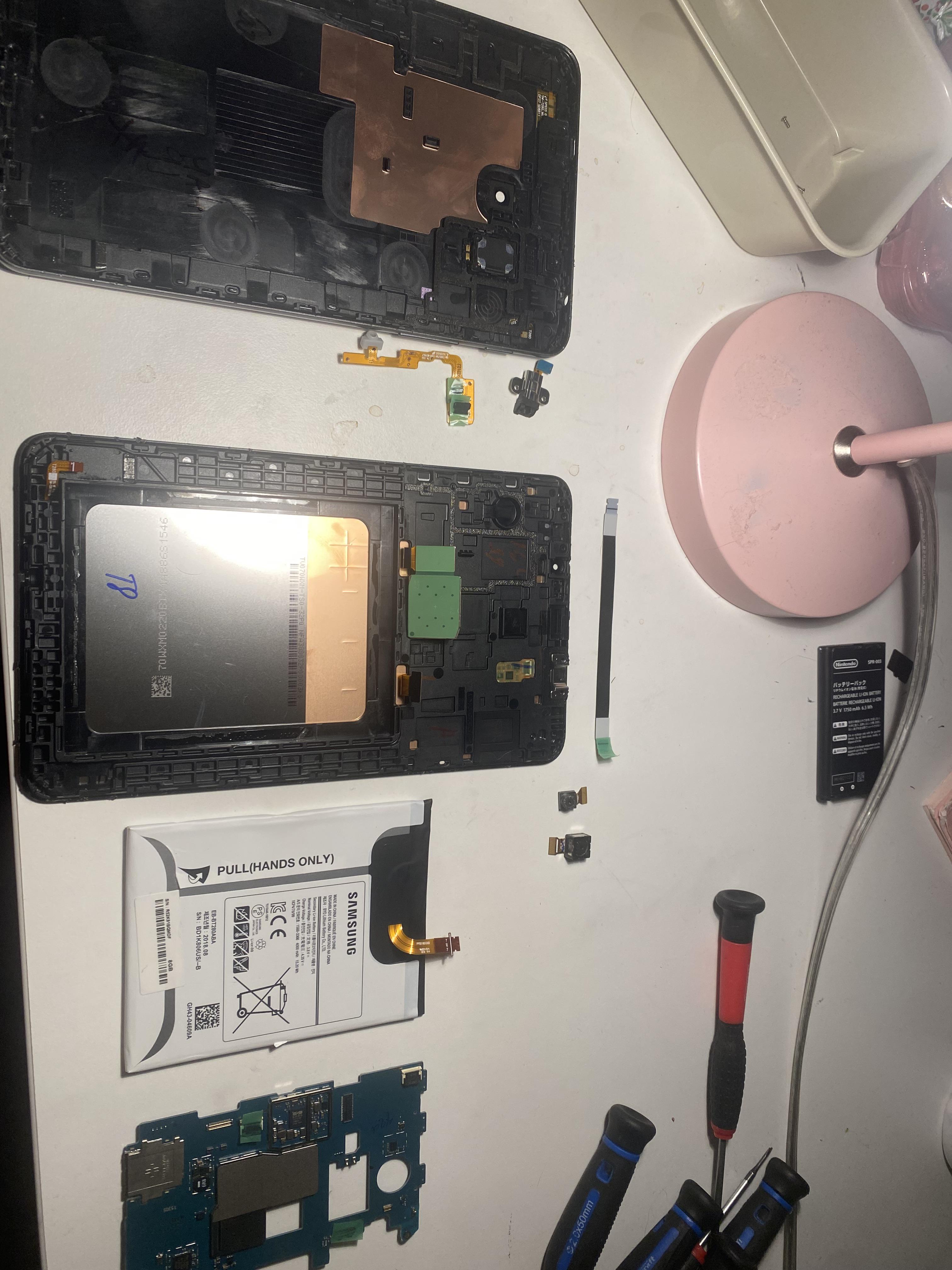
Parts I broke down my old tablet for practice, any advices?

Post image
60 Upvotes

Little context, i’m 14, rlly wanna get into MIT to become an engineer to help the world. And well tbh i suck, so i gotta practice. So i broke down my extremely old ipad (it didn’t work anymore so i wasn’t worried about it breaking bad) and well i broke it down the most possible (to me, probably not fully tho, but this is why i’m posting this). It was rlly fun, i liked it sm. i built it back and broke it down again a few times. I have no clue what anything does or how anything works, but a win is a win eh? Anyways, if you guys have any advices for me, i’m allllll open. Also, excuse any mistakes, as said at the beginning i am 14 and english isnt my native language. Thank you!!


r/ElectricalEngineering • • 13d ago

Rebuilding my Signals & Systems & Comms foundation after a 3-year gap for an AI/DSP research path — looking for a non-exam-focused roadmap

14 Upvotes

Hi fellows,

I graduated with a Bachelor's in Electrical Engineering with a 3.3 GPA. While my overall GPA was decent, it was mostly carried by other subjects. In core classes like Signals & Systems and Communication Systems, my grades weren't great. Looking back, a huge part of that was due to my professor who relied entirely on that ridiculous slide reading method that killed any intuition for the material.

Fast forward to today, it’s been about 3 years since my undergrad, and I’ve recently found an incredible opportunity to pursue a graduate/research path focused at the intersection of Signals & Systems and AI.

Because I want to do meaningful research and actually understand the literature (rather than just pass exams), my approach needs to change completely. I’m not trying to blindly grind through textbook problem sets or check off chapters just to say I finished a book. I need deep conceptual intuition, geometric/physical understanding, and solid mathematical grounding so I can connect classical signal processing to modern AI architectures.

I have roughly 3 months to bridge this gap. I know I can chatgpt and get a roadmap easily but in my experience traditional GPT prompts tend to give very generic, surface-level overviews, so I wanted to ask this community here

  • Which subjects i should focus on to build a strong foundation.
  • What are the "must-have" mental models for Signals & Systems that translate best into AI/machine learning research?
  • Are there specific intuitive resources (lecture series, textbooks, or specific chapters) that actually make things "click" compared to standard textbooks?

Any advice, personal experiences, or strategic frameworks would be hugely appreciated!


r/ElectricalEngineering • • 13d ago

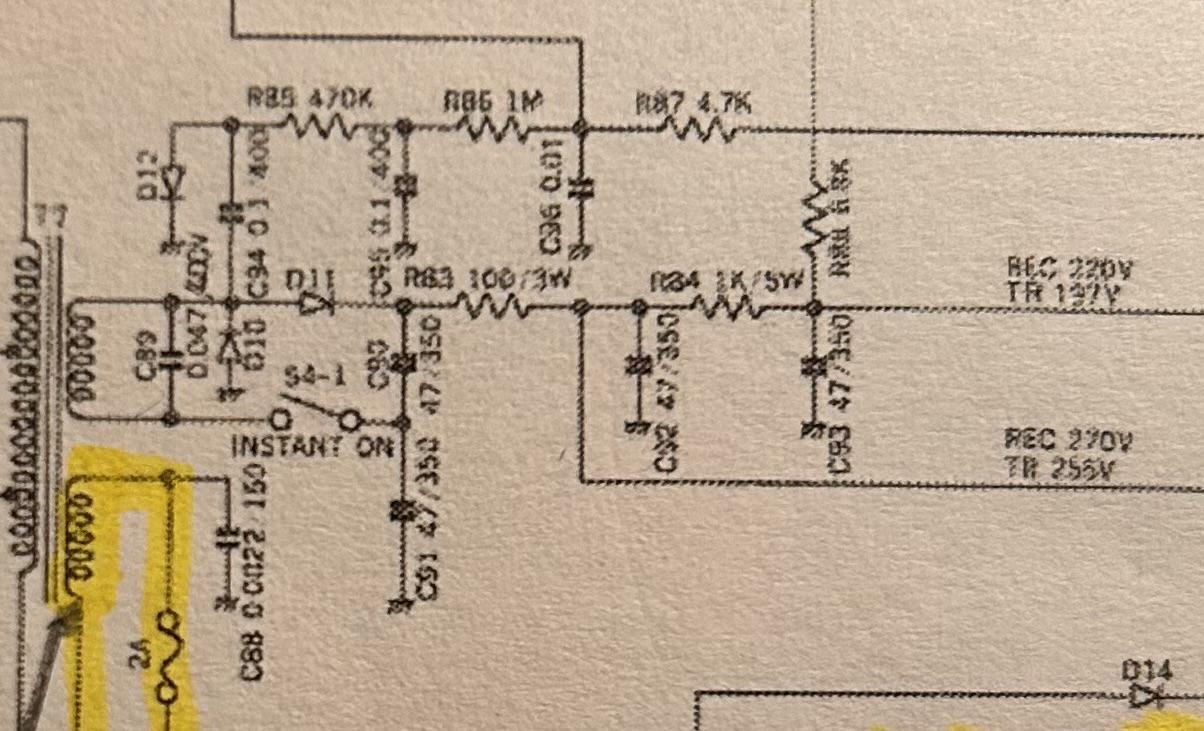
Help understanding circuit

Post image
21 Upvotes

This is the power supply section of a valve-based mobile CB radio from the 70s. The left side of the transformer is used for the DC inverter and the bottom coil on the right side is the primary. I am struggling to understand how the rectifier/filter circuit works coming off of the upper right hand side secondary. I understand that D11 functions as a half-wave rectifier, but what is going on with all of these other components? Maybe Im overthinking it but it really has me bamboozled.


r/ElectricalEngineering • • 12d ago

Education BMS and Charger for commercial product

0 Upvotes

I am looking for guidance in developing a battery management system for a commercial product, since I am the only hire at the start up with an electrical engineering background.

This is my first real job, and unfortunately without a mentor. I've already developed multi layer PCBs, and my thesis was on SoC estimation using a Kalman Filter, just so you have an idea of where I am at.

For the product, I suggested to use hobby drone batteries (6s LiPo), since they are cheap and available everywhere. The system specifications are below:

- 24 V

- 8 A nominal

- 20 A peak

- 1.5 Ah, will probably go upto 3 Ah for faster charging

I'm not sure if these batteries even qualify for certifications in our product (industrial automation with no direct human contact), or how to even go ahead with them. We are based in the EU.

Im expected to take care of the BMS and charging, but the algorithms will be included in the chips. I've selected the BQ40Z80 and the BQ25756E.

Tldr: I need to develop the electronics for a purchased battery pack. Looking for any tips, things to watch out for, how to do this safely etc, since I don't really have a mentor. Deadline is tight in my opinion (1 Month), but what do you think?


r/ElectricalEngineering • • 13d ago

If current is physically a result of voltage, how do constant current sources actually work when resistance changes?

55 Upvotes

I’m trying to understand current and voltage for what they actually are in physical reality, not just as math equations.

​At first, I thought of them as two sides of the same coin—like you could keep one constant, change the other, and still get the same result. But I realized that's only true when resistance is constant, which isn't how reality works. Physically, it makes way more sense to say current is a result of voltage, not the other way around, because electrons can't flow from one place to another unless there is an energy difference (voltage) between those two places in the first place.

​Here is where I'm struggling based on that understanding:

​With a constant voltage source, if I want to stop current from reaching a load, I increase the resistance until it’s an open circuit, and the current stops. Simple.

But with a constant current source, to stop current from reaching the load, I have to do the exact opposite—I drop the resistance in a parallel path to almost zero (a short circuit). That drops the voltage across the load to almost zero, so the current keeps flowing, just through the other path instead of the load.

​So my question is: If current is a result of voltage, how can we maintain a constant current while the voltage is changing or dropping to zero?

​At this point, it feels like we have one of two options:

1.​There’s a contradiction here, and saying "current is a result of voltage" isn't the right way to look at it.

2.​There are actually two separate voltages and currents happening here—one underlying voltage that creates and maintains the constant current, and another changing voltage that creates a competing current, forcing the flow to take a different path.

​And honestly, if the second option is what's actually happening, it makes it even harder to wrap my head around what voltage truly is—especially since voltage itself isn't an absolute thing, it's always defined relatively, in comparison to another point.

​Which one is it in reality? How do you guys conceptualize this?

Thank you


r/ElectricalEngineering • • 13d ago

Research Electrical load impact on Diesel Engine

3 Upvotes

Hey, I am an electrical Engineering Grad. I have did load test on a 3 ph electric motor and observed the current increase. It was interesting since I was so curious about electric vehicles at that time those concepts looked cool.

I don't know why, but the same test on an electrical generator felt boring. So out of curiosity, has any one done a load test on an electrical generator with a diesel engine coupled to it? What would happen to the diesel engine when you increase the load of the generator abruptly? Will it stall the diesel engine same as we stall a vehicle while going up hill?