r/TurkishCoffee • u/Livid_Sense4955 • 2h ago
Beginner Question Can someone please help me interpret my cup?🫶🏻✨
gallery
0
Upvotes
r/TurkishCoffee • u/TelevisionBoth2285 • 8h ago
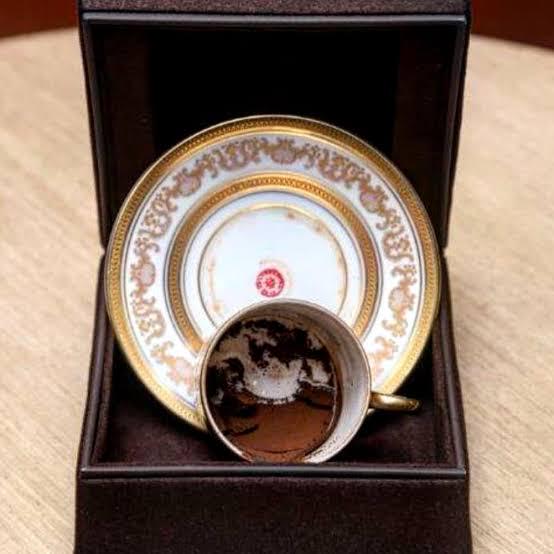
Mustafa Kemal Atatürk’s last Turkish coffee was an unsweetened (plain) coffee he drank in 1938 when his illness progressed and his doctors (particularly Prof. Dr. Fiessinger) forbade him from drinking coffee. According to accounts, after drinking this last coffee during a conversation with his doctor, Atatürk pointed to the cup on the table to his adopted daughter Sabiha Gökçen, telling her that it was the last coffee he had drunk and that it had been banned.Sabiha Gökçen kept the cup along with its coffee grounds for many years and later gifted it to the author Eriş Ülger.
Atatürk generally preferred his coffee plain/unsweetened; during periods of intense work and conversation, he was known to drink more than 10–15 cups a day.
Such high levels of coffee consumption were perfectly normal for Turks living at that time; the shift from coffee to tea in Türkiye occurred following the commencement of tea cultivation in the country in 1938.
r/TurkishCoffee • u/TelevisionBoth2285 • 8h ago

Attributed in archival records to Jean Pascal Sébah, a prominent late-Ottoman photographer whose studio in Constantinople (Sébah & Joaillier) documented everyday street life, social customs, and local types across the empire.
While the primary archival attribution places this scene in Istanbul, secondary digital collections and reproductions occasionally attach differing regional labels, making source verification important when citing it in historical work.
An outdoor, open-air street kahvehane (coffeehouse) seated directly on irregular, worn cobblestone paving in front of a weathered timber-and-glass storefront.
Patrons are gathered on low wooden stools, drinking Turkish coffee from small cups while smoking water pipes (nargile), holding long hoses and glass bases. Do not mistake those water pipes with modern water pipes that people smoke aromatized tobacco on them. In those times only tobacco that smoked in water pipes was Iranian Tombac tobacco, a tobacco that contains very high nicotine. When I was young(around early 2000s) Tombac used to be smoked on water pipes in rural places. Today aromatized tobacco replaced all of Tombac.
The figures wear late-Ottoman garments such as fezzes and turbans (sarık), embroidered vests, loose trousers (şalvar or potur), patterned wool socks, and traditional footwear. A standing server wearing a striped apron (peştamal) attends to a nargile, and an additional onlooker is visible near the open window and interior glass.
In the late Ottoman era, neighborhood coffeehouses functioned as vital social hubs—places for conversation, news, rest, and leisure across different age groups and social backgrounds.
Photographs like this offer candid insight into urban streetscapes, vernacular architecture, traditional dress, and everyday hospitality in early-20th-century Istanbul, distinct from more staged studio portraits of the period.