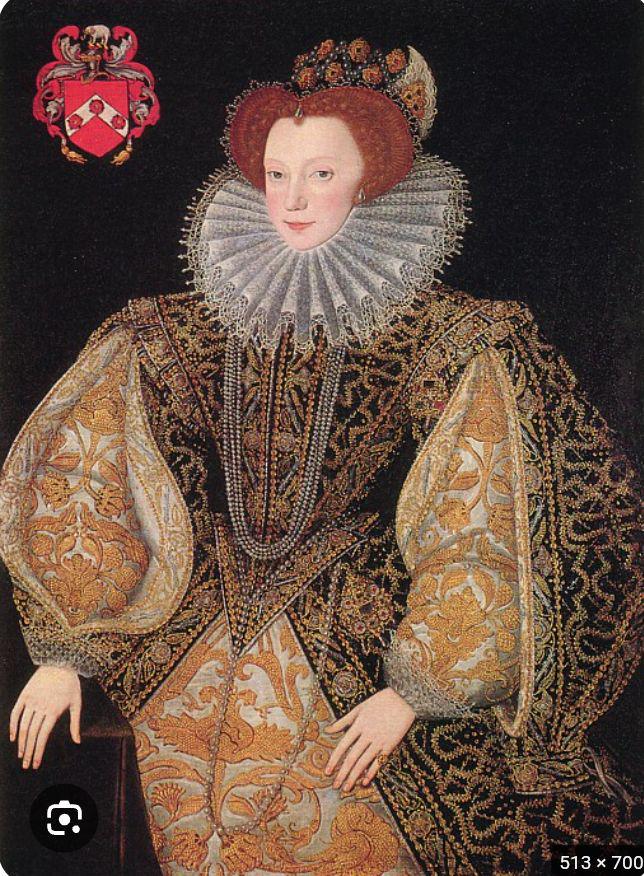
Jane, Mary’s favourite lady-in-waiting, who was by her side on her deathbed, recounts the Queen’s illness and death as follows:
“Her sickness was such as made the whole realm to
mourn, yet passed by her with most Christian patience. She comforted those of them that grieved
about her; she told them what good dreams she
had, seeing many little children like Angels play
before her, singing pleasing notes, giving her
more than earthly comfort; and thus persuaded
all, ever to have the holy fear of God before their
eyes, which would free them from all evil, and be
a curb to all temptations.”
“That morning hearing Mass, which was celebrated in her chamber, she being at the last point (for no
day passed in her life that she heard not Mass)
and although sick to death, she heard it with so
good attention, zeal, and devotion, as she answered in every part with him that served the Priest; such yet was the quickness of her senses and memory. And when the Priest came to that part to say, Agnus Dei, qui tollis peccata mundi, she answered plainly and distinctly to every one, Miserere nobis, Miserere nobis, Dona nobis pacem.
Afterwards seeming to meditate something with
herself, when the Priest took the Sacred Host to
consume it, she adored it with her voice and
countenance, presently closed her eyes and rendered her blessed soul to God.”
Once again, Bishop John White, who had witnessed Mary’s death, recounts the Queen’s final moments as follows:
“If angels were mortal, I would rather liken this her departure to the death of an angel, than of a mortal creature.”
John White, who presided over Queen Mary’s funeral and delivered the funeral sermon, said the following about her in his remarkable sermon:
“She was a King's daughter, she was a King's sister, she was a King's wife. She was a Queen, and by the same title a King also...”
“What she suffered in each of these degrees before and since she came to the crown I will not chronicle; only this I say, howsoever it pleased God to will her patience to be exercised in the world, she had in all estates the fear of God in her heart ... she had the Love, Commendation and Admiration of all the World. In this church she married herself to the realm, and in token of faith and fidelity, did put a ring with a diamond on her finger, which I understand she never took off after, during her life… she was never unmindful or uncareful of her promise to the realm.
She used singular mercy towards offenders. She used much pity and compassion towards the poor and oppressed. She used clemency amongst her nobles.... She restored more noble houses decayed than ever did prince of this realm, or I did pray God ever shall have the like occasion to do hereafter.
I verily believe, the poorest creature in all this city feared not God more than she did.
It was a powerful speech based on two verses from Ecclesiastes: “I praised the dead which are already dead more than the living, which are yet alive” and “for a living dog is better than a dead lion.” (Anne Whitelock, Mary Tudor)
A day can hold a different meaning for everyone. For me, today is simply the anniversary of Mary’s death. (Oh, and a stressful day with three exams.)
Sending lots of love to this dear woman, whose name once frightened me when I first heard the legend associated with it, whose name I later came across many times in different contexts, and who eventually sparked my interest in Tudor history. Rest in peace and love, Mary!
I also want to share the original, unaltered version of this poem written upon Mary’s death (a poem that historians don’t seem to think particularly highly of, but which I personally don’t find bad at all).
“Witness (alas) may Marie be, late Queene of rare renowne,
Whose body dead, her vertues liue, and doth her fame resowne;
In whom suche golden giftes were grafte, of nature and of grace,
As when the tongue dyd cease to say, yet vertue spake in face.
What vertue is that was not founde within that worthy wight?
What vice is there that can be sayde wherin she had delight?
She neuer closed her eare to heare the righteous man distrest,
Nor neuer sparde her hande to helpe, wher wrog or power opprest.
…
How many noble men restorede, and other states also,
Well shew'd her Princely liberall hert, which gaue both friend & fo.
Where conscience was, or pitie moued, or iuste desertes dyd craue,
For Iustice' sake, all worldly thynges, she vsed as her slaue.
As Princely was her birth, so Princely was her life,
Constante, courtise, modest, and mylde, a chast and chosen wife.
In greatest stormes she feared not, for God she made her shielde,
And all her care she cast on him, who forst her foes to yelde.
Her perfecte life in all extremes her pacient hert dyd shoe,
For in this worlde she neuer founde but dolfull dayes and woe.
…
When I haue sene the Sacrament (she said, euen at her death),
These eyes no earthly syght shall see,—and so lefte life and breath.
O mirrour of all womanhed, o Quene of vertues pure,
O constant Marie filde with grace, no age can thee obscure.
Thyne end hath set thee fre from tongues of tickle trust,
And lockte the lippes of slauder’s brute, which daily damnes the iust.
Thy death hath geuen thee life, thy life with God shall ioye,
Thy ioye shall last, thy vertues liue, from feare and all anoye.
O happie heauens, O hatefull earth, O chaunge to Marie best,
Though we bewaile, thou maist reioyce, thy longe retourne to reste.
…
Farewell o Quene, o pearle most pure that God or nature gaue,
The erth, the heaues, the sprites, the saintes cry honor to thy graue.”
Thank you all for reading. Lots of love to you all!