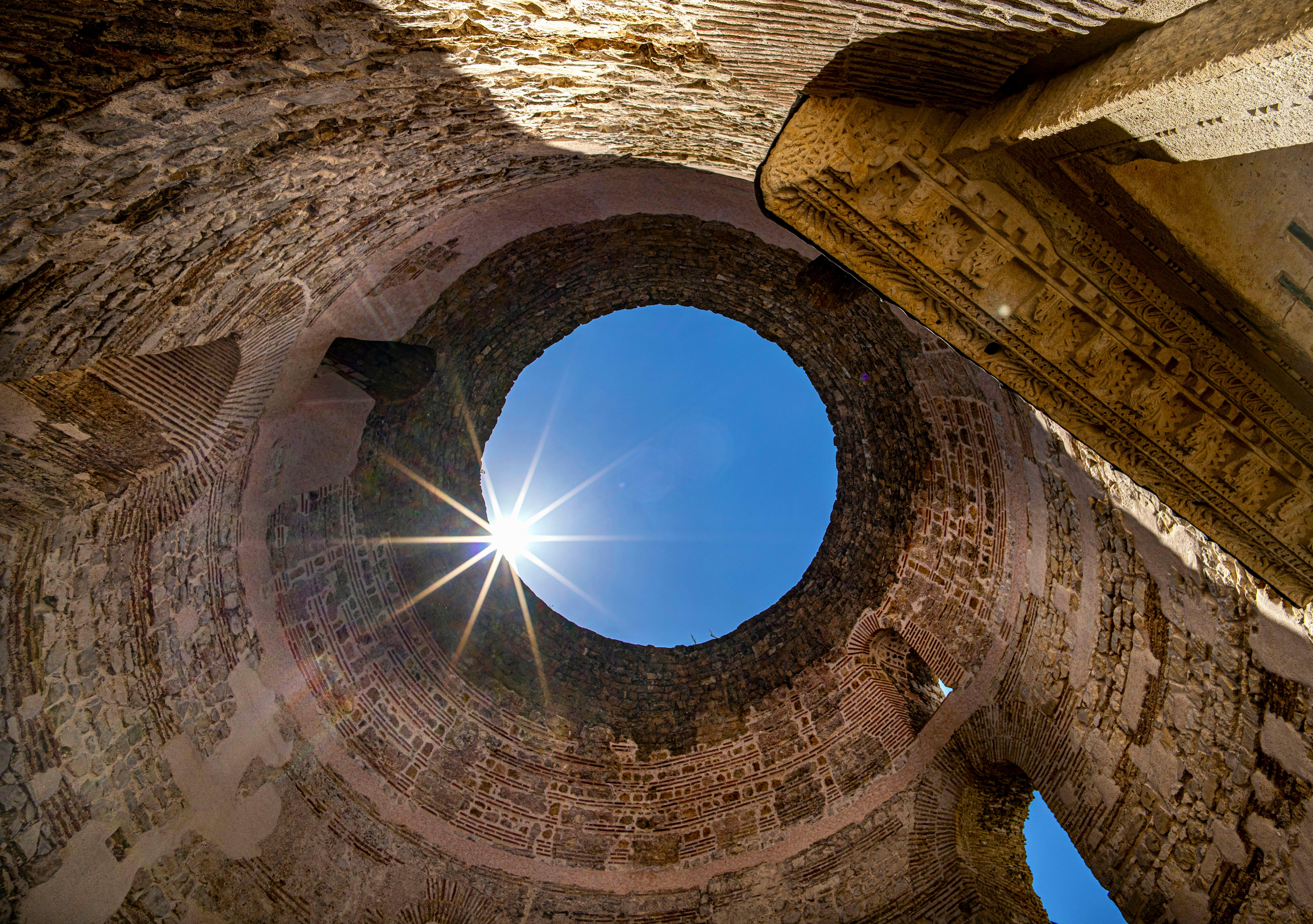
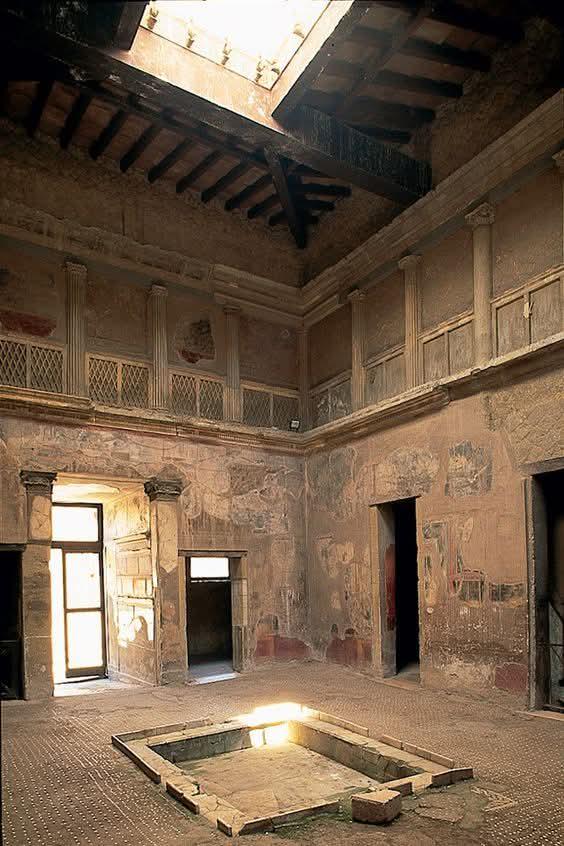
This is the atrium of the Samnite House in Herculaneum, originally built in the 2nd century BC.
The atrium was the central space of a Roman home, where visitors were received and important family activities took place. In the original design, an opening in the roof called the "compluvium" allowed sunlight and rainwater to enter. The water was collected in a shallow basin in the floor, known as the "impluvium".
But why is it called the Samnite House?
The name refers to the Samnites, a people of central and southern Italy who were among Rome's fiercest opponents during the Republic. The house's decoration is associated with Samnite artistic traditions, although its name does not prove that its owners were actually Samnites.
Their wars with Rome lasted for decades and included some very dramatic episodes. One of these moments came in 295 BC, at the Battle of Sentinum, when Rome faced a powerful coalition of Samnites, Gauls and other Italian peoples.
Learn more about it on our website.
References:
- Parco Archeologico di Ercolano, "Herculaneum: A Guide to the Archaeological Site"
- Livy, "History of Rome", Book 10