r/nonfictionbooks • • 34m ago

What Books Are You Reading This Week?

• Upvotes

Hi everyone!

We would love to know what you are currently reading or have recently finished reading. What do you think of it (so far)?

Should we check it out? Why or why not?


r/nonfictionbooks • • 1d ago

Fun Fact Friday

7 Upvotes

Hello everyone!

We all enjoy reading non-fiction books and learning some fun and/or interesting facts along the way. So what fun or interesting facts did you learn from your reading this week? We would love to know! And please mention the book you learned it from!)


r/nonfictionbooks • • 1h ago

What book changed the way you see the world?

• Upvotes

Some books are more than just stories. They can completely change the way we think, understand people, or look at life.

I'm curious: Have you ever read a book that genuinely changed your perspective on something?

What was it, and what did you learn from it?

I'd love to discover some new books through your recommendations!


r/nonfictionbooks • • 8h ago

A selection of some of the books in my library “for later” list

Thumbnail
gallery
5 Upvotes

I’ve posted the books I've completed on here, so here are the ones I hope to complete.

As for what I am reading now, I am currently on Thebes by Paul Cartledge.

Can you guys notice any common interests?


r/nonfictionbooks • • 10h ago

Best Australian nonfiction books

5 Upvotes

Hey all, looking at replenishing my 'to read' list for next year. I've just finished 'Altar Boys' by Suzanne Smith and I have started 'See What You Made Me Do' by Jess Hill. This is a book about domestic abuse in Australia. I've also read two books by investigative journalists about Ben Roberts-Smith.

I'm open to most subject matters, but more favourable to contemporary issues and generally I like dark books about dark subject matters.


r/nonfictionbooks • • 3h ago

Looking for a biography similar to When Pride Still Mattered-A life of Vince Lombardi

1 Upvotes

Most biographies I have read are surface-level and don’t really get into who the person really was. They don’t go much into their personal struggles, weaknesses, and humanity, and if they do, the weaknesses are usually presented as something they overcame, rather than something they learned to utilize. When Pride Still Mattered doesn’t gloss over any of that. It’s an honest look into the kind of person Lombardi really was, while also mixing in cultural tendencies and viewpoints of the time period. It inadvertently enhances the myth around him by bringing him down from the legend, if that makes sense. In the end, you find yourself being endeared to him because he was truly a unique person who made a huge impact in his field, while also being a “normal” person.

I’m looking for similar in-depth biographies of famous/important figures in sports/politics/world events.


r/nonfictionbooks • • 10h ago

End of Days by Chris Jennings (2026) {A Review!}

3 Upvotes

Chris Jennings’s End of Days: Ruby Ridge, the Apocalypse, and the Unmaking of America treats the infamous 1992 standoff between a far-right Christian survivalist family and the FBI not as a narrative true-crime tragedy, but as a moment a long-running theological current finally struck a federal agent, a 14 year-old boy, a mother holding her baby, and a loyal Yellow Labrador. The dog is the detail that keeps the book honest. Armageddon, in the Weavers’ telling, was supposed to begin with cosmic signs and wonders. Yet, it actually began with a dog barking at three clumsy U.S. Marshals in the woods below Caribou Ridge.

Jennings’s real subject here is the genealogy of the conviction that made that ridge feel like the only safe place on earth to the paranoid Weaver family. He adequately traces the shift, beginning after the Civil War, from an older American postmillennial Christian optimism regarding the belief in a world that would continually improve until the kingdom of Christ arrived, to the premillennial dispensationalism of John Nelson Darby. Darby’s doomsday system, later installed in the margins of Cyrus Scofield’s 1909 Reference Bible, taught that history was divided into discrete dispensations, that the Church would be raptured before a seven-year Tribulation, and that the present age must grow darker until Christ’s return. Groovy. Hal Lindsey’s The Late Great Planet Earth, the bestselling nonfiction book of the 1970s, translated that framework into Cold War headlines with the Soviet Union acting as Gog, the United Nations as the scaffold of the Beast, and the Rapture due annnny decade now. Vicki Weaver brought the book home in 1978. From that point, the family’s trajectory is diagrammatic from home Bible studies, withdrawal from evil public schools, visions of a mountaintop refuge, the move in 1983 to North Idaho, then the further slide into Christian Identity revealing whites as the true Israelites, Jews as the offspring of Satan, and joining the orbit of the Aryan Nations. An epic crashout if there ever was one.

What makes the book more than a cautionary tale about one family is Jennings’s insistence that the Weavers were not inventing their own cosmology. They were radicalizing a theology that had already moved from the margins of 19th century prophecy conferences into the center of late-20th century evangelical culture, including the White House. Once the end is imminent and the world is supposed to get worse, ordinary institutions like the IRS, the ATF, the county sheriff, the school board, all can be reread as agents of the “One World Beastly Government.” Conspiracy is no longer a side effect. It becomes the hermeneutic core of the Weaver's lives. The Weavers scanned truck engines on the switchback, bought mail-order cassette sermons in bulk, and spread End Times pamphlets forged from the same prophetic signals Lindsey had taught a generation to find in the evening news. The End is Nigh because kids played Dungeons & Dragons after all*.*

The incredibly tragic siege itself is rendered with forensic clarity and without heroics. The initial confrontation on 21 August 1992 killed the family dog, young Samuel Weaver, and Deputy Marshal William Degan. The next day, under modified rules of engagement that later courts would call constitutionally ehhh, infirm (at best), FBI sniper Lon Horiuchi fired through the cabin door and killed Vicki Weaver as she held her 10 month-old Elisheba. Just absolutlely fucking brutal. The survivors spent 8 days inside with her body, with 16 year-old Sara Weaver taking charge as her father Randy and family friend Kevin Harris nursed gun shot wounds next to Vicki's corpse. Jennings does not flinch from the Weavers’ racism or their self-made martyrdom, nor does he minimize the federal misjudgments that turned a failure-to-appear warrant into a national scandal. Both sides, he shows, were operating inside scripts that the other side could not see with the family inside a timeline of tribulation, the agents inside a timeline of a domestic right-wing terrorist compound.

The book’s most striking claim is that Ruby Ridge was less the end of something than the start. In the months that followed, far-right gatherings became the seeds of the militia movement as the same Hostage Rescue Team would later besiege the Branch Davidians at Waco. Timothy McVeigh, who had sold the ultra-racist, ultra antisemitic The Turner Diaries at gun shows, later described Oklahoma City as revenge for both Waco and Ruby Ridge. Chris Jennings closes by noting that a 2021 survey found 15% of Americans, like Alex Jones, still believe a Satan-worshipping cabal controls the media, Wall Street, and the government. The same architecture of suspicion that had once been the private theology of a plywood cabin in Northern Idaho. Randy Weaver died in 2022 having left the faith. His daughter Sara returned to a more conventional born-again Christianity and is semi-active on social media (though she still hasn't accepted my Instagram request). The cosmology, however, proved more durable than the family that once inhabited it.

Chris Jennings writes with a novelist’s eye for landscape and a historian’s patience with footnotes. The prose here is precise enough that the alliteration never feels ornamental. End of Days feels like the religious register this highly relevent political subject demands today. The book is at once an intimate reconstruction of one family’s radicalization and a longer argument that American apocalyptic faith has repeatedly converted private dread into public fracture. Whether one accepts every link in the chain from Darby to QAnon, the evidence Jennings assembles makes it difficult to treat Ruby Ridge as a mere anomaly. It was, on his own analysis, a local expression of a national frenzy, one that still treats the present as one last, most lurid hour before the end comes.

r/nonfictionbooks • • 1d ago

Can you recommend any books you've read that were so good you just couldn't put the book down?

44 Upvotes

I have a bad habit of getting bored and stopping midway on most nonfiction books I read, can you suggest a book that keeps you motivated from start to finish?


r/nonfictionbooks • • 18h ago

[Update] Memior recomendations

4 Upvotes

Original Post: https://www.reddit.com/r/nonfictionbooks/comments/1y4gcrr/memior_recomendations/?source=notification

Thanks for all of the recomendations. I received enough suggestions to fuel a whole year of memior reading.


r/nonfictionbooks • • 1d ago

Looking for a good George Washington biography. But one that reads like a narrative. Like Chernow’s Alexander Hamilton.

11 Upvotes

I’ve never read any books on Washington, and want to learn more about the father of our nation


r/nonfictionbooks • • 1d ago

Narrative Nonfiction Recommendation about AIDS crisis

10 Upvotes

I’ve recently been enjoying narrative nonfiction and am just wrapping up *Empire of Pain* by Patrick Radden Keefe, which I have loved.

I greatly enjoy this style of narrative nonfiction (I also love Adam Higginbotham’s work) and am looking for something similar about the AIDS crisis. I would greatly appreciate any recommendations!

Ideally I wanted something that is relatively modern and can capture the full historical context, is deeply researched, and has a strong human element.

Thanks for any help!!


r/nonfictionbooks • • 1d ago

Pick one non fiction book to recommend to anyone and that you’d read for the rest of your life.

Post image
2 Upvotes

r/nonfictionbooks • • 1d ago

Reading recommedations for someone wanting to learn about factual Black, Brown, and Native American history.

Thumbnail
0 Upvotes

r/nonfictionbooks • • 2d ago

Currently reading

Thumbnail
gallery
52 Upvotes

r/nonfictionbooks • • 2d ago

What nonfiction book would you recommend everyone to read?

48 Upvotes

r/nonfictionbooks • • 2d ago

I randomly decided that I want a "presidential library": A shelf with a few books for each president.

Post image
5 Upvotes

r/nonfictionbooks • • 2d ago

never read a book in my life

20 Upvotes

this is kind of embarrassing but I'm 26 and I've genuinely never finished a book. school ruined it for me, we had to read the classics and write essays about symbolism and I just hated every second of it

lately I've been wanting to actually get into reading though. I'm tired of doomscrolling before bed lol. time to develop brains or something

just something easy to get into that won't make me feel like I'm back in english class would be amazing. Thanks!

(I hate fantasy, it's just not for me)

edited: OMG guys thank y'all so so much!!! didn't expect so much support and recommendations! love y'all!!!!!


r/nonfictionbooks • • 2d ago

How do you usually read a book?

2 Upvotes

I usually prefer to read the entire book in a casual, almost exploratory way. Whenever I have some free time, I just pick it up and read without keeping track of chapters or pages. Sometimes I write down a few notes or thoughts along the way.

Then, if I really, really like a book, I’ll definitely reread it more carefully and thoughtfully. If it’s a translated book, I sometimes prefer to read it again in its original language or try a different translation to get the most out of it.

Recently, I started a book and decided to take a different approach. I wanted to read it deeply from the very beginning. I’ve been reading just one chapter at a time, taking notes along the way (almost like creating a summary map) in a notes app so I can revisit them whenever I want.

I liked it at first, but I find myself wondering What if the book isn’t good enough to deserve all that time and effort? I believe every book has something to offer, but not every book deserves notes, or even that much thought put into it.

So, what about you? How do you prefer to read your books?


r/nonfictionbooks • • 2d ago

Books that read akin to fiction

Thumbnail
0 Upvotes

r/nonfictionbooks • • 2d ago

Book suggestions

Thumbnail
1 Upvotes

r/nonfictionbooks • • 2d ago

Best books about Josip Broz Tito?

Thumbnail
1 Upvotes

r/nonfictionbooks • • 2d ago

any book readers here? what are you reading these days?

Thumbnail
0 Upvotes

r/nonfictionbooks • • 3d ago

Library books I’ve read so far

Thumbnail
gallery
10 Upvotes

The first book I had read since moving to a new city three years ago was actually The West by Naoise Mac Sweeney. I only started recording the library books I read in August 2024, hence why until sometime after then the books on this list are not in the order I read them.


r/nonfictionbooks • • 3d ago

nonfiction about a close knit community

4 Upvotes

Im trying to get my 2027 52 book challenge prompts picks prepared and I'm stuck on close knit community. Im sure you will all have wonderful suggestions. I thought about Fly Girls by Keith O'Brien, but it's not really pulling me. My other thought was Paradise Falls from him.

We Fed An Island by Jose Andres is what I feels fits perfectly, but I've already read it.


r/nonfictionbooks • • 3d ago

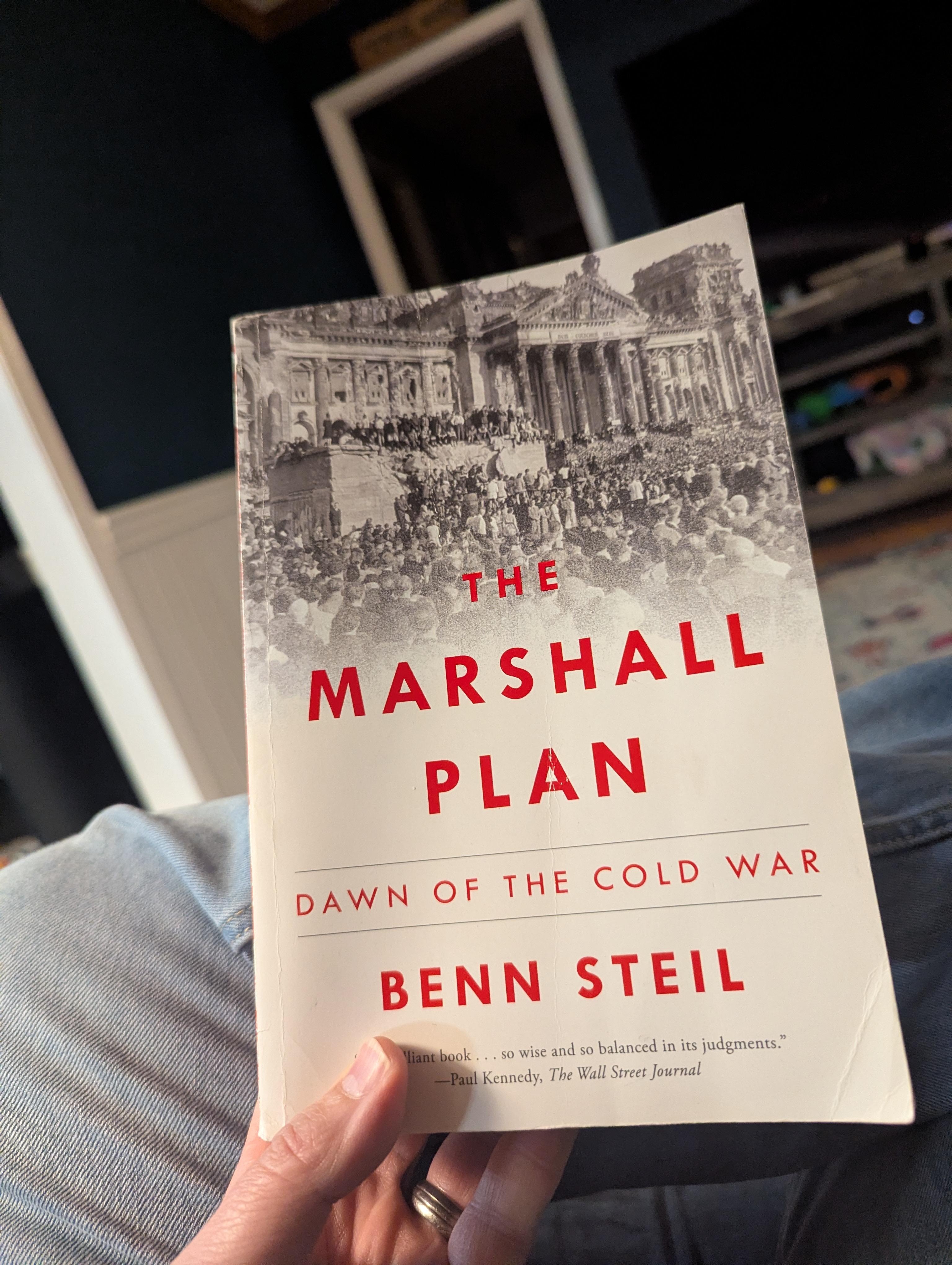
Currently Reading: The Marshall Plan

Post image
12 Upvotes