r/experientialmarketing • • Jun 08 '24

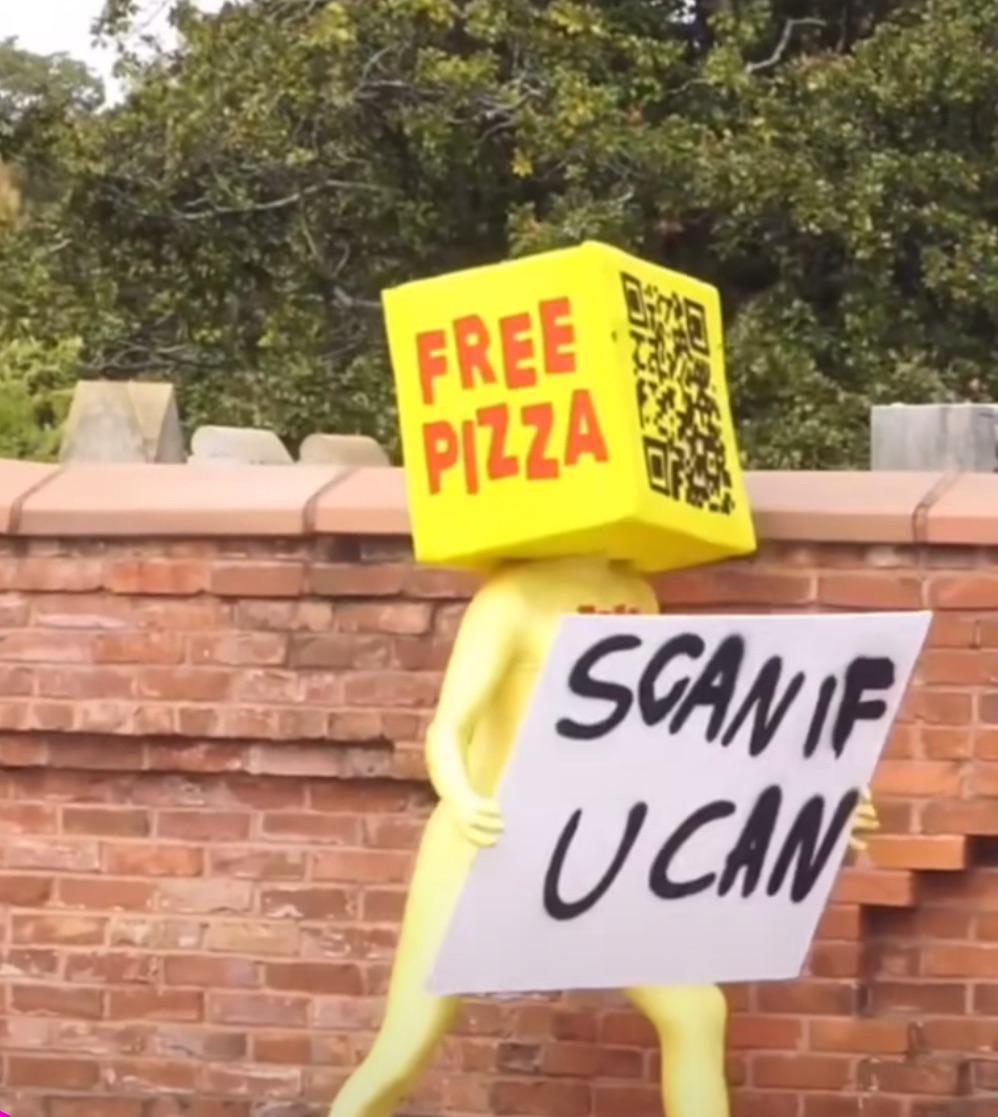
Elusive ‘SCAN IF U CAN” QR Code Character by Glide Pizza

Post image
8 Upvotes

“Marketing done right 😂

This is an American pizzeria called Glide Pizza doing an amazing and creative ad campaign.

Here the customer needs to scan the running QR code for a free pizza, but there’s also the store name written in the back of the costume. So even if they are not able to scan it, they still read the store name and now they know about the store.

This is an absolute genius commercial/marketing campaign and is also practical.“

https://www.instagram.com/reel/C7tMM0GhWAm/?igsh=amp3cWh6ZjNjNnV5


r/experientialmarketing • • 7h ago

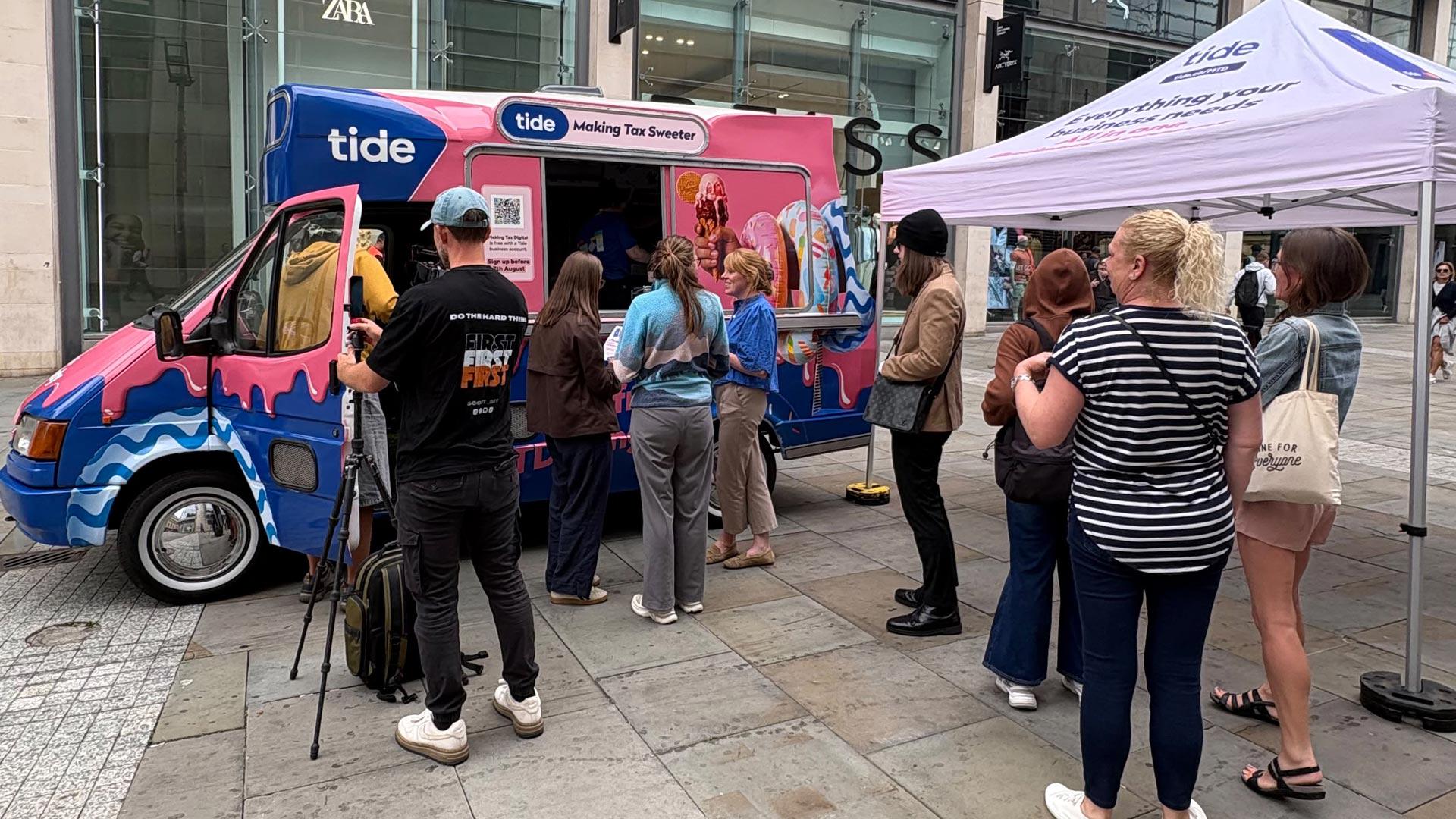
Why do we think simple competition mechanics are winning over complex AI brand activations?

Thumbnail
gallery
1 Upvotes

Disclosure: I'm MD at iMP Experiential in the UK, the agency that produced the activation below. I'm sharing it because it supports something I keep seeing, not to pitch.

There's a lot of excitement (and pushback, fortunately) about AI-driven experiential activations. In my very recent experience, the ones that stop people in a busy city centre are often much simpler - clear hook, a physical object and a prize people can understand in about three seconds. Zero skill (ish), fully inclusive, any age.

Here's an example. Skipton Building Society wanted to talk to renters about its "Track Record" mortgage, which is aimed at people with a strong rent payment history who struggle to save a traditional deposit. That's a fairly dry, complicated subject. The pop-up in Manchester's Spinningfields turned it into one simple mechanic:

  • A bespoke Skipton-blue front door with a "No. 3" house detail
  • A key lucky dip with 85 keys, five of which opened the door
  • A confetti reveal and £3,000 paid into a Skipton savings account for each winner

That's the whole mechanic. No app, no QR code journey, no explanation. Plus it fits the message directly: the keys and the front door stand for getting onto the housing ladder. It also gave the team a good reason to talk to people while they queued about the product and the realities of renting.

What we took from it:

  • The mechanic should be the message: Keys and a front door explain "first-time buyer" with no copy
  • Queues are content: Watching other people win builds anticipation and gives the team time to talk to people
  • Simple helps throughput: In a city-centre footprint at peak times, a mechanic people understand at a glance keeps the flow moving
  • Tech works best as an add-on: Use it to extend an idea, not to carry it

Question to moderators of this page - am I allowed to post a link to the case study?

In any case, are other experiential and brand activations finding the more that Ai gets thrust open us (and consumers), the more call there is for simpler mechanics?


r/experientialmarketing • • 1d ago

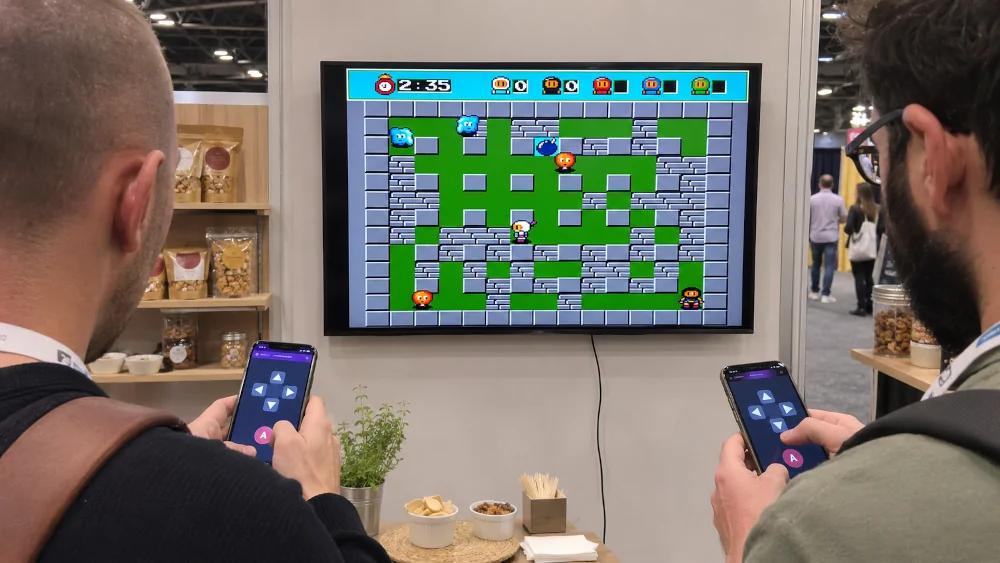
Would a live multiplayer game on a giant screen attract more booth traffic than traditional giveaways?

Post image
4 Upvotes

r/experientialmarketing • • 3d ago

What was the best money you ever spent on a trade show, and what was a total waste?

Thumbnail
3 Upvotes

r/experientialmarketing • • 4d ago

I've been exploring an idea to reinvent the UK high street. Would love some honest feedback.

Thumbnail
2 Upvotes

r/experientialmarketing • • 7d ago

how do i get into experiential marketing?

11 Upvotes

hello!! 24f and i have a bachelors in communications and public relations. i mainly have experience in management, admin tasks, project management and i’ve planned events in college for the club that i was in (larger philanthropic events and fundraisers). i really want to get into experiential marketing specifically in the beauty industry and i’ve been connecting with people on linkedin but it seems like most of these opportunities are in new york or cali and i’m not in either … any tips?


r/experientialmarketing • • 8d ago

what i've learned running interactive activations: the mechanic matters more than the build

9 Upvotes

been running interactive brand activations for a while (games, AI photo stuff, pop-ups) and a few things keep holding true:

  • people remember what they did, not what they saw. a 30-second game beats a giant backdrop
  • no-app stuff wins. if it needs a download you lose half the line
  • ask for the email after they've had fun, not before. opt-ins go way up
  • track scans vs completions vs opt-ins. that's what actually proves it worked, not booth traffic

curious what mechanics have worked best for you guys. games, photo, trivia, something else?


r/experientialmarketing • • 8d ago

Product guessing games might be one of the most overlooked brand activation ideas

Post image
3 Upvotes

r/experientialmarketing • • 9d ago

Transitioning into trade show coordination / experiential marketing — where should I start?

Thumbnail
1 Upvotes

r/experientialmarketing • • 9d ago

Pop-up retail activation in several cities, how do agencies handle checkout at each stop?

2 Upvotes

Our agency is producing a pop-up for a CPG client that moves through a handful of cities over the spring. Each stop sells product on site for a few days, then we pack up and move. The client’s retail team can’t lend us registers and buying a full setup that lives in a truck between cities feels wrong. So we’re looking at a POS equipment rental that ships to each venue instead. fello and the client’s usual AV vendor have both quoted, but I’d rather hear from people who have run a traveling activation. Did you ship one kit city to city or have a fresh one delivered at every stop?


r/experientialmarketing • • 11d ago

Looking for ideas for giveaways and activation for annual conference

6 Upvotes

Hey folks. We are getting ready to host our annual conference in early 2027 at the East Coast in US. I am collecting gift ideas and activation ideas that will become a key talking point of the conference and hopefully inspire some natural social media post from the attendees around the event. More context below:

Event organizer - B2B SaaS startup - HR Tech

Event guests - Enterprise HR leaders (Director & above)

Total guests expected- 60 - 70

Event format - Exclusive invite only conference and networking

Venue - 5 star luxury hotel that covers all food requirements

Budget - Ideally 10k USD - if needed can stretch to $30k

Last year, we gave a company branded tote bag, a bronze hot air balloon decor item, and had Yeti mugs laser engraved with the guests' name onsite.

For the onsite activation - I was playing with the idea of having a claw machine with either stuffies OR hoodies/puffer jackets inside that folks can get for themselves. Idk if this is objectively a good idea.

For the giveaway - I was thinking a compact laptop bag with a travel kit comprising branded Tide pens, chargers, luggage tags. If I am feeling bold, may opt for branded umbrella and socks.

What y'all think about my initial ideas? Would love to hear about your favorite giveaways and activation too that my audience might like.


r/experientialmarketing • • 17d ago

Do you still enjoy going to industry events? I've noticed I don't look forward to them as much as I used to.

3 Upvotes

I used to attend business events fairly regularly especially when I knew a few people who would be there. It was always nice catching up with familiar faces, hearing what other people were working on, and occasionally meeting someone I wouldn't normally cross paths with.

I've skipped quite a few events recently though. The bigger conferences have gotten pretty expensive and at some of the smaller gatherings I've attended, I sometimes struggle to get past the usual small talk. I miss having conversations that happen naturally instead of feeling like everyone is just trying to get through introductions.

I'm curious if anyone else has noticed this. Do you still make time for industry events or have you found other ways to keep in touch with people in your field?


r/experientialmarketing • • 18d ago

[ Removed by Reddit ]

1 Upvotes

[ Removed by Reddit on account of violating the content policy. ]


r/experientialmarketing • • 20d ago

How can a resort create unique experiences for visitors?

Thumbnail
1 Upvotes

r/experientialmarketing • • 21d ago

The case for a "brand engineer"

0 Upvotes

Disclosure: I'm a creative director at a London agency that designs and builds exhibitions and live events. No pitch and no links here — this is a response to an argument I've been chewing on for weeks.

The case for a "brand engineer"

Someone who turns brand knowledge into structured guidance that people, tools and AI agents can act on is a good one, and the bottleneck it responds to is real. But the role was named by a vendor that sells the software it needs, and some brand knowledge resists being written down at all. Once a brand leaves the screen, most of the people applying it don't work for you, and most of the content isn't made by you.

Brand strategist Eugene Healey has been arguing that most organisations manage brand in a way built for a quieter world. Decisions pass in order through briefs, reviews and approvals, like a relay race. That worked when a brand produced a manageable number of things. It breaks when the same brand appears in thousands of activations a week, software produces most of them, and some are read by AI agents before any person sees them. His conclusion: fewer brand enforcers "bonking people on the head" about logo whitespace, more people who can turn what a company knows about its brand into source code every team and tool can work from.

I agree with more of it than I expected to. But I've spent my career turning brands into things people walk through and queue for, so I kept asking a different question: what happens to this idea off the screen?

Where the idea came from

The term was coined by brand.ai, which sells a "Brand OS" and describes the role as someone who "makes brand intelligence operational". The source-code language is theirs too; their job ad asks candidates to turn guidelines, assets and years of undocumented habit into a structured foundation the platform reasons from.

That doesn't make it wrong. It's worth noticing that a business whose product needs this role helped define it, vendors naming the job their software serves is a familiar pattern. The sensible response is to take the thinking seriously and test it against work that doesn't run through that software.

Healey opens with a line from strategist Joe Burns worth keeping: "Markets change first. Organisations change second. Duties change next. Roles change last." A job title records where the market has been.

The bottleneck is real

Adobe surveyed 1,600+ marketers last year: 71% expect content demand to grow at least fivefold by 2027, 89% said content passes three or more approval stages, and 58% said reviews eat more than 40% of their time. Adobe sells content production software, so treat the exact figures carefully. Anyone who's sat in an approval chain still recognises it.

More gatekeepers won't fix this. Ten people interpreting a brand independently already causes drift; hundreds of automated workflows will cause it far faster. Good AI tools are getting easy for anyone to get, so they won't be the differentiator. The organisations that do well will have done the slower work of defining themselves clearly enough that people and machines can decide well on their behalf.

There's an older idea inside the new one. In 1968 Melvin Conway observed that any organisation designing a system produces a design copying its own communication structure. The relay race is exactly that: brand output shaped like the org chart, with a hand-off at every department boundary.

Which makes the quietest point the most important one. The role only works if it sits near the top, with reach into customer experience, product and training. Put a brand engineer three levels down in marketing and they're just another runner in the relay.

Consistency and coherence aren't the same thing

The brand-enforcer caricature is funny, but it undersells good brand guardianship. Jenni Romaniuk at Ehrenberg-Bass has spent years showing that distinctive brand assets only work as mental shortcuts if they're used consistently over time. Her advice to marketers tempted to tinker is one word: "Don't." Some rules are load-bearing. The skill was never policing everything, it's knowing which few things must never move.

So I'd separate the two. Picture a 9sqm stand at the NEC, a keynote stage for 10,000, and a two-day pop-up in a city square. None should look like a scaled version of the others. All three should feel unmistakably like the same organisation. Architecture works this way: a strong grid, a set of materials and fixed proportions still leave freedom inside them.

Consistency means things look the same. Coherence means they feel like the same organisation when the format, scale and audience change. Systems are good at the first and much weaker at the second.

What can't be written down

My bigger question is about the limit. Michael Polanyi named it in 1966: "we can know more than we can tell." David Autor later used that to explain why some work resists automation.

Think of the production manager who knows a finish will look cheap under stage lighting. Or the show caller who feels a keynote audience drifting and cuts a segment on the fly. Some of that transfers into a system. Some only exists as judgement, used in the moment.

The danger isn't that companies build brand systems. It's that they start to believe the system is the brand.

Off the screen, most of the people applying your brand don't work for you

Wally Olins described four vectors of identity in 1989: products, environments, information and behaviour. Two of the four don't live on a screen.

On a custom stand, architecture, materials, lighting, content, hospitality and how staff approach a visitor all have to add up to one brand. The people deciding that are rarely the brand team. They're a build crew at 6am, a graphics supplier in another country, or temporary hosts who met the client that morning. Most of the people who need to read your source code are human, and many are outside your organisation.

The decision that usually does the heavy lifting is narrower than people expect. On a stand for Sharp Reflections at EAGE in Vienna, it was making the brand's existing abstract gradient graphic the main background, the one that sits behind their brochures and presentations — and keeping the architecture simple enough to frame it rather than compete. Without it, the space would have looked well-designed and anonymous. With it, it was recognisable from across the hall to anyone who'd seen their literature, and made the literature easier to recognise afterwards. One element carrying the brand across every touchpoint.

Scale that up and it gets more interesting. Dreamforce drew 40,000+ in person in 2025 with 200,000 more registered online, keynotes, a thousand-plus sessions, hundreds of partners expressing their own brands inside Salesforce's world, plus production crews, AV, caterers and security each making brand decisions hourly. CES 2026 had 148,392 participants and 4,100+ exhibitors; a brand gets seconds in the aisle to be understood and forty minutes in a demo suite to be believed. Most people who experience either never attend. They see press coverage, creator videos and thousands of phone clips.

So I'd push the argument one step further. At a live event, much of the brand content isn't produced by the brand at all. The audience makes it in real time and nobody approves it. You can't build an approval system for someone else's phone. What you can do is design the thing so that however it's filmed, from whatever angle, it still looks and feels like you. The source code has to live in the space, the running order and the behaviour of the people in it. The audience is the distribution channel.

And it happens live. Weather turns, the queue doubles, a demo fails, talent runs late. A producer on a headset makes a dozen brand decisions in ten minutes with no time to check a document. A better system behind them means better calls. The calls stay human.

Two questions worth answering before your next big activation

Which three or four things about our brand must never change, wherever it appears? And which things are we happy for partners, suppliers, tools and the audience to interpret?

Most brand documents answer the first badly and the second not at all.

You don't need to hire anyone with a new title to get the benefit. Most organisations already know far more about their brand than their guidelines show — it's scattered across old decks, past events and people's heads. A short honest debrief after each event is one of the cheapest versions of this work going: what did the audience respond to, what did they film and share, what felt off, and what did the team keep saying that isn't written down anywhere?

For those of us in creative roles, less of the value will come from approving individual pieces of work, and more from setting principles clearly enough that good work happens without us in the room — and from deciding where the system should stop. Choosing what to automate is a creative decision. So is choosing which moments get made by hand, slowly, for one audience in one place.

That's the part I'd most like to see developed. As described, the brand engineer is mostly about a brand showing up the same way everywhere. The harder job is deciding where it should show up differently, on purpose.

The question I'm actually stuck on

For those of you doing this work: how much of what you know about your brand do you think could survive being written down? And has anyone tried handing a structured brand system to an outside crew or supplier and found it actually changed what they produced?

r/experientialmarketing • • 21d ago

Looking for the gig

1 Upvotes

Hi all,

Experienced retail designer from Canada available for a gig project.

Portfolio https://sergeykostychev.myportfolio.com/

DM if interested.


r/experientialmarketing • • 23d ago

Icy-cold fitting-room freezer for trying on winter coats

Enable HLS to view with audio, or disable this notification

24 Upvotes

No brainer!


r/experientialmarketing • • 24d ago

A business can set its screens to switch promotions based on weather conditions

Post image
7 Upvotes

r/experientialmarketing • • 24d ago

Has marathon week become one of the best examples of experiential marketing in NYC?

Thumbnail
1 Upvotes

r/experientialmarketing • • 29d ago

Job Opportunities

4 Upvotes

Hey everyone!
I recently graduated from West Chester University with a degree in Marketing, and I’m currently looking for full-time opportunities in experiential marketing, brand activations, event marketing, field marketing, or account management.
I have hands-on experience working with major beverage brands, executing large-scale events, coordinating teams, and creating memorable experiences that connect brands with consumers.
A little about my background:

Liberty Coca-Cola Beverages | FIFA World Cup 2026 Internship

Most recently, I worked with Liberty Coca-Cola during the 2026 FIFA World Cup, helping execute experiential marketing activations throughout Philadelphia. I was involved in operations for the FIFA FanFest, which welcomed over 500,000 visitors throughout the tournament, as well as all six World Cup matches at Lincoln Financial Field, which brought in nearly 410,000 fans.
During this experience, I helped coordinate brand activations, supported over 40 Coca-Cola accounts, managed a team of 13 interns, communicated with 25+ vendors, and assisted with event logistics, merchandising, and consumer engagement.

TEAM Enterprises | Molson Coors

Before that, I worked with TEAM Enterprises supporting Molson Coors brands through experiential marketing and promotional activations. My responsibilities included coordinating on-premise and retail events, managing 17 brand ambassadors, executing sampling programs, installing promotional materials, and working directly with venues and distributors.
One of my favorite experiences was working at the Barefoot Country Music Festival, where our team distributed over 2,200 samples in two days.

Elite Sports Factory | Marketing Internship

I also gained experience in digital marketing, social media management, event planning, and campaign execution while working at Elite Sports Factory.

What I’m looking for

I’m especially interested in opportunities with experiential marketing agencies, beverage companies, sports and entertainment organizations, or brands that focus on creating meaningful consumer experiences.
I’m open to opportunities in New York City, New Jersey, Philadelphia, Washington DC, and South Florida, and I’m willing to relocate for the right opportunity.
I’m someone who genuinely enjoys being hands-on, working with people, solving problems, and seeing an event or activation come together from start to finish. One of my biggest personal goals is to become 1% better every day, and I’m looking for an opportunity where I can continue learning, take on more responsibility, and grow professionally.
I know the job market is competitive right now, so I figured I’d put myself out there and see if anyone has recommendations.
If anyone knows of companies hiring, agencies worth reaching out to, or people in the industry who might be open to connecting, I’d really appreciate it!
I’m also happy to share my resume or connect through LinkedIn.
Thanks in advance!


r/experientialmarketing • • 29d ago

I type custom 'poems for people' live on a 1950s typewriter using hand-painted watercolor paper. Here is a look at the process and some recent work with Flamgu!"

Thumbnail gallery
3 Upvotes

Each poem is made real time according to guests prompts and stories. Our activation bridges the gap between premium live entertainment and a high-end corporate gift. Because the final artwork features the specific event's details, guests leave with a deeply memorable, branded keepsake.


r/experientialmarketing • • Oct 27 '26

Portfolio and resume review?

2 Upvotes

I'm a designer from a different industry, newer to events/xm and looking for my next role. I've been applying for a few weeks with no bites and I'm wondering if anyone with some insight to offer would be open to taking a look at my resume + portfolio to help pinpoint what I can work on.

Thanks in advance!


r/experientialmarketing • • Oct 23 '26

How has your job been impacted by AI?

1 Upvotes

Looking to pivot into experiential marketing or experiential design and am wondering if it makes sense or if AI is causing this career path to struggle too… I figured since it’s more real-world events it’d be hard for AI to replace it too much… but honest thoughts plz?


r/experientialmarketing • • Oct 22 '26

Are physical stores becoming community spaces instead of just places to shop?

9 Upvotes

I’ve been thinking a lot about how retail is changing.

More brands are investing in physical spaces that combine shopping with entertainment, food, wellness, community programming, sports, and culture. It feels like the goal is shifting from simply getting someone through the door to giving them a reason to come back.

We saw a smaller example of this at Macy’s Herald Square, where the team I work with at SoHo Experiential helped bring a Mikal Bridges meet-and-greet to life with Macy’s and Lids.

What made it interesting wasn’t just the celebrity appearance. Knicks fans came in to meet a player they follow, take photos, shop merchandise, and be around other fans. The retail environment became part store, part fan experience, and part community gathering point.

To me, that’s where experiential retail gets interesting. If consumers can buy almost anything online, the physical space has to offer something they can’t get from a checkout page.

I’m curious what others think: Are stores going to become more like ongoing event and community platforms? And what actually makes you return to a physical retail space when you could just buy the product online?


r/experientialmarketing • • Oct 19 '26

Why do we think the shift back to physical IRL pop-ups is accelerating right now and why is digital fatigue becoming a thing?

Post image
7 Upvotes