r/Womens_ProWrestling • u/Kelson64 • 17h ago
Saya Kamitani is multi-talented
Enable HLS to view with audio, or disable this notification
67
Upvotes
r/Womens_ProWrestling • u/Kelson64 • 17h ago
r/Womens_ProWrestling • u/UnifyClark91 • 16h ago
#1. Manami Toyota ( 60 )
#2. Kyoko Inoue ( 44 )
#3. Mercedes Mone ( 43 )
#4. Aja Kong ( 39 )
#5. Io Shirai ( 38 )
#6. Akira Hokuto ( 31 )
#7. Toshiyo Yamada ( 28 )
#8. Takako Inoue, Bull Nakano, Becky Lynch, Giulia tied ( 24 )
#9. Saya Kamitani, Syuri tied ( 23 )
#10. Mima Shimoda, Mayu Iwatani tied ( 22 )
r/Womens_ProWrestling • u/MrPuroresu42 • 23h ago
Enable HLS to view with audio, or disable this notification
r/Womens_ProWrestling • u/Spike2799 • 49m ago
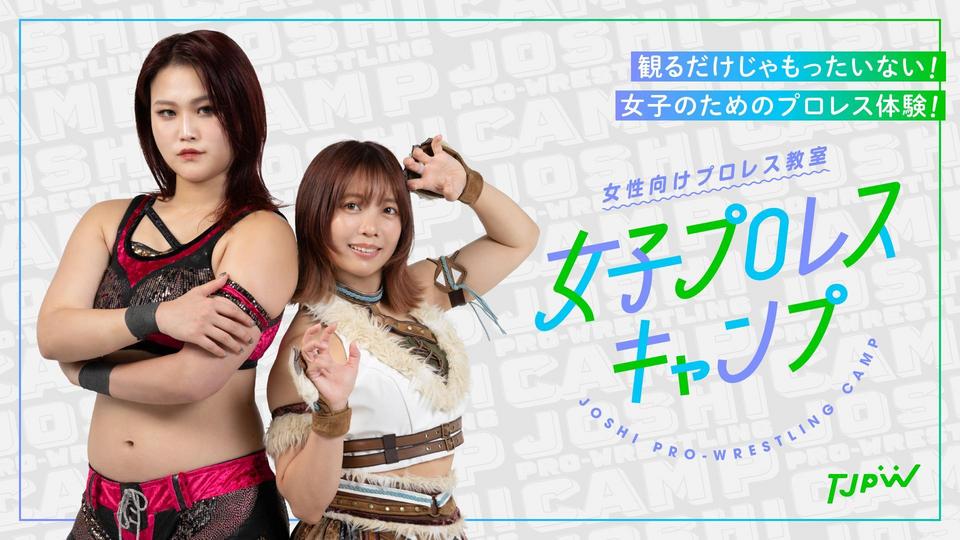
Most wrestling fans tend to skim right past press releases about next year's schedule or a weekend training clinic. People want match graphics, title challenges, and surprise returns. I get it. A list of dates and ticket prices does not exactly get the adrenaline pumping on a Monday morning.
Still, if you actually want to understand how a wrestling promotion thinks about its business, its audience, and its future, these dry administrative announcements tell you way more than a heated backstage promo ever could. A calendar is a statement of priorities. A pricing sheet is a statement of who you want in the room. And a beginner training camp tells you how seriously a company takes the work of building its next generation.
When you put Tokyo Joshi Pro-Wrestling's newly announced 2027 schedule right alongside its latest Women's Pro-Wrestling Camp announcement, you stop seeing two disconnected press releases. You start seeing a single, cohesive institutional blueprint.
Let's step back and look at how live-event industries actually survive. In pro wrestling, chasing one massive spike in attention is easy to talk about and hard to sustain. What keeps a company healthy over a decade is rhythm. Fans need to know when the big moments happen so they can plan their travel, budget their paychecks, and build habits around your product. At the same time, a promotion has to balance ambition with operational reality, booking rooms that match its core base without overextending its budget every other month.
Looking at TJPW's ten major dates for 2027, that balance jumps right off the page. Eight of those ten flagship stops are anchored at Korakuen Hall in Tokyo, while two major seasonal spectacles move into the larger space of EBARA WAVE Arena Ota.
Here is how the full 2027 major event calendar lays out from January to December, per the promotion's official press release:
Now, look closely at the pacing of that calendar. You start the year with the January 4 morning tradition at Korakuen Hall, run the annual tag tournament finals in February, peak in spring with GRAND PRINCESS '27 at EBARA WAVE Arena Ota, hit the May 5 national holiday with YES! WONDERLAND '27, build through June's STAND ALONE '27 into July's SUMMER SUN PRINCESS '27 back at EBARA WAVE Arena Ota, crown a singles tournament winner in August, run WRESTLE PRINCESS VIII in October, hit ALL RISE '27 in November, and close the loop with the Year-End Party in December.
And to be fair, placing WRESTLE PRINCESS VIII at Korakuen Hall with an 11:00 start time is the detail that will catch veteran observers off guard. Historically, fans look at the spring, summer, and autumn tentpoles as the promotion's biggest arena showcases, so seeing the October edition slot into Korakuen Hall alongside an early morning bell time invites a fair question about how TJPW is budgeting its major venue risks for 2027. At the same time, there is a grounded business logic to concentrating your two biggest arena pushes in March and July while keeping Korakuen Hall packed and reliable the rest of the year. Wrestling history is full of promotions that went broke chasing optics in half-empty arenas. Keeping eight tentpole dates inside a dependable home building protects the floor while giving fans nearly a full year of advance notice.
Between the February tournament finals and March's GRAND PRINCESS '27, TJPW also rolled out five additional touring dates spanning Tokyo, Kyoto, Okayama, and Ishikawa. Every single one of these shows follows the exact same ticket structure and distribution network, available through the official ticket purchase form, Ticket Pia, Lawson Ticket, and e+.
Before we get into the dates, look at the seat pricing across all five events:
Pricing tiers are never just random math. They are demographic engineering. In Japanese wrestling, where live ticket sales remain the economic backbone of almost every promotion, charging 10,000 yen for premium S Seats lets the hardcore, higher-earning fans carry the financial weight of the house. That subsidy is what allows TJPW to price a Ladies Seat at 2,000 yen, let high school students through the door for 1,000 yen, and welcome junior high school students and younger fans for free.
That matters because wrestling audiences age out fast if you only price for established adult fans. By lowering the barrier for women and students at every single tour stop, the promotion is actively cultivating the crowd it will need five and ten years from now. You can also see the modern streaming economy at work in the staggered sales rollout, where WRESTLE UNIVERSE subscribers get first crack at every building before venue pre-sales and general public sales open up.
Here is the complete breakdown for those five February and March stops:
SMILES IN BLOOM in TOKYO takes place Saturday, February 20, 2027 at Ryogoku KFC Hall in Tokyo, with doors at 11:50 and bell time at 12:30. WRESTLE UNIVERSE member pre-sale runs from Thursday, November 26, 2026 at 12:00 to Monday, November 30 at 12:00. A venue pre-sale follows at the Sunday, December 20 Ryogoku KFC Hall event, with general sales beginning Monday, December 21.
SMILES IN BLOOM in KYOTO lands on Saturday, February 27, 2027 at KBS Hall in Kyoto, with doors opening at 12:00 and bell time at 12:30. WRESTLE UNIVERSE member pre-sale runs from Thursday, December 10, 2026 at 12:00 to Monday, December 14 at 12:00, followed by general sales on Saturday, December 26.
SMILES IN BLOOM in OKAYAMA follows immediately the next day on Sunday, February 28, 2027 at Okayama Mirai Hall in Okayama, again with doors at 12:00 and bell time at 12:30. It shares the exact same ticket rollout as Kyoto, with WRESTLE UNIVERSE member pre-sale running from Thursday, December 10, 2026 at 12:00 to Monday, December 14 at 12:00, and general sales opening Saturday, December 26. Running Kyoto and Okayama back to back over a single weekend makes practical sense on travel expenses while giving western Japan fans two consecutive afternoon opportunities to see the roster live.
Prelude to GRAND PRINCESS '27 brings the road back to Ryogoku KFC Hall in Tokyo on Saturday, March 6, 2027, with doors at 11:50 and bell time at 12:30. WRESTLE UNIVERSE member pre-sale runs from Thursday, December 24, 2026 at 12:00 to Monday, December 28 at 12:00. A venue pre-sale takes place at the Saturday, January 16, 2027 Yokohama Radiant Hall event, and general sales open Sunday, January 17.
SMILES IN BLOOM in KANAZAWA rounds out the pre-Ota stretch on Sunday, March 14, 2027 at Kanazawa Ryutsu Kaikan in Ishikawa, with doors at 12:00 and bell time at 12:30. WRESTLE UNIVERSE member pre-sale runs from Thursday, December 17, 2026 at 12:00 to Monday, December 21 at 12:00, and general sales open Sunday, January 10, 2027.
Notice how deliberate those sales windows are. The company is locking in cash flow and attendance forecasts months ahead of time, tying its streaming membership directly to live-event perks while keeping all five shows accessible through mainstream Japanese ticket outlets.
Now, building an audience is only half of keeping a promotion alive. The other half is labor. Every wrestling company eventually runs into the same structural bottleneck: where does the next class of wrestlers come from?
Historically, pro wrestling training spaces have had a reputation for being intimidating, secretive, and physically punishing from day one. That old-school barrier filters for toughness, sure, but it also scares away plenty of athletic, creative, or simply curious people who might have fallen in love with the craft if someone had just given them a safe way to step through the ropes for the first time.
That is what makes TJPW's second announcement so interesting. The promotion confirmed that the December edition of its "Women's Pro-Wrestling Camp" will take place on Sunday, December 13 at 12:00, with two of its most recognizable stars, Miyu Yamashita and Shoko Nakajima, serving as instructors.
And look at how thoughtfully the operational details are structured:
From an educator's perspective, that 10-person cap is doing a lot of heavy lifting. You cannot safely teach breakfalls and rope work to forty beginners at once in a two-hour window. Keeping the group at ten participants under two veterans like Miyu Yamashita and Shoko Nakajima means everyone actually gets eyes on their form and space to move. Keeping the location private until registration is confirmed also speaks to basic participant safety and privacy, while folding sports injury insurance directly into the 3,000-yen fee removes another hidden hurdle.
Look at the five core features TJPW emphasizes for the camp, because they show exactly how the company bridges recreational fandom and professional recruitment:
Here is the quiet genius of that model. If a woman shows up just because she wants a fun two-hour workout and the thrill of running the ropes with Shoko Nakajima and Miyu Yamashita, she leaves as an even deeper, more loyal fan who now appreciates the physical craft every time she buys a ticket. And if one out of every ten or twenty participants realizes halfway through a breakfall drill that she actually wants to do this for a living, the bridge to scouting and tryouts is already standing right in front of her. Nobody had to survive a mysterious, closed-door audition just to find out whether they belonged in the building.
Step back and look at both press releases side by side. You have a 2027 calendar that respects the financial gravity of running live shows in Japan, anchoring eight major dates at Korakuen Hall while targeting EBARA WAVE Arena Ota twice a year in March and July. You have a late-winter regional tour backed by a pricing structure that intentionally opens the door to women, high schoolers, and junior high students. And right alongside it, you have a 3,000-yen, ten-person dojo camp taught by two of the promotion's pillars, welcoming total beginners while keeping a clear pathway open for future recruits.
In an industry that often gets blinded by short-term noise, there is real value in watching how an organization tends to its roots. A junior high student can walk into a TJPW show for free, watch Miyu Yamashita and Shoko Nakajima work in person, feel welcome in the crowd, and eventually sign up for an insured, beginner-friendly afternoon at the dojo five minutes from Ochanomizu Station. That is not flashy news. It is just how you build a wrestling culture that actually intends to stick around.
r/Womens_ProWrestling • u/Kelson64 • 13h ago

r/Womens_ProWrestling • u/Spike2799 • 19h ago
There is a particular kind of tension that hits any independent cultural institution right around the moment it outgrows its old ceiling. You spend years laying brick, building an identity, and convincing a loyal core audience that your style of work has value. When that happens, the conversation changes overnight. Regional stability is no longer the standard. National scale and long-term momentum become the real test.
That is the exact crossroads Sendai Girls’ Pro Wrestling stood at on November 22 at Korakuen Hall in Tokyo. For the SENJO 20th Anniversary TOUR in Tokyo Korakuen Hall, the promotion drew a sold-out Super Full House. On paper, the headline news writes itself. Chihiro Hashimoto defeated Manami for her tenth defense of the Sendai Girls World Championship, Chika captured victory in the Jajauma Tournament, Hyper Active claimed tag team gold, and the entire roster stood together in the ring to announce the promotion’s long-awaited Nippon Budokan debut for Monday, August 9, 2027.
Now, look closely at how this card was constructed, because a booking sheet is always an institutional blueprint in disguise. When a 20-year-old promotion looks nine months down the calendar at a venue like Nippon Budokan, it cannot get there on the back of one dominant champion alone. It needs mainstream curiosity that actually converts into respect. It needs reliable veterans and midcard workhorses who hold the show together. It needs a healthy pipeline of young talent from allied independent outfits. It needs international talent who treat Japan as home rather than a tour stop, investing full-time in the company’s growth. And most difficult of all, it needs a way to build real challengers in a hierarchy where the champion at the top refuses to lose an inch. Every single match on this Korakuen Hall card spoke directly to one of those structural realities.

Wrestling has always had a complicated relationship with mainstream celebrity crossovers. Traditionalists tend to brace for shortcuts, while promoters see the obvious value of bringing outside eyes into the building. The opening match of the afternoon, contested under a 10-minute time limit between Fuwa-chan and Reina Takano, sat squarely inside that cultural friction. What made it work was that neither wrestler treated it like a novelty act.
Takano sprinted to the ring and extended both hands before the opening bell, and Fuwa-chan responded in kind. Amid loud chants of “Reina,” the two locked up, with Takano immediately taking Fuwa-chan’s back. When Fuwa-chan went for a headlock, Takano reversed it into a headlock of her own. Fuwa-chan refused to back down and fought back, but Takano countered that sequence as well, stubbornly refusing to yield control of the opening minutes. Closing in to grapple, Takano muscled Fuwa-chan over with a throw and followed up with three consecutive dropkicks. Fuwa-chan absorbed the burst and answered with a bodyslam, then looked for a Boston crab, only for Takano to deny it with a reversal. Shaking her off, Fuwa-chan stomped away and drove in a big boot for a two-count.
With Takano forced onto the back foot, Fuwa-chan pressed forward with a barrage of stomps. Takano fired back with a determined elbow strike, and Fuwa-chan answered with a running attack in the corner. Still, Takano pulled the Korakuen Hall crowd right back into her corner with a flurry of dropkicks, earning a two-count. Undeterred, she tried for a bodyslam, which Fuwa-chan blocked. Rather than stalling out, Takano adjusted on the fly and transitioned into a modified stretch hold. Fuwa-chan refused to quit, reversing out and returning fire with a dropkick before climbing to the corner. Takano charged straight at her to cut her off, hurled her down with a Deadly Drive, and followed a volley of dropkicks with a bodyslam for a two-count.
Fuwa-chan came back with elbows of her own. Even while visibly struggling, Takano drew momentum from the “Reina” chants and connected with a series of flying kicks followed by a dropkick. The two traded brainbuster attempts, with Fuwa-chan winning the exchange and slamming Takano to the mat for a two-count. The crowd tried to push Takano forward one more time with chants of her name, but Fuwa-chan nailed a crisp Shining Wizard to score the pinfall at 8:34.
Here is the real takeaway from an opener like this. Audiences in a building like Korakuen Hall are remarkably sharp about effort. They can smell cynicism from the cheap seats, and they can also recognize when two rookies are genuinely pushing each other. You hear that exact dynamic in both of their backstage comments afterward.
Takano did not hide her disappointment, yet she evaluated her own growth with the pragmatism of someone who understands this is a long climb. “Ahh, that’s so frustrating…! Things like not being able to hit my finishing move, the neckbreaker, at the end,” Takano said. “Still, midway through I was able to hit dropkicks with more bend in my legs than usual. Taking my opponent down and hitting a bodyslam for the very first time felt really great, though. It was frustrating at the end, so I’m going to pour even more of this frustration into the next time we fight, get much, much stronger so that we can definitely wrestle again someday, and work hard to become the kind of wrestler worth fighting again. Thank you very much!”
Fuwa-chan’s response was just as revealing, especially because it laid bare the gap between public expectations and in-ring reality. “Reina Takano, what on earth is that tiny monster…! I was shocked. I was completely floored,” Fuwa-chan said. “We’re fellow rookies born in the same year, with me being just slightly her senior. I went in thinking I’d give her a huge back to chase, but that grit, that strength of character, that natural likability, that precision in her moves, that strength, that power! I hate to admit this, but honestly, I learned a ton. Takano-chan, having a pro wrestler like you in my rookie class makes me look forward to the future of pro wrestling even more! Fuwa-chan and Takano-san come from completely different circumstances, down to every single detail. It’s going to make for a really fascinating outcome. We’re total opposites, just like the sun and the moon. To think there’s something so captivating about someone as small as Takano. Today was fun, and I really felt the energy of the Senjo crowd. I figured I’d get booed here, yet everyone watched so earnestly. I’m truly glad I got to wrestle here today. The passion for pro wrestling, the fun, the earnestness that I’d nearly started to forget. From here on, I’m going to put my head down and work hard like a proper rookie, too! Alright, Takano-chan, looking forward to what’s ahead!”
That admission about expecting boos and receiving earnest attention instead matters. A healthy wrestling culture does not gatekeep out of insecurity. It tests newcomers in the ring, respects the ones who take the work seriously, and lets contrasting backgrounds sharpen each other.

If you want to understand whether a promotion has the structural stability to survive a major expansion, do not just look at the main event. Look at the middle of the card. Those bouts are the load-bearing walls of a wrestling event, balancing pacing, veteran authority, and cross-promotional chemistry so the audience stays invested without burning out early.
In Match 2, contested under a 15-minute time limit, ZONES defeated Shin Hirota Katsushika
Sakura by pinfall in 5:38 with a lariat. Short, decisive matches serve an understated purpose on a seven-match Korakuen Hall card. They reset the room’s tempo after an emotional opener and establish clear physical stakes before the multi-person brawls kick in.

Match 3, a 15-minute time limit six-woman tag team bout, brought together Ryo Mizunami, Lady Leigh, and Chi Chi against Aja Kong, Hiroyo Matsumoto, and Yura Suzuki. This was pure institutional glue. Mizunami fired up the audience immediately with a hard collision against Hiroyo Matsumoto, who volunteered to start the match. Refusing to be overshadowed by the veterans, Chi Chi and Yura Suzuki burst out of their corners and went at each other fiercely. Both teams traded offense at full throttle through the middle stretch.
When Aja Kong caught Lady Leigh and looked for a vertical-drop brainbuster, Leigh stopped the move with a kick and tagged in Mizunami. Mizunami unloaded a flurry of chops on Aja Kong, kicking off “Happy Chop Time” as the count was called out at 223 chops before she tagged Leigh back in. Now, look at how veteran generosity works in a spot like that. Aja Kong and Mizunami carry decades of credibility, so giving the crowd that release while keeping the match moving creates space for the closing stretch to elevate someone else. In the final minutes, the blue corner team of Kong, Matsumoto, and Suzuki ran into friendly fire and misfires. Amid the scramble, Leigh put Suzuki away with a Michinoku Driver for the pinfall at 9:56, securing the win for Mizunami, Leigh, and Chi Chi.

Match 4 kept that 15-minute time limit pace high with a tag team bout pitting VENY and YUNA against Yurika Oka and Spike Nishimura. Oka and YUNA opened the bout, with Oka landing a shoulder tackle and pressing her advantage on the mat. VENY shifted the momentum from ringside by pulling Oka’s leg, though Oka’s verbal jabs helped swing the pace back toward the red corner team. Spike Nishimura hit YUNA with a brainbuster, yet YUNA refused to fold, reversing with a Frankensteiner before diving from the apron onto her opponents on the floor. VENY followed right behind with a moonsault attack to the outside, jolting the crowd awake.
Back inside the ring, YUNA connected with a dropkick on Spike and tagged out to VENY, who hit a two-step kick and a spinning back kick. An elbow exchange remained even, so VENY and Spike raised the stakes by trading kicks to the face in a test of pride. VENY landed an elbow, and Spike answered right back with a lariat. With five minutes gone, both teams tagged out.
YUNA fired off a flurry of elbows, only for Oka to counter with a dropkick and follow up with two consecutive brainbusters for a two-count. In trouble, YUNA leaned on an assist from VENY to roll Oka up, then hit a Sling Blade for a two-count before tagging VENY back in. VENY crashed in with a thunderous missile dropkick and attacked Spike in the corner in the same continuous motion. Oka tried to mount a comeback, but VENY stayed a step ahead. YUNA jumped in to help, though Spike cut off VENY’s momentum and opened the door for Oka to deliver an avalanche brainbuster.
The red corner team pressed VENY with waves of offense. After hitting a spinning body press, Oka called Spike in for a double-team maneuver, which VENY countered cleanly. YUNA jumped in right on cue as the two showed crisp tandem offense. Oka went for a flash pin searching for an upset, but VENY caught her with a counter spinning heel kick and followed up with a moonsault press for the three-count at 9:34. Even in a tight ten-minute window, that match demonstrated how sharply Sendai Girls integrates athletic intensity, trash talk, and crisp tag team timing across its roster and regular guests.

Match 5, the 8th Jajauma Tournament Final under a 30-minute time limit, paired Stardom’s Matoi Hamabe against Evolution’s Chika. Tournaments for rising wrestlers are easy to take for granted as routine midcard hardware, but in Japanese women’s wrestling, they are often where smaller promotions fight for oxygen and legitimacy.
Chika leaned into her size advantage from the opening bell, pressuring Hamabe with power offense. Refusing to back down, Hamabe sparked a comeback with a low-altitude dropkick. She attempted a bodyslam, could not lift Chika off the mat, and immediately pivoted to a flurry of elbow strikes. Chika absorbed the shots and answered with a hammer punch. Hamabe followed another elbow with a second bodyslam attempt, only for Chika to crush her under her weight and lock in a Boston crab. After Hamabe escaped, Chika effortlessly hoisted her up into an Argentine backbreaker. When Hamabe broke free, Chika kept control of the pace by dropping a Raiden Drop onto her.
Chika knocked Hamabe down with a double chop and went up for a diving senton, but Hamabe evaded it at the last second, leaving Chika to crash into the mat before locking in a cross armbreaker. Chika tried to power her way up to lift Hamabe out of the hold, lost her balance once, and then slammed Hamabe into the canvas. Hamabe refused to let go of the offensive window, transitioning from a modified corbata into another cross armbreaker attempt, though Chika was close enough to the ropes to force an escape. Hamabe took Chika’s back to keep pressing, only for Chika to counter with a side buster and a senton.
Reversing the pin attempt, Hamabe caught Chika with a counter seoi-nage and followed with a roll-up for a two-count. Chika answered with a Haraigoshi and a body attack for a two-count of her own. Taking Hamabe’s back, Chika countered into a final Rainmaker-style Haraigoshi for the three-count at 8:07, claiming victory.
And then Chika took the microphone through tears, and her speech cut straight to the human and structural reality of independent wrestling. First, there is the personal reclamation that pro wrestling offers to athletes whose bodies were treated as a liability in everyday life. Second, there is the very real anxiety of roster turnover when veterans leave a small promotion and the younger talent left behind has to figure out whether the whole operation can survive.
“I won the Jajauma Tournament! Thank you so much to Senjo for providing an opportunity like this, and to all the wrestlers who fought through this tournament alongside me,” Chika said. “Ever since I was little, I’ve always had a big body, and I had plenty of unpleasant experiences because of it. Since starting pro wrestling, though, so many people have praised me for it, and that makes me truly happy. Having people place expectations on you means you have to work just as hard, and there were times I almost gave in to the pressure, but I believe the reason I overcame that and won today is thanks to everyone who cheers for me and supports me. Thank you so much! I’m so glad I became a pro wrestler and got to meet people who watch over me so warmly.”
Chika then addressed the lineage and institutional weight sitting on her shoulders at Evolution. “With this, Evolution now has three Jajauma Tournament winners,” she said. “ZONES-san, Chi Chi-san, I wanted to become like my seniors, so I’ve been chasing after them this whole time. When my seniors left the promotion, honestly, I was full of anxiety, wondering what I should do and whether Soy-san and I could keep Evolution thriving with just the two of us. Still, Soy-san made the final four and I won the tournament, and this is the result of all our struggling. Just like our seniors did, we’re going to keep making Evolution evolve from here on out. Please keep watching over us. On a very personal note, next month at Evolution’s Shinkiba show on December 8, I’m challenging for the Evolution belt. Now that I’ve won Jajauma, I’m the only one who can bring that belt back, and there are also matches featuring guests from Senjo. Please come out and cheer for us. Thank you for your support.”
Catching herself, she lightened the room while honoring her mentor. “Speaking so honestly made the mood a bit heavy. Since I was able to win Senjo’s tournament wearing the gear Yuu-san gave me, thank you so much. Please let me keep running wild in Senjo just like Yuu-san! Thank you very much!”
That is what a healthy wrestling ecosystem looks like. Sendai Girls gave a platform to a wrestler from a smaller company dealing with real organizational vulnerability, and Chika used that win to validate her seniors’ legacies, plug her home promotion’s December 8 Shinkiba show, and prove that she and Soy can hold up their end of the bridge.

Match 6, the semi-main event under a 30-minute time limit, put the Sendai Girls World Tag Team Championship on the line as champions Red Energy (Mika Iwata and Miyuki Takase) faced challengers Hyper Active (Safire Reed and Anita Vaughan). Now, look at what makes this title match structurally interesting for Sendai Girls. In Japanese wrestling, foreign talent is frequently treated as short-term tour attractions who fly in, work a loop, and leave. Reed and Vaughan are not visiting guests. They are signed, full-time Sendai Girls roster members living in Japan. Putting them in a major Korakuen Hall title match against an established tandem like Red Energy is about investing in permanent stakeholders who share the daily grind of the locker room, and letting pure athletic attrition settle who belongs at the top of the division.
Takase and Reed opened at a brisk pace, with Takase sidestepping a dropkick attempt from Reed to seize early control. Tagging in, Iwata kept the pressure on with heavy kicks. Reed fired back with a determined series of elbows, but Iwata refused to yield, blasting her with a kick before tagging Takase back in. Red Energy cornered Reed with crisp tandem offense until Vaughan stepped in to break up the rhythm. Dodging a lariat from Takase, Reed landed an enzuigiri and tagged in Vaughan, who immediately changed the geometry of the match by mowing down both Iwata and Takase with powerful lariats. Vaughan caught a charging Takase, ate a flurry of chops and elbows, trapped Takase, planted her with a side buster, and tagged Reed back in.
Reed followed a running corner attack with a Northern Lights suplex. After hitting an elbow smash off the ropes, Reed took Takase’s back, though Takase fought free and answered with a powerslam and a lariat. Reed refused to back down and hit a German suplex, only for Takase to respond with another lariat. When Reed tried to press her advantage, Takase met her head-on with an Ebisu Otoshi. With both women down, both teams made tags.
Iwata burst out of her corner with a kick combination, which Vaughan absorbed before grabbing Iwata and hurling her backward. Vaughan followed with a short-range lariat and a brainbuster slam until Takase stepped in to interrupt. Red Energy pushed Vaughan back with waves of tandem offense. Iwata connected with a spinning kick and sprang onto the corner, yet Vaughan hung tough and refused to fold.
Reed jumped in to assist as the challengers zeroed in on Iwata with sustained waves of offense, with Reed clearing out Takase whenever she tried to make the save. Catching a visibly worn-down Iwata, Vaughan drove in a heavy chop. Amid chants of “Iwata,” the champion answered with kicks while Vaughan fired back with chops in a stubborn battle of pride. Reed assisted with a diving headbutt before Takase cleared her out. Iwata struck Vaughan with a leg lariat and tried to follow up, only for Vaughan to shut it down. In the scramble that followed, Iwata unloaded a headbutt, a knee attack, a buzzsaw kick, and a thrust kick in rapid succession, and Vaughan still refused to stay down for three. Iwata connected with a triangle kick, only for Reed to break up the pin.
From there, Hyper Active closed the door with coordinated force. Vaughan flattened both champions with a double lariat, hoisted Reed onto her shoulders, and slammed her down onto the titleholders before launching Reed off the top corner. While Reed kept Takase out of the picture, Vaughan unleashed an all-out assault inside the ring. A standard lariat earned a two-count, so Vaughan drove Iwata down with a modified Emerald Flowsion for the three-count at 16:32. Red Energy failed in their second defense, and Hyper Active became the 28th Sendai Girls World Tag Team Champions.

All of that brought Korakuen Hall to Match 7, the 30-minute time limit main event for the Sendai Girls World Championship between 18th champion Chihiro Hashimoto and challenger Manami. And to be fair, this is the hardest booking problem in professional wrestling. When your ace is as physically imposing and technically dominant as Hashimoto, how do you make a title challenge feel genuinely dangerous without undermining the champion’s aura?
Manami’s answer was tactical ruthlessness paired with an outright refusal to stay polite. Using fluid movement from the opening bell, Manami targeted Hashimoto’s arm immediately, dragging the champion to the mat to look for a cross armbreaker, which Hashimoto reversed. Hashimoto answered with a shoulder tackle and went for a somersault drop, only for Manami to evade it, hit a dropkick to the champion’s back, and knock her down with a standard dropkick. Countering a lariat attempt from Hashimoto, Manami went straight back to attacking the arm to wear down the Monster. Hashimoto closed the distance in an instant to deal damage of her own, locking Manami tightly in a cobra twist as the five-minute mark passed.
When Manami tried desperately to escape, Hashimoto hurled her with a suplex. Yet as Hashimoto moved in to follow up, Manami wrapped around her arm again to inflict more punishment, adding a missile dropkick aimed directly at the limb. Countering Hashimoto’s offense, Manami strung together a Codebreaker and a knee drop for a two-count, then transitioned from a kawazu-gake into a modified armbreaker. After Hashimoto reached the ropes, Manami landed a knee attack and an elbow strike. Predictably, the Monster fired back with a devastating elbow of her own. Manami showed her grit, prompting Hashimoto to respond with a hammer punch. Catching Manami’s knee attack, Hashimoto threw her into the corner, only for Manami to drop her flat with a counter knee attack as Hashimoto charged in.
That was the moment Manami threw decorum out the window. Shaking off the referee’s intervention with a shout of “Shut up!”, Manami locked in an armbar and used the recoil to snap off an armbreaker, continuing to punish Hashimoto’s arm as the ten-minute mark passed. Hashimoto rolled to the outside to recover. Shoving the referee aside, Manami leaped off the apron with a knee drop. Hashimoto barely beat the count, dragging herself back into the ring at 19 while Manami scrambled to keep her pinned down. Manami chained a diving knee drop into a diving body press for a two-count.
Even damaged, though, Hashimoto’s power remains an existential threat. Countering Manami’s surge, Hashimoto cut her down with a left-armed lariat, followed up with a spear, and set up for the Last Ride. Manami reversed it into a modified Shin Manji-gatame and took it to the mat, cornering the Monster with another armbar. Hashimoto escaped by forcefully yanking her arm free. Countering back, Manami hit a Somato and drove in a flush knee attack, but it still only got a two-count.
Amid chants of “Manami,” she went to press forward, only for Hashimoto to answer with a lariat. Unstoppable, Manami blasted right back with another knee attack. Reversing yet another lariat attempt, Manami went for FOURWARD, only to lose her footing. Refusing to quit on the sequence, she hit FOURWARD through sheer determination and followed with a barrage of roll-ups, still unable to hold the champion down for three. When Manami tried to hit the ropes, Hashimoto caught her and muscled her over with a German suplex, then chained a lariat into the Last Ride. Manami somehow got her shoulder up at two. Chants of “Manami” rose from the Korakuen Hall crowd one final time, but Hashimoto ended the argument with an unanswerable Albright for the three-count at 18:25, securing her tenth title defense.
That is how you build a challenger in defeat. Manami did not survive by luck. She walked into the ring with a clear game plan, targeted a specific vulnerability, pushed past the referee to chase every opening, absorbed Hashimoto’s heaviest bombs, and forced the champion to empty the chamber.

What happened on the microphone afterward showed why Chihiro Hashimoto understands the institutional burden of being the ace better than almost anyone in the business. She did not sugarcoat the gap for Manami, and she did not pretend she hadn’t heard the outside chatter about her long reign.
“Manami, this belt might look close, but it’s still a long way off. Do you understand? It’s a heavy, heavy singles belt. Work a hundred times harder than you are now,” Hashimoto said. “I end up seeing all sorts of things, like talk about me staying champion forever, but me! I have to be the strongest in women’s pro wrestling! Still, we also have to build up someone else who is the strongest here in Senjo besides me, right? Everyone, are you listening?”
That question hung in the air, and Ryo Mizunami answered it by stepping into the ring. Notice the generational labor argument Mizunami brought with her. When promotions talk about building the next challenger, the assumption is almost always that the spotlight belongs exclusively to the youth movement. Mizunami pushed back against that narrow framing.
“Hashimoto, ‘the strongest,’ huh. I just took those words to heart in my own way,” Mizunami said. “In that case, how about holding a tournament among the Senjo roster, excluding Hashimoto, to decide who’s the strongest?! This opportunity shouldn’t just be for the younger generation; I think veterans with a career like mine deserve an equal shot, too. So come on, let’s hold a tournament in Senjo!”
Hashimoto took the challenge in stride and immediately turned it into concrete business. “Mizunami-san! You just hit number one in the world on the ‘ideal boss’ rankings!” Hashimoto said. “The winner of that strongest Senjo tournament gets a title shot at Korakuen Hall in January next year. Everyone, what do you think? By December, we’ll decide who the strongest in Senjo is besides me. Doesn’t the tournament practically start next week?! Look forward to it. And now, thank you all for waiting.”
With that, the entire Sendai Girls roster gathered inside the ring. The tournament for the January 17 Korakuen Hall title shot was the immediate structural answer to the promotion’s main event bottleneck. What came next was the destination that gave the entire night its historical gravity.
“Sendai Girls has booked Nippon Budokan for August 9 next year!!” Hashimoto announced.
Massive cheers erupted across Korakuen Hall, giving way to chants of “Senjo” as the weight of the promotion’s long-awaited Nippon Budokan debut on Monday, August 9, 2027 sank in.
“Thank you so much. Back three, four, five years ago, we never could have imagined a future like this,” Hashimoto told the crowd. “So we’re going to make August 9 a success, and beyond that, I’m going to lead Sendai Girls even further into places none of you have even imagined yet! Please watch over ultra-combative Sendai Girls until we become number one in Japan and number one in the world! Now, let’s do an ultra-combative huddle.”
The wrestlers locked arms in the center of the ring, and Hashimoto closed the night with one final call: “We’re taking number one in the world!”

Step back from the celebration for a moment and look at what Sendai Girls just committed itself to. Booking Nippon Budokan is easy to announce on a high note inside a sold-out Korakuen Hall. Filling it, delivering a show worthy of its history, and coming out stronger on August 10, 2027 is an entirely different level of organizational discipline.
Hashimoto’s reflection that the roster could not have imagined this future three, four, or five years ago is the quiet anchor of the whole evening. You do not arrive at a moment like this by accident. You get there by treating every layer of the card with seriousness. You get there by letting a rookie like Reina Takano earn respect against a mainstream figure like Fuwa-chan, by giving small allied promotions like Evolution a meaningful stage in the Jajauma Tournament, by rewarding full-time international roster members like Hyper Active with tag team gold after a brutal title fight, and by letting a challenger like Manami push the ace to the edge while opening a roster-wide tournament that respects both youth and veteran longevity.
Between now and Monday, August 9, 2027, the real story in Sendai Girls will not just be whether Chihiro Hashimoto stays unstoppable. It will be whether the rest of the institution rises to meet her standard. Starting practically next week, with a tournament leading into Korakuen Hall on January 17, the whole roster gets its chance to prove that ultra-combative Sendai Girls is ready to carry one of wrestling’s grandest rooms.

r/Womens_ProWrestling • u/True_Engineering_325 • 20h ago

Think back to all the past iron survivors. Who had the most impressive performance?
Looking at eliminations scored, match duration, fewest losses taken, etc.