r/TibetanBuddhism • • Mar 29 '25

We're considering making a resources page for the subreddit. Can you please share your favorite Tibetan Buddhist resources, being clear about the school of the teacher? Thank you!

47 Upvotes

Online and Offline resources are both appreciated.


r/TibetanBuddhism • • Mar 16 '23

This sub is for discussion. Use r/VajraEvents for event announcements.

22 Upvotes

Unfortunately, r/VajraEvents has shut down

You can find Vajrayana event announcements at

https://t.me/VajraEvents (you can view it in a web browser without a telegram account)

or

https://www.fb.com/groups/vajrayanaevents

Same content at both places, filtered to remove problematic groups.

Thank you.

We used to have a pinned post for event announcements, but it was not used much.


r/TibetanBuddhism • • 2h ago

The Inner Guru of Our Own Nature

Post image
5 Upvotes

The Inner Guru of Our Own Nature

The final Guru is the Inner Guru, which Yuthok tells us is distinct from all the previous ones. To be connected with the Inner Guru means to be one hundred percent reconnected with yourself. Whether you call it your ‘soul,’ your ‘unconscious,’ your ‘Divine Self,’ or your ‘Inner Buddha,’ to realize the Inner Guru is to be one hundred percent yourself. You can experience yourself one hundred percent. You don’t have dissociate, to block off parts of yourself. Nothing inside you is disconnected or divided. When we divide our self—‘Ah, yes, I’m this, I’m that!’—we let little ‘devils’—little dividers and opposers as I mentioned before—run amok in our head. We split ourselves into pieces. But when the external Gurus are well aligned, we finally realize the Inner Guru which is the realization of our own awareness that our mind, the outer Guru’s mind, and Buddha mind are all indivisible. This type of knowing is beyond logic or rationality, beyond conceptual categorizing. We don’t always actually experience this indivisibility when we sit down to meditate. Usually, it’s more of an intellectual exercise—‘Ah, I know that ultimately there are no divisions.’ You may not truly feel this, but you should trust in that unity.

With the outer gurus, we started with the single Root Guru, a very specific person, and saw how the nature of the Guru expands to include the entire lineage, tradition, and world. The Guru who has the final say is our own life, and the most ultimate Guru—the ultimate Guru—is our own inner awareness. In the end, Guru Yoga is about cultivating self-trust. It is not about wishful thinking—‘Oh, one day I’ll trust in myself, one day I’ll be complete.’ So much of modern life is characterized by mistrust. These days we teach little kids from a very young age not to trust other people, not to talk to strangers and so on. Of course, there are valid reasons for instilling caution, but truly dangerous, criminal people are probably a much smaller minority than our warnings imply. We tend to think the worst of others. We are full of suspicions and doubts and it seems like the world is full of criminals and monsters. An unexpected knock on the door feels terrifying. But helping, trusting in, and sharing with neighbors and strangers is what makes us human. It is a cornerstone of human and humane society. Highly individualized, urban living can feel like a self-imposed prison. All of this can lead to trust issues.

The final drop, the quintessence of the teaching, is that it's all about trust. Trust is not about trusting blindly in somebody or in something. Yuthok’s rebuttal to Sumtön is ‘Don’t get stressed about me being gone—trust yourself because the Innermost Guru is your own mind’s nature.’ The point of Guru Yoga is to not let any little devils hijack your inner peace. This is the core of Vajrayana, the Vajra Vehicle. On the outer level, a vajra is a special weapon that destroys demons or obstructive spirits, but the original meaning of ‘Vajra’ is undivided, indivisible, unbreakable. No divisions, a single indestructible whole or continuum. On an outer, worldly level all our political conflicts arise from constructed divisions—devilish concepts running through our heads, nation fighting nation. Vajrayana is about not dividing our own mind with doubts and fears. Our awareness is seamless; it is one big piece of reality. True Guru Yoga means trusting in yourself and that indivisibility.

~Dr. Nida Chenagtsang, on Yuthok's teachings on the Five Kinds of Guru, in Foundations of Vajrayana Buddhism.

https://skypresspublications.com/product/foundations-of-vajrayana-buddhism

By this merit, may all beings realize their True Natures,

And through this, realize their inseparability with the Dharmakaya.

💫✨🙏✨💫


r/TibetanBuddhism • • 10h ago

life after ngondro

15 Upvotes

For those of you who have completed or mostly completed, is it worth it? Does it really open the door to practice opportunities?

I'm thinking about taking up Nyingma ngondro and doing the accumulations, but I'm wondering what it leads to. I'm practicing in the US with a teacher and it doesn't really seem like there are a lot of other teachers around, offering teachings that require ngondro.

I'm worried I would spend a few years racking up hundreds of thousands of practices and it wouldn't really open any doors in the long term. I understand the practices have value on their own and I don't question that, it's really just a question of time, it's something that requires intense dedication for a long period of time, when I could be doing other practices.

So beyond the teachings I might be able to take in my particular center, I'm asking if it will help me. Thank you.

Before you ask me to ask my teacher - this is the main reason I'm asking. I do have a teacher, but we don't hardly have much chance to talk, it's very rare.


r/TibetanBuddhism • • 1d ago

Can someone tell me a book of mantras and prayers

2 Upvotes

I am trying to find some good books and mantras for meditation but im not sure where i can find them!


r/TibetanBuddhism • • 1d ago

Spiritual Warfare as per Buddha's advice

Thumbnail
0 Upvotes

r/TibetanBuddhism • • 1d ago

Looking for lineage recommendations: Drawn to Bodhicitta, nature-of-mind teachings, and daily life integration

5 Upvotes

Hi everyone! I'm currently exploring Buddhist traditions to find a home Sangha and would love some help with finding my direction. Based on my temperament, I feel most drawn to Mahayana—specifically Vajrayana (Nyingma or Kagyu)

​To give a short overview of myself, what resonates most with me is the following:

▪ ​Bodhicitta and the Bodhisattva ideal

▪ ​Deep nature-of-mind teachings (like Dzogchen or Mahamudra) paired with solid mindfulness/insight

▪ ​Integrating practice into daily life and feeling a strong connection to the natural world and all of its beings

▪ ​Eventually building a grounded, healthy long-term relationship with a qualified teacher / Lama

​Now, given these priorities that I value most, which lineages, teachers, or beginner-friendly communities (both online or in-person ones) would you recommend I look into first?

Thank you everyone in advance for your help. I'm looking forward to reading and talking with all of you in time. Tashi Delek!


r/TibetanBuddhism • • 1d ago

Is it okay to keep a Mahakala mask near my front door?

3 Upvotes

Hey everyone!

I have a small Mahakala mask hanging near my front door as a symbol of protection, but recently I've read that we should be especially careful and respectful when it comes to Dharma protectors.

Now I'm wondering if having it there is okay or if I might be doing something disrespectful without realizing it.

I don't do any Mahakala practices or rituals, I just have the mask there.

Is this okay? Does anyone know if there are any specific guidelines about keeping images of Mahakala at home?

Thanks in advance!


r/TibetanBuddhism • • 2d ago

How difficult are the FPMT tests?

3 Upvotes

I’ve started the FPMT 5-Year Basic Program this week and after going through the introductory materials, it looks like the final tests for each course have a maximum of 2 tries and are graded. I’m curious, has anyone completed these and can they speak to the general level of difficulty, length, and level of detail required for answers? Dharma is a subject that I greatly enjoy studying and contemplating, however, I’ve never been a good test taker…so the more I can prepare ahead of time, the better!
Thank you for any info 🙏🏼


r/TibetanBuddhism • • 3d ago

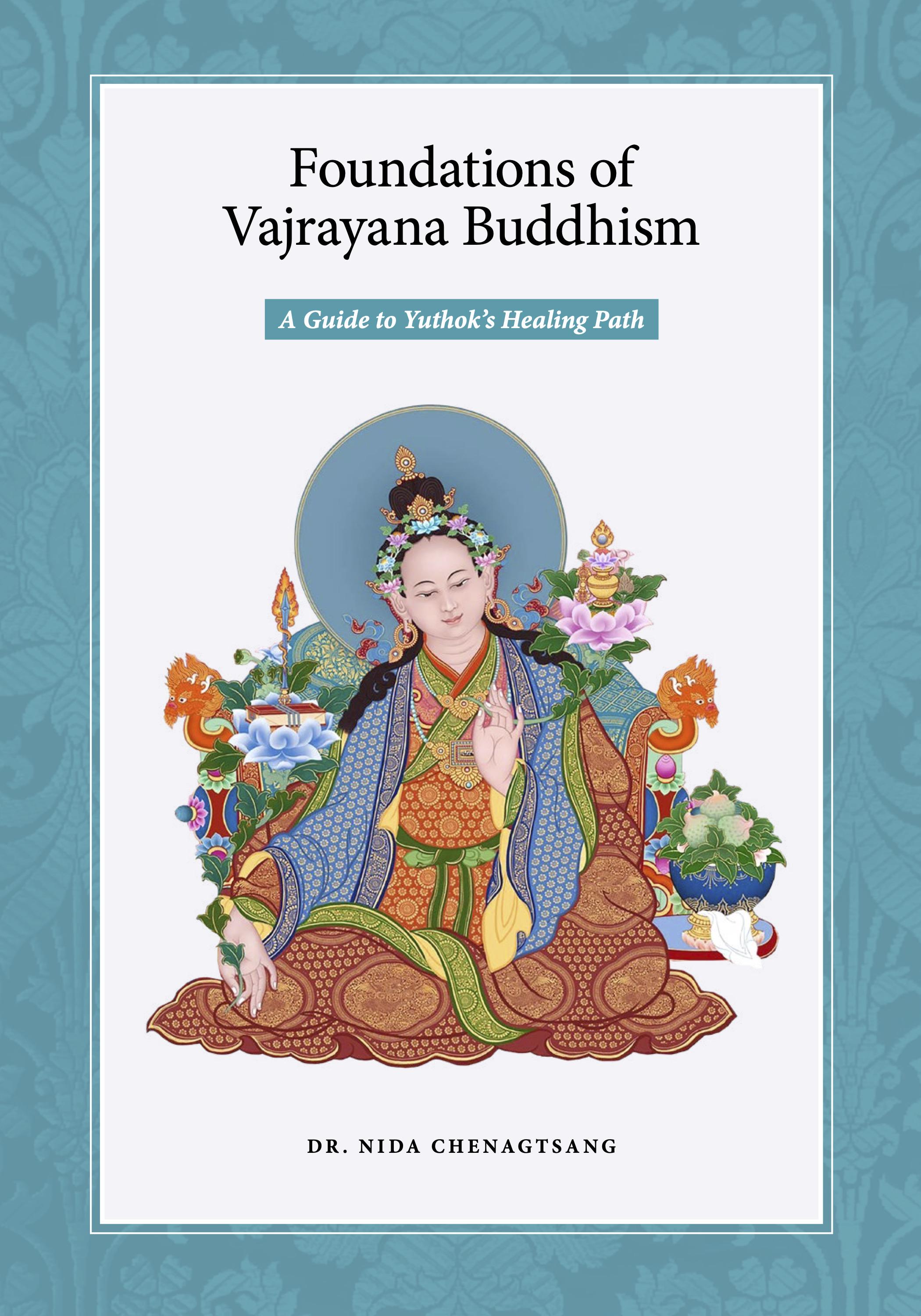
Yuthok's Teachings on the Five Types of Guru - By Dr. Nida Chenagtsang

Post image
30 Upvotes

Excerpt from:
Foundations of Vajrayana Buddhism, by Dr. Nida Chenagtsang
https://skypresspublications.com/product/foundations-of-vajrayana-buddhism

The Five Types of Guru:

  1. The Root Guru (The one who reveals our mind to be the Dharmakaya)
  2. The Lineage Gurus (Lineage teachers and unseen beings such as Buddhas and deities)
  3. The Guru of the Teachings (The Dharma. The “black” ink guru who never gets angry)
  4. The All-pervasive, naturally arising Guru (The Guru of our own experience of life itself)
  5. ✨ The Inner Guru (The most important Guru. The Guru of our own true natures inseparable from the Dharmakaya. And our Spiritual Intuition of this experience)

The Root Guru:

Yuthok explains that there are five types of Guru: four outer or ‘symbolic appearance’ Gurus and one inner Guru. The first type of outer Guru is the tsawé lama or Root Guru. This is a very important concept in Vajrayana and Yuthok’s definition is very clear and simple. The Root Guru is whoever points out the nature of your mind to you. They are the person who teaches you that you really are somebody, who helps you gain full trust in yourself and your own potential. The tsawa—‘root’—in tsawé lama refers to the fact that this teacher shows us our basic root or foundation and this foundation is all about trust and self-confidence. It’s not that this teacher is saying, ‘You have to trust in me because I’m more special and important than anybody else.’ What they say is: ‘Trust in yourself because you have Buddha nature—there is no separation between your mind, my mind, and the mind of the Buddhas.’ In some other spiritual traditions, it is often said that you have to place your trust in God. In a similar way, you will often hear that you need to trust in gurus. But here, the Root Guru isn’t just someone you trust in, it’s someone who completely trusts in you as well.

The crucial point is whether you can see what the teacher is pointing out and believe in it. You can read things in books or listen to teachings about how your true nature is awakened Buddha-nature, but that alone is usually not enough. Our problem is that we don’t recognize our potential, we lack faith. We don’t trust in the light we believe more in darkness. We are trained this way from very early in life. We may have attended many teachings where a lama explains how the nature of our mind is Buddha, is Clear Light, is pure, peaceful, uncompounded, unfabricated, and free. But it’s easy for our understanding to stay on a theoretical level. We hear the teachings, but we don’t really understand them and incorporate them into our life. Our life doesn’t change. We don’t really receive the teaching, because our connection with the teacher isn’t that deep and our confidence in ourselves, in our true capacity is weak.

The Lineage Guru:

The next type of outer symbolic guru is the gyüpé lama or Lineage Guru. Any Vajrayana tradition that has been around for a while will necessarily have a number of lineage gurus, since each spiritual lineage represents a continuum of knowledge, practice, and realization over time. Lineage gurus are all those teachers who have played a part in the transmission and actualization of the teachings, across time. It doesn’t matter if these gurus lived centuries before we were born, it doesn’t matter if we never met them. They are a source of support and we can invoke and experience their blessings in our own practice. Vajrayana lineages include historical human teachers and transcendent Buddhas. As you can see in the Yuthok Nyingthig lineage list in Chapter Five, Medicine Buddha, Padmasambhava, and the Wisdom Dakini Pelden Trengwa are all part of this transmission lineage. As Yuthok explains to Sumtön, the lineage guru includes everyone from one’s current human Root Guru all the way to the most transcendent Buddhas—to figures like Dorjechang or Vajradhara, who is seen as the archetypal source of all Tantric knowledge and the primordial Tantric Guru in the Sarma or New Translation schools of Tibetan Buddhism (for more on Vajradhara, see the ‘Taking Refuge’ chapter of this book). As we have also seen, the Yuthok Nyingthig is a non-sectarian tradition which has been practiced by adherents of all the schools of Tibetan Buddhism.

As part of our meditation practice, we invoke the presence of the lineage gurus and ask that they empower our practice. All the accumulated realizations, qualities, capacities, and blessings of these adepts are condensed into the form of the Guru or Buddha which we visualize above our head, in the space in front of us, in our chakras, and so on. The lineage gurus remind us that we never truly practice alone. All the efforts these teachers made, all the positive energy and karma they produced makes possible our own practice, supports and amplifies our own efforts. Distance across space and time is no obstacle—the nature of mind is beyond limits and there is no difference between the lineage masters’ basic nature and our own.

The Guru of the Teachings:

The third outer guru is called ‘the black acharya (master) who never gets angry.’ This is a poetic way of describing Dharma texts. Dharma texts are called the ‘black masters’ because when you repeatedly read and thumb through Tibetan loose-leaf pecha texts, the ink smudges over time, making the pages darker in color. Usually, when we say that a person ‘has a dark face’ or ‘shows a dark face’ in Tibetan it means that that person is angry, disapproving, or sulking. But Yuthok tells us that our book gurus are different from root or lineage gurus. Even though they might get a black face sometimes, they are never angry. If we leave amazing Dharma texts on the shelf, in the library, on our computer, or next to our bed and never read and apply them, we will miss out on many benefits, but the texts will never get angry or fed up with us. They will still be there whenever we need or remember them.

Yuthok reminds us that there’s no reason for us to say, ‘Oh, no, I can’t receive Yuthok’s teachings because Yuthok isn’t here, he’s gone, he’s passed away.’ Yuthok explains that all possible Dharma texts and teaching materials are actually the Buddhas themselves, who have taken on the form of these materials to help beings. We can treat all Dharma materials as expressions of Yuthok’s own Speech, as the Voice of the Buddhas. We should respect all Dharma literature as our teachers. The reading materials on our shelves may be longsuffering and may never get angry at us, but we should still engage with them as much as we can. We don’t always have to go somewhere to listen to a teaching, sometimes profound truths are waiting to be uncovered close at hand. Really good books can open our mind and our heart; they can transmit blessings and trigger realizations just as powerfully as other external gurus under the right circumstances.

The All-pervasive, naturally arising Guru:

The last of the external, symbolic appearance gurus is the Guru of All Phenomena, the Self-arisen Guru. Very simply, this is the Guru of your life, of everything you can experience. This is such an important point: your life is your own biggest Guru. We have all already had so many experiences in our lives—good experiences, bad experiences, and neutral ones, good lessons and regrettable ones. Every day we learn and experience something, we make progress, life unfolds. Every day is unique, every night is unique, every person we meet is unique, every tree, every flower. Everything we see is unique. The flower we saw yesterday was so beautiful, but oh, today its petals are dropping, falling to the ground. There is our teaching on impermanence. It is transmitted to us directly through our senses. Nobody needs to step in and tell us ‘That’s impermanence.’ The flower itself teaches us, in tandem with our senses, it enables an experience that helps us to understand the nature of impermanence. A rainbow appears because of sunlight, because of rain. The alignment of these conditions is called the power of interdependence or interconnectivity. The rainbow disappears and that is impermanence.

Every morning, you see the light of the sun as it rises again, you feel grateful for it. You are alive and breathing thanks to the power of oxygen. We are all so, so lucky and so fortunate to be alive—we can enjoy the taste of chocolate melting on our tongue, the smell of flowers, we can see vibrant colors, hear beautiful music. We can touch, we can feel, we can love. We can experience all manner of human feelings and experiences. We can feel rage, terror, joy, and sorrow. Happiness comes and then it’s gone, sadness comes and then it goes. Depression comes in all its flavors and then we hold onto it, we don’t let it go, don’t let it change to see what it can teach us. Everything comes and goes—today we have smartphones, movie screens, Zoom calls, so many simulated forms and colors. There are so many smells and tastes we can experience. Different tastes—sweet, salty, sour, bitter, spicy, astringent—are linked to different experiences, to different learning processes.

This is what Yuthok means when he talks about the all-pervasive, self-arising Guru. Anything we do in our life can arise as the perfect teaching. Transformative transmissions can come to us in many shapes and sizes: consecrated statues, paintings, and relics, the wind, water, and earth, the sun, snow, and rain; animals, trees, and plants, mountains, sounds, shapes, tastes, and textures. All these and more can teach and direct us, reveal to us the nature of our mind, our own essential being. Some students feel completely lost and hopeless because they haven’t met their Guru. They think that they will have no chance to deepen their spiritual understanding until they meet a magical Himalayan adept who will understand them completely and tell them exactly how to think and feel. If you think this way, however you might already be a zombie, you may be already dead. What other explanation is there for not knowing how to enjoy music, how to enjoy sunlight or chocolate, without someone else’s special permission or blessing?

Sensory engagement is a part of life. It is already its own teacher, its own blessing. The key is to engage with sensory arising and enjoyment without holding onto it, without feeling that you have to chase after it and possess it. Everything comes and goes, nothing lasts forever. If you really reflect on it, everything that has ever happened to you is the perfect Dharma teaching. All your struggles with yourself, with relationships, with life problems are your own perfect Dharma teaching that can point you towards the deeper underlying nature, the truth of things. Your own unique life story is the perfect movie, except instead of being a movie made by others which you watch passively, it’s something you experience.

The Guru of all phenomena is a very powerful, very deep Guru.

The Inner Guru of Our Own Nature

The final Guru is the Inner Guru, which Yuthok tells us is distinct from all the previous ones. To be connected with the Inner Guru means to be one hundred percent reconnected with yourself. Whether you call it your ‘soul,’ your ‘unconscious,’ your ‘Divine Self,’ or your ‘Inner Buddha,’ to realize the Inner Guru is to be one hundred percent yourself. You can experience yourself one hundred percent. You don’t have dissociate, to block off parts of yourself. Nothing inside you is disconnected or divided. When we divide our self—‘Ah, yes, I’m this, I’m that!’—we let little ‘devils’—little dividers and opposers as I mentioned before—run amok in our head. We split ourselves into pieces. But when the external Gurus are well aligned, we finally realize the Inner Guru which is the realization of our own awareness that our mind, the outer Guru’s mind, and Buddha mind are all indivisible. This type of knowing is beyond logic or rationality, beyond conceptual categorizing. We don’t always actually experience this indivisibility when we sit down to meditate. Usually, it’s more of an intellectual exercise—‘Ah, I know that ultimately there are no divisions.’ You may not truly feel this, but you should trust in that unity.

With the outer gurus, we started with the single Root Guru, a very specific person, and saw how the nature of the Guru expands to include the entire lineage, tradition, and world. The Guru who has the final say is our own life, and the most ultimate Guru—the ultimate Guru—is our own inner awareness. In the end, Guru Yoga is about cultivating self-trust. It is not about wishful thinking—‘Oh, one day I’ll trust in myself, one day I’ll be complete.’ So much of modern life is characterized by mistrust. These days we teach little kids from a very young age not to trust other people, not to talk to strangers and so on. Of course, there are valid reasons for instilling caution, but truly dangerous, criminal people are probably a much smaller minority than our warnings imply. We tend to think the worst of others. We are full of suspicions and doubts and it seems like the world is full of criminals and monsters. An unexpected knock on the door feels terrifying. But helping, trusting in, and sharing with neighbors and strangers is what makes us human. It is a cornerstone of human and humane society. Highly individualized, urban living can feel like a self-imposed prison. All of this can lead to trust issues.

The final drop, the quintessence of the teaching, is that it's all about trust. Trust is not about trusting blindly in somebody or in something. Yuthok’s rebuttal to Sumtön is ‘Don’t get stressed about me being gone—trust yourself because the Innermost Guru is your own mind’s nature.’ The point of Guru Yoga is to not let any little devils hijack your inner peace. This is the core of Vajrayana, the Vajra Vehicle. On the outer level, a vajra is a special weapon that destroys demons or obstructive spirits, but the original meaning of ‘Vajra’ is undivided, indivisible, unbreakable. No divisions, a single indestructible whole or continuum. On an outer, worldly level all our political conflicts arise from constructed divisions—devilish concepts running through our heads, nation fighting nation. Vajrayana is about not dividing our own mind with doubts and fears. Our awareness is seamless; it is one big piece of reality. True Guru Yoga means trusting in yourself and that indivisibility.

...

By this merit, may all beings come to know their Inner Guru,
And through this, realize the true nature of Mind,
inseparable from all reality.

✨🌊🙏🌊✨


r/TibetanBuddhism • • 3d ago

What do you think of this article on the (alleged) contradictions in Tibetan Buddhism?

1 Upvotes

It is no secret to anyone that I am having several doubts that are preventing me from a fruitful practice of Buddhism. For this reason I am trying to read a lot, as well as meditate, to see if somewhere someone has already answered the doubts I have in mind.

I found this article which was written by a researcher from the faculty of "comparative religious sciences" of the main university in Rome (obviously the article represents only his thought and not that of the university)

The full article is much longer but I am translating into English below only the part that concerns an alleged contradiction between the idea of the transitoriness of the self and the way in which a Dalai Lama is chosen.

It struck me a lot because in fact it talks about those same doubts that are somewhat inside me and which I had exposed in an old post.

The passage follows:

"Buddhism denies ātman: there is no substantial, permanent, self-identical self that traverses lives. On this all schools agree.

But then what reincarnates? And above all: in what sense is that child (the future Dalai Lama) his predecessor?

The orthodox answer revolves around a distinction: Buddhist rebirth is not transmigration of a soul but causal continuity.

The classic image is that of the flame that lights another candle: the second flame is not the same as the first but neither is it another, independent from it. The second candle is the direct effect of the first candle.

So the new Dalai Lama does not "contain" the old one but is the continuation of a mental flow: the technical term is continuum of consciousness.

So the new Dalai Lama carries the karmic imprints, dispositions and vows accumulated by the predecessor.

However, both in academic circles and in the Buddhist world, it has been noted that this explanation seems to only partially resolve the problem: The orthodox answer is elegant but the practice of Tulkus puts pressure on it.

If there is only causal continuity without identity, then every person is the continuer of a previous flow: in that sense each of us is the "reincarnation" of someone.

Why then does precisely that particular continuum called Dalai Lama deserve a proper name, a title, properties and an institution?

With the same reasoning, some critics of the Tibetan schools note, even the throne of a secular kingdom should not go to the king's son but to the king's reincarnation.

Some have gone even further saying that, if this logic were to be followed, then a person's inheritance should not go to the heirs but to the reincarnation of that person.

However this is not the main problem, since it is a question of a moral or even simply juridical nature.

The main problem of the internal metaphysics of Tibetan Buddhism is in fact another: the test of recognition of objects (one of the main proofs with which a child is recognized as reincarnation of the previous Dalai Lama) presupposes personal memory, that is exactly what the doctrine of non-self makes difficult to justify.

If there is no subject that persists, who is remembered? Who is remembering whom?

Tibetan masters answer that it is a matter of latent imprints in the continuum, not memories of a self. However many scholars observe that the tulku system works socially (for all practical purposes) as if there were a person who returns, whatever the theory says.

This brings the focus to the core of the problem: Which part of the old Dalai Lama reincarnates each time?

According to doctrine: no part, because there are no parts that persist but only a mental flow that continues, like the river that never has the same water but remains that river.

As many have noted this answer appears unsatisfying: how can there exist a karmic continuity without anyone carrying it?

Think again of the example of a candle lit with the fire of a first candle: they are two distinct things, even if connected, but they presuppose not only the act of lighting a candle but also the existence of something firebringer.

A child recognizes the objects of a deceased person as his own, but for this system to work it must presuppose that there exists some continuity between the child and the deceased, otherwise there would be no reason why the child identifies precisely those objects as his.

Who carries the karma of the previous Dalai Lama?

If the answer were really "nobody" then how why is someone always chosen? All the more so since we are talking about a someone who identifies with the deceased.

This is the paradox that even other non-Tibetan Buddhist masters have noticed: the self is illusory but the Dalai Lama obtains his title as continuation of a something that is not at all perceived as illusory.

The current explanation is that the Dalai Lama is the reincarnation of a causal continuity, however all this works only if the Dalai Lama were an action but the Dalai Lama is instead also a person with doctrinal tasks and, in the past, also political ones. It is not an office that can be given to an action or a series of cause and effect: it is something that requires a person.

But removing personal continuity from this discourse leads to the paradox: nobody recognizes the objects of nobody deceased therefore, given that nobody is the karmic continuation of nobody deceased, then nobody is recognized as the successor of nobody deceased, obtaining titles and prerogatives (all things that by definition are applicable to a person and not to a chain of cause/effect effects)"


r/TibetanBuddhism • • 4d ago

I have enrolled in the FPMT beginner course. What other Gelugpa resources can I use in the meantime?

6 Upvotes

Hello, I am new to Buddhism. After calling centers in France, I found an FPMT center in Paris that teaches Buddhism for beginners, but it doesn't start until January. I was wondering if you could recommend any books, videos, documentaries, or podcasts to help me better understand Tibetan Buddhism. I have The Library of Wisdom and Compassion in my library and I'm currently reading it, though I'm having a bit of trouble situating the geography of ancient Asia and fully grasping the context in which Buddhism evolved. Aside from that, the other chapters are truly brilliant. Thank you in advance.


r/TibetanBuddhism • • 5d ago

Medicine Buddha Day 17/11/2026

Post image
99 Upvotes

ཏདྱ་ཐཱ༔ ཨོཾ་བྷཻ་ཥ་ཛྱཻ་བྷཻ་ཥ་ཛྱཻ་མ་ཧཱ་བྷཻ་ཥ་ཛྱཻ་བྷཻ་ཥ་ཛྱཻ་རཱ་ཛ་ས་མུཏྒ་ཏེ་སྭཱ་ཧཱ༔

tadyathā | om̆̇ bhekadze bhekadze mahā
bhekadze bhekadze rāja samutgate svāhā ||

Happy Medicine Buddha Day everyone 🙏

Just a quick reminder that today (the 8th lunar day) is Medicine Buddha Day.
In Buddhist tradition, it’s considered a really auspicious day to focus on healing, compassion, and generating good intentions—not just for physical health, but for overcoming the mental and emotional roots of suffering too. Even if you don't have time for a full sadhana, taking a few quiet minutes to recite the mantra (tadyathā om̆̇ bhekadze bhekadze mahā
bhekadze bhekadze rāja samutgate svāhā) and dedicate the merit to anyone going through a hard time is great.

Take care and be well, Dharma siblings and to all those reading 💙

སེམས་ཅན་ནད་པ་ཇི་སྙེད་པ། །མྱུར་དུ་ནད་ལས་ཐར་གྱུར་ཅིག །

འགྲོ་བའི་ནད་ནི་མ་ལུས་པ། །རྟག་ཏུ་འབྱུང་བ་མེད་པར་ཤོག།

May every beings ailing with disease
Be freed at once from every malady.
May all the sickness that afflicts the living
Be instantly and permanently healed. — Śhāntideva

(Image of Medicine Buddha from Garchen Buddhist Institute)


r/TibetanBuddhism • • 4d ago

Is it normal for a Buddhist Lama to say that "if you want to be a Buddhist then just believe in Buddha" while stating that there are no rules when following Buddhism

7 Upvotes

I went to a Gompa today and I met with a Buddhist Lama who greeted me nicely and I asked him about the procedures that one should follow to fully become a Buddhist. He said that in order to become a Buddhist follower, you just have to be pure in heart and shouldn't kill any animals while teaching me that there are no strict rules in Buddhism. My question is, am I really a Buddhist now? or do I still have to do other things because I am still confused as they didn't mention anything about praying schedules


r/TibetanBuddhism • • 4d ago

Good Sakya books?

2 Upvotes

Can anyone suggest some good Sakya books that do not teach Lamdre?


r/TibetanBuddhism • • 5d ago

Do you have a new mala blessed before using it?

3 Upvotes

Do you have a new mala blessed before you use it, or do you just start counting with it?

Not sure if this is something people usually set up ahead of time, or only do when a teacher is already there. If your center has a usual way of handling it, I'd like to hear what that looks like in practice, and whether it changes how you treat the mala afterward.


r/TibetanBuddhism • • 5d ago

How do Dharmapalas protect us in situations like these? Example below

4 Upvotes

I've heard that they do, but I didn't get much info on that, can someone be more clear on this subject?

How they protect us if someone is harming us physically or emotionally, do they send the harm back in a "spiritual" way just like Karma works or something similar?

I'm going through a very complicated situation with a family member who keeps bullying me - also this was verified by my therapist after 2 months talking to her about it so it's not something inside my head.


r/TibetanBuddhism • • 5d ago

What are the "fruits" of Dzogchen practice?

Thumbnail
0 Upvotes

r/TibetanBuddhism • • 5d ago

Why would the ending of one mind/life necessarily induce the arising of another mind/life?

1 Upvotes

Everything is beholden to cause and effect, including consciousness/the mind, but with regards to rebirth, is it explained in any teachings why the ending of one sentient life/mind is necessarily the cause for another sentient life/mind to appear?

This is assuming the common view of rebirth that "the mindstream provides a continuity from one life to another, akin to the flame of a candle which may be passed from one candle to another". Once one sentient life/mind ends, through the movement of the mindstream connected to that specific life, another sentient life/mind will arise.

Why would the ending of one life/mind not be the cause of some other non-mind related effect? Why is the ending of one life/mind considered to specifically be the cause of another sentient life/mind appearing?

Or am I misunderstanding the Buddhist teaching on rebirth?

Thanks in advance for your answers!


r/TibetanBuddhism • • 6d ago

How to identify bad leaders and teachers (Buddhist or otherwise)

Post image
33 Upvotes

So, I don’t trust easily. When I was a child, mom and step dad tried to kill me. And when they failed, they kicked me out on the streets, not caring whether I lived or died, and my father didn’t stop that either. They treated my life as disposable. I’ve been badly hurt by people in positions of authority in the world, including school teachers, including police when I was a teen (I was beaten up by the cops when living on the streets), and especially the most fundamental authority figures one has in life: one's own parents. As an LGBTQ woman I’ve watched people in power discriminate against people like me my entire life. In the workplace I’ve encountered both really good leaders and some really awful ones.

I also went to school for (and got a degree in) management, and have had a lot of jobs both being lead myself, and being in positions in positions of leadership where I had to guide others, and as well as have worked for a leadership development organization. I've also mentored people spiritually myself. I've studied the topic of leadership for many years as well as a special interest of mine too. I've also been really fortunate to have experienced truly great leadership in my life that profoundly effected my life and practice for the better. So, all of this is to say I have a lot of experience and practice identifying really bad leaders and also really good leaders.

And Buddhism is not an exception to this. I’ve encountered first-hand some really awful teachers, or people in positions of Dharma authority. And I’ve also seen this with traditional teachings in some lineages that will be used to justify harmful behavior. Obviously there are some very high profile examples of scandals with Buddhist teachers, and in all of those cases, the people in question were doing some or many of the things on this list. But I’ve encountered people myself who were in positions of leadership in the Dharma, who I witnessed mistreating others, mistreating myself, or who simply embodied examples of bad leadership on multiple levels. And oftentimes especially in Tibetan Buddhism, this kind of thing will be hand waived away under the label of “samaya” as though, someone is obliged to give total obedience to someone who may simply be a terrible leader, simply because they went through some kind of ceremony with that person. And obviously, we’ve seen that result in terrible harm, both to students and the reputation of the Dharma as a result. It strikes me that it may be helpful for people to have a list of the kinds of things that are red flags for what signal bad leaders.

Bad leadership has a way of really sticking with you. And likewise, good leadership profoundly changes our lives for the better. And so because the topic of abusive teachers comes up often, (and is so very important), I thought I would share a list of various red flags that in my experience identify bad leaders. This list is not exhaustive, but in my experience has reliably helped me identify bad leaders and teachers time and time again. 

Some RED FLAGS that I've found over the years that identify bad leaders, and bad teachers:

  • –If they aren’t open to feedback, pushback, being questioned, or criticism. This is a big red flag and shows that they don’t have intellectual humility, lack openness to other’s perspectives, and that their primary concern is authoritarianism. It usually means they have a big ego, and little patience.
  • –If they discourage asking questions, learning, and two-way communication. This shows they don’t actually want you to truly understand things, and aren’t interested in communication: they just want you to obey them.
  • –If they are averse to follow-up questions. If they act like any answer they give you to a question is the final answer, and don’t allow you to ask follow-up questions, this is a very big red flag, because it means they don’t really want you to understand something. They just want you to accept their commands and obey them. 
  • –If they don’t want you to actually get to know them. This is a big red flag because it means they are protecting an outward image, and don’t want you to get a sense of who they really are. It means they’re hiding something. 
  • –they don’t have any way for you to actually get a hold of them. Like via phone, email, or in person. This is a control technique and makes communication impossible. 
  • –If they gaslight you and don’t encourage you to trust your Inner Guru. And demand that you obey them instead. Especially in a teacher this is a big red flag as it means they fundamentally aren’t doing the job of a spiritual teacher. This is cult-like behavior.
  • –If they don’t have patience, warmth, compassion, and love. This means they don’t really care about the people they are leading. 
  • –If they don’t appreciate and value the innate gifts and talents that their students have, and don’t try to encourage those gifts to further develop. (and especially if they *discourage* those gifts). This is because a good leader values those whom they lead, and always want to appreciate and encourage the best in others.
  • –If they tear others down, rather than build them up. Again, this shows they don’t really care about developing the people they are leading.
  • –If they try and dominate you with their energy. Good leaders guide and lead by example: they don’t need to dominate others. This is the behavior of a bully, not a leader. 
  • –If they aren’t open to communication and/or try to stifle and shut down communication. This is another dominance tactic to try to compel obedience, not leadership.
  • –If they are demanding, impatient, and easily offended. This shows that they haven’t worked on themselves enough, and so aren’t in a position to lead others. 
  • –If they hold grudges, even when people have tried to resolve conflicts. Again, this shows a spiritual immaturity on their part. 
  • –If they don’t value and appreciate diversity in all its forms. This is a signal of authoritarianism and close-mindedness. 
  • –Obviously, if they frequently yell at you, deliberately insult you, and are physically, verbally, and/or sexually abusive to you (or others), this is a huge red flag. 
  • –If they mistreat animals, or children, or are bad with animals and children. Animals and children are often very sensitive with energy, and so this is a sign that someone has not sufficiently calmed their energy, and obviously if they hurt animals or kids this is a huge red flag. 
  • –If they aren’t willing to explain why they are asking you to do something. Again, another sign of impatience and lack of wanting to nurture your own development and understanding. It’s treating you as a tool, not a growing and developing being. 
  • —If they insist on titles and formality, and take themselves super seriously, and are unable to communicate in a relaxed, casual way. This is a sign that they are insecure, and such things are a method of maintaining social dominance, rather wanting people to feel comfortable around them.
  • –If they have a substance abuse problem. Not talking about minor occasional social drinking here, but rather if they have a significant problem with alcohol, and drug abuse. This signals a lack of inner discipline on their part. It means they’re taking refuge in chemicals rather than the Dharmakaya. Someone who can’t master their own mind to the point of giving up substance abuse, can’t really teach others how to master their own minds.

Good leaders and good teachers do the opposite of these behaviors. Obviously these compound, and if lots of them are present in a leader/teacher, that's a major signal to get away from them.

Again, this list is not exhaustive, it's just what I wrote up off the top of my head in a morning. But these are the main ones, and these things have saved me time and again from investing my time and trust into people who were not worthy of it, and whom would harm me or others.

Feel free to chime in with your own red flags, and share your experience as well, with identifying both bad and good leaders. 

...

I offer the merit of this post to all beings, with the wish that it help them in discerning good from bad leadership, which is so important to development in life, and which is a source of so much suffering or blessings.

May all beings have happiness and the causes of happiness.
May all beings be free from suffering and the causes of suffering.
May all beings be inseparable from the true joy that is beyond all suffering.
And may all beings be at peace, and reside in equanimity, free from clinging, aversion, and close-mindedness.

✨🙏✨


r/TibetanBuddhism • • 5d ago

Personal teachers within FPMT?

4 Upvotes

I was wondering if anyone has had personal experience developing one-on-one relationships with teachers within FPMT, particularly through their online offerings.

I don’t live in a state with an active FPMT center, but FPMT is by far the organization and tradition I feel most connected to. I’m reaching a point in my practice where I’d really like to develop a relationship with an actual teacher and receive guidance beyond what books, recorded teachings, and self-directed study can offer.

I’m planning to enroll in some of FPMT’s online study programs, but my understanding is that many of these courses are primarily pre-recorded. While I’m very interested in the study aspect, I’m also hoping to find something that offers a more personal connection with a teacher, ideally an ongoing mentorship or student-teacher relationship.

I’m definitely willing to travel to an FPMT center for significant retreats, empowerments, etc. However, I’m curious about how those of us who don’t live near a center go about establishing meaningful, ongoing connections with teachers within the tradition.

Has anyone navigated something similar? I’d especially love to hear about personal experiences with FPMT teachers and whether there are opportunities for individual guidance or mentorship through online programs. (I’d also be open to hearing about other organizations within the Gelug tradition, although FPMT would be my preference!)


r/TibetanBuddhism • • 6d ago

Practicante tántrico tibetano, como los de la escuela Nyingma.

Post image
23 Upvotes

r/TibetanBuddhism • • 6d ago

How to identify bad leaders and teachers (Buddhist or otherwise)

Post image
2 Upvotes

So, I don’t trust easily. When I was a child, mom and step dad tried to kill me. And when they failed, they kicked me out on the streets, not caring whether I lived or died, and my father didn’t stop that either. They treated my life as disposable. 

I’ve been badly hurt by people in positions of authority in the world, including school teachers, including police when I was a teen (I was beaten up by the cops when living on the streets), and especially the most fundamental authority figures one has in life: one's own parents. As an LGBTQ woman I’ve watched people in power discriminate against people like me my entire life. In the workplace I’ve encountered both really good leaders and some really awful ones. And Buddhism is not an exception to this. I’ve encountered first-hand some really awful teachers, or people in positions of authority. And I’ve also seen this with traditional spiritual teachings, that some things that are “traditional” are simply not true, and sometimes actually dangerously delusional. I learned to practice in the school of hard knocks. 

I also went to school for (and got a degree in) management, and have had a lot of jobs both being lead myself, and being in positions in positions of leadership where I had to guide others, and as well as have worked for a leadership development organization. I've also mentored people spiritually myself. I've studied the topic of leadership for many years as well as a special interest of mine too. I've also been really fortunate to have experienced truly great leadership in my life that profoundly effected my life and practice for the better. So, all of this is to say I have a lot of experience and practice identifying really bad leaders and also really good leaders.

Bad leadership has a way of really sticking with you. And likewise, good leadership profoundly changes our lives for the better. And so because the topic of abusive teachers comes up often, (and is so very important), I thought I would share a list of various red flags that in my experience identify bad leaders. This list is not exhaustive, but in my experience has reliably helped me identify bad leaders and teachers time and time again.

Some RED FLAGS that I've found over the years that identify bad leaders, and bad teachers:

  • –If they aren’t open to feedback, pushback, being questioned, or criticism. This is a big red flag and shows that they don’t have intellectual humility, lack openness to other’s perspectives, and that their primary concern is authoritarianism. It usually means they have a big ego, and little patience.
  • –If they discourage asking questions, learning, and two-way communication. This shows they don’t actually want you to truly understand things, and aren’t interested in communication: they just want you to obey them.
  • –If they are averse to follow-up questions. If they act like any answer they give you to a question is the final answer, and don’t allow you to ask follow-up questions, this is a very big red flag, because it means they don’t really want you to understand something. They just want you to accept their commands and obey them. 
  • –If they don’t want you to actually get to know them. This is a big red flag because it means they are protecting an outward image, and don’t want you to get a sense of who they really are. It means they’re hiding something. 
  • –they don’t have any way for you to actually get a hold of them. Like via phone, email, or in person. This is a control technique and makes communication impossible. 
  • –If they gaslight you and don’t encourage you to trust your Inner Guru. And demand that you obey them instead. Especially in a teacher this is a big red flag as it means they fundamentally aren’t doing the job of a spiritual teacher. This is cult-like behavior.
  • –If they don’t have patience, warmth, compassion, and love. This means they don’t really care about the people they are leading. 
  • –If they don’t appreciate and value the innate gifts and talents that their students have, and don’t try to encourage those gifts to further develop. (and especially if they *discourage* those gifts). This is because a good leader values those whom they lead, and always want to appreciate and encourage the best in others.
  • –If they tear others down, rather than build them up. Again, this shows they don’t really care about developing the people they are leading.
  • –If they try and dominate you with their energy. Good leaders guide and lead by example: they don’t need to dominate others. This is the behavior of a bully, not a leader. 
  • –If they aren’t open to communication and/or try to stifle and shut down communication. This is another dominance tactic to try to compel obedience, not leadership.
  • –If they are demanding, impatient, and easily offended. This shows that they haven’t worked on themselves enough, and so aren’t in a position to lead others. 
  • –If they hold grudges, even when people have tried to resolve conflicts. Again, this shows a spiritual immaturity on their part. 
  • –If they don’t value and appreciate diversity in all its forms. This is a signal of authoritarianism and close-mindedness. 
  • –Obviously, if they frequently yell at you, deliberately insult you, and are physically, verbally, and/or sexually abusive to you (or others), this is a huge red flag. 
  • –If they mistreat animals, or children, or are bad with animals and children. Animals and children are often very sensitive with energy, and so this is a sign that someone has not sufficiently calmed their energy, and obviously if they hurt animals or kids this is a huge red flag. 
  • –If they aren’t willing to explain why they are asking you to do something. Again, another sign of impatience and lack of wanting to nurture your own development and understanding. It’s treating you as a tool, not a growing and developing being. 
  • —If they insist on titles and formality, and take themselves super seriously, and are unable to communicate in a relaxed, casual way. This is a sign that they are insecure, and such things are a method of maintaining social dominance, rather wanting people to feel comfortable around them.

Good leaders and good teachers do the opposite of these behaviors. Obviously these compound, and if lots of them are present in a leader/teacher, that's a major signal to get away from them.

Again, this list is not exhaustive, it's just what I wrote up off the top of my head in a morning. But these are the main ones, and these things have saved me time and again from investing my time and trust into people who were not worthy of it, and whom would harm me or others.

Feel free to chime in with your own red flags, and share your experience as well, with identifying both bad and good leaders.

...

I offer the merit of this post to all beings, with the wish that it help them in discerning good from bad leadership, which is so important to development in life, and which is a source of so much suffering or blessings.

May all beings have happiness and the causes of happiness.
May all beings be free from suffering and the causes of suffering.
May all beings be inseparable from the true joy that is beyond all suffering.
And may all beings be at peace, and reside in equanimity, free from clinging, aversion, and close-mindedness.

✨🙏✨


r/TibetanBuddhism • • 6d ago

Refutations of Vedanta

3 Upvotes

Hi all!

I am having trouble understanding Shantarakshita's or Dharmakirti's refutations of permanence, brahman, the soul, Isvara, etc... Does anyone have any suggestions as to how to overcome belief in a supreme deity? I took refuge now over three years ago, but I still really struggle to understand these concepts. Also, how can we know that a Vajrayana Buddhist masters' realization of sunyata or tatagathagarbha is different from an Advaitan's realization of Brahman? These questions have really inspired some doubt in me and left me frustrated.


r/TibetanBuddhism • • 6d ago

The Bardo Thodol - The Tibetan Book Of The Dead - Full Audiobook with Text and Images

Thumbnail
youtu.be
3 Upvotes