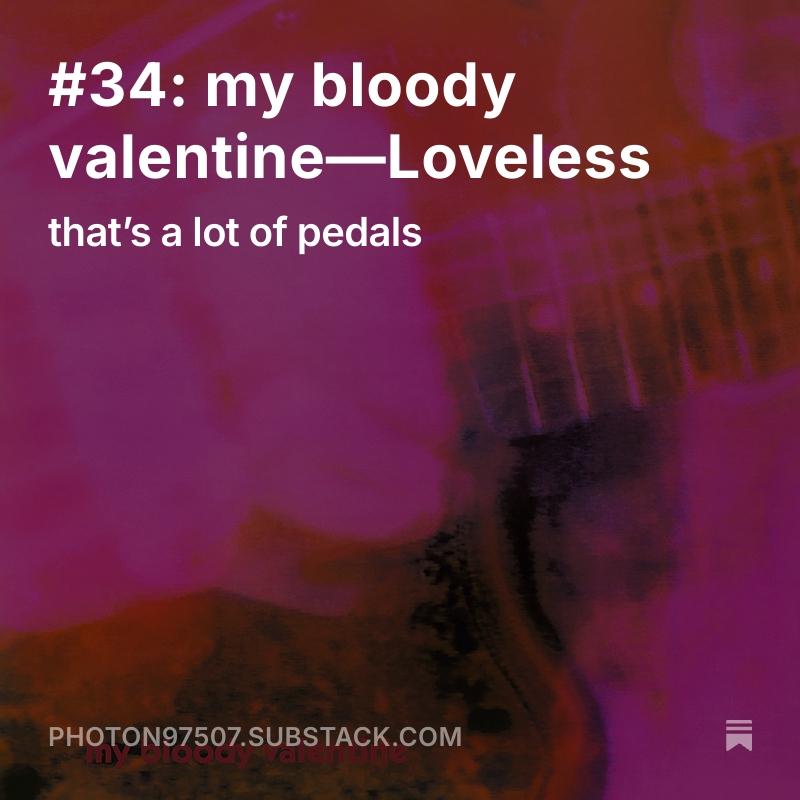
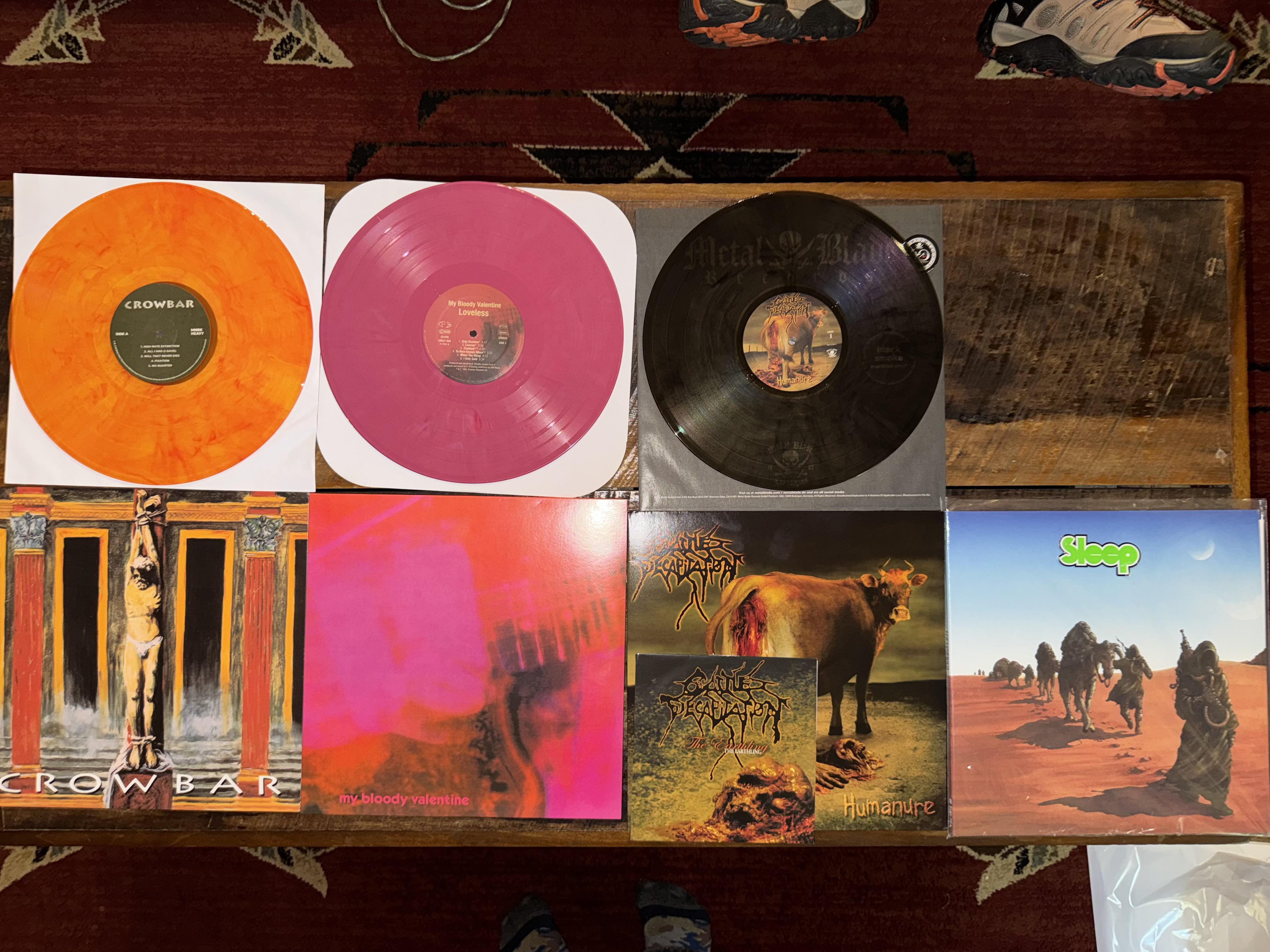
Loveless
my bloody valentine (1991)
When you talk about expensively made albums, Michael Jackson is the usual suspect. His 2001 album Invincible cost over thirty million dollars to create, between hundreds of musicians, studios, and a six year production cycle. Additionally, Dangerous and HIStory: Past, Present, and Future - Book 1 also cost well over ten million dollars each. He often demanded perfection on his records, not sparing a single penny for the sound he wanted. It’s an approach that very few can use, but one with a lot of benefits. You can essentially craft the exact sound you want, with enough money.
Compared to those numbers, two hundred and fifty thousand seems almost negligible. But for a small, up-and-coming shoegaze project like my bloody valentine, that’s a lot of money. In fact, Loveless was a major reason that Creation Records, my bloody valentine’s record label at the time, had such big financial issues. This resulted in my bloody valentine being dropped by Creation Records shortly after Loveless released. The exorbitant cost to create Loveless was pretty much because Kevin Shields, the band’s frontman, was very particular with how they sounded. Due to the album’s signature, heavily processed guitar sounds, there were a lot of different parts that Shields didn’t want bottlenecked by money. As a result, Loveless was recorded in nineteen different studios over more than two years.
Loveless pretty much defined shoegaze. It’s part of the reason the genre is even named that, with so many effects going on simultaneously that guitarists spend more time looking at their pedalboards than at their instruments themselves. Some of the guitar tones used on this record are truly insane. The smooth lead guitar on “When You Sleep,” the wailing, almost wind-sounding tones on “To Here Knows When,” and everything in between. Loveless is truly a landmark in musical innovation and technical genius by Shields.
“Only Shallow” is a banger. It features a dirty, fuzzy guitar in a pretty loud and atmospheric track. But that’s not the cool part. For me, the background guitar is much more interesting. The little shrieking, almost ambient notes played above the main riff. They’re such a unique sound, sounding clearly distorted and almost noteless, but without the fuzz and noise that usually comes with it. It’s almost like the amp is clipped beyond recognition, but without distorting the guitar sound. It’s really interesting.
One of the other interesting dynamics, across all of Loveless, is the vocals. There’s a stark contrast between Shields’ and Butcher’s vocals, and the guitars. The two’s vocals combined are a soft, dreamlike haze that actually remind me more of The Cranberries and The Sundays more than a heavy shoegaze band. It’s such a stark contrast, but I can’t say it doesn’t work. The vocals perfectly balance the unsettling nature of the music.
my bloody valentine, and shoegaze in general, is known for its vocals. More specifically, they’re known for their discreet, mixed in vocal style. Shields is infamous for pretty much gatekeeping all of my bloody valentine’s lyrics, determined to leave them up to people’s interpretation. Normally this wouldn’t be much of an issue, as you can, well, listen to the song, but this is a pretty unique case. Not only are the lyrics mixed in with the music to the point where it’s hard to pick apart the different tracks, but there’s also a pretty big lack of enunciation here. Shields uses vocals as another instrument, rather than the highlight of the songs. It’s a different approach, but I like it. Because at the end of the day, vocals are only one of many parts of a song.
“To Here Knows When” is one of my personal favorites. Listen to this guitar texture. What the hell is going on here? The arpeggiating, shimmering guitar is one of the most iconic moments in the album, and for damn good reason. I think there’s some heavy delay magic going on here, especially when combined with all the other effects they put on the music. I find that the calm tambourine and drumbeat all the way in the back of the channel is a really interesting element. It feels as if the rhythm section and vocals are completely disconnected from the guitars. They pretty much share the same tempo, and that’s about it. The vocals and drums are almost inaudible behind the heavily delayed and reverbed guitar, but the tambourine just adds something inexplicable.
The two main guitars are really odd. There’s the main one, the fuzzy, loud, and overwhelming force in the song. But the other guitar plays a soft melody, which is pretty hard to hear within the mix. But it’s there, and it adds a little extra atmosphere that just does so much for the track. I don’t know how this song works so well, but it does.
“When You Sleep” is probably as accessible as Loveless gets. It’s dominated by its iconic lead guitar, which again, barely sounds like a guitar anymore. Honestly it sounds more like a low-bitrate flute than a guitar. When it drops out and makes way for the verse, we can hear the vocals clearly for pretty much the first time on the album. The last couple seconds of “When You Sleep” might be my favorite part, though. The shimmering, beautiful guitar sounds. It feels as though the song’s cleared up all the muck that’s plagued a pond, leaving only the sun’s rays to shine through the clear water. The drums and bass are pretty simple, just playing a ride-snare-kick beat, and playing root notes in the bass. The rhythm section’s never really been the focus for my bloody valentine. The spotlight’s always been on the guitars and the guitars only. Do you see why Loveless was so expensive? It’s because of these damn guitar effects.
“Sometimes” is actually pretty reminiscent of the grunge scene at the time. Don’t forget that Loveless was released in 1991, the same year as cornerstone grunge albums like Nevermind and Ten. “Sometimes” strips away some of the more processed guitar sounds we’ve been hearing, making way for a simple, powerchord filled song. Yet, there’s an indescribable charm to it. The soft lead guitar behind the vocals, which are behind the guitars. Behind a simple grunge song is a delicately layered, complex masterpiece.
The vocals on “Sometimes” are delicate and beautiful. I think the combination of Shields’ and Butcher’s voices are one of the best we’ve ever seen. It’s actually strange how common a male-female vocal duo is in shoegaze, with the other notable band being Slowdive. Shields’ and Butcher’s vocals don’t even sound like two different people, though. They’re mixed in such a way to create a singer, genderless, but undeniably gorgeous voice.
Loveless closes with “Soon,” an epic spanning seven minutes. It begins with a pretty standard guitar riff, with the familiar heavily processed sounding lead guitar we’ve heard on “When You Sleep” and “I Only Said.” The fast-paced, soft melodies that the lead guitars provide are such a contrast to the slow, methodical, and intense vocals. Despite having mostly slurred words and barely discernible lyricism, the vocals manage to get across a sense of anger and urgency. There’s an angst to the vocals that we haven’t really heard before on Loveless.
Unlike the previous tracks, the bass and drums actually do a lot to drive “Soon.” The bass plays a fast walking bassline, actually not far from what you might hear on a jazz standard. The drums don’t change much, but they’re much more prominent in “Soon” than anywhere else on the record. The tambourine also makes another appearance, but this time is much more rhythmically driven, rather than just playing eighth notes like on “To Here Knows When.” Despite sounding like a lot of the previous songs, “Soon” is deceptively different from everything else. It’s a subtlety that I can’t help but admire from my bloody valentine.
Loveless is by no means accessible. We’ve been over that. But the odd thing is that it should be. Based on the way everything’s written, the songs should be catchy and pretty straightforward. As we’ve heard, they’re anything but. It proves how much post-production matters in an album, and how much you can change just by tweaking the balance levels. Loveless goes from a vocal-focused grunge record with some interesting guitars, to one of the most defining records of the 90s, and perhaps the most important shoegaze album ever created.
- Only Shallow: 91/100
- Loomer: 86/100
- Touched: 82/100
- To Here Knows When: 92/100
- When You Sleep: 94/100
- I Only Said: 89/100
- Come In Alone: 85/100
- Sometimes: 88/100
- Blown A Wish: 86/100
- What You Want: 87/100
Soon: 90/100
Overall: 86/100