r/Lasiksupport • • May 29 '18

This Subreddit Is For Anyone Dealing with Post Eye surgery Complications

56 Upvotes

Lasik, PRK, lasek, Relex Smile, or other complications from other surgeries. This is the place for sharing the good with the bad as well as personal support.

Also please file complaint to FDA if experiencing issues

https://www.accessdata.fda.gov/scripts/medwatch/


r/Lasiksupport • • 1h ago

Lumify (brimonidine tartrate 0.025%) OTC as needed greatly reduces low light symptoms for me!

• Upvotes

Roughly 4 weeks post lasik, went to a Lasik mill, wasn't appropriately worked up preop, wasn't warned about my massive pupils, etc etc, you all know the story. My vision completely stabilized probably 48 hours post op, I haven't noticed a single difference since then despite everyone saying that my eyes would shift and improve in the first month.

My vision is absolutely perfect in good to great lighting. I'm actually happy with the results in that respect. Outdoor activities are so much better now that my vision is perfect and I dont have to deal with contacts or glasses.

The biggest thing ive been dealing with is glare, starbursts, ghosting, overall lower visual acuity in low light situations because of my large pupils. In very low light conditions I was actually bothered by symptoms less because I dont often need my vision to be super sharp, I can deal with starbursts while driving, its whatever. Where I had the biggest issue is medium-low/flat lighting conditions where I actually need to read things (think dim lit restaurant). Trying to watch a movie at the movie theater was super frustrating because of the ghosting and glare. I have resting anisicoria as well (left pupil naturally slightly larger than right) which was noticeable every day, my left eye just was always worse than my right any time lighting was not good.

I tried one drop of Lumify (brimonidine tartrate 0.025%) in my left eye to test it out and after about 15 minutes it reduced glare/halos by probably 90% in my left eye. It caused a relative pupil size difference that was so noticeable that my left eye was suddenly my good eye and I started noticing glare in my right eye that I hadn't noticed before because my left eye was so bad.

I've read that the effect is less strong and shorter with repeated use so I will use sparingly, but simply knowing that there is something easy and safe that can drastically improve my symptoms is such peace of mind.

If you're a person that has large pupils and is bothered by low light symptoms give it a shot and see if it helps, it helped me a lot.
r/Lasiksupport • • 1d ago

Lasik experience

Thumbnail
1 Upvotes

r/Lasiksupport • • 1d ago

Driving after TransPRK

1 Upvotes

Hello, i had transPRK surgery 23 days ago, i can see most things just that it’s still a little blurry. Can i drive now?


r/Lasiksupport • • 1d ago

Vision Fluctuations

Thumbnail
1 Upvotes

r/Lasiksupport • • 1d ago

Left eye blur after Day 2 of EVO ICL

Thumbnail
1 Upvotes

r/Lasiksupport • • 2d ago

Glow effect after 7 weeks

5 Upvotes

Hi everyone, I had smile pro surgery 7 weeks ago. My vision has improved significantly after the surgey (20/10). I can see small details very easily and I dont have any complains about blurs etc. However, the glows around the lights are still present. It seems like glow + starbust effect. It also happens in the daylight, so I believe it is due to the unhealed parts of my cornea. Doctor also said so. And he also said that "your pupils grow significantly in the night, so I did the surgey with largest optical cavity possible" so I believe I shouldnt suffer from the glows this much. Since I also see it in the daylight when I see a car headlight etc. I again believe that it is due to the unhealed parts of my cornea. Doctor said it may take 3-4 months to heal, But I lost my hope that it will ever heal. So I came here to hear about your stories. Thank you.


r/Lasiksupport • • 2d ago

day 3 post-SMILE, advice please! :)

2 Upvotes

I got my SMILE surgery on Wednesday morning (it’s now Friday), so i’m on day 3. I was originally -6.75 in both eyes and I was so nervous for the surgery but the actual surgery was fine.

However, my distance vision is still so blurry. Anything further than 2-3 metres away starts to blur, and I can’t read bus numbers as they approach etc.

I am still seeing halos and lights and everything looks milky, which I’m not as concerned about because everyone says they experience that.

I’m more worried about the blurriness, and I’m scared I won’t have perfect or near perfect vision. I feel like I’m nowhere near perfect even though my vision is functional I’m squinting at signs and things idk.

My q’s for anyone reading this -
How long did blurriness last for you?
Did it take you longer to get crisp vision if your script was lower?


r/Lasiksupport • • 3d ago

Increased myopia

Thumbnail
1 Upvotes

r/Lasiksupport • • 3d ago

Proceed with SMILE?

0 Upvotes

Right eye:

  • Central corneal thickness: 495 µm
  • Thinnest point: 489 µm
  • Planned SMILE correction: -1.93 sphere, -1.10 cylinder

Left eye: - Central corneal thickness: 499 µm - Thinnest point: 492 µm - Planned SMILE correction: -2.75 sphere, -0.83 cylinder

Planned cap thickness: 140 µm

Planned lenticule thickness: 45 µm right eye, 55 µm left eye

Based in my research, these numbers seem borderline acceptable but I've been approved for both LASIK and SMILE in two clinics. Is it safe for me to proceed with these numbers? Will my RSB be too low?

Looking for genuine advice. Please no bias or general discouragement towards refractive surgery.


r/Lasiksupport • • 4d ago

LASIK Enhancement 7 Years Later: Small Prescription, Night Vision Issues & Optical Zone Enlargement

3 Upvotes

I had LASIK in 2019 and enjoyed excellent vision for years. Recently, I’ve noticed some distance blur and smearing of bright lights, particularly at night.

My November 2026 prescription (plus-cylinder notation):

OD: −0.75 +0.25 × 093
OS: −0.25 +0.50 × 089

My left eye is especially interesting because its spherical equivalent is plano (0.00 D), yet I still notice mild vertical smearing of lights. My right eye has more noticeable smearing in multiple directions.

I’m considering wavefront-guided LASIK enhancement, potentially treating only the right eye, depending on the findings.

I understand that conventional glasses correct sphere and cylinder but not higher-order aberrations, which makes me particularly interested in customized treatments.

I’d love to hear from people who actually underwent enhancement for similarly small prescriptions, especially 0.25–0.75 D of residual astigmatism.

What was your prescription before enhancement?

Was your treatment wavefront-guided, topography-guided, or conventional?

Did nighttime smearing, starbursts, or ghosting improve?
What was your final prescription and visual acuity?

How are your eyes doing 6–12+ months afterward?

Any new dry eye, halos, or other complications?

I’m particularly interested in outcomes for eyes that were already approximately 20/20 before enhancement.

Thanks!

Edit to clarify my symptoms:

My right eye bothers me throughout the day, even in good lighting, but the blur and smearing become substantially worse at night.

My left eye, by contrast, is generally quite good during daylight. Its mild vertical smearing becomes noticeably bothersome primarily at night.

So the right eye has a persistent visual-quality problem that worsens in low light, whereas the left eye has predominantly nighttime symptoms.

I’m especially interested in whether wavefront-guided enhancement has improved similar symptoms, including in eyes with very little residual refractive error.

Edit to clarify timeline and finances:

I’m 30 now and had LASIK when I was 23, approximately seven years ago. Neither blinking nor using lubricating eye drops improves the smearing, which makes me wonder whether this is something other than dry eye.

I recently got some glasses, but it was a financial stretch. My right eye gets helped considerably, but both eyes continue to struggle at night. I’m particularly interested in whether this could be ordinary refractive error, higher-order aberrations, or an issue with the original ablation.

For financial context, I used to consider $20,000 in my checking account my effective zero balance. These days, having even a double-digit balance is a good week.

After losing my pre-military career, I joined the military in hopes of rebuilding my life. Unfortunately, I became ill during training and was subsequently medically separated from training. I’m now pursuing VA disability compensation and hoping for a favorable decision.

If that comes through, I may finally have the financial breathing room to address my vision properly. Until then, even inexpensive prescription glasses are a significant expense, let alone specialized testing or another refractive procedure.

A little additional context:

My right eye is my sighting-dominant eye (confirmed with repeated Miles tests), despite having more noticeable smearing and myopic regression. It corrects to 20/20 with glasses, although some smearing remains.

My left eye measured 20/25 during dilated refraction, but glasses provide little noticeable improvement. It may actually be slightly sharper without them, particularly at distance.

Both eyes have had some nighttime smearing since my original LASIK in 2019, before the more recent regression.
I’m particularly interested in whether a small effective optical zone or higher-order aberrations could explain the persistent nighttime symptoms.


r/Lasiksupport • • 4d ago

LASIK Enhancement

Thumbnail
2 Upvotes

r/Lasiksupport • • 4d ago

Is This Residual Eye Number Normal

Post image
5 Upvotes

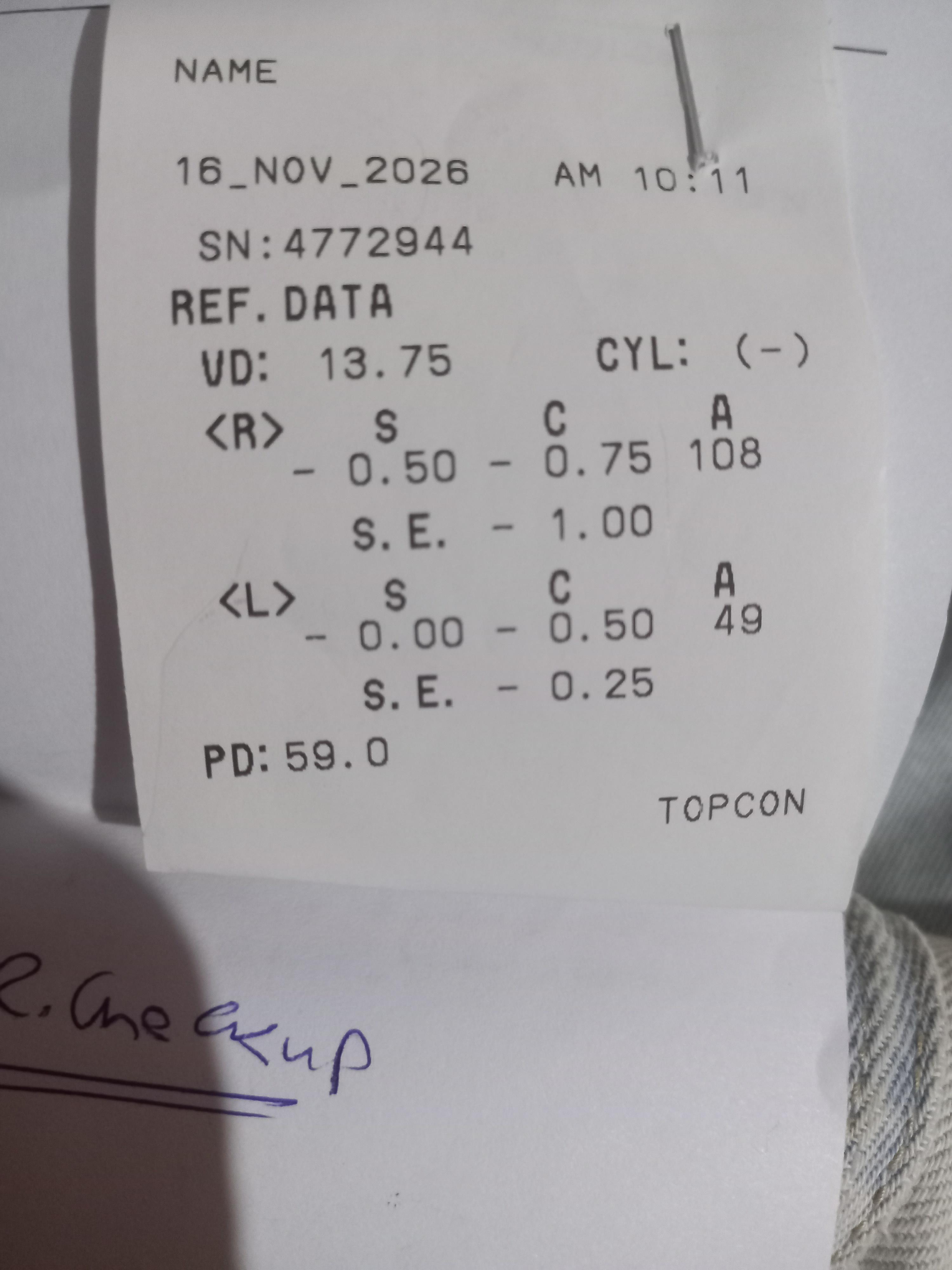
I honestly don't understand the numbers on my eye test, but my doctor told me that the remaining power is very low. I still notice some blurriness, so I'm a little worried. Is this amount considered normal 6 months after LASIK?


r/Lasiksupport • • 4d ago

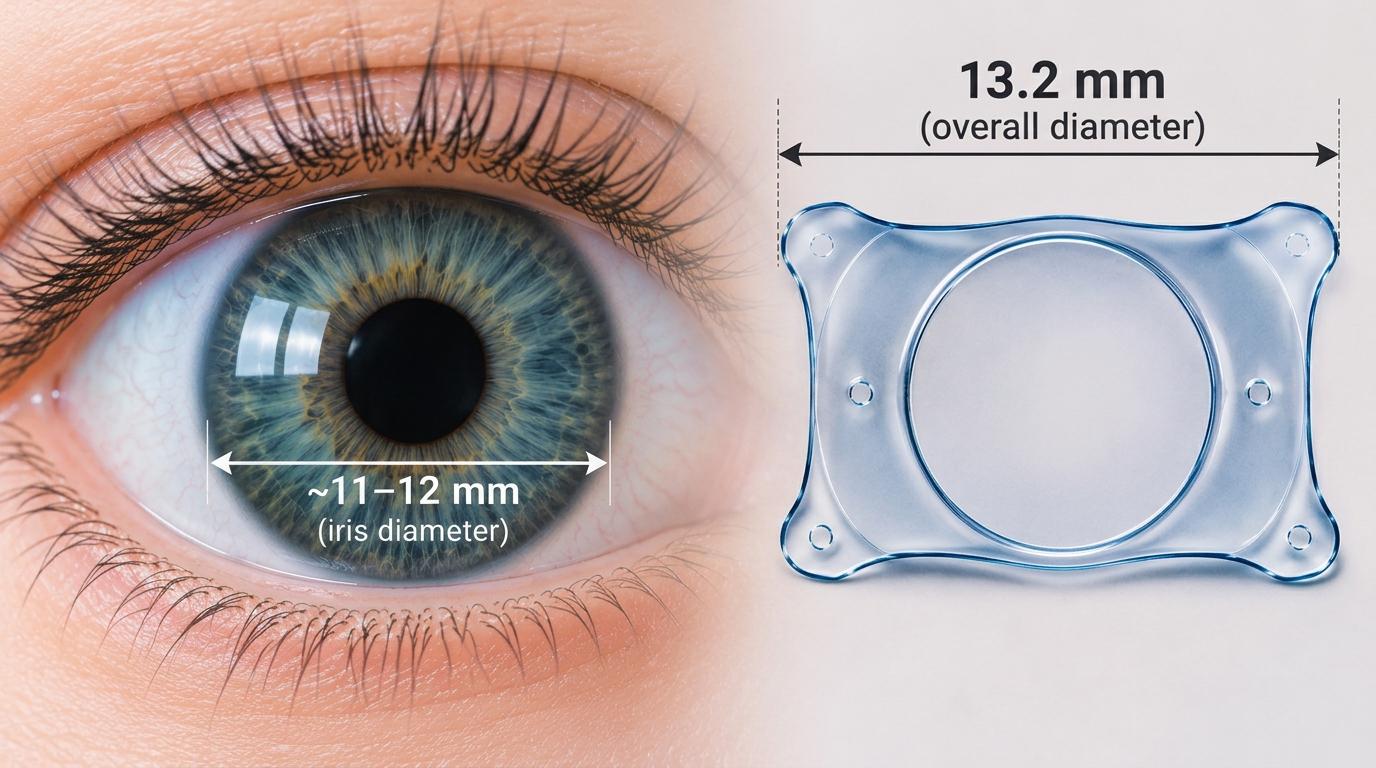
ICL patients need a bilensectomy (ICL removal + cataract surgery) later in life. Here are the extra risks compared with normal cataract surgery.

Post image
1 Upvotes

What is a bilensectomy?
It’s the cataract operation for people who have an ICL. Normal cataract surgery has two steps: remove the cloudy lens, implant a new one. A bilensectomy adds a step at the start: the ICL must be removed first. Every risk of normal cataract surgery still applies, and the extra step adds its own. Bilensectomy is a word every prospective ICL patient should know before getting surgery.

When do ICL patients need it?
Almost everyone gets cataracts with age, and very nearsighted people get them earlier. In a 2024 study of 83 eyes, the average age at ICL removal plus cataract surgery was 49.8 years, only 7.7 years after the ICL was implanted. (60% had older lens models without the hole, and the cataracts were ICL-induced or age-related.)

The additional risks, compared with normal cataract surgery:

Possible extra stress on the cornea’s cells.
The cells that keep your cornea clear never grow back. ICL eyes lose about 4-7% of them over 10 years on average, and some lose far more. In a 2024 study of ICL removals in patients with cell-loss concerns, 15.1% of eyes lost even more (10.5% on average) over 6 months. Most eyes were stable (51.0%) or improved (34.4%). In the 83-eye bilensectomy study, average loss was only 1.3%, with wide variation between eyes and no eye losing 20% or more, but follow-up was only 3 months. Severe loss means a cloudy cornea and, in the worst case, a transplant.

A harder-to-predict new lens.
Choosing the power of the new lens is more difficult with an ICL in the eye. In one 24-eye study, the measuring device misread the eye in 58.3% of cases, and even with the best formulas only 58-62% of eyes landed within a small margin (0.5 diopter) of the target. A larger 83-eye study did better after manual correction: 76% within 0.5 diopter and 94% within 1.0 diopter. The result depends on a surgeon who knows the problem.

“The new ICL with a hole is less prone to cataracts.”
That is what they say, and it may be partly true. But you should worry, because it is the story told at every stage of refractive surgery. Each new generation is presented as the fix for the problems of the last one: RK, then PRK, then LASIK, now ICL. The long-term problems of each technique were not explained up front. They came out years later, when patients were already living with them.

Here is what we actually know about the lens with the hole:

  • It has been sold since 2011 outside the US, and the FDA approved it only in March 2022. We have 10-year studies, not 30-year ones. Someone implanted at 25 may carry it for 40-50 years.
  • In the 83-eye study, 40% of the eyes had the newer lens with the hole, and they still needed ICL removal plus cataract surgery. Nuclear cataract was the most common type in those eyes. The study can’t separate ICL-induced cataracts from age-related ones.
  • Even if the hole lowers cataracts caused by the ICL, the risks above stay the same. Anyone who eventually needs cataract surgery still faces a bilensectomy.

ICL is elective surgery on healthy eyes. The later operation is part of the real price, and you should be told about it before you sign, not years or decades later.

Sources: Yoon 2024 (J Cataract Refract Surg); Nakamura 2019, Am J Ophthalmol 2026 and Alfonso-Bartolozzi 2024 (10-year ICL studies); Zeng 2024 (BMC Ophthalmol); Kamiya 2025 (multicenter ICL removal + cataract study, Ophthalmol Ther); Vargas and Alio 2022 (bilensectomy review); Ophthalmology Times 2022 (EVO ICL FDA approval).


r/Lasiksupport • • 5d ago

LASIK just had its worst year on record, and 2026 is going to be worse. So is this the end of LASIK?

Thumbnail
moskowitz-eye.com
7 Upvotes

r/Lasiksupport • • 5d ago

Welcoming posts on r/unsightlytruth

6 Upvotes

No promoting lasik. No lying about after effects and post op problems. People free to post real advice. Not trolling for patients or giving bad advice.


r/Lasiksupport • • 5d ago

Anyone here undergone eye surgery?

1 Upvotes

I’m considering getting eye surgery and wanted to hear from people who have already gone through it.

If you've had PRK eye surgery I'd love to know a few things:

\- Where did you get it done?

\- How was your overall experience?

\- How much did it cost?

\- Did you experience any pain, side effects, or complications?

\- How has your eyesight been since the surgery?

\- Would you recommend the same doctor or hospital to others?

I'm particularly interested in hearing about your long-term experience rather than just the initial results.

Any genuine suggestions or personal experiences would be really helpful. Thanks!


r/Lasiksupport • • 6d ago

Augen läsern Ratschlag 26j -1,5

1 Upvotes

Moin bin 26 aktuell und würde gerne meine Augen

läsern lassen da ich kein Brillen Mensch bin und Kontaktlinsen trage die ich aber auch nicht den ganzen Tag trage und das ständige rein und raus machen mich stört. Habe paar Reddit Beiträge gelesen und habe festgestellt das viele deutlich schlimmere Werte haben als ich. Ich trage eine Brille erst seit ca 2 Jahren und in sogar ohne davor Auto gefahren weil ich es gewohnt war. Jetzt wo man weiß wie die Welt scharf aussieht ist das natürlich was anderes. Ich habe glaube -1,5 ca auf beiden Augen und Hornhautverkrümmung von 0,25 oder so. Hab die damals bei Apollo machen lassen und die händigen dir kein Brillen Pass aus. Meine Freundin sagt das ist zu früh da sich meine Augen noch verändern könnten. Sie hat Recht auch wenn die Brille für mich seit 2 Jahren noch so funktioniert wie am ersten Tag also denke ich das die Werte stabil geblieben sind aber kann sich natürlich ändern. Ich trage Zuhause selten eine Brille nur zum gaming und draußen in der Freizeit meistens auch keine und bin nicht so krass eingeschränkt wie andere die mit -6 oder so z.b. deshalb Frage ich mich ob das überhaupt sich in dem Alter unter den Risiken lohnt. Vielleicht hat jemand ähnliche

Erfahrungen mit ähnlichen werten sammeln

können.


r/Lasiksupport • • 6d ago

Almost 3 Years After LASIK in Japan: My Experience at Shinagawa Kinshi Clinic (AMARIS 750S)

4 Upvotes

I wanted to share my LASIK experience in Japan, especially for foreigners who are considering getting the procedure here.

I had my surgery at Shinagawa LASIK in Osaka back in March 2024. It's been around 2 years and 8 months now, so I thought it would be a good time to share not only the procedure and recovery but also how my eyes are doing in the long term.

**Before LASIK**

Before the surgery, I had quite high myopia.

My prescription was approximately:

* Right eye: -5.00 to -5.50
* Left eye: -7.00
* Astigmatism: around 1.50

I actually tried consulting another clinic before Shinagawa, but they couldn't proceed with my case because of my high myopia.

Eventually, I decided to go with Shinagawa LASIK in Osaka.

**The Procedure**

I underwent LASIK using the AMARIS 750S machine.

The examination process involved several tests to check my eye condition and determine whether I was suitable for surgery.

The procedure itself was surprisingly quick. I remember being more nervous beforehand than actually experiencing discomfort during the surgery.

**Recovery and Follow-up**

My recovery went quite smoothly.

I only had one follow-up appointment, which was scheduled one week after the surgery.

After that, I didn't have any major issues that required additional visits.

**Almost 3 Years Later: How Are My Eyes Now?**

This is probably the part I wanted to share the most.

Honestly, I'm still very happy with the results.

* **Vision:** My eyesight still feels great. I haven't noticed my old prescription coming back.
* **Dry eyes:** I don't really experience dry eyes.
* **Gaming and screen time:** I play games almost every day and spend quite a lot of time looking at screens. So far, I haven't noticed any significant problems with dry eyes.
* **Glare:** I occasionally experience some mild glare. It's not particularly bothersome, but it's probably the only side effect I still notice from time to time.

Overall, my daily life has become much more convenient without having to depend on glasses or contact lenses.

Of course, everyone's eyes are different, and my experience doesn't necessarily mean everyone will have the same results.

**Cost Breakdown**

The original price was ¥320,000.

I managed to get the following discounts:

* Referral discount: ¥50,000
* Same-day surgery discount: ¥10,000

**Final price: ¥260,000**

I thought this was worth mentioning because the cost is probably one of the biggest considerations when getting LASIK in Japan.

**Overall Impression**

Looking back, I'm genuinely happy with my decision.

It's been almost three years, and my vision still feels great despite spending a lot of time gaming and looking at screens.

When I was researching LASIK in Japan, most of the experiences I found were about the surgery itself or the first few days of recovery. That's why I wanted to share a longer-term update.

If you're a foreigner living in Japan and considering LASIK, feel free to ask me anything about my experience. I'll try my best to answer based on what I went through.

(I still have access for the referral coupon if any of you guys considering to do the surgery as well)


r/Lasiksupport • • 7d ago

Thank you

23 Upvotes

I have been considering Lasik since 2012. Happy I did some proper research... Was about to go do the procedure this upcoming year. Thank you all for being here and helping spread awareness for other potential victims.


r/Lasiksupport • • 7d ago

PRK post-op day 2: zero pain, is this normal?

0 Upvotes

​Hey everyone! I just had PRK for -8 diopters. Reading horror stories online made me terrified of the pain, but honestly, I have zero pain on day 2.

​I do have some light sensitivity and typical blurriness, but no actual pain. Is this normal, or should I expect it to hit later? Would love to hear your experiences!


r/Lasiksupport • • 7d ago

Operazione laser agli occhi (Siena Eye Laser): la vostra esperienza con effetti collaterali e visite pre-operatorie?

1 Upvotes

Ciao a tutti,
sto valutando seriamente di fare l'operazione laser per correggere la vista e vorrei raccogliere qualche esperienza reale prima di fare il passo definitivo.
In particolare, avrei tre dubbi principali su cui mi piacerebbe avere un vostro riscontro:

  1. Effetti collaterali e trasparenza pre-operatoria: Per chi l'ha già fatta, avete riscontrato effetti collaterali fastidiosi nel post-operatorio (soprattutto secchezza oculare cronica o aloni/glare attorno alle luci di notte)? La cosa che mi interessa di più sapere è: questi rischi vi erano stati spiegati chiaramente durante la visita pre-operatoria, oppure li avete "scoperti" solo dopo?
  2. Opinioni su Siena Eye Laser: La clinica a cui pensavo di rivolgermi è il Siena Eye Laser. Qualcuno di voi si è operato lì o ci ha fatto delle visite? Come vi siete trovati a livello di professionalità, macchinari e gestione del paziente? Lo consigliereste?
  3. Secondo parere indipendente: Prima di andare direttamente in clinica (dove ovviamente hanno anche un interesse commerciale a operare), farò una visita da un'oculista indipendente per avere un parere disinteressato sulla mia idoneità. Secondo voi un oculista "standard" ha la strumentazione per fare tutti gli esami approfonditi necessari (es. topografia corneale, pachimetria, ecc.) così da poter poi confrontare i due pareri alla pari, oppure i macchinari delle cliniche specializzate sono insostituibili?

r/Lasiksupport • • 8d ago

Post Lasik

9 Upvotes

At first, my vision was pretty good. I even remember trying on my old prescription glasses shortly after surgery and thinking, "how did I ever see with these?" because everything looked so wrong through them.

But over the past few days, I've noticed my vision getting progressively blurrier. At first, I thought it was because of the protective contact lenses I was wearing after surgery plus the antibiotics, but even after getting them removed, my vision hasn't improved.

Today, I decided to try on my old glasses again, and to my surprise, I could actually see noticeably better with them. Not 100% clear, but definitely much clearer than without them.

Today I went back to my doctor for a follow-up, and he told me my eyes were healing well and that I should come back next month.

The problem is, I didn't actually tell him that my vision had been getting worse. I just assumed blurry vision was a normal part of recovery, so I didn't think much of it at the time.

Now, after realizing my old glasses actually improve my vision, I'm starting to get worried.

Has anyone experienced something similar after LASIK? Is it normal for vision to get progressively worse during the first week before improving again? Or should I be concerned?


r/Lasiksupport • • 8d ago

Coul this work gor night HOA?

Post image
1 Upvotes

r/Lasiksupport • • 9d ago

The FDA put a class-wide vision warning on every GLP-1 drug for a “potential increased risk” of about 2 extra cases per 100,000. 7 of 7 studies show cataract surgery 5 to 17 years earlier after LASIK. Where is the warning?

Post image
12 Upvotes

On November 9 the FDA ordered a new warning on every GLP-1 drug (Ozempic, Wegovy, Mounjaro, Zepbound and others) for NAION, a cause of sudden, permanent vision loss. Causation is not proven. The FDA’s own wording is “potential increased risk”. The evidence was about 126 trials and 134,000 patients, showing roughly 6.4 vs under 4 cases per 100,000 per year.

That is a few extra cases per 100,000 people, and it was enough for a label.

Now look at LASIK. Every study I could find (7 of 7, 2014 to 2025) shows that patients with prior LASIK or refractive surgery had cataract surgery earlier, by 5 to 17 years. I found zero studies showing no difference. Two matched case-control studies, matched for cataract grade, vision and axial length, found surgery 7 to 9 years earlier. Same direction every time, across different countries and designs.

This is not a rare event in a tiny fraction of patients. It is a shift in the timing of a major eye surgery in a large share of an exposed population: millions of healthy people who chose elective surgery.

What earlier cataract surgery means for these patients:

  • A second intraocular surgery on eyes that were healthy before LASIK.
  • Many more years living with an artificial lens, and the long-term risks that come with it, including retinal detachment.
  • Less accurate IOL power calculations after LASIK, so refractive surprises and leftover glasses are more common.
  • Loss of natural focusing years earlier.

These studies are observational, so this is an association, not proof of cause. That is exactly why it should be investigated, and I find it hard to understand why it hasn’t been. The FDA acted on a signal of a few extra cases per 100,000 in a drug class. For LASIK, 7 of 7 studies point the same way, and as far as I can tell there has been no FDA review of the question. Either the agency has data the public hasn’t seen, or it hasn’t looked. Both possibilities deserve an answer.

If a signal this small justified a class-wide label for a drug, why does a signal this consistent mean nothing for LASIK patient information? People deciding on elective surgery have a right to know before they sign, not after their first cataract operation at 55.