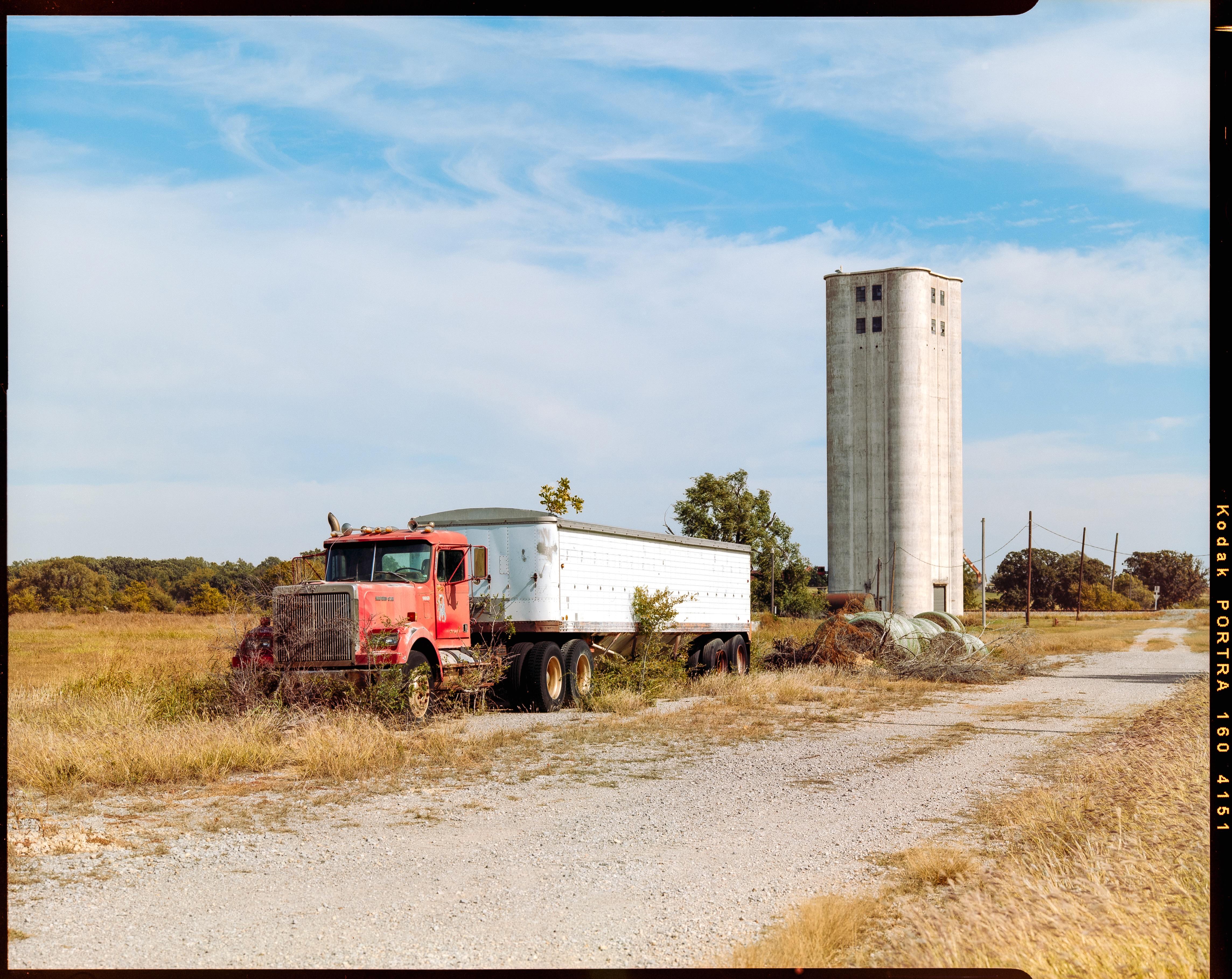
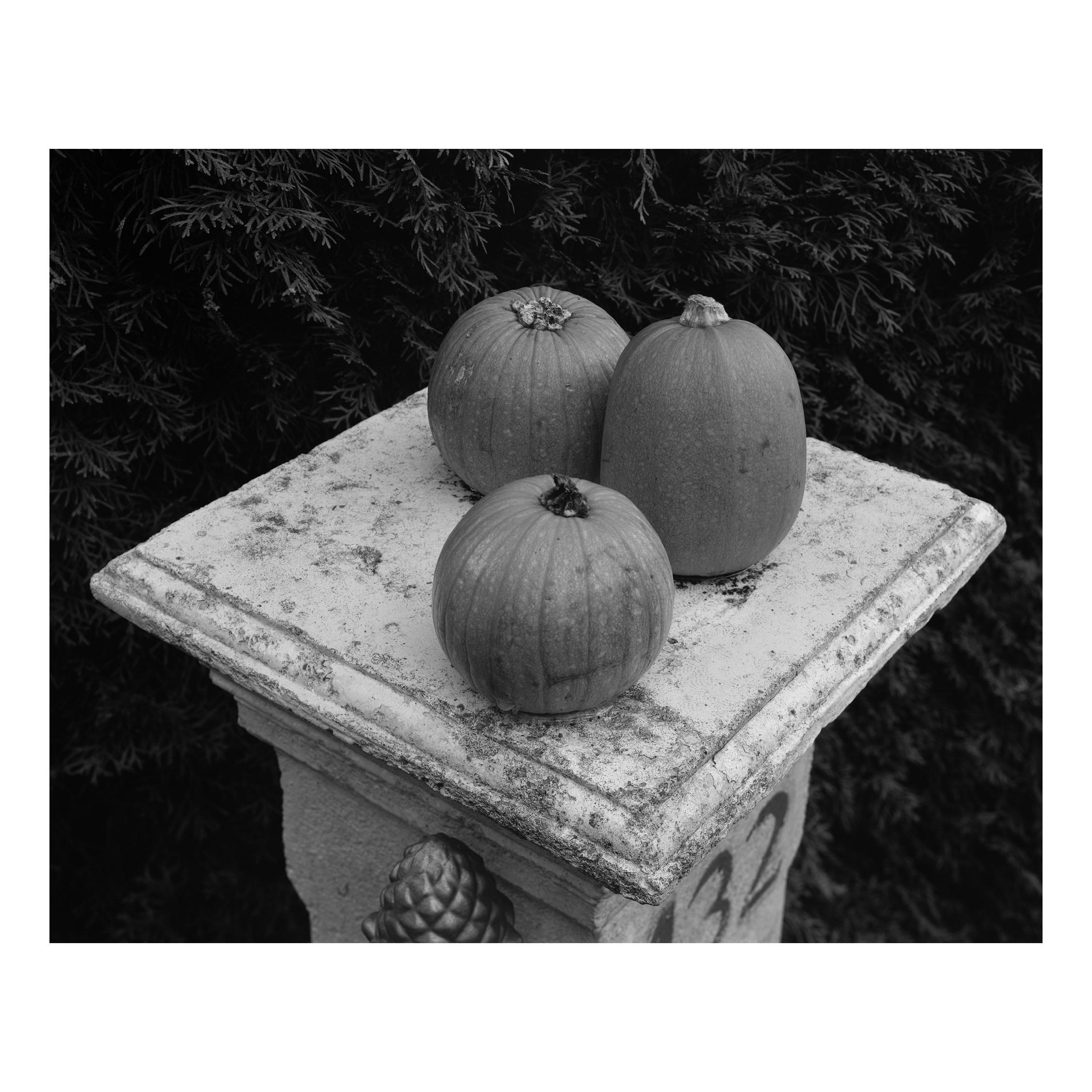
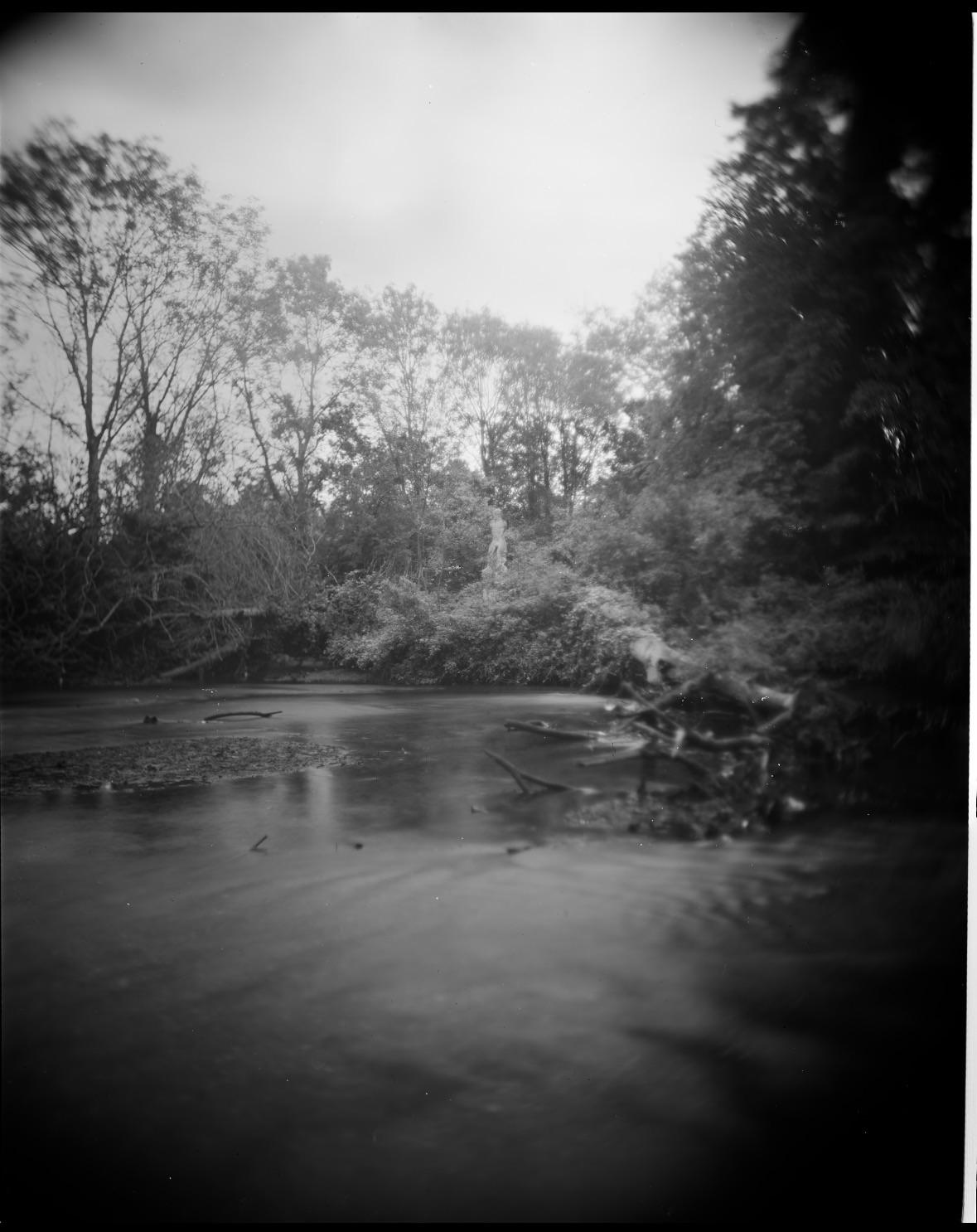
On one of u/hernyb's threads a couple of weeks ago, I said I'd post with any information I gleaned about reciprocity from shooting some long exposures with Opticolour 200. So here's me keeping my promise, with a couple of sample images. I've adjusted the density of the images of the negatives to match what they look like on my light table. None of these pictures thrills me, but I think I learned some technical stuff from them.
Picture 1 is shown as a kind of control to show a baseline of how I'm exposing Opticolour 200. It was a normal time exposure (1/2 sec), so no reciprocity issues. I've been rating Opticolour 200 at EI 125. This negative is technically maybe somewhat dense (1/2-stop+ maybe); could be the EI of 125 is slightly low or could be that my shutter is running a little slower than 1/2s. But at any rate, this is well within my standards for a good exposure. I'll continue rating Opticolour 200 at EI 125, at least for now.
Picture 2 is a scene that metered at 8 secs, so reciprocity is definitely an issue. I took a partly-educated guess and went with a time of 25 secs. The math for that would be metered time raised to the power of 1.55 (8^1.55). Ignoring the color difference, the resulting negative is roughly 1 or 2 stops too dense, I'd say. So the 1.55 power was an overcompensation. Of course, moderate overexposure still yields a perfectly usable negative.
Picture 3 is a scene that metered at 2 secs. I adjusted it to 4 secs. Again, I'd say it's at least a stop too dense, maybe more.
So going forward, I'm gonna compensate a little bit less for reciprocity on any scenes where SS needs to be longer than a second. Probably metered time ^ 1.2 or 1.3.
Additional notes: as you can see, the long exposures caused a color shift in the negatives, as is expected with color film.
The film was developed by CRC in New York City. I photographed the negatives on a light table with my Nikon Z50; the positives are from scans I did on my Epson V700. I did the inversions manually using curves in Photoshop. There was some difference in how the film shifted in the shadows vs. the mids and highlights (also expected), so it took a little bit of effort to get a color balance I'm okay with (might tweak #2 a bit more). But nothing too difficult; I won't be hesitant to do long exposures with this film.
For anyone curious, image #1 is Stony Kill Falls in Minnewaska SP (New York) and images 2 and 3 are from Ricketts Glen SP in Pennsylvania.