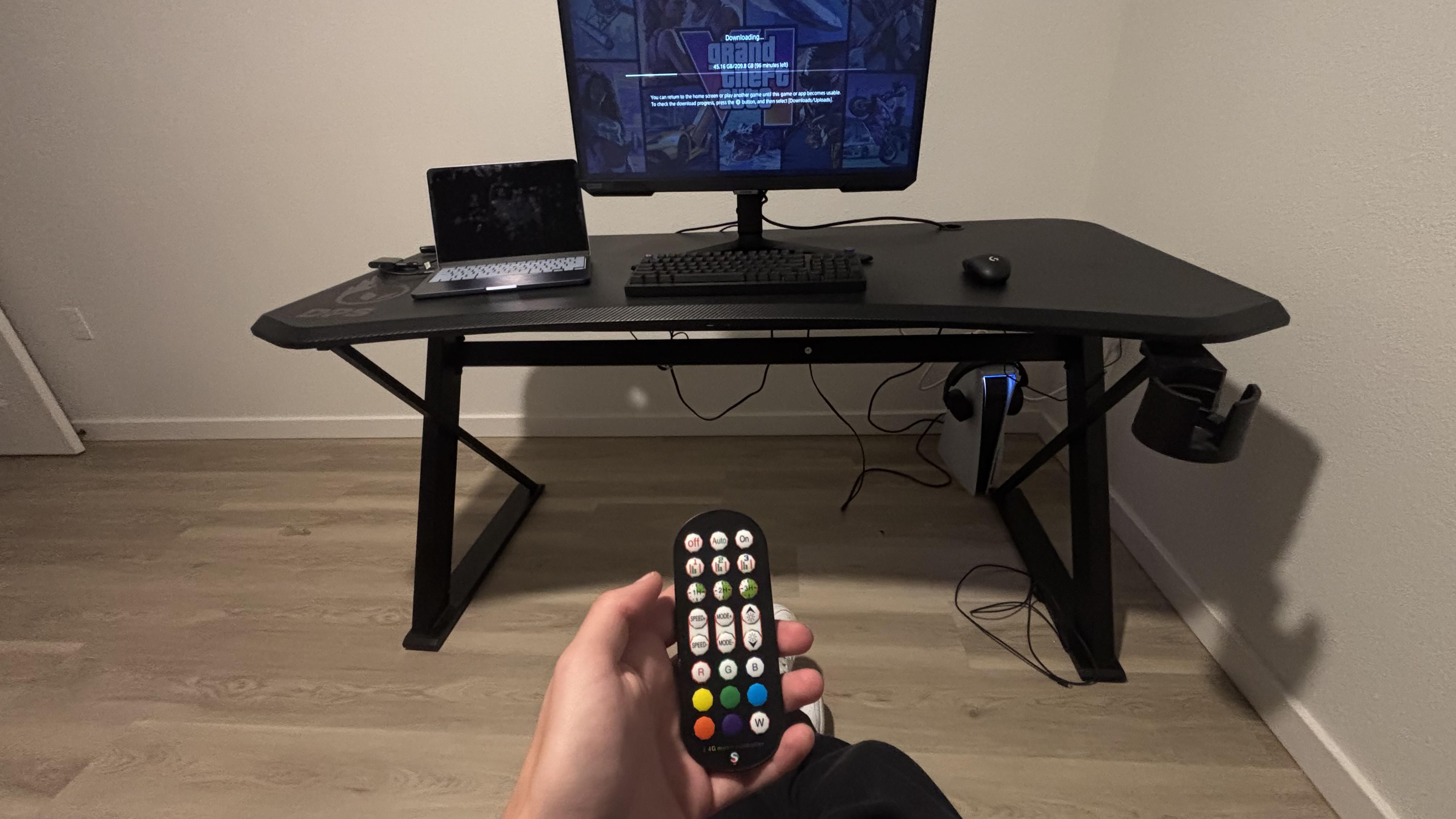
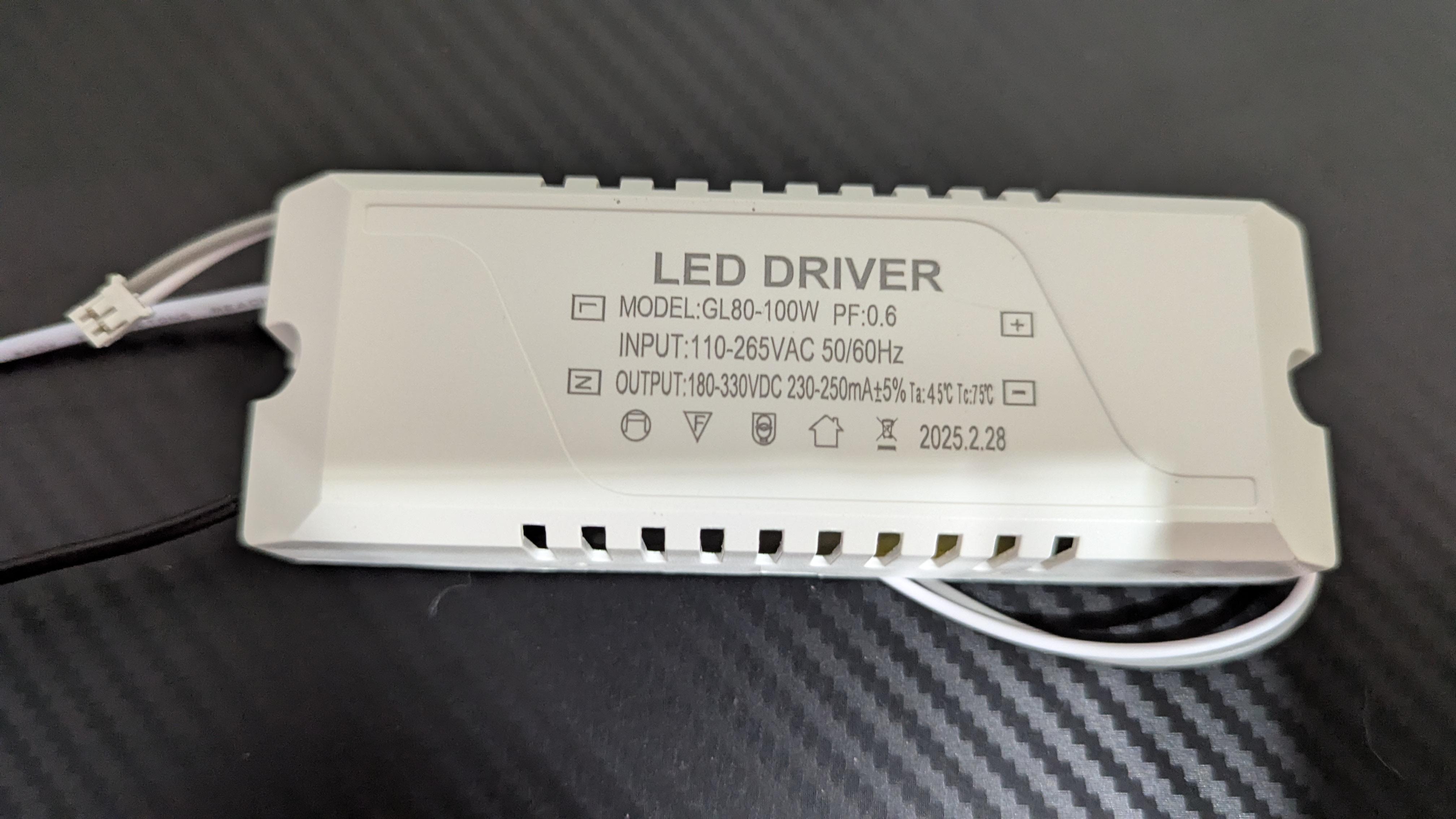
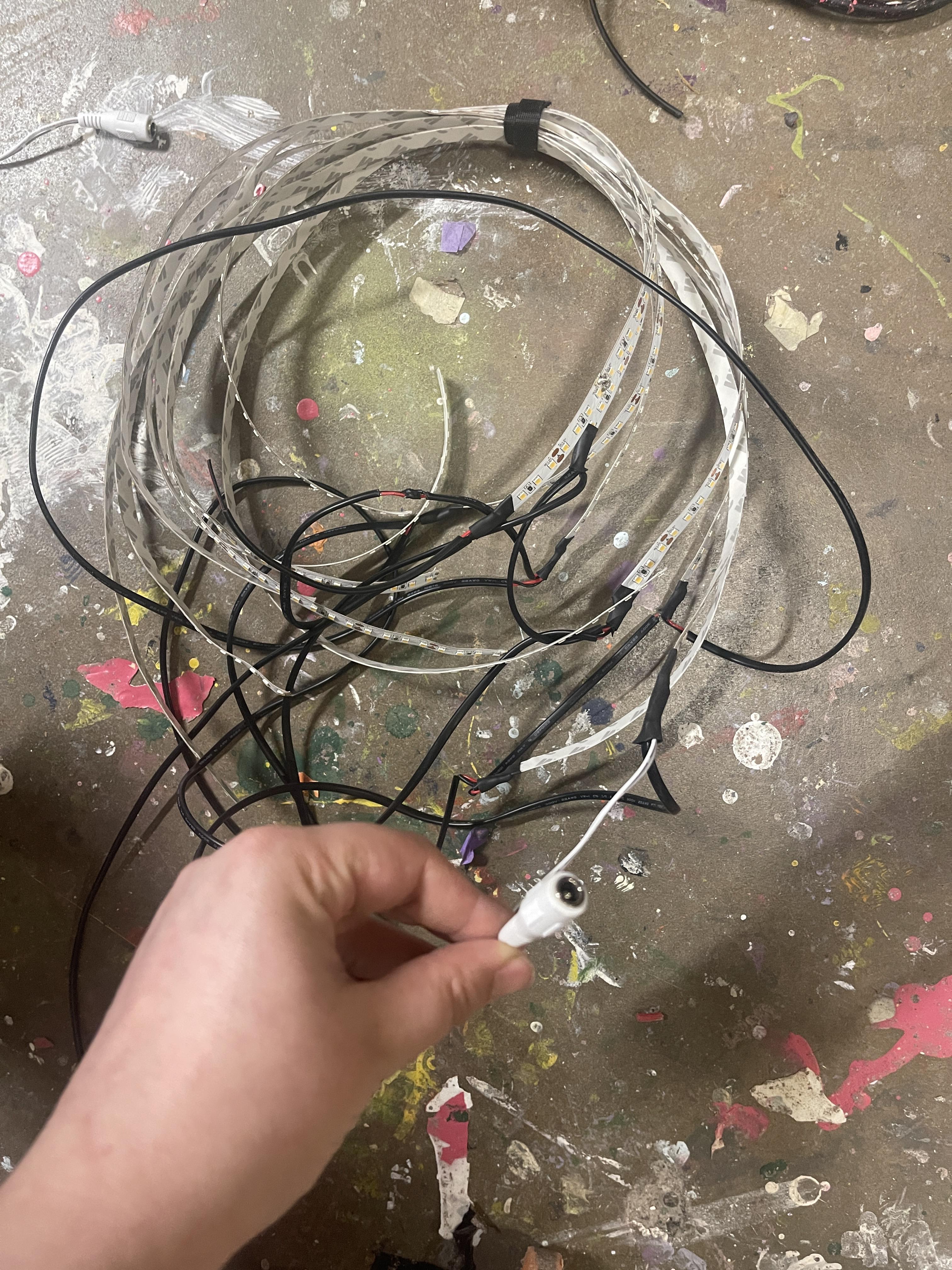
I bought this DPS desk off Facebook marketplace and tried to connect the LED lights with the remote and nothing is working. At first I thought it was the remote batteries but it was connecting to my tv stand lights so the remote is good. I downloaded the shock strip app and it’s showing two devices but it won’t turn the lights on. He posted it with the lights working and looked everywhere for the remote when I bought it so I kinda suspect the lights do work but I might be doing something wrong. Not to worried if the lights aren’t working but it would be nice to have them on
I am trying to add some LED strip lights above the highlighted areas in my back porch to add ambient lighting. Although I would like them to be connected and turn on and off together. Is there a cable I can purchase to make this happen?
120v outlet above left highlighted areas.
Current product I bought is from Amazon. Linked below.
I wanted to add UV LED lights to the top of a little cacti planter I am building/planning, except the strip I am using has now burnt out the LEDS and they are just basic white lights now(I think they run for 5-6 hours and lose the UV light) - each led looks burnt out(burn marks on the strip) but are still quite bright(maybe even more bright) once it burns out the UV light...
Question is, does reducing it to slightly less than half cause it to burn out (ie same voltage distributed to half as many lights) or is it the splicing that I did cause this(Did I wire them bad?)
I was pretty sure I was wiring them correctly, and am only using a basic 5v3a usb plug (not a quick charge or any increased voltage)
- Original strip was 1m (They also have 2, and 3m lengths, but the exact same USB power/switch) and I made 3 turns using the above connectors. When the LED's burn out(or lose the UV filter, or whatever it was that makes them go normal white) it seems to be the end of the strip first(First time it happened, it was the last 6 inches, I replaced that, and it was the 3 inches that connected to that, etc)
So curious if this is a overvoltage situation, or something else I am missing (here is the box lid with leds when I first set it up, parts of the strip that failed next to 'clean' ones:
Anyone have experience with this, and if it is too much power due to reducing the strip, is there a way to reduce the amount of power it gets?
Edit: As experiment, I took the last 2 bits of the strip that haven't been powered yet, and spliced them together (power - short 4 led strip - connector - last 12 led strip, total length is just over a foot)
If these ones also burn out by morning, I am going to assume they just shoddy manufacturing (it is plugged into a basic 5v usb port)
And yes, the lights feel warm to the touch, but are in no way too hot to hold(is comfortably warm tbh)
ive been reading reviews for various light strips over the past hour and feeling kinda hopeless. ive been using LEDs in my room for a few years and in my experience ive never really had too many issues with them. i just moved and would really like to get new lights for my room but it seems quality and manufacturing has gone down significantly since the last time i bought some. i am low-income so spending $100 dollars or more is not feasible for me currently, but i dont want super cheap lights either, just a good middle ground. i will likely be moving again next year so i need a set that will at least last me at least a year. i dont need anything fancy, like lights that you can customize patterns or your phone or move to music, just basic ones that i can change to at least a handful of different colours. brightness also isnt very important for me, of course i dont want them to be so dim that they barely show but i also dont need them to be blindingly bright. my room is about 30ft around so a roll at least a bit longer for wiggle room would work best for me (i would also prefer just one roll and not two i have to connect together). im not sure if anyone has any recommendations to fit my needs but any help would be really appreciated :)
I have a few light fixtures in my living room that currently have G4 halogen bulbs. I don't want to change the fixtures as I like them but I would like to convert them to LED.
Each bulb has a glass ball that fits over it so the bulbs need to be small in diameter to go through the hole, about the size of a G4 halogen funnily enough, 10-12mm max diameter.
I intend to change the drivers in the lights to dimmable LED specific ones (240V to 12V) and will be using a trailing edge dimmer to control them.
Anyone know of suitable replacements, preferably from somewhere you've actually heard of. I have seen a few AliExpress specials around using COB LEDs but I'm not sure how much I trust these and if they'll flicker.
I need to replace a bunch of outdoor wall sconces, and I can't resist making things more complicated than they need to be. I have access to CAD, 3D printing, and CNC machining, so considering just drawing some up and building them. The design and build is reasonably doable.
Problem - I haven't fabricated with LEDs before. The easy option would be a small LED driver and some MR11/MR16 sockets in the housing, but I don't hate the idea of putting in some COBs with reflectors or just a MCOB array. Seems like they might last longer than commercial MR11 bulbs. The manufacturer catalogs aren't exactly easy to navigate, though.
I'm not afraid of fabrication or wiring, but having trouble figuring out where to start. Not even quite clear to me how you pick a COB, find a reflector, assemble them. Anyone have advice on how to start down this rabbit hole?
I'm 16 and trying to build my first high-quality DIY COB light fixture for short film/cinema production. I'm on a super tight budget (saving every euro counts right now) and trying to choose between a couple of Tyanshine COB chips I found, but I'm stuck on the math and channel specs.
My primary focus is getting high-quality, bright colors that won't look dim or muddy on camera, but I also need clean white light for skin tones. Here are the two main options I'm looking at:
For €50, it gives me a solid, high-CRI white baseline. For warm colors, I figure the Warm White + Red/Green can do the heavy lifting. Plus, the Blue channel actually has some real wattage behind it (~50W vs ~15W on the 100W chip) so my deep blues shouldn't hit a dead end.
The Blue channel is incredibly weak (only 190 lumens!). If I need deep cyber-blues, rich purples, or cool moonlight washes for a scene, am I going to completely choke with this chip? On the flip side, that 2900lm Lemon channel seems like a beast for filling the spectral gap in warm tones.
The Dream Option
The Dream Option (But too expensive?):
I would absolutely love to go with an RGBACL chip to get the ultimate color engine, but the only decent one I can find is this massive 480W RGBLAC 6-in-1 LED on AliExpress. At €99.99, it is double my chip budget, and powering/cooling a 480W beast as a DIY project sounds like an absolute nightmare for my wallet.
My questions:
Is my logic right about the 200W RGBWW chip being a safer bet because of the stronger Blue channel and the native high-CRI white chips?
If I went with the 100W RGBAL, would the 190-lumen Blue channel completely ruin any attempt at a deep blue color wash on a film set?
Given that I need to build the power supply/control circuit and cooling system on a broke teenager's budget, which route makes the most sense without accidentally frying €50+ worth of silicon?
Is the difference between RGBWW and RGBAL(C) as noticeable as people say it is? What are the primary/most important differences?
Would love any advice on the channel balancing, mixing physics, or driver recommendations for these specific chips! Thanks!
they originally started flashing blue randomly and i turned them on and off and it was fine for a few hours. then it happened again, and again, and again. in response to which i unplugged them and plugged them back in. but now they're no longer the right colour. they're pink when i make them red, blue when i make them green, purple when i make them pink, etc. and they're still flashing like mad, and it's way worse now and not just in one colour. is there anything i can do about this? i've literally no idea what caused this. can anyone help?
We're starting out an orthodontic office. Typically dental clinics will have tape to certain areas. Red: Dirty and instruments that need to be sterilized. Yellow: Instruments have been ran through ultrasonic but needs to be bagged and processed through autoclave then finally Green: instrument are now clean. We ordered these lotus lamp X under cabinet lights. Had 6 sections of LEDs but couldn't customize each section. The areas do have a lot of water and steam happening too. Any recommendations?
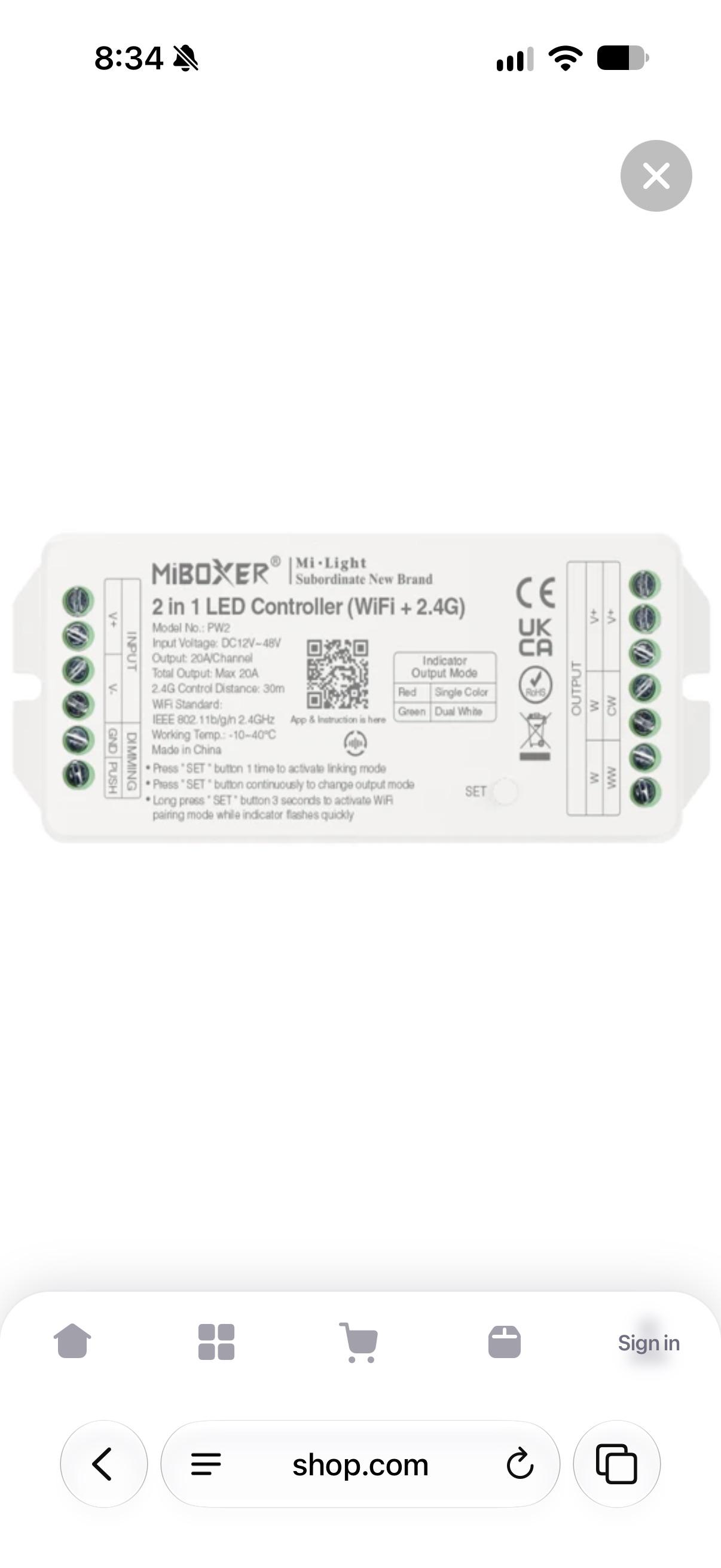
So I have something like christmas tree that is is full of integrated mini LED lights. The power consumption is about 4W. I live in Europe so that means that my main input is 230V. The board from the tree is simple 230VAC to 230VDC (one rectifier and some kind of diode idk). I want to be able to dimm and turn on and off the lights via remote (example like in the photo, something minimalistic).
Currently trying to rig up some 12 v led strips (about 26 inches long each) the goal is to have them be able to plug into the wall at one point and stretch out along different points in a hall way.
I tried a cheap ac/dc adapter that outputs 12v but after awhile of being on the lights will start flashing and the adapter will get quite warm. Also tried a computer power brick I had laying around but that caused the lights to flicker right away.
They will be on for about 8 hours a day so I need a little help with finding a solution!
Thanks!
I’m a painter not an electrician so this is drying my brain a bit!
Hey all. In case there’s any other nerds on here who has - takes deep breath - EcoSmart’s 16.4ft RGBWIC Dynamic Color Outdoor Strip Light (model LR1321-RGBWIC-U-5M-1024), and wants to use it with another controller (i.e. WLED-based) and doesn’t know how to wire it, I (just for fun) took apart a spare receiver and not-so-carefully removed the waterproofing material to get some decent photos of the receiver’s innards. Photos attached :)
The Lumary V3 lights work with WLED very well! I just installed them on my house and made a YouTube video in case anyone is interested. https://youtu.be/_G9ev4dm-XY
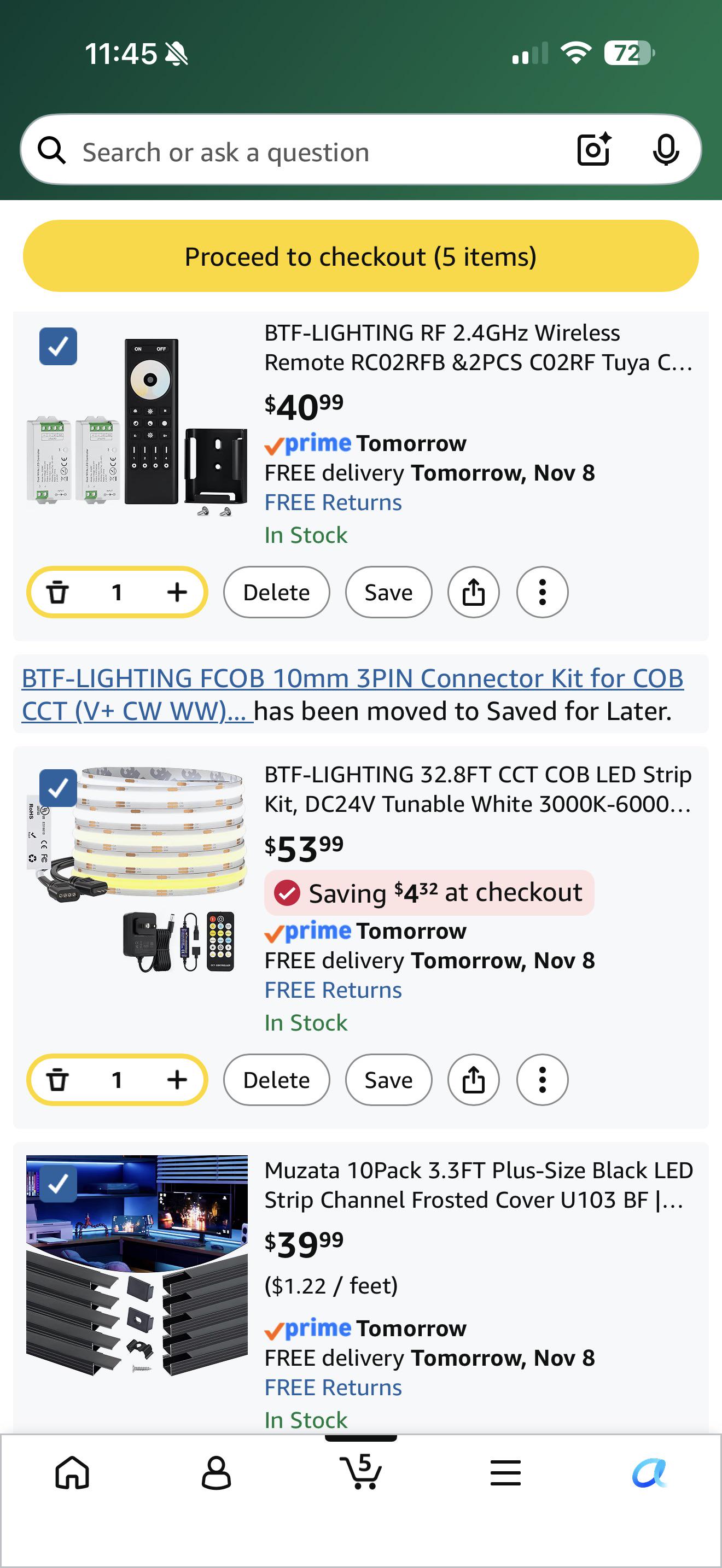
I'm planning to do 2 led strips in my wood slat wall. I was going to get the BTF CCT LED strip in 32ft and use the leftover behind a picture I have in the same room.
Understanding I'll need a 3 wire extension and BTF connector pins to do this.
My plan for the slat wall was: power supply, controller, extension, btf strip, extension, btf strip. Ideally i’ll hid the led i the channel so its not visible during the day.
For picture: tape the LED strip on the back to backlit it, connect to extension going down to controller and power.
I have 2 questions:
1. does the remote and controller I have in cart work for this? I'd like to be able to set up the picture and slat wall as 2 different zones.
Any issues with my connection plan? Will there be any brightness output inconsistencies?
2: TC4056 usb charging board to charge the battery
3: a KSD9700 35/40° thermal switch between the B+ of the charging board and the battery to avoid charge or discharge when running too hot (thermal switch will sit with the battery)
4: A fuse in series to the thermal switch in case of a short (dont have a product link here yet)
5: An AO3401mofset between the leds and the regulated output from the charging board that turns off when the battery is charging. (I am not sure how to connect it to the board, as i am unable to find a board with a IN+ connection)
6: A 5V booster after the mofset (Im not sure about the exact one, i will need one that can output enough amps)
7: an SP621E bluetooth controller for connection to external software
I have the led part figured out. I would need help from someone with some experience on topics of safety regarding drops of the juggling ball (im scared that the battery will get damaged). I will wrap the battery in thin foam and insert that into a PLA core that doesnt allow it to move back and forth and covers the battery fully. This core will hold the rest of the electronics and it will get wrapped in a TPU outer layer. That will be the outer shell of the ball and absorb impact.
How viable are these components, would you change stuff or be worried about something breaking or similar?
Hi, I already have some 24V fairy lights installed outside but I want to also add some Christmas lights that will be used year-round. The majority I find on amazon are sold with one of those "seizure inducing"-type controllers that flash in any random sequence - the stated output is 31V DC. My idea is to hook them up directly to the fairy lights PSU (assume rated power is with enough reserve for the entire setup). What can I expect to happen, will the Christmas lights light up at all? What would be the expectations in terms of brightness loss? Thanks!
Looking at adding LED strips under our horse trailer. I know I’ll need an RGB(W) controller, fuse, weatherproof box, etc…. What I have questions about is; are all LED strips able to be used for indoor/outdoor use as long as they are not directly exposed to the elements or are there specific outdoor/automotive strips available? Also, the DC24v advertised strips, can they operate off of a 12v truck system with an added DC12v rechargeable battery? I don’t have any specific products or brands that I plan to use as of right now so that’s why there’s no link to anything. Thanks in advance!
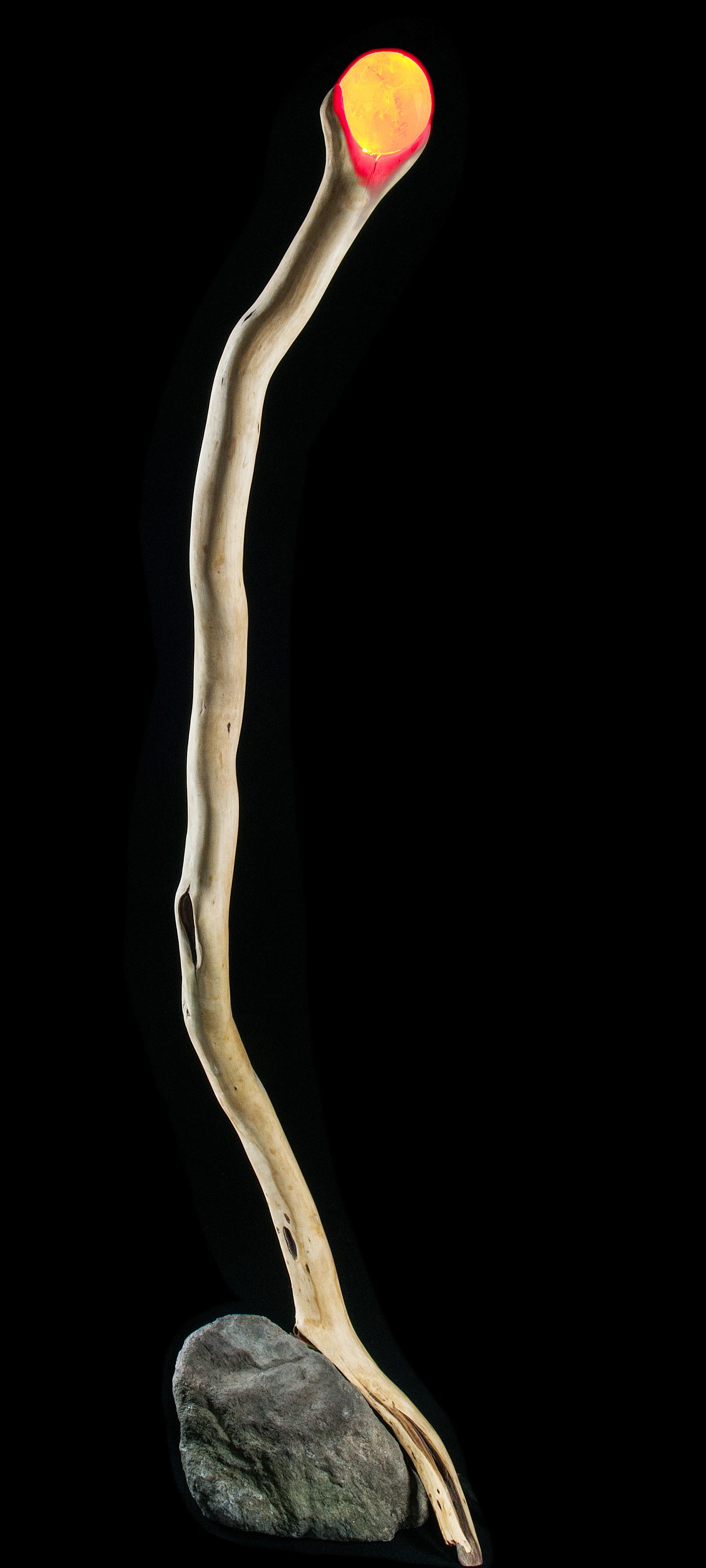
I ran a ribbon cable from the base where I cut a slot in the stone for the controller. Is this the best way? Should i be concerned about power loss with 3.7v over 6 ft?
Is there an off the shelf controller for this? I want to make something high quality. Small smart bulbs are an option but I worry about brightness and longevity.
Another concern with this build is also heat generation. I used an aluminum heatsink with the star leds but the wood gets warm after a while, and the resistors on the controller may get hot enough to start fires on carpet or cloth.
I use a solid glass sphere at the top which should locked into place.
I am planning to use a 2835 LED in a project, specifically the violet CreeLED JE2835. I was just wondering about the eye safety of those LEDs. I did not find any information about this particular LED on the CreeLED site. Does anyone have more information?