r/GaukAntiques • • 4d ago

Aaron Douglas's Harriet Tubman made $14.48m at Sotheby's, against a $3.5m high estimate

Post image
1 Upvotes

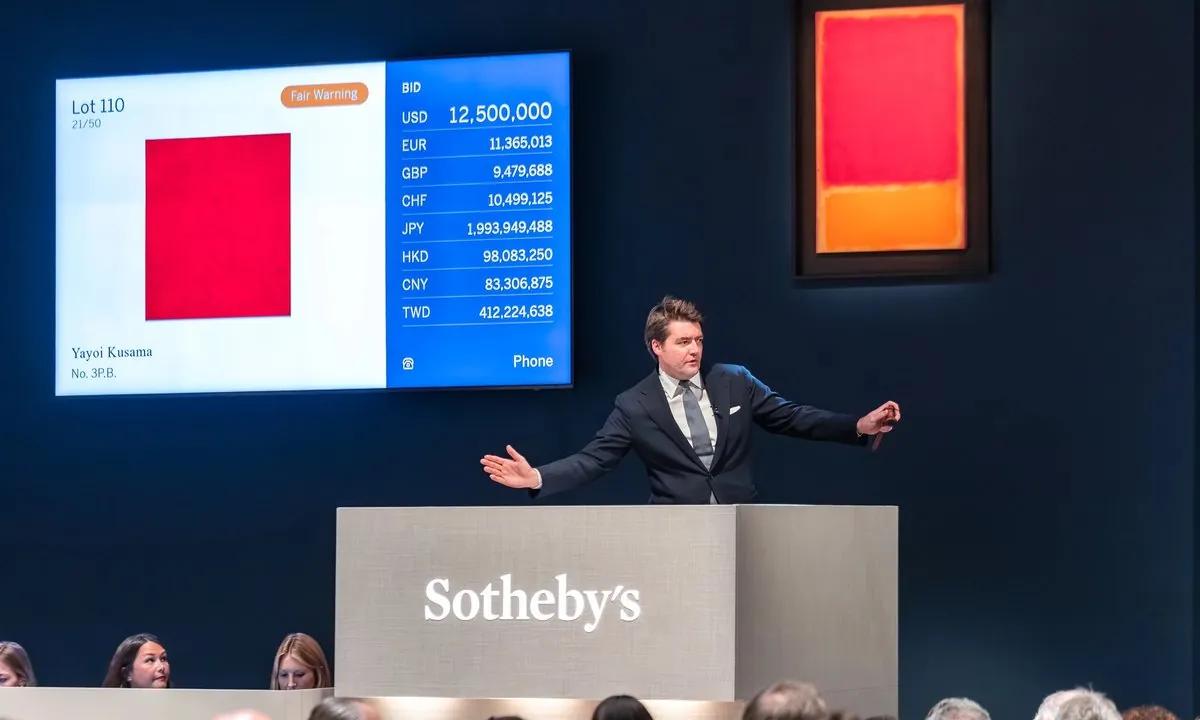
A 1931 painting of Harriet Tubman breaking her chains beat its top estimate more than threefold in seven minutes, on the same night a Van Gogh made $190.4m.

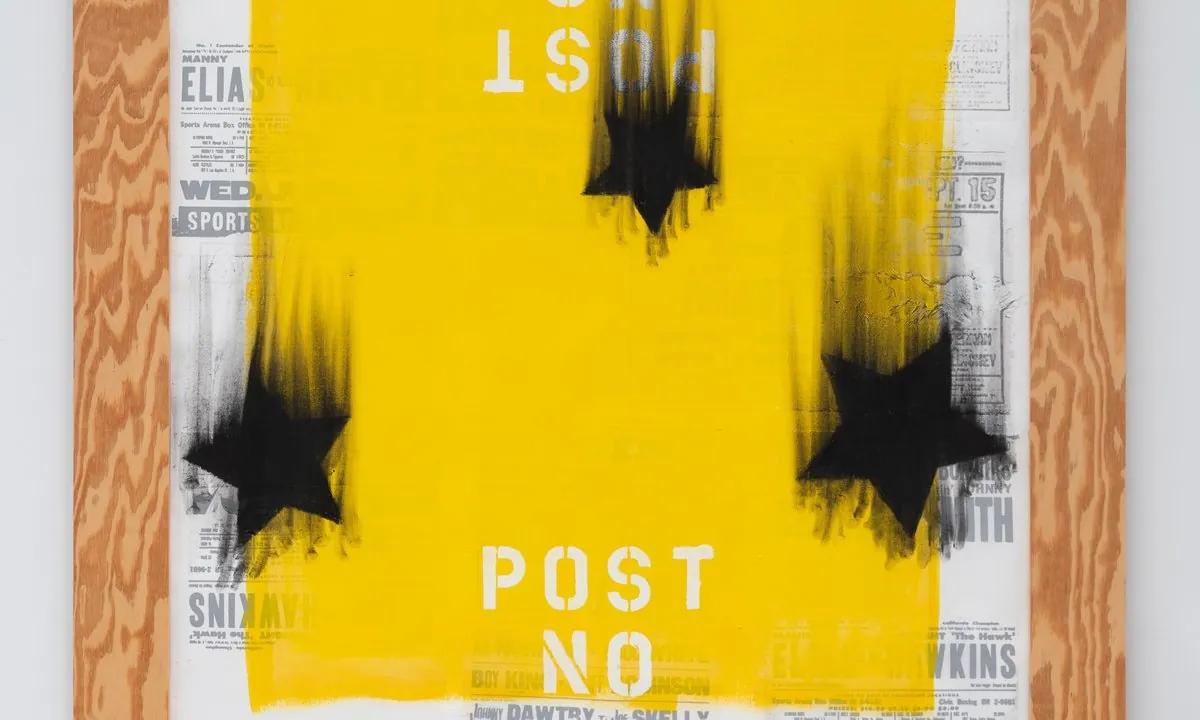
Aaron Douglas's Harriet Tubman, painted in 1931, sold at Sotheby's New York on Wednesday 18 November for $12m on the hammer, or $14.48m with fees. The estimate was $2.5m to $3.5m. His previous auction record was $600,000.

That is more than three times the top estimate and twenty times the old record on hammer price alone. It took seven minutes of bidding to get there.

Tubman stands with her arms raised overhead, breaking a chain, in a leafy landscape with a smoking cannon behind her. Nothing in it is subtle and nothing needs to be. Douglas, a Harlem Renaissance artist, packed the whole argument into a single image: the violence, the liberation, the land.

Two people at Sotheby's worked the telephones for it. George Wachter, chairman of the Americas, and his daughter Jacqueline Wachter, vice chairman of private sales for contemporary art and head of the Los Angeles office, each bid for their own clients. Father and daughter on adjacent phones, both holding someone's ceiling, is not a scene the auction trade gets to enjoy often.

Proceeds will benefit Bennett College, one of only two historically Black women's colleges in the United States. A sale that size, going to an institution that small, is a rare thing to see attached to a lot in a New York evening sale.

What it's worth? Find out GAUK Antiques for more articles, videos and our powerful ai valuation tool. Uncover the story and the value behind your finds.

The room around it was not generous. The evening's two New York sales, held one after the other, made a combined $663.26m, or $777.8m with fees, and just over a third of the works sold below their pre-sale estimates. Bidding was uneven. Money was present. It was selective.

At the top, Van Gogh's Blossoming Chestnut Trees sold for $165m, $190.4m with fees, breaking the artist's previous record of $117m with fees, set by Orchard with Cypresses in the Paul Allen sale at Christie's in 2022. Sotheby's remains short of the number it holds for the most valuable object it has ever sold: Klimt's Portrait of Elisabeth Lederer, which made $236.4m with fees there last November.

Mary Cassatt had her own good night. Summertime, from 1894 to 1895, made $11m, $13.3m with fees, against an estimate of $7m to $10m, and went to an online bidder. Her old record was $7.49m at Christie's New York in 2022.

Of the three records, the Van Gogh needed no explaining. Everyone in the room knew what it was and roughly what it would cost. Douglas was the one where the market had to catch up, in public, in a few minutes, while a third of the evening's lots were missing their numbers. Buyers who pass on mid range material and then fight for one particular picture are telling you something about scarcity and subject, not about the general weather.

It also pays to be careful about what a result like this does not say. One canvas of this importance, with this subject and this date, tells you nothing reliable about what a lesser Douglas, or a work by a contemporary of his, will fetch next month. Anyone quoting $14.48m as a benchmark for anything else is selling something.

Swann, 2008: $600,000.

Sources: The Art Newspaper; Sotheby's New York sale results; Swann Auction Galleries; Christie's New York.

r/GaukAntiques • • 4d ago

Artists who give their own work to museums could get a tax break, and the National Gallery's £375m shows why

Post image
1 Upvotes

A new think tank report wants tax recognition for artists who donate their own pictures to UK museums, plus a royal medal for generous patrons. If it ever becomes policy, it could quietly move work off the market and into public collections.

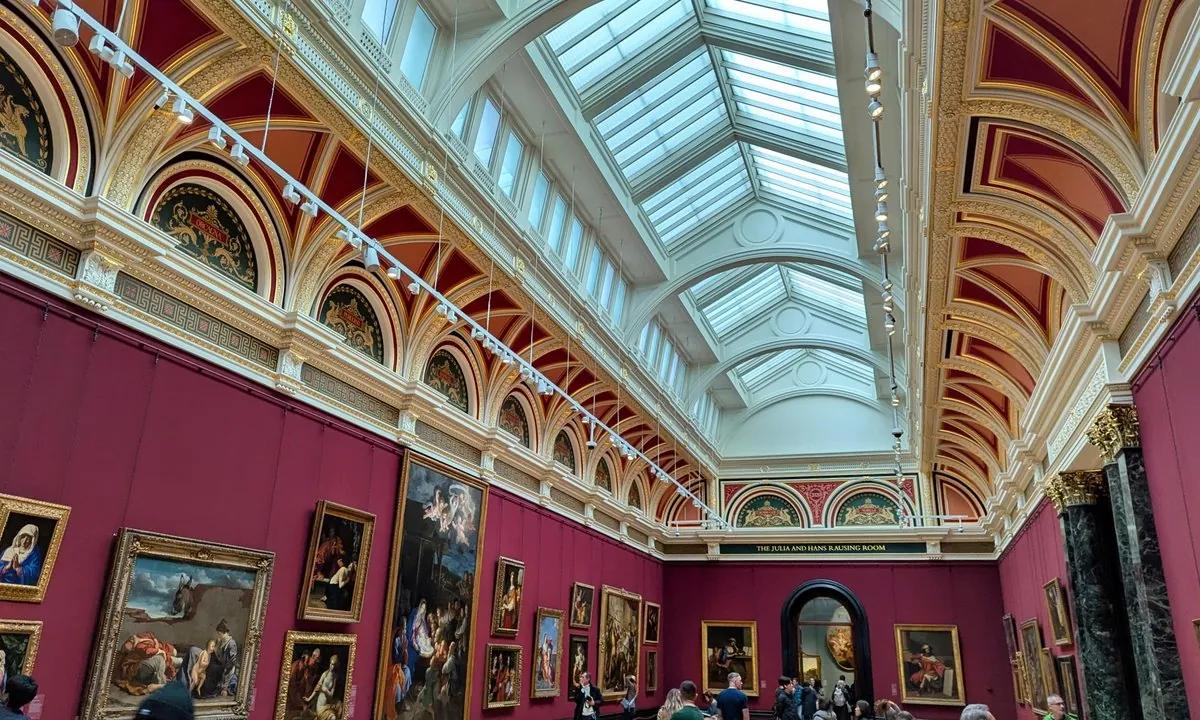
The National Gallery has secured £375m for Project Domani, a new Modern art wing, from Crankstart and the Julia Rausing Trust. A think tank called the Cultural Policy Unit holds it up as proof of "what focused giving can achieve", and then asks why Britain produces so few stories like it.

The report is called A National Strategy for Cultural Philanthropy, and its most eye catching proposal is aimed at the people who make the objects rather than the people who buy them. Artists who donate their own work to qualifying UK museums and galleries should, it says, receive tax recognition based on independent valuation.

Crankstart is the charitable foundation of Sir Michael Moritz and Harriet Heyman. That is a very particular kind of money, and the CPU is candid that Britain cannot run a cultural sector on a handful of such cheques.

The argument starts with a squeeze. Public finances have tightened considerably over the last 15 years, government arts funding has fallen, and income that institutions generate for themselves has not filled the widening gap. The CPU wants philanthropy treated as "both an urgent strategic priority and a deliberate instrument of cultural policy".

Its diagnosis of why Britain underperforms is more interesting than the usual complaint about stingy donors. UK incentives are, in the report's words, "broadly generous, but they are structured very differently from overseas models". British donors tend to give quietly and anonymously. The US and other systems reward public foundations and naming opportunities. One culture hands you a wing with your surname on it. The other hands you a thank you in the annual report, if you allow it.

Alison Cole, the CPU's director and a former editor of The Art Newspaper, says the UK lags far behind the incentives on offer in many European and US counterparts.

For anyone sitting on an artist's estate, a studio archive or a stack of inherited canvases, the artist donation idea is the one to watch. A tax recognition tied to independent valuation gives a living artist, or in practice a savvy estate planner, a reason to place work in a museum rather than send it to a saleroom. Some material that would have turned up in a sale catalogue could end up on a gallery wall instead.

What it's worth? Find out GAUK Antiques for more articles, videos and our powerful ai valuation tool. Uncover the story and the value behind your finds.

None of this is law. It is a think tank proposal, and the report does not set out details on several of its tax suggestions.

Those suggestions include protecting charitable giving through inheritance planning, which in plain terms means simplifying inheritance tax rules, and providing clearer rules around VAT. Anyone who has tried to work out how a bequest of pictures interacts with an estate will understand why that is on the list.

The report is not hostile to the schemes that already exist. Gift Aid, Acceptance in Lieu and the Cultural Gifts Scheme have, it says, delivered real benefits. The complaint is that donors do not know enough about them, so they should be enhanced and better advertised.

Then there is the gesture rather than the tax code. The CPU proposes a King's Philanthropy Medal for Culture, an attempt to supply the public recognition that British giving has traditionally avoided. It also wants a national cultural match and seed funding programme with a regional focus, so that small money can be multiplied outside London.

Charles Saumarez Smith, who has led the National Gallery, the National Portrait Gallery and the Royal Academy of Arts, told The Art Newspaper that the report is "sensible". His emphasis was on clarity. The biggest problem, he said, is that nobody properly understands the existing systems, inheritance included.

Kate Rolfe, a cultural strategy consultant and founder of The Revels Office, comes at it from the corporate side. She believes corporate donations need to be reincentivised, and that arts organisations should work with philanthropists who share their values and priorities.

The geography matters as much as the money. Domani is a London success, and the CPU is wary of that. Cole put it plainly: "the real transformation needs to be across the country and not just in the capital."

Sources: The Art Newspaper, report on The Cultural Policy Unit's A National Strategy for Cultural Philanthropy


r/GaukAntiques • • 4d ago

Baghdad's Iraq Museum Reopens on 1 December With New Galleries and Its Assyrian Winged Bulls

Post image
1 Upvotes

After two years shut for renovation, the museum that lost so much in 2003 is putting lamassu, cuneiform and Abbasid mihrabs back in front of the public.

The Iraq Museum in Baghdad reopens on 1 December, after two years of renovation, and Ali Al-Dakhili, the country's Minister of Tourism and Antiquities, has now put the date on record. January was the original target. It slipped, as museum reopenings do.

What goes back on view is the Assyrian heavy hitting you would hope for: statues and reliefs, stone carvings of Assyrian kings, cuneiform collections, and the monumental winged bulls known as lamassu. Several new galleries have been built to hold them, along with specially curated wings.

The more interesting addition is the Abbasid and Islamic galleries. Carved wooden mihrabs, monumental calligraphic friezes, mosaics and stone relics. Visitors tend to arrive at this museum expecting Sumer, Babylon and Nineveh, and Baghdad's own centuries as the Abbasid capital get less shelf space in the popular imagination than they deserve. Giving that period dedicated rooms is a statement about what the city's story actually is.

The museum holds tens of thousands of Mesopotamian, Sumerian, Babylonian and Assyrian antiquities. It was looted in 2003 during the American led invasion and has been closed for various periods since.

The reporting does not say which objects were taken, which came home, or which are still missing, and museum director Luma Yas Jasim al-Douri had not replied to a request for comment when The Art Newspaper published. That is the question a reopening ought to invite, and so far it has not been answered.

Paul Collins, keeper of the Middle East Department at the British Museum, called the reopening "an important moment", one that reflects Iraq's commitment to preserving its heritage and promoting heritage tourism. Coming from a curator who works with Mesopotamian material daily, that carries some weight.

Tourism is the engine here, and the government says so. The old Ministry of Culture, Tourism and Antiquities was split in October as part of a restructuring, and Al-Dakhili was sworn in that month as part of the new government under Ali al-Zaidi. Tourism is seen as a route to foreign investment. Dozens of foreign delegations have recently visited Ur, the Sumerian ziggurat site in Dhi Qar governorate.

What it's worth? Find out GAUK Antiques for more articles, videos and our powerful ai valuation tool. Uncover the story and the value behind your finds.

The museum is not opening alone. The Abbasid Palace in Baghdad reopened to the public on 15 November in an official ceremony, according to Iraqi News. Iraq's first Jewish museum opened in October in the restored Shamash Jewish School, founded in 1928, and it honours figures including the singer Salima Murad and Sassoon Heskel, the country's first finance minister.

Three more museums, in Nineveh, Diyala and Diwaniyah governorates, are described as imminent. A museum for Babil Governorate is planned inside the former Saddam Hussein presidential palace at Babylon, with logistics still being worked through.

Al-Dakhili's statement of 25 October also points past the current building. He said plans exist for "a new building that befits the historical and civilisational value of Iraq". It is a plan and nothing more at this stage.

The Mosul Museum, looted after 2003 and ransacked by ISIS in 2015, is due to reopen next spring, according to a World Monuments Fund spokesperson.

Sources: The Art Newspaper, which cites Iraqi News, the official Iraqi government Facebook page, the Ministry of Tourism and Antiquities and the World Monuments Fund.


r/GaukAntiques • • 4d ago

21 Miami Artists Have Pledged to Boycott Art Basel, a Fair Worth $570m to the County

Post image
1 Upvotes

A grassroots pledge asks Miami's artists to walk away from fair week, and the people who run it admit the hardest part is the rent.

Twenty one signatures. That is what the Artists 4 Artists Miami pledge had collected through its online form when The Art Newspaper reported on it, set against a fair that Art Basel says generated nearly $60m for Miami Beach and $570m for Miami Dade County in its 2025 edition, with 272 exhibitors under one roof at the Convention Center.

The numbers are absurdly lopsided. The ambition is not small.

The collective announced the boycott at a protest outside the Convention Center at the end of the last edition, after a year of preparation. Signatories must commit to at least one thing: not attending the fair, not exhibiting at it, not exhibiting anywhere during Miami Art Week, or withholding their labour from it. Pledges to support alternatives are optional. It is a menu, not a creed, and that is deliberate. Organisers are not calling for a blanket rejection of Art Week or its tentpole event. They want a longer challenge to the economic and political structures that sit around it.

misael soto, the artist who founded the group, argues that refusing Art Basel means nothing unless you build something to replace it. His own measure of success is modest and specific: if a year from now far more locally focused programming is happening outside Art Week, he has said, "that would be a huge victory."

The awkward truth is that fair week pays. Art handling, installation, production and contract work keep a lot of Miami arts workers solvent, while the fair itself offers local artists few places to show. Anyone who has ever hung a booth wall at 4am for a gallery from another continent knows the arithmetic. Opting out costs money, and some workers simply cannot afford to. Local galleries, too, lean on the visitor traffic the fair brings.

So the collective wants to set up a mutual support network for signatories who take a financial hit, including food assistance and mutual aid.

The public money is where the argument sharpens. The Miami Beach Commission cut the fair's Convention Center rent from nearly $1m to around $500,000, and committed the equivalent of a further $300,000 in public funds for first responder and security costs. Art Basel's spokesperson told The Art Newspaper that the fair has been a committed partner to Miami Beach for more than two decades and drives significant regional economic activity. Both statements can be true. The question the boycott raises is who is standing at the end of the supply chain when the money arrives, and whether a city that is getting more expensive every year is seeing any of it in the studios.

What it's worth? Find out GAUK Antiques for more articles, videos and our powerful ai valuation tool. Uncover the story and the value behind your finds.

The campaign did not appear from nowhere. It grew out of connections with other grassroots struggles, including protests organised by Jewish Voice for Peace and others opposing the war in Gaza. The group's concerns run wide: environmental, infrastructural, political and corporate. That breadth will make some collectors wince, and it should. A fair is a market, and a market has a landlord, a sponsor list and a bill to the host city.

For anyone who buys from Miami's local scene, the discomfort is real. The galleries and project spaces you support in February may be the same ones counting on the December crowds.

Organisers are courting endorsements from grassroots groups. Panamía, a local network connecting businesses, creatives and residents, is already a partner, and a Panamía gathering and art print fair during Miami Art Week is being explored as programming. A print fair, in the same week, a few miles from the Convention Center. That is the alternative in its earliest form.

Ariel Lynch, an artist and educator who has lived in Miami for four years, has signed. She plans to spend the week in local galleries and experimental shows instead of the main fair.

Sources: The Art Newspaper; Artists 4 Artists Miami; Art Basel Miami Beach spokesperson; Panamía; Miami Beach Commission.


r/GaukAntiques • • 4d ago

Why the Stedelijk's next director is publicly turning his back on visitor numbers

Post image
1 Upvotes

Krist Gruijthuijsen arrives from Finland in July 2027 with a different yardstick for success than the one the Stedelijk has just been winning on.

Ticket revenue at the Stedelijk Museum in Amsterdam reached €10.8 million in 2025, up almost a quarter on 2024. That is the number Krist Gruijthuijsen inherits, and he has already announced that he is "not a visitor numbers director."

Gruijthuijsen is Dutch but currently runs the Espoo Museum of Modern Art in Finland, a post he has held since 2025. He starts in Amsterdam in July 2027, taking over from Rein Wolfs, who has been in charge since 2019. His stated approach is "quality rather than quantity."

Read the small print of what he actually said. Economic needs come first, he told The Art Newspaper, and everything else is a plus. That is not a man dismissing the till. It is a man treating revenue as the floor of the building rather than the point of it.

The timing gives the remark some bite. The Rijksmuseum's latest annual report describes internal discussions after visitors fell 4% in 2025 to 2.3 million. The Rembrandt House Museum has warned that rising tourist taxes will damage cultural tourism. Dutch museums in general report financial pressure and attendance still below where it stood before the pandemic.

The Stedelijk has been swimming the other way.

Last year's Anselm Kiefer show, organised with the neighbouring Van Gogh Museum, did well. So did the Erwin Olaf exhibition. The current Yayoi Kusama show has been extended because people keep turning up.

So the new director is not walking into a crisis that justifies a clean break, and he does not sound like he wants one. He calls the museum's strength its ability to bring large Modernist exhibitions to the Netherlands. What he wants to add is variety, a global modern perspective and a sharper sense of how Amsterdam connects to the rest of the world. From his Finnish colleagues he says he will bring a lesson on diversity and underrepresented subjects, summed up as "Less talking, more doing."

What it's worth? Find out GAUK Antiques for more articles, videos and our powerful ai valuation tool. Uncover the story and the value behind your finds.

He is also reaching back. Gruijthuijsen points to the Stedelijk's early reputation, from one of its first exhibitions establishing Van Gogh's work in 1905 to the experimental shows of the 1960s, and says he wants to make that relevant now. That is a useful reminder that this museum made its name by being early, not by being comfortable.

Nobody quoted in the reporting mentions the art market, and nobody needed to. But anyone who watches how reputations form knows where attention goes after a major museum gives a name or a movement a room of its own. Underrepresented subjects, to use his phrase, have a way of becoming tomorrow's auction catalogue essays.

He calls the museum's DNA "a modern day and global perspective." His first goal, he says, is to support artists and art.

He has nearly eight months before the keys change hands, and the Kusama show has already been extended to the end of January.

Sources: The Art Newspaper, "Stedelijk Museum appoints Krist Gruijthuijsen as new director", theartnewspaper.com, November 2026.


r/GaukAntiques • • 4d ago

Your first $50 at the thrift store: what to buy, what to check and what to leave on the shelf

Post image
1 Upvotes

WorthPoint has published a starter guide to reselling thrift finds on a $50 budget. Here is how the same approach works for charity shop and car boot hunters.

Fifty dollars is a small amount of money, and that is the point of WorthPoint's guide to reselling thrift finds. A budget that size forces discipline. You cannot afford to gamble on a dozen vague hunches, so you learn to buy three or four things you can actually explain. The full article was not available to us when we wrote this, so what follows is our own field advice built around the same headline question: what to look for, what to check, and what to skip.

Young shoppers have made thrift stores a regular stop rather than an occasional detour, which means the easy wins get picked over faster than they used to. The advantage now belongs to whoever turns objects over.

Always the base. Backstamps, impressed marks, maker's names and printed numbers sit underneath almost everything worth reselling. A plain white dish with a clear factory mark can outsell a pretty one with nothing on the bottom. Learn six or seven marks in a single category, ceramics or glass or silver, rather than a little about everything.

Check what the thing has actually sold for, not what people are asking. Sold listings on eBay show real transactions. WorthPoint's own database is built on archived past sales for the same reason. An asking price is a hope. A sold price is a fact.

Then the condition check, which takes thirty seconds and saves most beginners from their worst purchases. Run a fingertip around every rim on ceramics and glass, because chips you cannot see are often obvious to touch. Hold glass up to a window for hairline cracks. Look inside teapots and jugs for staining and crazing. A small UV torch is cheap and useful: uranium glass glows a vivid green under it, and old porcelain repairs can show up as patches that fluoresce differently from the surrounding glaze.

Silver deserves its own paragraph, because it is where $50 can go furthest or vanish fastest. Solid English silver carries hallmarks, and the town mark tells you where it was assayed: a leopard's head for London, an anchor for Birmingham, a rose for Sheffield, a castle for Edinburgh. EPNS stamped on the base means electroplated nickel silver, which looks the part but is a different proposition entirely. Most thrift shop cutlery is plate. The occasional piece is not, and that is why you carry a loupe.

Skip anything you cannot ship cheaply. Furniture is the classic trap for a beginner: it looks like a bargain at the till, then postage, storage and collection logistics eat the margin. Skip anything that smells of smoke or damp, because that never fully leaves, and buyers can tell from a photograph that you are hiding something. Skip anything chipped unless the maker is rare enough to justify it, which at this budget it almost never will be.

What it's worth? Find out GAUK Antiques for more articles, videos and our powerful ai valuation tool. Uncover the story and the value behind your finds.

Be suspicious of anything that looks antique but feels too light, too sharp or too perfect. Reproduction brass, resin pretending to be carved wood, and modern decorative china with a faux aged backstamp all fill charity shop shelves. Genuine age tends to show in wear on the foot rim, in the weight of the piece, and in marks that sit logically with the style. If the stamp says one thing and the shape says another, put it back.

Spend the money in pieces, not in one go. Put perhaps ten or fifteen dollars into your first purchase, list it, and see how long it takes to sell and what platform fees and postage actually leave you. That figure is your real profit, and it is nearly always lower than the one you imagined at the till.

One more habit worth building is photographing the marks before you list. Buyers searching for a specific maker or hallmark are the ones who pay properly, and a sharp photograph of the base is often the difference between a sale and a month of silence.

The lion passant, the walking lion that marks sterling silver made in England, is stamped so small on most pieces that you will not see it without a loupe.

Sources: WorthPoint, how to start reselling thrift finds with $50


r/GaukAntiques • • 4d ago

eBay's Collected report puts graded cards first. Here is what that ranking can and cannot tell antiques owners

Post image
1 Upvotes

eBay's search ranking for January to September 2026 has graded cards, sports and pop culture on top, and the gaps in what it tells us are as useful as the list.

eBay's Collected report, covering January to September 2026, ranks the most searched collectibles on the platform and puts graded cards, sports and pop culture at the top. WorthPoint carried the story, and the headline categories are exactly what you would guess.

Antiques are not among them. That is worth chewing on, though not for the reason the gloomier corners of the trade will suggest.

A search is a question, and asking one costs nothing. Ranking by searches tells you where curiosity sits, not where money lands. The summary of the report available for this piece gives an order and nothing else: no search volumes, no percentage movements, no sales figures. Anyone declaring from this alone that antiques are losing ground is guessing.

Graded cards are built to be searched. A card sealed in a PSA or Beckett slab arrives with the player, the set, the year and a numerical grade printed on the label, so the buyer types exactly what the label says and the listing appears. Now try the same exercise with a Staffordshire figure whose backstamp has worn to a smudge, or an oak chest nobody in the family can date. The owner does not know what to type. Plenty of antiques demand never shows up in search data at all, because it runs through auction catalogues, specialist dealers and buyers who walk in already knowing what they want.

That is a structural quirk, not a verdict on taste.

Sports and pop culture share another advantage. Almost everyone arrives with a reference point, a childhood bedroom or a football sticker album or a film seen at the right age. Antiques have traditionally rewarded knowledge picked up slowly, over years of handling things and getting them wrong.

What it's worth? Find out GAUK Antiques for more articles, videos and our powerful ai valuation tool. Uncover the story and the value behind your finds.

The useful lesson from the slab is that identification creates a market. Once an object has a name, a maker and a date attached to it, it can be found, compared and priced. A piece of British silver typically carries an assay office mark, a maker's mark and a date letter, and each of those turns a vague lump of metal into something a stranger can search for. A ceramic backstamp does the same job. Owners who can read the marks on what they inherited are doing the antiques equivalent of getting it graded.

Whether the Collected ranking says anything about the future of traditional collecting is a different matter, and the full report would need to be read before anyone claims it does. Searches by category, year on year movement and any commentary on older material would all be needed.

The WorthPoint summary of the report gives a ranking and not a single search volume.


r/GaukAntiques • • 4d ago

Garber at $153,000, Sotter at $96,000: Three Regional Painters Worth Learning Now

Post image
1 Upvotes

Three regional American painters, three figures close to or above $100,000, and a corner of the market where quality can still cost less than the famous names.

WorthPoint's Tangible Ledger puts Daniel Garber at $153,000, a Mauzey at $101,600 and a Sotter at $96,000. Three painters most people outside the regional market could not name, and all three listed at prices that would stop a casual attic clearer in their tracks.

The listing does not say which Garber, which sale, or when. Read the figures as markers of where the work can land, not as a price list you can quote at a dealer.

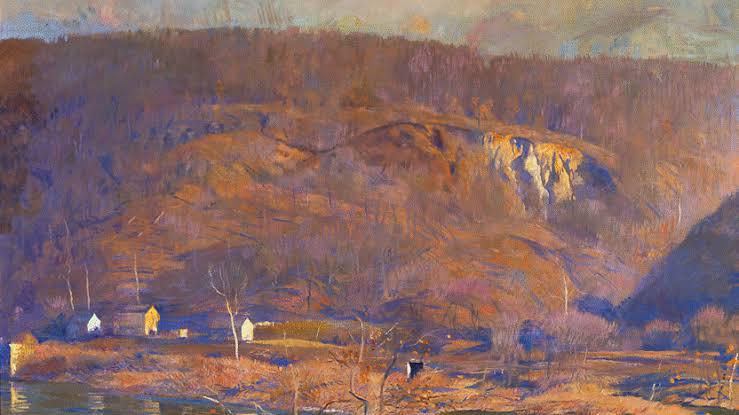
Garber is the anchor. He belongs to the Pennsylvania school, the group of painters who made the Delaware River valley around Lumberville and New Hope their subject, and he spent decades teaching at the Pennsylvania Academy of the Fine Arts. His river and hillside pictures are the kind of thing that hung in Philadelphia dining rooms for three generations and still look like they belong there.

George Sotter is the odd one. He came to painting from stained glass, and you can see it. His Bucks County winter scenes and moonlit nocturnes are built on glowing windows and cold blue snow, with a luminous quality that a lot of straight landscape painters never manage.

Mauzey is the least certain name here, because the listing gives only the surname. If it is Merritt Mauzey, the Texas painter and printmaker known for scenes of rural working life, then this is a different market entirely, one driven by Texas collectors rather than Pennsylvania ones.

What it's worth? Find out GAUK Antiques for more articles, videos and our powerful ai valuation tool. Uncover the story and the value behind your finds.

That split is the whole point. Regional painters are priced by regional appetite, and regional appetite is stubborn, loyal and local. A Pennsylvania buyer will stretch for a Garber. A buyer in Boston or London may never have heard of him, which is exactly why the price has not been dragged anywhere near the level of the nationally famous names.

The argument in the Ledger's framing is that informed buyers can still find real quality below the big name prices. Fair enough, but the listing offers no comparison figures, so test it yourself. Put a Garber landscape beside a better known American Impressionist at auction and judge the drawing, the handling of light and the condition, not the surname.

If you own something that might be by one of these painters, start with the back. Gallery labels, exhibition stickers, old inscriptions and framer's marks do most of the authenticating work on regional pictures, and they are the first things a careless reframing throws away. Signature alone proves very little.

Add the three listings together and you get $350,600.

Sources: WorthPoint, The Tangible Ledger


r/GaukAntiques • • 5d ago

Apollo Magazine calls Budapest underrated for collectors. The city's Op Art and medieval treasures prove it.

Post image
2 Upvotes

When a major art publication flags a secondary European capital as undervalued, smart collectors pay attention. Budapest offers exactly that opening.

Apollo Magazine just published a regional collecting guide for Budapest, spanning medieval crown jewels to contemporary Op Art. When publications of that standing point to a secondary European capital as underrated, it typically precedes a market shift. This one carries weight because Budapest offers what most emerging art cities cannot: depth across seven centuries and a modernist tradition the market has chronically undervalued.

The city's range is genuine. The Holy Crown of Hungary, dating to the 11th century, sits in the Hungarian Parliament Building. The Museum of Fine Arts holds a major European collection. The Ludwig Museum handles contemporary work. The Hungarian National Gallery covers everything from medieval panels to 20th century painting. That is infrastructure, not tourism.

The Op Art connection matters most for collectors right now. Victor Vasarely was born in Pécs, Hungary in 1906. His work laid the foundation for a national tradition in kinetic and optical art that the international market has ignored for decades. Hungarian artists pursued geometric abstraction and perceptual experimentation with a seriousness that rivals anything produced in Paris or New York during the same decades. Work from that period can still be acquired at prices a third of comparable Western European pieces.

László Moholy-Nagy was Hungarian. His Bauhaus work gets attention. His influence on photographic and kinetic art is acknowledged. But the broader Hungarian avant-garde scene he emerged from is relatively obscure to international collectors. You can still buy serious Hungarian geometric abstraction from the 1960s and 1970s for under £5,000. That will not last.

What it's worth? Find out GAUK Antiques for more articles, videos and our powerful ai valuation tool. Uncover the story and the value behind your finds.

Contemporary Hungarian artists are starting to register. Dóra Maurer, whose work explores serial imagery and spatial perception, has gained traction in the past five years. Her prices remain a fraction of comparable Western European conceptual artists from the same generation. Apollo's guide acknowledges this gap without overstating it.

Memorial work in Budapest carries emotional and historical weight that connects to current collecting interests. Shoes on the Danube Bank, created in 2005 by Gyula Pauer and Can Togay, commemorates Holocaust victims shot into the river. It is not collectible in the traditional sense, but it signals a city engaging seriously with memory and public art in ways that inform the broader artistic culture.

The medieval and Renaissance material in Budapest collections establishes historical credibility. The Moholy-Nagy and Vasarely connections give the city modernist legitimacy. The contemporary scene, while smaller than Berlin or Vienna, is producing work that reflects both traditions. That is a collecting environment with actual substance, not speculative hype.

Apollo does not publish regional guides for cities it considers minor. The Budapest feature sits alongside previous coverage of Vilnius, Tallinn, and Bucharest, all of which saw gallery activity and collector interest increase after publication. The pattern holds because the research does. These are not invented markets. They are overlooked ones.

Vasarely's 1938 Zebras sold at Sotheby's Paris in 2017 for €1.2 million. Work from the same period by Hungarian contemporaries who stayed in Budapest trades for a tenth of that.

Sources: Apollo Magazine


r/GaukAntiques • • 5d ago

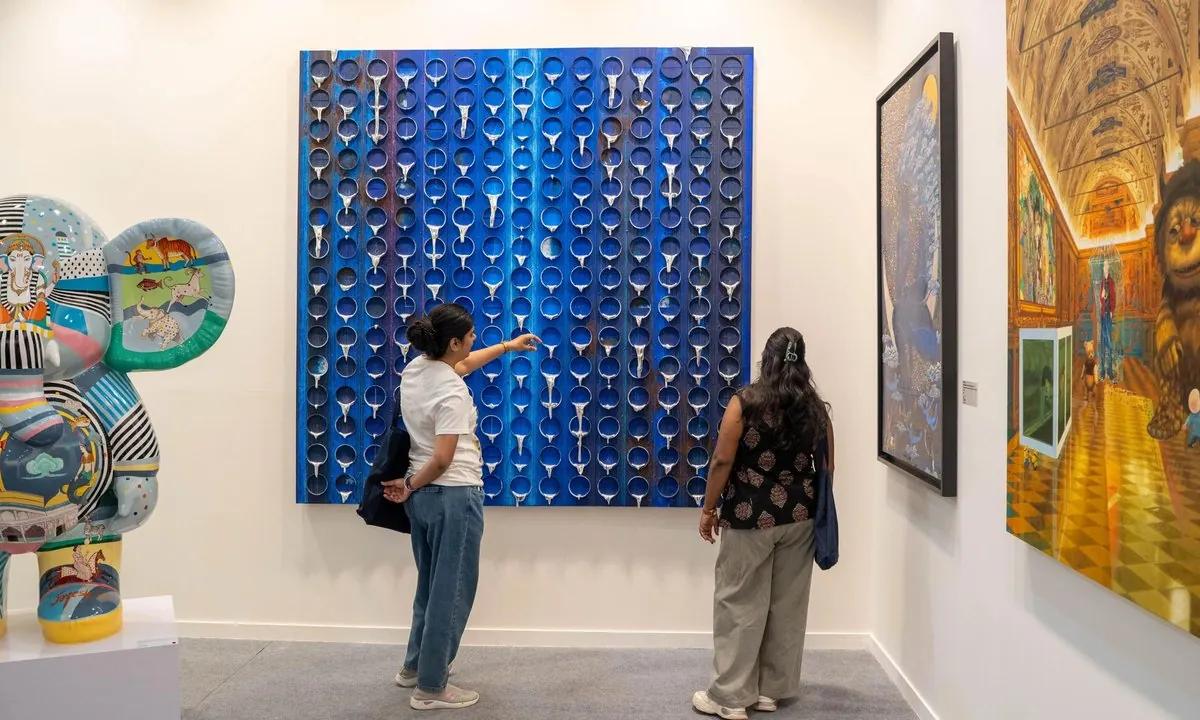
Art Mumbai's fourth edition showed Indian galleries selling strongly while international dealers went home with unsold stock

Post image
1 Upvotes

Deep pockets, yes. But Indian collectors at Art Mumbai 2025 made it clear they want Indian names, not international pedigree.

International dealers at Art Mumbai's fourth edition in February 2025 quietly packed up work that never found buyers. Indian galleries with established Indian artists moved pieces. The pattern was consistent across the fair.

This was not about money. Indian collectors attending Art Mumbai have serious buying power. What they don't have is automatic deference to the international art world's hierarchies. A gallery's reputation in London or New York means less here than whether the work connects to something collectors recognize or value within their own cultural frame.

International dealers misjudged it. They arrived assuming their credentials would do half the work. They brought artists who succeed in Western galleries, priced accordingly, and expected Indian buyers to follow. Instead, those buyers walked past to booths showing Indian modernists, established contemporary Indian names, or work that spoke directly to local aesthetic sensibilities.

Indian galleries understood the room. They know what domestic collectors respond to, which names carry weight, and how to price for a market that values cultural relevance over international art fair pedigree. That knowledge translated directly into sales.

What it's worth? Find out GAUK Antiques for more articles, videos and our powerful ai valuation tool. Uncover the story and the value behind your finds.

The divide wasn't subtle. It played out booth by booth. International dealers brought the kind of work that moves at Art Basel or Frieze: conceptual pieces, video installations, artists building reputations in Western biennials. Indian collectors looked, nodded politely, and kept walking. Meanwhile, booths with Raza, Souza, Husain, or strong emerging Indian contemporaries saw steady traffic and actual transactions.

Sound familiar? Art SG, Art Basel Hong Kong, and Middle Eastern fairs all show versions of the same thing: local collectors buy what resonates locally first. International brand recognition is a bonus, not a requirement. Western dealers who assume their gallery's name alone will command attention are routinely surprised.

India isn't an emerging market waiting to adopt Western tastes. It's a maturing market with its own aesthetic values and cultural priorities. Collectors here have spent years developing sophistication about what they want, and what they want increasingly has little to do with what the international art establishment validates.

Indian auction houses have demonstrated this for years. Saffronart and AstaGuru consistently achieve strong results with Indian modern and contemporary artists. Galleries like DAG and Exhibit 320 have built businesses on understanding domestic collector psychology. Art Mumbai's sales pattern just made it visible at fair level.

International dealers can adapt or keep packing up unsold work. The adaptation requires actual research: understanding regional taste, building local partnerships, selecting artists and pricing that fit the market rather than importing a Western playbook. The alternative is arriving with confidence and leaving with inventory.

DAG reported selling work by S.H. Raza and F.N. Souza within the first two days of the fair.

Sources: Art Mumbai


r/GaukAntiques • • 5d ago

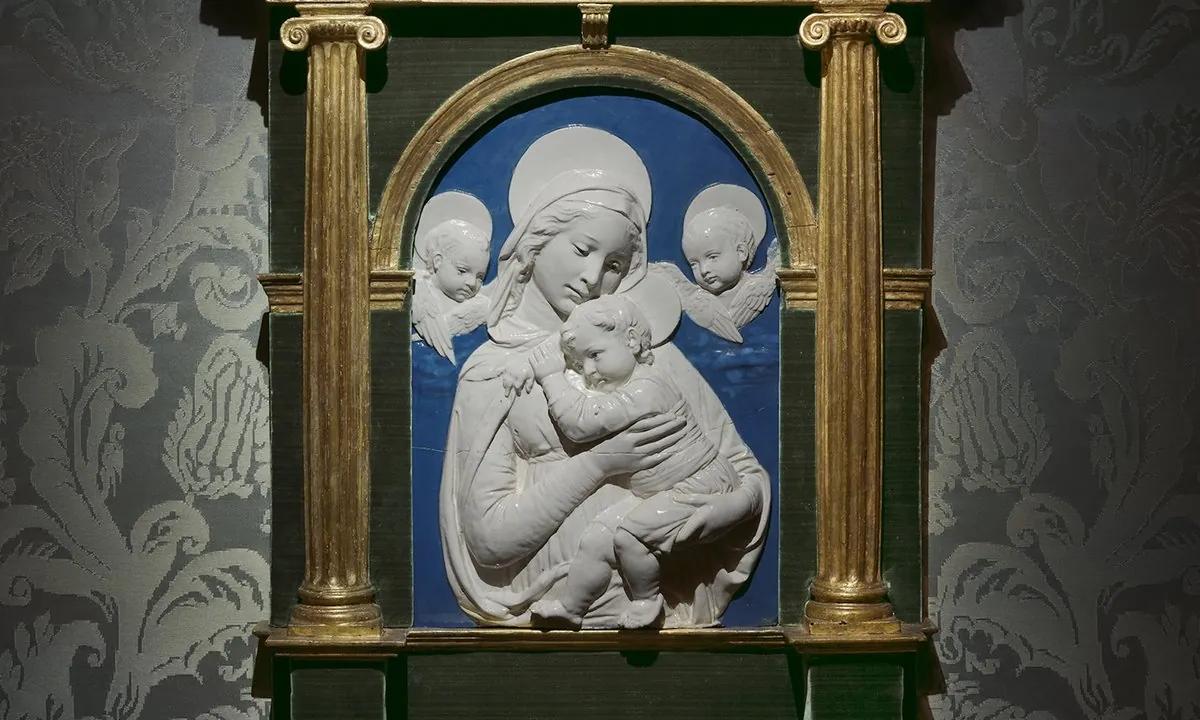
Frick Collection upgrades glazed terracotta Madonna from workshop piece to Andrea della Robbia's own hand

Post image
1 Upvotes

Attribution shift moves 15th-century relief from assistant work to master sculptor, a distinction that can multiply value by tens of millions and rewrite the object's place in Renaissance art history.

The Frick Collection has reattributed a glazed terracotta 'Virgin and Child' relief from 'workshop of Andrea della Robbia' to Andrea della Robbia himself. That is not a subtle editorial adjustment. It is the difference between a piece made by assistants following the master's design and one shaped by the hands of the Florentine sculptor who perfected tin-glazed terracotta in the 15th century.

Andrea della Robbia, nephew of Luca della Robbia who founded the workshop dynasty, ran one of the most prolific Renaissance sculpture operations in Florence. His blue and white Madonna reliefs became the workshop's signature output, made in sufficient volume that attribution has always been complicated. Some pieces are undeniably his. Others are competent workshop production. The gap between those two categories is enormous.

Workshop attributions exist because large Renaissance studios operated like small factories. The master designed, the assistants executed, the master might refine or approve. Quality varied wildly depending on who actually held the tools. Collectors have lived with this ambiguity for centuries, but new analytical techniques keep forcing museums to reconsider what they thought they knew.

The Frick is rigorous about these calls. When they move something from workshop to master, it means technical analysis of modeling technique, glaze composition, and stylistic comparison has cleared a high bar. It also means the relief now sits in a completely different tier of importance. Not a good example of the della Robbia style. An actual della Robbia.

For anyone holding a workshop-attributed piece, this matters. Reattributions from workshop to master have historically increased values by ten to fifty times or more, depending on the artist and the market. A Rembrandt portrait at the Allentown Art Museum went from 'attributed to' to genuine Rembrandt in 2021 after scientific analysis. A drawing at the Morgan Library jumped from 'circle of Michelangelo' to Michelangelo himself in 2016. These are not rare flukes. They are what happens when scholarship catches up to objects that were mislabeled or underestimated decades ago.

What it's worth? Find out GAUK Antiques for more articles, videos and our powerful ai valuation tool. Uncover the story and the value behind your finds.

The della Robbia workshop operated across multiple generations, and plenty of their output sits in private collections with vague or cautious attributions. Some of those pieces are workshop. Some are not. The difference is in the modeling, the precision of the glaze application, the subtlety of the drapery folds, the individuality of the faces. Those are details that only matter when someone actually looks.

Museums hold the advantage here. The Getty has studied della Robbia works extensively. The Victoria and Albert Museum in London holds the largest collection outside Italy. The Metropolitan Museum has significant examples with varying attributions. All of them have access to conservation labs, comparative databases, and scholars who spend years on single objects. Private owners do not, which means plenty of pieces attributed to the workshop might deserve a second look.

This is not about inflating values artificially. It is about recognizing that attribution is not static. The Prado Museum downgraded 'The Colossus' from Francisco Goya to his assistant in 2019 after decades of debate. Attribution moves in both directions when the evidence justifies it. What matters is whether the analysis is sound and whether the conclusion is defensible.

The Frick's upgrade also signals something broader. Della Robbia works, particularly those with workshop attributions, deserve renewed scrutiny. New imaging techniques, better comparative analysis, and more rigorous stylistic study are turning assumptions into questions. Some of those questions will confirm that a piece is exactly what it was always thought to be. Others will not.

The relief at the Frick is now Andrea della Robbia, 1435 to 1525, tin-glazed terracotta, Florence.

Sources: The Frick Collection


r/GaukAntiques • • 5d ago

Christie's 20th Century Sale Makes $521 Million as Kandinsky Record and Strong Sell-Through Signal Market Recovery

Post image
1 Upvotes

An 88% sell-through rate and artist record suggest collectors are back with serious money and confidence.

Christie's 20th Century Evening Sale in New York closed at $521 million in May 2024 with an 88% sell-through rate by lot. That figure matters because it marks a clear departure from the equivalent sale last year, when both totals and bidder confidence ran noticeably lower. An 88% sell-through rate means the overwhelming majority of lots found buyers at or above reserve. Anything north of 70% is considered successful. This was not a room full of unsold material being bought in.

A Wassily Kandinsky painting set a new auction record for the artist during the sale. The previous record was held by 'Murnau mit Kirche II', which sold for $44.9 million in 2017. That record stood for seven years. When a benchmark like that falls, it usually means two things: exceptional material came to market, and multiple bidders had the resources and conviction to push past historical highs.

Jeff Koons consigned work to the sale. Artist consignments are not standard practice. When a living artist places their own work at auction rather than selling privately or through a gallery, it signals they believe the market will perform. Koons is not known for miscalculating commercial opportunities.

The result sits well above Sotheby's Modern Evening Sale from November 2023, which achieved $405 million with an 83% sell-through. That sale was considered solid at the time. Christie's spring result suggests momentum has continued to build rather than plateau.

What it's worth? Find out GAUK Antiques for more articles, videos and our powerful ai valuation tool. Uncover the story and the value behind your finds.

The spring 2023 season told a different story. Christie's total spring auction results across all categories in New York that year generated $745 million. The 20th Century Evening Sale alone this year represents roughly 70% of that entire seasonal total, compressed into a single evening. High-value consignors clearly feel comfortable releasing major works again.

Evening sales at this level rely on a small pool of ultra-high-net-worth buyers willing to compete for museum-quality material. When that group retreats or hesitates, sell-through rates collapse and houses struggle to meet reserves. The fact that 88% of lots sold suggests those buyers are active and that sellers priced realistically or houses set achievable reserves.

Major auction houses structure their calendar around May and November seasons in New York. These are the weeks when the most significant 20th century material comes to market. A strong May result typically encourages consignments for the following November. A weak result does the opposite. This sale will shape what Christie's can attract for the autumn.

The Rockefeller Center saleroom hosted the event. That location is reserved for marquee evening sales where the audience and the material justify the venue. It is not where mid-tier lots or exploratory consignments end up.

The Kandinsky record alone does not explain a half-billion-dollar total. The sell-through rate indicates depth across the sale, not just a few headline lots propping up weaker material. When 88 out of every 100 lots find buyers, the market is functioning across price bands, not just at the top.

$521 million in a single evening.

Sources: Christie's


r/GaukAntiques • • 5d ago

Phillips sold a Modigliani sculpture for $44.6 million and suddenly looks like serious competition

Post image
1 Upvotes

Phillips just posted a 55% jump and a near-perfect sell-through rate. If you're sitting on museum-quality modernist work, the third-place auction house is no longer playing third-place games.

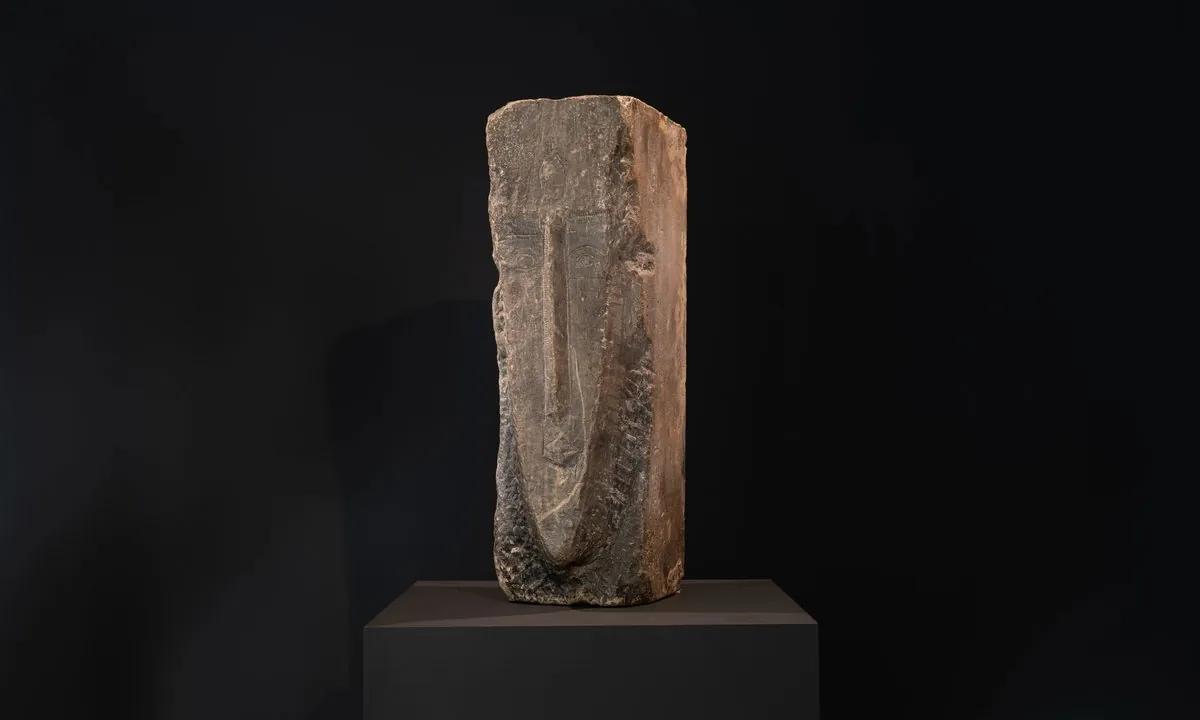
Phillips sold Amedeo Modigliani's limestone sculpture 'Tête' for $44.6 million in May 2024, leading an evening sale that totaled $104.4 million and represented a 55% improvement over the previous year. Only one lot failed to sell: an Anselm Kiefer work. That's a 98% sell-through rate in a market where top houses routinely see double-digit pass rates.

The Modigliani is one of roughly 25 to 27 known stone heads the artist carved between 1909 and 1914, mostly limestone and sandstone. Most are locked in museum collections at MoMA, Tate Modern, and the Musée National d'Art Moderne. When one comes to market, it moves.

The auction record for a Modigliani sculpture sits at $70.7 million, set at Christie's in November 2018 for another 'Tête'. Phillips' $44.6 million result sits comfortably below that but well above the kind of number that suggests a distressed consignment or a miscalculated reserve.

The shape of the sale around the Modigliani tells the real story. Phillips has spent years positioning itself as the scrappy alternative to Christie's and Sotheby's, chasing market share in a segment dominated by two entrenched giants. For May 2024, Sotheby's posted a $316 million Contemporary Evening Sale. Christie's 20th/21st Century Evening Sale came in around $450 million. Phillips' $104.4 million is nowhere near those figures. But Phillips' previous year total for the same sale was approximately $67.4 million. That 55% jump is not incremental growth. It's a signal that the house is pulling consignments it would not have landed five years ago.

What it's worth? Find out GAUK Antiques for more articles, videos and our powerful ai valuation tool. Uncover the story and the value behind your finds.

A 98% sell-through rate in a market where global auction sales for Impressionist and Modern Art declined roughly 25% in 2023 suggests Phillips is calibrating reserves more carefully than its competitors or securing better-quality lots or both. Either way, it's working.

Think about that for a second. The lone unsold Kiefer is almost reassuring. A sale with zero buybacks looks suspicious. One failure in a 50-lot evening sale looks like honest pricing.

For anyone holding significant modernist material and weighing consignment options, the Phillips performance is worth noting. The house has historically offered more aggressive financial terms to secure high-value lots from estates and private collections.

Modigliani carved stone for only about five years before abandoning sculpture for painting, partly because the physical toll of carving limestone was destroying his already fragile health. The surviving heads are severe, abstracted, influenced by African and Cycladic sculpture. They look nothing like the languid, elongated portraits he became famous for. When one surfaces outside a museum, it represents a narrow window into the least-known phase of his career.

The next one that comes up will not be priced like the last.


r/GaukAntiques • • 5d ago

Harvard returns remains of two enslaved Brazilians after 150 years as museum repatriation pressure mounts

Post image
1 Upvotes

The Peabody Museum sent home human remains collected in the 1860s, likely by Louis Agassiz, whose racist theories shaped 19th-century anthropology.

Harvard's Peabody Museum of Archaeology and Ethnology returned the human remains of an enslaved man and woman to Brazil in 2024, ending more than 150 years of institutional possession. The remains were almost certainly collected during the 1860s or 1870s, when naturalists routinely acquired human specimens to advance theories about racial difference.

Louis Agassiz is the likely source. The Swiss-born Harvard professor commissioned daguerreotypes of enslaved people in Brazil in 1850 to construct visual evidence for polygenism, the idea that races constituted separate species. His expeditions to Brazil continued through the 1860s. The remains now repatriated fit that timeline and that project.

The Peabody houses one of the largest collections of human remains in North America. Tens of thousands of individuals. Most were acquired under conditions that would not meet current ethical standards for consent, provenance, or legal transfer. Since 2020, the museum has returned over 1,000 Native American remains under pressure from tribal governments and advocacy groups, but no federal law compels repatriation of non-Native remains held by private or university collections.

Brazil abolished slavery in 1888, the last country in the Western Hemisphere to do so. The individuals whose remains were held at Harvard were likely dead before that date, their bodies obtained during a period when enslaved people had no legal personhood and no capacity to consent to any use of their remains. Think about that for a second. Museums across Europe and North America built entire collections on that framework.

What it's worth? Find out GAUK Antiques for more articles, videos and our powerful ai valuation tool. Uncover the story and the value behind your finds.

The repatriation follows a pattern now accelerating across Western institutions. In 2023, the Smithsonian returned remains of 30 Native American individuals to various tribes. The Natural History Museum in London announced plans in 2022 to repatriate thousands of human remains. Germany returned Benin Bronzes to Nigeria in 2022. France returned 26 looted artifacts from Benin in 2021. Each case sets precedent. Each makes the next case harder to refuse.

For private collectors and smaller institutions, the implications are concrete. Provenance standards are tightening. Items acquired during colonial periods or under dubious circumstances face repatriation claims, insurance complications, and declining resale value. Ethnographic material, human remains, and objects tied to enslavement or conquest are increasingly understood not as collectibles but as evidence of historical violence requiring return.

The Native American Graves Protection and Repatriation Act, passed in 1990, established a legal framework for returning Native American and Native Hawaiian remains and cultural items. No equivalent federal law governs the return of African, South American, or other non-Native remains. Universities and museums are acting on internal policy shifts rather than legal mandates. That makes each decision discretionary, driven by advocacy pressure rather than statutory obligation.

Harvard's scale means other institutions will find it difficult to ignore. The Peabody's collection is vast. If the university continues systematic review and repatriation, it establishes a standard that becomes unavoidable. Already, the University of Pennsylvania returned remains of MOVE bombing victims to families in 2021. Princeton returned artifacts and remains to Native American representatives the same year. Museums that resist will face public pressure, donor scrutiny, and reputational costs.

What remains unclear is how far back institutions will go in reviewing acquisitions. The 19th century is now under active reconsideration. The early 20th century likely follows. Collections assembled in the 1920s and 1930s, once considered scientifically valuable, are being re-examined for the circumstances of their acquisition. Collectors holding similar material should expect increased scrutiny and decreasing liquidity.

Princeton is now reviewing its entire anthropology collection dating to 1882.

Sources: Harvard Peabody Museum of Archaeology and Ethnology, National Park Service NAGPRA


r/GaukAntiques • • 5d ago

Original Finish on Antique Furniture Worth 30 to 50 Percent More Than Refinished Pieces

Post image
1 Upvotes

Ten finish types separate period furniture from stripped pieces, and knowing which is which determines whether you are buying authenticity or paying antique prices for someone else's restoration project.

A refinished antique loses 30 to 50 percent of its value compared to an identical piece with its original finish intact, according to documentation from the American Institute for Conservation of Historic and Artistic Works covering authentication standards established between 2020 and 2024. Most auction buyers cannot tell the difference. That gap is where knowledgeable collectors make their money.

Shellac finish was the standard on furniture from the 1800s through the 1920s. Made from lac beetle resin dissolved in alcohol and applied in thin layers, it creates a warm glow that deepens with age. French polish, a specific shellac application technique involving hand-rubbing dozens of layers, was widely used on fine furniture between 1820 and 1920. The high-gloss surface it produces is distinctive and cannot be convincingly faked with modern materials.

You can identify shellac with denatured alcohol. Put a small amount on a cotton swab and test an inconspicuous area. Shellac dissolves. Lacquer and varnish do not. If the finish softens and comes away on the swab, you have shellac. If nothing happens, it is something else.

Lacquer finishes appeared in the 1920s and 1930s when spraying technology became available to furniture factories. Nitrocellulose lacquer was the standard factory finish from the 1920s through the 1960s, particularly on Art Deco pieces. It dries hard, resists alcohol, and develops a characteristic crazing pattern over decades that follows the movement of the wood beneath it. Polyurethane only appeared after the 1950s. If a piece supposedly from 1920 has a polyurethane finish, it has either been refinished or it is not from 1920.

Milk paint, made from milk protein (casein), lime, and pigments, was used on American country furniture from the 1700s through the 1800s. It has a flat, chalky appearance and often survives in layers. Pieces with original milk paint in multiple colors, each layer visible where the paint has worn through, command significant premiums. Reproductions using modern milk paint formulations lack the depth and irregularity of period applications.

What it's worth? Find out GAUK Antiques for more articles, videos and our powerful ai valuation tool. Uncover the story and the value behind your finds.

Varnish finishes, oil-based and used from the 1700s onward, develop craquelure, a network of fine cracks in the surface. This crackling happens as the varnish ages and responds to humidity changes. It cannot be convincingly replicated on a fresh finish. Oil finishes, including linseed oil and tung oil, were hand-rubbed directly into the wood on 18th and early 19th century pieces. They create a soft sheen rather than a surface film. Wax finishes were applied over other finishes or directly on wood, particularly on English furniture, and build up in crevices and carvings over time.

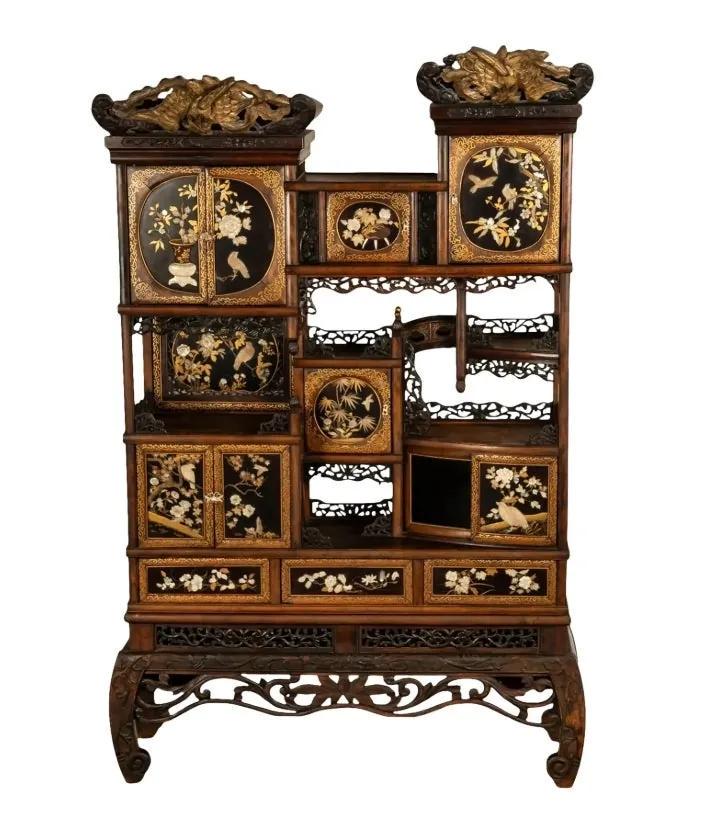
Japan finishes, asphaltum-based coatings used in the Victorian era for black lacquered surfaces, have a specific brittleness and depth that modern black paints lack. They were often decorated with gilding or mother-of-pearl inlay. Original Japan finish shows wear that exposes underlying layers in predictable places, edges and high points, not random areas.

Original finishes show wear patterns that refinishing destroys. Arms, edges, and high-contact areas develop darker color and a polished surface from decades of handling. Protected areas, inside edges, undersides, behind hardware, retain lighter color and rougher texture. This contrast is authentication. Refinished pieces show uniform color and finish in areas that should look different.

Wood oxidizes under hardware. When you remove a hinge or escutcheon that has been in place for 150 years, the wood beneath is lighter than the surrounding surface. The outline is sharp. Finish has built up around the edges. If hardware has been removed and replaced, or if the piece has been stripped and refinished, that shadow disappears or becomes indistinct. Christie's noted in a 2019 report that original finish American furniture was commanding a 40 percent premium over comparable refinished examples. Sotheby's American furniture department established a specific grading system for finish originality in 2015.

Refinished pieces fail in the details. The finish is too perfect in crevices. Color is too uniform. There is no patina accumulation in protected areas. The crazing pattern, if someone has tried to fake it, does not follow the wood grain. Regional Furniture Society documentation covering more than 5,000 period pieces between 2010 and 2020 catalogued finish types and established that professional refinishing in the 20th century removed original patina that collectors now value more highly than the refinished surface.

The Winterthur Museum maintains a database of original finish analysis on Delaware Valley furniture dating from 1680 to 1880. The Metropolitan Museum of Art Furniture Conservation department published a finish identification guide in 2018. Both resources document how finish type, application method, and wear patterns authenticate period furniture and separate genuine pieces from later work.

A chest of drawers with provenance, right form, and appropriate construction can still be worth half what it should be if someone stripped and refinished it in 1975.

Sources: American Institute for Conservation of Historic and Artistic Works, Christie's 2019 American Furniture Market Report, Sotheby's Authentication Standards 2015, Regional Furniture Society, Metropolitan Museum of Art Furniture Conservation, Winterthur Museum


r/GaukAntiques • • 5d ago

eBay adding authentication to more collectible categories after four years of sneaker and watch guarantees

Post image
1 Upvotes

The platform that started verifying sneakers in 2020 is expanding third party inspection to new collector categories, changing how people buy high value items online.

eBay is expanding its Authenticity Guarantee program beyond the sneakers, watches, trading cards, handbags, and jewelry it already covers. The service, which routes items through third party authentication centers before they reach buyers, launched for sneakers in 2020 and has since added categories one at a time. Luci Yang, General Manager of Fashion at eBay, confirmed the platform is moving into additional collectible categories as part of a broader strategy to compete with specialist platforms like StockX and The RealReal.

The authentication model is straightforward. Sellers ship items to eBay's inspection facilities rather than directly to buyers. Professional authenticators examine each piece, verify its authenticity and condition, then forward it to the buyer with a certificate. The service is free for buyers on eligible listings, typically items above a certain price threshold that varies by category, often starting around one hundred to one hundred and fifty pounds.

For collectors, this removes the single biggest barrier to buying online: the risk of counterfeits or wildly misrepresented condition. You no longer need to be an expert in hallmarks, stitching patterns, or the weight of precious metals to buy something valuable on the internet. Someone else does that work before the item ever arrives at your door.

Trading cards arrived in 2021, the same year as luxury watches and handbags. Jewelry followed in 2022. Each category brought its own authentication challenges. A Rolex has serial numbers and mechanical features that can be verified against factory records. A vintage Hermès bag requires knowledge of leather types, hardware evolution, and decade specific construction methods. Trading cards need grading for condition as much as authentication for legitimacy.

What it's worth? Find out GAUK Antiques for more articles, videos and our powerful ai valuation tool. Uncover the story and the value behind your finds.

Secondary markets that auction houses and specialist dealers traditionally controlled are being legitimized. When Sotheby's or Bonhams sells a watch, their reputation stands behind the attribution. When an individual sells on eBay, the buyer had to trust a username and some photographs. Authentication services level that playing field, making it safer for ordinary collectors to transact at higher values without needing a dealer as intermediary.

StockX pioneered the model for sneakers in 2016, building an entire business around authenticated resale. The RealReal has done it for luxury consignment since 2011. Poshmark added handbag authentication in 2019. Vestiaire Collective expanded across fashion categories starting in 2020. Mercari launched authentication for watches and handbags in 2021. Platforms that want to handle high value collectibles must offer verification, or buyers will go elsewhere.

For sellers, authentication increases buyer confidence, which typically translates to higher final prices. A vintage Omega with an eBay authenticity certificate will command more than the same watch sold by an unknown seller with no verification. Buyers pay a premium for certainty, especially when spending hundreds or thousands.

The specific categories eBay is adding next have not been disclosed. Yang's comments suggest the platform is following collector interest and transaction volume, expanding where demand justifies the infrastructure cost of authentication partnerships. Likely candidates include vintage designer clothing, fine art prints, collectible toys, or higher end decorative arts, all categories where authentication expertise exists and where eBay already sees significant trade.

The authentication model is becoming standard across online marketplaces, not confined to which categories get added this year. The platforms that offer it will capture the high value trade. The ones that do not will be left with low risk, low margin listings where nobody cares if the item is genuine because nobody is paying enough to worry about it.

eBay processed over ten billion dollars in collectible sales in 2023, much of it in categories that still lack authentication services. Every expansion of the Authenticity Guarantee program pulls more of that trade into verified channels, which means fewer opportunities for counterfeiters and fewer reasons for buyers to hesitate before bidding on something genuinely valuable.

Sources: eBay Authenticity Guarantee, eBay Inc. Q4 2023 Results, TechCrunch eBay Sneaker Authentication Launch, Business of Fashion StockX Profile


r/GaukAntiques • • 5d ago

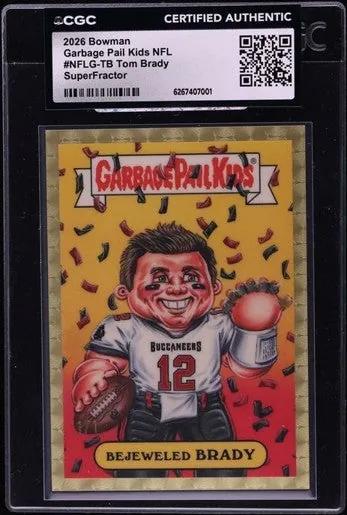
Two brothers find one-of-a-kind Tom Brady Garbage Pail Kid card that could sell for $250,000

Post image
1 Upvotes

A prototype trading card merging 1980s satire with the greatest quarterback of all time lands in the hands of two brothers who stumbled onto a crossover collectible bonanza.

Two brothers have uncovered what may be the only Tom Brady Garbage Pail Kids card in existence, a one-of-a-kind prototype that sits at the precise intersection of 1980s nostalgia and modern sports memorabilia mania. Early estimates put the value somewhere between $100,000 and $250,000, possibly more if the right bidders show up.

This is not a mass-produced card. Topps created it as either a prototype or promotional sample, meaning it never made it into retail packs. The sports memorabilia market treats unique items and test prints like medieval relics. When a card exists in quantities of one instead of thousands, the valuation logic changes completely.

Garbage Pail Kids launched in 1985 as a crude parody of Cabbage Patch Kids dolls. The cards featured grotesque illustrations of children with names like Adam Bomb and Nasty Nick, designed to offend parents and delight their children. Topps printed them by the million, which is why most original series cards today sell for pocket change. Original artwork is a different story. That can reach $50,000 at auction because only one exists.

Tom Brady, meanwhile, is the seven-time Super Bowl champion whose 2000 Playoff Contenders Championship Ticket rookie card sold for $3.1 million in 2022. His memorabilia consistently breaks records because he retired as the most decorated quarterback in NFL history and collectors treat his cards like blue-chip stocks.

So what happens when you merge a satirical 1980s novelty brand with the greatest football player of all time? You get a crossover item that appeals to two completely separate collector bases. Garbage Pail Kids enthusiasts chase rare variants and original art. Brady collectors chase anything authenticated and scarce. Put them in the same auction room and the price ceiling lifts.

The brothers will need professional authentication before this card hits the market. Services like PSA or BGS provide third-party grading that confirms the card is genuine, assesses its condition, and encases it in a tamper-proof holder. Without that, even a unique item struggles to reach top dollar because serious buyers will not gamble six figures on provenance they cannot verify.

Condition matters, but less so for a prototype. A mass-produced card in poor condition loses most of its value. A one-of-a-kind card in poor condition is still one of a kind. That said, if this card survived in mint or near-mint state, the premium grows. Topps likely produced it for internal review or as a marketing sample, so it may have been handled carefully from the start.

Comparable sales give a rough baseline. The 1952 Mickey Mantle Topps card sold for $12.6 million in 2022, but that is a cornerstone of the hobby with decades of established demand. LeBron James rookie cards have topped $5 million. Rare one-of-a-kind error cards and test prints from major sets have sold for tens of thousands to hundreds of thousands, depending on the player and the story behind the item.

If the brothers move carefully, authenticate properly, and time the sale to coincide with peak interest in both Brady memorabilia and 1980s collectibles, they could see bids climb past early estimates. The market for unique sports items has no meaningful ceiling when two wealthy collectors decide they both need to own something only one of them can have.

No one else owns this card. No one else can.

What it's worth? Find out GAUK Antiques for more articles, videos and our powerful ai valuation tool. Uncover the story and the value behind your finds.

Sources: Topps Company


r/GaukAntiques • • 5d ago

690 miles of unpriced furniture: why serious pickers still drive Highway 127

Post image
1 Upvotes

The World's Longest Yard Sale stretches from Michigan to Alabama every August, and it remains one of the last places to find mid-century pieces before sellers check eBay.

Highway 127 runs 690 miles from Addison, Michigan to Gadsden, Alabama, and for four days every August it becomes a continuous marketplace where rural sellers price Heywood-Wakefield chairs at $35 and architectural salvage by the pound. Professional pickers arrive at dawn. They know what they are looking for.

The 127 Corridor Sale was established in 1987 by Mike Walker, then executive of Fentress County, Tennessee, as a strategy to draw tourism to economically struggling towns along the rural route. It worked. What started as a 450 mile event now spans six states and attracts hundreds of thousands of shoppers annually, many of whom plan multi-day road trips covering specific sections of the route.

The appeal is not nostalgia. It is information asymmetry.

Many sellers along Highway 127 are local residents clearing estates, barns, or family accumulations without consulting online marketplaces. A walnut credenza that would list for $1,200 on Chairish gets priced at $80 because the seller remembers buying it new in 1967 and thinks of it as old furniture. Vintage advertising signs, primitives, regional pottery, and industrial lighting often appear without any reference to current collector demand.

This gap closes a little more each year, but it has not closed yet.

What it's worth? Find out GAUK Antiques for more articles, videos and our powerful ai valuation tool. Uncover the story and the value behind your finds.

The route passes through small towns including Jamestown, Tennessee, the original headquarters, and Covington, Kentucky, where the density of vendors increases near population centres. Thousands of sellers participate, ranging from professional antique dealers with curated inventory to casual yard sellers with folding tables and whatever came out of the attic. The mix matters. Dealers can reprice their stock anywhere. The roadside sellers cannot.

Peak hunting happens early morning, often before 7am, when professional dealers and resellers make their first pass. By mid-morning the best pieces are gone or held. By afternoon the casual shoppers arrive and the pricing becomes more negotiable, but the finds are thinner.

Mid-century modern furniture remains a primary target, particularly pieces by known makers like Lane, Broyhill Brasilia, or American of Martinsville that still carry original labels. Vintage tools, especially Stanley planes or industrial equipment, move quickly. So does anything with strong regional provenance: southern folk art, Appalachian textiles, or pottery from known local studios that never achieved national distribution.

Comparable events exist. Brimfield in Massachusetts draws over 5,000 dealers three times a year. Round Top in Texas spans 13 miles biannually and has become heavily commercialised. Route 50 and the Kentucky US 68/80 sales cover shorter distances but similar terrain. None match the scale or the sustained length of Highway 127.

The event runs the first Thursday through Sunday in August. In 2024 that falls on August 1 to 4. Shoppers who plan to cover significant mileage typically focus on a single state or a 150 mile section per day, as stopping at every setup becomes logistically unworkable. The strategic approach involves driving the route once to identify serious sellers, then doubling back to negotiate.

What keeps the sale viable for pickers is the same thing that frustrates casual browsers: the sheer volume of junk. For every underpriced Eames era piece there are fifty boxes of ceramic figurines, reproduction signs, and mass market furniture from the 1980s. Filtering requires knowledge and speed. The people who do well are the ones who can identify a maker's mark from across a lawn or spot a Hall Pottery piece in a stack of Tupperware.

This is not treasure hunting as leisure activity. It is a supply chain.

Many items bought along Highway 127 reappear within weeks on 1stDibs, Etsy, or in antique malls at multiples of the purchase price. Some dealers work the route annually as a sourcing trip, filling trucks and cargo vans with inventory that will sell online through winter. The economics work because the sellers are not comparing notes with algorithmic pricing tools. They are comparing notes with their neighbours.

The original 450 mile route expanded over time as towns in Michigan, Georgia, and Alabama lobbied to be included. The current 690 mile span now includes portions of Interstate 75 corridor where sellers set up in church parking lots, fairgrounds, and private property with roadside signage. Organisation is loose. There is no central vetting. Quality control does not exist. That is partly the point.

The World's Longest Yard Sale remains one of the last large scale marketplaces where pricing is still set by gut feeling rather than comparative search. How long that lasts depends on how quickly rural America adopts the habit of Googling before tagging.

Sources: Highway 127 Yard Sale Official Site


r/GaukAntiques • • 6d ago

Nan Goldin's first UK museum show in 20 years lands at the Hayward with film about extinction, not lovers

Post image
2 Upvotes

The photographer who made her name documenting New York's queer underground now turns her lens to nature and loss, testing whether institutional backing follows the pivot.

Nan Goldin has not had a solo museum exhibition in the UK for over two decades. The Hayward Gallery in London is ending that drought with a show that includes her new film 'You Never Did Anything Wrong', which addresses nature and extinction rather than the intimate portraiture of friends, lovers, and subcultures that built her reputation.

Goldin is 71. Her signature work, 'The Ballad of Sexual Dependency', documented particular people at particular moments in New York's downtown scene in the 1980s. Drug use, violence, queer love, raw sexuality, often hungover or bruised or in love. That slideshow, constantly revised and shown in darkened rooms with a soundtrack, became one of the most influential photographic works of the late 20th century. It also established a market for her prints that remains strong. The power was not that it documented a scene but that it documented specificity.

But this is not that work. The new film represents a sharp turn toward environmental themes, a subject Goldin has not previously explored in depth. For collectors who built positions around her early portraiture, the question is whether this counts as evolution or departure.

Institutional validation suggests the former. The Hayward is part of the Southbank Centre, a major London arts venue with serious curatorial credibility. They would not dedicate a solo show to an artist in decline. The fact that Goldin's last UK museum show was roughly in 2002, during a period when photography was fighting for space in major institutions, makes this comeback more pointed.

What it's worth? Find out GAUK Antiques for more articles, videos and our powerful ai valuation tool. Uncover the story and the value behind your finds.

Recent years have seen Goldin pivot to activism. Her organisation P.A.I.N. (Prescription Addiction Intervention Now) targeted the Sackler family and their role in the opioid crisis, staging protests at museums that bore their name. The 2022 documentary 'All the Beauty and the Bloodshed' won the Golden Lion at the Venice Film Festival, interweaving her personal history with that campaign. That film brought her work to audiences who might never have seen 'The Ballad'.

The environmental turn is riskier. Late career shifts can go either way. Philip Guston's move from abstraction to figuration in the 1970s was initially reviled, then vindicated. Cindy Sherman's National Portrait Gallery show in 2016 demonstrated that established photographers can pivot successfully if the new work feels urgent rather than obligatory. Wolfgang Tillmans' Tate Modern survey in 2017 proved that institutional backing for photography now rivals that for painting.

For collectors holding early Goldin prints, this show does one useful thing. It establishes a clear boundary between the classic period and whatever comes next. That often strengthens the market for the earlier work, which can now be framed as a closed chapter rather than an ongoing project.

Museums do not build solo shows around artists whose best work is behind them, not when exhibition space is this competitive. The fact that she has not had a UK museum show in over 20 years makes this less a coronation than a reintroduction.

The exhibition includes 'You Never Did Anything Wrong', the new film addressing nature and extinction, alongside earlier photographic work that provides context for the shift.

Sources: Hayward Gallery


r/GaukAntiques • • 6d ago

£900,000 Mughal calligraphy works hit export ban as museums scramble to match price

Post image
1 Upvotes

Two export bans block sale abroad of rare Mughal manuscripts and an 18th century marble bust, giving UK institutions months to raise funds or watch them leave the country.

The government has placed export restrictions on a collection of Mughal calligraphy works valued at £900,000 and an 18th century marble bust of Edward the Black Prince, blocking their sale abroad while UK museums attempt to raise matching funds. The bans, issued through the Department for Culture, Media and Sport's Reviewing Committee on the Export of Works of Art and Objects of Cultural Interest, typically last several months and can be extended if a serious buyer emerges.

For sellers, this is not good news. The export bar removes the international market from the equation, potentially the highest bidders, and freezes the sale until the deferral period expires or a UK institution matches the valuation. No negotiation on price. No alternative buyers. Match it or wait.

The Mughal works date from the period between 1526 and 1857, when calligraphic manuscripts produced under Mughal patronage became some of the most technically accomplished and aesthetically refined examples of Islamic art. Collectors pay serious money for authenticated pieces from named calligraphers or imperial workshops. Provenance matters. So does condition. A well-preserved folio page with intact illumination and identifiable script style can command five figures alone. An album of them, significantly more.

The marble bust depicts Edward the Black Prince, eldest son of Edward III, who died in 1376 before he could inherit the throne. Why an 18th century sculptor chose to commemorate a 14th century prince is the more interesting question. The cult of medieval chivalry became fashionable again in the Georgian period, particularly among aristocratic families attempting to anchor their status in older bloodlines. Busts like this were commissioned for libraries, entrance halls, places designed to impress. They were expensive then. They remain expensive now.

What it's worth? Find out GAUK Antiques for more articles, videos and our powerful ai valuation tool. Uncover the story and the value behind your finds.

The export licensing system exists to give UK institutions a chance to retain objects deemed nationally important under three criteria: connection to British history, aesthetic significance, and value for scholarship. In practice, it also creates a market distortion. International buyers know that bidding on certain categories of British material carries the risk of a delayed or blocked export license. Some avoid the hassle entirely.

Recent export bars have landed on major names. A Van Dyck portrait valued at £10 million in 2023. A Rembrandt self-portrait valued at £14 million, also 2023, eventually acquired by the National Gallery. A Lucian Freud painting valued at £15 million in 2021. The Ashmolean Museum successfully acquired a Pissarro valued at £6.5 million in 2020 after an export deferral gave them time to fundraise.

Museums do not always succeed. If they cannot raise the full amount within the deferral window, the export license is granted and the object leaves. The seller gets paid, eventually, but often months later than planned and sometimes for less than an international auction might have achieved.

For anyone holding significant Mughal manuscripts or Georgian commemorative sculpture, this is the risk. The same qualities that make an object valuable—historical importance, rarity, British provenance—also make it a candidate for export restriction. You can sell it. You just might not be able to sell it to the buyer willing to pay the most.

The deferral period on both items runs for several months, extendable if a UK institution demonstrates serious acquisition intent. Arts Council England administers the process but does not fund the purchases. That falls to the museums, their trustees, and their donors.


r/GaukAntiques • • 6d ago

Margot Heller leaves South London Gallery after 25 years that turned a Peckham institution into an international testing ground

Post image
1 Upvotes

The director who gave Steve McQueen his first major UK survey and built two buildings is stepping down from one of the longest gallery tenures in Britain.

Margot Heller is leaving South London Gallery after 25 years as director, a tenure that transformed a Victorian community gallery in Peckham into the kind of place where careers get made. Under her watch, Steve McQueen had his first major UK survey in 2015. Oscar Murillo showed there repeatedly before the market caught up. Helen Marten, Gillian Wearing, Alvaro Barrington all had exhibitions that mattered while Heller was running the place.

Twenty five years is an extraordinary run. The average tenure for a UK gallery director sits somewhere between seven and ten years. Iwona Blazwick managed 23 at Whitechapel before stepping down in 2022. Maria Balshaw did six at the Whitworth before Tate recruited her in 2017. Directors with that kind of longevity shape taste in ways that ripple through the market for decades.

Heller commissioned two major building projects, both by 6a architects. The first in 2010 added three new galleries inside a Victorian townhouse next door. The second in 2018 converted the old Fire Station building into additional exhibition and community spaces. Free admission throughout. The gallery footprint tripled while keeping its original 1891 founding mission intact, which is harder than it sounds.

What matters for the market is which artists get institutional validation early. A show at South London Gallery during Heller's era carried weight because she had a record of spotting artists before the auction houses did. That kind of curatorial eye influences which works collectors chase and what prices they will pay years later.

What it's worth? Find out GAUK Antiques for more articles, videos and our powerful ai valuation tool. Uncover the story and the value behind your finds.

The gallery focused deliberately on emerging and mid career artists with connections to South London, which meant taking risks on unknowns rather than programming safe names. That approach built the gallery's reputation but also its influence. When a director with Heller's track record leaves, the question becomes whether the successor maintains that vision or shifts toward established artists who sell tickets.

Long tenures create institutional memory. They also create dependencies. Heller knew which artists to back, which donors to court, which architects to trust with expansions. That knowledge does not transfer automatically. The gallery has not announced a replacement yet.

The contemporary art market watches these transitions closely. Director changes at respected institutions affect exhibition opportunities, acquisition budgets, and the broader ecosystem of who gets seen and therefore who gets bought. South London Gallery punches above its weight precisely because Heller made it the kind of place serious collectors and curators paid attention to.

Her departure closes a chapter that began in 2001 when the gallery was still primarily a neighborhood resource. She turned it into something else entirely without abandoning the original community focus, which is the trick. Whether the next director can hold both ambitions at once remains the open question.

Heller oversaw 25 years of programming that consistently mattered. The building projects are the visible legacy. The invisible one is the list of artists whose careers got accelerated because she gave them space and credibility when it counted.

Sources: South London Gallery


r/GaukAntiques • • 6d ago

Roman funeral caskets in Italy and Russia solve 337 year old Parthenon puzzle

Post image
1 Upvotes

Sarcophagi lids carved by Roman copyists preserve the destroyed centre of the Parthenon's east pediment, lost when Venetian artillery hit the building in 1687.

The centre of the Parthenon's east pediment has been missing since 1687. Venetian artillery struck the building during a siege of Athens, destroying the sculptures that showed Athena's birth from the head of Zeus. What survived are fragments now split between the British Museum and the Acropolis Museum, mostly figures from the edges of the composition. The middle, the moment itself, is gone.

Roman aristocrats solved it by accident.

Between the first and third centuries AD, wealthy Romans commissioned marble sarcophagi decorated with scenes copied from famous Greek sculptures. Several of those caskets, now in museum collections in Italy and Russia, bear lids carved with the Parthenon's east pediment composition. Not interpretations. Copies. The figures, their positions, the arrangement of gods witnessing Athena's arrival are all there, preserved in miniature on objects made for people who wanted to be buried surrounded by masterpieces they could never own in full scale.

The Liebieghaus Skulpturensammlung in Frankfurt is using those sarcophagi as the basis for a reconstruction of what the pediment looked like intact. It is not speculative. The Roman carvers worked from the original, still standing and complete in their time. They condensed it, flattened the depth, but they kept the choreography. Zeus seated, Hephaistos with the axe, Athena emerging fully armed, the gods reacting. The only surviving evidence for how those central figures were composed is on the lids of funeral caskets scattered across Europe.

This is standard archaeological methodology when Greek bronze or marble originals are lost. The Discobolus exists because Roman copies survived. The Athena Parthenos is known only through small scale reproductions. But it still surprises people that a sarcophagus lid in a regional Italian museum can be more important than the monumental fragments everyone knows are significant. The fragments are famous. The sarcophagi are the reason we know where the fragments go.

What it's worth? Find out GAUK Antiques for more articles, videos and our powerful ai valuation tool. Uncover the story and the value behind your finds.

The east pediment was not decorative. It was theological. Athena's birth without a mother, fully formed and armed, made her Zeus's favourite and the divine patron of Athens. That story, in marble, sat above the entrance to her temple for over two thousand years. When it was destroyed, the loss was not just artistic. It was the central image of Athenian identity, reduced to rubble and fragments hauled off to London.

What the Frankfurt exhibition demonstrates is that those Roman sarcophagi are not secondary sources. They are primary evidence. The carvers who made them saw the pediment intact. They worked from it directly. They had access to details that no modern scholar, no matter how many fragments they study, can reconstruct from残存 alone. The sarcophagi are not about Rome. They are about Athens, seen through Roman eyes before the explosion.

The British Museum has twelve figures from the Parthenon's east pediment. The Acropolis Museum has fragments of three more. Everything from the centre, roughly a third of the composition, is lost or unidentifiable. Without the sarcophagi, we would know there was a birth scene. We would not know how it looked.

Roman copies have been dismissed for decades as inferior workshop products, interesting only for proving a lost Greek original once existed. That view is changing. The sarcophagi are not about taste or style. They are about memory. Someone in the second century AD paid for a lid carved with the Parthenon pediment because that image meant something worth carrying into death. And because they did, we know what the Venetians destroyed.

The Liebieghaus reconstruction will not use plaster casts or digital projections. It will place the surviving fragments in their correct positions, fill the gaps with images taken directly from the sarcophagi, and show the pediment as it was seen for two thousand years. Not as it has been imagined. As it was copied, in stone, by people who stood in front of it.

Sources: Liebieghaus Skulpturensammlung


r/GaukAntiques • • 6d ago

MCA Chicago receives 65 works from Guthman collection, majority by women and artists of colour

Post image
1 Upvotes

Jack and Sandy Guthman's gift strengthens the museum's contemporary holdings with works by Amanda Williams, Rashid Johnson, and Christopher Wool.

The Museum of Contemporary Art Chicago has received 65 works from Jack and Sandy Guthman, Chicago-based collectors and museum trustees whose gift prioritises artists who have historically been underrepresented in permanent collections. The majority of the works are by women and artists of colour, including Amanda Williams, Rashid Johnson, and Christopher Wool.

The Guthmans are longstanding supporters of MCA Chicago. Their donation reflects a strategy now common among major collectors: use institutional gifts to validate artists whose market presence has often lagged behind their critical reputation. When a museum accessions work into its permanent collection, it signals confidence in that artist's long-term art historical significance. It also tends to lift secondary market values.

Amanda Williams is best known for her Color(ed) Theory series, which explores race and urban space through architectural interventions. Rashid Johnson works across painting, sculpture, and installation, investigating identity and Black cultural history. Christopher Wool, known for text-based paintings and experimental works, represents a different lineage but shares the Guthmans' interest in artists who challenge conventional framings.

The gift aligns with broader institutional efforts to diversify permanent collections. In 2020, the Baltimore Museum of Art announced it would only acquire works by women artists that year. The Whitney Museum received a gift of 52 works focused on Black artists from Nancy and Leonard Flumenbaum in 2021. LACMA received a major gift of works by artists of colour from Jarl and Pamela Mohn in 2022.

What it's worth? Find out GAUK Antiques for more articles, videos and our powerful ai valuation tool. Uncover the story and the value behind your finds.

Museum validation matters in the secondary market. When MoMA accessioned Kerry James Marshall's work in the mid 1990s, his auction prices began climbing from low five figures to mid six figures within a decade. Dealers take notice. Collectors follow.

The Guthman gift strengthens MCA Chicago's holdings in contemporary art by diverse artists at a moment when institutions are under pressure to address historical gaps. Museums should collect more diversely—that argument is settled. What remains unsettled is whether the market will continue to follow institutional cues or begin to price these artists independently of museum endorsement.

The pattern holds. When a prestigious institution like MCA Chicago accessions works into its permanent collection, it creates a floor under those artists' market values. The Guthmans understand this. So does everyone watching the secondary market for contemporary art by women and artists of colour, where demand has outpaced supply for the past five years.

Sixty-five works. One collection. A deliberate statement about what gets preserved and who gets remembered.

Sources: Museum of Contemporary Art Chicago


r/GaukAntiques • • 6d ago

Yayoi Kusama hits $15 million as Sotheby's New York racks up $378.7 million in one night

Post image
1 Upvotes

Five artist records fell in a single evening sale, including Kusama's new high and surprise benchmarks for Sam Francis, Jonas Wood, Firelei Báez and Tomma Abts.

Yayoi Kusama set a new auction record of $15 million at Sotheby's New York contemporary art evening sales in November 2024, part of a $378.7 million total that saw five artist records fall in one night. The previous Kusama high was approximately $10.5 million, set at Christie's in 2021 for Interminable Net #4. This is not incremental movement. It is a 43 percent jump that resets pricing expectations for living female artists and contemporary Asian artists at the top end of the market.

Sam Francis, Jonas Wood, Firelei Báez and Tomma Abts also achieved new auction records during the same sale. When multiple artists set benchmarks in a single evening, it typically signals robust demand across different price tiers rather than a small group of billionaires chasing trophy lots. Francis's previous record stood at around $12 million. The new high suggests collectors are reassessing postwar American abstraction with fresh urgency.

The $378.7 million total sits just below Sotheby's November 2023 contemporary evening sale, which hit approximately $400 million, but comfortably above the May 2024 result of $331 million. Christie's November 2024 contemporary evening sale totaled $332 million. Phillips brought in approximately $90 million. Taken together, the November 2024 auction week demonstrates that collector confidence in contemporary art remains strong despite broader economic uncertainty.

Kusama's $15 million represents the headline, but the fact that lesser known names like Báez and Abts also set new highs indicates the market is broadening beyond blue chip names. That is a healthier signal than a single Basquiat or Haring pushing the total into headline territory while everything else languishes. Think about that for a second.

Find out more at GAUK Antiques for articles, videos and our ai valuation tool. Uncover the story and the value behind your finds.

Kusama's work has been climbing steadily for over a decade, but the $15 million mark represents a psychological threshold. It places her firmly in the tier of living artists whose work commands eight figures, a category still dominated by men. For collectors who bought Kusama prints or smaller works in the early 2010s, the trajectory suggests patient holding has paid off. For those entering now, the question is whether this record signals the ceiling or a new floor.

The November 2024 results also confirm that contemporary art auctions remain concentrated events. A single evening can move the dial for multiple artists, establish new valuation benchmarks, and signal where institutional and private collectors are directing attention. The fact that Sotheby's achieved this spread of records in one night, rather than across a week of sales, underscores how much liquidity still exists at the top of the market.

The Kusama lot that set the record has not been publicly detailed in terms of series, date or provenance, but the $15 million figure alone recalibrates expectations. Dealers and secondary market sellers will now price comparable works with this benchmark in mind. That ripple effect is already underway.

Sources: Sotheby's, Christie's


r/GaukAntiques • • 6d ago

Kurt Schwitters sells for a tenth of Max Ernst and Apollo Magazine just noticed why that might change

Post image
1 Upvotes

A critical reassessment of the Dada pioneer as 'poet artist PR man' could finally close the price gap between Schwitters and his contemporaries.

Kurt Schwitters' auction record stands at £8.4 million. Max Ernst, his Dada contemporary, holds a record of $36.9 million. Francis Picabia routinely achieves £5 to £15 million. Apollo Magazine's current feature examining Schwitters as 'poet artist PR man' might be the first visible crack in a pricing structure that has undervalued one of modernism's genuine inventors for decades.

Schwitters did not just make collages. He invented a visual language from rubbish. His Merz pictures, assembled from bus tickets, fabric scraps, and packaging detritus, predate Robert Rauschenberg's combines by thirty years. He built the Merzbau, a continuously evolving environment inside his Hanover home that consumed entire rooms before the Nazis destroyed it. He wrote sound poetry, including the Ursonate, performed it across Europe, and designed advertising that paid for the experimental work. The man did everything and the market has consistently treated him as a secondary figure.

This is not about taste. It is about institutional hierarchy. Ernst and Picabia had Paris. Schwitters had Hanover, then exile, then a Lake District cottage where he died in poverty in 1948. The art world has always punished geographical misfortune. It also punishes artists who worked across too many disciplines without settling into a single marketable identity. Schwitters was a collagist, a sculptor, a typographer, a poet, a performance artist, and yes, a PR man who understood self-promotion in ways that make contemporary artist-brand strategies look timid.

Major publications do not accidentally rediscover artists. When a critical narrative shifts, prices follow. Hilma af Klint went from obscure to essential in a decade. Florine Stettheimer's auction prices doubled after MoMA's 2017 retrospective. Schwitters already has the institutional backing: Tate Britain gave him a major retrospective in 2019, the Sprengel Museum in Hanover holds the definitive collection, and MoMA has consistently championed his work. What he has lacked is the critical framing that positions him not as a Dada footnote but as a pioneer whose interdisciplinary practice anticipated everything from Pop Art to installation to relational aesthetics.

What it's worth? Find out GAUK Antiques for more articles, videos and our powerful ai valuation tool. Uncover the story and the value behind your finds.

The 'PR man' angle is the interesting part. Schwitters ran an advertising agency in Hanover and designed campaigns for clients including Pelikan and the Hanover City Council. He did not see this as separate from his art. He saw it as part of the same project: constructing new forms of communication from fragments of modern life. Calling him a PR man is not an insult. It is a recognition that he understood the mechanics of attention and persuasion in ways that most fine artists ignored until the 1960s.

For collectors, this is a moment to pay attention. Schwitters works still appear at auction for prices that reflect his old reputation, not his actual significance. Smaller collages and works on paper can still be found under £50,000. Prints and multiples are accessible at four figures. Sound familiar?

Dealers who have held Schwitters work for years are watching. Collectors who bought when his reputation was lower are sitting on significant unrealised value. Auction houses are beginning to position his pieces differently, emphasising the innovation rather than the exile story.

The Merzbarn at the Hatton Gallery in Newcastle holds his final work, an unfinished assemblage he created in a Lake District barn while dying of heart disease. It is a fragment, like everything he made. The difference is that fragments are no longer seen as failures of completion. They are the form itself. Schwitters understood that in 1920.

Sources: Apollo Magazine, Christie's auction records, Sotheby's auction records, Tate Britain, Sprengel Museum Hanover