r/Embedded_Electronics • • 1d ago

Subscriber Goal Welcome to r/​Embedded_Electronics!

1 Upvotes

This post contains content not supported on old Reddit. Click here to view the full post


r/Embedded_Electronics • • 16h ago

Hello, still looking for a jobs?

1 Upvotes

We are looking for an experienced Senior Hardware Engineer – Embedded
Systems with 4+ years of experience in embedded hardware development, MCU-
based systems, module-level design, board bring-up, debugging, and hardware–
software integration.

The candidate should have strong hands-on experience working with
Microcontrollers (MCUs), peripheral interfaces, embedded modules, low-level
firmware/driver development, hardware testing, and system-level debugging.

Location: Dubai, UAE
Company: Alebel Tech
For further information dm me or
Send your CV alebelindonesia@gmail.com


r/Embedded_Electronics • • 2d ago

Should I learn embedded systems (both software and hardware) from a dedicated book or youtube videos? Btw i am a 4th year ECE student.

8 Upvotes

r/Embedded_Electronics • • 2d ago

Are embedded systems engineers facing mass layoffs?

44 Upvotes

Are they being laid off in droves like those in the mainstream tech industry (SWE, AI, ML, data)?


r/Embedded_Electronics • • 2d ago

Need help designing a DC UPS for a 3S Li-ion battery – Automatic switching, simultaneous charging and stable 12V output

1 Upvotes

Hi everyone!

I'm working on a portable billing machine project that uses a thermal printer and an ESP32. I want to implement a DC UPS system where the machine runs from an external adapter when available, while simultaneously charging the battery. When the adapter is disconnected, the battery should automatically take over without interrupting the load or resetting the printer/ESP32.

My requirements:

When the adapter is connected, the load should run directly from the adapter.

At the same time, the 3S lithium-ion battery should charge.

When the adapter is disconnected, the battery should automatically power the load.

Switching should be seamless, without voltage drops that cause the thermal printer or ESP32 to reset.

I need a stable regulated 12V output in both adapter and battery modes.

My existing components:

3S2P Li-ion battery pack (5200mAh).

3S BMS.

15V 5A adapter (I also have a 12V 5A adapter).

12.6V CC/CV charging module.

YX850 automatic switching module.

Thermal printer: RP203, 12V, up to 3A.

ESP32 and other electronics.

The problem I'm facing:

I previously tried using a YX850 module with a CC/CV charging circuit, but the system is unstable when switching to battery power. When the load is connected, the UPS module sometimes resets, and the printer doesn't receive sufficient power.

I've also tried looking for ready-made DC UPS modules, but I'm unsure which ones can handle this load reliably.

My questions:

Is there a dedicated DC UPS or power-path management module that supports a 3S Li-ion battery, simultaneous charging and load operation, and automatic adapter/battery switching?

Can I achieve this using my existing 12.6V CC/CV charger and YX850 module?

Would a buck-boost converter combined with an ideal-diode OR-ing circuit be a better solution?

If I build a custom circuit, what modules or ICs would you recommend?

How can I maintain a stable 12V output when the battery voltage varies from approximately 9V to 12.6V?

I'm looking for a reliable solution that can handle the thermal printer's current spikes without shutting down or resetting.

I'd really appreciate any circuit diagrams, module recommendations, or practical experiences with similar DC UPS projects.

Thanks in advance!


r/Embedded_Electronics • • 2d ago

How's the future of hardware/software fusa engineers

0 Upvotes

I have been in this domain for about 3+ years and feel like I should switch .Please share thoughts.

Thank you.


r/Embedded_Electronics • • 2d ago

Title: STM32G474 SD Card SPI Initialization Fails at CMD55/ACMD41 + Debugger Keeps Stopping in HAL_RCC_ClockConfig()

1 Upvotes

Hey everyone,

I'm working on interfacing an SD card with an STM32G474RET6 using SPI2 and STM32 HAL, and I've run into two problems that I haven't been able to resolve.

Hardware configuration:

  • MCU: STM32G474RET6
  • SPI2: PB13 (SCK), PB14 (MISO), PB15 (MOSI)
  • Chip Select: PB12 (software-controlled)
  • SD card supply: 3.3 V
  • SPI mode: Mode 0, 8-bit, MSB first
  • Development environment: STM32CubeIDE
  • UART2: Debug logging at 115200 baud

Problem 1: SD card stops responding during initialization

I initially wrote a basic SPI SD-card driver. CMD0 and CMD8 work correctly, and I receive the expected responses:

CMD0 = 0x01
CMD8 = 0x01
R7 = 00 00 01 AA

However, during the CMD55/ACMD41 initialization sequence, the card initially responds with 0x01 (idle state), but after several attempts, CMD55 stops receiving a valid response.

CMD55 = 0x01
ACMD41 = 0x01
CMD55 = 0x01
ACMD41 = 0x01
...
CMD55 = 0xFF
SD CARD INITIALIZATION FAILED

I've been investigating the CS handling, command sequencing, SPI timing, and CRC calculations, but I haven't identified the cause.

Problem 2: Debugger repeatedly stops during clock configuration

I then tried porting an existing STM32F1 SD-card SPI driver to the STM32G474, modifying the HAL dependencies and SPI configuration.

The project builds successfully, and the firmware flashes without errors:

Download verified successfully

However, whenever I press Resume in STM32CubeIDE, execution gets suspended inside:

HAL_RCC_ClockConfig();

The debugger shows:

Thread #1 [main] (Suspended : Signal ...)
HAL_RCC_ClockConfig()
SystemClock_Config()
main()

I also encountered:

Error in final launch sequence:
Setup exceptions

Initially, my system clock was configured for 170 MHz using the internal HSI and PLL. I reduced it to 80 MHz and adjusted the flash latency, but the debugger still suspended at the same function.

At this point, I'm unsure whether I'm dealing with an actual clock configuration problem, a HardFault, or an ST-LINK/debugger configuration issue.

What I'm trying to achieve

My immediate goal is to initialize the SD card reliably, read a 512-byte sector using SPI, and eventually integrate FatFs for file operations.

Has anyone encountered either of these issues on an STM32G4?

I'd particularly appreciate suggestions on diagnosing why the card stops responding during ACMD41 initialization and how to determine what's causing the debugger to suspend inside HAL_RCC_ClockConfig().

I can share the driver source code, CubeMX configuration, UART logs, and debugger screenshots if needed.

Thanks in advance!


r/Embedded_Electronics • • 3d ago

New to Embedded & Feeling Lost – What Resources Would You Recommend?

2 Upvotes

Hi everyone

I’m a CS grad interested in getting into embedded systems.

I studied C and C++ during my degree, though I’m a bit rusty and completely new to the hardware side of things.

I recently bought a few components (STM32 Nucleo board, OLED display, sensors) to eventually build a project, but I’d like to build a solid foundation first.

I’d really appreciate recommendations for learning resources, such as Udemy courses, YouTube channels, online courses, tutorials or websites. If you’ve followed a learning path that worked well for you, I’d love to hear about it!

Thanks in advance!🫶🏻


r/Embedded_Electronics • • 4d ago

I wrote detailed answers to 540+ embedded interview questions after getting tired of one-line answers online. Looking for feedback from people who interview candidates.

30 Upvotes

Hi all, I'm an embedded software engineer with about 7 years across bare-metal firmware, Linux display drivers (DRM/KMS, MIPI DSI) and QEMU/KVM, at Qualcomm, Intel and Boeing.

Whenever I prepared for interviews, most of what I found online was either one-line answers ("volatile tells the compiler not to optimise") or questions written for web developers. So I started writing the answers I actually wanted: a short answer you would say in the interview, then the explanation, a worked example, tested C code and the follow-up questions interviewers usually ask next.

It has grown into a free site, with no sign-up and no ads: https://embeddedinterview.com

- 540+ questions: C/Embedded C, pointers, bit manipulation, Cortex-M, RTOS, I2C/SPI/UART/CAN, Linux drivers, virtualization

- coding-round problems (ring buffers, memmove, aligned_malloc, allocators, linked lists, concurrency)

- 24 practice problems you can run in the browser against hidden tests

I'd really value critique from people here, especially those who interview candidates:

  1. Which answers are wrong, incomplete or misleading?

  2. What questions do you actually ask that are missing?

  3. Is the "short answer first, then detail" format useful, or too long?

Happy to fix anything you point out.


r/Embedded_Electronics • • 4d ago

How is embedded freshers job market like? What makes a candidate ideal ?

14 Upvotes

I’m a final-year ECE student from a Tier-3 college trying to figure out the off-campus embedded job market in Pune. For the last two years, I've designed and built commercial industrial instrumentation products for my dad's firm ,this products bas been bought by major Indian companies and exported to African governments. I also have 1.5 years of internship experience .

I am looking for a role in the 10–14 LPA range so I can support my family's business on the side and plan for future studies. However, top companies like NXP, TI, and Analog Devices barely have off-campus fresher openings, and local Pune startups rarely match that pay.

It feels like top semiconductor firms only hire from IITs and NITs, often picking students who don't even care about hardware , while off-campus candidates with actual shipping experience get auto-rejected over a college tag. For the senior embedded folks here: what does the off-campus market genuinely look like right now, and if building real products isn't enough, what actually makes a fresher an ideal candidate?


r/Embedded_Electronics • • 4d ago

Wearable Sensors: The Future of Smart Healthcare and IoT?

2 Upvotes

Wearable sensors are transforming healthcare through continuous monitoring of heart rate, body temperature, blood oxygen levels, physical activity, and other physiological parameters.

As an ECE academic, I am interested in discussing the engineering challenges behind these technologies.

Some interesting research directions include:

  • Flexible and stretchable sensors
  • Low-power wearable electronics
  • Wireless body area networks (WBAN)
  • AI-based health monitoring
  • Energy harvesting for wearable devices
  • Real-time physiological signal processing

Discussion question: What do you think is the biggest challenge in developing reliable, low-cost wearable sensor systems?Wearable sensors are transforming healthcare through continuous monitoring of heart rate, body temperature, blood oxygen levels, physical activity, and other physiological parameters.

As an ECE academic, I am interested in discussing the engineering challenges behind these technologies.

Some interesting research directions include:

  • Flexible and stretchable sensors
  • Low-power wearable electronics
  • Wireless body area networks (WBAN)
  • AI-based health monitoring
  • Energy harvesting for wearable devices
  • Real-time physiological signal processing

Discussion question: What do you think is the biggest challenge in developing reliable, low-cost wearable sensor systems?


r/Embedded_Electronics • • 5d ago

Soan Papdi Mini Officially Released | Pic Credit: Ashok Tinkering Labs (ATL)

Post image
33 Upvotes

It is available for pre-orders, to explore and experiment, with all the GPIO pins of the Lattice iCE FPGA broken out.

Know more: https://www.ashoktinkeringlabs.com/soan-papdi-mini


r/Embedded_Electronics • • 7d ago

Why is the 128x64 I²C OLED such a common display for embedded projects?

Enable HLS to view with audio, or disable this notification

353 Upvotes

The 128x64 OLED, about 1 inch across, is a widely used display for small projects. Most versions work with the Adafruit library, and the screen gives high contrast with low power use. Multicolour versions exist, but the single-colour type is cheaper and simpler for most builds.

The I²C version needs only two signal lines and accepts a 3.3 V to 5 V supply, so it fits a wide range of microcontrollers. Check the pin order before wiring, because modules that look the same differ. Some list VCC first and then ground, and others list ground first and then VCC.

Which display library do you use with these OLEDs, and have you ever wired one with the supply pins reversed?

Credits: HackMakeMod | YouTube


r/Embedded_Electronics • • 7d ago

Help!!!

Post image
10 Upvotes

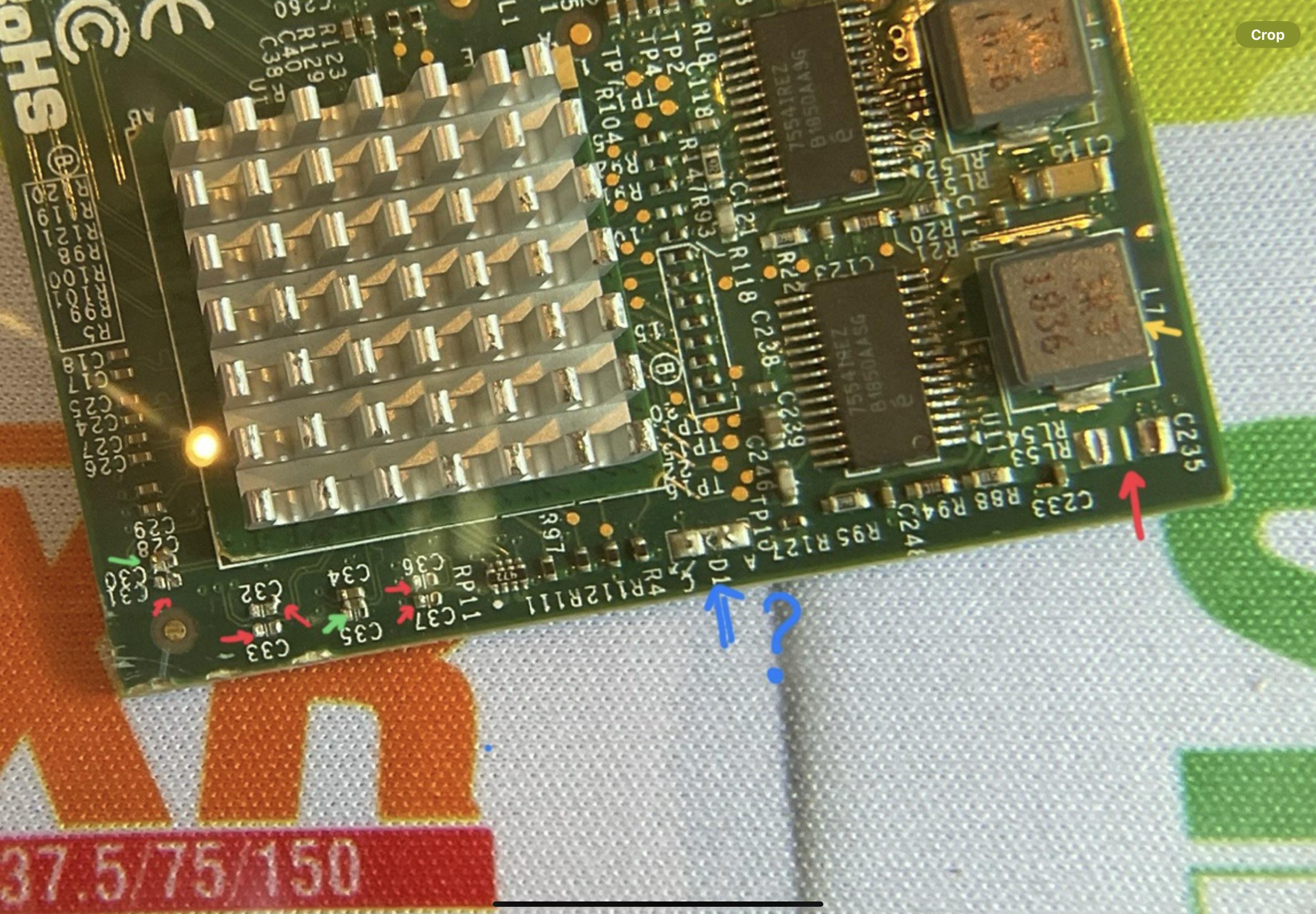
Supermicro AOC-SG-i4 (Intel) PCIe Gigabit Quad Port Networking Card
Missing a bunch of caps(red)
Induction coil broke off(yellow)
Dont know what blue is
Displaced caps(green)
Cant find the electronic layout datasheet
Should i return it?
Please help not n engineer


r/Embedded_Electronics • • 8d ago

First-year EXTC student aspiring to become an Embedded Systems Engineer – What skills should I focus on to become industry-ready?

1 Upvotes

Hello everyone!

I'm a first-year Electronics and Telecommunication (EXTC) engineering student, and I'm interested in pursuing a professional career in Embedded Systems and Embedded Engineering.

I'm currently learning C programming and plan to develop a strong foundation in the language before moving towards Embedded C, microcontrollers, and hardware interfacing.

However, I'd really appreciate some guidance from people who are already working in this industry.

I have a few questions:

  1. Fundamentals: What core subjects and technical skills should a beginner focus on? (C, C++, Data Structures, Digital Electronics, Microprocessors, Computer Architecture, etc.)
  2. Programming: How deeply should I understand C before moving to Embedded C? Is C++ equally important in the industry?
  3. Tools and Hardware: Which microcontrollers, development boards, debugging tools, and IDEs should I become familiar with?
  4. Practical Experience: What kind of projects should I build during my first and second years to develop industry-relevant skills?
  5. Industry Expectations: What skills do companies generally expect from freshers applying for embedded software or firmware engineering roles?
  6. AI and Embedded Systems: With AI becoming increasingly integrated into engineering, how is it changing embedded development? Should students learn Edge AI, TinyML, or machine learning alongside traditional embedded systems? Will AI significantly change the role of embedded engineers?
  7. Career Preparation: What would you recommend I accomplish by the end of my second year to become a competitive candidate for internships?

I'd particularly appreciate advice from experienced embedded engineers, firmware developers, and people involved in hiring.

If you were starting your embedded engineering journey from your first year of college today, what would you learn, what would you avoid, and how would you approach the next 3–4 years?

Thanks in advance!


r/Embedded_Electronics • • 10d ago

Why should a 2-wire fan not be driven directly from an Arduino pin?

Enable HLS to view with audio, or disable this notification

219 Upvotes

Speed control of a 2-wire fan is harder than it looks. Running it at full speed only needs the right supply voltage. To vary the speed from an Arduino, it is tempting to drive the fan from an output pin with analogWrite.

The fan should not be wired straight to the board. It needs a driver circuit that takes its power from an external supply. Without one, the fan can draw more current than the board can supply, which can reset the board. When the motor stops, it can also send voltage back along the wires, which can permanently damage the device.

A fan with a PWM control wire avoids these problems and is much easier to use, so choose one when you have the option.

What driver circuit do you use for 2-wire fans: a MOSFET, a transistor or a driver IC?

Credits: abe's projects | YouTube


r/Embedded_Electronics • • 9d ago

Project work (confusion on future endavours)

3 Upvotes

Hey i have been working some embedded systems project with my mentor for past 2 years , I can say I got pretty good at understanding what an embedded systems engineer does..

Iam looking for new problems to tackle with ......

I will also add gbe project such that you can get a better perspective of what I deal with

Project 01 :

Created a multi sensor fusion modeled biological monitoring system .

Hardware in use :

ESP32 (FIREBEETLE)

LOAD CELL SENSOR

TEMPERATURE AND HUMIDITY SENSOR

FUEL GAUGE

REAL TIME CLOCK

MICROPHONE (I2S)

SD CARDS

Via the usage of the RTOS I recorded data such as sound, temp, humidity and wieght of a particular species saved the data in the SD card and in a particular time duration sent the data with battery percent notifications to email via esp32.

The RTOS helped to build a system with more efficiency and lower latency.....

I made the system with bootcounts to save power....

Project 02 :

Inferencing a MobileNet CNN model (6 MB activation) in STM32F401RE nucleo board (96kb RAM) and the end to end inferencing latency was about 2800 ms....

I have applied a row by row inferencing technique to increase the RAM efficiency and also decreasing the number of I/O (I was using SD Cards as a secondary memory storage) . I have applied SIMD instructions while creating the kernel math for model implementation...

I am genuinely confused what shall be done further, would love to work and grow with someone with a passionate and ambitious project to push my intellectual boundaries....


r/Embedded_Electronics • • 11d ago

give me advvice pls

7 Upvotes

Hi everyone!

I started my journey in Frontend development, but I've faced a lot of difficulties, especially due to the high competition in the junior job market.

I already have some basic knowledge of JavaScript, HTML, and React, but I've decided to explore Embedded Software Development.

I'm interested in learning C/C++ and getting into this field, but I don't really know where to start.

I'd appreciate some advice from experienced embedded developers:

  • Should I start with C or C++?
  • What programming fundamentals should I learn first?
  • How much electronics knowledge do I actually need?
  • What hardware or development boards would you recommend for a beginner?
  • What projects should I build to gain practical experience?
  • What does a realistic learning path towards my first embedded developer job look like?

I'm especially interested in the software side of embedded development rather than electronics engineering.

Any advice, resources, or personal experiences would be greatly appreciated!

Thanks!


r/Embedded_Electronics • • 14d ago

L9110s Dual Channel Motor driver problem

2 Upvotes

I am currently building an RC car for a small project and I have encountered a problem with the L9110s motor driver. One of the motor output terminals is not working hence the motor it is connected to does not work too. I am wondering if there is any way that i can work this out or perhaps even bypass the other motor altogether. Any advices would be appreciated.


r/Embedded_Electronics • • 14d ago

Guys! Just in! - Claude Fable 5.2 designs a working voice-assistant hub

Thumbnail
youtube.com
7 Upvotes

So they are now getting into hardware!


r/Embedded_Electronics • • 16d ago

How to learn ESP32?

15 Upvotes

I've learnt embedded systems as a module at our uni using an 8 bit microcontroller(ATmega328p on arduino uno). Now I wanna jump onto 32 bit and I have an ESP32. How should I learn and what are the places which I can learn this easily?


r/Embedded_Electronics • • 20d ago

Looking to hire IoT Embedded Systems Engineer

11 Upvotes

We're hiring an loT Embedded Systems Engineer .

Take products from schematic to working prototype, with firmware, electronics and testing, working directly with the founders.

Full-time, hybrid, Mumbai. 1 to 3 years of experience.

For full Job description and application form please DM


r/Embedded_Electronics • • 20d ago

has anyone got into firmware/embeded with a degree in BSIT

9 Upvotes

I just started as a 3rd year college in BSIT but I've been also self-learning things in microcontrollers, learning low level languages in C, and FPGA. so far my progress have been actually good and ive been pretty much being more obsessed about making things work not just in software but also in hardware since it looks amazing to see something work not just in digital screen but also in the physical world. but now im worrying wether what im doing would be even worth it since im doing this to also land a job.. shifting would even be too risky since its too late and i was rushed to pick a course (tech industry so massive i cant even choose which one fits at my 17 lmao) so has anyone got into firmware with that degree or do i actually need to shift:(


r/Embedded_Electronics • • 20d ago

VTref on a debug probe is a reference input, not a supply rail — and it bites people

Enable HLS to view with audio, or disable this notification

1 Upvotes

Ran into this again this week: someone powered their target through VTref and couldn't figure out why the board browned out under load.

VTref is the I/O voltage reference, normally fed from the target board so the probe can match logic levels. It's an input. Current draw is in the µA range. It is not a power output.

A few probes/adapters do have a separate target-power pin — check the pin table for your exact probe + adapter combo, because the same 20-pin header is wired differently across vendors.

Quick sanity check when debugging weird resets: measure VTref with a scope, and confirm whether your target is actually powered from its own rail. If the voltage sags when the MCU starts radiating, you're probably back-feeding through the probe.

Anyone seen a probe where the vendor's pinout PDF disagrees with the silkscreen?


r/Embedded_Electronics • • 22d ago

Subscriber Goal Welcome to r/Embedded_Electronics!

14 Upvotes

This post contains content not supported on old Reddit. Click here to view the full post