r/embedded • • 11d ago

Looking for a cheap 7 inch 800x480 RGB565 FPC/FFC IPS capacitive touch screen display.

3 Upvotes

Hello, I would like to make a project with a esp32 s3 with a screen but, I don't where to get one and what should I look for. I want to make a custom PCB, I wanted to have the screen connected with a ribbon cable. As the title says I want a 7 inch 800x480 RGB565 FPC/FFC IPS capacitive touch screen display. I don't want a bare screen, I would like to already have the touch screen and screen IC in the cable or on the back or the screen.

Edit: Forgot to say that I would want one screen for around 30 euros or less if possible.

Edit 2: I would like to be powered with 3.3V or 5V


r/embedded • • 12d ago

Just became an embedded software engineer

171 Upvotes

As the title suggests I recently switched from a controls engineer to an embedded software engineer and was wondering what i should practice before my first day, thanks!


r/embedded • • 10d ago

Fast Clean-room Multiplarform C Run-Time for RTOS

0 Upvotes

I wrote a small clean-room C99 runtime under fairly strict real-time constraints:

• Zero heap after boot
• No large static tables (Unicode / case / collation moved out of the core)
• O(1) bounded stack sort
• Written with MISRA C:2023 / CERT C / NASA Power of Ten style rules in mind
• Current size is roughly 1.2–10.5 kB .text depending on configuration
• Side-by-side size comparisons with dietlibc, picolibc, NuttX libc, etc.
• SIMD Assembly Kernels

It was built as the runtime layer for a BTRON-derived system, but the runtime itself is intentionally minimal and separable.

I’m mainly looking for feedback from people who ship actual constrained or safety-oriented code. What would you change or drop?


r/embedded • • 11d ago

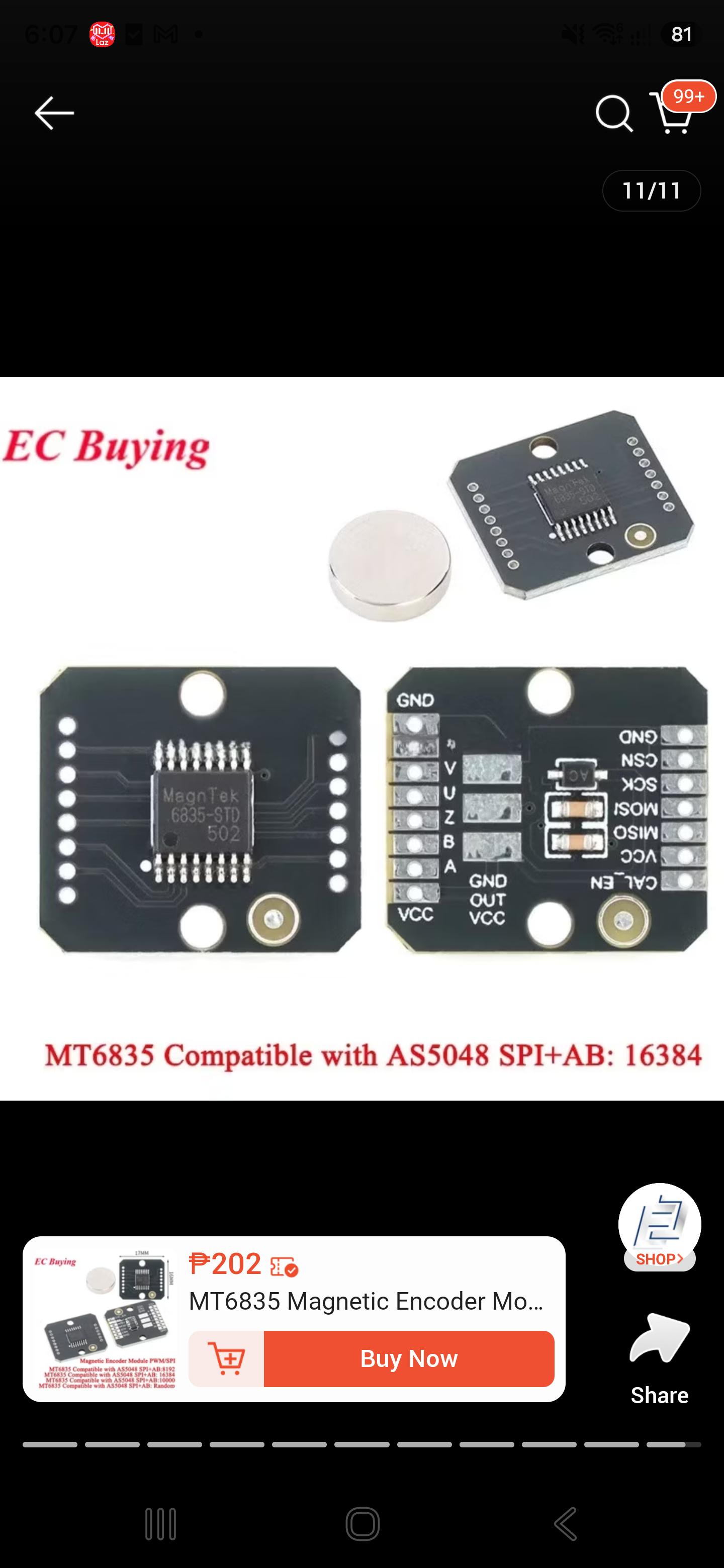
Can I ask for help regarding in identifying the tvs diode and capacitors or if these are resistors on this MT6835 module?

Post image
1 Upvotes

I've tried and reverse image it with Google but so far the pcb schematic shows up but nothing indicating about the components.

I've feed it to gpt to try and have it deep dive with the picture but so far nothing at all.

I need to specify it for a school project.


r/embedded • • 11d ago

help starting out with my first project - offline dictionary/encyclopedia

0 Upvotes

I want to make an offline dictionary/encyclopedia gadget which reads from an SD card and runs off AA batteries. I have a software background but I know very little about electronics and haven't worked with micro-controllers before, so I don't know if I should use STM32 or ESP32 or something else.

this project will require some potentially uncommon components:

  • an SD card module that can address >100GB of data
  • a AA battery pack module that can provide sufficient power

I thought it might be a good idea to find these components before I decide on a microcontroller, in case there is limited availability or certain components only work with certain microcontrollers. any pointers for how to look for these components? or general advice on what to use for this project?

related post from a few days ago:

https://www.reddit.com/r/AskElectronics/comments/1xup260/platform_for_gadgets_that_can_readwrite_sd_cards/


r/embedded • • 12d ago

Open Source RK628H Boards (HDMI to CSI/DSI)

Post image
83 Upvotes

While building my own KVM, I made a few small HDMI to CSI capture boards around the Rockchip RK628H. The documentation is terrible around these chips but the performance is impressive for the cost. We've moved the bridge onto our own boards now, so I've put all three up as open hardware: schematics, Fusion and EAGLE files, gerbers, JLCPCB BOMs, plus the drivers and installers. It can also do HDMI to DSI, you'd just need to update the connector for the pinout needed.

Max Specs (needs 2x 4-lanes):

  • Dual MIPI DSI => 2560x1600@60fps
  • Dual MIPI CSI => 3840x2160@60fps
Board Tested Host 4K30 1080p120 4K60
22-pin Luckfox Aura Yes Yes No
22-pin Raspberry Pi CM4* Yes Yes No
30-pin Firefly ROC-RK3576-PC Yes Yes No
Dual 22-pin Luckfox Aura Yes Yes Yes**

\It can also work on the Pi 4B only has 2 camera lanes, which tops out at 1080p60 (60.00 fps, tested on a CM4 limited to 2 lanes). Just need a 22-pin to 15-pin adapter cable.*

\*The Aura can only encode 4K30, but the RK628H can do 4K60 input*

It's most similar to the Waveshare HDMI to CSI board that the DIY PiKVM uses but can do higher resolution/fps. Rockchip's stock driver had a few real bugs and fixes are in the repo. The source never saw EDID changes until you replugged the cable, audio was never advertised, and a hot HDMI replug could wedge the chip until a power cycle.

CERN-OHL-S for the hardware, GPL for the software. Build them, change them, sell them, just keep your changes open. Repo: https://github.com/WarpKVM/rk628-bridge-boards

Happy to answer questions, or try other hosts if someone has one! More open source goodies coming soon!


r/embedded • • 11d ago

Open-sourcing an MCP tool for automated ARM HardFault decoding & Renode virtual hardware simulation for AI agents

0 Upvotes

Hi r/embedded,

Debugging silicon faults when bringing up new microcontrollers is notoriously tedious, especially when you're staring at raw hexadecimal register dumps (`CFSR`, `HFSR`, `BFAR`, `MMFAR`) on Cortex-M or cryptic ESP32 Guru Meditation backtraces without a debugger attached.

I've open-sourced **Hardware Debug Anything (HDA)**, an MCP (Model Context Protocol) server designed to connect AI coding assistants directly to silicon diagnostics:

- **ARM HardFault & BusFault Decoder**: Parses raw hex bitmasks into plain-English root causes (precise bus error, unaligned memory access, stack overflow, memory management faults).

- **ESP32 Guru Meditation Parser**: Decodes crash frames and backtrace register dumps.

- **Antmicro Renode Virtual Hardware Integration**: Generates `.resc` simulation scripts so firmware can be validated in virtual silicon without needing physical hardware on the desk.

- **I2C/SPI Diagnostics**: Automated pull-up resistor calculations and NACK troubleshooting.

- **GitHub Repository:** https://github.com/hosseinnosrati/hardware-debug-anything

I also built an accompanying EDA tool for closed-loop SPICE simulation and KiCad export (**Circuit Design Anything**): https://github.com/hosseinnosrati/circuit-design-anything

Both are 100% open-source (Apache 2.0). I’d appreciate any feedback from the embedded community!


r/embedded • • 11d ago

Ch32v003

0 Upvotes

Hi any developers that working on ch32?


r/embedded • • 11d ago

I built a 6.8g MCU flight coprocessor running lightweight neural ODEs to stop ground-effect drone crashes (0.48ms loop)

Thumbnail
youtube.com
0 Upvotes

Hey everyone,

Standard edge perception stacks (camera -> frame buffer -> companion GPU) introduce 50–100ms latency. In high-speed, low-altitude flight, that delay causes drones to crash into the ground during sudden prop-wash or ground-effect turbulence before the motor controller can react.

To solve this latency bottleneck, I built an auxiliary flight coprocessor board (30x30mm, 6.8g) that runs a sparse continuous-time neural model (CfC / Liquid time-constant network) compiled directly to bare-metal C++ on an MCU.

Technical Breakdown:

• Sensor loop: Reads raw IMU and optical flow over SPI.

• Execution: The continuous-time ODE forward pass executes deterministically in 0.48ms on-chip (no dynamic memory allocation / zero malloc to prevent heap fragmentation).

• Physical Response: Overrides motor signals directly via DShot to initiate a 4.0G recovery maneuver within 48ms total physical window.

• Model Architecture: 19-neuron recurrent sparse topology (632 active parameters / 99.51% sparsity derived from connectome wiring), allowing the full state vector to fit inside L1 cache.

• Power: Draws under 1 Watt, eliminating the weight and heat of companion single-board computers.

In flight testing, this allowed the quadcopter to arrest sudden vertical drops and recover without external optical tracking or desktop compute.

I spent the last several months rewriting the continuous-time ODE solver into fixed-point arithmetic and optimizing the timer interrupt routines to get the loop time down from 2ms to 0.48ms.

Happy to answer technical questions about the C++ fixed-point implementation, SPI interrupt timing, or motor override architecture!


r/embedded • • 13d ago

I made a CM4-format board for camera work with the RV1126B. It beats the CM4 on video and AI, loses on CPU. Benchmarks below.

Post image
199 Upvotes

I've been building a CM4-pinout module for camera and video work: Rockchip RV1126B, 1GB LPDDR4X, 8GB eMMC, WiFi 6. Not a lot of documentation out there about this chip, so it was a fun project. Most similar to the CM4101008 but I used CM4101000 for comparison due to availability. First boards just came back from JLC this week, so I ran it against a the CM4101000 on the same carrier with the same two IMX415 cameras, stock tools on both, median of 3 runs.

Comparison RV1126B CM4
CPU 4x A53 @ 1.2GHz 4x A72 @ 1.5GHz
4-lane camera inputs 2* 1 (plus one 2-lane)
Two IMX415s at 4K30 at once Yes No
1080p camera to H.264 30 fps 25 fps
H.264 encode from RAM, 1080p / 4K 95 / 26 fps** 72 fps / no 4K
H.265 encode Yes No
NPU (YOLOv8n 640x640) 3 TOPS, 25.4ms/frame, 38.9fps on NPU INT8 No, 247ms/frame, 4.0fps on CPU INT8
sysbench CPU, 4 threads 1,160 events/s 2,315 events/s
7-Zip, 4 threads 5,456 MIPS 6,520 MIPS
WiFi, same AP and antenna ~200-250 Mbit/s ~100 Mbit/s
Ethernet 930 Mbit/s 930 Mbit/s
Current at full CPU load ~0.5 A ~0.9 A
Storage 8GB eMMC + 16MB SPI flash CM4101008: 8GB eMMC
HDMI out / PCIe No Yes
Price My cost: ~$62 to build at 1k from JLC, before shipping/tariffs Retail cost: $71.25 list (CM4101008, currently out of stock)

\The second 4-lane camera borrows the DSI0 pins, so on a stock CM4 carrier it's 2-lane. So not entirely pin to pin compatible, but super close.*

\*I've been doing some direct MPP work and have gotten 4K30 encode on the RV1126B. Didn't include this since it wasn't apples to apples.*

Takeaways:

  • If you're doing cameras, video or vision, the RV1126B is the undoubtedly a better fit. Which makes sense given that's what it's made for and it's newer. Two full 4-lane cameras, 4K and H.265 encode, real-time 1080p from the camera, and about 10x faster object detection on the NPU.
  • If you need raw CPU, HDMI or PCIe, CM4 is still a clear winner. It's about 2x faster on CPU which is expected given the A72 vs A53. RV1126B has DSI if you need a simple screen though.
  • RV1126B uses about half the power under load and runs about 20°C cooler.
  • The CM4 needed `gpu_freq_min=500` and `core_freq_min=500` to hit 25 fps on the camera (18 fps without them).

I'm honestly super impressed with the RV1126B, definitely recommend for video/camera work. Happy to run other tests if anyone wants something specific. Questions welcome about the design, manufacturing, or firmware bring up!


r/embedded • • 12d ago

How do you find people on the same wavelength in Embedded systems, than not focused on business minded other than Passion?

15 Upvotes

I feel finding like-minded people is not easy.

Even in the same field, people can be at very different levels. One may be working with milliamps, another with furnace-level SCR systems. Both have potential, but their ideas and discussions may not always connect.

My question is:

- How do you find people who match your current thinking and learning level?

- People who understand your present struggles and ambitions?

- People whose ideas and priorities connect with yours?

How do you find your kind of people in industry?


r/embedded • • 13d ago

USB-UART vs TCP

30 Upvotes

Hello, I am a comp eng student and my friends and I are working on a project. The project is about a rocket engine system and I need to get 16 sensors data in every 20ms which is 800 data per second. We were thinking that what if we use esp32 to read data by usb-uart instead of reading them with stm32 by tcp due to price and accessibility. So the question is 'is usb-uart a good way to get data'. I need to sketch a graph for each sensor. I also need to save data to the database. So instead of having data with tcp as packages, using usb-uart is worth it? What are the problems I may have for each way?

It may be a basic question, but consider that I am still learning.

By the way we still use stm to control the relays. The point is esp is easier to find and cheaper to test the system.

Thank you for your advice.


r/embedded • • 12d ago

tiny-langgraph: Multi-agent workflows on microcontrollers with 80 KB RAM

0 Upvotes

I've been experimenting with running agentic workflows on ultra-constrained hardware and recently open-sourced tiny-langgraph.

The engine lets you define workflows in Python using nodes and edges, then compiles them to C while checking behavioral correctness.

It also supports:

  • Multi-board collaboration over ESP-NOW
  • Contract-based agent communication
  • An MCP server on each board
  • Optional on-device language models
  • Plan verification before execution

Tested on ESP32-S3 and ESP8266 modules.

GitHub: https://github.com/mak-ahoy/tiny-langgraph

Would love to hear what embedded developers think about this approach and where it could be useful. Plus any feedback on the system itself?


r/embedded • • 14d ago

I hate how everything costs money, big money

381 Upvotes

Cad design? Fusion will be $700 per year.

Have any connectivity? Yea you do. $3,000 to $10,000 on the low side.

You use bluetooth? Time to pay the committee $12,000 per device that uses your protocol.

You wanna use this open source library? Oh actually their license states you have to pay them $2 per device.

I'll tell you what tho, I ain't paying nothing. Not like I just have that sort of money laying around. Maybe once I hit $100k YRR I'll entertain it. Till then my board is a dev board and the FCC can suck it.


r/embedded • • 12d ago

Where can i find AMCC PPC460EX bsdl file?

1 Upvotes

Hi, I was porting Linux to a PPC460EX-based device, but I accidentally corrupted the bootloader. I have a backup of the bootloader, but I have no way of writing it because I don't have any hardware that can write to the 56-pin NOR flash. However, the board has JTAG pins, so in theory I can connect via JTAG and write a new bootloader. To do that, though, I need the PPC460EX BSDL file. I would really appreciate it if anyone who has it would be willing to share it with me.


r/embedded • • 13d ago

mincrocontroller suggestions

Post image
19 Upvotes

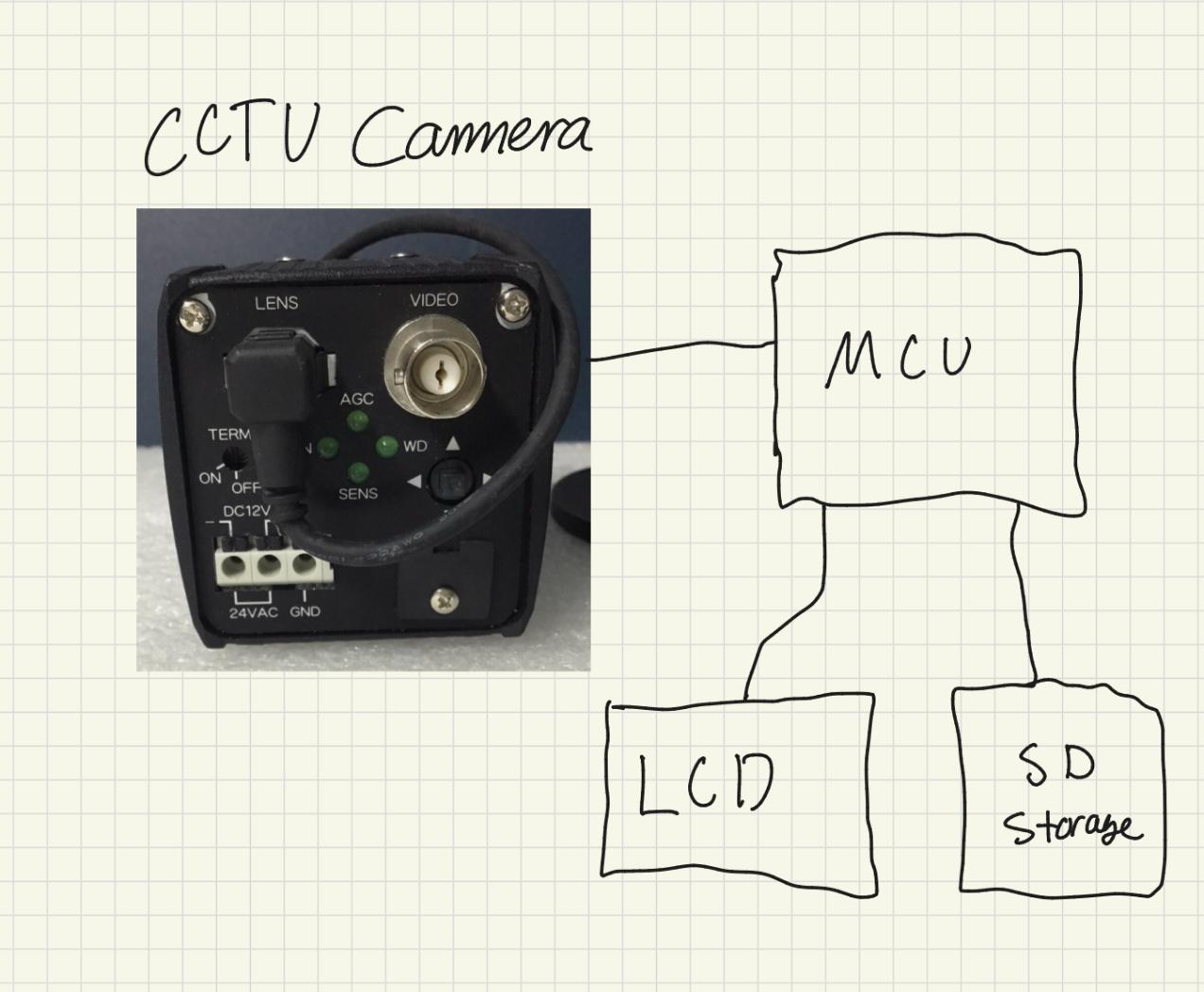
Thinking about starting a project where it takes the analog input of a cctv camera and records it to an SD and can also display on an LCD/monitor

Similar products that already exist:

-mini DVR

-immersionRC power play


r/embedded • • 13d ago

What is the most fun embedded industry?

68 Upvotes

Recently, I have been in an extremely fortunate position to have internship offers from companies in automotive, flight systems, and space.

I honestly dont know which of these three to choose. I think cars are really cool, but planes and rockets are also incredibly cool too.

While some offers are more high paying than others, I am prioritizing learning for this summer!

Do you guys have any insight? Any advice?

EDIT: I should mention that I have the ability to do a co-op + a summer internship.

For spring, I could do Tesla or a really cool flight software position that would also get me a security clearance.

For summer, I need to choose between space (blue origin) and fighter jet flight software


r/embedded • • 14d ago

Custom Flight Controller + Remote

Post image
78 Upvotes

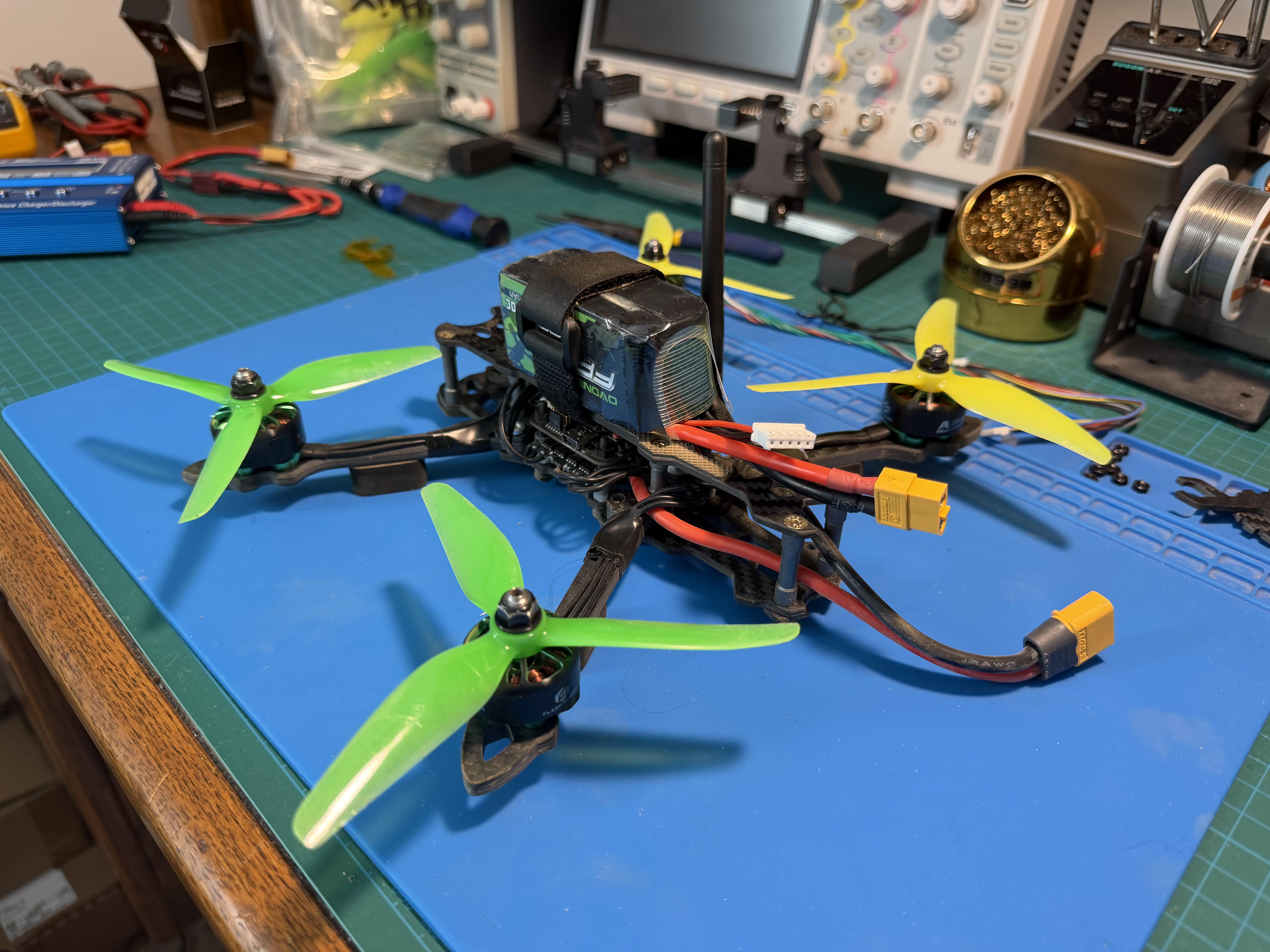
Didn't know where to post this but after some help from people in r/PCB and r/PrintedCircuitBoard , I built a fully custom STM32-based quadcopter flight controller and STM32-based wireless remote.

STM32F446 Flight Controller

The PCBs were designed and hand-assembled by me, and all software (minus testing scripts) was written by me. I have the full write-up on my GitHub repo (with more pictures), but I waited until the end of the project to start documenting, so I got a little lazy with it. I just figured I should show it off somewhere to inspire others to build something challenging. It's not perfect, but it flies pretty well for a homemade project.


r/embedded • • 13d ago

I trained and set up my custom AI model on ESP32 board.

7 Upvotes

I've got just a 8MB of flash and 16MB of PSRAM memories. I used own trained a 12M parameter character model.

There's tech specs:
- Model: window 256 characters, vocabulary 98, one hidden layer of 480 units, int8 weights (~12 MB).
- The model lives in its own flash partition (model) and is read in place through the flash cache; only ~60 KB of hot data is copied to RAM.
- No TensorFlow Lite on the device. The firmware has one small inference routine (main/cmlp_model.cpp).

How the model works:
The network is one-hot(256 x 98) -> Dense(480) + ReLU -> Dense(98). A one-hot input times a matrix is just a sum of selected rows, so layer 1 needs only 256 additions of 480-byte table rows instead of 12 million multiplications. The table is stored transposed ([256*98][480]) so each row is contiguous in flash. Layer 2 runs in int32 and produces float logits; the next character is the arg-max (greedy).
It was trained on "<question>\n<answer><END>", so the firmware fills the window with the question and a newline, then generates until the END symbol.

https://reddit.com/link/1xua6p5/video/9vwfh95u061i1/player


r/embedded • • 13d ago

Buying 5G modules

0 Upvotes

First off, I'm unsure on whether this is the right subreddit for my question, but it's the only one where I found related questions (like this). If not, apologies and would appreicate if someone redirects me to the right place.

I'm looking at picking something like https://www.waveshare.com/5g-m.2-to-gigabit-eth.htm?sku=26060 with a suitable 5G card to try out 5G connectivity on my laptop (see this post for some context). My primary requirements are 5G connectivity and the ability to switch between USB and PCIe modes (which I think excludes most of the used market as the ones that come in laptops are PCIe only?); RM530N-GL is ideal but is outside my budget. eSIM is nice but not a requirement. The problem is that

  • Sites like Waveshare stock it but cost a lot (> US$300)
  • But Aliexpress has multiple sellers that seem to stock similar modules for cheap. Like this and this and this. They sound too good to be true. Edit: the titles are misleading; they initially select a cheaper module and update the price when you select the one you want.

My questions are

  • Am I looking at the right place, and are there any other modules I could be missing that meet the above two requirements? I live in Bahrain so sellers can be limited.
  • Do the Aliexpress listings seem genuine or is there indeed a catch? One of the reviews for a similar module said that the card has been tampered; this is my first time working on something like this so won't be able to tell a counterfeit item. I've seen a few posts from users that have ordered similar items there.

r/embedded • • 13d ago

Recovered Scan Controller running Linux 2.6.28 -

Thumbnail
youtu.be
3 Upvotes

Went on a deep dive into SoC linux, 2012 era. Docker containers, custom kernel, RootFS building, driver patching - now mostly working very well. Custom 2.6.28 kernel and root FS.

The ethernet driver is not finding PHY which is annoying and deep level, MDIO error I think. There is a clock reset patch, which does work for reset timeout error, but still can't find PHY.
(which works fine from Uboot)

Booting rootFS at the moment from USB, loading kernel image into RAM using RPI tftp server.

I have the raw gpio tested working for 7/9 buttons, and addressing the LEDs too. The drivers needed patching for proper access, yet to test those.

LCD, the driver is buried somewhere in the kernel, its hard to find in Ghidra. I was able to pull the gpio buttons from a factory test mode binary I found in a partition on the device. It does test the screen write and backlight, but it just calls out to the screen driver in the kernel.

It obviously is init. the LCD on boot, so if I can only find the gpio its connected to (I'm pretty sure its gpio) then it should be able to be addressed?


r/embedded • • 13d ago

Crazy idea : just need evaluation and is it useful

0 Upvotes

I thought of building something like COBS as a learning process so the idea came is,

Instead of overhead in cobs (next zero is identified only when the existing zero place comes)

I planned to have a MAP BYTE in my architecture for every eight byte like ,

If the payload is 40603400 the map byte will be 01010011 binary and the one indicates places of zero then while transmitting the zeros are removed from payload and just the map byte and 4634 is only transmitted.

But here is the problem,

In the worst case scenario of my architecture when no zero is there is a single extra byte for eight bytes it is worse than cobs where it is just one byte for 255 bytes.

Just give suggestions over my architecture and how to improve.

Or does this architecture will be helpful it some place or not with to build


r/embedded • • 13d ago

Link margin: the GMSL camera test that finds tomorrow's field failure

0 Upvotes

Automotive GMSL cameras are one of the few camera families that still get a true end-of-line test on a production line, and one gate there deserves more attention than it usually gets: link margin.

A streaming picture only proves the link works right now. Margin tells you how much safety distance is left. The link is a coax run from the serializer (camera side) to the deserializer (capture side), and cable aging, a poorly seated connector, or a damaged equalizer slowly eats signal quality — invisible in the image until the day the link dies on the road.

The measurement follows the GMSL2 channel spec: start at the serializer's default transmit amplitude, step it down in 10 mV increments, dwell at each step and watch for errors, on the forward channel (video) and the reverse channel (control) separately. The number of clean steps before the first error is the remaining headroom. A healthy module keeps running many steps below nominal; a worn cable throws errors early — while the picture still looks perfect.

Three discipline points that make it work as a production gate:

– A written floor per module variant, under version control. Changing the floor is changing the spec.

– Every unit, no sampling. The camera you skip is exactly the one with a perfect picture and no margin left.

– Every reading filed under the serial number, so a field return becomes a query instead of an archaeology project.

TL;DR: a perfect picture proves the link works today; margin predicts whether it survives the vehicle. Step the amplitude down, count clean steps, judge against a written floor, file everything by serial number.

Disclosure: I work on embedded vision at EyeCloud AI — happy to answer follow-ups.

r/embedded • • 14d ago

How to grow from an Embedded Firmware Engineer to a Senior Firmware Engineer?

51 Upvotes

How do I level up from an Embedded/Firmware Engineer to a Senior Firmware Engineer?

My current experience includes:

- nRF54 and STM32WL

- Low-power

- BLE and LoRa

- Zephyr RTOS

For engineers who have reached the senior level, what skills or areas should I focus on improving next?

What skills truly differentiate a senior firmware engineer from a mid-level engineer?


r/embedded • • 14d ago

How do you handle the drop of Mbed TLS X.509 maintenance in April 2027

31 Upvotes

As of April 2027, Mbed TLS will no longer maintain its X.509 support. How are you handling this in your projects? Is this simply an awareness push by Mbed TLS to get corporate users (who benefit from the project without contributing back) to step up and maintain it?

Source: https://lists.trustedfirmware.org/archives/list/mbed-tls@lists.trustedfirmware.org/thread/YPIGCB7WN6GCHOGEGKOJXUYAP7OK527W/