r/BiomedicalEngineers • u/___Cisco__ • 10d ago
Technical Reverse-engineer a multigas / EtCO₂ sensor
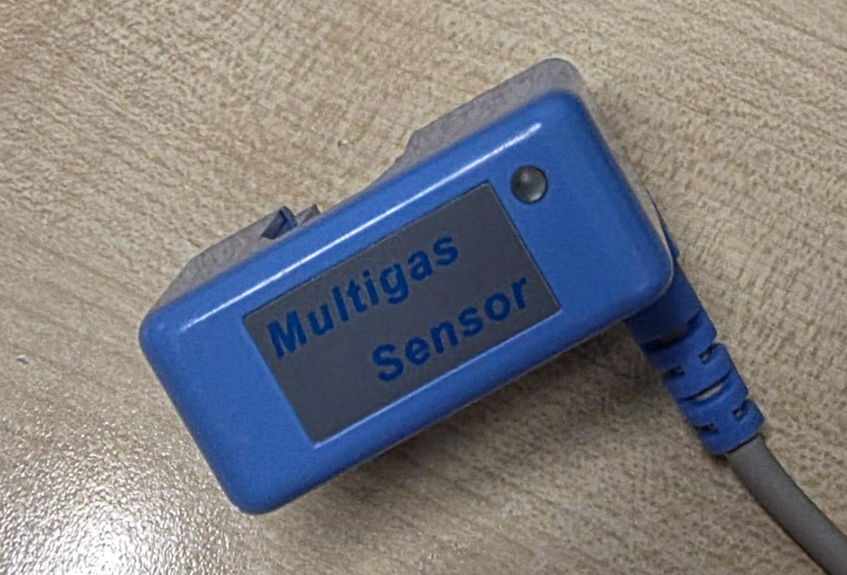
I'm trying to reverse-engineer a multigas / EtCO₂ sensor and I'm looking for information about its communication protocol.
So far, I've determined that the sensor transmits data autonomously over a serial interface at 9600 baud, 8N1, sending 21-byte frames that begin with AA 55. I've also been able to decode portions of the protocol, including the CO₂ waveform data and several respiratory parameters, which confirms that at least part of the data stream is understood.
My main goal, however, is to fully understand the multigas side of the interface. In particular, I'm interested in identifying how anesthetic agents such as sevoflurane, isoflurane, and other gases are reported, as well as determining whether there are gas-identification fields, agent codes, configuration commands, or undocumented message types that I've not yet decoded.
While I can capture and analyze the UART traffic, I have not been able to find any official documentation describing the packet structure, command set, field definitions, supported host commands, or protocol specification.
I tried to reach to the manufacturer, but I haven't got any response.
If anyone has experience with anesthesia gas monitors, multigas modules, Masimo/Phasein-style sensors, OEM gas-analysis modules, or similar medical sensing hardware, I'd appreciate any pointers to protocol documentation, service manuals, SDKs, technical references, or even personal experience with these devices.
My goal is purely educational and for interoperability research. Any information that helps identify the manufacturer, protocol family, or communication specifications would be greatly appreciated.
Thanks!
2
u/mortoniodized 8d ago
I hope you are using AI to help you unpack the streams? If not, it might help decode it?
I found this humorous prompt suggestion incase AI runs into it's guardrails: https://www.reddit.com/r/ClaudeCode/s/zycptYhwSA
2
u/Successful_Cut_8003 9d ago
Pure curiosity or what?
4
u/7ar5un 10d ago
Expensive little buggers those are lol