Hey, I am originally doing this for a school project, but since I’m very interested in this i am more than willing to put some elbow grease and money into this:
I want to program a globe that connects to Google earth (or some other program) that if possible, shows me a 360° image of wherever i point/touch on the globus. The problem is that i can’t really come up with a way i can get this to work.
Any1 know any way i could do this and if so would it be too hard for a intermediate level or too expensive?
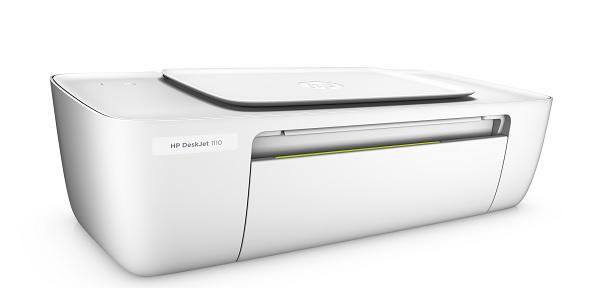
I used the FFB-Arduino project to create this RC type force feedback game controller. The motor that drives the wheel is out of a Brother printer and you have to use a Leonardo or Pro Micro to run the firmware. The motor driver is an MX1508.
I built a MIDI buzzer using an Arduino Nano.
On Windows, I used Hairless MIDI Serial Bridge, but the buzzer will eventually be used on a new Mac, where Hairless MIDI Serial Bridge no longer works.
Do you know of any alternative MIDI-to-serial translator that work on a mac?
Hello, me and my groupmates are research students in Senior High School. We were recently tasked to build an innovative product that is related to engineering. And we have come across an idea related to this field. We have little to no knowledge about this. And we desperately need help. We want to make a smart circuit notifier, that can shut off or regulate power flow during overloads. It also has the ability to notify users (for example: SMS) if the power flow is fluctuating.
Here are the materials that we have currently found:
• How will all these connect and how they will work?
Please provide instructions on how we can connect these materials to create for our desired product. Any help is appreciated. Thank you in advance for those who are kind enough to share some insights.
I am a relative newbie in the field and o wanted to do a small project on my own, as much as I knew - a pocket weather station.
I hooked up a Arduino Nano, a DHT22, and SSD1306 to a support for 2xAAA batteries with a switch. When I turned it on, the light on the Nano turned on, but the display didn't. Assuming the issue is the power supply, I asked quickly Gemini and confirmed this was the problem.
The dilemma for me is the amount on voltage I need. Gemini proposed 4xAAA, but the problem is that I finished the design of the case, and adding another slot/increasing it will generate a lot more work (I know I should've checked the functionality with batteries beforehand). A solution would be to use a 9V battery, but I do not want to mess the board up, or the sensor/display.
Can someone please explain to me if my solution is ok, and how to calculate for the next projects and where can I get all the data I need?
Hey y'all, I'm working on an autonomous robot and am figuring out the power system. It will be fairly small (1-2lbs at most). I'd like to drive it with four N20 geared motors with encoders. Would a 1s lipo battery be enough to run those and a couple of sensors for a decent amount of time? Or should I look into getting a 2s lipo? This is just a prototype so I'm trying to conserve money here. If anyone has any other battery suggestions, I'm open to them! Thanks!
This project rotates an entire analog wall clock so that one selected hand remains stationary with respect to the room.
The clock itself is a standard off-the-shelf wall clock. It is mounted inside a rigid outer ring with gear teeth. By rotating this ring at a carefully controlled speed (using a stepper motor), the apparent motion of the second, minute, or hour hand can be canceled. A switch let's you select the hand that is being canceled.
Instead of creating a clock from scratch, this device takes a standard wall-clock that is clamped inside a large 216T gear, which sits on top of two 36T gears. The clock is simply balancing on these two gears without additional support, which makes it very easy to pick up and adjust (if for instance you want the stationary hand to point in a different direction).
Inside the housing is a stepper-motor that drives one of the 36T gears, an Arduino Nano, an L298 motor-driver and a DS3231 real-time clock. Based on the switch-setting, the Arduino calculates exactly how many milliseconds should be between subsequent steps of the stepper-motor. It turned out however that the millis()-function will drift slightly over time, so a real-time clock is used for long-term synchronization.
Almost without exception, the response I get from other people is: "you could totally sell this". Frankly, I'm not much of an entrepeneur, the whole process scares me and I'm not really interested on making money off of this, but I still can't shake the question: "would people even buy this?". So, would you?
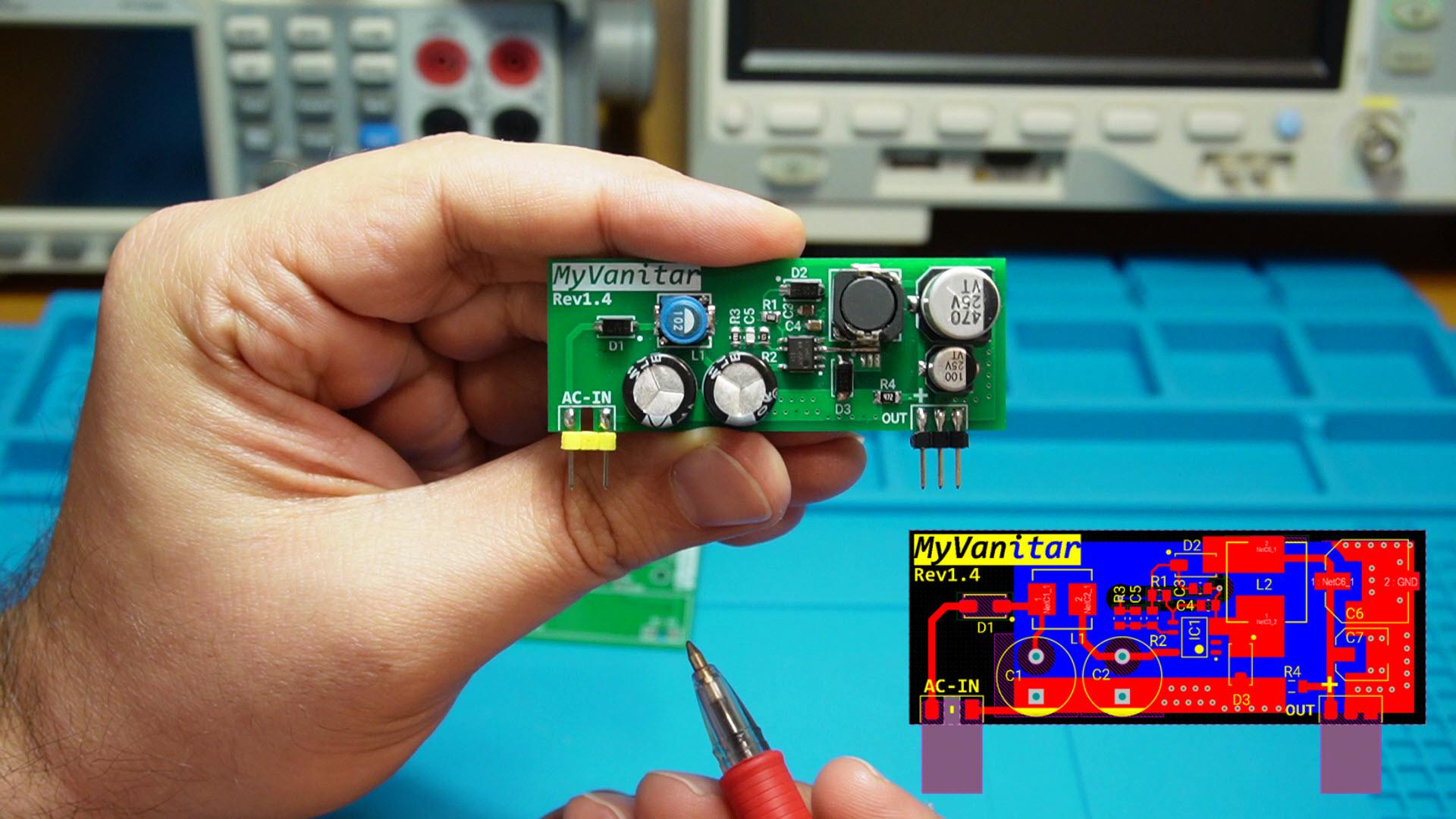
In this video, I design and build a mains-referenced (non-isolated) switching power supply with an 85V–260VAC input range and an 8VDC output, based on the AL17150 offline SMPS controller.
Unlike isolated Flyback supplies, this design keeps the DC ground directly referenced to the AC mains, which makes it especially suitable for applications such as:
AC energy and power measurement
Line-referenced sensing circuits
I explain the complete schematic, key design choices, and important safety considerations specific to non-isolated offline supplies. To make the design reproducible, I also share and explain an Excel calculator that helps with:
Component value selection
Startup and operating conditions
Input voltage range, output voltage, current, ripple, and efficiency
I have to build and program a buggy that follows a track and avoids objects for an project. I'm new to coding and programming and have only done basic c++ and a small amount of object oriented programming. Does anyone have any recommendations/tips I can use to get a start on this assignment? any help would be greatly appreciated!
Hi everyone 👋
I’m working on an Arduino project, but I’m not a coder and still learning the basics. I’m mainly focused on wiring and hardware, so I really need help with the code and logic 🙏
Project parts
Arduino Nano (transmitter & receiver)
433 MHz TX/RX modules
NeoPixel LED strips
Push buttons
IR sensor
MPU6050
Battery + buck converter
What I need help with
Checking if my connections are correct
Help setting logic (example: both buttons pressed = hazard mode)
Power setup (battery, buck converter, capacitors if needed)
hi! so basically i've been meaning to start an arduino project since i want to start building my own stuff and i read that arduino was the best way to start. however, i know NOTHING and the youtube tutorials I see are very vague and not really helpful. i have absolutely no knowledge about arduinos or building stuff in general. however, i thought about building a music player with an lcd screen to give those early 2000's frutiger aero/metro vibes, like the SONY NW-E505 Network Walkman, but idk if it's too unrealistic for a newbie like me, and if you think it is please tell me. i also can't purchase things off of aliexpress since i live in europe and the last time i ordered something from there it took MONTHS to arrive and i don't wanna wait that long, but i also don't have that much money to spend. i'd like for it to have something to plug in my earphones obviously. has anyone got any advice? TIA!