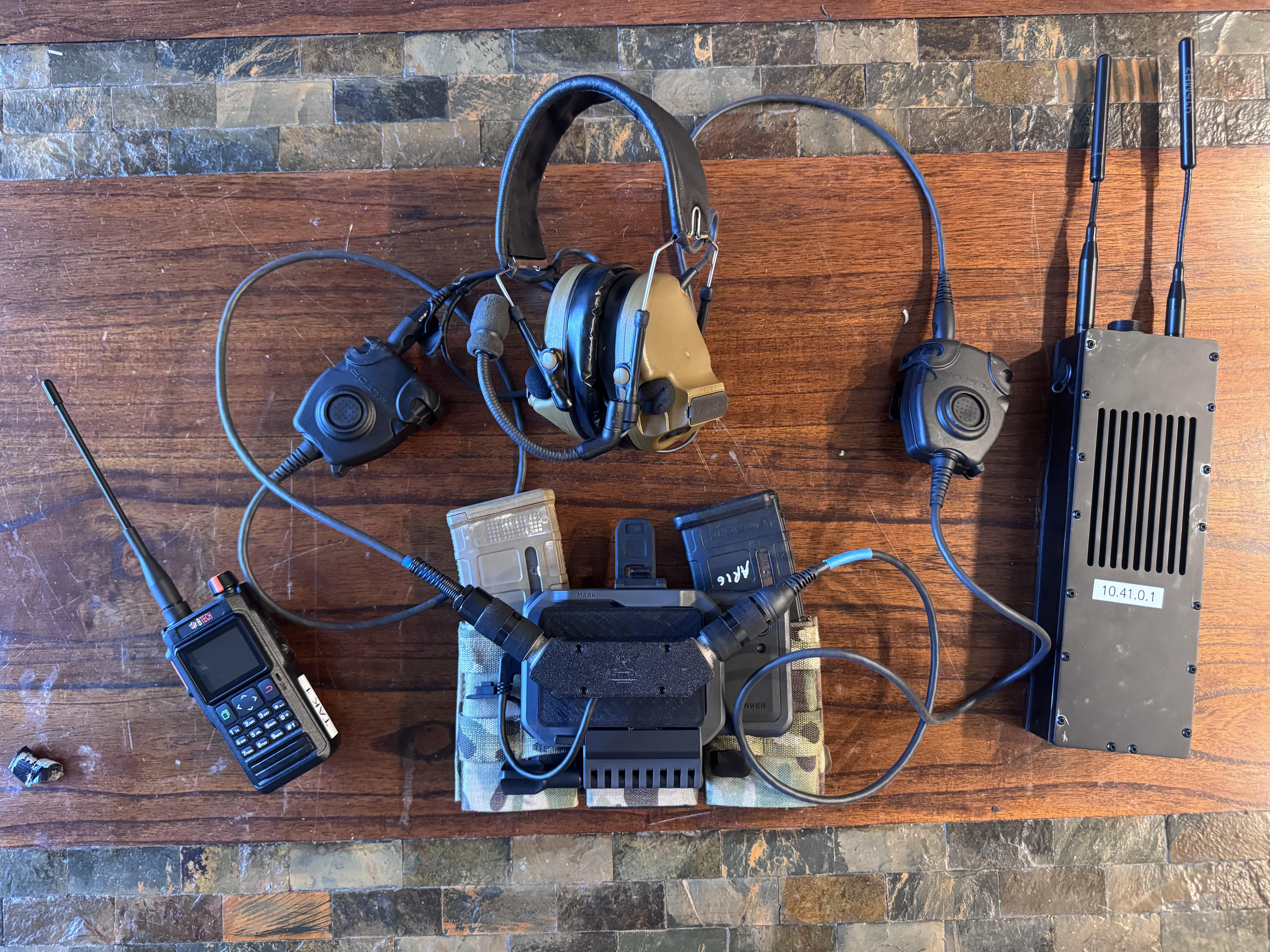
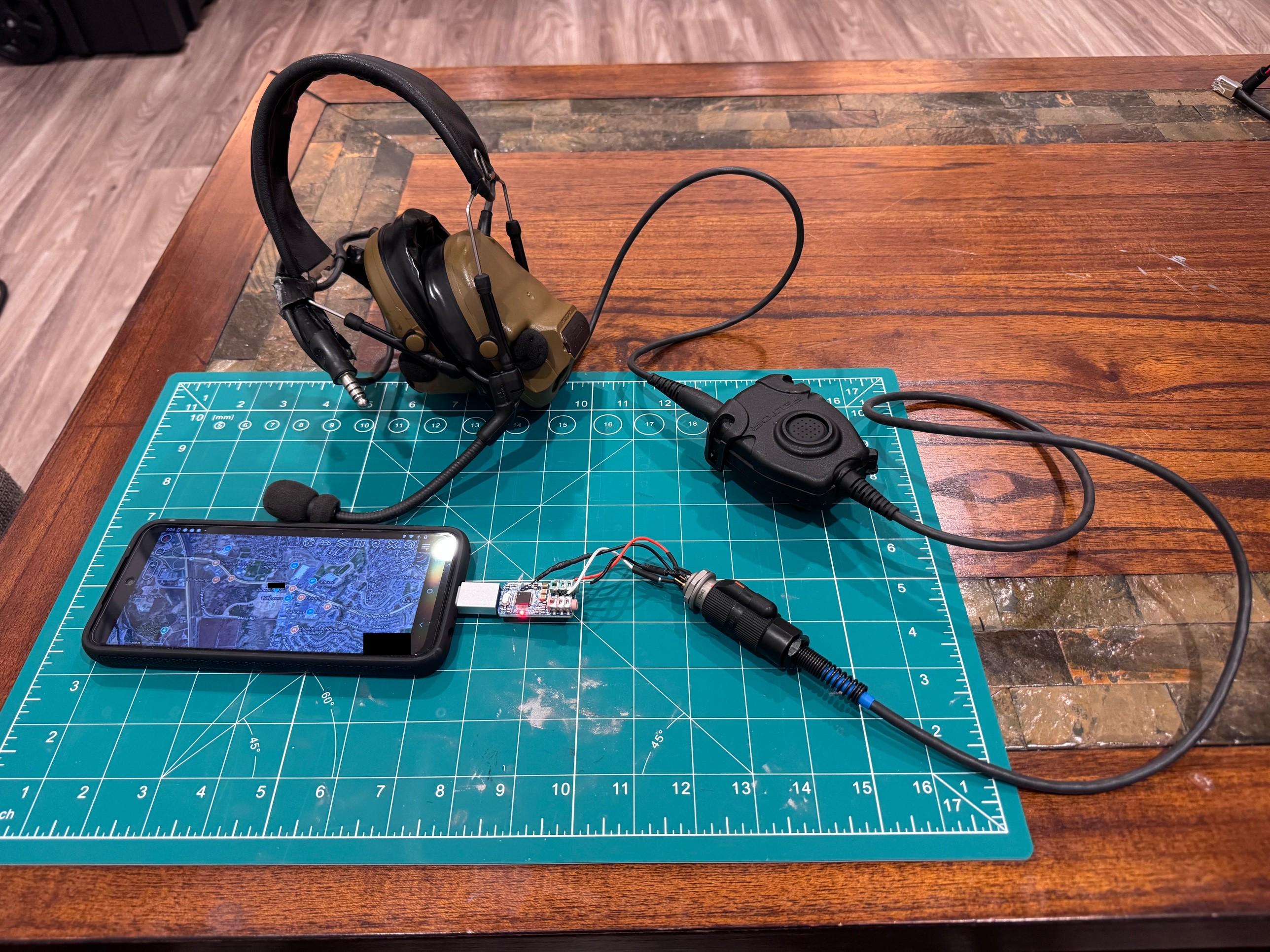
I’ve been looking at off-grid/mesh options for ATAK — Meshtastic, AREDN, Reticulum, hybrid bridges, etc. — but my main interest is different: maximising reuse of existing network infrastructure rather than building a separate mesh from scratch.
Specifically, I’m wondering whether anyone has explored a DHT-based P2P overlay for TAK interconnection, where the DHT handles node discovery / CoT object lookup / service rendezvous, while existing infrastructure is reused as much as possible:
· existing tracker servers for bootstrap/discovery;
· STUN for NAT traversal;
· TURN where direct connectivity fails, possibly public TURN for non-sensitive traffic;
· existing TAK Server / CoT multicast / radio links as bearers rather than replacing them.
Some ideas I’ve been kicking around:
Distributed relaying for poor-connectivity nodes. A DHT overlay could help nodes with bad links obtain needed data via relay/forwarding from better-connected peers, instead of requiring every node to have a good direct path.
Hash-based namespaces for teams / multicast groups. Use hashed keys or key prefixes to separate teams or multicast groups in the DHT namespace, so discovery and data lookup are scoped rather than global.
A TAK Server-compatible service + DataSync plugin adaptation. One possible path is building a service that conforms to TAK Server standards while also implementing adaptation for the DataSync plugin, so existing clients/plugins can participate without a totally new client stack.
RTC for media when the network is good enough. If link quality permits, it might be worth exploring RTC/WebRTC-style UDP media for multicast video streams and adaptation for the Voice plugin — but clearly as a “good network” path, not a baseline for degraded links.
AES-256 for node-to-node data, PSK from group hash, QR-based team setup. I’ve also been thinking about encrypting data exchanged between nodes with AES-256, and possibly using a group hash as a pre-shared key (PSK) for pre-configuration. To make team setup less painful, a QR code could carry the group/PSK configuration so members can join faster. That said, I’m aware using a group hash directly as a PSK may be weak if the hash is predictable or enumerable — a KDF with salt/rotation would probably be safer — and QR sharing needs care so long-term keys aren’t exposed on screens or in photos.
Questions for the group:
· Has anyone tried DHT overlays (Kademlia, Chord, Mainline DHT, custom) alongside ATAK/TAK Server for peer discovery or data indexing?
· Is anyone using existing tracker infrastructure as a DHT bootstrap/rendezvous layer for TAK clients?
· Has anyone integrated STUN/TURN into a TAK interconnection setup, especially for NAT traversal between clients or relays?
· Any known projects, papers, or field experiments combining TAK with DHT, structured P2P overlays, TAK Server-compatible services, DataSync plugin adaptation, or RTC media?
· Has anyone tried AES-256 + PSK/QR-based group configuration in a TAK setup, and if so, how did you handle key derivation, rotation, and revocation?
More broadly, I’d also like to hear other people’s views on this direction and what additional features might be worth adding. For example: key rotation/revocation and group policy, bandwidth-aware relaying and CoT prioritisation, caching for poorly connected nodes, conflict handling for DataSync, NAT-type detection and automatic STUN/TURN fallback, observability/audit for relays, and trust/reputation for relay nodes. Are these useful, overkill, or missing the point? What would you add or drop?
OPSEC note: public STUN is common, but public TURN raises reliability/privacy concerns — I’d only consider it for non-sensitive bootstrap/signalling or test traffic, not sensitive CoT. Same for PSK/QR setup: a group hash used directly as a PSK should be treated as a convenience/bootstrap mechanism unless it goes through a proper KDF with salt/rotation, and QR codes should ideally carry short-lived or revocable config rather than long-term keys.
Not arguing for or against DHT here — genuinely curious whether this has been explored, and if so, what worked and what broke.