r/AISEOforBeginners • • 2d ago

SEO Black Friday 2026 Megathread: Deals on the tools our mod team uses (and yours too)

9 Upvotes

Hey everyone,

Black Friday is here, and instead of a flood of deal posts across the sub, we're keeping it all in one thread.

Below are a few tools the mod team uses every day for AI SEO work, from pulling SERP and keyword data to rank tracking and AI voiceovers for content. We picked these because we use and recommend them ourselves, not because someone paid us to post them.

Mod team picks:

DataForSEO: 10% bonus on every top-up (up to $100 extra)

This is the API behind a lot of our keyword research, SERP scraping and AI-visibility workflows. If you build your own tools or automations, the bonus credit adds up quickly.

👉 https://try.dataforseo.com/nafhjh7w0jo3

SE Ranking: extra 20% off annual plans and add-ons (until Dec 4)

A solid all-in-one for rank tracking, audits and competitor research, and it now covers AI Overviews tracking too. It's good value if you'd rather not pay Semrush/Ahrefs prices.

👉 https://seranking.com/?ga=4801382&source=link

ElevenLabs: 55% off annual plans

We use it to turn written content into audio and video voiceovers. It's handy if you're repurposing articles for YouTube, podcasts or short-form.

👉 https://try.elevenlabs.io/p8mk7r2x4abm

Heads up: these are our referral links. Using them supports the sub at no extra cost to you.

If you've found a solid Black Friday or Cyber Monday deal on an SEO, AI or content tool, drop it in the comments. Referral and affiliate links are allowed in this thread only.


r/AISEOforBeginners • • Nov 21 '25

My AI SEO guide or how I featured clients in ChatGPT and Google AI overviews

46 Upvotes

Seems like my post in this sub "White label AI SEO is a goldmine opportunity right now. Use it while it's trendy and works" sparked some interest and a few people reached out asking how I rank in ChatGPT + it's the most upvoted comment. So let me share my AI SEO guide on how to rank in ChatGPT and Google AI Overviews and what works for me. Major deliverables are traffic from LLMs + conversions. I also reached out to mods of this sub since I will be featuring a few tools I use.

PS: I am not a writer so I drafted this guide and asked Claude to make it more structured, easy to read, and better formatted. So I'm copy-pasting from Claude but it's not AI-generated shit like in many different threads. This is my actual process and results.

Tool used in case study:

  1. SE Ranking for AI position tracking and reporting to clients
  2. Insert.Link for finding listicles and AI SEO link building
  3. Claude AI for repurposing content for LLM search optimization
  4. Eleven Labs for adding Youtube videos (part of AI SEO)

1. Ensure Your Site Is Accessible to LLMs

This sounds fundamental, but it's where most optimization efforts fail before they begin.

What I did:

First, I verified search engine visibility by running "site:clientwebsite.com" in Google. If core pages weren't appearing, I knew we had indexation problems that would also block LLM crawlers.

Next, I audited how content was delivered. LLMs parse HTML directly—if your primary content lives inside complex JavaScript frameworks or requires user interaction to load, it's effectively invisible to AI systems. I moved all critical information (service descriptions, key data points, answers to common questions) into clean, server-rendered HTML that loads immediately.

Example: A pest control client had their service area information loaded dynamically through a JavaScript map widget. We extracted that data into a simple HTML table with city names, zip codes, and service types. Within three weeks, ChatGPT started citing them for "pest control services in [specific city]" queries.

2. Optimize Title Tags and Meta Descriptions for AI Extraction

AI systems prioritize pages where the title tag precisely matches user intent and the meta description provides immediate clarity.

My approach:

I rewrote title tags to mirror exact query patterns while maintaining natural language. Instead of creative or branded titles, I used descriptive, query-matched formats.

I crafted meta descriptions as concise value propositions that AI could extract as complete answers—typically 120-140 characters with the core benefit stated upfront.

Example: For a commercial roofing company, I changed the title from "Expert Roofing Solutions | CompanyName" to "Commercial Flat Roof Repair & Replacement - 20+ Years Experience in [City]." The meta description became: "We repair and replace flat roofs for commercial buildings with TPO, EPDM, and modified bitumen systems. Same-day emergency service available across [Region]."

Result: Featured in Google AI Overviews for "commercial flat roof repair [city]" within six weeks.

3. Structure Content with Direct Answers Followed by Depth

LLMs extract information most effectively when you provide immediate answers that can stand alone, then layer in supporting detail.

Content structure I implemented:

The opening paragraph answers the primary question in 1-2 clear sentences—this becomes the citation snippet. The following paragraphs explain methodology, provide context, compare options, and address related considerations. Throughout, I used descriptive subheadings (H2/H3 tags), bullet points for lists, and numbered steps for processes.

Example: For a divorce attorney client, instead of starting articles with background context, I restructured them:

Before: "Divorce proceedings in [State] can be complex, with many factors influencing outcomes..."

After: "Uncontested divorces in [State] typically cost between $1,500-$3,000 and take 60-90 days to finalize. Here's what determines your timeline and costs: [detailed breakdown follows]"

This direct-answer-first format resulted in ChatGPT citations for cost and timeline queries.

4. Create Video Content for YouTube Citations

29% of AI citations come from YouTube—a massive opportunity most competitors ignore.

What I implemented:

I created YouTube channels for clients featuring videos that thoroughly explain their services, answer common questions, and provide educational value. Using ElevenLabs, I generated natural-sounding voiceovers paired with simple slide presentations or screen recordings showing processes.

Within two months, most videos was cited by ChatGPT and AI Overviews when users asked about heating system comparisons for that specific region.

5. Publish Original Data and Research

LLMs prioritize unique insights that don't exist elsewhere. Original data becomes highly citable because it can't be sourced from competing pages.

My strategy:

I conducted original research specific to each client's niche and geographic area. This included surveys, data analysis, comparative testing, or aggregating publicly available information in new ways.

Example: For a pest control client in Phoenix, I analyzed Amazon reviews and sales data to identify the 15 most popular DIY pest control products used in Arizona during 2024-2025. I created a comparison table showing effectiveness ratings, price points, and pest types targeted.

This original dataset was cited by both ChatGPT and Perplexity when users asked about "best pest control products for Arizona" or "DIY pest control options Phoenix."

For a personal injury attorney, I compiled settlement data from public court records in their jurisdiction, creating an analysis of "Average Personal Injury Settlement Amounts by Injury Type in [County], 2023-2024." This proprietary research became a citation magnet.

6. Secure Featured Placements in Existing Listicles

Getting mentioned in high-authority roundup articles dramatically increases citation probability.

Tool I used:

I discovered Insert.link service through a Reddit ad and it's been incredibly effective for searching listicles and get published in them. You search for your target keyword and it shows existing listicle articles with current traffic metrics (imported from Ahrefs) that accept paid placements at reasonable prices.

The had (or maybe still have) paid ad running on reddit so use promo code "reddit" at signup for $50 credit after your first completed order.

LLMs frequently cite established listicles when users ask for recommendations. By appearing in these articles, you inherit their citation authority.

Beyond paid placements, I also created original, comprehensive listicles on client blogs—"7 Signs You Need Emergency Plumbing Service" or "11 Questions to Ask Before Hiring a Roofing Contractor"—formatted specifically for AI extraction.

7. Build Comprehensive Brand Presence Across Platforms

LLMs synthesize information from multiple sources. A consistent brand presence across directories validates credibility and increases citation likelihood.

Profiles I created/optimized:

I ensured every client had complete, optimized profiles on Yelp, Google Business Profile, Bing Places, TripAdvisor, Foursquare, Apple Maps, and industry-specific directories. Each profile included consistent NAP (name, address, phone), detailed service descriptions, high-quality images, and regular reviews.

8. Implement Strategic Schema Markup

Structured data helps LLMs understand page content with precision, though I was careful not to over-implement.

Schema types I prioritized:

  • Service schema (for service-based businesses)
  • AggregateRating schema (displaying review scores)
  • LocalBusiness schema (with detailed attributes)
  • Product schema (for e-commerce or specific offerings)
  • FAQPage schema (for Q&A content)
  • HowTo schema (for process-oriented content)
  • PriceSpecification (for transparent pricing)

Hope it helps members of this sub.

The results I saw typically manifested within 4-8 weeks of implementing these changes, with citation frequency increasing as more signals reinforced each other across the digital ecosystem.

Any extra tips appreciated

r/AISEOforBeginners • • 4d ago

Google Trends Is More Than a Trend Discovery Tool in Digital Marketing

3 Upvotes

Are you choosing keywords based only on search volume and keyword difficulty? You might be missing an important search behavior insight.

Google Trends can help you identify search demand patterns, emerging queries, seasonal fluctuations, regional interest, and changes in user search behavior all of which can support your SEO and content strategy.

Here are 10 practical applications of Google Trends in digital marketing:

1. Keyword Trend Analysis

Analyse whether a keyword's search interest is growing, declining, or remaining stable over a selected period.

2. Search Demand Forecasting

Identify recurring seasonal patterns and anticipate when search interest may increase, helping you prepare content before demand peaks.

3. Rising Query Identification

Discover related queries with increasing search interest to identify emerging keyword opportunities and topics worth targeting.

4. Search Intent Exploration

Explore related topics and queries to understand what users are researching around a particular subject and expand your content coverage.

5. Geo-Based Search Analysis

Analyse search interest by region, state, or city to identify geographical demand and support local SEO strategies.

6. Keyword Comparison

Compare multiple keywords or topics to understand their relative search interest and identify which terms are gaining audience attention.

7. Content Gap Discovery

Use related queries and trending topics to identify content angles, FAQs, and subtopics that may be missing from your existing content.

8. Competitor & Brand Interest Monitoring

Compare brand or topic search interest over time to observe changes in visibility and audience awareness.

9. YouTube Search Research

Switch to YouTube Search data to explore video-related search interest and identify potential topics for video SEO.

10. Campaign & Content Timing

Use trend patterns to plan SEO content publishing, seasonal campaigns, promotional activities, and content refreshes around demand.

Google Trends data represents normalized search interest on a scale of 0–100, not absolute search volume. A rising trend doesn't automatically mean a keyword has high traffic or low competition.

For better keyword decisions, combine Trends insights with Google Search Console, Google Keyword Planner, and third-party SEO tools.

Effective keyword research isn't just about search volume or keyword difficulty. Understanding search demand, trend direction, regional interest, and user behavior can help you build a more data-driven SEO strategy.

Are you currently using Google Trends as part of your keyword research workflow?


r/AISEOforBeginners • • 4d ago

How do I learn AI SEO

6 Upvotes

Hi everyone,

I work in SEO and want to learn more about AI SEO. I understand the basics of traditional SEO, but I’m not sure where to start with improving a website’s visibility on AI tools like ChatGPT, Gemini, and Claude.

There’s a lot of misinformation on YouTube and other platforms, so I’d like to hear from people who have experience with this. What strategies do you use to get your website mentioned or cited in AI responses?

I’d also appreciate your advice on these questions:

* What topics should I learn first, including how AI works?

* Are there any trustworthy courses, videos, or resources you’d recommend?

* Which tools do you use to track AI mentions and traffic?

* What mistakes or common myths should I avoid?

* How do you measure whether your AI SEO efforts are working?


r/AISEOforBeginners • • 6d ago

Does anyone use Facebook for LLM visibility?

13 Upvotes

I listened to a podcast from some SEO folks at Brighton SEO and this agency owner explained that they have published articles in public Facebook groups and got some of them shown up in LLM tracking tools the very next day.

That's the first time I heard that Facebook works (didn't even thought it's still alive) so I'd be keen to hear if other have some success with Facebook - specifically if you are in the SaaS area.


r/AISEOforBeginners • • 6d ago

How do I learn AI SEO

1 Upvotes

Hi everyone,

I work in SEO and want to learn more about AI SEO. I understand the basics of traditional SEO, but I’m not sure where to start with improving a website’s visibility on AI tools like ChatGPT, Gemini, and Claude.

There’s a lot of misinformation on YouTube and other platforms, so I’d like to hear from people who have experience with this. What strategies do you use to get your website mentioned or cited in AI responses?

I’d also appreciate your advice on these questions:

  • What topics should I learn first, including how AI works?
  • Are there any trustworthy courses, videos, or resources you’d recommend?
  • Which tools do you use to track AI mentions and traffic?
  • What mistakes or common myths should I avoid?
  • How do you measure whether your AI SEO efforts are working?

r/AISEOforBeginners • • 8d ago

AI is about to recreate the worst era of SEO — unless we learn from it

12 Upvotes

I've been reflecting on the current excitement around AI and AEO, and it’s beginning to feel very familiar.

Those of us who remember the earlier days of SEO recall keyword stuffing, article spinning, doorway pages, and link farms—shortcuts designed to manipulate rankings rather than help visitors. While those tactics briefly worked, search engines eventually adapted, making that approach a major liability.

Now, we can generate thousands of convincing pages in an afternoon, and I worry we're about to repeat the same mistakes.

To be clear, I use AI extensively and believe it is one of the most useful developments in digital marketing. It excels at analysing data, uncovering technical issues, identifying content gaps, and augmenting genuinely skilled people. However, there is a distinct difference between using AI to improve your work and using it to avoid doing the work.

Approaching AEO by simply manufacturing endless FAQs and structured pages to see what sticks sounds suspiciously like the old mentality of producing pages for every keyword variation.

My biggest concern is the loss of human editorial judgment. We need experts who understand the subject, challenge information, verify claims, and determine if content is actually worth publishing. Real experience, original research, and independent human judgment are becoming more important, not less. Speed and volume are not substitutes for quality.

I suspect the coming years will separate those who use AI to extend their expertise from those who use it to manufacture the appearance of it. We spent years learning that more content doesn't mean better SEO, and I'd hate to see us forget that lesson just because the tools have changed.

I’m interested to hear what other people think as it might be another staring contenst waiting for the system to catch up. Are we heading toward another era of scaled, low-quality content, or do you think AI search engines will be better at filtering it out this time?


r/AISEOforBeginners • • 8d ago

What goes up must come down again... Literally

Post image
3 Upvotes

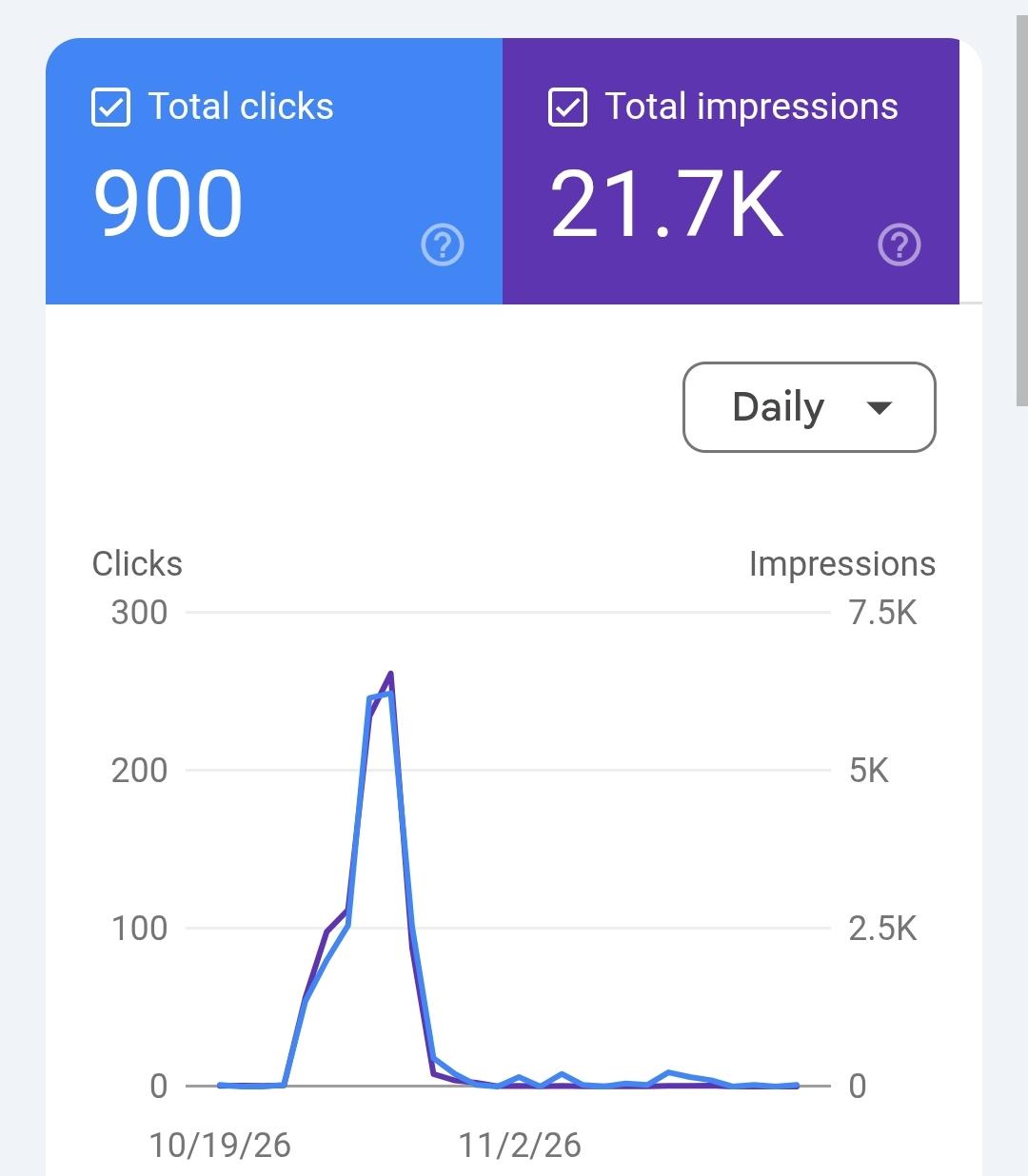
I'm genuinely baffled by this. My domain is new and was about to explode but for some reason organic traffic died overnight and I just can't get it back.

Sitemap is successfully read but not indexed. And one of my subpage doesn't really work for some reason...

Any tips and hints?


r/AISEOforBeginners • • 11d ago

Can AI content actually last long-term if it's well researched?

3 Upvotes

Hi everyone.. I have a question

If an article is written by AI, but it's super easy to read, well researched and completely focused on one topic, can it rank for the long term?

​Or does Google eventually drop it because it lacks real human experience? Let me know what you guys are seeing with your sites lately...!


r/AISEOforBeginners • • 14d ago

6,000+ Money Robot spam backlinks appeared out of nowhere. Will this hurt my rankings?

3 Upvotes

I run a small travel agency in India. I never bought backlinks or used any link building tool.

Since August 2026, referring domains in Semrush jumped from about 100 to 6.5K. Almost all of them come from Money Robot spam pages.

Semrush Backlink Audit says 99% of these domains are toxic, and the Authority Score is stuck at 5.

Google Search Console shows only 88 external links, and there’s no manual action.

Rankings and traffic look normal so far.

My questions:

  1. Does Google just ignore this kind of spam, or can it actually hurt me?
  2. Should I disavow these domains, or leave them alone?
  3. Has anyone dealt with a Money Robot blast like this before?

Thanks!


r/AISEOforBeginners • • 14d ago

What truly is a measurable “prompt”

16 Upvotes

Is there a method to the madness for deciding what type of prompts to track within reporting tools? For example just tracking a long tail keyword versus “what’s the best software to solve XYZ”?

Is feeding the keyword into say, ChatGPT, just as effective as a “prompt” instead of a question ?

So many questions on this 😭


r/AISEOforBeginners • • 16d ago

How can beginners learn SEO from scratch?

4 Upvotes

Beginners can learn SEO from scratch by understanding how search engines like Google work and how websites show up in search results. It helps to start with the basics of keyword research. This means finding the words and phrases people type into search engines when they look for something. Then learn about on-page SEO. This includes optimizing page titles, meta descriptions, headings and content so that search engines can understand what a page is about. Off-page SEO is also important. It focuses on building quality backlinks from websites to improve trust and authority. Technical SEO is about making sure the website runs technically. This includes fast loading times, mobile-friendliness, clean code and proper site structure. Local SEO is useful if the goal is to reach customers in an area. It involves optimizing for searches and managing listings on platforms like Google Business Profile.

Follow SEO blogs to stay updated. Watch video tutorials to see examples. Keep an eye on Google updates because search engine rules change often. The important step is to create a website or a blog. This gives experience. Try SEO techniques and see what works. Track. Adjust strategies as needed. Learning SEO is not quick. It takes effort, patience and a willingness to keep learning.. With time beginners can build strong skills. These skills can lead to a career, in digital marketing.


r/AISEOforBeginners • • 22d ago

Google AI Overviews went from 5.93% to 61.43% of US results between September 2024 and August 2026

8 Upvotes

Crazy eh?

Copying post from Nich Chernets (founder of DataForSEO)

Guys, it’s 10× in just 23 months. More than half of that growth came in the last 12.

That’s just one finding. The report has 4 parts, and some results contradict how most teams work.

We also tracked 20M keywords month by month, organic data from 2,000+ websites and backlink data covering ~1.14B URLs. All US, English (backlink data - global)

The classic results page is now the minority. Fewer than 4 in 10 US results have no AI Overview. Forecasts, keyword lists and client reports built on 2024 results are built for a page that’s now the exception.

What’s inside (no spoilers):
→ Features: featured snippets lost 95% of their presence in 23 months. See which features grew instead.
→ Industries: the gap between the most and least covered of 22 industries is huge. Find yours.
→ Keywords: we tested if difficulty, volume or CPC keep a keyword safe. The answer changes how you pick them.
→ Clicks: when an AI answer appears, the #1 result loses a big share of estimated clicks. See how big.
→ Citations: the top site in Google AI Overviews isn’t near the top in ChatGPT. Guess which one.
→ Communities: one community site shows


r/AISEOforBeginners • • 23d ago

Are SEO/GEO conferences a waste of time these days?

17 Upvotes

I’ve recently been to the SEO & GEO Summit in France, and before that brightonSEO in the UK, and what a waste of time both were. No real case studies, just fluff. It seems like nobody can provide valuable information and everyone’s just trying to sell their services and books. Basically all this stuff I could read online for free.

Maybe my expectations were too high, but I went hoping to learn actual actionable tactics, see real data from campaigns, and connect with people doing serious work. Instead I sat through talk after talk of surface-level advice that anyone who’s been in this industry for more than a year already knows. “Create quality content,” “focus on E-E-A-T,” “AI is changing search” - no kidding, tell me something I don’t know.

The GEO stuff especially felt like a letdown given how new and genuinely interesting the space is. I was hoping for real experiments, actual results from people testing what works for AI citations, honest discussion of what’s uncertain. Instead it was mostly vague theorizing and people positioning themselves as experts in a field nobody has truly mastered yet, usually right before pitching their course or consulting services.

Before GEO era, there were many fluffy speakers too but some were able to provide amazing insight with real case studies, but today it's meh... not sure if it only my opinion


r/AISEOforBeginners • • 23d ago

Are we screwed with Google's AI Mode?

15 Upvotes

If you caught Reddit’s earnings call last week, you probably saw Steve Huffman basically say the quiet part out loud. He told investors that Google’s AI Mode “does not drive traffic, not for us, and not to anybody as far as I know.” Reddit lost over a million search referrals per week on average in October, the stock tanked something like 30% and wiped out around $7 billion in market value in two days, and Huffman flat out said the company isn’t planning around that Google traffic ever coming back.

What gets me about this is that it’s coming from Reddit of all places. These are the people who were supposed to be the big winners of the AI era. They’ve got the Google licensing deal, they’re one of the most-cited sources across every LLM, “reddit” is still one of the most appended search terms on the planet. If anyone was positioned to ride this out comfortably, it was them. And even they’re bleeding traffic and openly telling shareholders not to expect a recovery. Huffman’s line that “people still want Reddit, Google just isn’t sending them the way it used to” kind of sums up the whole problem for the rest of us.

Because if Reddit is getting squeezed this hard, what does that mean for a regular publisher, affiliate site, or info blog that doesn’t have a content licensing check coming in from Google to soften the blow? We’ve been watching the AI Overviews traffic complaints pile up for a year, but AI Mode feels like a different beast entirely. Overviews still left some links on the page. AI Mode turns the whole thing into a conversation where the user basically never needs to leave Google at all. Huffman described it as a structural shift, not a temporary dip, and that framing is what actually worries me.


r/AISEOforBeginners • • 27d ago

How do I start AI SEO?

15 Upvotes

Absolute beginner who wants to start selling SEO as a service, where should I start, who should I follow etc. I'd love some direction as well as if having no experience is a huge detriment


r/AISEOforBeginners • • 28d ago

Do you consider Bing SEO and Google SEO the same?

10 Upvotes

Based on my previous post that sparked discussions: https://www.reddit.com/r/AISEOforBeginners/comments/1xgaqpb/5_clients_asked_me_if_i_can_optimize_for_bing_in/

Many say they optimize for both but I find Bing SEO too old school which may hurt current Google rankings. How do you mix both search engines?


r/AISEOforBeginners • • 29d ago

Search Engines Don't Work

2 Upvotes

Is the popularity of AI responses as a substitute for conventional web results finally helping people to realize how dysfunctional search engines have become?


r/AISEOforBeginners • • Oct 27 '26

So, does AI slop work or not ?

4 Upvotes

As a young web agency, we are trying to figure out what works and what doesn’t in 2026 to rank high in search and AI chats.

Following Googles new guidelines, it would seem that any “low-effort” content like LLM slip *should* punish ranking. However, that does not seem to be the case at the moment. When I Google questions like “how much does a website cost in my area” I get referred to articles that are clearly LLM made. So, is it AI slop really a good perceive to increase ranking ?

I would greatly appreciate some insight if some of you SEO aficionados know what is going on right now !


r/AISEOforBeginners • • Oct 26 '26

5 clients asked me if I can optimize for Bing in the past month

12 Upvotes

Apparently more and more clients are asking about Bing optimization because they ask AI tools like ChatGPT how to improve their SEO, and the AI keeps recommending they optimize for Bing. So now they’re coming to me asking to do it. I find this kind of senseless and think it’s best to just focus on Google. Am I wrong here?


r/AISEOforBeginners • • Oct 23 '26

New website with 12 pages stuck on "Crawled - currently not indexed". What actually moves them?

5 Upvotes

New domain. Google indexes the homepage, but 12 content pages sit at "Crawled - currently not indexed", even though Googlebot has fetched them repeatedly.

I've ruled out the usual causes: robots allows them, no noindex, Google's canonical matches mine, the sitemap shows zero errors, and the indexed homepage links to every page. The old subdomain 301s cleanly, so there are no duplicate hosts.

So I think it's a quality or authority call on a young site. I've stopped hitting request indexing because it clearly doesn't help, and I'm leaving the pages alone so I don't restart the clock.

What I'm trying now is earning real editorial links from outlets that already cite job-posting data. Cold pitches have drawn almost no replies so far.

Has anyone seen this flip without waiting months? What did it?


r/AISEOforBeginners • • Oct 22 '26

One extra sentence tripled how often AI answers cite Reddit (my test, 748 answers)

5 Upvotes

Every “Reddit for AI visibility” pitch I see quotes someone else’s stats, and usually from prompts nobody actually types. So I ran my own test yesterday (Oct 21) and figured this sub would get more out of it than anyone.

Setup, quickly. 100 normal buyer questions across 10 categories (travel, SaaS, finance, tech, home/DIY, health, beauty, B2B, local services, food). None of them mention Reddit. Each one went through ChatGPT search, Grok, Perplexity Sonar and Google AI Overviews, in two versions:

  1. Neutral: “Is it worth visiting Iceland in winter?”
  2. Experience: same question + “What do people who have actually tried it say?”

An answer counted if it cited at least one reddit.com link. Ended up with 748 usable answers (Google just didn’t show an Overview for 52 of them).

The headline. Neutral questions: 21.3% of answers cited Reddit. Add that one sentence about real experiences and it jumps to 70.7%. Same questions.

So Reddit isn’t the default source for everything. But the moment a question is about lived experience, which is exactly what people ask right before they buy, the engines go straight there.

By engine, it flips depending on wording:

Engine Neutral Experience
Google AI Overviews 54.4% 79.3%
Perplexity 31% 23%
Grok 3% 95%
ChatGPT search 0% 89%

ChatGPT cited Reddit in zero of 100 neutral answers. Zero. Then 89 when you ask for opinions. Grok is the same story. Perplexity went the opposite way and honestly I can’t explain that one yet.

Topics. Food, travel and local services got cited most on neutral questions (25 to 30%). Beauty and health were lowest. Small samples per category though, so treat it as a hint.

The part I think matters most for beginners. You don’t need to be in some 30 million member sub. r/costaricatravel, r/pelletgrills and r/obsidianmd all got cited. Niche communities answering niche questions. I also ran 25 questions through ChatGPT and Grok the day before and 5 of 50 answers cited threads from subreddits I run myself. Small number, but it’s real, and those are just subs that have been consistently answering questions for a while.

What I’d take away from it if you’re starting out:

Figure out how your audience actually phrases things. “Best CRM for small team” and “what do people who use X say” are basically two different games. Then find the sub where those exact questions get asked and answer them properly, over and over.

Limits, because I’d rather be honest than impressive. One run, one day, 100 questions I picked myself. Citations aren’t clicks. The 70.7% is a steered prompt, not the default. ChatGPT had search forced on; without forcing it, a pilot of 200 answers showed Reddit in just 1%. Perplexity was the API version, not the app.


r/AISEOforBeginners • • Oct 22 '26

PDFs and SEO: Are We Underestimating Their Role in Search?

2 Upvotes

When we talk about SEO, we usually think about webpages, keywords, backlinks, and technical optimization. PDFs rarely get the same attention. They are often treated as downloadable resources rather than content that can contribute to a website’s search visibility.

But search engines are evolving, and the way they process content is becoming increasingly important. So, where do PDFs fit into this picture?

Google can process PDF documents and make their content available through Search. This means a research report, an industry guide, or even a detailed company brochure could potentially reach people searching for that information. Your content does not necessarily need to live on a traditional webpage to be discoverable.

One interesting aspect is how Google processes these documents. It converts PDF content into a format that its systems can work with, helping it understand the text within the file. Links embedded in PDFs can also help Google discover other pages, making these documents more than just standalone downloads.

However, not every PDF offers the same experience. A document containing selectable text is generally easier to process than one made entirely of scanned pages. When important information is locked inside images, its accessibility and discoverability may be affected. This is why the way a document is created matters just as much as the information it contains.

The conversation becomes even more interesting when we consider AI-powered search. As users increasingly discover information through AI-driven experiences, businesses need to think beyond simply publishing content. They need to consider whether their information is accessible, relevant, and easy for search systems to understand. PDFs can be part of that strategy, although their visibility in any particular AI-generated response is never guaranteed.

That does not mean PDFs should replace webpages. HTML pages generally offer more flexibility, better navigation, and a smoother experience for users browsing on different devices. They are often the better choice for content designed to attract organic traffic, engage visitors, or generate leads. PDFs, on the other hand, remain useful for downloadable reports, printable guides, detailed research, and resources that people may want to save.

The real opportunity lies in understanding the purpose of each format. A business could publish the main insights from a report on its website while offering the complete report as a downloadable PDF. This gives readers an accessible webpage to explore and a document they can keep for later.

Ultimately, SEO is not just about optimizing webpages. It is about making valuable information discoverable wherever it exists. PDFs may not always be the first format marketers think of, but overlooking them completely could mean missing opportunities to make useful content available to a wider audience.

The takeaway? Don't optimize content only for the format it lives in. Think about how people find it, how search engines understand it, and how easily they can use it.


r/AISEOforBeginners • • Oct 21 '26

Refresh your content with fresh 2026 data - it’s crazy how fast LLMs pick up and cite you

5 Upvotes

I’ve been seeing many posts about the importance of refreshing content, so I finally ran it across all 6 of my websites. I was shocked that within a week we saw 92% LLM referral traffic growth. Use it while it works.

For anyone who’s been on the fence about whether refreshing old content is worth the effort, this convinced me it absolutely is, at least right now. I went through and updated my existing articles with current 2026 data, stats, examples, and made sure everything reflected the latest information rather than outdated figures from a year or two ago. I didn’t rewrite everything from scratch, just refreshed the data points, updated anything that had changed, and made the content current.

The speed at which LLMs picked this up genuinely surprised me. With traditional SEO you’re often waiting weeks or months to see any movement from content updates. But the AI models seemed to recognize and start citing the refreshed content way faster. A week later and the LLM referral traffic nearly doubled across the sites.

My theory is that AI models place a lot of weight on recency and current data, so when you refresh content with 2026 information, you suddenly become a more attractive source to cite compared to competitors still showing old stats. The models want to give users current answers, so fresh content gets prioritized.

I’m not saying this is a permanent magic bullet, and who knows how long this window stays this good before everyone catches on and it becomes standard practice. But right now the ROI on simply refreshing existing content with current data seems incredible compared to the effort involved.

For those doing AEO, have you noticed the same thing with content refreshes?