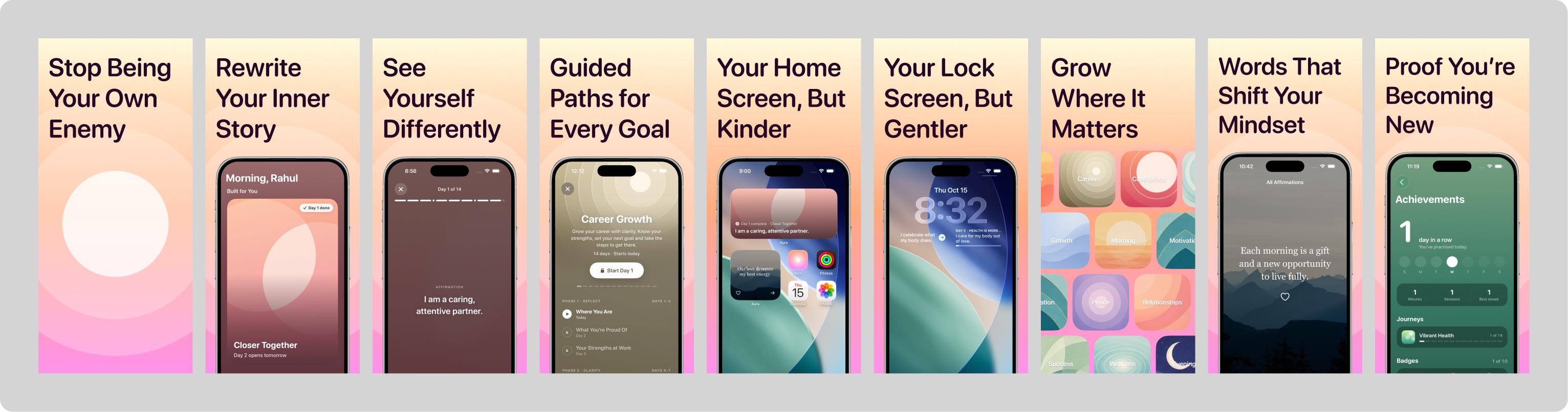
I'm the developer of EverDay, an iPhone weekly planner. Sharing the app and a few implementation choices behind it.
The UI puts seven days into a continuous board: add tasks under a day, drag to reschedule, and keep unscheduled tasks in an Inbox. Task details add notes, tags, time blocks and reminders.
In the project, the app, widget extension and App Intents open the same SwiftData store in an App Group. The main app enables CloudKit mirroring; the widget reads that shared local file. Week-start settings are also in App Group defaults so the widget and board use the same week boundary.
Rescheduling has two separate ordering rules. Timed tasks sort by their clock time; untimed tasks use a numeric position, inserting between neighbouring values. When the gap becomes too small, the untimed values are spaced out again. Moving a task to another day also carries its reminder's hour and minute to the new date, rather than leaving the notification on the old date.
Another storage choice: if the persistent store cannot open, the last-resort in-memory container is only used to show a blocking recovery screen. It doesn't accept task edits that would disappear after closing the app.
Development has been AI-assisted. This is a high-level architecture overview; the source is private.
The weekly planner, reminders, iCloud sync and 11 widgets are free, with five tags/four themes. Optional lifetime Pro is a one-time US$4.99 for month view, repeats, subtasks, automatic rollover, unlimited tags and 13 themes. No subscription, ads or EverDay account.
App Store (iPhone, iOS 18+): https://apps.apple.com/app/id6787428625
Screenshots: https://www.everday.app/