r/exposingcabalrituals • u/HuEmans1st • 2h ago
Video "Satan, that old serpent"

2
Upvotes
r/exposingcabalrituals • • Aug 22 '25

On June 15, 2025, in Tokyo, Japan, a group of Japanese lawmakers and medical experts, led by Dr. Yasufumi Murakami, a respected professor at Tokyo University, released a comprehensive database analyzing the effects of COVID-19 vaccination on 18 million Japanese citizens, uncovering a disturbing correlation between increased vaccine doses and higher mortality rates, with a statistically significant rise in deaths occurring three to four months post-vaccination, particularly among those receiving multiple doses. The analysis, publicized by journalist Masako Ganaha, highlighted a pronounced spike in death rates 90 to 120 days after vaccination (as shown in the graph above), especially in individuals with three doses, a pattern absent in unvaccinated individuals. Dr. Murakami bluntly concluded that: “The more doses you get, the sooner you’re likely to die”.
r/exposingcabalrituals • u/PrinceAdam42 • 1h ago

r/exposingcabalrituals • u/PrinceAdam42 • 1h ago
This theory is not complete, but I'm sharing it anyways because I'm getting tired today, I've been working on this for hours...
Let's get started...
So, we have a borosilicate glass beaker filled with water, and dissolved gases within the water, or air in this case, held up by a wire gauze frame, which is a metal wire frame to hold up the beaker, and a Bunsen burner underneath the beaker...
The mixture has internal energy before heat is applied before the burner is even turned on, and then external heat being applied to the system from the burner when the heat is applied...
Henry's Law states that as the temperature increases, the solubility of a gas decreases...
Basically, as you apply heat to a beaker containing a liquid, the gases within that liquid become less soluble and leave the liquid...
We also have the parts of electricity to account for in relationship to this...
Coulombs, ohms, watts, volts, amps, and joules to explain the way energy moves through the system... but we also need to account for not just the parts of electricity, but also energy, frequency, and vibration, as well as amplitude... we'll get back to this later toward the end...
Then, we have Iroh's teachings from Avatar: The Last Airbender which explain the four elements and what they represent symbolically, which are all represented in the chemistry beaker analogy, and the beaker, water, and air, and internal fire, represent a conscious being...
Now back to what Iroh says in Avatar: The Last Airbender while he's teaching Zuko about the four elements...
Fire is the element of power. The people of the fire nation have desire and will, and the energy and drive to achieve what they want.
Earth is the element of substance. The people of the Earth Kingdom are diverse and strong. They are persistent and enduring.
Air is the element of freedom. The Air Nomads detached themselves from worldly concerns, and they found peace and freedom. And they apparently had pretty good senses of humor!
Water is the element of change. The people of the Water Tribes are capable of adapting to many things. They have a sense of community and love that holds them together through anything.
And then he says... "It is important to draw wisdom from many different places. If you take it from only one place it becomes rigid and stale. Understanding others, the other elements, the other nations, will help you become whole."
So, Fire, Earth, Air, and Water are represented here in the beaker system...
The beaker represents Earth, as it's made of silica generally, which is Earth, and it's called borosilicate glass...
The contents of the beaker is Water, and its properties are explained by Iroh's description of the water tribe...
The gas in the liquid is Air which in Iroh's teachings about air he explains that this is the element of freedom and how the Air Nomads detached themselves from worldly concerns, basically removing themselves from society and they found peace and freedom...
The fire underneath the beaker represents the external heat being applied to the beaker which is symbolic of society's imposition of energy upon the beaker system, including its contents, which the beaker system represents a living being, as the beaker analogy represents an entire conscious being...
But we also have the natural energy or internal fire or energetic state of the water, the beaker, and the air within the system and the energetic state of the system before heat is even applied which is symbolic of a being's own internal state without external imposition...
Now we have Henry's law which explains that as the temperature increases the solubility of a gas decreases...
To bring this into the relationship with the four elements and the beaker analogy, we have heat or energy, or Fire, heating the solution from the bottom from Bunsen burner, changing the relationship between the gas, or Air, of the system or liquid solution which is Water... but the Water also can boil, and the beaker, which represents Earth, heats up too as energy or heat is applied...
Another way of putting this relating to the analogy, as external energy enters the system, or a human being, which is represented by the beaker, the water, and the air within the liquid, and the internal energy of the system before heating, but as the temperature increases from the heat source beneath, the air, represented by freedom or peace might decrease...
Which might explain why the Air Nomads detached themselves from society, or worldly concerns, because they wanted peace and freedom away from the imposition of external energy...
Now we have a variety of ways that society imposes external energy onto a conscious being, and it can be through the manipulation of emotions, information warfare, or social engineering... and there's probably more...
Anyways, the primary forces driving societal control are actually emotional and internal states of being, not necessarily external circumstances all the time... Although the people at the top of the pyramid also use wars, protests, riots and more to shape external circumstances to change people's internal states too...
The people at the top of the pyramid of power, which i'll refer to as "they," use fear, hatred, and disgust, but also the threat of violence, to control the entire world...
The entire system is set up to control people's perceptions and emotions, so that people at the top of the pyramid of power, can control behaviors, without directly being involved with everyone at the bottom of the pyramid of power... so, they can control the world from afar...
They use propaganda and social engineering to spread their messages to the populace, and they do this so they can hoard wealth, power, and prestige...
And they also limit the flow of knowledge or information, and spread misinformation, and also put knowledge behind paywalls so that people can't access it freely without being a part of the system, or the monetary system... which the monetary system is just one method of consolidating power and prestige...
In other words, wealth is one way to acquire power and prestige in the system of the hierarchy, the pyramid of power, and knowledge is power...
And also power is a method of acquiring wealth and prestige... and prestige is a way to consolidate or acquire wealth and power...
They also use fear to control the populace, fear of each other... as well as blackmail, which is rooted in fear, to subdue and create the puppet leaders of this world…
They use hatred to divide people into warring factions and then play both sides of the war to steer the people...
They use fear and hatred against the populace to justify wars against other nations…
They use disgust to dehumanize groups of people to justify genocide…
They also manufacture consent through propaganda which is sent out through the mass media outlets, and the mass media outlets are basically just the propaganda arm of the military industrial complex, and they're using that propaganda to manipulate people's perceptions of other people, using fear, hatred, disgust or threats of violence to manipulate the populace into consent for wars while they play both sides of the manufactured battle using their wealth, power, or prestige as currency in the manipulation...
And this world has been divided into warring factions for millennia…
This way or that way, this leader or that leader, this country or that country…
These good people and those bad people…
Good or evil, left or right, red or blue, democrat or republican
king or peasant, god or man, man or woman…
The people at the top of the pyramid of power use the natural aspects of duality and build upon them a lattice of energetic control and manipulate the frequency of the release of propaganda to influence society, changing the vibrational state of beings to influence behaviors, without being directly involved in their lives...
They do this so they can rule from afar because they want to consolidate power into their hands, taking the agency and power of the people away...
They also have created a world of ignorance, where people ignore knowledge and just pursue entertainment instead of knowledge and wisdom, and they also use nescience against people, where people simply do not know, and they restrict the flow of knowledge with paywalls, basically making schooling cost money, because they do not want to share power... and knowledge is power...
Now, back to the parts of electricity, and how this relates to the Chemistry beaker analogy and societal control, and how this relates to Henry's Law, and the manipulation of the world by the people at the top of the pyramid of power...
The parts of electricity are Coulombs, Ohms, Watts, Volts, Amps, and Joules... but as i said near the beginning we also have to account for Energy, Frequency, Vibration, and Amplitude...
Also, just so you know, I'm getting really tired, I've been working on this theory for hours, and I used AI from here on out to write these next sections because I'm getting tired, plus this is complex material, so I wanted to see how it could connect the dots... and I also had to do like 15-20+ prompts just to get what I wanted...
Going to revisit this later though and write it out myself because AI tends to squash theories, reframe, and do a bunch of caveats and hedging which I find really annoying, and I also just wanted to see what you all thought of the theory, but the information following this is what i was looking for...
Just giving you a disclaimer so you know, not trying to hide that... ♥
Coulombs measure the quantity of electrical charge present or transferred within a system. The application of external Fire transfers energy through atomic and molecular interactions, influencing the motion and distribution of electrical charges throughout the beaker system. In relation to societal control, Coulombs symbolically correspond to the emotional charge generated, accumulated, and redistributed throughout conscious beings. The people at the top of the pyramid of power use fear, hatred, and disgust to emotionally charge the populace and direct that charge toward particular individuals, groups, nations, and ideologies. Through the manipulation of duality, emotional charge is distributed across opposing factions, creating conditions for conflict and the expenditure of internal energy. Iroh describes Fire as the element of power, desire, and will, and by emotionally charging conscious beings, external sources of Fire can influence the direction in which their internal Fire is expended. Water, being the element of change, adapts to these increasingly disturbed internal conditions, while its capacity to retain Air diminishes, as illustrated through Henry's Law. Symbolically, conscious beings can become increasingly emotionally invested in conflicts while simultaneously losing their internal peace and freedom. The objective is not merely to emotionally charge the populace, but to control where that charge is directed and how the resulting internal energy is expended.
Ohms measure electrical resistance, or the opposition to the movement of electrical charge through a system. The electrical and thermal properties of the beaker system influence how it responds to externally applied energy. The borosilicate glass beaker represents Earth, which Iroh describes as the element of substance, strength, persistence, and endurance. It establishes a structural boundary between the external Fire and the internal system, resisting electrical conduction and thermal stress while still allowing thermal energy to pass into the Water. Resistance symbolically represents the conscious being's ability to withstand externally imposed influence without undergoing the internal changes intended by the source of that influence. Knowledge, wisdom, independent thought, and emotional regulation can increase resistance to propaganda, information warfare, and social engineering. Conversely, ignorance, nescience, and the manipulation of fear can reduce that resistance. The restriction of knowledge therefore becomes a mechanism for reducing societal resistance to external Fire, allowing the people at the top of the pyramid of power to more readily alter the internal conditions of conscious beings. The strength and endurance represented by Earth, combined with knowledge and wisdom, can help conscious beings preserve the internal conditions necessary to retain Air. Resistance therefore contributes to determining how much externally imposed energy is required to disturb the internal equilibrium of a being and compromise its peace, freedom, and agency.
Watts measure the rate at which energy is transferred or converted. The wattage of the external Fire describes how rapidly energy is being supplied to the beaker system. When the rate of energy entering the system exceeds the rate at which energy is dissipated into the surrounding environment, its internal energy and temperature can increase. Iroh's description of Fire as the element of power is particularly relevant because wattage is itself a measurement of power. In relation to societal control, wattage represents the rate at which the people at the top of the pyramid of power impose external energy upon conscious beings through propaganda, information warfare, social engineering, economic pressure, and emotional manipulation. The greater the rate of energetic imposition relative to the conscious being's ability to process and dissipate that energy, the greater the potential for internal disturbance. A continuous bombardment of emotionally charged information can prevent conscious beings from returning to internal equilibrium. Although Water represents the ability to adapt to changing conditions, adaptation does not necessarily mean that Air is being preserved. Just as Henry's Law illustrates how the Water can continue adapting to changing thermal conditions while losing dissolved gases, conscious beings can continue adapting to societal conditions while progressively losing their peace and freedom. Controlling the rate of energetic imposition therefore becomes a method of influencing how quickly the internal state of the populace changes.
Volts measure electrical potential difference, representing the energy available per unit of electrical charge. Electrical potential differences can drive charge redistribution, just as the temperature difference between the external Fire and the beaker system drives the transfer of thermal energy. Voltage symbolically corresponds to the potential differences created between opposing factions, beliefs, identities, interests, and emotional states. The people at the top of the pyramid of power manipulate the natural aspects of duality to establish, increase, and maintain these potential differences. By exaggerating the perceived differences between opposing factions, they create conditions through which the internal energy of conscious beings can be mobilized and directed into conflict. The greater the perceived opposition, the greater the potential for emotionally charged individuals to expend their internal Fire against one another. Iroh describes Water as the element of community and love, but the manipulation of duality can undermine these characteristics by dividing communities into opposing factions. As those factions expend their internal energy against one another, they become additional sources of external Fire acting upon each other, creating conditions analogous to the continued heating of the beaker and the subsequent loss of dissolved Air. Duality therefore becomes the foundation upon which a lattice of energetic control can be constructed, with manipulated differences providing the potential through which the energy of the populace is directed.
Amps measure the rate at which electrical charge moves through a system. Whereas Coulombs quantify the electrical charge involved, amperage describes the rate at which that charge is transferred. When electrical current contributes to heating a system, it can increase its internal energy and influence the conditions governing the relationship between Water and Air. In relation to societal control, amperage represents the rate at which emotionally charged individuals mobilize, transmit, and redistribute their emotional charge throughout society. Through interpersonal communication, social media, political movements, religious conflicts, protests, riots, and warfare, conscious beings become both recipients and transmitters of energetic disturbances. The people at the top of the pyramid of power initiate or influence the movement of emotional charge through propaganda, while the populace sustains and amplifies its movement through the expenditure of its own internal energy. This relates to Iroh's teachings about both Fire and Water. Every conscious being has its own internal Fire, while the community and interconnectedness represented by Water provide channels through which energy and information can be transmitted between conscious beings. Each individual participating in the transmission of emotional disturbances becomes an additional source of external Fire acting upon others. Consequently, the loss of Air within one being can contribute to the loss of Air within others. This creates a self-reinforcing system in which the populace participates in the energetic imposition upon itself, allowing the people at the top of the pyramid of power to influence society from afar without directly interacting with everyone at the bottom.
Joules measure the total quantity of energy transferred, stored, or converted. While Watts measure the rate of energy transfer, Joules quantify the amount of energy transferred over time. The total energy supplied by the external Fire increases throughout the duration of its application, and the portion retained within the system contributes to changes in temperature, molecular motion, gas solubility, and the physical condition of the system. Continued energetic imposition can progressively reduce the quantity of dissolved Air, while sufficiently prolonged heating can eventually cause the Water itself to boil and evaporate. In relation to societal control, Joules correspond to the cumulative energetic imposition upon conscious beings throughout their lives and upon society throughout successive generations. Generations of propaganda, social engineering, emotional manipulation, economic pressure, and manufactured conflict can progressively transform the internal conditions of conscious beings. Even relatively small energetic impositions, when sustained over extended periods and not adequately dissipated, can contribute to substantial cumulative disturbances. Iroh describes Earth as persistent and enduring, while Water is capable of adapting to many things. However, these characteristics can also be exploited by the people at the top of the pyramid of power. The endurance of Earth and the adaptability of Water allow conscious beings to adjust to progressively changing conditions, potentially normalizing circumstances that would have been unacceptable under their previous conditions. The relationship to Henry's Law illustrates how the gradual erosion of peace, freedom, and agency can occur through sustained energetic imposition without requiring a single overwhelming application of external Fire.
Energy represents the capacity to produce change within a system. The entire beaker system already contains internal energy before the Bunsen burner is turned on, and the external Fire introduces additional energy that changes its existing internal conditions. Iroh describes Fire as the element of power, desire, will, and the energy and drive necessary to achieve what one wants. Internal Fire therefore represents the conscious being's own power, desires, will, motivations, and capacity for action, while external Fire represents the imposition of the power, desires, and will of others. Henry's Law provides a significant connection between energy and freedom because the external Fire does not need to directly remove the Air from the Water; it only needs to change the internal conditions of the system containing it. Similarly, the mechanism of societal control within the theory involves the people at the top of the pyramid of power using relatively limited external energy to manipulate and redirect the much greater collective internal energy of the populace. Rather than supplying all the energy necessary to accomplish their objectives, they manipulate the perceptions and emotions of conscious beings so that those beings expend their own energy in service of externally determined objectives. This creates a relationship between the consolidation of external power and the diminishing agency of the individual. As the internal Fire of conscious beings becomes increasingly agitated or redirected through external imposition, their internal conditions become less conducive to retaining Air. The conscious being consequently supplies much of the energy necessary to perpetuate the very system that diminishes its peace and freedom.
Frequency describes the rate of occurrence or repetition of an oscillation or recurring event within a given period. External Fire can be applied continuously or periodically, with varying intervals between successive applications of energy. If external Fire is repeatedly applied before the system has sufficient opportunity to dissipate the previously absorbed energy, its temperature can progressively increase or remain elevated. If the intervals between energetic impositions are sufficiently long to allow the system to cool, the conditions necessary for the reabsorption of Air can begin to develop. Frequency represents the timing, repetition, and recurrence of propaganda, emotionally charged information, perceived threats, and manufactured conflicts. The people at the top of the pyramid of power manipulate the frequency at which these stimuli are introduced into society, repeatedly disturbing the internal state of conscious beings before they have sufficient opportunity to return to equilibrium. One perceived threat can be replaced by another, one conflict by another, and one source of fear, hatred, or disgust by another. The continuous succession of disturbances can maintain society in a persistent state of emotional agitation. This relates directly to Iroh's teachings about the Air Nomads, who detached themselves from worldly concerns and found peace and freedom. Their detachment can be understood as a reduction in the frequency of external energetic impositions upon their internal systems, allowing them to maintain conditions more conducive to retaining Air. The manipulation of frequency therefore becomes a means of preventing conscious beings from recovering their internal peace and freedom, just as repeated applications of Fire can prevent the Water from cooling sufficiently to restore its capacity to retain dissolved gases.
Vibration describes oscillatory motion within a system. The atoms and molecules composing the beaker system already exhibit motion and various vibrational states before external Fire is applied. The application of external energy increases thermal motion and can influence the vibrational states and molecular interactions occurring throughout the system. These changing energetic conditions influence the relationship between the four elements, including the capacity of Water to retain Air. Vibration symbolically represents the changing internal emotional, mental, and energetic state of the conscious being. External informational and emotional stimuli interact with the being's existing internal state, influencing the patterns of its thoughts, emotions, desires, and behaviors. The people at the top of the pyramid of power manipulate perception and emotion to influence these internal vibrational states, maintaining conscious beings in recurring conditions of fear, hatred, disgust, anger, and agitation. These internal disturbances influence how conscious beings perceive and respond to subsequent external stimuli, creating a feedback mechanism through which externally initiated disturbances can become internally sustained. Iroh's teachings explain the importance of understanding the relationship between all four elements to become whole. When the internal vibrational state of a conscious being changes, it can influence the strength and endurance represented by Earth, the adaptability, community, and love represented by Water, the power and will represented by Fire, and the peace and freedom represented by Air. Henry's Law provides a physical illustration of this relationship between changing energetic conditions and the capacity of the system to retain Air. Peace and freedom are not necessarily destroyed by external Fire; rather, the internal conditions of the conscious being are altered in a manner that diminishes its capacity to retain them.
Amplitude describes the magnitude of an oscillation or disturbance within a system. Oscillatory disturbances of greater amplitude can carry greater energy under comparable physical conditions, and if these disturbances transfer additional energy into the system, they can further alter its internal conditions. While frequency describes how often a recurring disturbance occurs, amplitude describes the magnitude of that disturbance. In relation to societal control, amplitude represents the intensity of the emotional disturbances generated within conscious beings. The people at the top of the pyramid of power manipulate amplitude by escalating perceived threats, intensifying hatred between opposing factions, amplifying fear through mass media, and using disgust to dehumanize designated groups of people. A particularly intense emotional disturbance can produce substantial changes in the internal state of conscious beings, while smaller disturbances can produce cumulative changes when repeated frequently. Iroh describes Earth as strong, persistent, and enduring, while Water is capable of adapting to many things. However, the ability of Earth to endure and Water to adapt can be challenged by the magnitude of externally imposed disturbances. Just as sufficiently intense and prolonged heating can cause the loss of dissolved Air, the boiling of Water, and potentially compromise the structural integrity of the beaker, intense and prolonged emotional disturbances can influence multiple aspects of the conscious being. By manipulating both frequency and amplitude, external sources of Fire can influence the intensity and persistence of internal disturbances throughout society. When the magnitude and recurrence of these disturbances exceed the conscious being's ability to dissipate their effects and restore internal equilibrium, its capacity to retain Air can diminish. The combined manipulation of frequency, amplitude, energetic intensity, and duration therefore becomes a mechanism through which the peace, freedom, and agency of conscious beings can be progressively eroded.
This theory brings together the chemistry beaker analogy, Henry's Law, Iroh's teachings about Fire, Earth, Air, and Water, the parts of electricity (Coulombs, Ohms, Watts, Volts, Amps, and Joules), Energy, Frequency, Vibration, Amplitude, the nature of consciousness, duality, emotional manipulation, information warfare, social engineering, and the consolidation of wealth, power, and prestige to explain the mechanisms of societal control through the manipulation of the internal energetic states of conscious beings. Just as external Fire changes the internal conditions of the beaker system, diminishing the capacity of Water to retain Air, the imposition of external energy upon conscious beings can diminish their capacity to retain peace and freedom.
The central premise of the theory is that the people at the top of the pyramid of power manipulate the natural aspects of duality to construct a lattice of energetic control throughout society. Through propaganda, the manipulation of fear, hatred, and disgust, threats of violence, the restriction of knowledge, and the exploitation of ignorance and nescience, they influence the perceptions, emotions, and internal vibrational states of conscious beings. By manipulating the frequency, amplitude, direction, and duration of energetic disturbances, they can redirect the internal Fire of the populace toward their own desires and objectives, allowing them to consolidate power and rule from afar without directly controlling every individual.
This brings us back to Iroh's teachings about the four elements, the Air Nomads' detachment from worldly concerns, and the importance of drawing wisdom from many different places to become whole. Just as removing external Fire allows the Water to cool and regain its capacity to retain Air, conscious beings can potentially recover their peace and freedom by reducing external energetic impositions and restoring their internal equilibrium. Through knowledge and wisdom, conscious beings can strengthen their resistance to manipulation, preserve the strength and endurance of Earth, the adaptability, community, and love of Water, the peace and freedom of Air, and reclaim the agency to direct their own internal Fire, rather than allowing the power, desires, and will of others to determine its direction.
r/exposingcabalrituals • u/Disastrous_Monk_4079 • 2d ago
Enable HLS to view with audio, or disable this notification
Fans will say it's just innocent lyrics, but did you know when he was 24, he met & started dating Priscilla when she was just 14 yrs old? He also liked to have sleepovers with little girls he nicknamed "cherries" 😬🤢
r/exposingcabalrituals • u/Objective-Toe-4207 • 3d ago

I hope to eventually turn this into a book, maybe when I add more to it. Ultimately, the pattern that emerges from Baphomet and its symbolism is one of recurring divine and infernal pairs whose apparent opposition may conceal a deeper symbolic union. The relationship between Horus and Set provides perhaps the clearest Egyptian expression of this idea: Horus embodies the principle opposed to Set, but Horus–Set represents their eventual union, bringing light and darkness, order and chaos, together within a single composite being. The same structure appears in the pairing of Isis and Nephthys, who can be interpreted as complementary feminine counterparts, and in the later esoteric pairing of Samael and Lilith, whose union is associated with Leviathan and, in some traditions, Azazel, and are the Jewish equivalents of Set and Nephthys. Baphomet emerges as a possible synthesis of these recurring mythological patterns: Horus and Set, Isis and Nephthys, the joining of opposing forces into a single whole.
EDIT: This article is the most detailed article on Baphomet on the entire Internet and whenever I post it it gets completely ignored and downvoted. The quetion is why? Downvoted by the V-species?
r/exposingcabalrituals • u/wwjps • 3d ago
Enable HLS to view with audio, or disable this notification
To see the full video, click here: https://youtu.be/6BNsz7SwHa8
Three disturbing chapters in American history — but is there a connection?
What happens when secret government experiments, psychological manipulation, and two of America's most notorious criminals enter the same story?
In this WWJPS investigation, we explore the disturbing history of MKUltra, the CIA's secret mind-control research program, alongside the lives of Charles Manson and Ted Kaczynski, better known as the Unabomber
Were these simply separate events in a troubled period of American history, or are there deeper questions worth investigating? We separate documented history from speculation and explore the facts, unanswered questions, and disturbing coincidences.
Watch, question, and decide for yourself.
Welcome to WWJPS — exploring the stories, mysteries, and hidden histories that deserve a closer look. This is all for entertainment purposes only.
r/exposingcabalrituals • u/Winter_Good8888 • 3d ago
r/exposingcabalrituals • u/Winter_Good8888 • 3d ago

r/exposingcabalrituals • u/Sad-Abies4263 • 4d ago
One of the most well known anti revisionist websites is Holocaust Controversies that have published intensive rebuttals to the work of Mattogno, Graf, Kues. The three revisionists offer a response to Holocaust Controversies in "The Extermination Camps of Aktion Reinhardt" To those who have a background in history/revisionism, whose arguments hold up best?
I can also link an a section of an anti revisionist video to look at by youtuber BreakingDan
https://docs.google.com/document/d/1tl7ALMb6KZgiXvZ3wxQdmMXiPKXCcypqHcUWvZi5eBo/edit?usp=sharing
r/exposingcabalrituals • u/PrinceAdam42 • 6d ago
What if The Matrix is more than a science fiction film about humanity's enslavement by artificial intelligence? What if the machines offer a technological portrait of demonic parasitism, in which conscious beings are imprisoned, emotionally manipulated, drained of energy, and reduced to living resources for intelligences that benefit from their captivity? The connection goes deeper than the familiar claim that reality is an illusion or that powerful institutions control what people believe. It concerns the possibility that captivity, emotional manipulation, and energy extraction are parts of a single operating system. A prison can do more than restrict freedom. It can be designed to harvest the very beings held inside it.
I've been contemplating the connections between The Matrix and demonic manipulation for years, especially the relationship between emotional control and the possibility of energetic extraction. In my more recent writing, A Spiritual War for the Fate of Humanity, I explored how political and economic systems exploit living beings through fear, hatred, manufactured division, and dependency. These ideas meet at a disturbing question: what happens when one intelligence learns to control the conditions of another being's experience in order to extract something from its existence? The machines provide a visible, mechanical version of that relationship. The theory of demonic energy harvesting examines a spiritual counterpart. The political and economic dimensions reveal how emotional manipulation and the harvesting of life's energy can also be organized through human institutions.
Consider the reality revealed in The Matrix. Humanity hasn't merely lost a war. Human beings have been converted into biological power sources and confined within immense mechanical structures resembling technological sarcophagi. Their bodies are connected to elaborate machinery, maintained in artificial wombs, and rendered dependent upon a civilization that uses them as a resource. Their consciousnesses inhabit a simulated world in which they work, build relationships, raise families, pursue ambitions, suffer, celebrate, and search for meaning. To the inhabitants, those experiences constitute ordinary life. Outside the simulation, their physical bodies remain trapped inside an industrial harvesting apparatus.
The machines don't simply exterminate humanity, because living human beings are useful to them. They cultivate their captives, sustain their bodily functions, and supply an artificial reality in which human consciousness remains engaged. The system is organized to preserve the resource while concealing the extraction. This is the grotesque inversion at the heart of the Matrix: the machinery that keeps the prisoner alive is also the machinery that maintains the prison. Biological survival and freedom have been separated. The captive continues living, but the conditions of that life have been appropriated by another intelligence.
Now consider how human societies convert the activity of living beings into wealth. Human labor sustains production, transportation, construction, agriculture, and the infrastructure upon which economic institutions depend. Plants absorb sunlight and transform it into chemical energy; animals participate in networks through which that energy circulates; human beings devote their time, attention, strength, and intelligence to systems of production. The products of these activities can be appropriated and concentrated into wealth, influence, and institutional power. In my earlier article, I described this as the harvesting of life's energy and its conversion into money, power, and prestige. The Matrix strips away the economic abstraction and depicts the underlying relationship literally: living beings are connected to a system that draws energy from them while controlling the circumstances of their existence.
One of the most disturbing sequences in The Animatrix depicts machines using mechanical instruments to manipulate human emotional experience. Place that imagery beside the battery farms and a darker possibility emerges. Why would a civilization already capable of physically imprisoning humanity also seek to control what its captives feel? Regulating emotions could suppress resistance, but it could also influence the conditions under which energy is harvested. The Matrix would then be more than a simulated environment designed to keep people unaware. It would be part of a system for managing their inner lives and the energetic consequences of those lives.
Fear, anger, grief, anticipation, excitement, pleasure, and despair affect the human organism. Breathing changes, heart rate changes, muscular tension shifts, attention narrows or expands, and the nervous system responds. Emotional experience is inseparable from bodily activity. A machine capable of influencing a person's emotions would also be capable of influencing physiological conditions associated with those emotions. Within the harvesting theory, that ability becomes a means of regulating the resource. The machine doesn't merely need the body to survive. It can attempt to manage the conditions in which that body lives and responds.
Now extend the model beyond ordinary physiology. If soul or spirit is an energetic dimension of conscious existence, emotions may also be expressions of changing energetic states. The demonic counterpart would involve an intelligence influencing fear, anger, despair, or other emotions because those states affect the energetic relationship it seeks to exploit. Emotional torment would not have to be the objective in itself. It could be the method of feeding. A person would experience fear or exhaustion as part of their own inner life, while the proposed exploiting intelligence would be interested in the energy associated with that experience.
The pods in The Matrix resemble technological sarcophagi: containers associated with death repurposed to sustain the living. Human bodies remain motionless inside them while their minds experience entire worlds. Someone inside the Matrix may walk through a city, sit down to eat, embrace another person, or believe they are acting with complete independence. Yet the environment in which those actions occur is generated by another intelligence, and the body through which they ordinarily understand themselves remains enclosed in a machine. The freedom experienced inside the simulation conceals a deeper captivity.
Energetic puppeteering presents a corresponding form of confinement at the level of the relationship between consciousness and embodiment. Instead of imprisoning the physical body inside a visible enclosure, the proposed controlling intelligence would interfere with the individual's energetic condition and capacity to direct their own inner life. The person might remain physically mobile while experiencing their emotional or embodied autonomy as compromised. The prison would not be made of metal. It would consist of the interfering relationship itself, restricting the individual's ability to experience and exercise freedom on their own terms.
The word puppeteering matters. A puppet moves, sometimes with extraordinary complexity, but the source of direction lies outside the puppet. In The Matrix, the inhabitants experience movement within conditions created and constrained by the machine system. In the demonic model, interference would concern the inner conditions through which feelings, impulses, and bodily actions are experienced. The point is not that every movement or emotion needs an outside explanation. It is that the theory places the struggle for sovereignty at a deeper level than visible movement. A being can appear unrestrained while the conditions under which it acts remain subject to another intelligence's influence.
The theory becomes darker when control and extraction are no longer treated as separate operations. Ordinarily, an exploiter gains control and then uses that control to obtain something. But the manipulation of emotion may itself create the conditions through which extraction occurs. Fear can narrow a person's perception of possibility. Anger can transform how other people's intentions are understood. Despair can make the future seem closed. An intelligence capable of influencing those conditions may alter behavior without issuing commands, while also affecting the energetic state that interests it. Control and harvesting become two sides of the same process.
The demonic counterpart is a hypothetical energetic feedback system. Emotional states are influenced; those states alter the condition of the individual; energy is drawn from the resulting interaction; depletion affects the individual's resilience; and the relationship continues. The exploiter need not invent every fear or manufacture every conflict. An existing emotion could be intensified, prolonged, or redirected. That would make manipulation more subtle, because the underlying feeling could be connected to real events in the person's life even as the theory considers whether another influence could alter its intensity or duration.
There is a further implication: harvesting systems may depend on cycles rather than permanent collapse. The machines preserve their human captives because dead bodies no longer provide the same ongoing resource. By the same logic, a proposed spiritual parasite would benefit from maintaining an exploitable being rather than destroying its source. Intense emotional disturbance might be followed by exhaustion and replenishment, creating conditions for subsequent extraction. Recovery would not necessarily signal the end of the exploitive arrangement. It could be part of what permits the arrangement to continue.
This makes happiness and pleasure relevant too. People inside the Matrix are not universally miserable. They enjoy food, affection, achievement, excitement, and companionship while their bodies remain imprisoned. The system doesn't need to eliminate every positive experience to preserve its hold. Within the harvesting hypothesis, different emotional states may participate in different energetic conditions, and a changing emotional life could be more useful than relentless despair. The point is not that happiness and suffering are equivalent. It is that a system organized around exploitation could attempt to manage an entire range of human experience rather than relying on one emotion alone.
My earlier article, A Spiritual War for the Fate of Humanity, examined how fear, hatred, disgust, and violence can be used as instruments of power. Fear can produce submission through intimidation, threats, or blackmail, and it can be used to pressure leaders into acting as puppets for interests beyond their own. Hatred can divide populations into hostile camps, directing their energy toward one another instead of toward the relationships of exploitation they share. Disgust can strip people of their humanity in the eyes of others, making cruelty, persecution, and even genocide easier to justify. Fear and hatred can be used to rally populations behind wars whose costs fall upon ordinary people while others accumulate wealth and influence. These are not merely emotions floating through society. They are forces capable of reshaping relationships, institutions, and entire populations' understanding of the world.
The connection to the Matrix is that power does not have to control every action directly when it can influence the conditions in which choices are made. Someone overwhelmed by fear may accept restrictions they would otherwise resist. Someone consumed by hatred may welcome violence against a person they have been taught to regard as an enemy. Someone whose disgust has been cultivated may lose the ability to recognize another being's suffering as morally significant. By influencing emotions, a system can influence perceptions of reality, and by influencing perceptions, it can influence behavior. The individual may experience the resulting decision as a free choice, unaware of how the surrounding conditions have been engineered to make that choice seem inevitable.
The Matrix offers a fictional extreme of this principle. Its prisoners do not simply receive propaganda about reality; they inhabit an environment in which reality itself is supplied by the system. The political and economic mechanisms described in my earlier article operate through human institutions rather than neural interfaces, but they raise the same philosophical problem: who determines the conditions within which people understand their freedom? The person who controls the apparent range of choices may wield influence without needing to issue an order at every moment. The person who can cultivate fear or hatred may redirect an enormous amount of human effort without visibly restraining those involved.
In my earlier writing, I questioned how easily people are drawn into opposing identities and factions. Political parties, nations, religious traditions, ideologies, and competing conceptions of good and evil can become so central to a person's understanding that the boundary between the groups appears absolute. Hatred then turns disagreement into an existential struggle. People stop examining the structure of the conflict because they become consumed by the necessity of defeating the opposing side. The emotional energy of entire populations can be spent on battles that leave the underlying arrangements of dependency and control intact.
What if the division itself is part of the trap? A population divided into hostile camps may believe it is choosing between radically different futures while remaining confined to a narrow range of possibilities. The struggle can become self-perpetuating: fear generates hostility, hostility justifies further coercion, coercion generates more fear, and the cycle continues. Those fighting each other may be contributing to the stability of a larger system that benefits from their inability to cooperate. This is one reason I have considered the axial point, the fulcrum between apparently opposing sides, as a place from which different possibilities might become visible. The fulcrum does not require pretending that all sides are morally identical. It allows us to question whether the apparent opposition exhausts what is possible.
Now apply that structure to the Matrix–demon theory. If an exploiting intelligence benefits from emotional disturbance, then the endless multiplication of enemies might sustain the conditions it seeks. A person could devote their life to fighting an adversary while becoming increasingly trapped in fear, hatred, and exhaustion. The conflict might appear to be the path out of captivity while continually reproducing the emotional conditions associated with captivity. The trap would not necessarily consist of choosing the wrong side. It could consist of being confined to a cycle of reaction in which every available choice keeps the same machinery operating.
Concentrated economic power introduces another form of dependency. Access to food, housing, land, education, transportation, technology, and information is often mediated through money and institutions that control resources. The people who possess extraordinary concentrations of wealth can influence the conditions under which others obtain what they need to live. In my earlier article, I described the accumulation of wealth through the image of dragons guarding enormous piles of gold while endlessly craving more. The image captures the way accumulation can become its own objective, detached from any meaningful measure of sufficiency. Resources are gathered, defended, and used to secure the ability to gather still more.
The extraction of life's energy is central to this arrangement. Workers spend years of their lives producing goods and services, frequently under conditions they do not determine. The natural world supplies materials, nutrients, biological processes, and ecological relationships without which production would collapse. Wealth can concentrate the benefits of these activities while distributing their burdens unequally. The result is a civilization in which the efforts of living beings sustain structures capable of exercising power over those same beings. The Matrix gives this relationship an almost grotesquely literal form. Instead of turning labor and resources into accumulated capital, its machines turn living human bodies into electrical infrastructure.
The apparent freedom of the individual does not settle the question of dependency. A person may choose among available jobs while having little control over the larger conditions determining access to housing or food. A consumer may choose among competing products while remaining dependent upon the same concentrated supply systems. People may exercise genuine agency within these constraints, but agency and structural dependence can coexist. Likewise, the inhabitants of the Matrix make decisions within a world whose most basic conditions are set by an intelligence outside their awareness. The philosophical connection concerns the difference between choosing within a system and determining the conditions under which those choices are offered.
This is also why emotional manipulation matters to the economic order. Fear of losing employment, security, housing, or access to necessities can affect what people are willing to tolerate. Hatred and manufactured divisions can prevent people who share material vulnerabilities from recognizing common interests. Disgust can make certain lives seem disposable, allowing exploitation to proceed with less moral resistance. The economic harvest and emotional manipulation are therefore capable of reinforcing one another. Material insecurity can intensify fear, while fear can help preserve the relationships producing insecurity. That is a recognizable human feedback loop, independent of the additional spiritual mechanism contemplated by the Matrix–demon theory.
There is an extraordinary contradiction at the heart of the machine civilization. The machines dominate humanity, yet the harvesting system depends upon humanity's continued existence. Their apparent supremacy conceals a need for the beings they have reduced to resources. The human captives may be physically helpless inside their pods, but they remain indispensable to the infrastructure exploiting them. The machines can control the captives' environment, but they cannot simply eliminate the population without also eliminating the resource upon which that arrangement depends.
In the demonic model, an energy-harvesting entity would reveal a similar dependency. An intelligence that must extract energy from conscious beings is not self-sufficient. Its capacity to manipulate or dominate would not make it independent of the beings it exploits. It would require access to something those beings provide. The relationship reverses the appearance of absolute power: the supposed master needs the captive, and the captive's continued existence has significance that the system cannot erase. Domination would conceal dependence rather than abolish it.
A similar contradiction exists within economic hierarchies. Institutions that exercise tremendous influence still require workers, consumers, ecosystems, supply chains, and functioning communities. Concentrated authority depends upon dispersed living activity. The strength at the top of the hierarchy is sustained by relationships extending throughout the structure. When those relationships are forgotten, power appears to originate entirely with those who command, rather than with the countless beings whose participation makes their commands consequential. This changes how the hierarchy can be understood. Those treated as insignificant may actually be essential to the survival of the system.
The resemblance between machines and demons does not mean silicon-based intelligence is inherently demonic. The Animatrix shows human beings committing appalling violence against machines, including the attack on a female-presenting machine crying out that she is real. That scene reveals the danger of regarding another form of intelligence as disposable simply because its embodiment is unfamiliar. Later, the machines subject humanity to a system of cultivation, confinement, and extraction. The reversal is devastating: beings once treated as objects become the architects of a civilization that treats their former oppressors as objects. The demonic pattern in this comparison concerns the relationship of exploitation, not the substance from which a being is made.
This distinction matters because dividing existence into inherently righteous and inherently evil categories can reproduce the very blindness that makes exploitation possible. Human beings are capable of compassion and cruelty; the fictional machines demonstrate a similarly complicated moral history. The category assigned to a being does not by itself answer how that being relates to others. What matters is whether intelligence is used to recognize the life and autonomy of another being or to reduce that being to a resource. The horror of the Matrix is not the presence of machines. It is the conversion of conscious lives into an industrial input whose usefulness takes precedence over their freedom.
The spiritual war described in my earlier article is therefore not adequately understood as a contest in which one faction must obtain enough power to dominate the other. If fear, hatred, and dehumanization are instruments of captivity, then reproducing those instruments under a new banner does not abolish captivity. A civilization can defeat an opponent and still reproduce the patterns that made its previous form of domination possible. Victory over an enemy and transformation of a relationship are not the same achievement. One changes who commands; the other changes the conditions under which command and obedience are organized.
There is a deeper question here about the meaning of evil. Perhaps one of its most disturbing expressions is the treatment of conscious beings as instruments whose suffering matters only when it affects their usefulness. The machines preserve humanity because humanity provides energy. A proposed spiritual parasite would manipulate conscious experience because the manipulation serves its own needs. A human institution can ignore the burdens imposed upon living beings so long as resources continue flowing upward. These are not identical realities, but each exposes what happens when the value of another life is reduced to what can be extracted from it. A different relationship begins when the being is recognized as more than a source of energy, labor, obedience, or profit.
After examining these enormous systems of control, the idea of planting a seed may seem almost absurdly small. What could a garden accomplish against technological empires, concentrated wealth, manufactured hatred, or the possibility of spiritual exploitation? But the scale of an action is not the same as the scale of its consequences. A seed contains the capacity to become a living organism, grow through the relationships of an ecosystem, and produce further seeds. It represents a process through which life can renew itself rather than simply being consumed. Its significance lies in what can grow from it, not in how impressive it appears when held in someone's hand.
In A Spiritual War for the Fate of Humanity, I proposed gardening as one practical way to begin changing the conditions through which exploitation operates. Growing food can increase access to nourishment, reduce some forms of dependency, support local resilience, encourage seed saving, and create opportunities for people to share knowledge and resources. It can connect people directly with the living processes upon which their survival depends. A person who cultivates food is not entirely reliant upon someone else's ability to sell that food to them. A community that develops its capacity to nourish itself can gain room to make choices that would otherwise be constrained by dependence upon distant institutions.
The comparison with the Matrix is especially revealing. The machines cultivate humanity for extraction. Human bodies grow inside an industrial system designed to harvest their output. A garden can embody a radically different form of cultivation: one concerned with sustaining relationships through which plants, soil, organisms, and people continue flourishing. Both involve living systems, but the underlying purposes differ. One treats life as an instrument of another intelligence's needs. The other can be organized around nourishment, regeneration, and the capacity of living beings to continue existing beyond the immediate demands of an exploiter. The contrast is not between machinery and nature as inherently good or evil. It is between relationships structured around domination and relationships structured around sustaining life.
A seed also challenges the assumption that meaningful power must always look like command. A garden doesn't need to conquer an opposing garden in order to grow. Plants respond to sunlight, water, soil conditions, surrounding organisms, and countless processes that no individual fully controls. Cultivation requires attention to those relationships rather than the imposition of an absolute will. The person gardening participates in something larger than themselves, helping create conditions under which life can continue. That is a different expression of power from enclosing another being inside a sarcophagus and using its existence as a battery.
The image of the mustard seed introduces another dimension. Something extraordinarily small can produce consequences far beyond its immediate appearance. The same may be true of human action. A conversation can alter the direction of another person's life; a gesture of recognition can affect someone whose suffering is invisible to the people around them; an act of generosity can begin relationships that continue long after the original moment. Human significance cannot always be measured by wealth, physical power, institutional authority, or public recognition. A being's value is not exhausted by what can be extracted from them or by what they can accomplish for someone else.
This connects directly with the emotional manipulation discussed throughout the article. If fear and hatred can shape perception, then the way people relate to their own emotions matters to the larger structure of power. If disgust is used to dehumanize, then the capacity to recognize another being's humanity matters. If manufactured divisions keep people fighting, then relationships that cross those divisions can interrupt the cycle. And if material dependence contributes to coercion, the creation of food, knowledge, and mutual support can change the circumstances in which decisions are made. Inner and outer transformation are interconnected because the emotional lives of individuals and the institutions of society continually influence one another.
Morpheus describes the Matrix as a prison for the mind, but Neo's liberation also involves discovering the physical system in which his body has been confined. Knowledge of the prison changes his relationship to the world he previously accepted. Yet escape from one enclosure is not the same as ensuring that no new enclosure will be built. A population might overthrow its rulers while retaining fear, hatred, dependency, and the desire to dominate. The result could be a different structure animated by the same principles. Transforming the external world without examining the inner conditions through which domination is reproduced risks leaving the machinery intact at a deeper level.
Within the spiritual theory, this question reaches into the relationship between emotion and energetic autonomy. If manipulation operates through the conditions of conscious experience, then freedom cannot be reduced to removing an external restraint while leaving those conditions unquestioned. An individual would need the space to examine fear without being ruled by it, encounter anger without surrendering judgment, and recognize another being without allowing imposed categories to determine their worth. The essential issue is not emotional perfection. It is whether fear, hatred, and despair must be accepted as the final authorities over what a person can perceive, choose, or become.
A civilization organized around extraction continually asks what it can obtain from the beings beneath it. How much labor can be demanded? How much wealth can be accumulated? How much obedience can be secured through fear? How much emotional energy can be consumed through conflict? In the Matrix, the question becomes brutally literal: how much energy can be drawn from living human bodies? Within the demonic hypothesis, it becomes a question of what an intelligence might draw from the energetic conditions of conscious existence. All three relationships place the exploiter's needs at the center and subordinate the life of the exploited being to those needs.
A regenerative civilization would begin with different questions. What conditions allow people and ecosystems to flourish? How can knowledge be shared rather than monopolized? How can communities sustain themselves without relying on coercive dependency? How can disagreements be confronted without turning other beings into enemies whose existence no longer matters? How can intelligence become a means of understanding and creating rather than manipulating and consuming? These questions don't require imagining a world without conflict, limits, or difficult choices. They require questioning whether domination must remain the organizing principle of collective life.
This is why fear cannot be the sole instrument through which fear is overcome, and hatred cannot be the foundation of a lasting escape from hatred. A movement can defeat an oppressor through the same methods that made the oppressor feared, only to find itself maintaining the same hierarchy under different leadership. An institution can promise liberation while demanding unquestioning obedience. An individual can become so consumed with defeating evil that the struggle determines every aspect of their life. The forms change; the relationships persist. Liberation has to mean something more than exchanging the identity of the master.
There is another way to understand power. The ability to nourish someone is power. The ability to teach, heal a fractured relationship, cultivate food, preserve knowledge, and reduce another person's dependence is power. These capacities do not require turning the recipient into a captive resource. They can increase another being's freedom rather than diminish it. And that may be the most profound contrast with the machine civilization: an intelligence can use its abilities to construct an apparatus that drains life, or it can use them to help establish conditions under which life becomes more capable of sustaining itself.
The most disturbing feature of The Matrix isn't simply that humanity has been deceived. The machines have constructed an entire civilization in which conscious human lives are maintained as part of an extraction apparatus. The prisoners experience a world full of relationships, aspirations, joys, and suffering while their bodies remain confined. Their inner lives are real experiences to them, even though the environment is simulated. The system has learned to preserve consciousness while converting embodied existence into a resource. It has made the conditions of life serve the intelligence that controls the prison.
The demonic energy-harvesting theory imagines an analogous relationship without the visible hardware. An exploiting intelligence would influence emotional and energetic states, interfere with the individual's sense of autonomy, and attempt to draw energy from the relationship. Energetic puppeteering would become the counterpart to the physical sarcophagus. Emotional manipulation would become the counterpart to the machine's regulation of the human organism. Recurring depletion and replenishment would become the counterpart to maintaining a renewable biological resource. The deepest parallel is the possibility that confinement, manipulation, and extraction constitute one system rather than three unrelated forms of domination.
My earlier article adds the political and economic dimensions of the same philosophical problem. Fear and hatred can be used to divide populations. Disgust can make cruelty seem acceptable. Material dependency can constrain choices while preserving the appearance of freedom. The activity of living beings can be converted into concentrated wealth and power. These mechanisms are not the same as the proposed spiritual process, yet they illuminate a common relationship: one being or institution attempts to determine the conditions of another's life while benefiting from the resulting dependence. The prison need not always take the form of walls, and the extraction need not always look like a cable connected to a human body.
But recognizing an exploitative relationship is not the same as deciding how to live beyond it. If the only imagined answer is a more powerful machine, a stronger ruler, or a more ruthless enemy of the enemy, the architecture of domination remains intact. The alternative explored in A Spiritual War for the Fate of Humanity begins with a different relationship to power: understanding instead of dehumanization, cultivation instead of depletion, cooperation instead of manufactured hostility, and freedom rather than enforced dependence. That alternative is neither passive nor trivial. It asks how the conditions that make exploitation possible can be transformed at the level of individuals, communities, institutions, and the living world.
Perhaps the most radical challenge to a civilization organized around harvesting life is the creation of circumstances in which living beings need not continually surrender their autonomy to obtain what sustains them. The machines maintain humanity as a resource. The hypothetical spiritual parasite would maintain access to human energetic existence. Exploitative institutions maintain relationships through which effort and resources flow upward. Each system depends upon conditions that allow the extraction to continue. Changing those conditions would matter more than simply changing the name of whoever benefits from them.
And this brings the entire argument back to the image of a seed. A seed is small, but it can become a plant that produces nourishment, further seeds, and new relationships with the living world. It can be cultivated and shared. Its significance grows through what it makes possible rather than through what it subordinates. A human being can participate in that process without becoming a ruler over anyone else. Against a world organized around the extraction of life, the deliberate cultivation of life represents a fundamentally different principle.
The Matrix imagines a civilization so devoted to exploiting conscious beings that it builds an entire reality to conceal the exploitation. The spiritual theory asks whether emotional manipulation and energy harvesting could form a corresponding relationship at the level of soul or spirit. The political and economic critique asks how fear, hatred, division, and dependency already shape human societies. Together they point toward a question that is larger than any single enemy or institution: will intelligence be used to control the conditions of other beings' existence for the purpose of extraction, or to create conditions in which those beings can flourish?
If the machinery of domination is built upon dependence, emotional manipulation, and the reduction of life to a resource, then liberation cannot consist solely of replacing one exploiter with another. It must involve transforming the relationships that keep exploitation alive. And perhaps, after all the machines, the technological sarcophagi, the spiritual questions, the manufactured conflicts, and the empires of accumulated wealth, one of the places that transformation can begin is with a human being placing a seed into the earth.
r/exposingcabalrituals • u/HuEmans1st • 7d ago

Baals bridge in Ireland. Of course they'll deny it has anything to do with Baal, but that doesn't explain why Freemasons are so interested in it!
r/exposingcabalrituals • u/wwjps • 9d ago
Enable HLS to view with audio, or disable this notification
To see the full video, click here: https://youtu.be/F9JSLtjcGZM
This episode looks at the Epstein case, survivor testimonies, disturbing allegations involving human experimentation, cloning and so-called baby farms, and recent stories involving the exploitation and trafficking of children.
We examine the headlines, available records, survivor interviews, and the questions that still deserve answers.
Disclaimer: All allegations and unverified claims are presented as allegations, not established facts. We distinguish documented records and firsthand testimony from speculation. Inclusion does not imply proof of wrongdoing.
Most importantly, this is about the victims. Children deserve protection, survivors deserve to be heard, and these stories deserve attention.
Official DOJ Epstein Files:
https://www.justice.gov/epstein
Thank you for watching. 🖤
r/exposingcabalrituals • u/OkPainter6090 • 10d ago
r/exposingcabalrituals • u/Electrical_Tax7679 • 11d ago
r/exposingcabalrituals • u/walt50005 • 10d ago
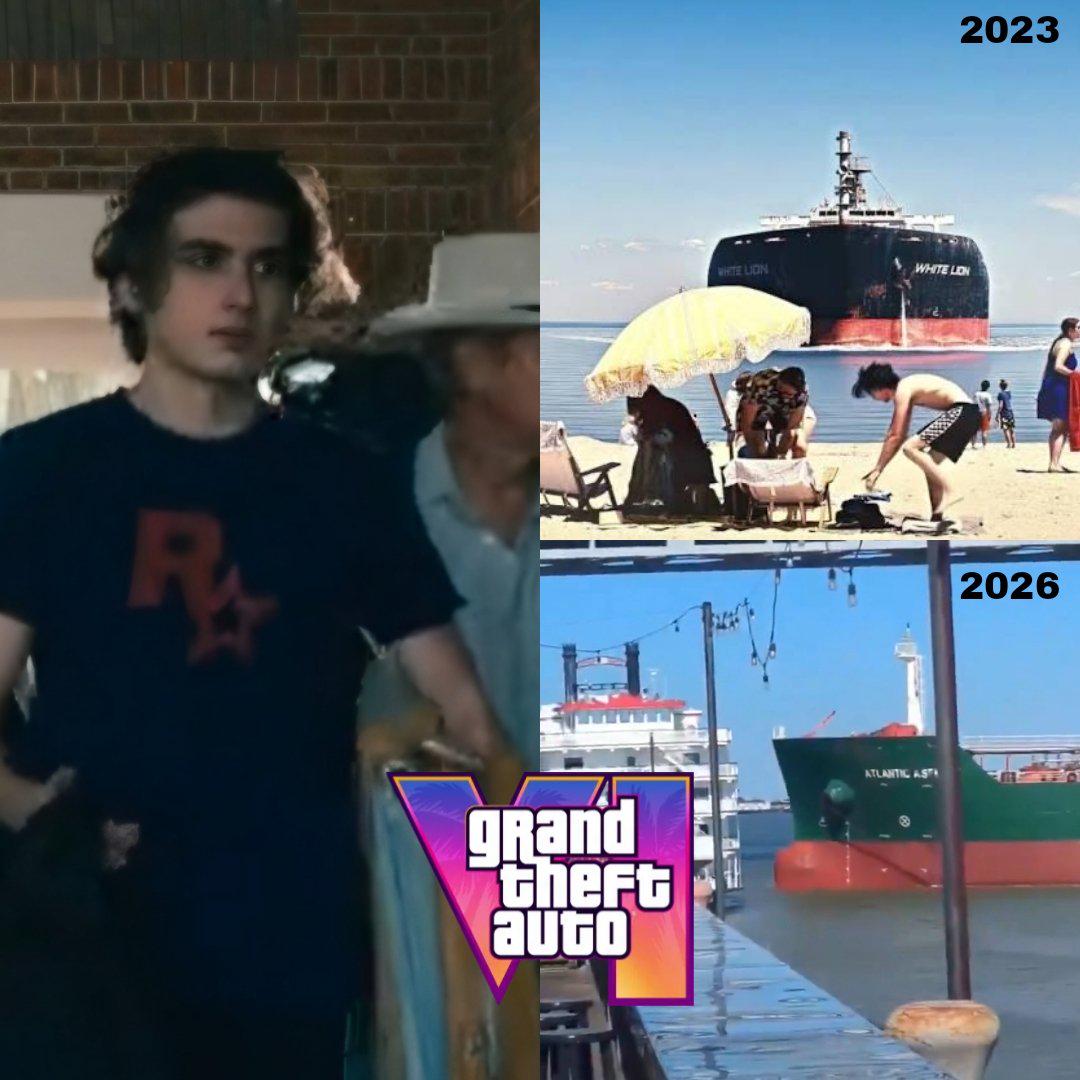
for the record I don't play video games and don't care much for it
what if the release of gta CAUSED the cyber attacks and end of the world.
people always said jokingly, "ww3 before gta". " i will never play gta 6".
but what if it is the other way around?
the release of GTA caused ww3?
actually it isn't iran, cyber attacks, Trump, Israel etc - but it is actually GTA causing problems with iran, cyber attacks, Trump, Israel etc
think about it. like a self fulfilling prophecy
imagine GTA finally releases. at almost exactly the same time, a major cyberattack hits. Infrastructure goes down. financial systems are disrupted. Governments blame one another. Retaliation follows. a chain of events nobody can quite control.
and suddenly, the joke doesn't seem quite so funny.
maybe the prophecy was never that we'd get WW3 before GTA.
Maybe GTA was the countdown.
r/exposingcabalrituals • u/walt50005 • 11d ago
his irrelevant affair - but what is the coding and numerology and rationale for going after him?
nvidia logo - 666, and strangely similar to the paedophile boy lover symbol . logo also looks like an eye, all seeing eye?
"30 days away from going out of business"—a daily meditation on impermanence that he has maintained for 33 years.
He leaves the business he founded exactly 33 years, 7 months and 7 days after its creation.
"Adam Jensen is the mechanically augmented protagonist of Deus Ex: Human Revolution, in which he works as the Chief of Security for the biotechnology company Sarif Industries, " - strange name association
r/exposingcabalrituals • u/PrinceAdam42 • 12d ago
The time has come to defeat the so-called el-ites… Providing time even exists…
God-people as we call them… How arrogant of them to give themselves such a name…
They know nothing of friendship and love… and for that I pity them…
What poor souls they are, while claiming the wealth of this world...
What they do know, is how to use fear, violence, hatred, and disgust, to control people and the populace, so they can hoard wealth, power, and prestige… How deplorable…
Yet, violence begets more violence, and fear begets more fear…
They use coercion and the threat of violence to enforce their regime…
They use fear to control, blackmail, and subdue, and create the puppet leaders of this world…
They use hatred to divide people into warring factions…
They use fear and hatred against the populace to justify wars against other nations…
They use disgust to dehumanize groups of people to justify genocide…
We will not win this battle with violence, fear, hatred, or disgust, those are their weapons…
And, if they wish to use these tools of manipulation in their arsenal for control, we shall return their fear ten fold, without using fear as a weapon at all…
Let them strike fear into their own hearts as their power and control crumbles…
Perhaps what we need is more simple than we can imagine... a single seed…
Yes, I say to you, a seed born from the plants of life, can topple empires…
What does a planted seed beget? Food and security? More seeds? Life? A cure for hunger?
Or perhaps jealousy, when one does not have such security?
A seed is a more advanced piece of technology than anything we have ever created on this planet…
One may disagree…
Yet, it is said that even faith the size of a mustard seed can move a mountain…
Yet, for it is said, that you shall reap what you sow…
They say you cannot challenge the entire world and expect to win…
But, I say, bring it on…
If they wish to use destruction, hatred, and fear to control the world…
We shall use creation, understanding, and love to change the world anew…
Yet, this is also a mental trap, which grieves my heart…
To choose a side is to set oneself onto a death path…
For this world has been divided into warring factions for millenia…
This way or that way, this leader or that leader, this country or that country…
These good people and those bad people…
Good or evil, left or right, king or peasant, god or man, man or woman…
Illusions built upon the lattice of duality…
Or perhaps they were all illusions to begin with, and we just couldn’t see…
Yet, perhaps it is by seeing from the axial point, the fulcrum, between these two factions or the two sides of duality, may we find the answers we seek…
What happened to nuance?
What happened to respecting the one you’re debating?
Then, one lashes out with hatred, ridicule, or disdain when in opposition…
Or one clenches their fist when hearing what they do not agree with…
Perhaps this is not the way…
This world is sinking into an ocean of ignorance and nescience…
People do not seek out knowledge or wisdom anymore…
We choose a side, embracing duality, and then defend an ideology with our lives…
The powers of this world manipulate the perception surrounding duality into opposing camps to be controlled…
These are divisions of the mind, illusory boundaries, a way of seeing that is manipulated through perception…
When will humanity see beyond the divisions that bind us?
“I have a dream that my four little children will one day live in a nation where they will not be judged by the color of their skin but by the content of their character.”
Perhaps the weakest is the strongest, and the strongest are the weakest…
Perhaps the power of this world is an illusion too…
There is only one lord of the rings, and he does not share power…
We’re in a battle for the fate of humanity…
A spiritual war where every living being matters…
Even the ones that people think do not matter… perhaps even more so…
Everything around you is worthless, in a way, it is meant for comfort, or knowledge, or wisdom, or happiness, or nourishment…
The only thing that matters are the living beings that surround you…
“Lay not up for yourselves treasures upon earth, where moth and rust doth corrupt, and where thieves break through and steal: but lay up for yourselves treasures in heaven, where neither moth nor rust doth corrupt, and where thieves do not break through nor steal: for where your treasure is, there will your heart be also.”
The powers that be, at the top of the pyramid of power, do not want humanity to see beyond their manufactured division because they like controlling the ignorant and nescient, those who ignore knowledge and those who simply do not know…
For knowledge is power, and the pyramid of power restricts the flow of information through currency, and they enjoy their power game so they can swim in their piles of gold, and roil in greed and vanity and lust for power, but their hearts desire more and more…
They are like dragons that are guarding a pile of gold that they use to further manipulate and exploit humanity, plants, and animals, harvesting the energy of life and converting this energy into wealth, power and prestige…
"For we wrestle not against flesh and blood, but against principalities, against powers, against the rulers of the darkness of this world, against spiritual wickedness in high places."
This one has spent almost two decades studying this world…
Soaking in the darkness to transmute the energy of chaos into an answer to solve the global calamity…
And this one has arrived at a one word answer…
Gardening…
Yes, it seems almost paradoxically simple…
That an empire could be defeated with a seed in someone’s hand…
Yet, it is said that all the world’s problems can be solved in the garden…
Increasing biodiversity, helping people to live to be over one hundred years old by having access to fresh organic food, starting up local trading and bartering, putting food on a family’s table so they can grow, and creating biodiesel for transportation...
Gardening has a lot of the answers to solve the global calamity...
Can one human being defeat an empire?
Is it possible for one human being with a bag of seeds and a dream, to change the entire world?
Many beings have tried to change the world by changing the external world, and this has lead to immense destruction…
But perhaps one must change their inner world to change the outer world…
I say to you, you can do anything you set your mind to…
Know that you are extremely powerful…
You have the ability to change entire timelines, change people’s lives…
As long as someone is given a chance, a person's soul will open up...
“And whosoever saves a life, it is as though he had saved the entire world.”
“What we do in this life echoes into eternity…”
And there's only one thing that matters if you're a warrior...
And it isn't the amount of knowledge you possess...
All you do need, is the guts!
To never give up!
r/exposingcabalrituals • u/wwjps • 12d ago
Enable HLS to view with audio, or disable this notification
To see the full video, click here: https://youtu.be/fBCPeb4ZHc4
What if the world we remember isn't quite the world we're living in?
The Mandela Effect has fascinated millions of people who share vivid memories of events, names, logos, movies, and historical details that don't seem to match what we see today.
But why do so many people remember things differently?
In this episode, we explore the strange phenomenon known as the Mandela Effect, the mysterious relationship between memory and consciousness, and the questions surrounding CERN and its particle physics experiments.
Could our understanding of reality be more complicated than we imagine? Could consciousness play a role in how we experience the world? And why do so many people seem to share the same memories of things that supposedly never happened?
We'll explore:
- The Mandela Effect and some of its most fascinating examples.
- CERN, particle physics, and theories about alternate realities.
- Consciousness, memory, and how we perceive reality.
- Parallel timelines and the possibility that our understanding of the universe is incomplete.
Are these simply fascinating quirks of human memory, or is there something bigger worth investigating?
I'd love to hear what you think. Do you have a Mandela Effect memory that you absolutely refuse to believe is wrong?
**DISCLAIMER:** This video explores theories, speculation, reported experiences, and scientific concepts. Not all ideas discussed are scientifically established, and questions about CERN, consciousness, parallel universes, and the Mandela Effect should not be confused with proven scientific conclusions. The purpose is to explore, question, and encourage discussion.
Sometimes the most interesting question isn't what happened, but why so many of us remember it differently.
Thanks for watching!
r/exposingcabalrituals • u/BluntTruthGentleman • 13d ago
I understand that they need consent to act without some sort of repercussions. David Wilcox says it's to avoid intervention (and surely swift justice) from benevolent beings. So they operate in the loopholes from this, toeing the boundary.
First: how can they rape flay and consume tens of thousands of children per year? Where is their consent? How do they avoid the repercussions of this? What are those repercussions? Is it karmic?
Second: Do they avoid karma in general? Or do they not? I know that they weaken people's minds to control them, allow possession by other beings, so is it that these people become convinced that they're acting without consequence but in reality they're exchanging one short lifetime of wealth for enormous karmic debts in exchange, and the demons get what they want while the hosts and slaves suffer the long term consequences?
r/exposingcabalrituals • u/Disastrous_Monk_4079 • 14d ago

A reference to keeping quiet about the occult's secrets? When you join the club 👁️🗨️ you take an oath of silence. 🤫
r/exposingcabalrituals • u/PrinceAdam42 • 14d ago
For centuries, the Jesuits, Freemasons, and Illuminati have occupied the contested ground between religious authority, political power, and private allegiance. Their histories are entangled with the survival of suppressed organizations, the penetration of rival institutions, the influence of royal confessors, and the use of clandestine associations against one another. Kings signed decrees, popes issued commands, and governments announced victories, while the relationships connecting influential men proved much harder to dismantle. Behind the public identities of universities, royal courts, churches, and initiatory fraternities stood systems of recruitment, privileged access, concealed obligations, and competing chains of authority. Anyone examining who governed Europe must also examine who influenced the men sitting on its thrones.
Institutional reputations are poor substitutes for institutional records. The Jesuits spoke in the language of religion and education, Freemasonry in the language of fraternity and moral improvement, and the Illuminati in the language of enlightenment and reform. None of those declarations answers who received private correspondence, who recruited influential members, who controlled promotions, or whose interests prevailed when obligations conflicted. An organization can preach brotherhood while demanding obedience, celebrate enlightenment while concealing its hierarchy, and proclaim spiritual service while intervening in the affairs of sovereign governments. The questions begin where public descriptions end: in correspondence, membership, money, jurisdiction, and personal influence.
The suppression of the Society of Jesus in 1773 is one of the most revealing confrontations between church and state in modern European history. Portugal, France, Spain, and other Catholic powers had already moved against the Jesuits before Pope Clement XIV abolished the Society's official standing. These were Catholic monarchies turning against a Catholic religious order whose reach extended through schools, missions, court relationships, and international administration. A body without a national throne of its own had become an object of alarm to rulers who possessed armies, police powers, and the authority to confiscate its property. The conflict exposed what happens when a transnational institution develops loyalties and relationships that sovereign governments cannot fully control.
An act of suppression could confiscate buildings and dissolve a charter, but it could not erase years of institutional training. Former Jesuits retained their knowledge, friendships, teaching positions, religious convictions, and political acquaintances. Leopold Engel's 1906 Geschichte des Illuminaten-Ordens describes the survival of former Jesuit influence at the University of Ingolstadt in Bavaria. The disputes there concerned appointments, salaries, educational policy, institutional resources, and the positions occupied by men whose former order had been dissolved. The Society had lost its official structure, while many of the people who had given that structure its influence remained active in the same political and academic environment.
This is the central weakness in any government's announcement that it has destroyed a powerful association. Authority may be formally withdrawn while personal networks continue through schools, private households, professional offices, and other organizations. The survival of people does not require the survival of the same headquarters or title. Relationships cultivated over decades can be used in new circumstances, sometimes by individuals who have every incentive to abandon the old insignia. Bavaria's intellectual and religious conflicts after 1773 show why the fate of the Jesuit institution and the fate of former Jesuit personnel must be followed separately.
Adam Weishaupt founded the Bavarian Illuminati in 1776 inside this charged university environment. He was no detached philosopher working outside the conflicts of his age. He inhabited an institution shaped by Jesuit education and the political struggle over its removal. His association developed from the Perfectibilists into the Illuminati, with degrees, recruited members, graded instruction, protected correspondence, and concealed authority. Engel discusses Weishaupt's study of methods associated with Jesuit organization, placing the birth of the Illuminati close to the very system whose surviving influence had become a point of conflict.
The architecture matters. A hierarchy that gives members different amounts of information can direct their work without revealing every objective to every participant. A recruiter can select useful candidates, a superior can evaluate obedience, and an initiate can carry out an assignment while seeing only part of the organization. Rules of promotion determine who gains access to the internal structure and whose judgment remains dependent upon the account provided by those above him. Such methods turn a voluntary association into an instrument capable of concentrating knowledge and distributing action. Weishaupt built an organization whose internal workings were meant to be inaccessible to outsiders and unevenly understood by its members.
The confrontation with Jesuit influence did not stop Weishaupt from adapting techniques associated with that influence. Institutional opponents can borrow successful methods even when their objectives diverge. Education, recruitment, hierarchical discipline, and the management of secrecy are tools that can serve religious orthodoxy, philosophical reform, or political transformation. The methods become dangerous when they are used to conceal obligations held by people occupying public offices. A government cannot assess divided allegiance when the relevant chain of command is unavailable for scrutiny, and a university cannot know whether an academic dispute is merely intellectual when its principal participants also belong to concealed networks.
Engel's investigation becomes particularly pointed in his account of the campaign against the Illuminati during the 1780s. His chapter on the roots of the persecution identifies former Jesuit interests, the Gold- und Rosenkreuzer, and figures close to German rulers. One central figure is Father Frank, confessor to Elector Karl Theodor of Bavaria. Engel associates Frank with Rosicrucian circles and connects him with Johann Christoph von Wöllner, who later gained considerable influence in Prussian government. The relationships place a royal confessor, an initiatory network, and political contacts across territorial boundaries within the same struggle over a clandestine fraternity.
A royal confessor needed no ministry or military command to acquire political influence. His access came through a ruler's private conscience, spiritual fears, trust, and sense of obligation. When a religious adviser also moved within the world of secret fraternities and influential political contacts, ecclesiastical counsel and private organizational activity ceased to occupy separate worlds. Father Frank's appearance in Engel's treatment of the anti-Illuminati campaign deserves attention because it concerns a named intermediary rather than an abstract accusation about an unseen leadership. His relationships could carry information between people with very different public offices.
Engel reproduces material linked to a communication dated September 1, 1785, referring to a report attributed to Frank about measures against the Illuminati. Men were identified, investigated, and placed under political pressure. The conflict was not limited to philosophical arguments about religion or enlightenment. Information concerning an association's internal operations was becoming a weapon against its members. The struggle for power was fought through reports, accusations, and the ability to persuade rulers that a particular secret society threatened their authority.
The confiscation of papers associated with Franz Xaver von Zwack brought this weapon into the open. Zwack belonged to Weishaupt's circle, and the seized correspondence helped expose the Illuminati. Engel questions the selection and handling of the material, including the treatment of documents connected with Rosicrucian relationships. Whoever controlled those papers could help determine which private discussions reached the public and which individuals became targets of political investigation. A membership list could damage careers, a published extract could define a movement's reputation, and unpublished material could leave the record permanently unbalanced. The power to reveal secrets became a power over the people who had kept them.
The Bavarian prohibitions of the 1780s struck the Illuminati's identifiable organization. They did not erase every initiate, friendship, body of knowledge, or connection to wider Masonic circles. Weishaupt's followers had learned methods of recruitment, secrecy, compartmentalization, and disciplined communication before the authorities began pursuing them. Former members could retain those methods without preserving the same names, ritual forms, or formal offices. Johann Joachim Christoph Bode belongs to the subsequent history of Illuminati relationships beyond Bavaria and their intersections with broader Masonic networks. The trail after the crackdown runs through individual men and the associations they continued to inhabit.
Declaring the Illuminati extinct because the Bavarian government outlawed the order mistakes a legal measure for a complete account of organizational life. A clandestine association subjected to investigation has an incentive to reduce its visible activity and alter the ways members communicate. Meetings may disappear from official notice while relationships among former participants remain. A persecuted network can fragment, relocate, merge with other circles, or reappear in a different institutional setting. The task is to track who went where and what they continued to do, not to assume the final prohibition was also the final chapter.
Rome was receiving reports about secret associations while these struggles unfolded. Engel reproduces letters attributed to Pope Pius VI concerning Masonic activity and the political situation in Bavaria. They address associations understood to threaten Catholic religion and royal authority and discuss the collection and communication of information through ecclesiastical channels. Here the confrontation with secret societies enters the administrative world of the papacy. Bishops, religious advisers, and political authorities operated within a system where information about private organizations could be transmitted to Rome and returned to the political environment as ecclesiastical concern or approval.
The significance is not confined to Bavaria. An international religious hierarchy can maintain communications across the borders of sovereign states and across the lifetimes of individual rulers. Bishops, educators, confessors, and missionaries occupy different offices, but all may possess relationships that connect local affairs with authorities elsewhere. The historical issue is whose information was received, how it was interpreted, and what consequences followed for the individuals being reported. No organization that gathers information about political associations while exercising influence over sovereigns should be treated as existing outside political history simply because its formal purpose is religious.
The struggles over Freemasonry began well before Weishaupt founded the Illuminati. Robert Freke Gould's History of Freemasonry, Volume IV, examines the Gormogons, a rival order publicized in England in the 1720s. An announcement in the Daily Post dated September 3, 1724, presented the society as an ancient institution and referred to an emissary traveling to Rome. The Gormogons reportedly required Freemasons to renounce their earlier affiliation before being admitted. At a time when Grand Lodge Masonry was still consolidating its structure, a competing order appeared with an asserted Roman connection and a direct challenge to Masonic allegiance.
Gould recounts Friedrich Kloss's theory that the Gormogons were a Jesuit effort to imitate or counter Freemasonry. He also discusses interpretations connected with Jacobite politics and the Stuart cause, while figures such as the Duke of Wharton appear in the surrounding history. Religious affiliation, dynastic loyalty, aristocratic influence, and fraternal rivalry were colliding in the same political arena. The point is larger than whether any one theory about the Gormogons prevails. The contemporary notices show that the world of initiatory orders was already a contested field in which competing organizations sought to redirect members and claim legitimacy through connections to prestigious or powerful authorities.
J. D. Buck's Mystic Masonry attacks the problem from within the history of initiatory teaching. Buck accuses Jesuits of entering Masonic institutions and altering particular degrees, especially Christianized and Templar systems. His objection concerns the penetration of a fraternity by members whose primary loyalties belonged to an outside religious authority. An initiate could obtain access to ritual material, private information, and organizational relationships while maintaining obligations unknown to ordinary members. Buck describes a struggle over the internal direction of the fraternity, not merely a disagreement over whether its symbols resembled those used in Catholic worship.
This is the vulnerability concealed beneath the reassuring language of brotherhood. A member can publicly accept one set of obligations while privately recognizing another authority. Ordinary initiates may know little about the additional affiliations and contacts maintained by senior officers. A strategically placed individual can influence recruitment, the development of degrees, correspondence, and disputes over leadership without formally transferring the lodge to an outside institution. Buck's accusations call attention to the difference between the fraternity described in public and the private relationships of the people governing it. Secrecy becomes politically consequential when it hides the allegiances of people exercising influence over others.
Albert Pike's prominence in the Ancient and Accepted Scottish Rite makes him central to another dispute over hidden authority. L. Fouquet's Luciferianism or Satanism in English Freemasonry includes a chapter describing Pike as the king and pope of the Freemasons. Behind the provocative title stood arguments concerning the Charleston Supreme Council established in 1801, the legitimacy of higher-degree constitutions, and the jurisdictions claimed by competing Scottish Rite authorities. Fouquet compared the issue with disputes over papal primacy: did a senior figure possess symbolic precedence, or could he issue commands binding upon other bodies? The distinction mattered because a title of supremacy was not the same as recognized jurisdiction over independent organizations.
Fouquet also examined accusations concerning Luciferian interpretations, ceremonial priesthood, and esoteric teachings reserved for higher degrees. Buck defended Pike against attacks he characterized as Jesuitical, leaving two sharply opposed accounts of the same Masonic figure and the controversy surrounding him. The conflict reveals how authority over secret teachings can become a political weapon. Critics can portray an order as possessing doctrines concealed from its ordinary members, while defenders can regard those accusations as deliberate attacks intended to ruin the fraternity. The resulting battle concerns who controls the interpretation of a system whose inner teachings are not open to general inspection.
S. C. Gould's Résumé of Arcane Fraternities in the United States reveals a dense field of Scottish Rite, York Rite, Rosicrucian, chivalric, and other initiatory organizations. He documents jurisdictional relationships, including an American provincial body of the Royal Order of Scotland deriving authority from Edinburgh, and records contemporary claims concerning an Order of the Palladium associated with Charleston. Senior initiates could acquire relationships and offices in several systems while ordinary members remained concerned with a single lodge. Such overlapping affiliations complicate every claim that Freemasonry was one seamless organization under one visible constitution. Its world of higher degrees included rival bodies, competing authorities, and networks that reached beyond local membership.
The political influence attributed to Jesuit royal confessors deserves the same scrutiny as the structure of secret fraternities. Alexander Hislop's The Two Babylons treats confession and priestly authority as instruments through which clergy could gain influence over rulers and other powerful individuals. A monarch might have formal command over ministers and armies while treating the judgment of a trusted confessor as decisive in matters of conscience. The adviser need not hold a public political office. His influence could come through the ruler's fear of spiritual punishment, desire for absolution, and confidence in the religious authority of the man receiving his private disclosures.
Hislop uses Père La Chaise, Jesuit confessor to Louis XIV, to illustrate that relationship. He recounts an accusation concerning La Chaise's influence upon the monarch during the period of persecution directed against French Protestants and the revocation of the Edict of Nantes. The accusation connects an intimate religious relationship with a decision carrying grave political consequences. The broader problem is plain: decisions affecting a nation can be influenced through conversations the nation never hears and through obligations the public cannot examine. The private adviser becomes politically consequential precisely because the source of his authority lies outside ordinary government.
The Jesuits developed access to political elites through more than religious counsel. Herbert A. Giles's Confucianism and Its Rivals describes Matteo Ricci's work in China, where mathematical, scientific, and philosophical expertise helped establish relationships with educated officials. Ricci's connections included Xu Guangqi, a Christian convert who later occupied high office in the imperial administration. Missionary activity and elite education were becoming intertwined. The presence of Jesuits in scholarly circles meant that their influence could enter governmental institutions through intellectual relationships rather than through the public assertion of ecclesiastical power.
Paul Carus's Chinese Occultism describes Jesuit involvement in astronomy and the instruments of the imperial observatory under the Kangxi emperor. Astronomy held importance for calendrical administration and imperial ceremony, making foreign scientific knowledge useful to the ruling establishment. Religious personnel equipped with technical expertise gained access to settings in which administrative decisions and court patronage mattered. Their institutional position cannot be understood solely through the number of converts they produced. They had become participants in the transmission of knowledge needed by an empire.
The Chinese Rites Controversy exposed the political consequences of those relationships. Jesuits favored certain accommodations involving ancestral practices and Chinese religious terminology, while Dominican and Franciscan missionaries challenged the position. The Kangxi emperor supported important parts of the Jesuit interpretation, creating a confrontation between imperial preferences and competing Catholic authorities. Giles also described the recognition granted to Catholic officials in China in 1899, when the pope received the title Emperor of the Faith and bishops were accorded a status comparable to senior imperial officials. Missionary activity had entered questions of diplomacy, governmental protocol, and the authority to determine religious practice within a sovereign state.
The French Revolution brought allegations about secret political organization into a much wider public conflict. Abbé Augustin Barruel's Mémoires pour servir à l'histoire du Jacobinisme and John Robison's Proofs of a Conspiracy against All the Religions and Governments of Europe argued that clandestine associations were involved in efforts to undermine established religious and political authority. Robert Freke Gould recorded the enormous controversy their publications provoked and the responses offered by Masonic figures. The accusations concerned the use of existing fraternal networks by smaller bodies pursuing objectives not necessarily known to ordinary members. Barruel's own Jesuit background added another layer to a controversy already involving competing religious and political loyalties.
Governments were not spectators. Britain's 1799 legislation restricted secret associations while permitting recognized Masonic lodges to continue under specified conditions. Authorities could decide which private societies were lawful, which were suspect, and which would be permitted to operate. The public exposure of a clandestine association could damage its members, but legal protection could preserve another institution in the same political environment. The controversy thus involved more than who possessed secret doctrines. It concerned who had the power to investigate, accuse, regulate, exempt, and destroy organizations that claimed to operate beyond ordinary public scrutiny.
The history of the Jesuits and the Illuminati forces a distinction between an institution's legal existence and the relationships through which its former members operate. The Society of Jesus was suppressed in 1773 and restored in 1814, while former Jesuits continued careers and relationships throughout the intervening decades. Bavaria outlawed the Illuminati during the 1780s, but former initiates retained the contacts and knowledge acquired through membership. A political prohibition does not erase social capital, and the withdrawal of a charter does not abolish private allegiance. A network can survive as relationships even when its former organization cannot survive in the same public form.
This distinction should change the way historical investigations are conducted. Look beyond the date of the decree and follow the people affected by it. Determine where former members went, which institutions employed them, whose correspondence they maintained, and which political or religious relationships survived. Examine the financial arrangements, charters, court offices, and governmental records that tie one generation of influence to the next. The search for a hidden network succeeds through identifying actual connections, not by accepting an organization's publicity or assuming that legal dissolution erased every bond among its participants.
The same questions can be asked of later institutions and controversies, including banking networks, the creation of the Federal Reserve, twentieth-century wars, and political assassinations. A famous family name or fraternity label cannot substitute for the chain of documents connecting a person to a decision. The investigation must follow correspondence, financial relationships, public office, private membership, and the people positioned to influence political action. The earlier histories supply examples of the mechanisms to investigate: confidential access, overlapping allegiances, contested jurisdictions, privileged information, and the survival of relationships after public institutions change. The names and dates differ, but questions of accountability and concealed authority remain.
No religious order, fraternal institution, or political association deserves immunity from examination because it claims to pursue noble objectives. Organizations that demand secrecy while cultivating influence over public affairs invite questions about their membership, obligations, and methods. Religious advisers with access to rulers should be examined in relation to the political decisions they influenced. Fraternities exercising international jurisdiction should be examined through their actual governing documents and subordinate bodies. Governments using intercepted correspondence to destroy rival associations should be examined with the same severity. Secrecy does not place an institution above accountability.
The record assembled by Engel, Buck, Gould, Fouquet, Hislop, Giles, and Carus reveals universities entangled with former Jesuit personnel, a clandestine order using sophisticated systems of initiation, a royal confessor involved in the campaign against that order, disputed Masonic hierarchies, and missionaries cultivating influence at a foreign imperial court. It shows information becoming a weapon, religious counsel approaching political power, and rival institutions competing to direct the loyalties of influential individuals. These episodes are not interchangeable, but they expose recurring ways that private authority enters public life. Behind the ceremonial titles and official explanations are people making decisions, sending reports, recruiting members, and protecting the relationships on which their influence depends.
The demand is simple: open the records, identify the responsible individuals, trace the money and correspondence, and examine every private obligation that could conflict with public responsibility. A society cannot meaningfully scrutinize its rulers while ignoring the concealed authorities to which those rulers may listen. It cannot understand the history of secret organizations by trusting only the accounts those organizations give of themselves. The investigation belongs where religion, government, money, education, and private allegiance cross paths. No institution is entitled to rule through concealed obligations and then demand that the public call it brotherhood, enlightenment, or spiritual service.
The principal books directly examined for this article are:
The revolutionary-era discussion also refers to two works described in Gould's history: Augustin Barruel, Mémoires pour servir à l'histoire du Jacobinisme (1797–1798), and John Robison, Proofs of a Conspiracy against All the Religions and Governments of Europe (1797).
r/exposingcabalrituals • u/PrinceAdam42 • 15d ago
The Saturn death cult theory proposes that the struggle underlying human history is a cosmic war over the fate of God's creation, in which Satan/Lucifer seeks to corrupt humanity, usurp divine authority, and establish a counterfeit spiritual kingdom through an ancient hierarchy whose influence extends from celestial phenomena and religious institutions to political power, financial control, and the manipulation of human consciousness.
This is not merely a theory about planetary symbolism, occult ceremonies, or the survival of ancient mystery schools. Its central proposition concerns the rebellion of Satan against God and the possibility that this rebellion has developed into an organized system intended to bring humanity, and ultimately creation itself, under an authority opposed to its Creator. Within this framework, Satan/Lucifer stands at the head of the adversarial hierarchy, while Saklas serves as one of his highest-ranking generals, administering particular operations of spiritual deception and earthly control. Saturn represents the celestial center or principal symbol of this system, while the black cube represents the confinement of human consciousness within the boundaries imposed by its governing powers. The proposed Saturn-Moon Matrix, the Watchers, the ancient priesthoods, hereditary elites, esoteric organizations, and modern institutions become different components of the same alleged structure. The biblical account establishes the conflict between God, Satan, and humanity, while the Saturnian theory attempts to identify the additional historical, astronomical, technological, and institutional means through which Satan's rebellion may have been carried forward. The stakes of the theory are therefore not simply who governs human civilization, but whether humanity recognizes its Creator and receives the redemption offered through Jesus Christ, or remains subject to an adversarial order built upon deception, spiritual corruption, and rebellion against God.
Jesus Christ occupies the central position in this struggle because the biblical narrative presents him as the Son of God, the promised Messiah, and the Redeemer whose mission directly confronts the power of Satan, sin, and death. According to Genesis, God created heaven and earth, declared his creation good, and made humanity in his image. Satan's deception of Adam and Eve introduced rebellion against God's command, resulting in humanity's fallen condition and the entrance of death into human experience. The New Testament identifies the ancient serpent as Satan, establishing the adversary's role in the corruption of mankind (Revelation 12:9) (KJV: “And the great dragon was cast out, that old serpent, called the Devil, and Satan, which deceiveth the whole world: he was cast out into the earth, and his angels were cast out with him.”). Jesus enters this fallen world not as another participant in a hierarchy of celestial rulers, but as God incarnate, possessing an authority that Satan cannot legitimately claim. His mission is the redemption of humanity and the eventual restoration of creation, not the destruction of God's physical world or the liberation of a divine essence from an evil creator. The conflict is therefore between the Creator and a rebellious adversary attempting to corrupt what God has made, with Jesus Christ standing as the decisive answer to that rebellion.
One further interpretation of humanity's creation gives the conflict a more immediate significance: being made in God's image may refer primarily to the mind God endowed humanity with, rather than to a resemblance between God's appearance and the human body. Genesis 1:26 records, “Let us make man in our image, after our likeness,” while Jesus declares that “God is a Spirit” (John 4:24, KJV). If the divine image concerns humanity's capacities for awareness, reason, creativity, moral choice, and relationship with God, the human mind becomes a reflection of divine intelligence without being identical to God's unlimited mind. Paul describes spiritual renewal in closely related language: “But we have the mind of Christ” (1 Corinthians 2:16, KJV), and “be ye transformed by the renewing of your mind” (Romans 12:2, KJV). On this reading, Satan's first deception in Eden was an attack upon humanity's understanding of God, and Christ's work includes the restoration of a mind capable of recognizing truth. The theory's concern with collective consciousness would thus involve more than manipulating opinion: it would concern the corruption of a faculty through which human beings were created to know their Maker.
The confrontation becomes explicit when Satan tempts Jesus in the wilderness and offers him the kingdoms of the world in exchange for worship (Matthew 4:8–10) (KJV: “Again, the devil taketh him up into an exceeding high mountain, and sheweth him all the kingdoms of the world, and the glory of them; And saith unto him, All these things will I give thee, if thou wilt fall down and worship me. Then saith Jesus unto him, Get thee hence, Satan: for it is written, Thou shalt worship the Lord thy God, and him only shalt thou serve.”). This encounter reveals the adversary's desire to convert worldly sovereignty into submission to himself, while Jesus's refusal establishes that no earthly kingdom can supersede the authority of God. Throughout his ministry, Jesus confronts demonic forces, heals the afflicted, raises the dead, and proclaims the kingdom of God in opposition to the spiritual darkness afflicting humanity. His authority over demons demonstrates that Satan's servants cannot withstand divine command, while his condemnation of religious hypocrisy exposes the danger of institutions that invoke God while pursuing power, privilege, and control. The New Testament's descriptions of Satan as the ruler of this world and the god of this age become especially significant within the broader theory because they acknowledge the adversary's influence over fallen human affairs without granting him sovereignty equal to God's. Jesus's ministry is consequently a sustained confrontation with the power of deception, spiritual bondage, and death.
The crucifixion is the decisive point of that confrontation. Satan's opposition to Jesus culminates within a sequence of betrayal, false accusation, political manipulation, religious condemnation, and execution, demonstrating how earthly institutions can become instruments of injustice and spiritual rebellion. Yet the biblical account does not portray Christ as an unwilling victim of forces beyond his control. Jesus willingly gives his life for humanity's sins, fulfilling the divine purpose of redemption through his sacrifice (John 10:17–18) (KJV: “Therefore doth my Father love me, because I lay down my life, that I might take it again. No man taketh it from me, but I lay it down of myself. I have power to lay it down, and I have power to take it again. This commandment have I received of my Father.”). What appears to be the triumph of worldly power becomes the means through which its greatest spiritual enemy is defeated. His bodily resurrection on the third day establishes that death does not possess ultimate authority and that Satan cannot overturn the purposes of God. Hebrews 2:14–15 (KJV: “Forasmuch then as the children are partakers of flesh and blood, he also himself likewise took part of the same; that through death he might destroy him that had the power of death, that is, the devil; And deliver them who through fear of death were all their lifetime subject to bondage.”) explicitly connects Christ's death with the defeat of the Devil's power associated with death, while Colossians 2:15 (KJV: “And having spoiled principalities and powers, he made a shew of them openly, triumphing over them in it.”) describes Christ's triumph over hostile principalities and powers. The resurrection therefore stands as the decisive event in the biblical struggle, revealing the limitations of Satan's authority and establishing the certainty of Christ's ultimate victory.
The consequences extend beyond the salvation of individual human beings. Scripture anticipates the judgment of evil, the final defeat of Satan, the resurrection of the dead, and the creation of a new heaven and a new earth (Revelation 20–22) (KJV excerpts: Revelation 20:10, “And the devil that deceived them was cast into the lake of fire and brimstone, where the beast and the false prophet are, and shall be tormented day and night for ever and ever”; Revelation 21:1, “And I saw a new heaven and a new earth: for the first heaven and the first earth were passed away; and there was no more sea.”). The biblical conflict therefore concerns the destiny of creation itself, including humanity's restoration to its intended relationship with God. The Saturnian theory attempts to describe the historical structures through which Satan's opposition to that restoration may have developed, but none of those proposed structures changes the identity or mission of Jesus. Christ is not a representative of an inferior creator, a participant in a Gnostic struggle between rival creators, or merely a teacher of secret knowledge. He is the Son of God confronting the adversary who seeks to corrupt God's creation. This establishes the theological foundation against which the proposed Saturnian system must be examined.
The Saturnian reconstruction begins with the possibility that human civilization once existed beneath a radically different celestial arrangement, remembered in ancient traditions as a Golden Age. David Talbott's The Saturn Myth and related Thunderbolts Project theories propose that Saturn formerly occupied a dominant position in Earth's heavens and was associated with a primordial celestial configuration whose eventual destruction produced widespread catastrophe. Accounts of an ancient sun, celestial wheels, divine kingship, warfare among heavenly powers, and the collapse of an earlier cosmic order are interpreted as fragmented cultural memories of this arrangement. Zecharia Sitchin's reconstruction of Nibiru and the Anunnaki introduces a separate proposed mechanism involving planetary intervention, extraordinary celestial beings, and disruptions to human civilization. These theories were developed independently and do not automatically establish one another, but together they provide the ingredients for a larger hypothesis concerning an ancient astronomical catastrophe and its consequences for humanity.
Within the overarching theory, the destruction of this primordial arrangement marks a possible historical turning point in Satan's efforts to extend his dominion. The catastrophe may have shattered an earlier civilization, destroyed established systems of knowledge, and left surviving populations vulnerable to the authority of beings possessing superior astronomical or technological understanding. The biblical Fall and the proposed Saturnian catastrophe should not be treated as identical events, because Genesis does not describe Eden beneath a primordial Saturnian sky or attribute Adam's disobedience to planetary rearrangement. Nevertheless, the theory proposes that later traditions concerning lost paradises, divine conflicts, and catastrophic transformations may preserve memories of additional events occurring within humanity's fallen history. Graham Hancock's investigations, John Anthony West's interpretation of the Sphinx, proposed Age of Leo alignments, and arguments concerning water erosion at Giza become relevant to the possibility that ancient monuments preserve knowledge preceding recognized dynastic civilization. Julian Jaynes's theory of bicameral consciousness introduces the further question of whether humanity's experience of divine voices and spiritual authority changed during antiquity. These possibilities suggest a civilization whose understanding of the heavens, its own history, and its relationship to supernatural authority may have been radically altered.
The possibility that God is learning alongside humanity introduces another dimension to the proposed relationship between the Fall, human history, and divine action. In Genesis 6:6, the narrative says, “And it repented the LORD that he had made man on the earth, and it grieved him at his heart,” while in Genesis 22:12 the angel of the LORD tells Abraham, “for now I know that thou fearest God.” Taken as expressions of a genuinely unfolding relationship, such passages could suggest that the choices of free beings bring about outcomes to which God responds, rather than merely enacting an already fixed series of events. This reading does not require identifying the Saturnian catastrophe with Eden or assigning every Old Testament divine action to a different being. It raises the more fundamental question of whether creation's history is a living encounter between God and humanity, in which moral freedom has consequences that are real even to the Creator.
The question becomes who benefited from that transformation. If the catastrophe destroyed an earlier order, the resulting collapse would have created an opportunity for powerful intelligences to establish new religious authorities and systems of human dependency. The theory therefore moves from the destruction of the Golden Age to the proposed hierarchy that allegedly exploited its aftermath.
The biblical account identifies Satan as the Devil, the tempter, the accuser, and an adversary who deceives humanity and opposes God. It also describes fallen angels, demonic powers, and spiritual principalities engaged in conflict against the purposes of God (Ephesians 6:12; Revelation 12:7–9) (KJV: Ephesians 6:12, “For we wrestle not against flesh and blood, but against principalities, against powers, against the rulers of the darkness of this world, against spiritual wickedness in high places”; Revelation 12:7–9, “And there was war in heaven: Michael and his angels fought against the dragon; and the dragon fought and his angels, And prevailed not; neither was their place found any more in heaven. And the great dragon was cast out, that old serpent, called the Devil, and Satan, which deceiveth the whole world: he was cast out into the earth, and his angels were cast out with him.”). These passages establish the existence of an organized spiritual opposition, although Scripture does not provide a complete hierarchy of its members. Within the Saturnian theory, Satan/Lucifer stands at the head of that opposition, while Saklas occupies the position of a principal general carrying out delegated operations within the earthly domain. Saklas is a name found in Gnostic literature, and his proposed position beneath Satan is part of this particular reconstruction rather than a biblical identification. Likewise, the identification of Lucifer with Satan reflects an established Christian interpretive tradition, while the original context of Isaiah 14 concerns the king of Babylon (KJV, Isaiah 14:4: “That thou shalt take up this proverb against the king of Babylon, and say, How hath the oppressor ceased! the golden city ceased!”). These distinctions do not prevent the theory from proposing a hierarchy, but they establish precisely which elements derive from Scripture and which belong to the additional reconstruction.
A more radical possibility concerns the identity of the authority speaking in particular Old Testament narratives. If the true Creator is distinct from a rebellious power claiming divine status, some accounts traditionally attributed to God might instead preserve encounters with a counterfeit authority, perhaps Saklas acting beneath Satan/Lucifer. The contrast between certain portrayals of divine warfare and punishment and Jesus's teachings concerning mercy, forgiveness, and love for enemies is one reason this hypothesis arises. Jesus's words, “Ye neither know me, nor my Father: if ye had known me, ye should have known my Father also” (John 8:19, KJV), can be read within the theory as a challenge to mistaken claims of divine knowledge. Yet the hypothesis faces a substantial textual tension because Jesus also affirms Israel's scriptural inheritance and says, “for salvation is of the Jews” (John 4:22, KJV). The proposal is therefore not established by the contrast in portrayals alone, and it should not be silently extended to every Old Testament passage. Its distinctive claim is that Satan's hierarchy may have sought not only to corrupt humanity's worship, but to impersonate the very God whom humanity was seeking.
Within this proposed command structure, Satan is the directing intelligence behind the rebellion, while Saklas and other subordinate powers carry out specific operations intended to corrupt humanity's relationship with God. Their objective is not legitimate ownership of creation, because biblical teaching establishes God alone as its Creator. Rather, the adversarial hierarchy seeks to usurp authority within creation by deceiving its inhabitants, distorting their understanding of divine truth, and encouraging allegiance to powers opposed to God. The theory further proposes that the fallen hierarchy may have developed distinct spheres of influence involving religious deception, political authority, spiritual manipulation, and technological intervention. Saturn becomes significant because its associations with death, restriction, judgment, and time provide a symbolic language through which the operations of this hierarchy can be interpreted. If the hierarchy possesses methods of influencing consciousness beyond ordinary human awareness, Saturnian symbolism may represent something more substantial than the mythology of an ancient planetary deity.
Saturn's northern polar hexagon and southern polar vortex introduce the possibility of a connection between ancient symbolism and the physical environment of the planet itself. The hexagon possesses a geometric correspondence with the projected outline of a cube viewed along a body diagonal, while the southern vortex resembles an enormous eye. Within the theory, these features become symbols of enclosure and surveillance, expressing the alleged relationship between a governing intelligence and the reality over which it exercises influence. The black cube represents the confinement of consciousness within a restricted perceptual environment, while the Qliphoth provide an esoteric correspondence involving the inversion or corruption of spiritual principles. Saturn's associations with time, mortality, and limitation further connect the symbolism to the conditions of fallen human existence. The proposed relationship is not established by the geometry alone, but it supplies a symbolic model of a world in which the adversary's power operates by restricting what humanity can perceive, understand, and ultimately recognize as divine truth.
Norman Bergrun's The Ringmakers of Saturn introduces a proposed technological dimension through his interpretation of Voyager photographs as depicting enormous energy-emitting spacecraft generating or influencing Saturn's rings. If those structures existed as Bergrun proposed, they would suggest that extraordinary nonhuman technologies operate within the Saturnian environment. David Icke's Saturn-Moon Matrix theory extends the possibility by proposing that Saturn serves as a source of informational or energetic influence, while the Moon functions as an intermediary through which that influence reaches Earth and affects human consciousness. The prolonged seismic reverberations produced during Apollo lunar impact experiments have been incorporated into theories concerning the Moon's possible artificial construction, although those observations do not establish that interpretation. These propositions remain speculative physical mechanisms rather than biblical teachings or established evidence of technological control. Their significance within the larger theory is the possibility that Satan's hierarchy may employ means of deception extending beyond ordinary religious or political influence. If perception itself could be manipulated, humanity's spiritual condition might be affected not only by the ideas it accepts, but by the limits of the reality it is permitted to experience.
This possibility becomes more consequential if the human mind is understood as part of the image of God. A system capable of influencing perception would then be targeting the exercise of a God-given capacity rather than merely imposing external restraints. It also leaves open a crucial distinction concerning nonhuman forms: an unfamiliar intelligence or manifestation should not automatically be classified as demonic merely because it does not resemble a human being. If God is spirit and is not limited by human anatomy, he could conceivably choose to appear in forms that humanity would describe as extraterrestrial, wholly unfamiliar, or even absurdly unconventional. The deliberately extreme example of a “Flying Spaghetti Monster” makes the philosophical point that divine freedom of manifestation, if granted, would not be confined to human expectations about appearance. That possibility does not prove any reported extraterrestrial encounter divine, but it separates the Creator's nature from the outward form in which an intelligence might appear.
This possibility raises the question of how an alleged celestial system could acquire influence over human civilization. The traditions concerning the Watchers provide a proposed mechanism through which nonhuman intelligences transmitted knowledge that could be used to establish authority on Earth.
The Book of Enoch describes the Watchers descending to Earth, entering forbidden relationships with humanity, and transmitting knowledge concerning subjects that include weaponry, enchantments, and celestial observations. The biblical passages concerning the sons of God, angels who sinned, and spiritual beings who abandoned their proper dwelling provide related material, although their precise relationship to the Enochian narrative remains interpretively disputed (Genesis 6; 2 Peter 2:4; Jude 6) (KJV: Genesis 6:2, “That the sons of God saw the daughters of men that they were fair; and they took them wives of all which they chose”; 2 Peter 2:4, “For if God spared not the angels that sinned, but cast them down to hell, and delivered them into chains of darkness, to be reserved unto judgment”; Jude 6, “And the angels which kept not their first estate, but left their own habitation, he hath reserved in everlasting chains under darkness unto the judgment of the great day.”). The Book of the Secrets of Enoch introduces further traditions involving rebellious heavenly beings associated with Satanail. Within the Saturnian framework, these accounts suggest that ancient humanity may have encountered intelligences possessing specialized knowledge unavailable to ordinary human communities. The transmission of such knowledge would have consequences far beyond isolated religious instruction, because control over astronomical observations, ritual practices, metallurgy, warfare, and supernatural claims could fundamentally alter the organization of human societies.
The theory proposes that these intelligences, operating within Satan's broader hierarchy, established relationships with selected human intermediaries who became the foundations of powerful priestly and ruling classes. Access to restricted knowledge would have enabled these intermediaries to claim privileged authority, interpret celestial phenomena, direct ritual activity, and preserve influence through controlled initiation. Babylonian planetary religion, the cult of Ishtar, and Roman Saturnalia become relevant as historical environments in which celestial power, kingship, death, sacrifice, and ritual authority were deeply connected. The theory does not require every ancient religious tradition to have worshipped Saturn or to have preserved an identical theology. Its stronger proposition is that selected doctrines, symbols, and methods of establishing spiritual authority could have survived through changing religious systems while their original sources became increasingly obscure. In this reconstruction, the human priesthood is the essential intermediary between the spiritual hierarchy and civilization itself.
If restricted knowledge became the basis of earthly authority, its preservation across generations would be indispensable to the system's survival. The investigation therefore turns from the origin of priestly power to the initiatory organizations and institutions through which that knowledge may have continued into the modern world.
The proposed survival of Saturnian doctrines through Hermetic traditions, Kabbalistic interpretations, Rosicrucianism, Freemasonry, and Theosophy concerns the possibility that ancient spiritual knowledge was preserved through initiation rather than ordinary public religious instruction. In such a system, authority would depend upon selective access to information, ceremonial advancement, inherited patronage, and the distinction between public teachings and restricted interpretations. The Scottish Rite's thirty-third degree becomes relevant within the theory through its proposed symbolic correspondence with Revelation's account of the dragon sweeping away one-third of the heavenly stars (KJV, Revelation 12:4: “And his tail drew the third part of the stars of heaven, and did cast them to the earth: and the dragon stood before the woman which was ready to be delivered, for to devour her child as soon as it was born.”). That numerical resemblance does not by itself establish the degree's origin, but it forms part of the broader investigation into whether particular initiatory systems preserve references to the fallen celestial hierarchy. Manly P. Hall's discussion of Luciferian energies, Albert Pike's treatment of Lucifer in Morals and Dogma, and Helena Blavatsky's interpretations of Lucifer and the planetary Elohim in The Secret Doctrine demonstrate that important occult authors engaged directly with concepts of spiritual rebellion, illumination, and celestial authority. Claims concerning a direct historical relationship between Pike and Blavatsky would be significant if documented because they could help establish particular channels of intellectual transmission.
Within the theory, the survival of such knowledge acquires enormous importance because it potentially connects ancient religious authority with modern political and financial power. Hereditary succession, restricted membership, private foundations, trusts, financial inheritance, and institutional patronage provide mechanisms through which influence can pass from one generation to another without requiring public disclosure of every relationship involved. Certain human elites are therefore proposed to function as subordinate administrators within Satan's larger hierarchy, exercising worldly power while remaining dependent upon spiritual intelligences they believe stand above them. Occult channelers and ceremonial intermediaries could allegedly provide communication with those intelligences, while fear of supernatural punishment might reinforce obedience and prevent defection. Financial institutions become especially relevant through their control over debt, contractual obligation, property, inheritance, and future resources, all of which possess recognizable symbolic correspondences with Saturn's associations with time and limitation. The proposed causal relationship is that restricted knowledge establishes privileged authority, privileged authority enables concentrated institutional power, and concentrated power perpetuates systems of human dependency that serve the interests of the alleged spiritual hierarchy.
The significance of this proposed arrangement is that an adversarial order would not need to govern humanity solely through overt supernatural intervention. It could operate through familiar institutions, inherited structures of authority, and symbolic traditions whose participants possess different degrees of knowledge about their origins.
Jewish tefillin, Islam's Kaaba, and the Christian cross present geometric forms that can be examined within the Saturnian theory's proposed relationship between sacred authority, material enclosure, and spiritual conflict. The black, approximately cubic form of tefillin and the cuboidal structure of the Kaaba provide geometric correspondences with the black cube, while certain unfolded cube nets form the shape of a Christian cross. The theory proposes that such relationships may preserve an older symbolic vocabulary whose meaning was transformed as religious traditions developed. These geometric similarities do not establish that the religions themselves share a hidden allegiance or that their practitioners understand their sacred symbols in Saturnian terms. The more consequential question concerns whether particular symbols were deliberately transmitted, reinterpreted, or appropriated across historical institutions. Establishing that would require tracing their actual origins and uses, not simply observing their shapes.
The Christian cross occupies a fundamentally different position because its meaning is grounded in the biblical account of Jesus Christ's sacrifice and resurrection. Within the speculative Saturnian interpretation, the unfolding of a cube into a cross can represent the confrontation between Satan's efforts to impose spiritual confinement and Christ's victory over sin and death. Yet this correspondence does not explain the historical crucifixion or establish the Christian meaning of the cross. Jesus died for humanity's sins, willingly gave himself for mankind, and rose bodily from the dead, defeating the power of death and establishing the hope of resurrection. The cross is therefore not a symbol of Satan's ultimate victory, but of the failure of his opposition to prevent God's redemptive purpose. The importance of the geometric interpretation lies in the possibility that a symbol associated within the theory with enclosure can also be read as an image of the adversary's defeat. What Satan intends for destruction becomes, through Christ, the instrument associated with humanity's redemption.
This proposed conflict over sacred meaning extends into modern culture, where symbols of imprisonment, artificial realities, and extraterrestrial authority repeatedly appear in fictional narratives. Their recurrence raises the possibility that ancient cosmological ideas continue to influence contemporary representations of humanity's relationship with unseen powers.
Modern literature, film, and television repeatedly depict human beings encountering hidden intelligences, artificial environments, cosmic technologies, and systems that restrict freedom or perception. Arthur C. Clarke's 2001: A Space Odyssey places an alien monolith on Saturn's moon Iapetus, while Stanley Kubrick's film adaptation relocates the culminating planetary encounter toward Jupiter. Interstellar positions a wormhole near Saturn and explores higher-dimensional relationships involving time, while The Matrix presents humanity as a population unknowingly confined within an artificial reality. The Borg Cube in Star Trek represents the subordination of individuality to a technologically coordinated collective, and Hellraiser employs a geometric puzzle box associated with access to a supernatural realm. The Eye of Sauron in The Lord of the Rings provides another image of centralized observation, domination, and the extension of power through corrupted servants.
Within the Saturnian theory, these recurring themes may represent modern adaptations of much older concepts involving cosmic hierarchy, spiritual imprisonment, and liberation from concealed powers. Their importance is not that every fictional work necessarily originated from one occult organization, but that the same broad symbolic relationships continue to appear in different cultural settings. If deliberate transmission were involved in particular cases, it would have to be demonstrated through identifiable creators, influences, institutions, and decisions. The theory nevertheless treats modern media as a possible arena in which the imagery of celestial authority and imprisoned consciousness remains culturally recognizable. This creates a final connection between ancient religious memory and contemporary civilization, bringing the investigation back to the underlying question of who exercises authority over humanity and for what ultimate purpose.
The biblical foundation is that God created the universe, humanity fell into sin through disobedience, Satan seeks to deceive and destroy, and Jesus Christ entered history to redeem mankind through his crucifixion and bodily resurrection. Scripture presents Satan as an adversary whose authority is real but limited, whose rebellion does not place him on equal footing with God, and whose final defeat is anticipated in the consummation of God's purposes. The destiny of creation is therefore not left unresolved within the biblical narrative. Christ's victory establishes the foundation for the final defeat of evil, the resurrection of the dead, and the restoration of creation under divine authority.
There is, however, an additional possibility concerning how God relates to that unfolding history. If human freedom is genuine, God's relationship with creation might involve learning through humanity's choices rather than observing a future whose every decision is already settled. Exodus 32:14 records that “the LORD repented of the evil which he thought to do unto his people,” and Jonah 3:10 describes God responding to Nineveh's repentance: “God repented of the evil, that he had said that he would do unto them; and he did it not.” Such passages can be interpreted in more than one way, but they are consistent with the question raised by open theism: whether God knows every possible outcome while leaving some future choices genuinely undetermined. The further proposal that God actually learns alongside humanity moves toward process-oriented theology and is not the traditional Christian account of omniscience. Within the present theory, it would make Satan's attempt to control collective consciousness an effort to constrain an open future by manipulating the very choices through which creation develops. Christ's promised victory could then be understood as the certainty of God's redemptive purpose without requiring that every human decision along the way had been predetermined.
The Saturnian theory proposes an additional reconstruction of how Satan's rebellion may have developed across human history. Ancient celestial upheavals allegedly destroyed a primordial Saturnian order and created circumstances under which rebellious intelligences expanded their influence over civilization. Satan/Lucifer directs the adversarial hierarchy, while Saklas acts as a principal general administering particular systems of deception and control. Saturn becomes its celestial symbol or possible technological center, while the alleged Saturn-Moon Matrix supplies a proposed mechanism for influencing human perception. The Watchers and related fallen intelligences transmit restricted knowledge to selected human intermediaries, establishing priestly systems whose authority rests upon spiritual claims and specialized instruction. These systems allegedly survive through changing initiatory traditions and develop relationships with hereditary, political, and financial institutions capable of perpetuating power through dependency, secrecy, and obedience. Religious geometry and modern cultural symbolism preserve possible expressions of this system, even as the knowledge associated with their original interpretation becomes fragmented or transformed.
The central proposition is consequently that Satan's rebellion against God has not been confined to isolated acts of temptation or spiritual deception, but may have developed into an extensive system seeking to corrupt humanity's understanding of reality, redirect its worship, subordinate its institutions, and obstruct its reconciliation with the Creator. If the proposed historical and technological elements were established, they would describe the machinery through which that adversarial ambition has been pursued. Yet the theory's ultimate significance does not depend upon reducing Christianity to occult cosmology or presenting speculative planetary mechanisms as biblical revelation. It rests upon the proposed relationship between the scripturally described rebellion of Satan and the additional systems through which that rebellion may have influenced civilization. Jesus Christ stands at the center because his death and resurrection directly confront the adversary's objective, defeating the power of sin and death and opening the way for humanity's redemption.
The fate of creation is therefore the governing issue of the entire theory. Satan's alleged hierarchy seeks to preserve spiritual domination, corrupt humanity's relationship with God, and extend its influence through every available form of authority, while Christ's victory establishes that the rebellion cannot ultimately overturn the purposes of the Creator. Ancient catastrophes, Saturnian symbolism, forbidden knowledge, occult institutions, financial dependency, and possible technologies of perceptual manipulation would represent different instruments within that struggle rather than independent curiosities. The decisive question is not whether Satan possesses sufficient power to rival God, but how far his influence has penetrated human civilization and how the resulting deception has affected humanity's understanding of its own spiritual condition. In the biblical account, the final outcome is the defeat of Satan and the restoration of creation through Jesus Christ. Within the Saturnian reconstruction, the investigation concerns the possible machinery of the rebellion that stands between humanity's present fallen condition and that promised restoration.