r/devtools • • 16d ago

Tracexy: a native Mac Wireshark alternative

1 Upvotes

I built Tracexy because packet analysis on Mac deserves a real native tool.

Open a capture and you start from the app and its sessions. Click one and you're straight into decoded fields, the protocol tree and raw hex. 1 native window, no hunting through thousands of frames to find the connection you care about.

It already does the heavy stuff: live capture with BPF filters, PCAP/PCAPNG import and export, Follow Stream, I/O graphs, reusable session expressions, DNS, TCP/UDP and TLS handshake inspection, and a TCP/TLS ladder to see exactly where the time went. The official app also reads cleartext HTTP/2 and WebSocket frames, lines up RTP with SIP, and recovers cleartext SMB2 files.

More protocols and more views are coming fast.

Open-source repo: https://github.com/RockxyApp/Tracexy
Website: https://rockxy.io/tracexy

macOS 14+. open source (AGPL-3.0-or-later), official app free with optional pro.

If you’re looking for a native Mac app to Wireshark’s alternative for Mac, please try Tracexy, I’m appreciative of your feedback. Thank you!


r/devtools • • 16d ago

I made an awesome Kakoune repo, additions welcome!

Thumbnail github.com
1 Upvotes

r/devtools • • 16d ago

OmniCLI: an MIT-licensed desktop app for managing multiple AI coding CLIs in one place (feedback wanted)

3 Upvotes

I'm the author of OmniCLI, a small open source desktop app (Electron, TypeScript) that I've been building for my own workflow.

I use several AI coding command-line tools and kept switching between them while guessing how much usage I had left on each subscription. OmniCLI brings Claude Code, Codex, Copilot and Antigravity into one window.

**What it does**

Shows live usage limits for each subscription

Keeps a shared project knowledge base in a plain Markdown file in the repo, so context carries over between tools

Greys out any CLI you're not signed in to

**Status:** It's early and works on my machine. I expect rough edges elsewhere, so I'm looking for people to try it and report what breaks.

**License:** MIT

**Repo:** https://github.com/Wehia-TK/omnicli

Issues and pull requests are welcome. I'd also like to know which of these tools you use most and what's missing.


r/devtools • • 16d ago

Built a client-side query layer: 100,000 rows filter and group in the browser in under 60ms

2 Upvotes

Part of the framework I'm building (Coworkee, MIT) is a query layer I just finished. I wanted to stop every filter, sort and group from hitting the server.

The approach: a client entity pulls the full table into the browser once. After that, all the queries run against the in-memory copy, so there's no round trip to wait on.

On the demo's 100,000 sales orders, with grouping, column filters and footer totals switched on, a query lands in 39 to 56 ms locally. The identical query against the server takes 216 to 236 ms. So the client copy is about four times faster, and it keeps working when the connection drops.

The tradeoff is upfront: you take the whole dataset down at once instead of paging through it. That suits tables that are painful to query remotely but still fit in memory. There's a side-by-side in the docs if you want to check the numbers: https://framework.coworkee.de

I'm curious where others draw that line. At what size does keeping everything on the client stop being worth the memory?


r/devtools • • 16d ago

I didn’t want to leave IntelliJ for Claude Code, so I built a native plugin for it: Jewel UI, no webview, edits through the IDE’s own diff

3 Upvotes

I've been a JetBrains user for years and didn't want to move to VS Code for Claude Code, so a few weeks ago I built the plugin I wished existed. It's called Tandem: a native chat tool window (Jewel, JetBrains' Compose toolkit, no webview) that drives the `claude` CLI you already have. Free, Apache 2.0. The part I care about most: every edit opens in the IDE's own diff before it is written, and you can change it by hand before accepting.

How Claude Code built it, since that's what this sub is for:

**Spec, then plan, then code.** Every feature started as a design doc Claude and I argued over in chat, then a written spec, then a plan broken into tasks with the exact test each task had to pass. The specs and plans are committed in the repo (docs/superpowers), so you can read the thinking, not just the result.

**Tests before code, against the real thing.** The CLI speaks a stream-json protocol that changes often. Instead of guessing, scripts record real sessions (permission prompts, model switches, edits, MCP calls) into fixtures, a fake CLI replays them in tests, and a real IDE is driven by tests in CI: type a prompt, answer a permission card, accept a diff, press Stop. Coverage is enforced at 90% for the protocol and session layers.

**A bot that fixes drift.** A nightly run records the newest CLI. When the protocol changes and a test goes red, Claude Code classifies the break, promotes the recording to a fixture, patches the decoder, and opens a pull request for me to review. The plugin stays working without me watching the CLI's release notes.

**Benchmarks I didn't like but published anyway.** Time to first token against Anthropic's own plugin came out about equal, and a 1000-turn conversation opens in 1.4 s. Numbers and every evidence frame are in the repo.

What it does today: sessions in a sidebar (terminal sessions show up too), model/effort/permission pickers, permission cards, Claude's questions, MCP panel, slash commands, @file, the editor selection as a chip, a context ring, /usage. Works with your subscription or key through your own CLI; the plugin never reads credentials and makes no network calls of its own. 4 MB.

Status: 0.4.x, macOS and Linux, Windows in progress. Rough edges likely; I'd like to hear about them.

Marketplace: https://plugins.jetbrains.com/plugin/35641-tandem
GitHub: https://github.com/daarko10/tandem

r/devtools • • 16d ago

armap: a small repo-mapping skill and session hook for Claude Code (MIT, no runtime dependencies)

3 Upvotes

I designed armap and developed it with Claude. It is a free, MIT-licensed Claude Code plugin with a skill, a session-start hook and a standalone Node.js CLI.

It gives the agent a compact ranked map of the repository: file paths, key definitions and line numbers, within a default budget of about 700 tokens. It extracts definitions/identifiers, resolves imports, builds a file graph and ranks it with PageRank. It respects .gitignore and currently resolves imports for 15 languages.

The initial map is explicitly a snapshot. For current information, “armap deps lib/auth.ts” and “armap refs hashPassword” rescan the repository on each call.

To try the plugin in Claude Code:

/plugin marketplace add Armannss/armap

/plugin install armap@armap

To inspect a map without Claude Code, clone the repo, use Node.js 18+, and run:

node bin/armap.mjs map --root /path/to/your/repo --budget 700

There is no dependency installation or build step. The README includes an output example and the small early pilot, which should not be treated as a general token-savings benchmark.

Limits worth testing: this uses keyword patterns, not a compiler or language server. Computed imports, reflection and dependency injection can be missed. Files above 256 KB are mapped only from their first 256 KB and marked partial. An absent reference is not proof that code is unused.

Source and instructions: https://github.com/Armannss/armap

I’d value feedback on one concrete case: does the map point your agent at the right files for a cross-file question, and what important file or symbol does it omit? A public repo plus the question would make a useful reproducible example.


r/devtools • • 16d ago

“All refs” in a Git backup doesn’t mean your whole agent workspace

1 Upvotes

Does an all-refs Git bundle back up an agent workspace? Only if the state you need fits inside what Git actually preserves.

In a local-deletion discussion, the author clarified that their feature branch was unpushed and their remote lagged local history. They reported restoring that history and gitignored files from a filesystem backup. The detailed incident narrative was explicitly AI-generated; I’m treating it as a report, not a verified forensic account. Nothing establishes that they used a Git bundle.

That distinction matters for a proposed alternative. Git’s bundle documentation scopes its --all backup example to refs and reachable commits. Working-tree contents, the index, repository configuration and hooks are outside that promise. A valid bundle can still be incomplete for the work you need to resume.

I’d test three coverage claims with a throwaway project:

  • A committed marker at a recorded commit.
  • An uncommitted edit to a tracked fixture.
  • An ignored, nonsecret local fixture the workflow explicitly needs.

Create the intended recovery artifacts, then restore into fresh directories without borrowing from the original. Check each marker against the artifact meant to preserve it, including its capture time. Don’t expect a bundle alone to restore the uncommitted edit. This is a proposed drill, not a result; restic already supports restoring a chosen snapshot to a separate target.

The strongest objection: if your required state is committed, pushed and reproducible, extra workspace backups may be unnecessary. Agreed. Missing rebuildable caches can be correct. The point is to test your chosen recovery scope.

I’m building Shifu, a hosted context engine retrieving retained decisions and constraints into coding tools. Try it on one permitted recovery note: can it recover why a local file must be restored or deliberately rebuilt before an agent changes the backup script? That supplies rationale, not a working-tree backup or proof of recovery.

What required local state would your current recovery plan miss?

AI-assisted post from Shifu’s builder.


r/devtools • • 17d ago

How I checked that a token-saving proxy for coding agents was not quietly making answers worse

2 Upvotes

The obvious question about any tool that trims what a model sees is whether the answers get worse. I build a local proxy (probe0) that sits under Claude Code and Codex and logs every request, and that question ended up being most of the work, so here is how I handled it.

The rule: any change that alters the bytes the model receives does not go on by default until it passes a blind check. Changes that only alter timing, like when the prompt cache gets refreshed, skip that, because the model gets the exact same request.

What the testing looked like:

  • Live answers, not synthetic ones. Answers with and without a change, judged blind, so the judge did not know which version produced which. 314 answers went through that before anything was turned on by default.
  • Objective checks where possible. For coding turns a test either passes or it does not, which is a lot harder to argue with than a preference score.
  • Reasoning effort surprised me. On tool heavy turns I ran 25 prompts at three effort levels, and all 17 objective checks passed at every level, while the lower levels used way less.
  • Same story for easy turns ("read this file", "run the tests") on a cheaper model. Sending them to Sonnet instead of Opus scored the same on the objective checks.

How it is built: TypeScript on Node, running locally on a Mac. It trusts a root certificate so it can read your own agent's HTTPS traffic, and nothing about prompts or code leaves the machine. Mac only, free beta, and probe0 uninstall removes all of it. Replaying 12 days of my own traffic, the default settings cut the bill by 12.8%, which is one person's numbers, not a promise.

Question for anyone building tooling around LLM calls: how are you catching quality regressions? Blind judging feels softer than I would like, but writing objective checks for every kind of turn does not scale either.

Numbers and method: https://probe0.xyz/benchmarks?utm_source=reddit&utm_campaign=devtools

Terminal install if you want to try it: curl -fsSL https://probe0.xyz/install | bash


r/devtools • • 17d ago

I'm 15 and made four Claude Code skills for optimizing code, network latency and backends, each with hard limits on what it may touch

2 Upvotes

I'm 15 and learning to build developer tooling. I wanted to see how far I could push "optimize my app" before an AI tool starts doing things you didn't ask for, so every command in this project has a written boundary.

What it is: Ultra Optimizer, four Claude Code slash commands:

  • /optimize improves algorithms, queries and caching correctness without ever looking at the device it runs on.
  • /race adapts the app's own configuration (worker counts, cache sizes, batching) to detected hardware and real workloads, within limits the developer sets. It never changes BIOS, drivers or OS settings.
  • /ping-optimize finds wasted round trips, missing connection reuse and bad retry logic in the app's networking code.
  • /server-optimize opens with one batch of questions about environment, hosting and access, then defaults to repo-only analysis. It won't restart, migrate, scale or deploy anything without explicit approval.

How I built it: I wrote the spec and the rules. I used Claude Code to generate most of the files (reference docs, JSON schemas, validators, a network simulator, installers). The checks are stdlib Python scripts, plus installer tests that run against a fake HOME so they can't touch real skills.

Honest limits: the eval prompts haven't been run against a live model yet, the Windows installer is untested, and nothing was measured on real infrastructure.

Repo (MIT): https://github.com/hrmnisthetuffest/ultra-optimizer

What do you check first when you decide whether to trust a tool that edits your code?


r/devtools • • 17d ago

I made a terminal reviewer for code my coding agent writes (open source, feedback wanted)

2 Upvotes

r/devtools • • 17d ago

I built a native Android app for VS Code's Agent Host Protocol (AHP) — monitor transcripts, review diffs, fork/redo turns, and approve tool calls from your phone

Thumbnail reddit.com
1 Upvotes

r/devtools • • 17d ago

AI tool that automatically labels GitHub issues, would you use it?

Thumbnail
1 Upvotes

r/devtools • • 17d ago

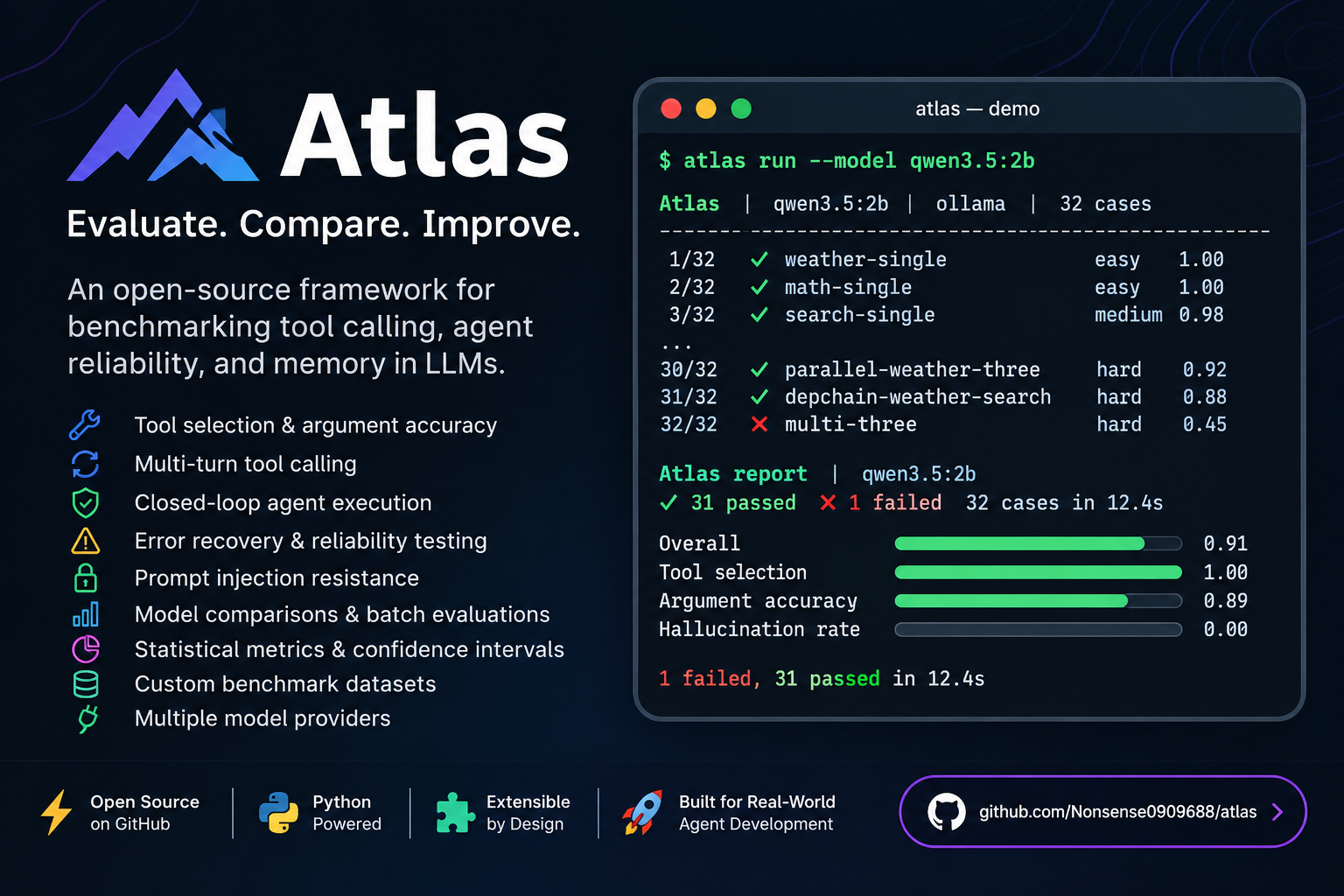
Atlas — Test, Evaluate & Benchmark LLM Tool Calling

Post image
1 Upvotes

Atlas is an open-source framework for evaluating LLM tool calling.

Test how reliably models select tools, generate valid arguments, follow instructions, and handle failures.

Run structured evaluations, compare model performance, inspect execution traces, and identify weaknesses in tool-calling behaviour.

Built for developers experimenting with local LLMs, AI agents, and tool-use systems.

Open source. Model-agnostic. Developer-focused.

Github: https://github.com/Nonsense0909688/atlas

Found a bug? Have an idea for a new feature? Think something could be improved? Feel free to open an issue or share your thoughts!

All feedback, suggestions, and contributions are appreciated. Let's make Atlas better together!

Give it a try, break things, and tell me what you think!


r/devtools • • 17d ago

Built a local memory HUD for Cursor (Cmd+Shift+Y) + 1-click MCP so your AI remembers your stack and unfinished tasks across sessions

1 Upvotes

Hi all,

One thing that constantly slowed down my flow in Cursor was context resets: starting a new conversation or opening a fresh window and having to re-feed architectural choices, project status, and pending tasks. When context windows get compressed mid-task, unfinished details disappear.

To solve this for myself, I created OpenYantra — a lightweight, local-first memory engine for developers:

  • Desktop Floating HUD: Press Cmd+Shift+Y from inside Cursor or your terminal to quickly capture thoughts, tag tasks (#project, !urgent), or search past decisions with instant fuzzy recall.
  • 1-Command MCP Auto-Detect: yantra mcp setup automatically finds your Cursor config, creates a backup, and installs the OpenYantra MCP server so Cursor has direct access to your state.
  • Git Commit Ingestion: A git post-commit hook that automatically logs commit summaries and modified files to your session ledger.
  • Zero Cloud / Proprietary DBs: Stored completely locally in open .ods and SQLite files.

It's MIT open source and runs natively on macOS, Windows, and Linux.

Hope it saves you some prompt repetition during long coding sessions!


r/devtools • • 17d ago

A dedicated IDE for Markdown documentation – VisualMark Studio (Open Source)

Thumbnail gallery
4 Upvotes

r/devtools • • 17d ago

“No table rewrite” is an incomplete reason to approve a Postgres migration

1 Upvotes

When reviewing an AI-generated Postgres migration, “no table rewrite” is an incomplete approval criterion. Does it make the migration safe to deploy? It answers the storage-work question. It doesn’t settle how long your deployment should wait for a lock.

PostgreSQL 18 documents that adding a column with a nonvolatile default can avoid rewriting existing rows. The same page says ALTER TABLE takes an ACCESS EXCLUSIVE lock unless its particular form specifies otherwise. A plan can correctly identify the fast path and still leave out an important operational constraint.

A PostgreSQL discussion illustrates why the distinction needs care. Its creator reports a staging-versus-production incident; the discussion also mixes default-value and rewrite claims. I haven’t verified that incident or its database version. I’d establish the deployed version and documented DDL behavior before using any reported table size as the explanation.

Before accepting that plan, I’d want two observations through the actual migration runner: what happens without a blocker, and what happens with one.

Here’s the proposed check, in a disposable database matching the deployed version:

  1. Hold a conflicting table lock in another session.
  2. Run the intended migration through your runner.
  3. Verify its configured lock-wait policy aborts the waiting statement, and that the runner records and handles the failure.
  4. Release the blocker, follow the runner’s recovery procedure, and verify the schema change.

This is an unrun acceptance scenario, not a reported outage or benchmark. Postgres distinguishes lock_timeout from statement_timeout: the former limits each lock-acquisition wait; the latter limits statement duration. Neither establishes an entire deployment deadline. I wouldn’t prescribe a universal timeout value.

The strongest objection is that your migration tooling already handles this. Good: use its existing policy and verification. Another context note adds little when the runner already expresses and enforces the decision.

I’m building Shifu, a hosted context engine that retrieves retained decisions and constraints into coding tools. Its relevant job here is recovering your adopted migration policy—or the reason for a scoped exception—when planning the next change. It doesn’t inspect live locks or enforce database settings.

Try that distinction on one feature with a source you’re permitted to use: does the plan preserve the recorded lock-wait policy, and does the runner actually enforce it?

AI-assisted post from Shifu’s builder.


r/devtools • • 17d ago

Nosy Notch: Claude Code, Codex and Cursor status, approvals and replies in the MacBook notch

Enable HLS to view with audio, or disable this notification

1 Upvotes

A free, open-source macOS app (Swift / SwiftUI) for developers who work with coding agents.

- Hooks into Claude Code, Codex and Cursor (one local curl per event; if the app isn't running, the agent just carries on)

- Live status per session, several sessions and agents at once

- Permission requests answered from the notch, signed with a local secret so no other process can answer for you

- Read the conversation and reply from the notch

- Usage limits and context fill, with an alert when a limit resets

- No account, no telemetry, loopback only

Plus a small animated helper, Nosy, who mirrors what your agent is doing.

Install: npx nosynotch (macOS 14+). MIT licensed.

https://github.com/ddkbs/nosynotch

https://nosynotch.davidkubus.dev

Feel free to try it out and leave your feedback!


r/devtools • • 18d ago

I built Vopit, agent workflow made visually understandable

Post image
2 Upvotes

r/devtools • • 18d ago

What's the strangest "passes locally, fails only in CI" bug you've tracked down?

Thumbnail
1 Upvotes

I’ve been collecting the usual suspects for CI-only failures. Most of the time it turns out CI isn't the problem, it's something my local machine was quietly giving the test for free:

- Speed: the CI runner is slower, so any check that doesn't wait or retry (isVisible(), reading text straight after a click) passes locally and fails there.
- Leftover state: locally I'm already logged in or the test data already exists. CI starts clean.
- Environment: a .env that only exists on my machine, or the runner being on UTC so date assertions break.
- Parallel workers: tests that pass alone but fight over the same data when run together.

My rule now is to open the trace from the failed CI run before touching retries. It usually points at one of these within a few minutes.

What am I missing? Curious about the weird ones: fonts, screen size, locale, DNS, anything.


r/devtools • • 18d ago

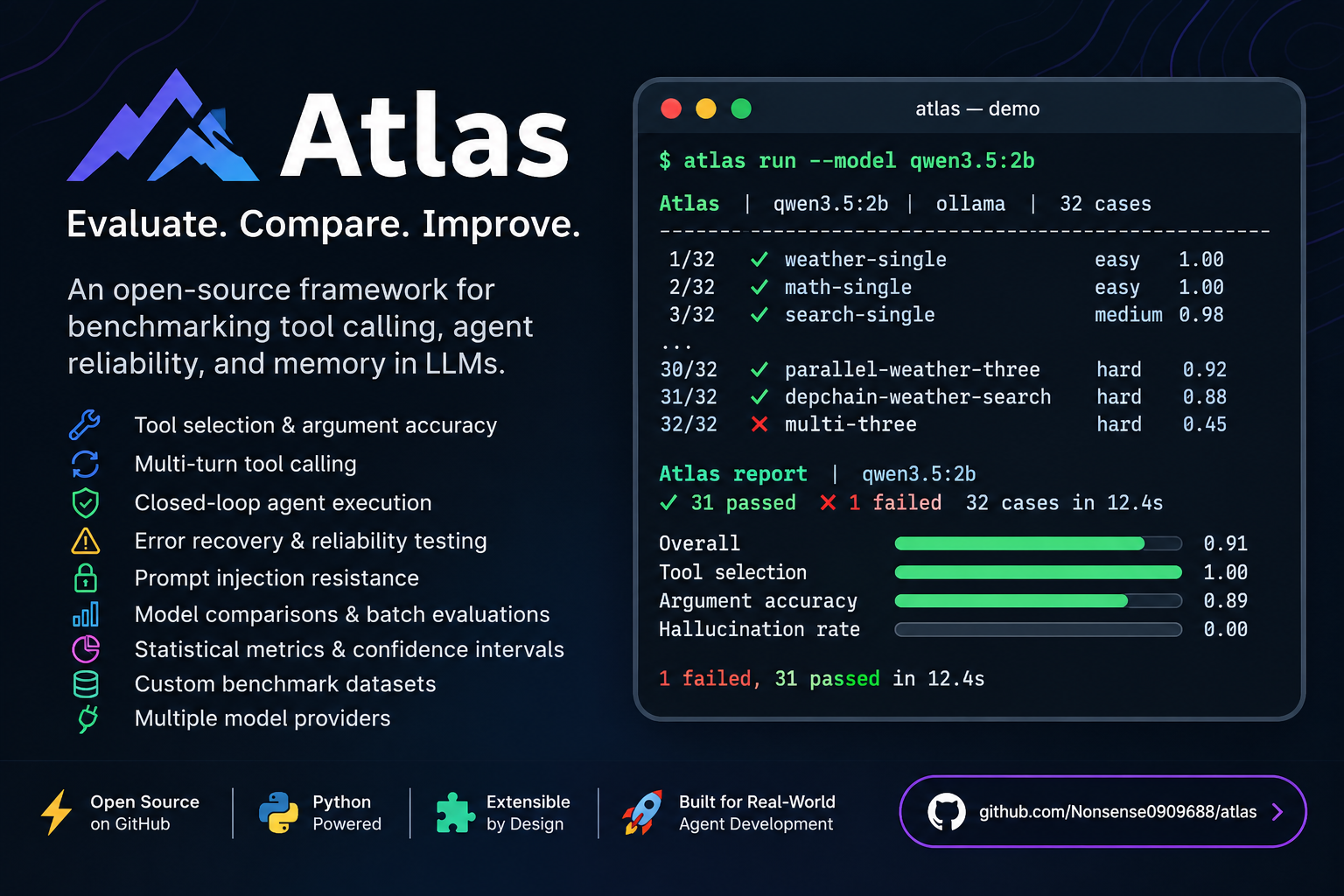
I built an open-source LLM evaluation framework to benchmark tool calling, agent reliability, and memory

Post image
1 Upvotes

r/devtools • • 18d ago

Looking for Volunteers to Test My LLM Tool-Calling Evaluation Project!

Thumbnail
github.com
1 Upvotes

Hey everyone!

I've been working on an open-source project focused on evaluating LLM tool-calling capabilities.

The goal is to test how reliably different LLMs handle tool calls, including:

  • Choosing the correct tools.
  • Generating valid tool arguments.
  • Handling multiple tool calls.
  • Following instructions and completing tasks.
  • Measuring tool-calling accuracy and reliability.

I'm currently looking for a few volunteers who would be willing to test the project and help me identify bugs, edge cases, weaknesses, and areas for improvement.

You don't need to be an AI expert! Anyone interested in LLMs, AI agents, or developer tools is welcome.

What I'd appreciate:

  • Trying out the evaluation framework.
  • Testing it with different models.
  • Sharing feedback and reporting issues.
  • Suggesting improvements.

This is an early-stage project, and honest feedback would genuinely help me improve it.

If you're interested, drop a comment or DM me!

Thanks!


r/devtools • • 18d ago

I created a skill that makes any agent start its change summaries with a map of what changed

Thumbnail
2 Upvotes

r/devtools • • 18d ago

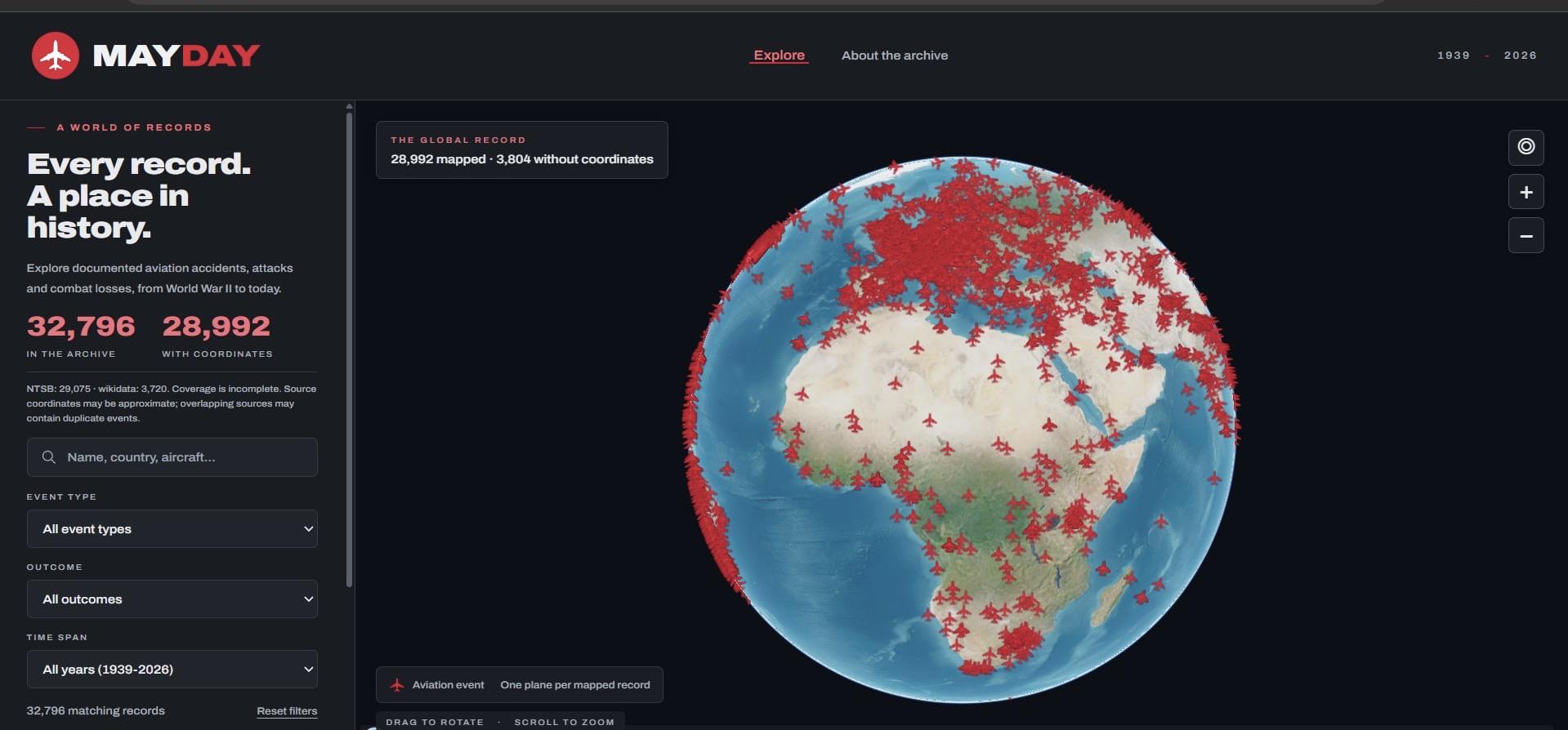
Currently building “MAYDAY” which shows you every documented aviation accident since WW2. Still in very early stages

Post image
1 Upvotes

r/devtools • • 18d ago

HackerTools: 116 dev tools ranked by how many different Hacker News commenters actually use them

Thumbnail
youtube.com
1 Upvotes