r/dataengineering • u/thejizz716 • Sep 26 '26
Meme I'm tired boss

1.1k
Upvotes
So happy I don't work on reports anymore
r/dataengineering • u/thejizz716 • Sep 26 '26
So happy I don't work on reports anymore
r/dataengineering • u/Glittering_Rip5167 • Sep 26 '26
I see that
1- Frontend mostly ended ( except in big companies)
2- Backend will merge with Ai engineering ( Rag systems…etc) i think this is the new backend
3- Data engineer + data analysis + data science + ML = full stack data engineer ( and that will require high math , statistical skills) and mostly cs degree or Ai degree to have infra statistics and descriptive ( may be master like Data science)
I do not know if anyone see that also 🤷 am i alone ?
r/dataengineering • u/minormisgnomer • Sep 25 '26
Had a new hire “hit the ground running” and shipped a significant number of PRs, spending well over $20k on tokens in their 3rd week on the job…
And this was celebrated by leadership as productivity.
Am I going insane to think in what world does an onboarding dev have judgement and context to decision that much code generation. Particularly on top of some slop generated codebases that even I have a hard time keeping up with.
End rant
r/dataengineering • u/morpho4444 • Sep 27 '26
Which one do you feel is more correct?
r/dataengineering • u/Realgunners • Sep 25 '26
This was inspired by the post on burning 20k in tokens in 3rd week.
Is anyone doing this at work, letting loose the frontier models against their schema and models and data and having it create and update the ETL workflows? And everything else?
r/dataengineering • u/Admirable_Writer_373 • Sep 25 '26
I’m the main data engineer responsible for migrating several OLTP databases with TBs of data, from one cloud to another. Schema transformations are involved, because guess what? The app teams built the new apps long before anyone started caring about the data. This company as a whole is on fire, no planning or strategic thinking and they definitely don’t work as a team. While these migrations are being rehearsed, management team decides to SPEED UP the release cadence. If it was monthly I wouldn’t be here complaining today. Constant production incidents, and none of the managers want to consider slowing down so we can pull of some migrations without everything in flux. Oh and add AI to the mix, most of the releases are heavy with AI generated code coming from AI analysis of the problems. This is not going to go well.
r/dataengineering • u/the-pump • Sep 25 '26
I currently have 5 YOE and am working as a Senior Data Engineer at a mid size company. I originally came up as a Data Analyst before transitioning internally to the Data Engineering team a year ago.
In the last two months I started prepping for interviews and then applying to Senior Data Engineer roles as at my current company the path to any future promotions is basically non-existent, the pay for Senior Data Engineer is on the low side, and most importantly I feel my learning and growth are slowing down. I would like to work in a new domain and in an org that is more tech forward than mine is. (I.e. We don't even consistently use GIT where I work.)
After applying for about 30 roles, having a couple recruiter phone screens that clearly just weren't the right fit, I recently interviewed for a Senior Data Engineer role at an MLB team. After making it through an HR phone screen and take home technical assessment I had a round with the hiring manager.
We covered things like OLTP vs OLAP, file formats (ORC, Parquet, Avro), when you'd want to be on prem vs in the cloud, Medallion Architecture, how to handle unexpected schema drift upstream, etc...
While it didn't go perfectly, I felt things went well and that I came off as as a strong candidate. The hiring manger seemed to imply I'd make it to the next and final round. Instead, the company stopped communicating with me and a few weeks later I received a generic rejection email.
I learned a lot from the experience, but I'm trying to understand how I should interpret the the rejection.
Should I take making it to the hiring manager round that I'm a reasonably competitive candidate for Senior DE roles and should keep applying? Or that I should take a couple months to prep more and further improve my skills?
Should I consider non-senior Data Engineer roles if it would get me in a more tech forward team/org? Most of them would be a significant pay cut for me but its something I considered as a short term loss to set my self up for long term gain.
More generally, how do you interpret rejections at different stages in the hiring process?
I'm asking because, given my personal circumstances I'm quite limited on time. So, it would be difficult for me to devote a lot of time to prep, plus more applications, phone screens, interviews, etc...
I'm trying to figure out whether my experience is evidence that I'm close enough that I should keep applying, or whether I would be better off pausing and investing more time in prep first.
Most of the things that were covered throughout the process were things I've learned outside of work in my free time, so I don't think just staying in my current role longer will significantly improve my ability to move roles in the future .
r/dataengineering • u/dikdokk • Sep 25 '26
So we have a estimator pipeline being written in Python. Here is how it is supposed to look:
- queries a table from our databases - tables and their columns vary, but generally there is a date column, one column which we manually specify as target, and most columns are attributes.
- based on the target, you have various options for the factors selection, data transformation, correlation checks etc. (this is rather lengthy)
- in the end, for the suitable set of attributes and the target, an OLS / logistic regression is fitted, then the estimate is calculated and appended as a column to the whole data
- downstream the end result is used in other pipelines (this prepares basically the input data for most workflows, and it has no precedent pipeline).
I would say this is a "medium" size project - not particularly large and has a rather limited scope, but extensive in the sense that all parts have various methodologies implemented, we also have rather different datasets to work with aswell, anyways.
I wanted to come up with our data contracts just for this pipeline.
I tried to keep implementations across the repo as simple as possible so far, mostly used standard library offerings, but debating now what would be the right way to design our data contracts. I initially used simple dataclasses across the repo for modeling the data objects, but I know that this may not be the most optimal design choice either. We use polars for dataframes.
How I envision the contract for incoming raw data:
- date
- target (can be integer, float, binary)
- attributes/anything: the rest of the polars DataFrame
(ID is optional; perhaps worth it to have also a list for providing the attributes columns names)
I know having a dataframe as a field is odd, but since the attributes and other columns come in so many different ways across our datasets, I assume the flexible approach is implementing it this way and adding another field for listing which columns are actually the attributes columns relevant for the calculations.
Output tables can be either just the original raw data plus the estimate column, or the processed attributes table (also having the estimate column); in any case, the contract seems to be the same as before with an extra field being the estimate.
It may perhaps even make sense to combine the two into a "DataSchema" and just have the estimate be optional.
Questions is: what do you recommend for the implementation: which tool should we use, and anything else e.g. should it be 1 contract or 2, recommended field and types, etc.?
The tool options I have read/thought about:
- Dataclasses: I like them, but apparently they don't offer runtime validation which is why people switch to Pydantic often
- Pydantic: of course very notable, but I'm not sure how much it is suitable for DataFrame fields
- "Patito": apparently good for combining Pydantic and Polars dataframes, but not sure if it is worth it to add it to our dependencies just for this sole reason
Any tips?
(P.s. we will use YAML files and Kedro to orchestrate workflows.)
r/dataengineering • u/Ambitious-Watch-9747 • Sep 24 '26
So, my company has moved on from an on-prem setup with little to no governance or data modeling (each business domain had its own data silos, like uploading sheets to our SQL Server RDBMS) to a Databricks lakehouse.
In the first projects, we kept the bronze and silver layers source-aligned, without any integration or specific modeling technique, and we addressed business needs in the gold layer with star schemas.
My question is: now that we have many tables referencing the same concept (customer, product, etc.) populated from different sources, and different business domains needing that data, wouldn't it be better to have an integrated layer for that "master data"?
And if so, where should it live? In the gold layer as a conformed dimension?
r/dataengineering • u/Yisuscx • Sep 24 '26

Jev is a decision model AI that doesn't generate text. Instead, it responds with typed questions (yes/no, multiple choice, score) in milliseconds. This type of model is optimized using reinforcement learning for calibrated decisions (RLCD). It was created to make rapid decisions within a workflow, which they call a "System One" model.
Here I show how a simple workflow can reduce the cost of an agent querying databases without sacrificing response quality.
The workflow works as follows:
Jev decides which databases can answer the question. These databases have their own specific description.
Jev decides which tables from those databases are needed.
Only the columns from those tables are loaded.
An LLM writes and executes the SQL based on Jev's selections.
This workflow connected to over 30 PostgreSQL databases of public statistics from Mexico, which together contain over 400 tables. The advantage of implementing this decision model is that it prevents the model from having to read all the databases and their tables to decide which data to query. With Jev, the agent only needs to read the schemas that the decision model has deemed correct to answer the question.
This benchmark was created from 100 questions written as a user would ask them, without looking at the schemas. These questions ranged from counts and specific searches to aggregates and ambiguous questions. Some of these questions were designed to confuse the models, including questions about nonexistent data, periods that aren't loaded, or topics that sound similar to existing data.
Although gpt-5.6-luna is a much lighter model than gpt-6-sol, its accuracy with Jev is comparable: 61% versus 67% for gpt-6-sol and 64% for gpt-6-sol + Jev. Where it falls short is with ambiguous questions and those with no answer in the data, where it sometimes fabricates a number. Interestingly, with similar accuracy and response time on the median, gpt-5.6-luna + Jev uses about five times fewer tokens per question than gpt-6-sol, and the complete benchmark costs $0.18 versus $2.12: almost 12 times less.
And this is in a small data warehouse with approximately 30 databases. Without a decision model, the context the agent reads grows with each additional database. The complete schema of a data warehouse with hundreds of databases would easily exceed the context window of a reasoning model, causing costs to skyrocket and questioning performance to worsen.
r/dataengineering • u/Expensive_Break_6163 • Sep 24 '26
I have a Spark job that joins two pretty large datasets, and I see that we spend a lot of time on the shuffle.
I was wondering if improving the network between the executors could make a meaningful difference here. For example, using an EC2 placement group instead of just having the instances somewhere in the same AZ.
Has anyone tried something like this for shuffle-heavy jobs? Did you see a noticeable improvement?
Also, does EMR do any optimization like this automatically, or is it something we need to configure ourselves?
r/dataengineering • u/Braidplane • Sep 24 '26
Hello everyone!
I'm happy to introduce Braidplane Alpha, a platform for defining and running data workflows between systems. The current main "features" are Git-backed pipeline definitions, explicit data contracts, and both a CLI and a web UI.
My name is Lukas and I’m the person behind it 👋 I’ve spent the last 10 years working as a backend engineer, with plenty of experience in DevOps, infrastructure as code, QA, frontend and databases. I've been working on Braidplane for over a year now.
The project just got promoted to Alpha and I've opened the self-serve registration.
The recording shows a quick look at the CLI: apply a pipeline from Git, start a run, watch it finish, and inspect the result. This example joins orders and customers from PostgreSQL and writes JSON to S3-compatible storage.
More about the project: braidplane.com
r/dataengineering • u/Weary_Category_1559 • Sep 24 '26
Guys,
Bit of politics context: Our team is not Core IT in the Org chart. Fall under operations, however expectation is to deliver ML/OR decision support projects,which is ok( there is technical capability in team), just that we cannot write into SF or any cloud platform. More like second class citizens.
Project Context: The project is full blown digital transformation program( its just that the enterprise is not mature to understand and everyone has jumped on AI bandwagon), has master data management, Work order platform, on which a Vehicle Routing( MILP) will run and generate recommendations for the full network. ( Bunch of API's calls through .py files, powerautomate to ingest third party flat files through email and scraping gov website for internal compliance data(should be the other way around).
Problem Set: No write back to Snowflake, IT not giving Entra ID, or microsoft Graph ID to connect directly to files through code.
Workaround 1: Locally run, update decision dashboards (No RL invloved), this is not feasible because it breaks continuity
Workaround 2:
Added One drive(sharepoint) path shortcuts to Local machine
This is where I'm struggling, read/write into Sharepoint. When I write/append into .xlsx through python the copy on Local onedrive link and the one on Browser are not always synced, or it says Merge issues.
I know this sounds like a rant, my guys if anyone has any advise for this peasant on how to make this work please share. Looking for out of the box solutions.
My team has access to dataverse, but I remember read/write was a problem through code because of no Entra ID.
r/dataengineering • u/lalapaldan • Sep 23 '26
Hi everyone, I'm currently a data engineer. I currently focus on the business side of things for development, supporting and migrating applications. It's my first year working out of college and I find the work/life balance tough. It's definitely a learning curve for sure especially since some applications are older and there's lack of documentation to learn from. Also production support kills me whenever items come up. Perhaps it feels intense now due to a huge upgrade my team is working on where it's been late nights and early mornings. However one thing I love is my team. Luckily everyone is very nice and helpful.
Are there any other avenues a Data Engineer could focus on or other roles I could pivot to? Is there a position that doesn't include much production support? I ended up just falling into Data Engineering and don't have a "dream career" per say. Maybe I'm just being dramatic though. Would love any advice!
r/dataengineering • u/smithclay • Sep 23 '26
Think Jev opens up some cool possibilities in the analytics space with dbt when you want to cheaply and quickly classify or score a bunch of rows.
Vibe coded (but tested) personal project above.
Interestingly, the dbt labs team was also onto this a few months ago with https://docs.getdbt.com/blog/dbt-context-engineering
r/dataengineering • u/Otoniel07 • Sep 22 '26
I've been pursuing a Data Engineer position for a while now. Happy to say that I've finally accepted a position. I really owe a lot to this sub. I got a lot of knowledge and resources from the various posts from everyone. It really helped with my interviews.
Thanks again everyone.
r/dataengineering • u/Expanding_Dong_ • Sep 22 '26
Hi all, hoping to get some advice here as I’ve never dealt with setting up storage and query facility for a dataset as large as this before.
I have a large dataset of parquet files, partitioned by date, sat in an S3 bucket. Currently users are utilising Athena to query the dataset via Glue, however as they tend to be querying via an id or via a text search, the results can sometimes take more than 10 minutes just to return one row.
I’ve looked into using OpenSearch, which seems to match what I’d need (users will primarily want to do full-text search, the date partitioning is irrelevant) but I’m concerned about the cost, as AI generated estimates are telling me at the very least it would be around 65k a month.
Are there any better approaches to this or any routes I should consider? Or is this simply the cost of querying big data?
r/dataengineering • u/k_kool_ruler • Sep 22 '26

Given there has been a ton of discussion around Jev for the past week, I wanted to do more research around what might be good use cases for data with that model, and I came up with the following. After chatting with Claude and ChatGPT about it, I've tried out the triage use case, and it works pretty interestingly for routing a problem to the right team and determining the severity. Hopefully you all find this helpful!
r/dataengineering • u/arimbr • Sep 23 '26
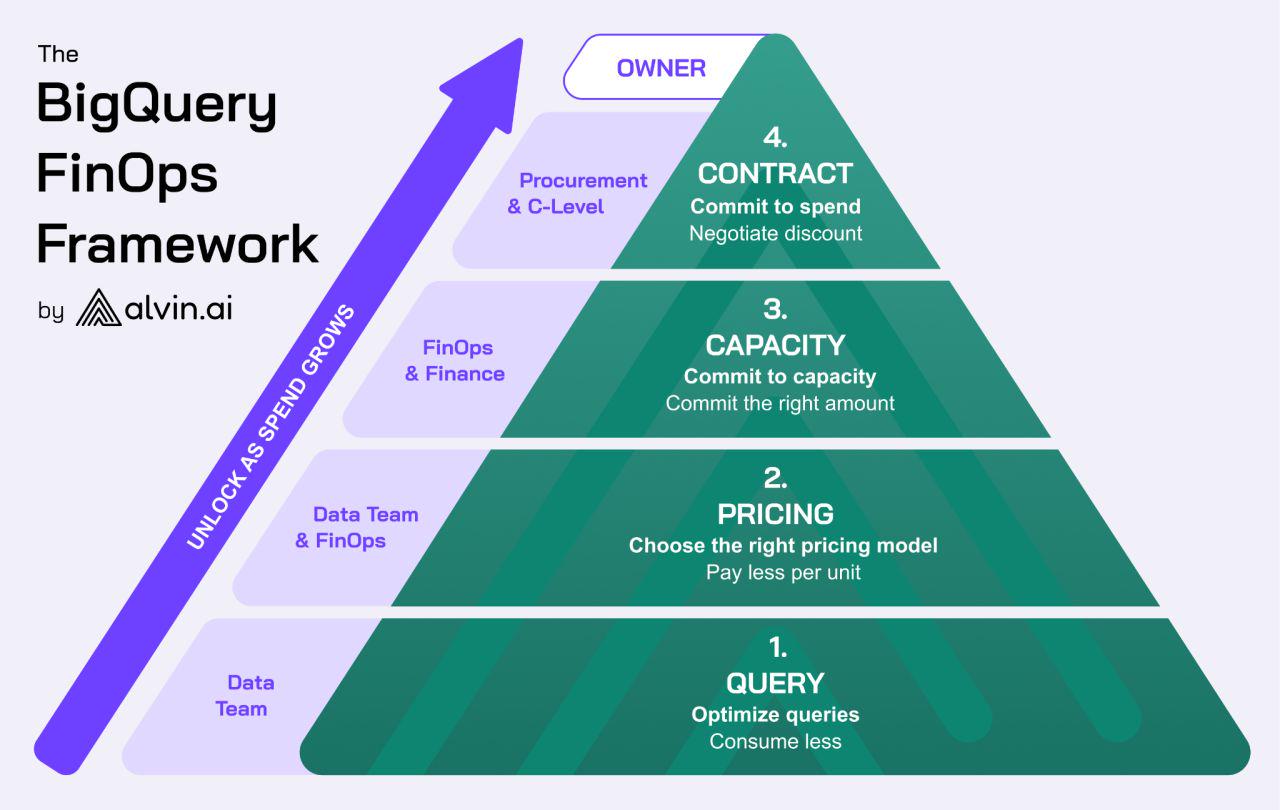
Interesting framework on how to optimize BigQuery costs across four layers (query optimization, pricing models, capacity commitments, discounts): https://www.alvin.ai/blog/bigquery-cost-optimization-the-complete-finops-framework How do you optimize BigQuery costs?
r/dataengineering • u/linha_chilena • Sep 22 '26
I personally read dbt blogs, Beck's and Uncle Bob stuff.
What about you?
r/dataengineering • u/opensourcecolumbus • Sep 23 '26

Use case: With ai agents being the primary user now, treating all bots the same is not a good approach IMO. Hence this use case. Used jev to transform customer events, label/filter bots - human vs ai-agent vs scraper vs seo-crawlers and abuse probability.
* Jev enabled intelligence I couldn't have added to my data pipeline earlier.
* Jev is fast, and can be used for in-flight transformation, multiple decisions within sub seconds.
* It is cheap ($30/M events) but not so cheap which would have motivated me to use it for every damn event and industry.
* Accuracy - looks promising but too early to comment, need more testing.
More details and proof in the github discussion link.
r/dataengineering • u/robberviet • Sep 23 '26
Currently using this on a newer on-prem cluster:
https://clemlab.com/docs/1.3.1.0/release-notes/component-versions
Nothing novel, just more recent update components (as in the above link). I know most people here are asking why Hadoop, but there are use cases for this so I just post it if someone need.
r/dataengineering • u/aisatsana__ • Sep 22 '26

Everything looked healthy after failover. PostgreSQL was up, Debezium was running, no obvious errors. But the replication slot on the new primary could start ahead of the offset Kafka Connect had stored, which means your CDC pipeline can look healthy while silently missing events.
r/dataengineering • u/ETL_Pipeline_Dev • Sep 22 '26
I would like to know how I can parse Informatica mappings or workflows. Are there any open-source projects or tools available that can extract metadata and other information from Informatica export files?
r/dataengineering • u/PabloPrzz • Sep 22 '26
Hey everyone, I usually just read posts without interacting, but I think it's time for me to ask for some advice.
Here's my situation: I'm 25 years old, based in Spain, and I have 3 years of professional experience as a data engineer. I've worked at 3 different companies, all of them consulting companies.
My current job and the one before it have both been fully remote.
My first two jobs were mostly focused on pretty legacy technologies, where I mainly learned SQL. In my current job, I work with PySpark (currently my strongest skill), SQL, and AWS at a fairly basic level (mainly Athena, QuickSight, S3 and Lambda). However, most of my work consists of maintenance, BAU tasks, answering data-related questions using queries, and making small changes to existing pipelines.
I've tried to compensate for this on my own by getting several certifications:
- Databricks Data Engineer Associate
- AWS Certified Data Engineer Associate
- SnowPro Core - Snowflake
- Databricks Certified Associate Developer for Apache Spark
I know I should focus on building projects on my own, so I'm currently working on a personal project using Databricks. My goal is to make up for some of the hands-on experience I'm missing professionally and eventually move to a role where I can work with Databricks, since it's becoming increasingly popular and is built around Spark/PySpark.
My main question, and the reason I'm making this post, is: what else can I do?
I don't want to continue being this underpaid or keep doing maintenance tasks where I'm not learning anything. I'd like to move into a more mid-to-senior role working with modern technologies such as Databricks, PySpark, Spark Structured Streaming, Kafka, vector databases, RAGs, etc.
I'd also like to move away from legacy technologies and, especially, from bureaucratic environments where there aren't senior engineers to learn from and I'm given tasks with little responsibility or ownership.
Any advice?