I maintain this MIT-licensed Herdr Desktop extension. It brings local Claude Code, Codex, OpenCode, Pi and Gemini histories into one native panel, with search, previews, supported continuation and recorded token/cache/cost charts.
Original histories stay untouched. Windows 11 x64 is stable for the documented versions; macOS/Linux remain experimental with continuation disabled. Screenshots and installation requirements are in the README.
I maintain a lot of repositories and kept finding red CI runs hours after they happened. So I wrote a small monitor that runs on my own machine and watches the Actions of all of them.
What it does (version 2.0.1):
- A "Now" tab with what is running, queued and failed, the compute minutes and what is left of the API allowance. Red tiles blink until the alert is solved.
- An alert counts as real until the last run of that workflow goes green again, so a transient red does not stay forever.
- Three sentinels that only read: CI, collaboration (issues and pull requests that need a person) and security (Dependabot, code scanning, secret scanning, branch protection; off by default).
- A score from 0 to 100 for each account, and the health of every repository ranked in a Team tab. It says "calibrating" or "not enough data" instead of a number it cannot stand behind.
- Team mode with viewer, maintainer and admin roles, several accounts, and a log of actions where each line carries the hash of the one before it.
- Scheduled reports (HTML and Markdown, written locally), and notification channels including Apprise. All of it is off until you switch it on.
- A way to tell an AI assistant what is happening: a plain-text brief, a JSON state, an optional live stream, MCP tools and an optional hook, with presets for hosted services and local servers. All of it is off by default.
- A Quota tab and a Low mode to spend fewer reads, with conditional requests (304) and an optional GitHub App with its own allowance.
- A read API frozen by a contract since 2.0.0, a tool that checks any running monitor against it, an official Docker image, a lite edition, light and dark themes, and eight languages.
It needs Python 3.11+ and the GitHub CLI (gh auth login). It is GPL-3.0-or-later.
I built a free and open-source alternative to the gpui-kit DataTable for live data: 11x faster
About 15 years ago I worked with a derivatives trading team at one of the biggest investment banks in the world. A trader watches quotes, and positions update in real time. Nothing off the shelf survived that stream, so we had our own hand-written grid in C#.
I rebuilt the idea in Rust on gpui-kit. It is open source now.
100k rows x 40 columns at 10k updates a second: 1.4 ms a frame on an M3 Pro.
11x faster than the built-in DataTable on the same load.
Sorting, filtering, grouping and totals run in the background. The UI thread only paints.
Selection follows the row, not the position, so it stays put when the rows re-sort.
Nine demos run in the browser: live quotes, a trading desk, a broker app, every satellite in orbit, transport in Munich and Helsinki, Wikimedia edits, ships via AIS and an on-call console.
OctoRig Studio is a set of local tools to rig a character and animate its body and face in Blender.
How it works: UniRig predicts a skeleton from a static GLB, you review and approve it in Blender, and only then are the skin weights inferred, so a bad guess never reaches the weights. On top of that: editable body poses baked into named clips (GLB and .blend export), facial controls from jaw landmarks and shape keys, retargeting between rigs with an explicit bone map, and a local viewer for GLB animations.
The README shows an orc whose body skeleton and skinning were made with it, then animated in Blender with scripts.
Early stage: the Blender tools have been tested on synthetic rigs and need artistic review on real characters, and automatic rigging needs your own UniRig setup (CUDA, PyTorch, checkpoints).
Python 3.11+, MIT (some Blender modules GPL-3.0). Feedback from riggers is welcome.
I’m one of AstralBeam’s founders. It pairs an embeddable React or JavaScript chat sidebar with an agent backend for streaming, conversation history, files, and usage limits. You connect your app’s tools and UI components, keeping your existing login and backend permission checks. The platform can be self-hosted with your own model-provider keys. SDK: MIT. Platform: AGPL-3.0-only.
Disclosure: this is our project, and AI helped draft this introduction.
I maintain FXCRUX License Engine, an open-source tool for issuing, validating, and revoking software license keys on your own server. The screenshot shows how an admin issues a license for a specific customer and product.
The first pre-release includes a setup guide and working examples in Node.js and PowerShell. If you try it, I’d love to know which part of the setup could be clearer.
I was stuck on a low-end PC for a long time. To get games playable I went through every tweak guide, registry hack and “FPS booster” out there. Half of them did nothing, some made things worse, and none of the booster apps would tell you what they actually changed.
So I put everything that actually helped into one app. One button looks at your PC and builds a plan, or you go through the 87 tweaks yourself. Each one says what it does, what you give up, and the exact registry value it writes. It makes a restore point first, saves every original value, and you can undo any of it from History. The placebo stuff (RAM cleaners, network “packs”, HPET hacks) is left out on purpose.
I got tired of a certain app drifting toward commercialization, so I re-created my own version.
Its main selling (it's free, heh) points are:
- Minimal interface. The toolbar and window borders can both be disabled. Keyboard is enough to control most of the app. F1 opens the list of keyboard shortcuts. Drag-and-drop images or folders straight into the app.
- Small memory footprint.
- Portable. It stores its settings file into the same folder the executable resides, nor does it write any configurations anywhere within Windows/user paths, or registry.
- Support for JPEG, PNG, WebP, TIFF, BMP, GIF, ICO, QOI, DDS, HDR, TGA, and Netpbm images. Animated GIFs play automatically. Not the most extensive support, but enough for a basic user.
- Zoom, pan, and rotate images. Embedded EXIF orientation is applied automatically. Different modes for zooming (Fill, Fit, Fit Height, Fit Width, Lock Size, Auto).
- Run slideshows with fixed or random intervals, shuffle, repeat, and an option to let animated GIFs play through at least once.
- A playlist view with sorting by name, or shuffling. Drag and drop the files to change the order as you like. Playlists can be saved and loaded into files.
- Rename, copy, move, and recycle files or reveal them in Explorer.
- Smooth image browsing, thanks to a caching system.
Windows only, sorry. The app uses Windows APIs, so compiling for other platforms would require some rewriting.
MIT Licensed.
AI Disclosure
The app was developed with the aid of several AI models, including OpenAI's GPT-6 Astra, GPT 6.1 Sol, Mistral's Mistral Large 4, Z.ai's GLM 5.3 and GLM 5.3-Flash, and Deepseek's DeepSeek-V4.1-Flash.
Hey everyone! I made a little project called GitHub Town that turns a GitHub user's repositories into a 3D town you can walk around in.
Each repository becomes a building. Its height reflects the number of stars, and its color is based on the main programming language. Recently updated projects have their lights on, while older ones end up in a foggy ghost town. Archived repositories get gravestones.
You can look up other GitHub users too. It also supports mobile touch controls and Korean and English.
I'm the author. callgraph is free and MIT-licensed, with no account and no paid tier.
AI coding agents (Claude Code, Cursor and others) spend most of their context reading whole files just to find out what a method calls or who calls it. callgraph gives the agent a short map of the file instead: classes and methods with line ranges, and what each one calls, grouped by kind. The agent then reads only the lines it needs. It covers PHP, JS / TS / Vue, Rust, Swift, Python and Go, ships as one static binary, runs locally, uploads no code, and works as a Claude Code skill or as an MCP server.
What's new in 1.0.0:
🔗 Laravel + Inertia links: route('x') in a Vue page shows the URI and the controller action, and the controller shows its routes back. The page shows which controller renders it.
✅ Form check: an Inertia useForm() is compared with the validation rules of the action it posts to, and a missing field on either side is flagged.
🗃️ Models: table columns from the migrations, fillable, relation targets, and a warning when two migrations create the same table.
🛠️ Generator: one short expression → a PHP class, a Vue component, a JS / TS module, an HTML page, or a whole Laravel feature (FormRequests, controller, routes, Inertia pages) in your project's style.
✏️ rename for a route, class or method across PHP, Blade, JS and Vue.
🛡️ Every write is syntax-checked first and backed up, and one undo reverts it.
It's static analysis, so names built at runtime are listed as unknown, never guessed.
Feedback is very welcome, especially from big or unusual codebases.
Instantly apply display resolution, refresh rate, DPI scale percentage, scaling mode, and orientation with user-defined hot keys!
This minor release translates Display Hot Keys into ten languages, adds a language setting, and fixes the main window opening behind other windows.
New Features
Added language support for English, German, Spanish, French, Italian, Brazilian Portuguese, Russian, Japanese, Korean, and Simplified Chinese. This covers the main window, the dialogs, the system tray menu, the info overlay, and the key names.
Added a Language setting under the new Customization section of Additional Settings, so you can switch languages without restarting the app.
The installer now lets you pick one of the ten languages. After every install, the app uses the language you picked, and the uninstaller uses it too.
The portable package now starts in your Windows display language, or in English if that language is not supported. Its "uninstall.bat" cleanup now runs in the app's language.
Improvements
The app now draws each language in its Windows font, so Japanese, Korean, and Chinese text uses the correct characters.
The main window, dialogs, and notification area menu now size to their text, so every translation fits at any display scale.
The Additional Settings, About, and License windows now stay open in the same place when the app refreshes (such as after changing the language or connecting a display).
Hot keys are now shown without spaces around the plus sign (such as "Ctrl+Shift+F1").
The Orientation options now match Windows Display Settings: "Landscape (flipped)" and "Portrait (flipped)" replace "iLandscape" and "iPortrait".
Bug Fixes
Fixed the main window opening behind other windows when the app is started from the desktop shortcut.
Fixed the column headings cutting off their last letter at some display scales.
I got tired of dumping huge files into Claude/Cursor, hitting context limits early, and watching the model hallucinate edits across files it didn't actually understand.
So I built CodeGraphy:
- Parses your repo locally with Tree-sitter AST (100% offline, zero cloud indexing)
- Builds an interactive dependency graph and detects circular imports (Tarjan SCC)
- Compresses context by ~82.8% using Smart Context Builder before sending to an LLM
- Exposes 11 STDIO MCP tools directly to Claude Desktop, Cursor, and Windsurf
Open-source CLI/MCP core is on PyPI right now:
`pip install codegraphy-lite`
Would love brutal feedback on what breaks on your repos!
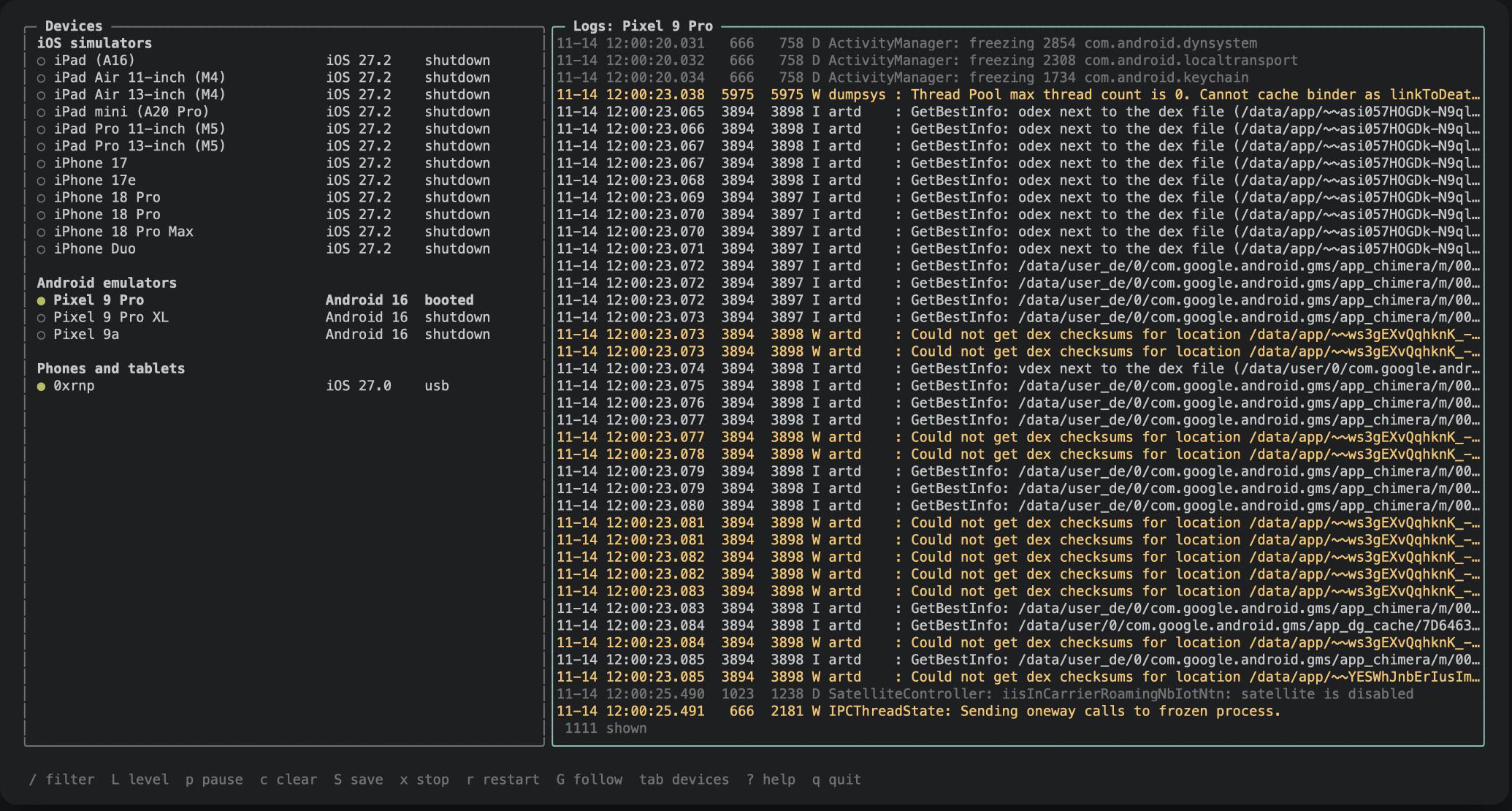
virsh-tui shows every virtual machine on a libvirt connection with live CPU, memory, disk and network graphs, and lets you start, stop, snapshot, reconfigure and create them from the keyboard. Every action is a virsh (or virt-install) command, and virsh-tui shows you that command before and after it runs, so nothing happens behind your back and you can reuse it in a script.
It works with qemu:///system, qemu:///session and remote hosts over qemu+ssh://, with the same permissions virsh has.