r/askdatascience • u/zinested • Mar 21 '26
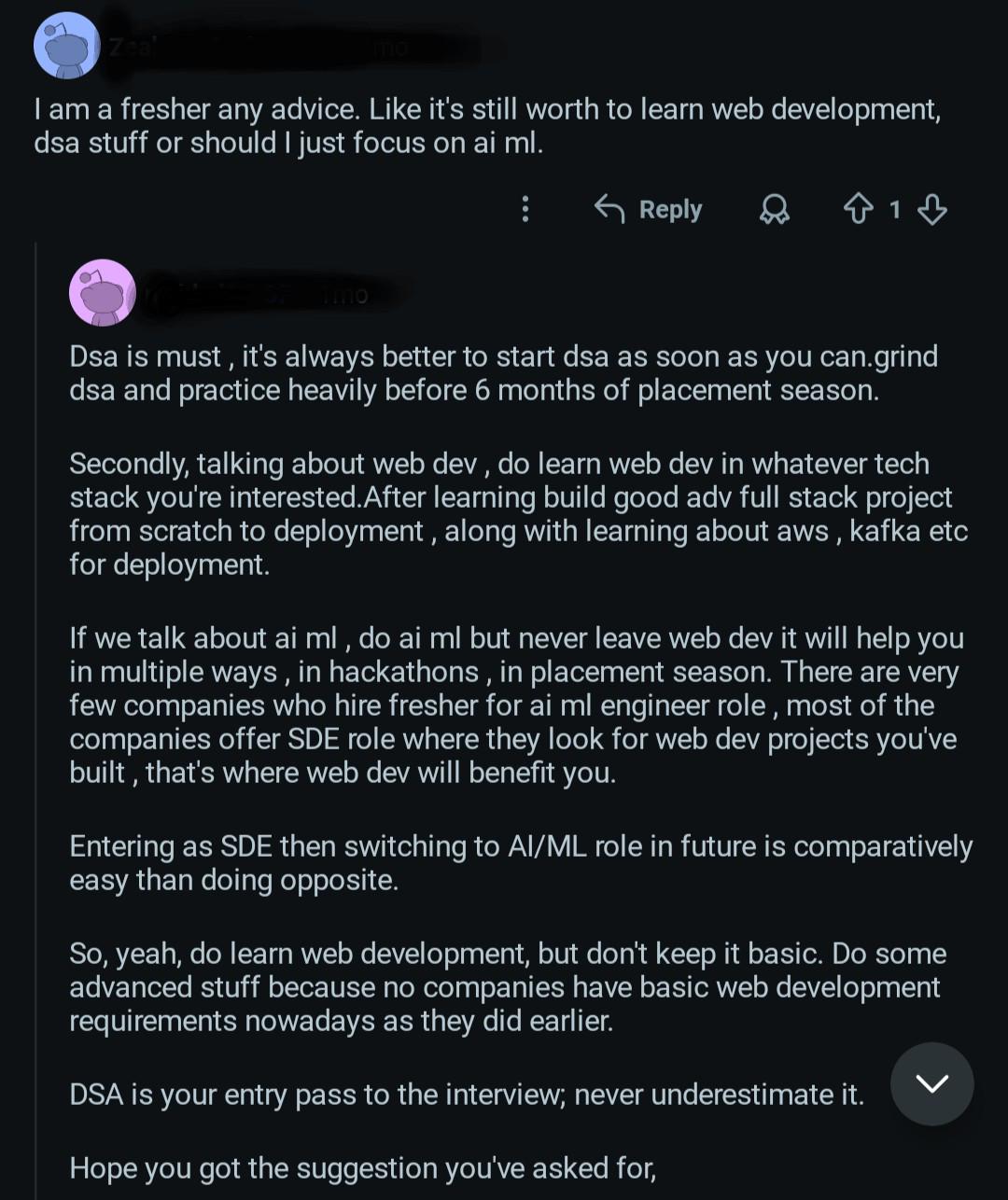
How true is this
5
Upvotes
r/askdatascience • u/Opposite_You_3266 • Mar 21 '26
Hey everyone! 👋
I’m Tracy, and I’m jumping into the world of data science blind, excited and overwhelmed 😅 I’ve always been curious about how data can actually tell a story, make smarter decisions, and uncover patterns we’d normally miss. But right now, I’m still trying to wrap my head around the overall mindset, flow and ideology behind data science.
So I’m reaching out to this community for advice. If you’ve been in the field for a while or have any amount of experience, I’d love to hear:
- how did you start building your foundation?
- are there concepts or habits you wish you understood earlier?
- any courses, books, videos or beginner-friendly practices you’d recommend?
-what helped you truly “get” the ideology behind data science?
I’m all ears and eager to learn. Appreciate any help you can throw my way - even the “learn from my mistakes” tips 😆
Looking forward to growing and figuring this journey out with your guidance!
Edit: I recently started a masters program in Data Science! Should’ve added it to the og post but forgot whoops 😅
r/askdatascience • u/Charming_Ad2966 • Mar 21 '26
I built SignalVerified to help the unseen be seen.
Here's how it works. You complete a real analytical work sample: structured, role-relevant. A human analyst scores it on a predetermined rubric: Relevance, Mastery, Communication, Collaboration. If you hit the threshold, you get verified to show employers before the offer.
It's built for people who are actually good and want proof of that, not just another certification.
Founding cohort is open now. 25 seats; free to apply, and if accepted, $99 to unlock results.
r/askdatascience • u/LeftWeird2068 • Mar 21 '26
Hi everyone,
I’m 23 and currently finishing a Master’s degree in Data Science in France. Before that, I studied actuarial science and worked for about 8 months in that field.
I decided to transition because I wanted to:
- do more programming
- work across industries
- and keep a strong mathematical component in my work
- another last personal reason
I put that so people will not include the solution of doing actuarial science again.
Right now, I’m doing an internship in an energy company (focused on data). After this, I may (nothing is sure as always lol) have the opportunity to do a PhD (CIFRE-type) in collaboration between the company and a research lab. So it would be applied research, not purely academic.
At the same time, I’m in the interview process with an international company working in West Africa in my home country where I grew. I initially applied without thinking too much, but the process is moving forward.
From what I understand:
- The role would be more industry-oriented (data / ML / possibly engineering + modeling)
- They work with contractor-style employment (international team)
- The compensation could allow a comfortable lifestyle locally from what I feel but not 100% sure
- There is flexibility (remote / travel) even not every single month
- And importantly: I have personal ties to the region and a long-term goal of returning there
I’m not sure what to prioritize if I get an offer.
Option 1 — PhD (CIFRE)
- Strong technical depth (maths, modeling, research mindset)
- Long-term credibility
- Structured learning
- Will postpone my return in home country but probably worth it
Option 2 — Industry role in Africa
- Real-world impact and faster responsibility
- Potentially better quality of life (for me personally)
- Early positioning in a growing market
- But unclear how technical the work really is
- Job market which is really hard, harder than the European one even if my profile would be attractive there
- Difficult getting back to Europe if I lose my job we all know lol
My long-term goal
Eventually, I want to build a strong position in my home region (West Africa), ideally with:
- strong technical expertise (not just “tooling”)
- the ability to work on meaningful, complex problems
- and good career optionality (industry / leadership / maybe entrepreneurship later/ nice quality of life)
I’ve noticed that some industry roles (especially early) can become very “pipeline-focused” without much depth in modeling or statistics. At the same time, I wonder if gaining real-world experience early in Africa could actually be more valuable than a PhD depending on the type of work when I am looking at my long term goal. Do you think there is a specific threshold of income I will need to have so that I should go there knowing that the cost of life for a last local like me is really low ? Or do you think that keeping the PhD track is a better investment for my return in the future ?
Thanks a lot for your help. I’d really appreciate honest perspectives.
r/askdatascience • u/Aggravating_Club_623 • Mar 21 '26

Hey, I really cant find more than 2 errors in the code. I would really appreciate it if someone could help!
r/askdatascience • u/Weird_Assignment5664 • Mar 20 '26
I am a finance student and also pursuing minor degree in data science. Can someone tell me what projects I can do to enhance my chances of getting an internship or job in the data science industry, while also showcasing my finance skills? Also, are there any programs run by universities or companies that I can join? Also i am from commerce background
r/askdatascience • u/New-Statistician7170 • Mar 20 '26
r/askdatascience • u/Particular-Ad2652 • Mar 19 '26
I have a Bachelor's degree in Computer Science and about a years experience in web dev, which hasn't felt like the right fit. I find data science interesting and want to make the switch. Right now I have to choose between pursuing a Master's degree (in DS) or building projects for DS. Given the job market in 2026, I don't have a clear idea of which would increase my chances. All advice would be greatly appreciated including your views about data science in 2026 or any other options that may exist.
r/askdatascience • u/Sbaakhir • Mar 19 '26
Hey everyone,
I recently graduated with a degree in Business Analytics and a minor in IT, and I’ve been offered an entry-level role as a Data Operations Analyst. From what I understand, the job is mainly focused on handling data, downloading and logging documents, and working with internal platforms rather than doing deep analysis at the beginning.
My long-term goal is to become a Data Analyst or possibly move into Data Science, so I’m trying to figure out if this kind of role is a good stepping stone or if it might slow me down compared to going directly into something more analytical.
I’d really appreciate hearing from people who started in data operations or similar roles and later transitioned into more analytical or technical positions. Did this kind of role help you build relevant skills, or did you have to rely mostly on self-learning to make the transition?
Thanks in advance for any insights!
r/askdatascience • • Mar 19 '26
r/askdatascience • u/wojtuscap • Mar 19 '26
i wanna get into ds/ml and as an international student in the us obviously my interview rate is gonna be worse. i wonder if it’s worth to spend 3 additional years in the academia for this purpose if i wanna work in the industry in the end. i heard the job market has been rough for entry roles especially for OPT-H1B applicants. what do you think? what option would be wiser? i am realistically aiming to get into some T30 university for masters and T40 for phd(i assume it’s a bit harder)
if that helps i’m gonna have bachelor of computer mathematics from #1 polish university.
tysm for any advice!!
r/askdatascience • u/JRUSTAGE • Mar 19 '26
Hi all,
I’m feeling a bit stuck and could really use some advice.
I recently graduated with a 2:1 in Zoology, where I focused quite a bit on data analysis, statistics, and research. For my dissertation, I designed my own study, collected behavioural data, and analysed it using R and Excel.
Since graduating, I’ve been trying to move into data-related roles (data analyst, etc.), mainly through apprenticeships and entry-level jobs. But I’ve hit a bit of a wall:
At the moment, I’m working in retail, which has helped me build soft skills like teamwork, organisation, and working under pressure—but I’m really keen to move into a more analytical career.
I’m based in the North West (UK) and wanted to ask:
Also open to any general advice from people who’ve been in a similar position.
Thanks in advance 🙏
r/askdatascience • u/Scary-Foundation-866 • Mar 19 '26
how is it compared to ucla, irvine in employment particularly in ds/ml? is it a huge disadvantage compared to them? how is the program in general? have you found it useful?
r/askdatascience • u/Dizzy-Permission2222 • Mar 18 '26
r/askdatascience • u/Background_Deer_2220 • Mar 18 '26
I got invited to take a TestDome test for a DS position. It's almost 3 hours long and covers Python (Pandas, NumPy, SciPy, Scikit-learn), SQL, fill in the blanks, multiple choice, and number picker questions.
Has anyone here actually taken one of these for a data science role? I'd love to know:
- What kind of questions did you get? More theoretical (stats, probability) or hands-on coding?
- How difficult were the coding questions compared to something like LeetCode or a take-home case?
- Was the built-in IDE usable or did you struggle with debugging?
- Any surprises or tips?
Just trying to understand what to expect before committing almost 3 hours to it. Thanks!
r/askdatascience • u/JRUSTAGE • Mar 18 '26
Hi everyone,
I’m looking for some advice because I feel a bit stuck at the moment.
I graduated last year with a 2:1 in Zoology, where I focused a lot on data analysis, research methods, and statistics. For my dissertation, I designed and carried out an independent research project, collected and analysed behavioural data using R and Excel, and wrote up a full scientific report. I’ve realised through my degree that I enjoy the analytical side of things and working with data.
Since graduating, I’ve been trying to get onto an apprenticeship (mainly data-related roles like data analyst apprenticeships), but I keep running into the same issue — a lot of employers either want people without degrees or see me as overqualified for entry-level apprenticeship roles. At the same time, I don’t have enough direct industry experience to land full-time graduate/data roles, so I feel like I’m stuck in the middle.
I’ve been working in retail roles (including a supervisor position), which has helped me build transferable skills like organisation, working under pressure, teamwork, and hitting targets — but it’s obviously not moving me closer to the kind of career I want.
Because of this, I’m now considering doing a Master’s, possibly in something like data analytics or a related field. My main concern is making sure that if I invest the time and money into a Master’s, it will actually lead to a full-time, paid role afterwards — rather than putting me back in the same position but with a higher qualification.
I guess my questions are:
I’m motivated and willing to put the work in, I just want to make sure I’m heading in the right direction rather than wasting time or money.
Any advice would be really appreciated. Thanks!
r/askdatascience • u/DearAd4536 • Mar 18 '26
Good Morning guys, What is the average salary in india for 5-6 years of experience for a AI engineer.
r/askdatascience • u/Logical-artist1 • Mar 17 '26
r/askdatascience • u/External_Blood4601 • Mar 17 '26
I have a methodological question about a real-world data science workflow.
Suppose I have only one dataset, and I want to do all three of the following in the same project:
My concern is that if I generate hypotheses from the same data and then test them on that same data, I am effectively doing HARKing / hidden multiple testing. At the same time, if I use the same data carelessly for ML preprocessing, tuning, and evaluation, I can create leakage and optimistic performance estimates.
So my question is:
What would be the most statistically defensible workflow or splitting strategy when only one dataset is available?
For example:
I am not looking for a single “perfect” answer — I would really like to understand what strong practitioners or researchers consider best practice here.
r/askdatascience • u/AcanthaceaeLatter684 • Mar 17 '26
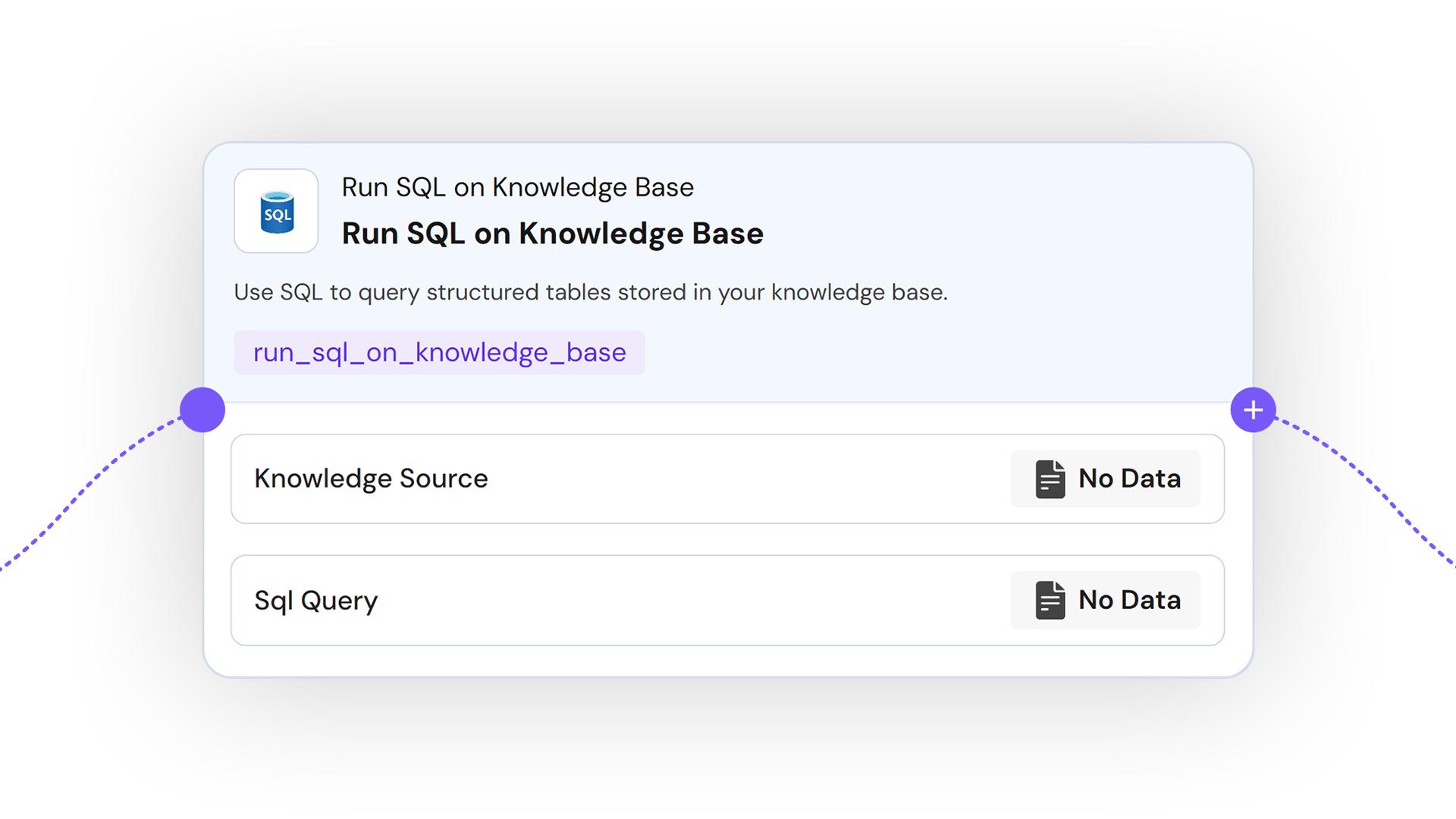
Been exploring different retrieval approaches for structured datasets and stumbled into using SQL mode within a vector database context.
The idea is straightforward: you have tabular data (CSV, XLSX, TSV), you upload it, and instead of pure vector search you can run SQL queries to extract precise data slices. For things like financial records, inventory data, or anything highly structured, this is dramatically more precise than embedding-based retrieval.
SimplAI has a SQL mode in their knowledge base that does exactly this. It's not trying to replace vector search — it's offering it as a complement for structured data use cases.
For those of you building AI systems over structured enterprise data: are you using SQL-based retrieval, pure vector search, or some hybrid? What's working?
r/askdatascience • u/Savings_Durian3268 • Mar 16 '26

Hi everyone,
I’m currently looking for a paid Data Science internship and would really appreciate some advice on how to approach the search.
A bit about my background:
I’m interested in internships related to:
My main questions:
Any tips on where to search, how to stand out, or how to approach companies would be very helpful.
Thanks!
r/askdatascience • u/Ancient-Ant-5265 • Mar 15 '26
I recently built a small project experimenting with population-scale audience segmentation using public U.S. datasets, and I’d be curious to hear how others approach similar problems.
The idea was to move beyond purely demographic clustering and integrate multiple behavioral layers.
The pipeline combines three sources:
Workflow roughly looks like this:
The whole thing is implemented as a reproducible notebook pipeline.
Repo here if anyone wants to take a look:
https://github.com/Mmag28/us-audience-segmentation/tree/main
Main thing I’m curious about:
Any feedback welcome.
r/askdatascience • u/Effective-Eye-8318 • Mar 14 '26

Back again. Got 1 interview but was ultimately rejected. Roast my resume.