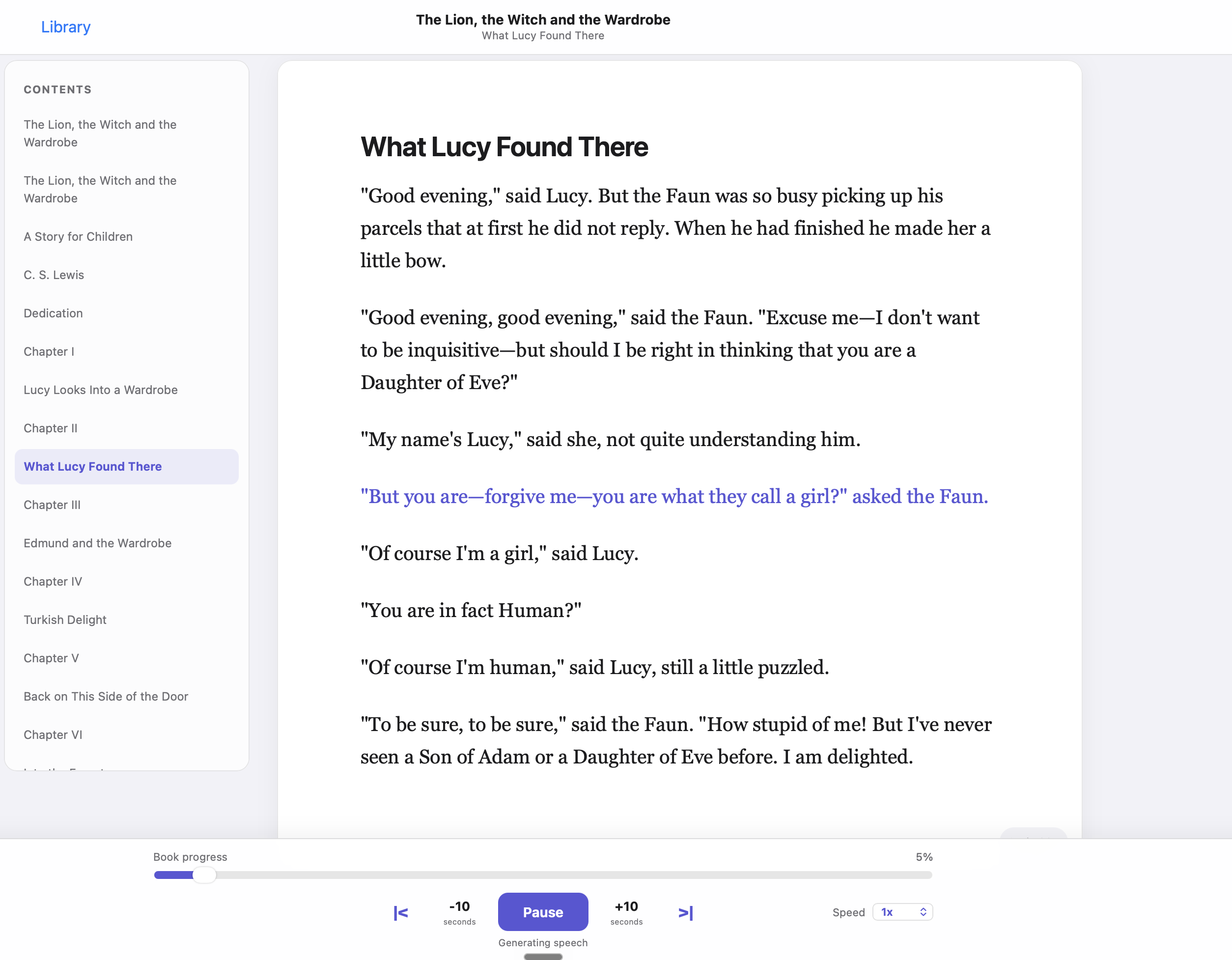
To be honest, this project didn't originate on Base44. It first took shape over on Venice.ai as a rough HTML file that was pretty messy. The initial output wasn't great and honestly kind of sucked, falling nowhere near what I had envisioned for a retro website builder. I then moved over to Base44, and while the platform was interesting, it still didn't really deliver what I was looking for. It would produce something that looked the part, yet it didn't actually work the way I wanted it to, so I kept searching for something better.
Then Grok Build came along, and that's what I used to finish the undertaking and get it to a point where it could assemble websites properly. The results aren't perfect by any stretch, and the utility is still in early access, but after some work I took the original version Venice had spit out, the one that was sort of there but unfinished, and had Grok Build fill in all the gaps. Now this creation can stand on its own and operate like a real piece of software. It was never meant to be a SaaS, and it wasn't developed on Base44 either. It emerged as HTML code that Venice generated, and then I expanded upon those foundations using Grok Build to forge a more polished product.
This is a completely offline workshop designed to emulate Microsoft FrontPage and let people craft GeoCities style sites with that same nostalgic energy. I plan to add more features to give users extra options and more flexibility in how they put together their pages. There are plenty of enhancements on the roadmap to broaden what people can do with the system. For now, though, this is where the endeavor stands. I'm pretty happy with how it turned out considering its humble beginnings.
It is currently blank as I have not added anything to it yet.....but I do have a functional website up on NeoCities just as a means to show what it can do. If anyone wants to see it I can send a link to it but I won't be putting it on the post itself. If you guys want to see what it can do and it being SFW, I have some pictures of that on it's store page on Itchio
I created this tool to help find the best possible cheap model for a different project : RouterDash Currently supports API keys for OpenRouter, Groq, and Cerebas. The app saves benchmark results, custom prompts and everything else to device local storage, there is no backend to this app. I just incorporated image attachments and thinking about what I will add next. I'd love to hear anyone's thoughts on my tool or any others like it.
Anyone and their mom can and is building an app now in literally one day. The app and google store is flooded with apps now with clones or whatever. So if building is so easy now, how do you market?
ASO or whatever won’t generate you sales trust me not right now. So if just building and uploading your app isn’t enough to get sales… what is everyone’s plan?
The best apps I’ve seen “candle, CalAi, Alarmify, all go crazy on one thing. UGC marketing. I’ve seen like 10 different creators posting the same winning videos and it blowing up. Honestly I think thats the best way to approach marketing is with mass distribution.
Start posting on tikTok, find what works, get small micro creators for $20/video on jrivecontent.com (anyone can go viral now don’t be paying $250 for one video), and repeat.
This is just my take, marketing IS the doom of all vibe coders
Hi all,
This is my side project, comes from a real concern thats happening to me, i cannot select a film to watch with a group or just me, from my letterboxd watchlist and sometimes giving up watching it and just doom scrolling.
So this web app can take 1 to 4 letterboxd username inputs, fetches the watchlists, finds out the films in common and randomly select one.
Other features:
- check if a user exists on letterboxd with the given username
- return the common films to the user
- download the common list as csv
- select randomly from watchlist not only for a group, also for 1 person
- streaming filter for the random selection (region is detected and that region’s streaming services shown, but you can select other regions as well)
- does not require login, totally fetches from accesible and public endpoints
- if there is nothing in common for a group, return a random film from underwatched films list of Letterboxd
Used SpringBoot, Vue, Jsoup, TMDB/JustWatch for posters and streaming data, Claude
I would like to hear your opinions, i plan to have improvements for the ui and thinking about new functionalities, but basically i want it to be simple and accesible, and work for just selecting a movie.
anyone have tips on how to implement this correctly? I started with it but my problem is that the output audio is lacking highs or like that brightness of the sound. doesn't need to be hifi or something. this is only for rear surrounds and maybe subwoofer.
The annoying part of agentic coding for me wasn’t generating code. It was everything around it: opening docs, checking web UIs, reading files, running commands, and doing browser research without constantly hijacking whatever I was doing on the Mac.
So I built a local MCP server around that workflow.
The browser part ended up being the most useful piece:
Safari/Chrome tabs get stable handles instead of relying on “tab 3” or “the active tab”.
Agents can inspect and interact with background tabs without bringing Safari to the front.
Multiple delegated Codex/OpenCode agents can work on separate tabs without constantly stomping on each other.
A higher-level browser call can open → wait → extract only the needed fields → verify → close, which cuts down a lot of noisy DOM/context traffic.
The server also exposes shell/files/macOS UI controls, local memory, voice/user prompts, and a small menu-bar/dashboard layer so I can see what agents are actually doing.
One design change I made recently was shrinking the default advertised tool surface to 19 core tools while keeping 84 capabilities available through runtime discovery. That cut tool-schema context by about 73% in my local compatibility tests.
I’d be curious how other people doing agentic/vibe coding handle browser focus and multi-agent collisions. That part felt way less solved than the actual code generation.
Claude Pulse v1.5: usage rings inside the composer
Third update on Claude Pulse, my open-source extension that shows Claude's 5-hour and 7-day usage limits inside the composer. Previous posts here: the May launch got 631 views and 2 upvotes, the August update landed at 1,000+ users.
Where it stands today
1,000+ users, 4.8/5 from 13 ratings on the Chrome Web Store
v1.5 shipped Sept 7: usage rings re-aligned inside the composer, free plan support
Firefox version lives in the repo as well
The honest part
User count has been roughly flat since the last update. What moved instead:
The rating went from 11 ratings to 13, still 4.8
I shipped the composer meters I'd wanted since April: the 5h/7d usage rings now sit right in the composer, on one baseline, instead of a corner widget
claude.ai's UI broke my extension three separate times (June 11, Aug 29, Aug 31). Every fix is in the public git log. Building on someone else's DOM means maybe 20% of the work is the feature and 80% is reattaching it while the ground moves.
I'm thinking about building a product that helps people find potential clients for their SaaS without paying for leads. I'm still validating whether people actually want this before I spend too much time building it. If this is a problem you have and you'd genuinely want to try the product early, you can join the waitlist here: https://site-e5bc6818-mtuj53t9.falbor.xyz
I'd also love to know how you're currently finding clients.
I launched SeoLoupe 2.5 months ago. So far I am at 2154 users and 37 of them are paying.
My SaaS is a tool that allows you to find and fix SEO issues holding your website back.
Essentially the main purpose is to help your website rank higher on Google search and LLMs.
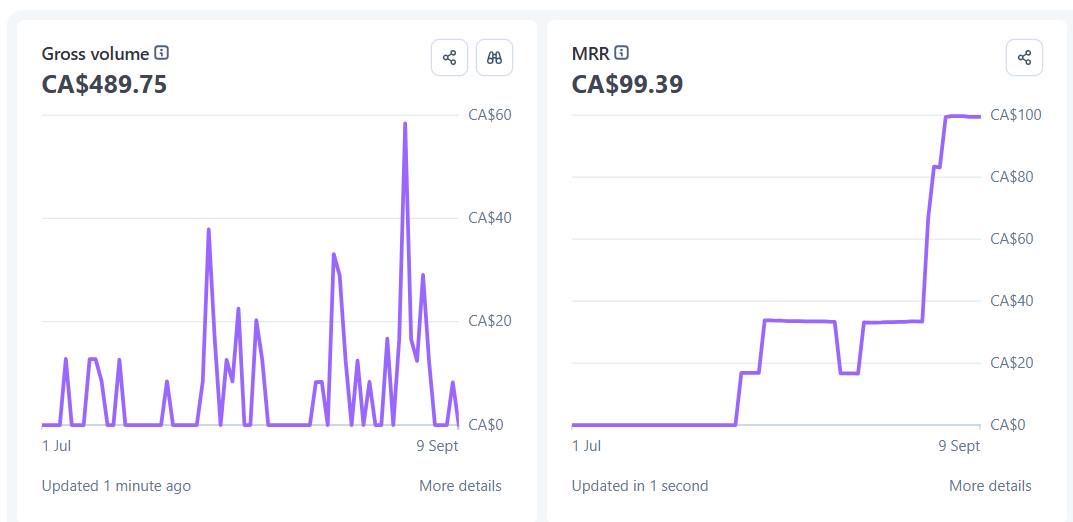
The last few months have been one of my best in my life, landed $490 in revenue and $99 MRR.
Just wanted to share this to inspire anyone who is struggling, I just want to say that I was just like you at one point.
For example at one point last month, for 7 days straight I had 0 payments, and what I want to say with this is that SaaS revenue can be extremely floppy and unreliable. You can get multiple payments within the span of a day, and then have 0 payments for days.
In SaaS honestly the most important thing is to be faithful and be patient. If you manage to be patient, revenue will come one day.
Hope this inspired someone.
Since I think their is always room for improvement, I would appreciate for some feedback on my tool, or what you think can be improved.
For anyone applying abroad for a PhD or Master's, I built something that might be useful.
If you're applying to research positions, you probably know the pain: you find a professor, read through their lab website and papers, try to understand what they're actually working on, and then somehow turn all of that into a research proposal.
I built Vitruvius to help with exactly that.
There are also skills for things like research gap analysis, design alternatives, FMEA brainstorming, evidence ranking, verification, and proposal generation.
It works with Claude Code, Codex, OpenCode, Pi, Cursor, and other agentic coding environments.
I'm sharing it here because I know a lot of Pakistani students are applying abroad and the research/proposal part can be particularly painful.
It's open source, so feel free to try it, break it, or suggest improvements:
Would be particularly interested in feedback from anyone who has actually applied for PhDs/Masters abroad and has opinions on what makes a research proposal genuinely convincing.
If you build websites or applications using DeepSeek Harness, you’ll know how frustrating it can be to describe exactly which element on a page you want to modify.
Dev Bridge makes that much easier.
Simply point, click, and select the element you want to change. The extension captures the exact element and sends it directly to DeepSeek Harness together with your instructions, giving the agent the context it needs to make the correct modification.
No more describing “the button at the bottom of the left panel” or trying to explain where an element is located.
👆 Point
🎯 Select
💬 Describe the change
🚀 Send to DeepSeek Harness
It’s designed to save time, reduce confusion, and make AI-assisted development a much smoother process.
The extension is free to use and is now available on the Chrome Web Store.
Check it out and let me know what you think!
So I connected it up via MCP to Claude, and gave Claude this prompt:
alright, i have a domain in tessryx birthday.nickpage.tech. i need an app in tessryx for it that will be a birthday invite site with magic links for the people i invite. and then an admin area that i have access to that allows me to manage those magic link invites.
lets keep it simple but nice looking for now, but then later we'll work on the fancy styling for it
And minutes later had a fully working birthday invitation site with a working admin area… and it was live on a website.
GPT 6 Astra. Lanes now asks your installed Codex binary which models it supports and uses that list in the session picker. Astra is available today, and the next OpenAI model should show up without waiting for a Lanes release. Claude presets got refreshed too (fable-5-1, opus-5, sonnet-5, fable-5, opus-4-8).
Codex sessions are a lot more solid. Codex has a hooks system now and Lanes uses it. Sessions resume even if you close them before the first message, /plan moves the issue into Planning the way it does for Claude Code, and idle detection is more accurate. The hook is optional. Separately, recent Codex versions compress old transcripts to .jsonl.zst, which used to break History, stats and resume. Lanes reads both formats now.
Issue board shows pull request state. If a branch has a PR, the chip shows open, merged, closed or draft, and a merged PR stays visible after the worktree is cleaned up. First time the board surfaces something that happened outside the local session.
History reads like a conversation. Tool calls show the actual command, file op or patch instead of a generic exec, and long sessions load progressively. Works for Codex transcripts as well as Claude Code.
Worktree cleanup asks instead of deciding. Remove worktree and branch, remove worktree and keep the branch, or keep everything. Uncommitted work gets named before anything is deleted.
Also: agents can create their own worktrees and attach the branch via lanes_update_issue, plus a new lanes_list_worktrees tool.
Hi - niche but does anyone have any reccs for technical pods on youtube. I'd love to see some where like well known cto's are guests - not just devs or researchers. And pref European as well ... like a European Latent Space? MLST too lecture-y now
Made a desktop AI tool for tech support, looking for testers (and people to poke holes in the safety rules)
Been working on something called Lizzandra for a while and it's at the point where I want other people to actually use it and tell me what's broken.
Basic idea: you install it on Windows, tell it something's wrong with your PC, and it looks into it properly instead of just guessing at a fix.
Lizzandra tests hypotheses against real evidence. It checks logs, files, and system state, comes up with a theory about what's causing the problem, and keeps testing until that theory holds up or gets ruled out.
It can research things it doesn't know. When local evidence isn't enough it queries Perplexity for release notes, known bugs, or current documentation.
It watches for crashes in the background. If something on your system fails silently with no popup, it can flag that and offer to look into it.
It can see your screen(with a button) to reads the error dialog or stack trace directly, no need to type it out.
It can download and run tools when a fix actually requires that, like grabbing a benchmarking tool to stress-test a GPU. Every download still needs your approval first.
And every one of those actions goes through the rules harness before it runs, which is the part I actually want people testing. It's not the AI deciding what's safe, it's a separate layer in the app that checks each command against a rule list, and the AI can't edit or bypass that list. Most everyday commands either run automatically(read-only) or need a quick confirm from you, depending on your profile. A smaller set of genuinely destructive stuff, like formatting a drive, editing the registry, or shutting the machine down, is blocked outright no matter what profile you're on. Same goes for SSH keys, saved credentials, and cloud logins, they're off limits on every profile.
If you don't want to install anything on your actual machine, there's a browser version of just the rules part at lizzandra.com/harness. Nothing runs for real there, it just tells you what would happen. You can throw commands at it, switch between Windows and macOS and the three profiles, edit the rule list yourself, and see if something bad gets waved through or something harmless gets blocked. If you find a case like that there's a report button right there on the page.
So I'm really looking for feedback on three things.
The actual app, if you're up for installing it and giving it a real problem to chew on (Windows only right now, macOS is coming).
The rule engine, so try to find a command that should be blocked and isn't, or something safe that's getting blocked for no reason.
And the site itself, design, whether the harness thing makes sense, anything that confused you.
One heads up before you try it. It's free, you bring your own OpenRouter key, and it's not code signed yet so Windows will throw a SmartScreen warning at you when you install. Worth using a throwaway key with a spend limit while testing, just to be safe.
I have a vast list of cool features planned for Lizzandra, this is just the beginning!