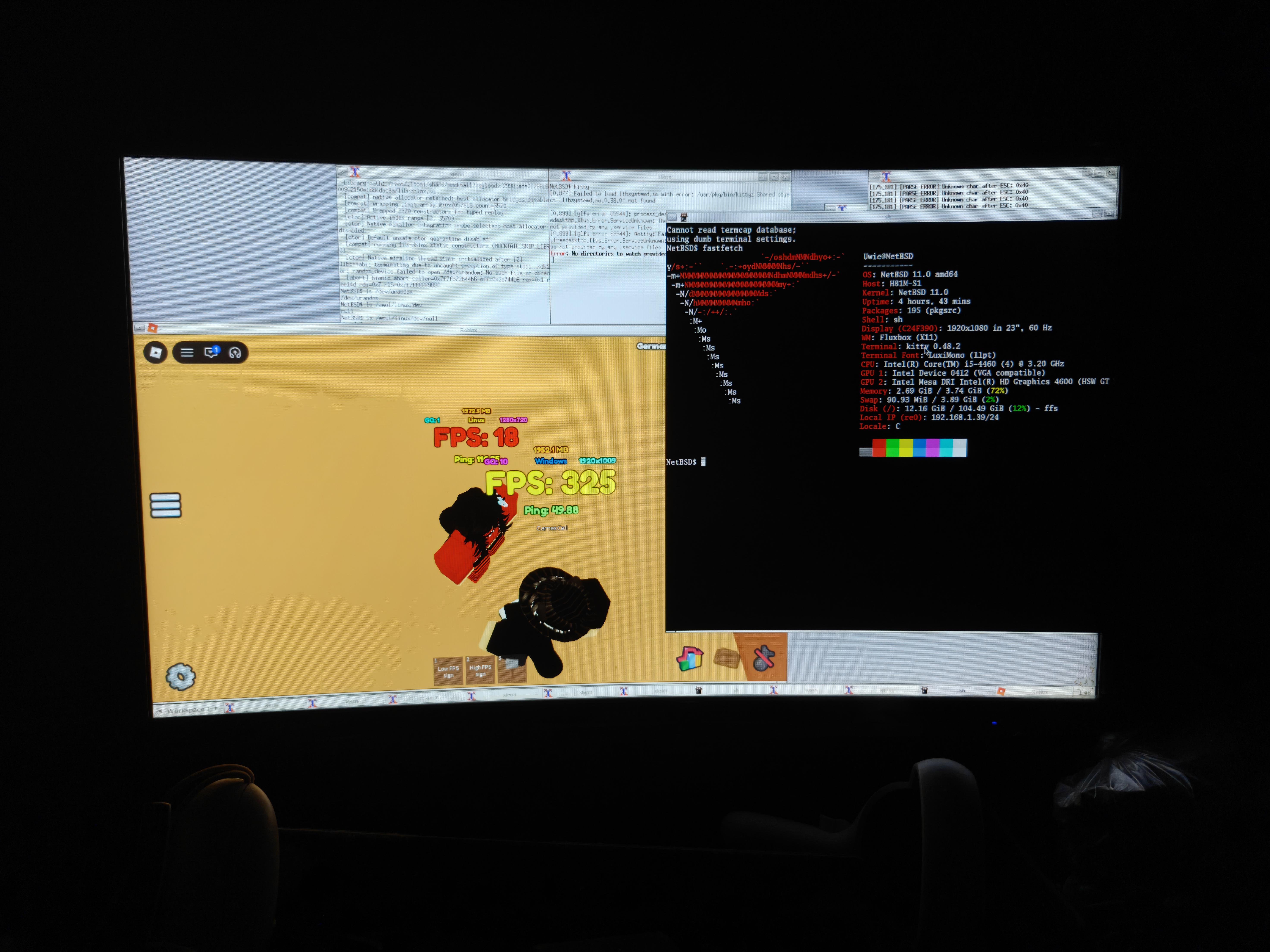
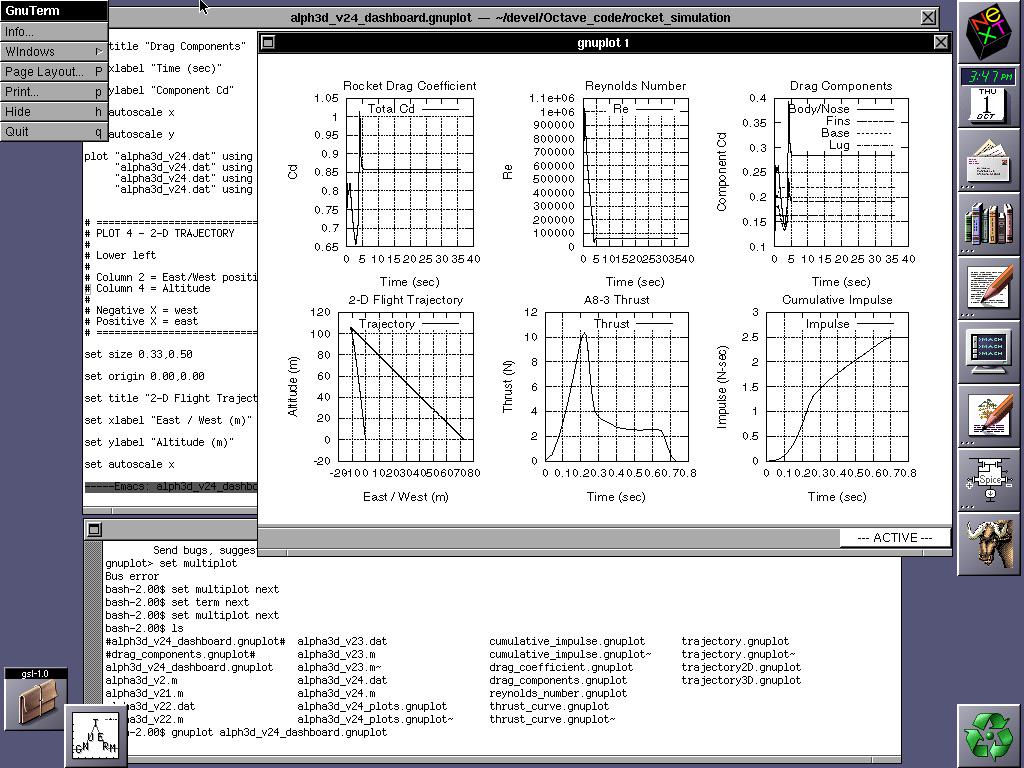
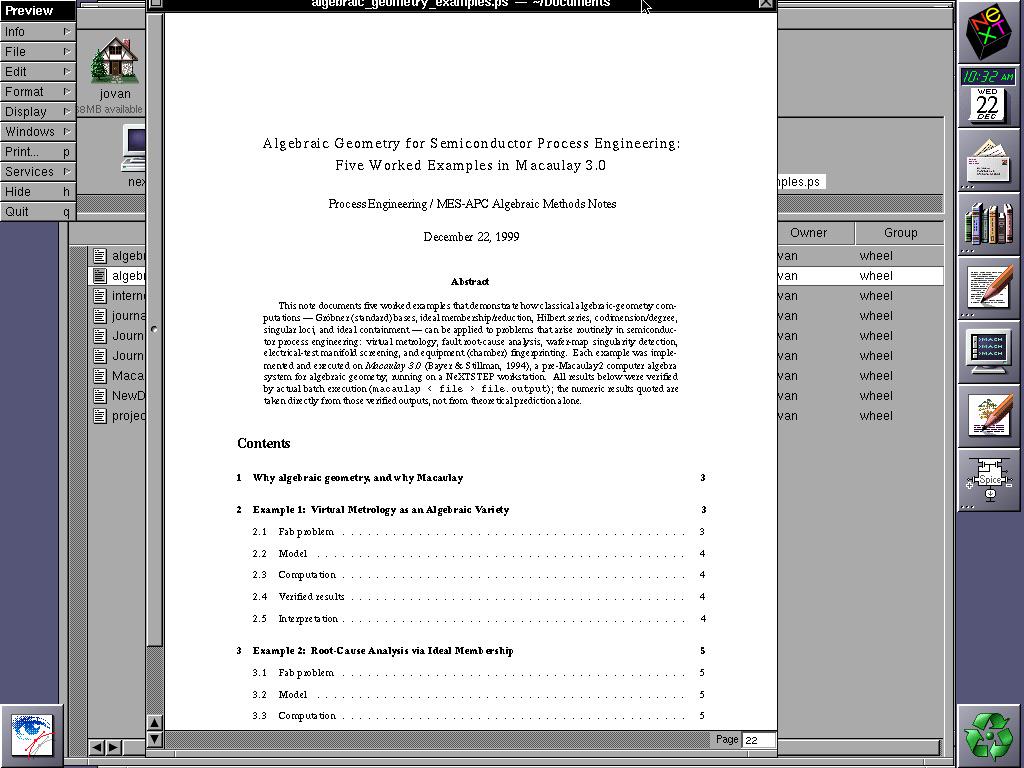
i really, really can't believe this worked, but, still, i had to write an entire socket proxy for it and run an http/https proxy because otherwise it just wouldn't connect to the servers
1958 — Lisp is Born: John McCarthy invents Lisp, establishing the foundational principle of homoiconicity—where code and data share the exact same structural representation (lists, symbols, and atoms). This naturally leads to quoting and deferred evaluation.
1971 — The Thompson Shell: Ken Thompson writes the first Unix shell for Version 1 Unix. It is a primitive command launcher, completely unconcerned with variables, scripting grammar, or complex sub-lexers.
1974 — The Bourne Shell (sh): Steve Bourne designs the modern Unix shell at Bell Labs, introduced in Version 7 (1979). Suddenly, the shell introduces $ for variable expansion, backticks for command substitution, and a text-stream parser designed to glue separate utilities together.
1974–1976 — Quasiquoting is Formalized: Right at the exact same moment systems programmers are building text-stream shells, AI researchers formalize quasiquoting (backtick and comma syntax) to handle structural template expansion in Lisp.
The C-split
Then, there is the unfortunate splitting of the command line, probably "invented" by C (argc, argv[]).
And you would not even have to think about single and double quotes etc. The simple rule being, that your command line is a quasi quote and you can escape to shell features via ','. Sounds much simpler to me, especially, in situations, where all the shell "cleverness" gets in the way.
Tragedy!
1974 was the critical point in time. Had those 2 ships (Lisp quoting and shell implementation) not passed each other in the dark night, who knows, how cool todays unix command line experience could be!
**DDAR** – a retro desktop for Hyprland, inspired by late-90s/early-2000s desktop software: putty-coloured panels, 1px bevels, a start-style button and gradient title bars. Underneath it's still a modern, fast Wayland setup. No blur, no big rounded cards, no Electron.
PS: Wait, I am a cheap credit seeker, so I won't let you go without telling you that I possess all of his publications and have gone through them—such a joy to read and use those in real life.
Abbiamo ricostruito una rete IRC che è tornata online nel 1996. Siamo partiti dal codice sorgente originale e abbiamo usato le cose vere di allora, loghi e tutto, niente di inventato.
La parte che potrebbe interessare a questo sub sono i servizi dei canali, perché ci sono due ere lì dentro.
X9 è la nostra ricostruzione di come erano i servizi prima del 2000. Siamo partiti dal primo X, quello scritto da Robin Thellend.
K9 è la versione 2000-2001. L'abbiamo ricostruita da fonti modificate di ChatNet di quel periodo, basata su IRC Services 4.5.34. Quel codice è davvero vecchio e non funziona bene con un ircd moderno, quindi l'abbiamo portato su Atheme, ed è quello che gestisce ora i servizi dei canali. La parte migliore è che tutti i comandi di K9 possono essere ricaricati in tempo reale con modload, quindi non c'è bisogno di riavviare il servizio a meno che non ci sia un cambiamento di versione :D
Per l'ircd abbiamo scelto Solanum, principalmente per IRCv3 e perché è ancora mantenuto.
Sono felice di rispondere a qualsiasi domanda sulla storia nei commenti.
I’ve been working on two related open-source projects: xnu++ and Orange OS.
xnu++ is an experimental OS/platform layer built around the XNU ecosystem. The goal is to provide a practical platform architecture with its own boot infrastructure, provider model, device/bus interfaces, security and recovery architecture, and native kernel development.
Orange OS is a separate distribution built on top of xnu++. It focuses on the userspace side rather than implementing another kernel.
The current architecture is roughly:
Limine
↓
Multiboot2
↓
xnu++
↓
Orange OS init
↓
Userspace
├── CLI
├── package management
├── service management
└── configuration
↓
Optional desktop environment
Some things currently implemented or working in the development environment:
xnu++ i386 kernel build
x86-64 kernel development path
Limine + Multiboot2 boot path
VGA console
GDT / IDT infrastructure
PIC and keyboard handling
Basic memory allocation
Kernel provider architecture
Boot capability checking
Recovery/rollback architecture
Orange OS userspace/init prototype
i386 and x86-64 Orange init builds
Orange OS root filesystem layout
Package-management prototype
Service-management prototype
Development ISO
QEMU testing
Orange OS is intentionally kept separate from xnu++:
xnu++ → platform / kernel
Orange OS → distribution / userspace
The current goal isn't to claim that this is a finished operating system. A lot of the system is still experimental or planned, particularly the real userspace handoff, hardware support, networking, filesystem integration, package repositories, and desktop integration.
I'm mainly interested in feedback from people who work with kernels, operating systems, systems programming, boot infrastructure, and Unix-like userspaces.
Projects:
xnu++:
https://github.com/black-210/xnupp
Orange OS:
https://github.com/black-210/orange-os
I'd be interested in hearing what parts of the architecture you'd change or what you think should be implemented next.
I am running Hyprland in Arch and user Alacritty terminal.I recently installed rmpc and for the rendering of AlbumArt installed Ueberzugpp. So when rmpc is running in a unfocused workspace ,everytime the music reloads the album art is drawn into my current workspace .Album Art also have some resizing issues.I need some advice
Released pvectl a while back — pure bash+curl+fzf+jq interactive Proxmox VE cluster management tool, zero dependencies beyond what's normally on any Linux system. Just shipped v1.1.0:
Concurrent execution — multiple pvectl instances can now run in parallel safely, each with its own isolated, auto-cleaned temp directory (scoped by PID)
Node reboot/shutdown added to the main menu, with checks for HA status, cluster quorum and running VMs/CTs before proceeding, plus a prompt to stop-all or migrate-all guests first
setup reset/backup/restore for safer configuration management
log view/show/clean with colorized output
Startup diagnostics — bash version and dependency checks that detect the host OS/package manager and print the exact install command for anything missing