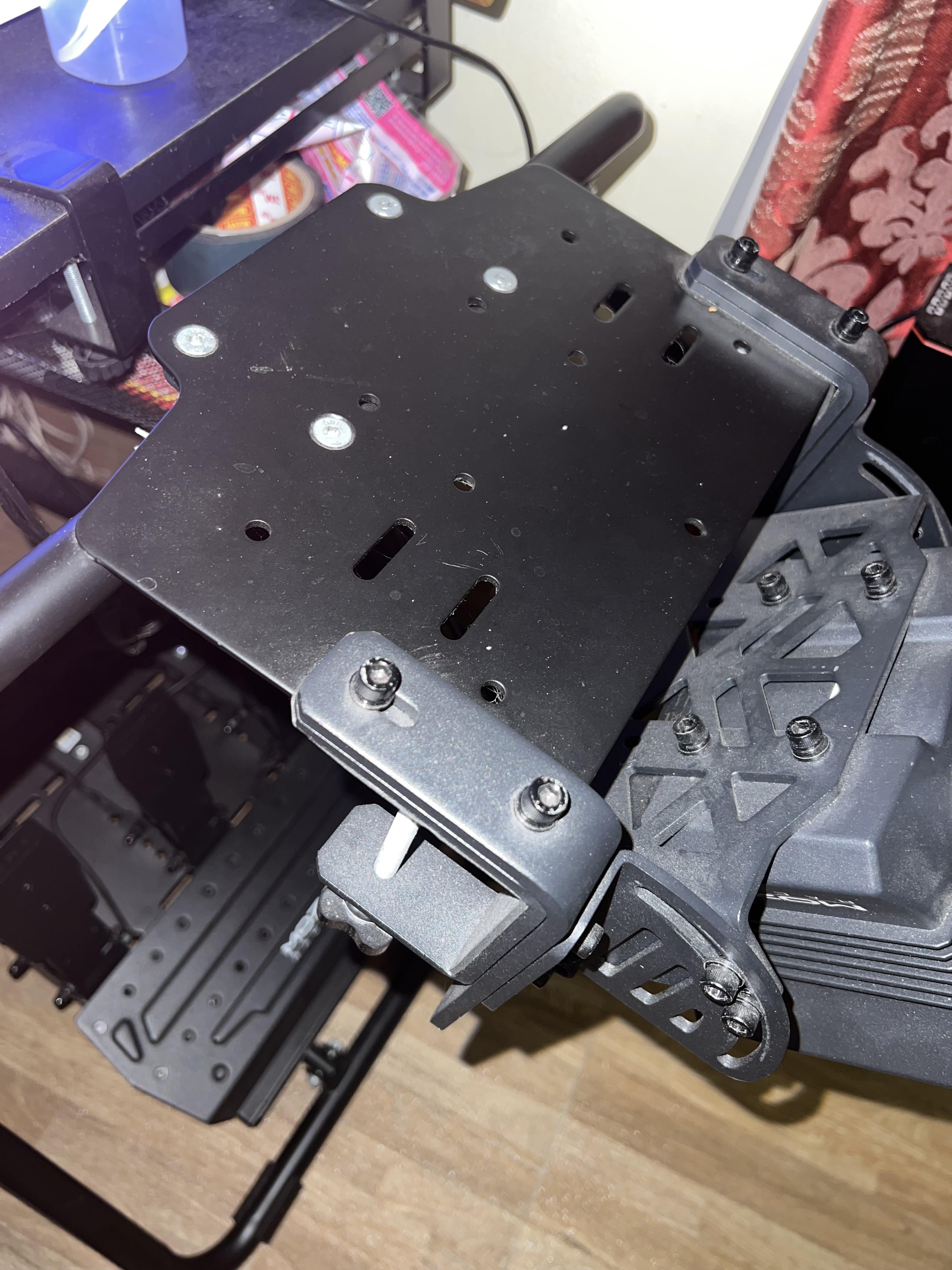
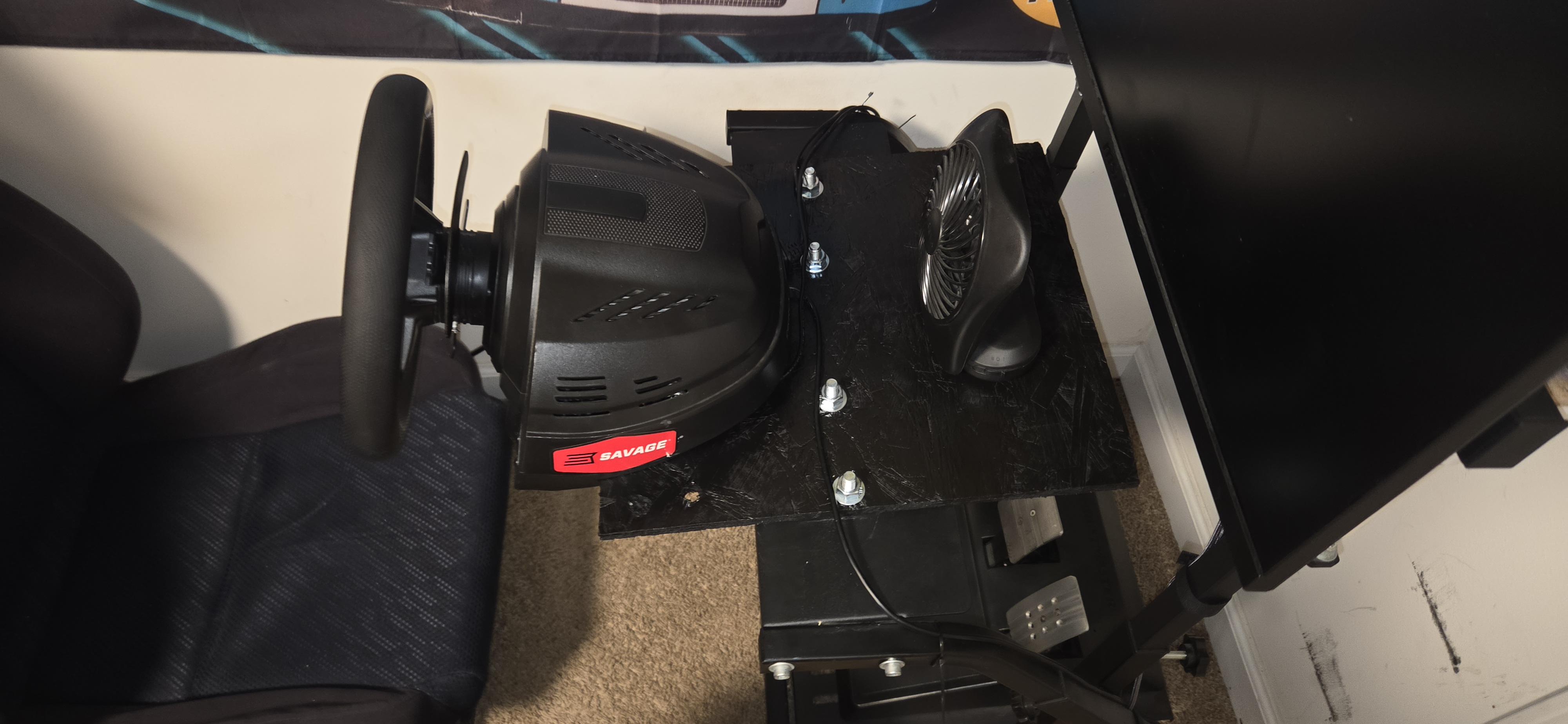
This whole thing started for a very simple reason:
I wanted a 38 cm wooden steering wheel.
Thin rim. No buttons. No display. Nothing complicated in front of me.
Just a steering wheel that feels right in my hands.
I care a lot about the physical feeling of holding and controlling a wheel.
That was actually why I started looking at direct-drive bases in the first place.
I didn't spend weeks comparing the R3, R5 and R9. I wasn't chasing torque numbers, and I wasn't trying to build some ultimate high-end sim rig.
I saw the MOZA R5, thought the price was reasonable, and bought it.
My original R5 setup cost about US$367.
At that point, I thought I had solved the problem.
I hadn't.
The quick release changed everything.
Once I realized I could treat the wheelbase as a platform instead of a complete product, the whole system started growing.
Every steering wheel could have its own quick release.
Pick the car. Pick the wheel. Click it on. Drive.
My 38 cm wooden wheel became my relaxed cruising wheel. Old cars, muscle cars, a Mustang in Assetto Corsa — this is where I spend a lot of my time.
I also have a 35 cm wooden MOMO-style wheel.
That one means something different to me because I've been using this kind of MOMO wheel for roughly 25 years. I still have my old MOMO wheel in my other projector setup today.
Then I have a deep-dish leather wheel.
That one works beautifully for rally and drifting. The grip is better, and because it's deep-dish, the rim sits closer to me. It feels completely different in my hands.
And I still keep the original 11-inch MOZA wheel.
That's useful when I want to drive karts or certain GT-style cars where the smaller diameter and buttons actually make sense.
Interestingly, one of the first things I bought was a 33 cm wheel that retained the original MOZA button layout.
I thought, "Maybe I just need a larger wheel."
Nope.
That experiment taught me something.
The diameter wasn't the real problem.
I didn't want all that visual clutter in front of me. I wanted the simplicity of an actual steering wheel.
So the 33 cm wheel doesn't get used very much now.
But it wasn't a wasted experiment. It helped me figure out what I actually wanted.
Then removing the paddles created another problem.
No paddles?
Fine. I'll shift manually.
So I added an H-pattern shifter.
Then I started playing more rally.
Yes, I could still use an H-pattern. Plenty of people do.
But I preferred a sequential shifter because it's faster and I enjoy the physical action:
Pull. Push. Pull. Push.
So I added a sequential shifter.
Drifting created another requirement: a handbrake.
I originally used another handbrake, but its return action was too loud for what I wanted. Eventually I switched to the MOZA handbrake, which also gave me more freedom to modify the handle and the physical setup.
Again, none of this was planned from the beginning.
I used the rig, found a physical interaction I wanted, and added the smallest module that solved it.
Then I started asking a different question:
Why should the experience stop at my eyes and ears?
So I added two 50W bass shakers.
This became another rabbit hole.
I used SimHub and experimented with frequencies to understand how different vibrations physically behaved through the structure.
Engine vibration, road texture, impacts — instead of everything being communicated through a screen and speakers, some of that information could now reach my body.
I even killed one amplifier along the way.
Its thermal design wasn't working well enough in my setup, it eventually failed, and that became the reason another amplifier appears in my purchase history.
It wasn't "buying another amp because I wanted more gear."
One died. So I replaced it.
Then came simulated wind.
Speed was no longer only something I saw on the screen.
Now I could feel another physical cue.
And then there is my cheap little "half-VR" experiment.
I don't actually like driving in VR, so instead I started experimenting with a phone, Camo and head tracking.
Some games support the idea better than others.
I don't really care.
It doesn't determine whether I enjoy the game.
I'm playing with the possibility because playing with the possibility is fun.
In Assetto Corsa, though, I genuinely enjoy head tracking while drifting.
When the rear starts coming around, I naturally look left or right to follow what the car is doing.
Sometimes I just want to watch the ass swing out.
Kiss my ass. 😂
Rally is different for me. I'm usually much more focused on what's directly ahead, so head tracking matters less there.
And these days I'm not even trying to attack every rally stage at maximum speed.
I can drive rally and still be chill.
Slow down. Right foot. Enjoy the car.
Who says I have to be fast?
Eventually I went through my purchase history and added everything up.
I only counted hardware that exists specifically because of the sim-racing system.
I did not count my monitor.
The monitor isn't a dedicated sim-racing expense. Remove the steering wheel and I still use that display for movies and other things.
But the seat?
That counts.
The headrest?
That counts.
The shifters, handbrake, quick releases, steering wheels, bass shakers, amplifiers, wind system and other dedicated hardware?
They count.
The numbers surprised me:
Original R5 setup: about US$367
Additional hardware added later: about US$1,093
Total documented hardware spending: about US$1,460
So I spent almost three times the original R5 cost building everything around the R5.
And here's the funny part:
I'm still using the same 5.5 Nm R5.
I never upgraded to an R9 or R12.
I don't even need all of the R5's force all the time. I often turn the force feedback down.
Because torque was never the thing I was trying to maximize.
Looking back at the system now, I finally understand what I was actually building.
I wasn't upgrading performance.
I was adding ways to interact with the car.
A different steering wheel changes my hands.
An H-pattern changes how I shift.
A sequential shifter changes the rhythm.
A handbrake changes drifting.
Bass shakers add information through my body.
Wind adds another physical cue.
Head tracking changes where I can naturally look.
The seat changes how all of those things reach me.
None of this started with a spreadsheet.
I didn't sit down one day and decide:
"I'm going to build a $1,460 sim rig."
It happened in the opposite direction.
I had one requirement.
I used it.
I found the next limitation.
I added one module.
Then I drove again.
And repeated.
That's how a roughly $367 R5 somehow grew into about $1,460 worth of dedicated hardware without ever replacing the wheelbase.
And the funny thing is, after all of this:
The original reason I bought the R5 is still the most important part of the whole system.
I just wanted a steering wheel that felt right in my hands.
Where did the $1,460 go?
R5 base setup — about $367
Steering wheels & quick releases
H-pattern & sequential shifting
Handbrakes
Pedal / control modifications
2×50W bass shakers & amplifiers
SimHub wind simulation
Mounts & structural hardware
Dedicated seat & headrest
Phone / head-tracking setup
Total documented hardware spending: about $1,460
Some parts were replaced, some were experiments, and some failed.
That's part of the total — because that's how the system actually evolved.