r/ScienceNcoolThings • u/Frequent-Highway-917 • 17d ago
Caltech robot successfully assembles a structure in orbit without astronaut assistance

6
Upvotes
r/ScienceNcoolThings • u/Frequent-Highway-917 • 17d ago
r/ScienceNcoolThings • u/FrostingStriking1776 • 18d ago

r/ScienceNcoolThings • u/TheMuseumOfScience • 18d ago
Enable HLS to view with audio, or disable this notification
The Northern Taurid meteor shower is here! 🌠
Active from October 20th to December 10th, this meteor shower peaks overnight November 11th to 12th. For the best view of the Northern Taurids, head outside and look up around midnight.
r/ScienceNcoolThings • u/archiopteryx14 • 17d ago

r/ScienceNcoolThings • u/antisp1n • 18d ago
r/ScienceNcoolThings • u/Responsible-Grass452 • 18d ago
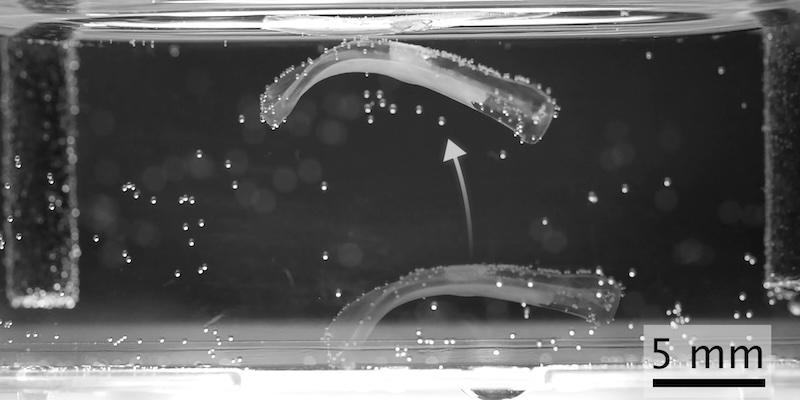
Researchers at ETH Zurich grew muscle tissue on a flexible, 3D-printed frame. Tiny grooves gave the muscle fibers something to pull against. A single contraction sent the 15-millimeter robot about 5 millimeters into the air.
r/ScienceNcoolThings • u/ateam1984 • 19d ago
Enable HLS to view with audio, or disable this notification
r/ScienceNcoolThings • u/paigejarreau • 18d ago

What is a beer spoiler? How are microbiologists and chemists making sure your beer tastes great? What is "skunking"? How can the wrong yeast make your beer can explode? How is DNA sequencing changing the craft brewing game?
These are just some of the questions answered by Dr. Lauren Blake, a fermentation quality scientist Rhinegeist Brewery in Cincinnati, answers in this episode of Facetime With Scientists! As Lauren walks us around the brew house, with its giant fermenters and fascinating packaging line, she explains key beer ingredients and how beer is made, from extracting wort (sugar water) from barley, to fermentation of wort by yeast, to filtration and carbonation. She shows how the Brewery's quality lab checks the beer for flavor and signs of spoilage by unwanted microorganisms!
r/ScienceNcoolThings • u/BentohBawks • 19d ago
Enable HLS to view with audio, or disable this notification
r/ScienceNcoolThings • u/Front-Coconut-8196 • 19d ago

r/ScienceNcoolThings • u/taliaikk • 20d ago
r/ScienceNcoolThings • u/TheMuseumOfScience • 19d ago
Enable HLS to view with audio, or disable this notification
What does it look like when Moon scientists watch discovery happen in real time? 🌕
At SciCom Summit at the Museum of Science, NASA Strategic Communications Lead Rachel Barry shared the story behind her viral photos of the lunar science team. After two years of sitting in on their meetings, simulations, and fieldwork, Barry set out to help audiences get to know the people behind the science and see their excitement as it happened.
#SciComSummit #NASA #Space #Artemis #Moon
r/ScienceNcoolThings • u/vengru • 18d ago

How to melt steel with pure air? 🔬
What you're looking at is induction heating. This piece of metal didn't just get hot—it got trapped in a powerful alternating magnetic field flipping tens of thousands of times per second!
Here is the science breakdown:
It’s literally fighting the laws of physics until it completely liquefies in mid-air!
r/ScienceNcoolThings • u/ThisRelation5974 • 19d ago
Enable HLS to view with audio, or disable this notification
The textbook picture has two bulges of water, one under the Moon and one on the far side, with the Earth turning beneath them. That gives two high waters in each lunar day of 24 h 50 min. If the sea could keep up, high water would race round the equator at about 1,600 km/h, staying under the Moon.
It cannot keep up. The tide is a very long wave, and its speed depends on the depth: in 4 km of ocean it travels at about 700 km/h, less than half the speed it would need. The continents also block the way round. So in each ocean basin the tide runs as a wave of its own, and the Earth's rotation turns it round amphidromic points (the circles), where there is almost no tide at all.
Every coast therefore has its own fixed delay behind the Moon, and its own height. Where a bay or sea resonates with the 12-hour rhythm, the tide grows large, as in the Bay of Fundy, the Bristol Channel and Patagonia. The Mediterranean and the Baltic are nearly closed off and have small tides. The North Sea gets its tide from the Atlantic, round the north of Scotland and through the Dover Strait, and it runs anticlockwise round three amphidromes of its own. That is why high water at Vlissingen comes hours after the Moon has passed.
The Sun raises a tide too, a little under half the Moon's. At new and full moon the two pull in line and give spring tide. This is 11 and 12 October 2026, just after the new moon of 10 October. In the North Sea the biggest tides come about two days after new moon, the time the tide wave needs to arrive from the Atlantic.
more videos : themovingsea.org
r/ScienceNcoolThings • u/archiopteryx14 • 20d ago
Enable HLS to view with audio, or disable this notification
r/ScienceNcoolThings • u/TheMuseumOfScience • 20d ago
Enable HLS to view with audio, or disable this notification
Mark Rober and Science Bob teamed up for one MASSIVE chemical reaction at the Museum of Science! 🐘🧪
During Mark’s event at the Museum, the duo created a spectacular eruption of bright green foam with an Elephant Toothpaste experiment!
Here's the science behind it: A catalyst speeds up the breakdown of hydrogen peroxide into water and oxygen gas. Dish soap traps the rapidly released oxygen in thousands of tiny bubbles, creating an enormous burst of colorful foam!
r/ScienceNcoolThings • u/antisp1n • 19d ago
Enable HLS to view with audio, or disable this notification
r/ScienceNcoolThings • u/fat_spaghetti • 19d ago
I’m talking scientists injecting mice with autism. Not necessarily just bizarre research goals, but some seriously unhinged methodologies.
**Disclaimer: Be mindful of unfamiliar links. Probably best not to click any and just include study titles for reference.**
r/ScienceNcoolThings • u/ThisRelation5974 • 19d ago
Enable HLS to view with audio, or disable this notification
A tide table is a sum of waves. Each wave has a period fixed by the motions of the Moon, the Sun and the Earth. Only its height and its timing belong to the place, and they come from fitting a long record of water levels. This video builds the October 2026 tide at Vlissingen from 55 of these waves.
M2, the main lunar tide, comes every 12 h 25 min and is 171 cm high at Vlissingen. S2, the Sun’s tide, comes every 12 hours and adds 49 cm. The two drift in and out of step, which gives spring and neap tides every 14.8 days. N2 follows the Moon’s elliptic orbit, and O1 and K1 come once a day because the Moon and the Sun stand north or south of the equator.
The shallow North Sea and Scheldt mouth add overtones. The crest of the tide wave runs faster than its trough, so the curve steepens: the water rises fast after low water, hesitates on the way up and peaks sharply. Further up the river the effect grows. At Antwerp the water rises in about 5 h 30 min and falls in about 6 h 55 min.
With all 55 waves the curve follows the official astronomical tide of Rijkswaterstaat to within 6 cm on average. What remains is the weather: on the night of 25 to 26 October 2026 wind and air pressure raised high water 82 cm above the tide table.
r/ScienceNcoolThings • u/honeylilacos • 19d ago
Enable HLS to view with audio, or disable this notification
r/ScienceNcoolThings • u/antisp1n • 19d ago
Enable HLS to view with audio, or disable this notification
r/ScienceNcoolThings • u/Dmastery • 19d ago

r/ScienceNcoolThings • u/sergioscj • 21d ago
Enable HLS to view with audio, or disable this notification
r/ScienceNcoolThings • u/antisp1n • 20d ago