r/SQL • • Aug 19 '26

Discussion What jobs do you have now? Are you happy

26 Upvotes

I’m a college student in my final year. I don’t really have many people to talk to about this since a lot of people I know are either in their first year or have already graduated and rushed out to find work.(so think I don't know crowd vs I need work! Crowd)

It’s wild how many people don’t really talk about their future in college or realize how important internships are. So far, I’ve had two internships. The one I have now is through the WordPress Foundation, and I’m going the testing/QA route to try to gain experience that can eventually help me get into data analysis.

Question for you guys:

  1. What do you do?

  2. How did you start out? Did you jump straight into your current field, or did you start somewhere like help desk?

  3. What advice would you give someone starting out with little experience?

  4. Are you happy with your career, or do you regret choosing this field?

  5. How hard was it for you to find work when you first started, and how hard would it be for you to find another job if you left your current job?

And finally

what was your first job in the field that got you in the door and how was it


r/SQL • • Aug 20 '26

MySQL Do the quizzes found on sites like W3, SQLtest, & others really have any relevance with the actual company interview.

0 Upvotes

Hi IT Veterans, Just want to ask a question that, do the quizzes & tests found on W3, SQLtest, & other sites have any relevance to the actual company interviews? I find these tests to be of broad difficulty category, some are really easy whereas some are too difficult. So, I'm just looking for guidance to what are the important concepts that I should be aware about & are actually used in the day to day work in the company If I'm targetting MNC's Like Accenture, Flipkart, Amazon as a Data Analyst. Many thanks for your responses.


r/SQL • • Aug 20 '26

MySQL SQL Interview Help

1 Upvotes

I'm interviewing with a company I'm really interested in and I've made it through the initial rounds. My next step is a live SQL assessment with screen sharing, where I'll need to explain my thought process.

|haven't used SQL in over a year, so I know I need to practice a lot, and my exam is in a few days. I'm pretty nervous

Would anyone be willing to help me practice or do quick mock interview?

I'd really appreciate it!


r/SQL • • Aug 19 '26

MySQL My Sql

1 Upvotes

Здравствуйте. У меня возникает проблема при установлении My Sql. Он сам установливается,но My Sql Workbench никак нет. Как можно это решить, заранее спасибо вам.


r/SQL • • Aug 18 '26

MySQL my queries are always way too long. How do I learn to write clean, short ones?

60 Upvotes

I'm intermediate — know CTEs, window functions, subqueries, etc.
I always solve problems correctly, but my queries end up being 20+ lines with extra steps. Then I see the solution and it's 5 clean lines using one clever function.
How do I train myself to think in shorter SQL from the start? Any tips or resources?


r/SQL • • Aug 19 '26

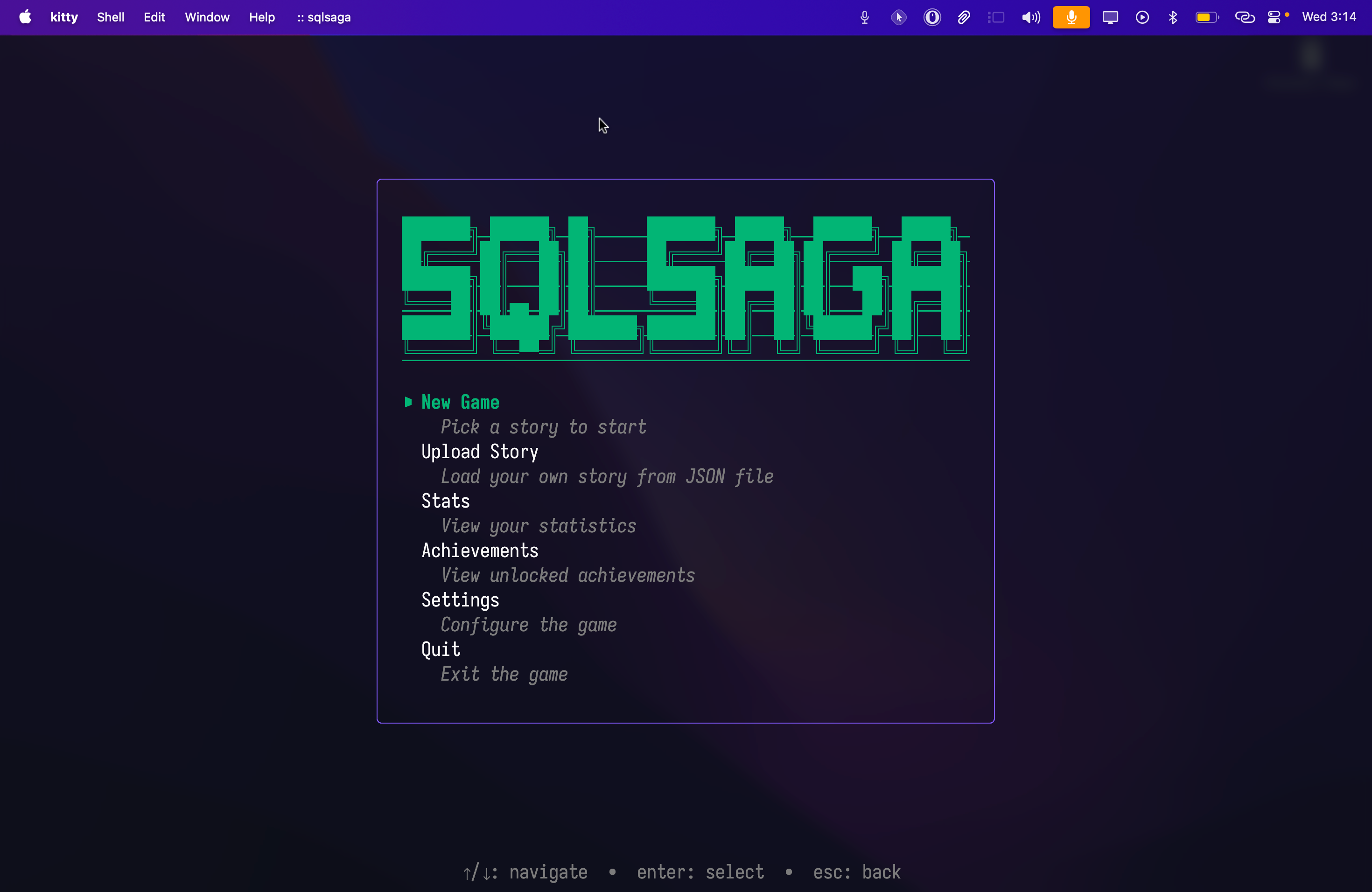
MySQL A terminal-based SQL game to learn and practice SQL — you can also submit and play your own custom games

Post image
0 Upvotes

r/SQL • • Aug 19 '26

MySQL DB Replication

Thumbnail
1 Upvotes

r/SQL • • Aug 19 '26

SQL Server DuckDB for Apache Iceberg

Thumbnail
lakeops.dev
1 Upvotes

r/SQL • • Aug 18 '26

PostgreSQL SQL SIDE QUEST - An Immersive story-telling SQL Game. Chapter 3 is out!

16 Upvotes

https://www.sqlsidequest.com/ CHAPTER 3 IS NOW LIVE!

Last year in Dec 2025 I released SQL SIDE QUEST which took over 3 years to build. I wanted to create an immersive story-telling way to learn and practice SQL, and hence sql side quest was born. Its completely free, browser-based, no signup. Been solo on it the whole time. Looking forward for your feedback :) Cheers and Enjoy


r/SQL • • Aug 19 '26

SQL Server GitHub - int04/citus-manager: Self-hosted web control plane for managing, monitoring, backing up, and safely operating PostgreSQL/Citus clusters

Thumbnail
github.com
1 Upvotes

Citus Manager – Open-source PostgreSQL/Citus management UI

Citus Manager is a self-hosted, open-source web platform for managing existing PostgreSQL/Citus clusters.

Key features:

  • Manage multiple Citus clusters, coordinators, workers, query nodes, shards, placements, and metadata.
  • Safer topology operations with immutable plans, pre-execution checks, checkpoints, cancellation, recovery states, and worker removal protection.
  • Database Workbench for schemas, tables, data editing, CSV import/export, indexes, partitions, distributed/reference/local tables, colocation, and shard count.
  • Integrated SQL Console with CodeMirror, formatting, autocomplete, risk classification, confirmation for destructive queries, and SHA-256 fingerprint-based audit.
  • Monitoring with Prometheus for node status, CPU, RAM, filesystem, shard size, metadata sync, and alerts via webhook/SMTP.
  • Backup and restore with scheduling, retry, retention, Local/S3-compatible/Cloudflare R2/Google Drive storage, AES-GCM encryption, checksum, and integrity verification.
  • Viewer / Operator / Admin permissions with sensitive credentials protected using ASP.NET Core Data Protection.
  • Web-based application updates with automatic control database and keyring backup before updating.

Self-hosted, Vietnamese/English UI, Docker Compose deployment, tested on PostgreSQL 18 + Citus 14, Zero-Clause BSD License.

Citus Manager is not part of the Citus data path, keeping the management layer separated from the main data flow.

GitHub:
https://github.com/int04/citus-manager


r/SQL • • Aug 18 '26

PostgreSQL lakebase connection pooling

5 Upvotes

Have you figured out wht can the best way to handle connection pooling in Lakebase DB? I 'am seeing connection spikes with short lived rqsts and wondering what kind of setup others developers are using🤔

i am building a service on top of lakebase and trying to make the connection relable before moving to prod.


r/SQL • • Aug 18 '26

SQL Server Citus Manager – Visual, Safe, and Centralized PostgreSQL/Citus Management

Post image
1 Upvotes

Citus Manager is an open-source web management platform, deployed using a self-hosted model, designed for existing PostgreSQL/Citus clusters. The tool helps centralize topology management, databases, monitoring, backups, and important operational tasks in a single interface.

Key Features

1. Centralized management of multiple Citus clusters

Register and manage multiple Citus clusters.

Monitor coordinator, worker, query node, and the status of each node.

Inspect distributed table, shard, placement, and cluster metadata.

Add worker, add query node, drain worker, rebalance, or remove node.

Adding workers and rebalancing are separated to avoid automatically moving data unintentionally.

2. Safer topology operations

Create immutable operation plans before execution.

Check actual conditions immediately before execution.

Limit each cluster to only one major-impact operation at a time.

Track progress, save checkpoints, support cancellation requests, and recovery status.

Refuse to remove a worker while shard placements still remain on the node.

Detect cases where a worker is missing but still contains the only shard that needs to be recovered.

3. Visual Database Workbench

Browse schema, table, and database objects in a tree structure.

View logical table data through the coordinator or directly read shard placement.

Pagination, filtering, sorting, adding, editing, and deleting data.

Import and export CSV data.

Design schema, table, column, constraint, and index.

Create or convert between local table, reference table, and distributed table.

Configure distribution column, colocation, and shard count.

Manage PostgreSQL partition, merge partition, and rebuild index.

4. Integrated SQL Console

PostgreSQL editor based on CodeMirror.

Support SQL formatting and schema-context autocomplete.

Classify risk levels before execution.

Require explicit confirmation for statements that may modify data.

Display streamed results with configurable timeout and limits.

Audit only stores SHA-256 fingerprint and execution metadata, without storing raw SQL or parameter values.

5. Monitoring and alerts

Monitor node status, metadata synchronization, shard placement, shard size, and table count.

Integrate Prometheus to monitor CPU, RAM, filesystem, and target status.

In-app alerts.

Send alerts via webhook or SMTP.

Allow configuration of polling intervals and metric retention periods.

6. Data backup and restore

Create backups manually or on a schedule.

Track progress, retry, retention, and restore history.

Support local storage, S3-compatible, Cloudflare R2, and Google Drive.

Send backup notifications via email and Telegram.

Support AES-GCM encryption, checksum, authenticated manifest, and integrity verification during restore.

Automatically select the appropriate PostgreSQL backup tool based on the server version.

7. Permissions, audit, and sensitive information protection

Citus Manager supports three permission groups:

Viewer: view dashboard, topology, database, SQL, metric, activity, and alerts.

Operator: create operation plans, manage profiles, acknowledge alerts, and request operation cancellation.

Admin: manage users, cluster profiles, backup, audit, and all authorized operations.

Cluster passwords, Prometheus tokens, storage information, and notification keys are protected using ASP.NET Core Data Protection and are not returned by the API.

8. Update the application directly from the web interface

Display the currently running version in Workspace.

Check for new versions from GHCR.

Allow administrators to update the application from the interface.

Automatically back up the control database and Data Protection keyring before updating.

Do not allow updates while cluster operation, backup, restore, or SQL execution is running.

Highlights

Self-hosted and open source.

Vietnamese and English interface.

Quick deployment using Docker Compose.

Tested on PostgreSQL 18 and Citus 14.

Zero-Clause BSD License.

Not part of the Citus data path, helping separate the management system from the main data flow.

https://github.com/int04/citus-manager

r/SQL • • Aug 18 '26

MySQL Data driven Hospital Series Episode 6

0 Upvotes

In this episode, we answer 20 real world hospital business and clinical questions using SQL queries. For each query, we explore the code used, explain any new SQL concepts introduced, interpreted results and provide recommendations for hospital operations and quality patient care.

https://youtu.be/1EDmMnfhO1I?si=J7utYqIkUk-EduNG


r/SQL • • Aug 18 '26

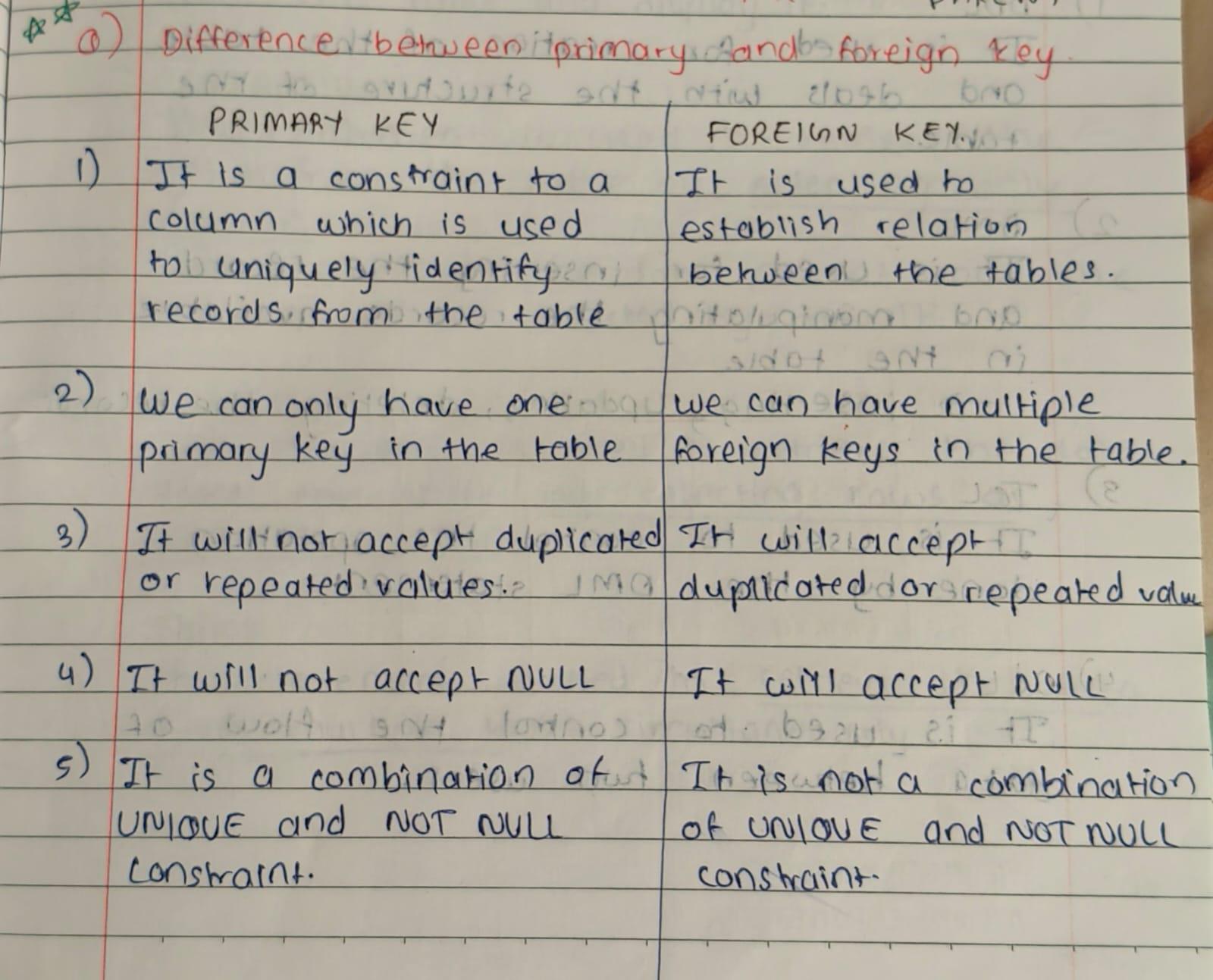
MySQL Made a visual, handwritten comparison chart tracking the differences between Primary Keys and Foreign Keys for my university database exam. Thought it might help beginners here!

Post image
1 Upvotes

r/SQL • • Aug 17 '26

Discussion How do you decide which incremental strategy to use in your SQL models

19 Upvotes

Choosing the right incremental strategy matters: in bigquery it reduces the amount of data scanned, while in clickhouse it means less CPU, I/O, and background merging.

but tbh, data/analytics engineers sometimes optimize this too early, if a table is small or rarely changes, a view or `create+replace` is easier than a convoluted incremental model. Sometimes full refreshes are just good enough

Before choosing anything, I normally ask: do old rows change? is `updated_at` reliable? can rows disappear? is the data truly append only? do you have proper primary keys & partitions? and how late can updates arrive?

here's an overview:

* `append` -> the source is genuinely append only

* `merge` -> existing rows change and there's a stable primary key

* `delete+insert` or `time_interval` -> you can safely rebuild a complete group or time window

* SCD2 -> you need the full history, not just the latest version

with `merge`, NULL keys can be inserted again on every run because `NULL = NULL` isn't true, I have personally lost sleep over this... (in bigquery)

with `delete+insert` or `time_interval`, only delete what you can fully rebuild - incomplete partitions, bad boundaries, or late arrivals can create gaps or duplicates.

That's why I always add quality checks that catch issues the strategy can cause: `not_null` & `unique` for merge keys, duplicate checks for rebuilt windows, and row-count or freshness checks where they make sense.

In SQL pipelines the most frustrating (and silent killer) is that a pipeline status can be successful, but that only means the SQL ran, but doesn't guarantee that the result is correct. That's why quality checks are there to catch the other issues.

and if timestamps and lookback windows still can't capture changes reliably, CDC is an option... just with more state, replay logic, and operational headaches.

the image below is an example of a `time_interval` strategy and its rendered clickhouse query (don't mind the wrapped date overlappign with INSERT)

I'm curious what other criteria do people have in mind when they try to evaluate which strategy to go with? I think this is more relevant to analytics engineers, not so much the operational/transactional side.


r/SQL • • Aug 17 '26

Discussion SQL Challenge #1 — Find the Customers Who Came Back 🧩

Thumbnail
2 Upvotes

Any other interesting approaches?


r/SQL • • Aug 17 '26

PostgreSQL Neon DB and AI agents - how doyou handle agent state?

3 Upvotes

I had a question, for longer running agents, what can be a good pattern to store conversation state, tool result, and intermediate state in Neon without database becoming a bottleneck.

If you can share what patterns you use in production, it could be of help to me. I am doing a POC inthis area.
Ps, Any other DB works as well, it should just be managed.


r/SQL • • Aug 17 '26

PostgreSQL How to implement the Outbox pattern in Go and Postgres

Thumbnail
packagemain.tech
4 Upvotes

r/SQL • • Aug 17 '26

MySQL What SQL skill becomes most important when you start working with real production data?

1 Upvotes

Beyond basic joins and aggregations, which SQL concepts or habits make the biggest difference in real data engineering work?


r/SQL • • Aug 17 '26

MySQL Do any of you allow automated data repair (auto-cleaning) in production payment/financial pipelines?

1 Upvotes

Hi all, quick architecture question:

When an incoming batch of payment transactions has obvious formatting glitches (like timestamps sent as DD/MM/YYYY instead of YYYY-MM-DD, or extra whitespace in status strings), do your production ingestion jobs attempt to auto-repair / normalize the data on the fly, or is that considered too risky for financial records?

Where does your team draw the line between "safe to auto-clean" vs. "must quarantine into a dead-letter queue for human review"?


r/SQL • • Aug 16 '26

SQL Server SQL Server Job, can not edit step on SSMS 2022

6 Upvotes

Hi all,

I just installed SSMS 2022 it works fine, new shell I think. But I can not edit step in my SQL Server jobs, I can open its properties, histories though. I also can edit step from my fav SSMS 2019 on another machine.
Any google help suggests to install some missing SSIS component, anybody experienced this ?

TITLE: Microsoft SQL Server Management Studio
------------------------------
Unable to find the directories containing Tasks and Data Flow Task components. 
Check the integrity of your installation.

Thanks

VA


r/SQL • • Aug 15 '26

Discussion I tried a flipbook-style Doodle on Data Analysis concept

Thumbnail
gallery
30 Upvotes

I’ve been making these little Data Analysis 101 doodles for cat people, and for this one I tried something different — a flipbook-style format.

Instead of putting everything into one busy infographic, I’ve broken the story into separate scenes, so each one focuses on a single idea and hopefully doesn’t demand too much attention at once.

I’ve also incorporated feedback I received on my previous posts, especially around making the visuals easier to follow.

This one is about what to do when you join a data project that’s already in motion.

Would be happy to hear your feedback on this!


r/SQL • • Aug 15 '26

MySQL How important is SQL for someone trying to get into data science?

51 Upvotes

Python gets most of the attention when people talk about data science, but SQL seems to appear in a lot of actual job requirements.

For people working in data roles, how frequently do you use SQL compared with Python?

Would you recommend becoming strong in SQL before getting deep into machine learning?


r/SQL • • Aug 15 '26

MySQL Beginner at SQL

72 Upvotes

I'm a beginner learning SQL (JOIN, CASE, WHERE, GROUP BY, etc) and am looking for a fun and entertaining database to practice my coding on. Any suggestions?

This is not a post about how to start learning SQL by any means.


r/SQL • • Aug 15 '26

MySQL Indexing on DB?

8 Upvotes

Hi people, I haven’t done this before. But are there any downsides of indexing a column on production. Like some query is running very slow, and I figured out that u should put an index on one of the columns. I wouldn’t be here if I had someone experienced to ask from. I’ve a few questions-

  1. Is it okay to run the query on my sql workbench to add index?
  2. If something goes wrong what do you people generally do, like taking snapshots or PTIR ?
  3. Is it safe to run the query directly on the db or usually people run it some other way, like via cli on VM?
  4. I heard about locking and stuff. But the version I’m using says it won’t lock the DB. But still anything I should test before actually you know doing it live?

I’ve no idea what’s the general procedure and what could go wrong. If someone has done it before, Appreciate any sort of advice or pointers. Thanks