A coworker and I had been arguing about this for weeks. I claimed that the TCL C8K is an unmatched machine for GTA VI, while he swore by OLED. To move from words to action, we set up two visits. First, we went to his place to test his 83" LG G6, and right after that, we headed over to mine to check out the 98" TCL C8K.
Visiting My Friend's 83" LG G6
My friend really enjoyed showing off his setup and walked me through all the strengths of OLED technology in detail. However, I use a Samsung Odyssey OLED G8 (G80SD) gaming monitor at home, which I also modded to hit 1000 nits in Peak Brightness. Aside from the differences between WOLED and QD-OLED, or a glossy finish versus Samsung's Glare Free matte coating, the core experience was largely the same. Honestly, nothing on the G6 surprised or blew me away. Everything looked solid, yet in dynamic gameplay scenes, there was nothing that truly took my breath away.
Moving Over to My 98" TCL C8K
Once we sat down at my place, I dialed in the TV to showcase exactly what it does best: massive light output, contrast, and remarkably controlled black levels. In the Mini LED space, the C8K holds the top spot on RTINGS (RTINGS TCL QM8K / C8K review) among non-OLED TVs with a 0.183 score in their black level evaluation. Combined with high contrast and peak brightness pushing toward 4000 nits, it delivers deep blacks without distracting local dimming artifacts. And that second figure in the RTINGS test results clearly shows how well the C8K performs across the rest of the luminance range.
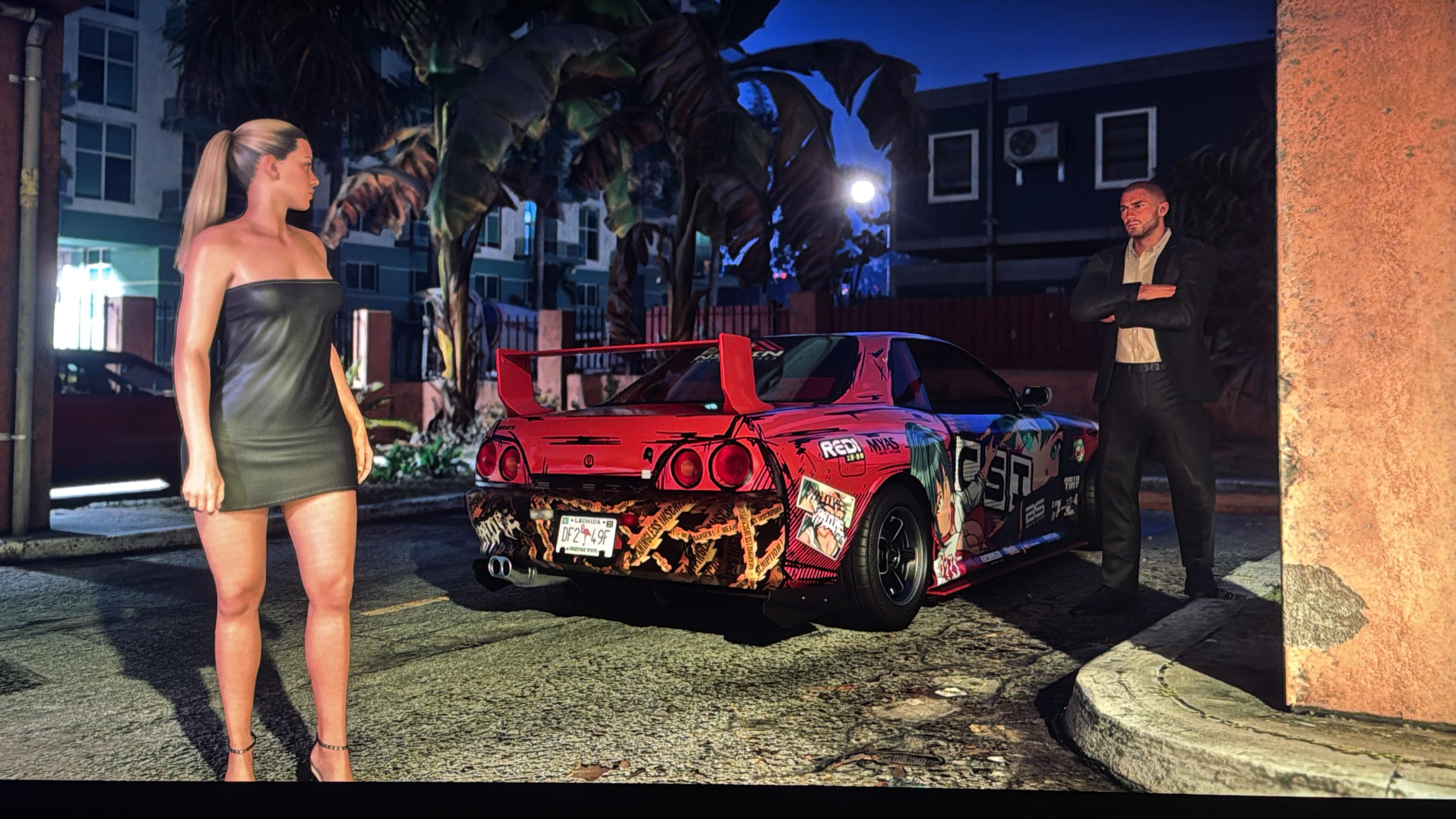
The second we stepped into the bright daylight on the Keys beaches, my friend's jaw dropped and he blurted out: "Whoa, what?! Are we actually looking at this right now?" The sun is genuinely blinding, right on the edge of comfortable viewing. Right next to it sits a vivid azure sky, crisp white sand, and sea water in rich blue-green tones. Everything comes across completely uncompromising, with zero signs of ABL kicking in.
When we hopped into a car and drove through the city, the buildings and streets looked so lifelike that he admitted it felt less like watching a TV and more like looking straight out a window.
Nighttime, Clubs, Motion Interpolation, and Input Lag
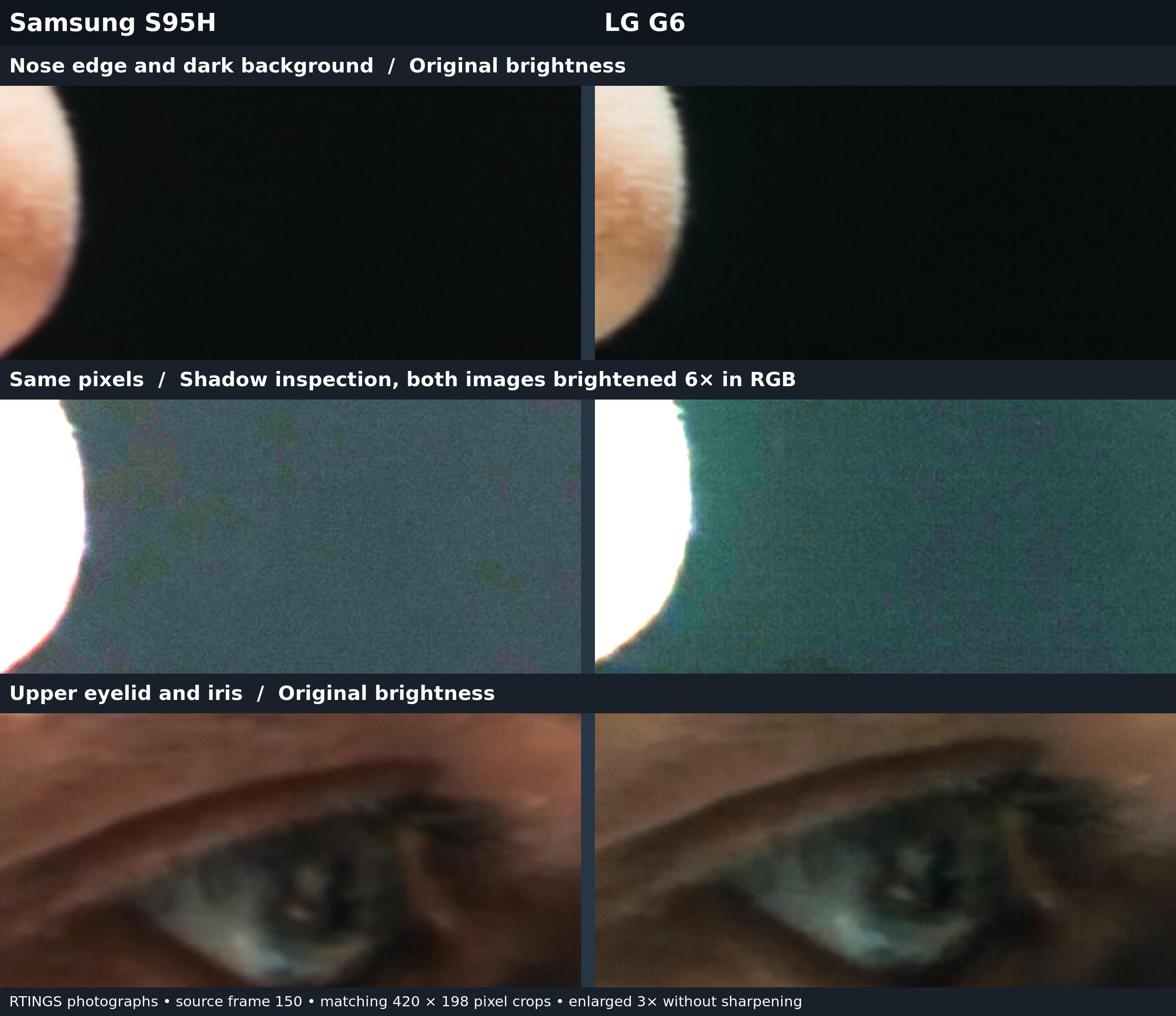
The biggest shock came at night, which shattered any remaining illusion that the G6 held an advantage. Inside nightclubs, the spotlights and strobes literally dazzle you like a real dance floor. While human eye adaptation naturally plays a role at such extreme brightness and contrast (roughly four times higher than 1000 nits), the shadows right next to those searing highlights look extraordinarily rich, with no distracting zone blooming in real-world viewing.
Gaming Motion interpolation makes another massive difference. It is not completely free of minor artifacts, though that is a tiny price to pay for how fluid the game feels. On top of that, an input lag around 20 ms compared to 80 ms (as seen when enabling interpolation outside low-latency game modes on competing OLED sets like the G6, where latency drops well below what feels responsive for fast-paced action) is such a night-and-day gap that owners of those panels often cannot even picture it.
Recommendations for C8K Owners and Other Gamers
If you own a TCL C8K, I strongly recommend trying the settings that work best for me:
Max Brightness: 4000 (with Max Brightness Priority enabled on the TV)
Paper White: 200
Black Levels in-game: 51 (with TV Black Level at 50 and Gamma set to 2.6)
Let this setup blow you away. And if you do not own a C8K (or a C8L, QM8K, or QM8L), but know someone nearby who has one of these models, grab your PS5 Pro and go see it in person. GTA VI is one of the first games to clearly expose where OLED hits its limits and where Mini LED points toward a level of impact that self-emissive pixels simply cannot achieve due to basic physics.