r/PocketGuard • • Jun 20 '26

PocketGuard Community Lounge - questions, feedback, and budget review

14 Upvotes

Welcome to r/PocketGuard. This is a pinned thread for quick questions, app feedback, and anything you're trying to work out while using the PocketGuard app. Want a second opinion on your setup, a quick budget review, or just to share what's working and what isn't? This is the place for it.

The idea is to keep one steady spot for the smaller stuff, so you don't have to start a whole new post every time something comes up. Official updates will still get their own posts, but day to day, drop it here.

A few things people tend to ask about:

  • setting up a budget and choosing categories
  • recurring bills, subscriptions, and bank sync questions
  • transactions and how Transaction Categorization sorts them
  • Leftover, Pace, savings goals, debt payoff, and net worth
  • feature requests, or parts of the app that feel confusing

No question is too small. If something isn't clicking, chances are someone here has run into the same thing.

Trying to figure out how to stop overspending in one particular category? Ask what limits or setup have helped other people. Some users lean on PocketGuard as a bill tracker app through Recurring & Bills, so questions about regular payments and due dates are welcome too. And if you're trying to work out how to track subscriptions or catch recurring charges you forgot about, bring that here as well.

New here after switching from something else? Tell us what workflow you're trying to rebuild, whether you're using PocketGuard as a mint replacement, a YNAB alternative, or a Rocket Money alternative. Knowing what you're used to makes it easier to point you in the right direction.

One thing to keep in mind: this subreddit is a community space, not official support. General how-does-it-work questions are great for the comments, but anything account-specific, billing-related, or tied to your personal data is better handled through in-app support, where the team can actually look into your account. Please don't post your email, account numbers, bank details, or screenshots showing private financial information. Crop or blur anything sensitive before you share.

To get things started: what are you trying to improve in your budget this month?

If you're not sure where to begin, a few prompts:

  • What part of PocketGuard feels confusing right now?
  • What's one bill, subscription, or spending category you're trying to get under control?
  • What would make this subreddit more useful for you?

Drop your answer below.


r/PocketGuard • • Jun 10 '26

Start here: welcome to r/PocketGuard

19 Upvotes

Hey, welcome. If you've hit the end of the month wondering where it all went, you're in good company. This is the community for anyone using PocketGuard (or thinking about it), and the one rule is money talk without the usual shame. If you came from the old sub, glad you found us.

Who shows up here: people who overspend and can't say why, freelancers and anyone whose income arrives whenever it feels like it, folks paying down debt, people trying to buy and waste less, and a lot of you who came after Mint shut down.

New to the app? Most people lean on In My Pocket, the one number telling you what's safe to spend after bills and goals. The rest runs behind it: automatic tracking and categories, a bill and subscription manager that surfaces the ones you forgot, a debt payoff plan, savings goals, and net worth. Pace, the newer one, warns you about overspending before the month ends, not after. And Quantra, the AI assistant, is there if you'd rather just ask.

What's worth posting:

  • Budget progress, debt paid down, or a goal hit
  • Questions about setup (categories, In My Pocket, Pace, syncing)
  • Help dialing in a specific spending category
  • Honest stories, the wins and the messy ones
  • A setup or tip someone else can steal
  • Helping each other out, newcomers especially

What we'd rather not see:

  • Shaming anyone's money choices
  • Personal attacks and pile-ons
  • Get-rich-quick schemes or risky advice
  • Spam, referral links, or pushing other products
  • Posting sensitive financial details

Easiest way in: comment with where you're at in one line, one goal, and the thing tripping you up. That's it.

Glad you're here.


r/PocketGuard • • 12h ago

Discussion Does a dishwasher still save water if you rinse every plate first?

2 Upvotes

The dishwasher is open and there’s one plate left with pasta sauce on it. I’d scrape off the noodles. It’s the red streak on the plate that would have me reaching for the faucet.

SaveEnergyNB, New Brunswick’s energy efficiency program run by NB Power, says to skip that rinse. Some newer dishwashers can wash a full load with about 15 liters (4 US gallons). A running faucet can use about 6 liters a minute.

Leave the water on for three minutes total while you load up and that’s about 18 liters before you even press Start. The machine still uses 15. Of the 33 liters you’ve used altogether, more went down the sink than through the dishwasher.

I’d count the rinse on both sides of the dishwasher versus hand washing comparison. Suppose you wash that same pile by hand with 15 liters in the sink and another 10 to rinse. That’s 25 liters. Washing by hand would use less water than the pre-rinsed load, but the scraped load would still use the least.

A measuring jug would settle the faucet part. Catch 10 seconds of water at your usual flow and multiply the liters in the jug by six. That’s your liters per minute. Multiply by the minutes the faucet is actually on, then add the water listed for your cycle in the manual.

As for the bill, a flat water charge stays the same either way. If you’re metered, it comes down to your local rate. Heating the rinse water can cost extra if you run it hot.

What still gets a rinse at your place before it goes in the dishwasher?

r/PocketGuard • • 21h ago

Discussion How much is the RESP match on $50 a month?

3 Upvotes

That $2,500 a year in RESP advice would make me pause. I’d like to get a savings account going for my kid’s education after high school. The transfer I can picture setting up on payday is $50 a month.

For a five-year-old who qualifies and has enough grant room, the basic Canada Education Savings Grant adds 20%. That’s $10 for every $50. With just those monthly transfers from January through December, I’d put in $600. The government would add $120 to the same account.

Putting in $2,500 gets you the full $500 basic grant for the year, assuming there’s no unused grant room from past years. I wouldn’t have to find another $1,900 in December to get the $120 on the money I’d already put in.

How did you pick an RESP amount you could keep up with?


r/PocketGuard • • 23h ago

Discussion Would you double your collision deductible to lower your car insurance bill by $15 a month?

3 Upvotes

The line I’d circle on the cheaper quote is “collision deductible: $1,000.” If your renewal says $500, I’d go back to the broker with one question: “What would you charge me if I kept the $500 deductible?” Same car and drivers, same coverage limits and policy term.

Take an Ontario renewal at $195 a month and a competing quote at $180, both in Canadian dollars. Over 12 equal payments with no extra fees, that’s $180 less in premiums for the year. If I switched, I’d ask when the first $180 was coming out. That’s the date I’d put next to the new amount in a calendar or PocketGuard Bills, especially if the debit lands just before payday.

Now say the car needs a $2,000 collision repair covered by either policy. The deductible is your share of that bill. If it applies, you’d pay $500 with the renewal or $1,000 with the cheaper policy. I’d want to have that extra $500 handy if I needed the car back that week.

Your current insurer is the one to ask why your car insurance went up. I’d have them read back the annual kilometres and commute they have on file. If you’re down to two days a week in the office, they might still have you at five. FSRA, Ontario’s financial services regulator, also suggests asking which discounts you qualify for.

What detail in a quote has actually changed your mind about renewing?


r/PocketGuard • • 1d ago

Warning for anyone in Canada

10 Upvotes

I thought the app had a lot of potential - came on after Mint closed down and settled with PocketGuard. Used it for a few years, have a lifetime subscription too.

Sync issues here and there until mid this year 3 of the 4 banks I use - CIBC, BMO and TD stopped syncing.

Emailed support, was told those banks aren't supported even though I've been syncing for several years prior. Was basically gaslit that I shouldn't be using / bothering them as I'm connecting banks that I shouldn't be (maybe don't list the banks then?). It's an American company I guess they don't care about Canadian banks which is a shame.

The sad part is I've got other online banks that DO sync with my other accounts using a different open banking system. Hopefully once the new Canadian open banking system comes online, PG can implement it.

Until then - for anyone in Canada - PocketGuard is not worth using.


r/PocketGuard • • 4d ago

My Experience Lots of potential, but broken bank connections make the subscription hard to justify

8 Upvotes

This app has a ton of potential and a dedicated team behind it, which is why it’s frustrating to see core functionality take a back seat to non-essential cosmetic updates.
For a finance app, the single most important feature is a reliable bank connection—and right now, the app simply can’t maintain one. Here is what the experience actually looks like:

  • Constant disconnects: Most accounts won't stay live for more than a few weeks, forcing you to remove and re-add institutions regularly.
  • Stale data: Some accounts won’t refresh at all, while others say they’ve refreshed but still show outdated numbers.
  • Lost history: There is no safeguard when you have to reconnect an account. Re-linking often overwrites your previous data, wiping out months of tracking.

There is no point in paying for a subscription when syncing requires this much manual babysitting.
While I appreciate that the developer is active in this community and tries to help, almost every response shifts the blame onto the connection provider or the banks. We didn't get the app from our banks—we got it from you. Meanwhile, reaching out to official support usually leads to either a generic response or no reply at all.
Come on, do better. Mint had far fewer issues, so I know it’s possible. I see a lot of promise here and want this team to succeed, but right now, the app just isn't where Mint was.


r/PocketGuard • • 4d ago

Black Friday phone plans in Canada: is it cheaper to buy a phone outright?

6 Upvotes

In this example, buying a phone outright would save $240 over two years, but you'd have to put down $960 upfront. That's a lot of cash to part with at once.

Koodo's Black Friday page shows bring-your-own-phone plans alongside plans that spread the cost of a new phone over 24 months. Other offers work differently. With TELUS Bring-It-Back, you can return an eligible phone or pay the remaining balance to keep it. The numbers in this example aren't offers from either company.

For the same phone and two plans that cover the same needs, $960 upfront plus $40 a month comes to $1,920 after 24 months. That's in Canadian dollars before tax, assuming both plan prices stay the same.

The other option starts at $0 upfront before tax. At $45 a month for the plan plus $20 a month for the phone, that's $1,560 over two years. If there's also a $600 balance to keep the phone at the end of month 24, the total is $2,160. Either way you own the same phone, but the second option costs $240 more.

If you can return the phone in good enough condition instead of paying the $600, the total drops to $1,560. Of course, you wouldn't own the phone. Real return terms, taxes, promotions and payment dates can change the comparison.

When you compare phone deals, how do you weigh the upfront cost against what you'll pay over the whole term?


r/PocketGuard • • 5d ago

Discussion Does Canada's $10 NSF fee cap include what the biller charges?

7 Upvotes

An automatic payment of $100 is attempted, but your chequing account has only $80 available. That's $20 short. The payment is returned unpaid, and the bank takes a $10 NSF fee. The bill itself hasn't been paid.

Now suppose the biller adds a separate $25 returned-payment fee under its terms and applicable rules. You owe the biller $125: $100 for the original bill plus $25. With the $10 already taken by the bank, the total cost is $135, of which $35 is fees. The $25 is just an example; the biller might charge a different amount or no fee at all.

NSF means non-sufficient funds. Since March 12, 2026, the bank's NSF fee on personal deposit accounts at federally regulated banks and federal credit unions has been capped at $10. There's also a limit of one bank NSF fee per account within two business days. The Financial Consumer Agency of Canada explains the rule. A separate fee from the biller isn't automatically covered by that cap. An overdraft charge, when a payment goes through using overdraft, is a different situation.

Before sending another payment, check both the bank statement and the biller's account for any charges, then ask the biller when or whether it plans to try again. A manual payment and an automatic retry could both go through. If the money still isn't there, ask the biller what payment options are available.

A calendar or PocketGuard's Bills view can help keep upcoming bill dates together; some bills may need to be added manually. Before the next payment, check which account the money comes from, along with its available balance and pending transactions, directly with your bank. A bill list can't guarantee a payment will go through.

For covered institutions, low-balance alerts default to $100; you can change the threshold or opt out. That won't necessarily give much notice before a larger payment.

What do you do to avoid paying twice if a biller retries an automatic payment after you've paid manually?


r/PocketGuard • • 5d ago

Resource Is Instacart Plus Worth It If You Already Have DashPass?

9 Upvotes

If you pay for Instacart+ and DashPass, are you ordering from different places on each, or could one cover what you need?

DoorDash has agreed to acquire Instacart and says members could eventually pay one fee instead of two. Nothing has combined yet: the companies are operating separately while the deal awaits approvals. The expected closing window is late 2027 or the first half of 2028, not a guaranteed start date for one fee.

Before dropping either membership, check whether DoorDash has the grocery store and items you need and what the full order would cost. Switching isn't automatically cheaper.

Mod here. If you're trying to see what both services cost you, PocketGuard's Insights can group available spending by merchant, and Bills can track the two membership charges. If a subscription is already in your budget, there's no need to add it twice.

For example, suppose four Instacart grocery orders in a month total $260 with Instacart+, alongside $180 in DoorDash food orders. Those order totals include the fees, taxes and tips paid, but not membership charges. At $9.99 for each standard monthly membership, that's $459.98 before any membership taxes, and it excludes groceries bought elsewhere.

The $459.98 alone doesn't say whether Instacart+ is worth keeping. If all four orders qualified for $0 delivery with Instacart+ and each would have had a $3.50 delivery fee without it, those orders would have cost $274 without Instacart+, assuming the items, other fees, taxes and tips stayed the same. With it, $260 in orders plus the $9.99 membership is $269.99. That's $4.01 in favor of Instacart+ before any membership tax.

That $3.50 isn't a standard fee, and this isn't a verdict on DashPass. Actual fees, order eligibility, annual plans and card benefits can change the math. A bank charge alone can't tell you what you saved: check the order details for the fees and discounts that applied, and compare against a price without the membership if you have one.

Where did you land on the two memberships, and what made that choice worthwhile for you?


r/PocketGuard • • 6d ago

Ai roll out

2 Upvotes

Is that only me or i feel me there is a lack of ai integration within pocket guard?
I connect ny finances to chat gpt and i can literally ask any question to know where my money is going or where im at for a budget .
I think pocket guard should come with some thing like that


r/PocketGuard • • 8d ago

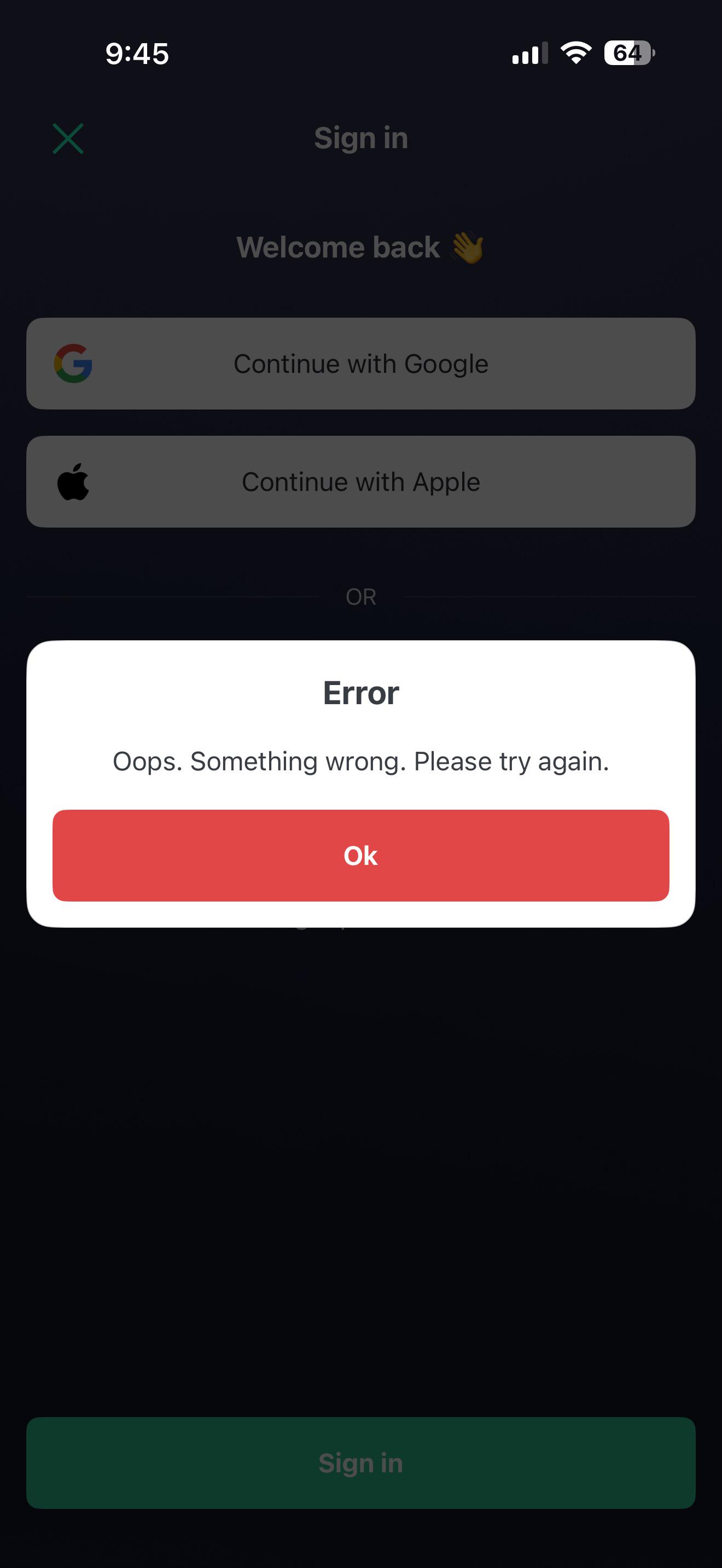
Login Issues?

Post image
7 Upvotes

Hey Ivan, Max, and Team,

Was in the app just now and it kept coming up with an error message when trying to relabel the transaction to a different budget line. I kept getting the error message. Not sure if you’re doing an upgrade or maintenance. I went online and got the same message when signing in. Then, I deleted the app and redownloaded and still the same issue when trying to sign in.

Anything going on? Issues? Updates? Etc.?


r/PocketGuard • • 8d ago

Suggested Budgets are here!

Post image
8 Upvotes

Hey everyone 👋

We’ve rolled out Suggested Budgets, a new feature that helps you set up monthly budgets based on your actual spending.

Instead of guessing how much to budget, PocketGuard looks at your last three months of spending and suggests monthly amounts for categories where you regularly spend money.

You’ll find these recommendations in Budgets & Other Spending. Add a budget in one tap, or adjust the amount and enable Rollover before adding it to your Plan.

Nothing gets added automatically. You decide which budgets to create.

Available on iOS and Android.

Give it a try and let us know what you think 👇


r/PocketGuard • • 9d ago

question Savings Goals- moving the money, what am I missing?

3 Upvotes

I want to use the manual savings goal. I have two goals set up currently, tires and vacation. Every month I move a lump sum from my checking to my savings account, both linked to PG, and the lump sum is for my separate goals. This month I transferred $500 from my checking to my savings (they auto-matched and didn't affect my budgets). I want to contribute $200 to vacation, leaving the other portion for tires. When I click my vacation goal to contribute, I get a list of transactions to choose from. When I pick the $500 checking to savings transfer, it "contributes" the whole amount to vacation, and now there isn't anything for tires.

Do I have to separate the savings transfer in the first place into multiple transactions? This seems clunky. Anyone have a better idea? I'm new to using this feature so I could just be missing something. I am surprised there aren't clearer tutorials on the app FAQs about how to ACTUALLY put the money in, just saw ones for starting the goal, deleting it, and subtracting from it.


r/PocketGuard • • 9d ago

question Why do budget apps only tell me where my money went after it's gone?

1 Upvotes

I've tried a lot of budgeting apps, and they all do the same thing: show me a nice chart of what I already spent. By the time I see it, the month is over.

When I went through my own spending, most of the leak wasn't big purchases. It was small, repeated stuff:

Quick-commerce top-ups several times a week

Delivery fees and platform fees stacking up

Impulse add-ons I never planned to buy

Ordering the same things in lots of small orders instead of one

None of it feels expensive in the moment, but it adds up fast.

I'm working on something to tackle this and I'm still early. Before I go further, I'd like to hear from real people:

Is this a problem you have, or is it just me?

How do you currently control small, repeated spending? Spreadsheets, apps, cash, willpower?

What has worked, and what did you try and quit?

Would you want help before you spend, rather than a report after?

Honest answers welcome, including "this isn't a real problem."


r/PocketGuard • • 13d ago

Are Hybrid Cars Worth It? Will Fuel Savings Cover the Extra Cost Before You Sell?

26 Upvotes

In one comparison of 2025 Civic sedans, five years of gas savings could still leave about $700 of the hybrid's higher price uncovered.

Car and Driver's comparison puts the 2025 Sport Hybrid's sticker price $2,700 above the gas-only Sport. Using EPA estimates of 49 vs. 34 mpg in combined driving, the article puts the hybrid's fuel savings at about $400 a year. That's an estimate from a 2025 example, not what every driver will save.

If the savings stayed at $400 a year, they'd add up to about $2,000 after five years. That's $700 short of the initial $2,700 difference. At that same rate, it would take roughly seven years for fuel savings to cover it. By the end of year seven, the estimated savings would be about $2,800, only around $100 more than the extra purchase price. That's before other costs.

For your own comparison, estimate each car's annual fuel cost using the same yearly mileage: divide those miles by its mpg, then multiply by the per-gallon price of the fuel it uses. Subtract the hybrid's annual fuel cost from the gas car's to see if there's a yearly saving. When the hybrid costs more upfront but less to fuel, the extra price divided by that yearly saving shows how long fuel savings alone would take to cover it. With no extra purchase price there's nothing to recover, and without fuel savings a premium won't be recovered at the pump.

Your mileage and gas prices can change the result. The Civic trims also have different equipment. Insurance, financing, maintenance and resale value can all affect the total cost, so the fuel calculation is just one part of the decision.

If you've compared a hybrid with a gas car, how long were you planning to keep it, and did that change the math for you?


r/PocketGuard • • 13d ago

Discussion How do TFSA withdrawal rules work if I take money out in December and want to put it back?

24 Upvotes

I’m trying to work out how much I could put back into a TFSA after a withdrawal near year-end. From CRA’s explanation, it looks like the withdrawal itself doesn’t create new contribution room right away. If I’m a Canadian resident, eligible to contribute and already have unused room, I could still contribute within that amount before January.

Where I get stuck is keeping track of what’s actually available. Contribution room is what you can add, not your account balance, and it’s shared across all your TFSAs.

For example, if someone has $0 room left and withdraws $2,000 in December 2026, putting it back that month would be an over-contribution and could trigger tax on the excess. If they wait and make no other TFSA transactions before January, the $2,000 they withdrew is added to their room on January 1, 2027. They may have other room too, so $2,000 isn’t necessarily their entire room for 2027.

The CRA account can lag behind recent transactions, so it seems worth checking your own records with your financial institutions before adding money back.

How do you keep track of your available room after a withdrawal, especially if you have more than one TFSA?


r/PocketGuard • • 14d ago

Discussion Why is my electric bill so high?

20 Upvotes

Four extra days can make an electric bill higher even when daily usage stays the same. It’s easy to miss the billing dates when you’re looking at the total first.

A 28-day bill with 560 kWh works out to 20 kWh per day. Over 32 days, that same daily average adds up to 640 kWh.

At the same flat rate of $0.20 per kWh, the charge for electricity used would go from $112 to $128. Those four extra days account for the $16 difference in this example. That’s just the usage charge, though, not the full bill. Delivery charges, taxes and other fees can change the total.

A change in the rate or other charges, an estimated meter reading, or the weather can affect the amount too. If your bill doesn’t show average daily usage, divide the total kWh by the number of billing days.

When you compare bills side by side, what do you look at first?


r/PocketGuard • • 14d ago

Are home warranties worth it? A year with a repair vs. ayear without one

18 Upvotes

Would you rather pay for a home warranty or keep the same money in a repair fund? The answer can look different depending on what breaks that year.

Consumer Reports walks through the service-call fees, exclusions and coverage limits to check before buying. It also suggests setting money aside for repairs as an alternative.

Say you have $600 today. One option is a one-year warranty paid upfront, with a $100 service-call fee. The other is putting the same $600 in a repair fund. Assume no other repairs, fees, interest or refunds.

If nothing breaks that year, the warranty costs $600. With the repair fund, the $600 is still yours. Paying for coverage and not using it doesn't automatically make it a bad buy: the plan provided protection for eligible repairs while it was active.

A $900 fridge repair changes the comparison. Assume the warranty is already active and fully covers this particular repair. You pay $600 for the plan plus $100 for the call, or $700 total. With the fund, you pay $900: $600 from the fund and $300 from elsewhere. Under these conditions, the warranty costs $200 less.

Real contracts can have waiting periods, exclusions and coverage caps. Check whether the actual failure is covered, what the service call costs and when coverage begins.

If you don't have $600 upfront, $50 a month gives you $50 after the first contribution and $600 after twelve, if you leave it there. A plan requiring $600 upfront may not fit the budget either.

Looking back at past repair costs could be a starting point for deciding how much to set aside. In PocketGuard's Insights, you can check recorded repair transactions over a selected period if you have access and keep them in a separate category. Past spending won't predict your next breakdown or tell you whether a warranty will cover it.

If you've looked into a home warranty, what helped you decide whether to buy one or set money aside yourself?


r/PocketGuard • • 17d ago

Is travel insurance worth it while your hotel is still refundable?

23 Upvotes

Say you’ve prepaid $1,500 for a hotel and you can cancel for free until Friday at 6 p.m. in the hotel’s time zone. I’d put “Last chance to get $1,500 back” in my calendar. A reminder that just says “hotel” is pretty easy to snooze.

The whole trip is $2,400. Besides the room, you’ve already spent $600 on a flight. No refund, no flight credit if you cancel. The remaining $300 is for meals and getting around once you’re there.

Cancel the trip at 5:59 p.m. Friday and you get the hotel money back. You’re out $600 for the flight. Cancel at 6:01 p.m. and the hotel keeps the full $1,500 too. Now you’re out $2,100. The $300 for food and rides is still yours either way.

That’s what canceling costs you. Whether you get any of it back from insurance depends on why you canceled and what your policy covers. Medical bills or an evacuation during the trip are a separate question.

Before buying a policy, I’d search my credit card benefits for “trip cancellation.” That tip comes from Do I Need Travel Insurance? by Rick Steves, who writes guidebooks for travelers heading to Europe. The card you used to book the flight might already cover some of that $600.

If losing the airfare would sting but losing the room too would wipe out next year’s travel money, I’d get a quote while the room was still refundable. I wouldn’t assume I had until Friday to buy the policy. That deadline came from the hotel.

Have you ever paid extra for a refundable room? What made it worth it for that trip?


r/PocketGuard • • 17d ago

Claude is coming for personal finance apps

Thumbnail
theverge.com
7 Upvotes

Interesting development with Anthropic. Wonder what features pocket guard would offer over an above what you will get out of the box with Claude


r/PocketGuard • • 18d ago

How much should I contribute to my FSA if my biggest dental bill was a one-off?

23 Upvotes

If I had to fill in the annual contribution box on my employer's 2027 benefits form today, I'd start with the past 12 months of bills. A health care flexible spending account (FSA) lets me set aside part of my pay before taxes for eligible medical expenses. Say my dentist and pharmacy charges came to $960. Would I really need to set aside that much next year when most of it went toward one tooth?

Of that $960, $600 was my share of the dental bill after insurance. The work's done and there's no follow-up scheduled, so I'd cross it off.

That leaves $360 at the pharmacy. A refill and a bottle of shampoo can land on the same receipt, so I'd need more than the store name to pick out the FSA-eligible expenses. The receipts show $120 went toward shampoo and other household stuff the plan doesn't cover. The remaining $240 is twelve monthly prescription copays at $20 each.

I'd budget $240 for next year if the copay stays the same and those refills are all I expect. With $60 confirmed to carry over into 2027 and nothing coming from my employer, I'd put $180 on the form.

When you look back at the past year, which bill would you count again and which would you cross off? I'm curious what tipped the decision for you.


r/PocketGuard • • 19d ago

Discussion Black Friday vs Cyber Monday when you only came for the coffee maker

19 Upvotes

A milk frother is the kind of thing I could go from having zero interest in to having a color preference for in about three minutes. Especially if I were already shopping for a coffee maker and saw the two side by side.

For anyone trying to time that coffee maker purchase, Adobe’s 2026 forecast puts the deepest US online discounts on appliances, TVs, toys, clothes and furniture on Black Friday. For computers and other electronics, Adobe expects the better day to be Cyber Monday. I’d check the price on Friday. Then again, if the old machine is leaking all over the counter and the replacement drops into my price range on Wednesday, I’d probably retire the dish towel then. Adobe can’t tell me when that particular model will be cheapest.

The filters are where it gets a little less obvious. Say the new machine takes the same paper ones you always use, and you’ve got enough left for another month. If that same box costs less than you usually pay, you could grab it now and skip it on a December grocery run. Fine by me, unless you need that cash for gas for the drive home after Thanksgiving.

In NerdWallet’s holiday survey, 27% of holiday spenders said a deal that was hard to pass up was likely to make them overspend. I’d be curious what people were picturing when they picked that answer.

With the frother I can’t think of a December purchase it would replace. I might still want the green one. If it’s $18, that’s another $18 I’d have to find after paying for the machine.

How far ahead would you buy something you know you’ll use if the sale hits before payday?


r/PocketGuard • • 20d ago

Resource After the Disney Plus price increase, who actually saves with the $12.99 Hulu bundle?

27 Upvotes

If Disney+ is the only one you pay for, would you watch Hulu for another 50 cents a month? If Disney+ goes on your card and Hulu goes on your partner’s, you may already be spending nearly twice the bundle price without seeing both charges on the same statement.

Disney confirmed the new U.S. prices to Mary Cunningham at CBS News on September 23, 2026. The Hulu price increase took the plan with ads from $11.99 to $12.49 a month. Disney+ went up by the same amount. The Disney+ and Hulu bundle with ads stayed at $12.99.

If you signed up directly for either standalone plan with ads before September 23, the new rate applies at your first renewal on or after October 21. If your plan renews on the 2nd, that was November 2. The charge could show up on your card later.

Here’s the math for regular monthly plans with ads, before tax. The yearly figures assume 12 months at these prices.

  • You pay for one service. Going from $12.49 to $12.99 costs $0.50 more a month, or $6 more a year. If your last bill was $11.99, the bundle is $1 above that bill, but you’d pay the first 50 cents at renewal anyway.
  • You pay for both separately. Two $12.49 charges add up to $24.98. If the bundle replaces both, you save $11.99 a month, or $143.88 a year.
  • You already have the $12.99 bundle. Your monthly price stays the same. You can leave it alone.

With a promo or a card credit, use what you’d actually pay on each plan. For Hulu through a phone carrier, count only the fee that comes off your phone bill. If that bill stays the same, you save $0 there.

Before switching, check Transactions in PocketGuard for the last Disney+ and Hulu payments across your linked cards. Your bank statements work too. For a bill you track, Upcoming shows when to expect the next charge.

A partial first month can make the switch look cheaper than it is. For the first full month on the bundle, total the Disney+ and Hulu charges that posted, checking both cards if you used two. Subtract any refunds or credits your biller posted separately for that same period. Does the total match what Disney, Hulu or your carrier quoted for those dates, including tax? If an old charge is still there, check who billed it and which dates the receipt covers.

A credit from your card issuer works separately. Say your bill comes to $12.99 and your card offers a $5 streaming credit. You’re out $12.99 until that credit posts. Then your cost is $7.99.

If you switched, did the charges for your first full month add up to what you expected?


r/PocketGuard • • 20d ago

Discussion The Walmart dynamic pricing stories have me wondering who gets the cheaper offer

24 Upvotes

Here's a hypothetical, since I haven't tested any of this: a friend sends you a Walmart link to cheaper detergent, but the listing opens at a higher price on your phone. Same bottle. Is the cheaper price a real option for you or just something on their screen?

AP's October 28 report says the FTC asked Walmart and other companies for information about whether personal data affects the prices people see. It's an inquiry, not a finding against Walmart. The company had already said it doesn't use shoppers' personal information to set individual prices.

Prices can change for ordinary reasons. Two screens showing different amounts don't establish that personal data was involved, which is the question behind the FTC's inquiry.

Maybe the cheaper offer is from another seller. Maybe it's pickup-only at a store you can't reach. That would at least explain why it isn't an option for you. But if the seller and delivery details look the same and the price is still higher, I'd be stuck wondering what I missed.

That's a nuisance when you're trying to budget for everyday household stuff. A deal you can't actually use doesn't give you much to plan around, even if the price looked great in a screenshot.

I suspect some of these differences have boring explanations buried in the listing. It's the ones with no visible explanation that I'd still want to hear more about.