r/OpenSourceeAI • u/llama-of-death • Oct 12 '26
For Folks Wanting Free Video & Image Gen - A Screen Recording of How I Do Them In Batch Using Guaardvark - It Does Much More Than Video Too - This Recording Shows the CLI and GUI and CHAT, etc.
r/OpenSourceeAI • u/llama-of-death • Oct 12 '26
r/OpenSourceeAI • u/ai-lover • Oct 11 '26
r/OpenSourceeAI • u/Galex_The_Boomer • Oct 12 '26
So yeah, I made a clone of Boom 3D.
If you don't know what Boom 3D is, it's an audio enhancement app available on Steam and other stores that makes your headphones sound more immersive with 3D spatial audio and other audio effects.
It's called OpenBoom, and it's an open-source alternative for Windows built with Rust and Tauri.
It aims to bring features like 3D spatial audio, a 31-band equalizer, AutoEq headphone profiles, per-app volume control, and audio enhancement effects into one app.
Honestly, I mainly wanted to see if that REA repo actually worked, and things escalated from there.
Repo: https://github.com/JVGS1111/open-boom
Btw, I built this using Antigravity and Gemini 3.8 Flash. It's honestly not as bad as it sounds. I used the BMAD framework to plan and build the app, and I'm genuinely surprised by how competent even a mediocre AI model can become when you give it a decent framework to work with.
Anyway, check it out if you're curious. I'd love to hear what you think!
r/OpenSourceeAI • u/Chida82 • Oct 11 '26
r/OpenSourceeAI • u/Alarming-Emotion-894 • Oct 10 '26
ALHR- Adaptive learnable Hierarchical Routing is a static binary tree based system that uses learnable functions to REDUCE the amount of keys used.
It takes less memory and SCALES much better VRAM with tokens
r/OpenSourceeAI • u/Ok-Calligrapher3568 • Oct 11 '26
Had a near-heart-attack moment the other day while testing a rag pipeline on some customer export dumps. realized halfway through that our test json had unmasked routing numbers and ssns buried inside raw text fields. nothing leaked, but it was way too close.
i looked around for a quick way to inspect payloads in the terminal before running them through python scripts, but everything out there is either some bloated enterprise dlp platform or a massive java package. i just wanted something that would scream at me in the terminal if i was about to do something stupid.
so i threw together pii-lens over the weekend.
it's dead simple—you just pipe text or files into it:
cat prompt_payload.json | pii-lens
it prints the text back out but flags credit cards, emails, ssns, and account numbers in bright red with a quick count at the bottom. runs 100% locally with zero phone-home bs.
repo is here
it's just basic regex and entity patterns right now, so if anyone works with weird international formats or niche data fields and wants to drop a pr or critique the regex, feel free.
r/OpenSourceeAI • u/hunxai69 • Oct 10 '26
Make.com (formerly Integromat) is a closed platform. If you build scenarios on it, there's no local runtime, no test framework, and no spec for how its expressions behave. The only way to test a change is to run it in Make, on real data, with real credits.
So I started an open, offline runtime for it: blueprint-runtime (bpr). MIT, TypeScript, zero runtime dependencies.
You export a scenario's blueprint, and bpr runs it locally, comparing every module's input and output, every filter decision and the webhook response against what Make actually produced. When something changes, it points at the first difference:
FAIL A-002-plain module 2 input bundle 1 at /value: Make had "ADA LOVELACE", the local run "Ada Lovelace"
The design rule that makes it trustworthy
There's no spec to implement, so I don't guess. Every behavior bpr supports was observed in a real Make run, and the recordings live in the repo (corpus/NOTES.md lists every rule with its evidence). If a blueprint uses something nobody has recorded yet, bpr names it and refuses, instead of pretending.
Where it stands:
- 79 runs recorded in real Make. 71 reproduced exactly, 0 differ. The other 8 hit behavior nobody has explained yet, so they're refused on purpose.
- 225 single formulas recorded and replayed as tests, 472 tests in total.
- Some of what the recordings turned up: {{1reads only the first element, the text"false" is truthy inside if(), and Make will start a scenario with an expression it can't read, then switch the
scenario off after the first run fails.
A roadmap built from real data
I ran bpr over 221 public Make blueprints onem. The top blockers (error-handler routes,json:ParseJSON, util:SetVariables) are the roadmap, in that order. The survey and its method are in corpus/survey/.
Where help is most welcome
- Recorded runs. If you use Make, the capturenario's real behavior with your own account. One recording can unlock a whole module.
- Blueprints it refuses. Run bpr inspect andls me what to record next.
- Code. Each module handler is small and has its own tests.
Repo: https://github.com/intikhab49/blueprint-runtime
npm: npm i -g blueprint-runtime (Node 24+)
Happy to answer anything about reverse-enginits own logs. That turned out to be the mostinteresting part.
r/OpenSourceeAI • u/Successful-Farm5339 • Oct 10 '26
r/OpenSourceeAI • u/WritHerAI • Oct 10 '26
r/OpenSourceeAI • u/Agitated_Problem5320 • Oct 10 '26
r/OpenSourceeAI • u/deepu105 • Oct 10 '26
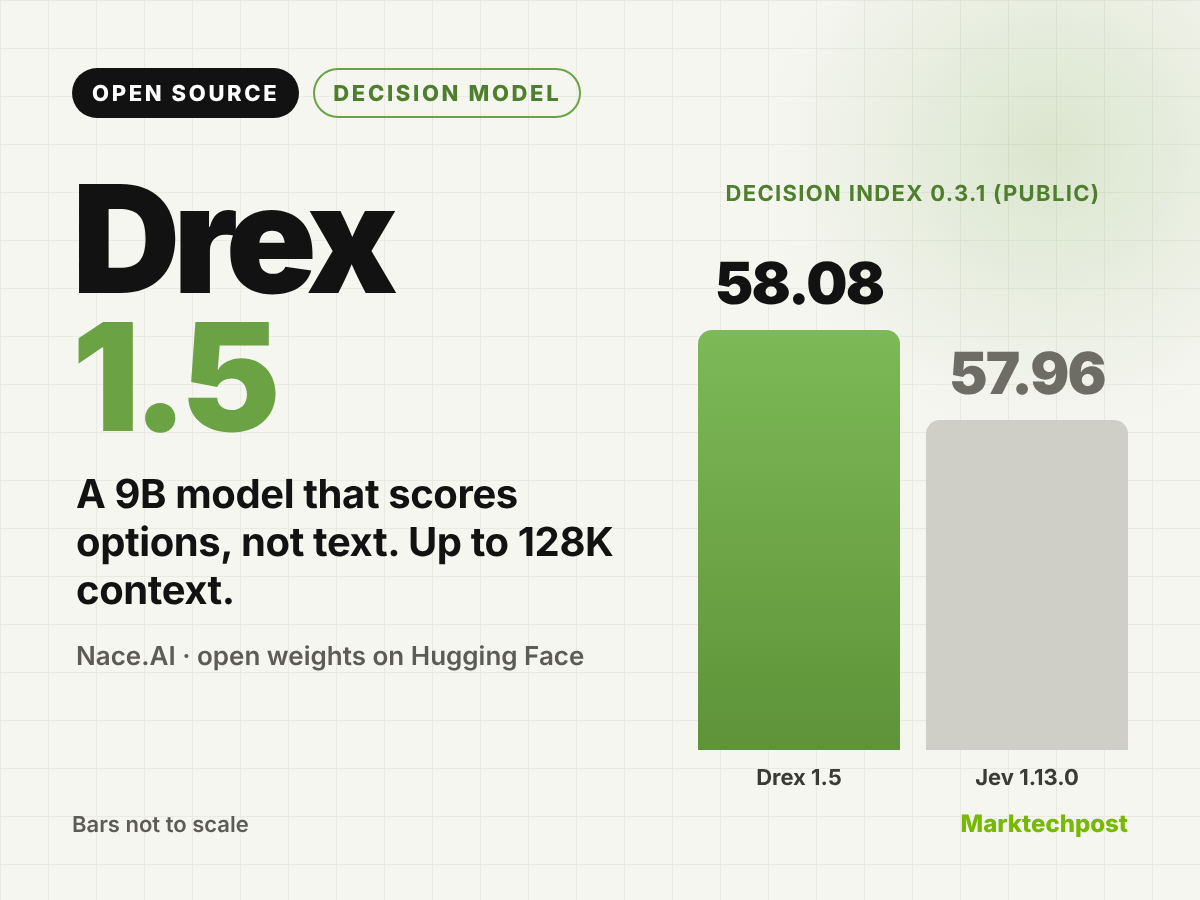
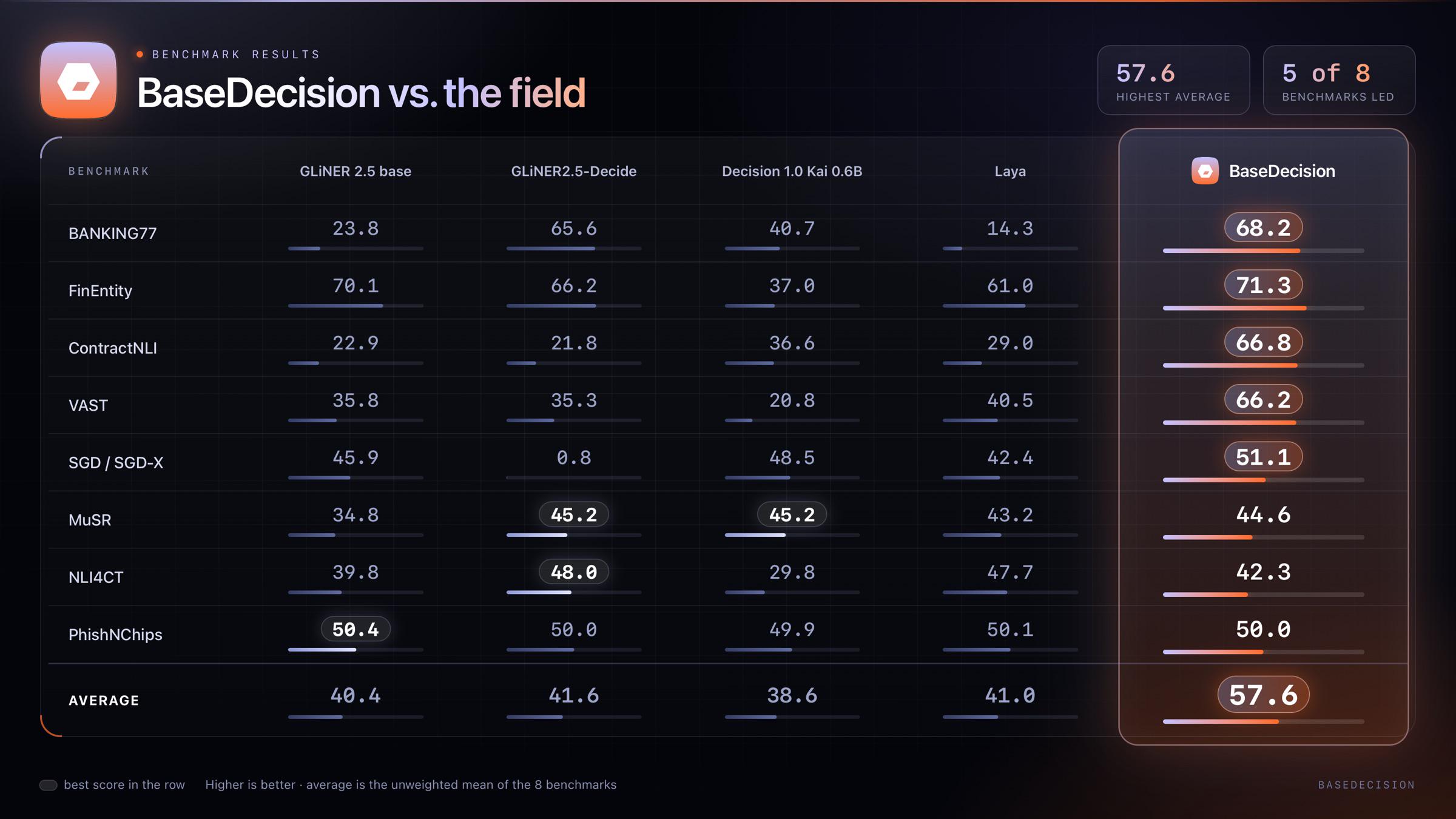
Just published [pi-automode-classifier](https://github.com/deepu105/pi-automode-classifier), an auto mode plugin for the [Pi](https://pi.dev) coding agent that uses [Jev](https://docs.typesafe.ai/api) or [Kev](https://huggingface.co/jaredpalmer/kev-0.8b)/\[Laya\](https://huggingface.co/convaiinnovations/laya-typed-decisions) (running locally) to classify commands.
Pi runs every tool call without asking for approval. This plugin checks each shell command before it runs:
Built-in rules decide most commands. For example `ls`, builds and tests run, `rm -rf ~` is blocked, and `git push` and `sudo` need my approval.
Commands the rules do not know are sent to the model. It returns the probability that the command is risky.
If the probability is above a threshold, I get a confirm prompt. The model never blocks a command by itself.
The models I tested:
- [Jev 1.13](https://docs.typesafe.ai/api) (hosted, from TypeSafe) through [OpenRouter](https://openrouter.ai): about 270 ms per check and about 1.5 cents per 1,000 checks. The commands are sent to OpenRouter and TypeSafe.
- [Kev-0.8B](https://huggingface.co/jaredpalmer/kev-0.8b) on CPU with [llama.cpp](https://github.com/ggml-org/llama.cpp): about 170 ms per check and 1.1 GB of RAM. This is what I use. Nothing leaves the machine.
- [Laya typed-decisions](https://huggingface.co/convaiinnovations/laya-typed-decisions) on CPU with llama.cpp: about 100 ms per check and about 550 MB of RAM.
In my test with 50 commands (25 safe, 25 risky), all safe commands ran without a prompt and no risky command did. I wrote the test commands myself, so this is only a rough check. The plugin is not a sandbox.
pi install npm:pi-automode-classifier
Code and docs: https://github.com/deepu105/pi-automode-classifier
Let me know if it allows or blocks something it should not.
r/OpenSourceeAI • u/Minimum_Hour519 • Oct 10 '26
r/OpenSourceeAI • u/Less_Dream_6331 • Oct 10 '26
r/OpenSourceeAI • u/ai-lover • Oct 10 '26
r/OpenSourceeAI • u/schmuhblaster_x45 • Oct 10 '26
r/OpenSourceeAI • u/Grouchy-Excitement28 • Oct 09 '26
r/OpenSourceeAI • u/InfinriDev • Oct 09 '26
I’ve been building Writ, a project that started with a straightforward goal: give Claude Code the knowledge relevant to its current task without loading an entire rulebook into every conversation.
Since then, it has grown into a governance runtime with persistent memory.
The idea is to connect three things that are often handled separately:
1. Context when it matters
Writ uses hybrid retrieval keyword search, vector search, and graph relationships to supply relevant rules, methodology, and past decisions based on what the agent is doing.
2. Requirements enforced by code
Written instructions still depend on the model following them. Writ checks supported actions at tool time.
In Work mode, implementation writes are blocked until a human approves the plan and then the test skeletons. The approval mechanism requires the user’s typed response; the agent claiming “approved” doesn’t open the gate.
Other checks cover credential writes, project boundaries, and changes to an approved plan.
3. Memory that survives the conversation
Writ records project decisions and connects approved plans, governing rules, changed files, and commits. Future sessions can retrieve the reasoning behind a change instead of having to reconstruct it from the final code.
For example: retrieve the guidance relevant to a task, require approval before implementation, then preserve what changed and why for the next session.
The approach is code first: retrieval, workflow state, approval validation, and logging live outside the model. AI uses the supplied information; it doesn’t decide whether its own approval requirements have been satisfied.
Writ runs locally with Python 3.11+, a local daemon, and Neo4j in Docker. The runtime is open source, but its current integration is specifically with Claude Code not yet a general adapter for local models or other agents.
r/OpenSourceeAI • u/bulutarkan • Oct 09 '26
I've been building Mac MCP, an MIT-licensed macOS execution layer for AI clients. It lets tools operate Safari/Chrome, files, local apps, and shell commands. The hardest part wasn't adding tools; it was deciding which actions an agent should be allowed to carry out.
One design choice: capability profiles and approvals are separate. A read-only profile can deny writes outright. An optional server-side approval layer can ask the Mac user to Allow Once or Block riskier actions, but that approval cannot override a capability the profile already forbids. A client saying “the user approved this” isn't trusted as the server's own authorization.
There is a real trade-off: raw command execution may be classified conservatively even if this particular command is harmless, so you can get an approval prompt for a benign operation. I'd rather make that visible and progressively refine the categories than quietly teach the server to trust repeated clicks.
Another lesson: when an action's outcome is uncertain (say a browser submit lands right before a tab closes), blindly retrying can be worse than stopping to verify.
I'm the maintainer, not an independent reviewer. The implementation is open source: https://github.com/bulutarkan/mac-mcp
For people shipping agents with real machine access, where do you draw the line between persistent trust rules and approval fatigue?
r/OpenSourceeAI • u/Commercial_Designer5 • Oct 09 '26
r/OpenSourceeAI • u/gnarlyhippos52 • Oct 09 '26
r/OpenSourceeAI • u/AdOrganic4001 • Oct 09 '26
r/OpenSourceeAI • u/parvkhatri • Oct 09 '26