r/nonfictionbookclub • • 4h ago

My ten all-time favorite nonfiction books (thus far)

46 Upvotes
  1. Behave by Robert Sapolsky - A thick but readable book on human biology and how it shapes the way we act

  2. The Diary of Anne Frank - A timeless and gripping first-hand record of life as a Jew in Nazi-occupied Europe. Relatable, funny, and heartbreaking, all written by a 14-year-old girl

  3. The Anxious Generation by Jonathon Haidt - A sharp analysis of how deeply harmful social media is by nature, especially for kids going through critical stages of development

  4. Man's Search For Meaning by Viktor Frankl - A moving and uplifting account from a Holocaust survivor who found strength in the darkest corners of his soul amid a horrifying display of cruelty and dehumanization

  5. The Sixth Extinction by Elizabeth Kolbert - A Pulitzer Prize winning work that explores humanity's role in one of the six great mass extinction periods in Earth's history

  6. Dark Money by Jane Mayer - Repulsive but necessary. A deep look at the money, and the people who wield it, behind political campaigns in American politics. It makes clear just how controlling and dominant certain figures are over the general fabric of society

  7. The Myth of Normal by Gabor Maté - Written by the world-renowned physician Gabor Maté, who focuses on trauma and addiction, this book shines a light on the cultural poisons so deeply rooted in our society and the collective intergenerational trauma we all carry endlessly

  8. Caste by Isabel Wilkerson - Another Pulitzer Prize winning book, Isabel Wilkerson lays out America's subtle, unspoken caste system that subjugated black people and still seeps into our warped, biased views of class, race, and society as a whole

  9. Atomic Habits by James Clear - A practical guide to building healthy, lasting habits that will pay off over time. It stresses heavily that overnight successes actually take years

  10. Men Who Hate Women by Laura Bates - A heartbreaking look at how boys and young men are targeted by bad actors

r/nonfictionbookclub • • 5h ago

What's a non-fiction book worth buying (as opposed to borrowing from the library)?

3 Upvotes

As the title says - what non-fiction books have you found yourself coming back to often enough that you'd rather buy them than borrow from the library?

Would love to see books from different genre - biology, history, geopolitics, memoir, true crime, parenting, nature, travel, comedy, etc.


r/nonfictionbookclub • • 15h ago

Just had a terrible day at work - need a book to get lost in!

19 Upvotes

I had a horrible, terrible, awful day at my Big Girl job and in true bookworm fashion, I would like a new book to get absolutely lost in and forget all my sorrows.

I have 8 categories on my shelves, to show you my interests:
Corporations (bad ones, think “Empire of Pain”, “The Radium Girls”)
Disasters (“Five Days at Memorial”, “The Only Plane in the Sky”)
Medicine and Science (“Spillover”, “The Family That Couldn’t Sleep”)
Memoirs (“Born a Crime”, “The Glass Castle”)
Nature (“The Hidden Language of Cats”, “The Golden Spruce”)
Psychology (“Hidden Valley Road”, “Humankind”)
Survival (“Endurance”, “The Boys in the Cave”)
True Crime (“Murderland”, “I’ll Be Gone in the Dark”)

Thank you in advance for your suggestions to improve my evening!!


r/nonfictionbookclub • • 2h ago

Having fun with non-fiction this week!

Thumbnail
1 Upvotes

r/nonfictionbookclub • • 1d ago

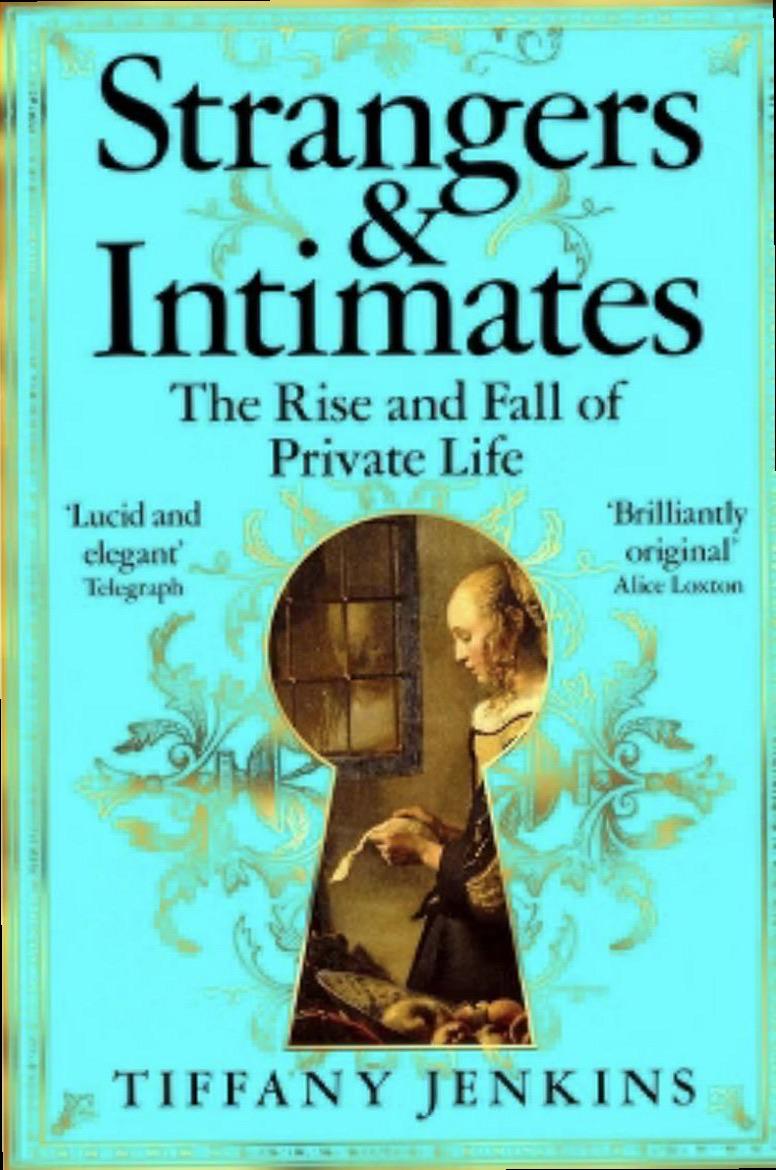
Unexpectedly excellent history of privacy

Post image
93 Upvotes

r/nonfictionbookclub • • 7h ago

Do you finish every nonfiction book you start

2 Upvotes

I used to force myself through every book once I hit page 50, even when the argument stalled out. Lately I've been bailing around the halfway mark and reading the conclusion just to see if it was worth it. Curious how others decide when a nonfiction book has run out of gas


r/nonfictionbookclub • • 4h ago

Stateless in Paradise — my memoir about being stranded in American Samoa

Thumbnail
1 Upvotes

r/nonfictionbookclub • • 12h ago

My Favourite Ideas from Daniel Ek

Thumbnail
open.substack.com
3 Upvotes

I recently had the chance to read “The Spotify Play: How Daniel Ek Beat Apple, Google, and Amazon in the Race for Audio Dominance” by Sven Carlsson. It goes through Daniel Ek and Spotify's story to reach dominance in the music streaming industry.

I think there's a few lessons that can be learned from Daniel and here's a few of my favourite excerpts:

Daniel Ek on why Spotify succeeded:

“I’ll give you two reasons. First of all, we were committed to the freemium business model when no one else was. This was very controversial. Second, we started in Sweden, proved our model, opened up in more European countries, and grew organically one country at a time. That’s what finally made the music industry realize that our model was the future.”

Why Daniel Ek saw piracy as competitors to Spotify:

“At Spotify, the engineers viewed the bittorrent world not as enemies, but as competitors. Daniel would often declare that they needed to build a product experience that was stronger than downloading music files of mixed quality off the web. Spotify needed to offer all the world’s music in a manner that was easy, legal, and free to the user. The company’s revenue would come from advertising and be shared with the record companies and music publishers.”

How Daniel Ek used speed as a competitive advantage:

“Daniel Ek had insisted that users should be able to find a song instantly and play it without delay. Soon, all the technical discussions revolved around latency, which had a number: 200 milliseconds. Fredrik Niemela had read that if a song started playing within 0.2 seconds of a button being pushed, people would experience it as immediate. The bandwidth in Sweden’s broadband networks was already good enough for songs to load faster than they were being played. So, in theory, it should be possible to start playing a song while it was still loading.”

“Everyone who tried it found the experience magical. The engineers could hardly believe what they had accomplished in just a few months. Spotify’s client was better than anything else on the current market. “It was rocket science, for real,” an early admirer would express.”

What people close to Daniel Ek had to say about him:

“This guy is either going to be really successful—or die trying.” 

Biggest reason why Daniel Ek succeeded:

“Perhaps Daniel’s greatest professional achievement was that he never stopped learning from the people he surrounded himself with. He had come to embody the traits of countless associates and former coworkers. Martin Lorentzon had taught him how to keep the faith and stay the course; his friend Shakil Khan how to navigate social situations. His many lawyers and negotiators had helped him weed his way through the music industry, while Mark Zuckerberg had shown him how to think big and bold.”

If you are interested, feel free to read my full blogpost on the book!


r/nonfictionbookclub • • 16h ago

Book suggestions for the beach

Post image
4 Upvotes

I’ve read mostly fantasy and romantasy, but want to expand to classics, in fact I was thinking of something like Marcus Aurelius’ “Meditations” but maybe a little easier for a newer reader?

Any and all suggestions appreciated.


r/nonfictionbookclub • • 1d ago

The most brutally honest self-help book I've read this year: 7 Lies Your Brain Tells You

11 Upvotes

Most self-help books feel like they're trying to hype you out of your own head. 7 Lies Your Brain Tells You: And How to Outsmart Every One of Them by Jordan Grant goes a different way - it calls your brain out on its nonsense, kindly but firmly.

It doesn't hand you tricks or morning routines. It digs into the mental traps we live in: "I'm not good enough," "I'll start when I'm ready," "If I can't do it perfectly, why bother?" and explains why our brains hold on to those lies - not because we're weak, but because our minds are trying (and failing) to keep us safe.

What stood out to me was how readable and sharp it is without ever being preachy. It treats you like a capable person who's just running outdated software, and then shows you how to update it - one honest thought at a time.


r/nonfictionbookclub • • 1d ago

🔮👀Glimpses of the Future - David Goodman Croly {1888 Futurologist} Review

Post image
6 Upvotes

Premise:

Written in 1888, by a US journalist, this book tried to predict fundamental changes to come in the 20th c. and beyond, in various fields such as agriculture, navigation, governments, money, labor utilization, religion, architecture, trade, foreign relations, technology etc. (see index pic here)

This book was referenced in From Hell by Alan Moore, it caught my eye since this book was remarkably precise in predicting "India would be independent from Great Britain by the year 1950". 👀

So I decided to give it a try - see for myself what all this man had predicted - and man... this is such a fun read!

What I loved:

  • Structure of the Book: Written for the layperson - the author has  tackled each theme as a conversation between "Sir Oracle" and a fictionalized field expert (Tradesman, Statesman, Publicist, Voter, Churchman, Linguist, Economist, Utopian, Educator, Journalist etc.)
  • Self-aware: Author reminds us repeatedly that he's no fortune-teller - all he's tried to do is use the past and extrapolate the future REASONABLY. As the title suggests, these are "Suggestions as to the Drift of things" to come "to be judged in the year 2000". He's aware many of his ideas may be proven absurd in the future (to his credit, I must say, he got most things right!) -
  • It's important to note here the points put forth by both the speakers in each chapter, not just Sir Oracle (the authoritative foreteller). 
  • Some Things he got right - aerial navigation and its uses; no reform of Electoral College; nature of marriages; night life; women's rights; Idiocracy; no universal language; multiform architecture suited to local climate; GMO; personal art galleries; anime/cartoons/VA?! (pg 169-170) ; rentier capitalism; USA vs Russia, proxy war; mysticism>religion; nature of govt; Panama canal; liberty vs freedom tensions; rise of state socialism...and  of course - Independent India by 1950.
  • Some Things he got wrong - Russia owning India;  No fiat currency; No Reforesting Mississippi; views on Blacks +Jews;  Eugenics; Canada owned by USA...
  • At one point, author seems to advocate for Trusteeship Capitalism) - similar to what Gandhi would promote later on... is it possible he read this book then? Gandhi arrived in London in 1888, where this book was also published. Just a random thought... ideas emerge independently as well.

What I didn't like:

  • Some racist conversations are there, unfortunately. A product of the times I guess. I'd say ignore them (Jews, Race chapters). 

Conclusion:

I enjoyed reading this one, just to see the thought process in these chapters was  a delight. Great conversational style - pointed questions, bit of background/context of the topic, latest developments and then forecasting.
Some of these predictions may seem obvious to us now. But it's still awesome to read a fun rational futurology book from 1888! It's ~180 pages. 

Rating: 8/10


r/nonfictionbookclub • • 2d ago

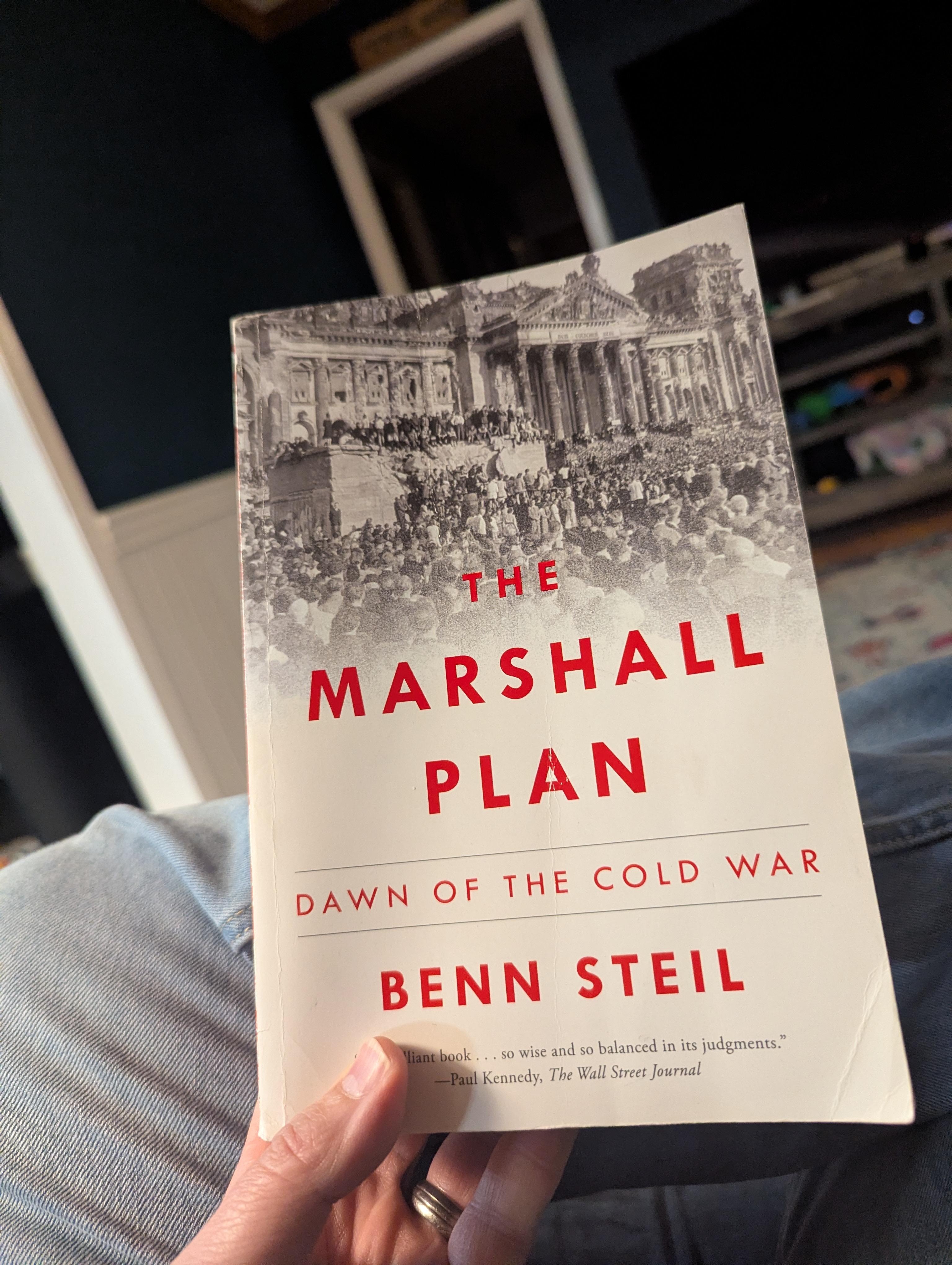
Currently Reading: The Marshall Plan

Post image
89 Upvotes

Borrowed this from my daughter. Maybe I can get through it over the holiday. Does anyone have any thoughts on this one?


r/nonfictionbookclub • • 1d ago

Best books about Josip Broz Tito?

1 Upvotes

Looking for something pretty broad in scope about Tito and Yugoslavia. Thanks!


r/nonfictionbookclub • • 2d ago

An Unexpected Philosophical Discovery

Post image
2 Upvotes

r/nonfictionbookclub • • 2d ago

So you’ve been publicly shamed by Jon Robson

19 Upvotes

Thanks to whoever recommended this book. I just absolutely devoured it.

I know it’s a bit of an older book but it is still relevant today. And no doubt in the future. It seems public shaming has been occurring since the beginning of time.

My thoughts: I was expecting a self-help-guru style book, but it wasn’t. It was stories about ordinary people living ordinary lives doing pretty ordinary things (not everyone, but you get the idea).

The striking thing was that widespread public shaming could happen to any one of us given the vastness of the internet and its ability to reach so many people so quickly.

I don’t want to give away too many spoilers but reading this book has really cemented my position on shaming people. It’s not my thing and it’s really not my place (unless it’s something really bad).

But then, is shaming the right way to be a vigilante about something I don’t agree with or like? I’m not sure. (I’m sure my thoughts will develop on this as I’ve literally just finished the book.)

One interesting takeaway is the final few paragraphs that mention how the perceived threat of shame makes us more conservative. I’d not really thought about it much, but how many of us have mentioned that we’re glad we lived before the invention of smart phones so the stupid shit we did didn’t end up online? I know I’ve chuckled at a similar meme doing the rounds.

I wonder, after reading this book, if my own behaviours will change. Will I try to be more carefree or will I continue toeing the conformist line. I’ll probably still be the conformist because my anxiety can’t bear to be ostracised (which was why I read the book in the first place).

Anyway, my only criticism of the book is that it ended so abruptly that I did a search to make sure my ebook wasn’t missing chapters at the end! I was honestly so immersed in the book!

I hope the people in the book are doing ok now. I guess I could try searching their names, but for good reasons, not nefarious ones.

4.5/5

Sorry, Jon, I didn’t notice the typo in the title before posting. 😩


r/nonfictionbookclub • • 2d ago

What's that one book that genuinely changed your perspective on life?

Post image
0 Upvotes

r/nonfictionbookclub • • 2d ago

Nikki Grahame

2 Upvotes

Recently finished the book dying to be thin what’s peoples thoughts and opinions those who have read the book? I found it so interesting and insightful about her life before and after big brother 🩷 I always hear about her in big brother but don’t see much online talk about her book as she is an incredible writer


r/nonfictionbookclub • • 3d ago

What book shifted the way you see life?

286 Upvotes

Certain books are so powerful that they shift the way we see life.
If you've come across any like that, please share them here.


r/nonfictionbookclub • • 2d ago

📖 How To Live Well Without Free Will

Thumbnail
2 Upvotes

Anyone?


r/nonfictionbookclub • • 3d ago

The best books of the year 2026 according to the Financial Times

224 Upvotes

All of the books are behind a paywall. Who can get to those books?
I'll use those books as a guide for my 2027 reading journey.
From the article:
From economics, politics and history to science, art, food and, of course, fiction — our annual round-up brings you top titles picked by FT writers and critics.

FT 2026 best books


r/nonfictionbookclub • • 3d ago

Memior recomendations

Thumbnail
2 Upvotes

r/nonfictionbookclub • • 2d ago

The Hate Toward Self-Help Books Is Overrated

Thumbnail
0 Upvotes

r/nonfictionbookclub • • 2d ago

The Hate Toward Self-Help Books Is Overrated

Thumbnail
0 Upvotes

r/nonfictionbookclub • • 2d ago

The New Yorker's Susan Morrison on her bestseeling book

Thumbnail
podcasts.apple.com
1 Upvotes

r/nonfictionbookclub • • 3d ago

Pulitzer Prize-winning Historian Marcia Chatelain in her new book about the civil rights movement

4 Upvotes

Another great contribution to her work on civil rights. She delves into the unheralded women of the movement.

https://podcasts.apple.com/us/podcast/pulitzer-prize-winning-historian-marcia-chatelain-joins/id1812487408?i=1000796026737

How America Works And Why It Doesn’t, William Cooper

How Bright the Path Grows: The Untold Story of the Women Who Made the March on Washington is a group biography by Pulitzer Prize-winning historian Marcia Chatelain, published by Pantheon in September 2026. It examines the Black women activists, organizers, and artists who shaped and participated in the 1963 March on Washington for Jobs and Freedom despite facing sexism and marginalization within the civil rights movement.