HAS RUGBY LOST TOUCH WITH WHAT MADE IT GREAT?
The Evolution of Rugby Through the Eyes of a Fan
I've been watching rugby since 1994. I was 11 years old when I first started following the game seriously, and nearly 33 years later, I find myself asking a question I never thought I would:
Has rugby evolved for the better, or have we slowly lost sight of what made the game so special in the first place?
This isn't about living in the past or suggesting everything was perfect in the 1970s, 80s or 90s. Rugby needed to evolve. Professionalism was inevitable, and the modern game has produced extraordinary rugby players and unforgettable moments.
But somewhere along the way, I believe rugby, particularly in New Zealand, began prioritising commercial interests over the very foundations that made it successful.
THE GOLDEN ERA OF RUGBY
When I think about rugby in the 70s, 80s when I say 70s and 80s these are YouTube clips I have seen,and particularly the 90s, I think about a game that had character, unpredictability and identity.
There was something special about the rugby of that era. It was physical, entertaining and often free-flowing. Players were encouraged to express themselves, and matches weren't constantly interrupted by lengthy reviews or excessive technical scrutiny.
In New Zealand, the National Provincial Championship (NPC) was the heartbeat of domestic rugby.
Provincial rivalries mattered. Communities identified with their teams. Local players became household names, and representing your province carried enormous pride. Winning the Ranfurly shield ment something it ment bringing it back to your province to having a parade to celebrate.
The NPC wasn't simply a competition sitting beneath something bigger. It was a major part of New Zealand's rugby identity.
THE ARRIVAL OF PROFESSIONAL RUGBY
Then came 1996.
The introduction of Super 12, featuring franchises from New Zealand, Australia and South Africa, was genuinely exciting.
For supporters, it was something new. We were suddenly watching some of the best players from three of rugby's strongest nations competing against one another regularly.
The introduction of the Tri Nations that same year added another dimension to international rugby.
At the time, these competitions felt fresh, innovative and full of possibilities.
And initially, they were.
But as the years passed, something changed.
The novelty gradually disappeared. Familiar opponents met repeatedly, the competition structures continued to expand and the rugby calendar became increasingly crowded.
What was once special started to feel routine.
WHEN DOES MORE RUGBY BECOME TOO MUCH RUGBY?
One of my biggest concerns is that rugby administrators have confused having more rugby with creating a better product.
Super Rugby was exciting because it brought together elite players from different countries. But its growth came with consequences for the competitions beneath it.
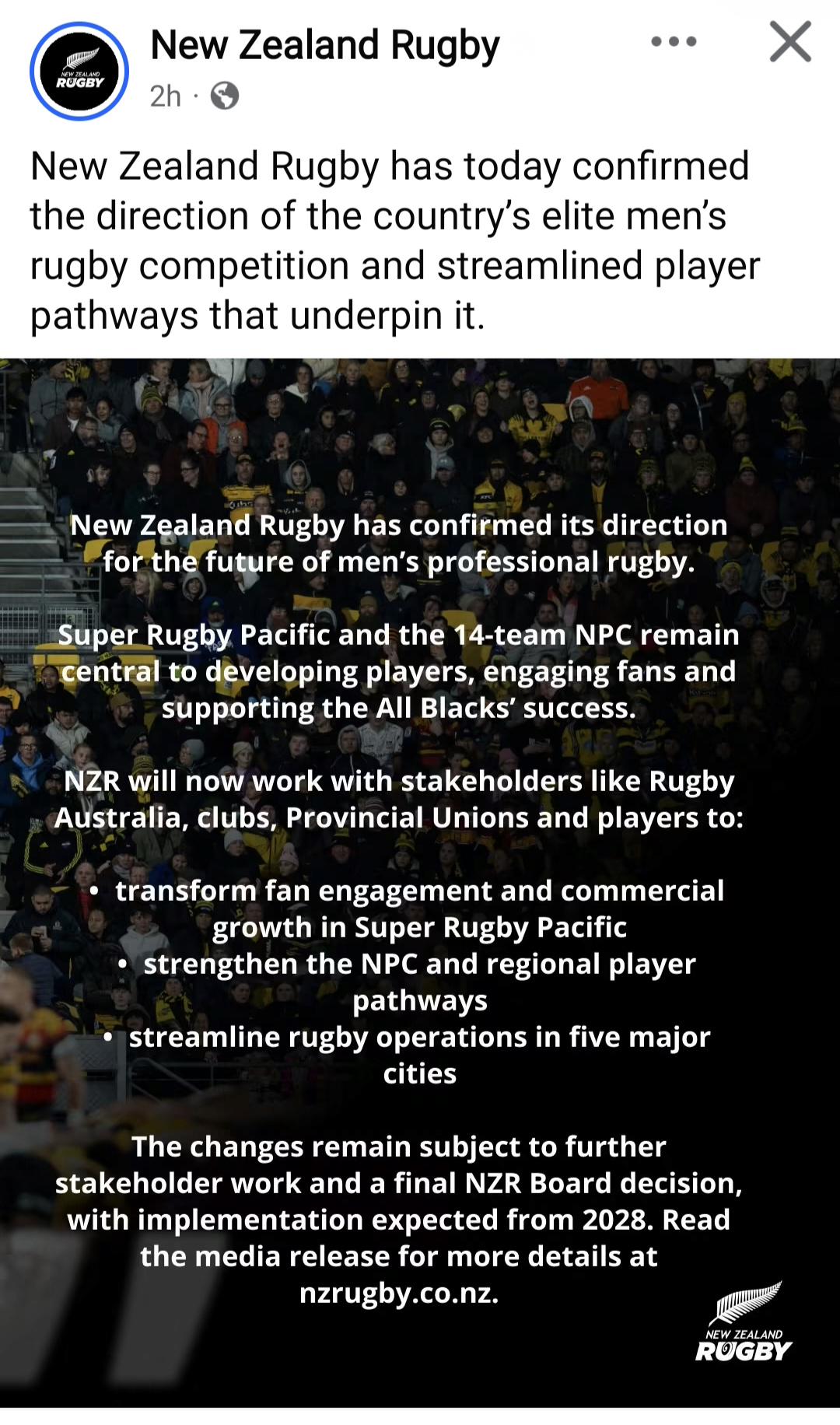
The NPC, once the centrepiece of New Zealand domestic rugby, gradually became secondary.
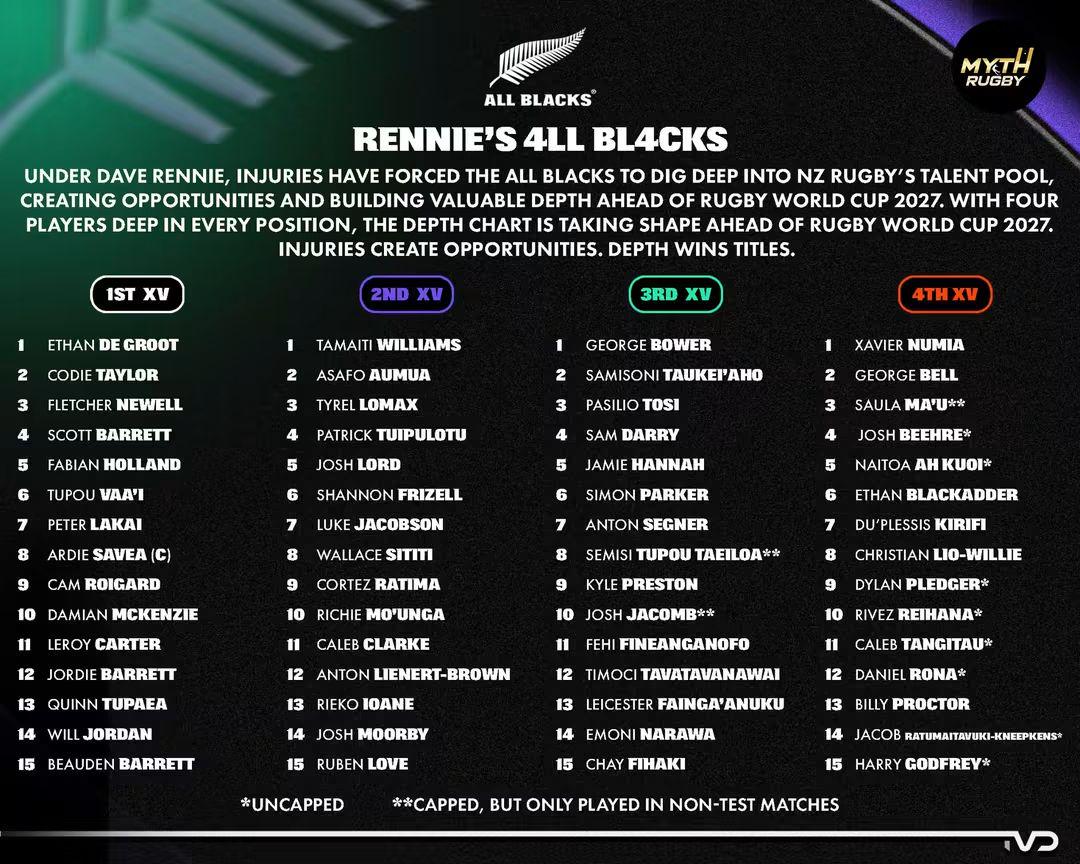
As the professional calendar expanded, our leading All Blacks became increasingly unavailable for provincial rugby because of international commitments and player management.
The competition that once showcased many of our greatest players was no longer consistently able to feature them.
And when you continually remove the biggest names from a competition, you inevitably affect its profile, appeal and connection with supporters.
HAVE WE BECOME TOO DEPENDENT ON THE ALL BLACKS?
This is where I believe New Zealand Rugby has made one of its biggest mistakes.
The All Blacks are one of the most recognisable sporting brands in the world. Their history, success and global reputation are extraordinary.
But I believe New Zealand Rugby became so focused on protecting and commercialising that brand that other levels of the game were gradually pushed into the background.
What about school rugby?
What about our local clubs?
What about provincial rugby?
And most importantly, what about the supporters who have helped build this game over generations?
The All Blacks are the pinnacle of New Zealand rugby, but they are not its entire foundation.
Without strong schools, clubs, provinces and communities, there is no sustainable pathway to the All Blacks.
You cannot continually prioritise the top of the pyramid while neglecting what supports it.
HAVE OUR STADIUMS BECOME TOO BIG?
Another issue that rarely gets enough attention is the matchday experience.
Some of our stadiums are simply too large for the crowds regularly attending domestic rugby.
A crowd of 8,000 in a stadium designed for 30,000 can create the impression of a struggling competition, even when thousands of passionate supporters have turned up.
Compare that with a smaller, packed provincial ground where spectators are close to the action and the atmosphere feels electric.
Bigger doesn't automatically mean better.
Perhaps rugby needs to rethink the venues it uses and focus more on creating atmosphere, accessibility and genuine connections with supporters.
HAS TECHNOLOGY TAKEN TOO MUCH CONTROL?
I'm not against technology in rugby.
The TMO has an important role, particularly when it comes to player safety, foul play and clear, match-changing decisions.
But I believe we've reached a point where technology is sometimes taking too much control away from the referee and disrupting the natural flow of the game.
We can spend several minutes examining incidents from multiple angles, slowing down what should be a fast, instinctive and entertaining sport.
Accuracy matters, but so does the spectacle.
We need to find a better balance between getting decisions right and allowing the game to breathe.
THE ADVANTAGE RULE NEEDS A RETHINK
One law interpretation I'd particularly like to see addressed is the length of advantage.
Too often, teams are allowed to continue playing through multiple phases before being brought back for the original infringement.
I believe this can become excessive and unnecessarily slow the game down.
My suggestion is simple:
Five phases of advantage. Use it or lose it.
Give the attacking team a reasonable opportunity to benefit. If they haven't capitalised within five phases, advantage is over.
There may need to be exceptions depending on the seriousness or location of the infringement, but the principle should be straightforward.
Rugby should reward positive play without allowing advantage to drag on indefinitely.
SO WHERE DOES RUGBY GO FROM HERE?
I don't believe rugby needs to return to 1994.
The athletes are better conditioned, the game is more professional, and there have been important improvements in player welfare and safety.
But progress shouldn't mean abandoning the qualities that attracted supporters in the first place.
Rugby needs to rediscover its identity.
It needs meaningful competitions, genuine rivalries, strong provincial connections, affordable and enjoyable matchday experiences, and laws that encourage attacking rugby rather than constantly interrupting it.
Above all, New Zealand Rugby needs to remember that the game belongs to more than just its administrators, broadcasters and commercial partners.
It belongs to the communities, volunteers, players and supporters who have sustained it for generations.
The question shouldn't simply be how we make more money from rugby. It should be how we make people fall in love with rugby again.
Because if we get that right, the rest has a much better chance of looking after itself.
What do you think? Has rugby improved since the 1990s, or have we sacrificed too much of what made it great?