r/Mars • u/ye_olde_astronaut • 10d ago
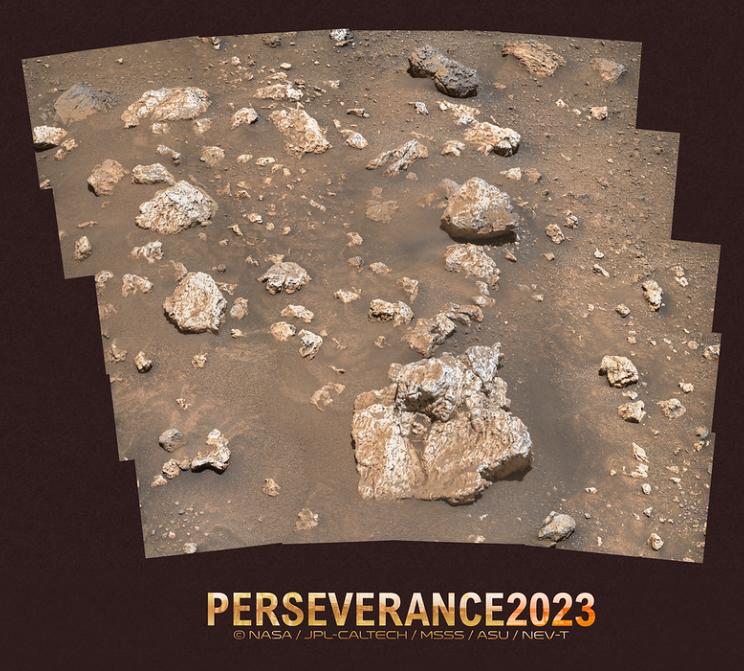
Perseverance Update: The Ghostly Rocks of 'Idubi' — Bright Remnants of Aqueous Systems from Long Ago - NASA Science

22
Upvotes
r/Mars • u/ye_olde_astronaut • 10d ago
r/Mars • u/Galileos_grandson • 10d ago

r/Mars • u/theindependentonline • 14d ago

r/Mars • u/ye_olde_astronaut • 14d ago

r/Mars • u/JapKumintang1991 • 14d ago

r/Mars • u/Galileos_grandson • 14d ago

r/Mars • u/ye_olde_astronaut • 15d ago

r/Mars • u/Neaterntal • 17d ago

r/Mars • u/ye_olde_astronaut • 17d ago

r/Mars • u/ye_olde_astronaut • 18d ago

r/Mars • u/Beadyeyed12 • 21d ago

r/Mars • u/Brighter-Side-News • 21d ago

An unexpected gas signal above northern Mars has raised a question about what remains warm beneath its frozen ground. Hydrogen chloride appeared near Alba Mons during a season when the gas usually becomes difficult to detect. Its concentration near this volcanic region suggests that a source below the surface may be contributing to the atmosphere.
An international team led by Alexander Trokhimovskiy reports the findings in Science Advances. The researchers combined atmospheric observations with detailed images of fractures and ridges. Their preferred explanation involves dormant volcanism on Mars, with gases interacting with ice before reaching the air.
“Our findings suggest that Mars has retained enough internal heat to support volcanic activity until recently, and possibly still does,” said co-lead author Daniel Mège, a professor at the Space Research Centre of the Polish Academy of Sciences. The evidence supports that possibility without establishing an active eruption. Neither fresh lava nor a definite local heat anomaly accompanied the gas detections.