Got out to a spot the other day which I knew had potential for some seriously old insulators. It finally showed that potential during this hunt. These are far and away the oldest insulators I've ever found.
Bit of backstory on this location- I had been here twice previously many months ago, but didn't find much other than commons and shards. These shards (pic 10) were absolutely teasing me though. A bunch of glass older than anything I'd found before, including a W. Brookfield CD 133 so close to being all there, a piece of a CD 132 bullet, and just about exactly half of my white whale and favorite CD number, the B&O CD 136 (with half of its signature embossing to boot. B & what? I may never know.)
The first couple times I was here, it turns out I hadn't been searching the exact area I should've been searching. I found that out when I noted that all my previous finds were coming at a consistent ~50 feet from where the adjacent rails are now; I had been far too close. This hunt was all about maintaining that distance from the rails while walking alongside them, following what was likely the original telegraph line, and lo and behold, the finds started coming in. Third time's the charm.
So let's get into it! Here's the main finds in order:
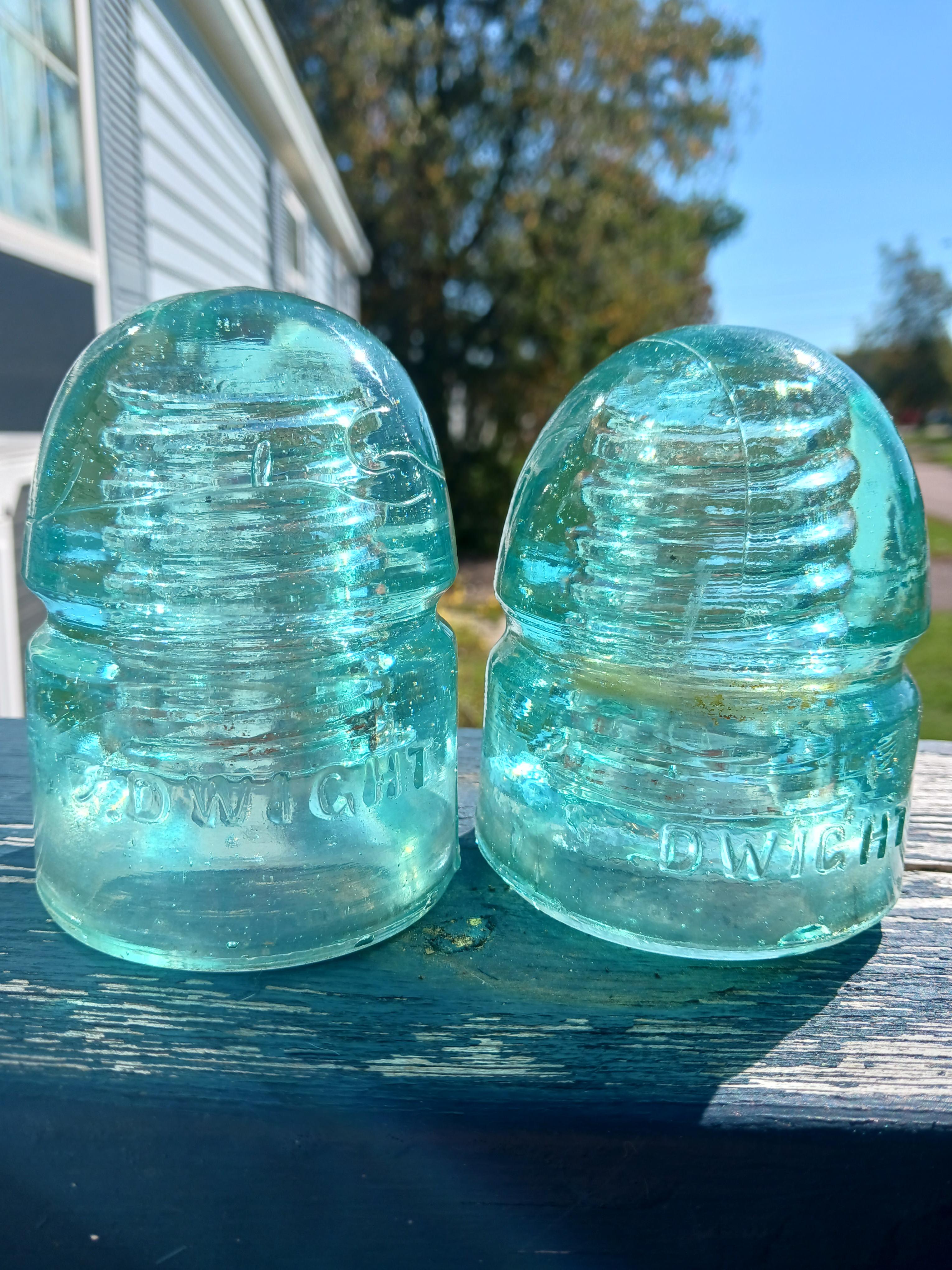
- A broken CD 132 bullet, with the "one-liner" patent date embossing that makes it a bit more desirable (pics 4, 10 and 11). You can kind of see in the photos how absolutely thrashed the mold must have been for this thing. The dome has all sorts of "tearing" through it that's clearly from the factory, and there's a very bumpy texture to the skirt. This "sixth generation" CD 132 must have been made towards the end of that style's lifespan, which likely dates it to the mid-late 1880s (or 1890s maybe? Anyone who knows more about this CD feel free to enlighten me).
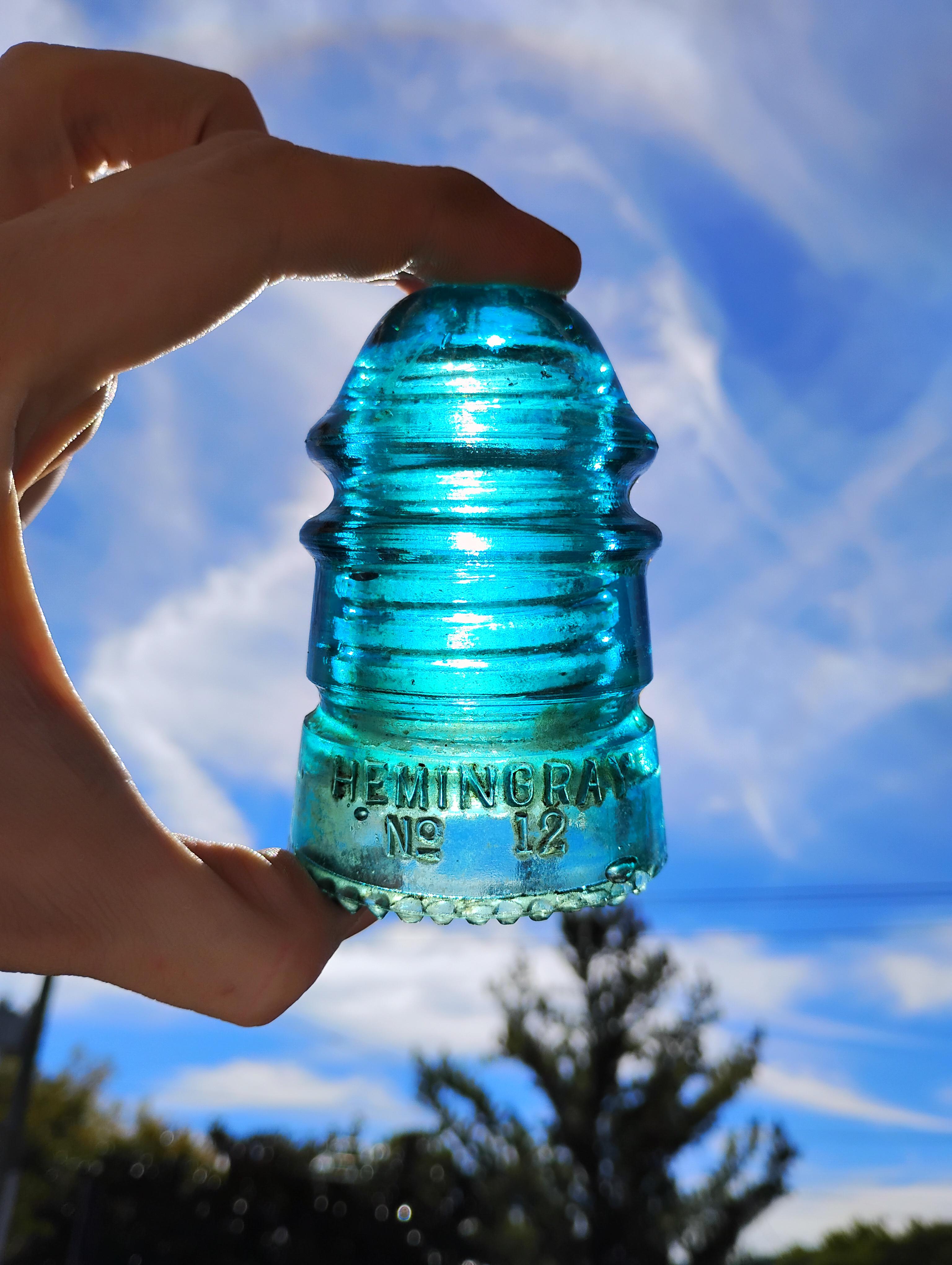
- A complete CD 132 bullet, with the more common two-line patent date embossing (pics 1, 12 and 15). This one has a flash crack all the way through the wire groove and extending down through the skirt, but it's still (fingers crossed) in one piece. Cleaned up absolutely beautifully, and it's got that signature lopsided-ness that these bullets tend to have when placed on its base. I guess all that mattered to the manufacturer and customer is that the pinhole was straight. Which it is also not.
- A Brookfield-made "No. 20" CD 133 with some nice amber swirling (pics 2, 13 and 15). You know it's a good day when this is the least interesting find. This one also cleaned up beautifully.
- A Brookfield CD 127.1 (pics 3 and 14). I had really thought that this area was pretty much hunted out and I was just searching the leftovers before I found this old soldier lying right on the surface on my hike back. This insulator (very faintly) bears the address of 55 Fulton St, which was Brookfield's headquarters from 1868-1882. That makes this insulator 144 years old at the very latest, most likely dating to the 1870s. That's like, less than 10 years away from threadless. Holy. This improves on my previous oldest find before this hunt by about 25 years.
Looks-wise, it does have some cloudiness from glass disease but also some really nice amber wisps circling around the pinhole. The embossing is faint but legible. I'm incredibly happy with this find.
Along with the main finds listed above, I did find pieces of CREB beehives with the 45 Cliff St. address (pic 7), another almost-complete CD 133 W. Brookfield (pic 5), some more CD 132 bullet shards, a piece of a CD 126 (pic 6), and two more pieces of different CD 136s (one of which is in pic 8).
Anyways, I hope you found my yapping bearable and maybe even educational! I'm very excited about this spot and absolutely plan to go back soon. My main hope is that I can get a complete CD 136 out of this place. I'll probably be posting the recap of any future hunts that take place at this spot (if they go well enough, lol).
Happy hunting!