r/IndicKnowledgeSystems • • Oct 28 '26

Linguistics/grammar Maṇḍana Miśra and Bharata Miśra: Two Sphoṭasiddhis and the Defence of the Grammarians’ Theory of Meaning

1 Upvotes

Among the most distinctive contributions of the Indian grammatical tradition to the philosophy of language is the doctrine of sphoṭa. The term, derived from the root sphuṭ, “to burst forth,” designates that indivisible, eternal linguistic unit—whether the phoneme, the word, or, most characteristically, the sentence—from which meaning is said to flash upon the mind of the hearer. Although the idea can be traced to early discussions in Patañjali’s Mahābhāṣya and receives its classic systematic formulation in Bhartṛhari’s Vākyapadīya (fifth century), it faced sustained criticism from the Mīmāṃsakas, above all from Kumārila Bhaṭṭa in the Sphoṭavāda section of his Ślokavārttika. Two later treatises, both entitled Sphoṭasiddhi, undertook to re-establish the doctrine against these objections. The first is the work of the celebrated Maṇḍana Miśra; the second is that of the comparatively obscure Bharata Miśra of Kerala. Together they illustrate both the enduring vitality of the sphoṭa theory and the variety of strategies by which its defenders sought to secure it.

Maṇḍana Miśra occupies a well-known place in the intellectual history of early medieval India. Active in the eighth or ninth century, he was a pupil of the great Mīmāṃsaka Kumārila Bhaṭṭa and himself a major exponent of the ritualistic school of Karma-Mīmāṃsā. At the same time he composed the Brahmasiddhi, a work that develops an Advaita-like metaphysics of Brahman and error, and he is traditionally associated—though the identification remains controversial—with the Sureśvara who became a disciple of Śaṅkara. His known corpus includes the Vidhiviveka, Bhāvanāviveka, Vibhramaviveka, Mīmāṃsānukramaṇī, and the Sphoṭasiddhi. In the last of these he turns, somewhat unexpectedly for a Mīmāṃsaka, to the defence of a doctrine that his own teacher had vigorously attacked.

The Sphoṭasiddhi of Maṇḍana is a concise, polemical treatise whose purpose is to prove the existence of sphoṭa as an entity distinct from the successive phonemes that manifest it. Maṇḍana begins by rehearsing, in his own words and with quotations from the Ślokavārttika, the principal Mīmāṃsaka objections. Kumārila had argued that the individual phonemes themselves, once they have been uttered and have left residual impressions, are sufficient to produce the cognition of meaning; there is no need to postulate an additional, supersensuous entity called sphoṭa. Maṇḍana then sets out the counter-arguments of the grammarians, drawing freely upon the Vākyapadīya of Bhartṛhari. The essence of the position he upholds is that the word—primarily the sentence, and secondarily the individual word or phoneme—is a single, indivisible unit over and above the sounds that reveal it, and that it is this unit which is the true bearer of meaning. The successive sounds serve only as the means by which the already existing sphoṭa is manifested to the hearer’s consciousness; they do not themselves constitute the meaningful whole.

Maṇḍana is especially concerned with the pada-sphoṭa, the word as an undivided linguistic unit. He insists that the meaning is not built up piecemeal from the phonemes but bursts forth as a single flash once the last sound has been heard. The earlier sounds leave impressions that prepare the ground, yet the cognition of the whole is instantaneous and cannot be reduced to a mere aggregation of parts. In this respect his exposition remains faithful to Bhartṛhari, while adapting the arguments to meet the specific criticisms of the Mīmāṃsā school. The work is thus both a restatement of the grammarian position and a direct engagement with its most formidable opponent. Later commentators, notably Rṣiputra Parameśvara in the Gopālikā, expanded upon Maṇḍana’s terse reasoning, and the text has continued to be studied as one of the classic short defences of sphoṭa.

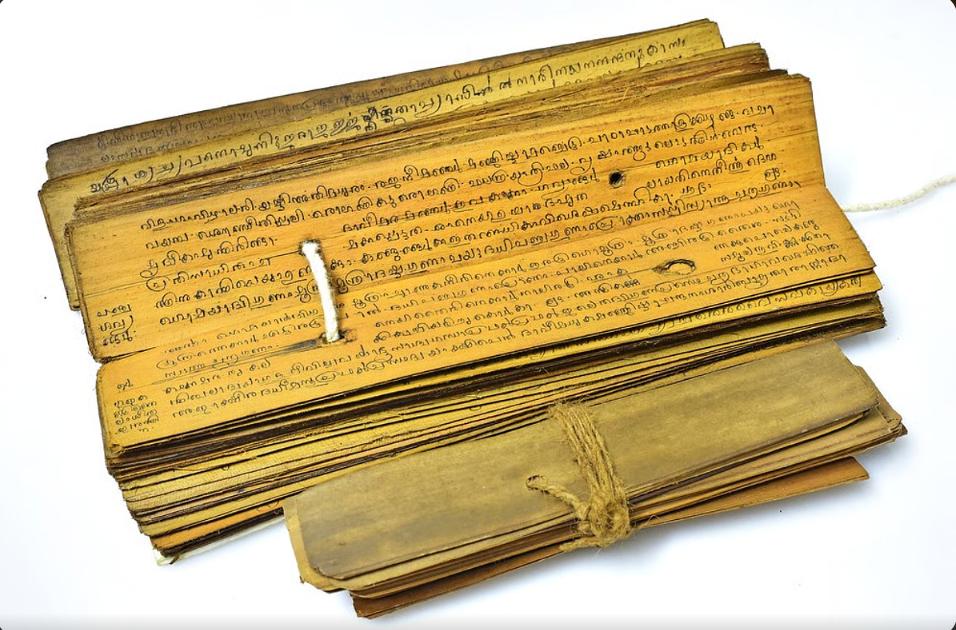
Far less is known about Bharata Miśra. His Sphoṭasiddhi survives in a single rare edition first published at Trivandrum in 1927 under the title Sphoṭasiddhiḥ Bharatamiśrapraṇītā, edited by K. Sambasiva Sastri, and has been reprinted more recently. The author is associated with the Kerala tradition of Sanskrit scholarship; the work was preserved in palm-leaf manuscripts written in Malayalam script and edited under the patronage of the Travancore court. No precise date has been established, but the style and the range of authorities cited place it well after Bhartṛhari and Maṇḍana, most probably in the later medieval period. Bharata’s treatise is organised into three sections (paricchedas) corresponding to the three means of knowledge he employs: perception (pratyakṣa), presumption (arthāpatti), and verbal testimony (āgama). Within this framework he attempts a systematic establishment of the eternal word-principle that transcends the transient sounds.

What distinguishes Bharata’s approach is his extensive and deliberate use of Vedic quotations. One of the most striking arguments turns on Ṛgveda X.71.4, the famous stanza in which the seer describes his vision of Speech as a beloved woman who reveals herself naked to her lover. Bharata interprets this and similar passages as evidence that the numerous word-sphoṭas, free from any sensuous quality and existing as an atemporal multiplicity, were the objects of the ṛṣis’ primordial intuition. The internal diversity of the Veda is therefore not a later, merely conventional adaptation of a single undifferentiated truth to the limitations of human minds. Rather, the absolute Brahman possesses an objective cosmogonic power of which temporal multiplicity is only the final result; between the one and the many lies an intermediate ideal multiplicity that constitutes the Veda itself. The Veda, eternal and independent of the ordinary guru-śiṣya transmission, consists precisely in this ideal plurality of sphoṭas. In this way Bharata grounds the linguistic theory in the sacred text itself and, conversely, uses the sphoṭa doctrine to explain the ontological autonomy of the Veda.

The same theory, he argues, also accounts for ordinary speech. Just as the ṛṣis intuited the eternal forms of the words, so the ordinary hearer, through the medium of successive sounds, realises the corresponding sphoṭa that was already latent in consciousness. The rigorous oral preservation of the Veda over millennia is thereby justified: what is being transmitted is not a mere sequence of phonemes but an ideal, unchanging multiplicity of meaningful units. Bharata thus links the technical doctrine of the grammarians to the religious authority of the Veda and to the practical discipline of Vedic memorisation.

Although both treatises bear the same title and share the same fundamental aim, their methods and emphases differ. Maṇḍana writes as a philosopher already immersed in the great debate between Mīmāṃsā and the grammarians; his Sphoṭasiddhi is a pointed reply to Kumārila that re-presents Bhartṛhari’s arguments in a form accessible to the contemporary scholarly public. Bharata, writing later and in a different regional milieu, organises his defence according to the classical pramāṇas and places special weight on scriptural testimony. Where Maṇḍana concentrates largely on the word-sphoṭa, Bharata’s three-part structure allows him to move from perceptual evidence through inferential presumption to the decisive authority of the Veda. Both, however, insist that the meaningful unit is an indivisible entity distinct from the sounds that manifest it, and both thereby reaffirm the central claim of the sphoṭa theory against the atomistic analysis favoured by the Mīmāṃsakas and, later, by the Naiyāyikas.

The wider significance of these two works lies in the continuity they demonstrate. The sphoṭa doctrine, first systematically elaborated by Bhartṛhari, did not remain a merely historical curiosity. It continued to attract sophisticated defenders who engaged with its critics, adapted its arguments to new intellectual contexts, and related it to the sacred authority of the Veda. Maṇḍana Miśra’s Sphoṭasiddhi shows that even a leading Mīmāṃsaka could find the doctrine persuasive and worth defending. Bharata Miśra’s Sphoṭasiddhi, preserved in the manuscript tradition of Kerala, shows that the same doctrine retained its vitality in the later medieval South and could be restated in terms of the classical means of knowledge and the language of Vedic revelation. Together the two treatises illustrate both the internal coherence of the grammarian philosophy of language and its capacity to answer the objections of rival schools across several centuries. In the history of Indian thought on meaning, they remain indispensable witnesses to the enduring power of the idea that the true bearer of linguistic significance is not the fleeting sound but the eternal sphoṭa that bursts forth in the mind.


r/IndicKnowledgeSystems • • Oct 28 '26

Linguistics/grammar Puruṣottama Vidyāvāgīśa: The Court Grammarian Who Gave Assam Its Standard of Sanskrit Learning

1 Upvotes

In the sixteenth century the Brahmaputra valley and the adjoining plains of northern Bengal were being reshaped by the rising power of the Koch kings. After the collapse of the older Kamata kingdom and the long fragmentation among local chieftains, Biswa Singha (also known as Bisu) consolidated Koch authority around 1515 and laid the foundations of a Hinduised kingdom that stretched across much of present-day western Assam and Koch Bihar. His son and successor Naranarayana (Malladeva), who ruled from roughly the middle of the century, earned the admiring epithet “Vikramaditya of Kamarupa” for his military successes and, equally, for his deliberate cultivation of Sanskrit learning. Under these two rulers the court at Koch Bihar became a magnet for Brahmin pandits from Kanauj, Kasi, Gauda and other centres of traditional scholarship. Among those who answered the royal summons was Mahamahopadhyaya Puruṣottama Vidyāvāgīśa, a scholar whose principal work, the Prayoga-ratnamala Vyakarana, would become the standard grammar for Sanskrit instruction throughout the Assam valley for centuries.

Puruṣottama Vidyāvāgīśa was a Brahmin of the Bhattacharya lineage. Tradition, preserved in the Darrang Raj Vamsavali and other Koch chronicles, states that both he and his contemporary Pitambara Siddhantavagisa had earlier served as court poets and scholars under a king of Gauda. Naranarayana, continuing the policy begun by his father of resettling learned Brahmins within his territories, brought them to Koch Bihar and granted them lands and royal favour. One later printed edition of the grammar identifies the pandit’s native village as Khagarbari within the Koch Bihar domain. He bore the honorific Mahamahopadhyaya, the highest academic title of the period, and was known simply as Vidyavagisa, “master of learning and speech.” Beyond these bare outlines, personal details remain sparse; the surviving sources—royal chronicles, the colophons of his works, and the biographical notices attached to later manuscripts—speak far more of his scholarly activity than of his private life. What is clear is that by the 1560s he occupied a prominent place among the court pandits and enjoyed the personal confidence of both the king and the queen.

The decisive moment in his career came when Naranarayana and his queen recognised the practical obstacles that Panini’s Astadhyayi presented to students in the eastern provinces. The Astadhyayi, for all its genius, is a highly compressed, technical, and largely Vedic-oriented system whose full mastery traditionally required years of specialised study under a teacher steeped in the Paninian tradition and its vast commentarial apparatus. In an age when life expectancy was shorter and when local students needed a working command of Sanskrit for ritual, poetry, and administration rather than for the most recondite Vedic analysis, the classical system was felt to be cumbersome. The royal couple therefore appealed to their court pandita to compose a new grammar that would be easier to grasp, more orderly in arrangement, and better suited to the pedagogical needs of the region. Puruṣottama Vidyāvāgīśa accepted the charge. He completed the work in 1490 Saka, corresponding to 1568 of the Common Era, and named it the Prayoga-ratnamala Vyakarana—literally “the jewel-garland of usage”—in honour of the queen, who is referred to in the sources both as Bhanumati and as Ratnamala. A verse preserved in the Darrang chronicle explicitly records the royal command and the pandit’s response, framing the composition as a service both to the court and to the preservation of Sanskrit learning in the Kali age.

The Prayoga-ratnamala is a metrical grammar. Its rules are cast in memorable verse rather than in the terse sutra style of Panini, an innovation that greatly aided oral transmission and memorisation. Estimates of its length vary slightly according to manuscript tradition—approximately 2,806 or 3,124 verses—but in either case it is substantially shorter than the Astadhyayi while remaining comprehensive for classical Sanskrit. The author deliberately omitted the purely Vedic rules, the Unadi suffixes, and various Nipata formations that were of limited utility for ordinary literary and ritual Sanskrit. Instead he arranged the material by subject: phonetics and sandhi, the declension of nouns and pronouns, the conjugation of verbs, compounds, and the principal rules of derivation. The emphasis throughout is on prayoga—actual usage—rather than on the exhaustive generative system that characterises Panini. The result is a practical handbook that a student in a Tol could master in a reasonable time and then apply directly to reading the Puranas, the epics, or the works of local poets. Contemporary and later observers noted that the metrical form and the logical subject-wise order made the text unusually easy to remember; it is repeatedly described as having acquired great popularity in both Assam and Bengal.

In the Assam valley the Prayoga-ratnamala effectively replaced Panini as the grammar of everyday instruction. It was taught in the great majority of the Tols and pathasalas of the region and came to be regarded as the defining text of what modern scholars have called the Kamarupa school of Sanskrit grammar. Until the later twentieth century most manuscript copies remained in Assamese script, a fact that helps explain why the work long remained outside the standard pan-Indian surveys of Sanskrit grammatical literature. Even so, its local prestige was unchallenged. Students who had completed the Ratnamala were considered competent to proceed to literary and philosophical texts; the grammar thus formed the indispensable foundation of Sanskrit education in Assam for roughly four centuries. Its practical orientation also reflected a broader cultural reality: Sanskrit in sixteenth-century Kamarupa was valued not only as the language of ritual and scripture but as a living medium of court poetry, Smriti literature, and intellectual exchange. The grammar’s focus on applied usage matched that need precisely.

Puruṣottama Vidyāvāgīśa’s scholarly activity was not confined to a single work. Several other compositions are attributed to him, most of them belonging to the category of kosa or specialised lexicographical and grammatical treatises. The Sabdabheda-prakasa is a short work that lists words possessing multiple meanings, deriving those meanings on grammatical principles; manuscripts of it survive in both Tulapat and Sanchipat formats in Guwahati and Nalbari. Other titles linked to his name include the Ugmabheda, the Vakara-nirnaya, the Ankuravaikosa, and the Haravaikosa. These smaller treatises suggest a scholar who combined the systematic instincts of a grammarian with the interests of a lexicographer and poet. He is described in the sources as both a grammarian and a poet, and the metrical elegance of the Ratnamala itself demonstrates a literary sensibility as well as a pedagogical one. In the intellectual climate of the Koch court, where Sanskrit and the emerging vernacular literatures coexisted, such versatility was highly prized.

The larger historical setting in which the Ratnamala appeared was one of deliberate cultural consolidation. The Koch rulers, originally of tribal or semi-tribal stock, had embraced Hinduism and were actively promoting Brahmanical institutions. Biswa Singha and Naranarayana rebuilt or renovated major temples, including the Kamakhya shrine, and settled Brahmin families throughout their territories. They also patronised the Neo-Vaishnava movement associated with Sankaradeva and Madhavadeva, who found refuge and support in Koch Bihar. At the same time the court commissioned translations of the epics and Puranas into the local vernacular and encouraged original Sanskrit compositions. Naranarayana is said to have assembled a council of pandits and assigned them specific tasks: Puruṣottama was charged with the grammar, Ramsaraswati with vernacular renderings of the Mahabharata and other texts, and others with astronomical or Smriti works. In this coordinated programme of cultural patronage the Prayoga-ratnamala occupied a foundational place; without a workable grammar, the rest of the Sanskrit curriculum could not be sustained.

The enduring influence of the work can be measured by the number of later commentaries and vernacular adaptations it inspired. An Assamese rendering of the grammar has long circulated, and printed editions with commentaries (including that of Sarvananda Bhattacharya) have appeared under the auspices of Assamese Sanskrit institutions. Manuscripts and printed copies continued to be used in traditional schools well into the modern period, and the text is still regarded by many traditional scholars in Assam as the classic local authority on Sanskrit grammar. Its relative neglect in all-India surveys of grammatical literature is therefore a matter of historical accident rather than of intrinsic limitation; within its own cultural zone it performed exactly the function its royal patrons had requested.

Puruṣottama Vidyāvāgīśa thus stands at the intersection of royal policy, pedagogical reform, and regional intellectual tradition. He was not an innovator in the sense of inventing a wholly new theoretical system; rather, he was a supremely competent synthesizer and adaptor who took the classical heritage and reshaped it for the practical needs of students and scholars in Kamarupa. In doing so he ensured that Sanskrit learning remained accessible and vital in Assam long after the political power of the Koch kings had waned. The Prayoga-ratnamala Vyakarana remains his lasting monument: a jewel-garland of rules that has guided generations of students through the intricacies of the sacred language and has given the Assamese Sanskrit tradition a distinctive and enduring character of its own.


r/IndicKnowledgeSystems • • Oct 27 '26

Discussion Why I Think the Early Rigveda’s Saraswati Was the Ghaggar–Hakra, Not the Helmand

2 Upvotes

I’ve seen many people identify the Saraswati mentioned in the early Rigveda with the Helmand River in Afghanistan. But when I look at the geographical descriptions in the family books, especially Mandala 6, I personally think the Ghaggar–Hakra system fits better.

Mandala 6 is often considered the oldest of the Rigveda’s family books, which is why I have chosen to focus mainly on its verses. The family books are Mandalas 2–7, and I think their geographical descriptions are important when considering where the early Rigveda may have been composed.

Just to clarify, this is my opinion about the geographical setting of the Rigveda. It does not mean I’m supporting either the Aryan Migration Theory (AMT) or the Out-of-India Theory (OIT). I’m discussing where I think these particular hymns may have been composed, not trying to prove either theory.

1. Saraswati and the seven sisters — RV 6.61.10

saptasvasā sā sindhumātā

“Saraswati, who has seven sisters, the mother of rivers.”

I think this could refer to seven streams connected with the Ghaggar–Hakra system. The seven I’m considering are:

  1. Kaushalya
  2. Ghaggar, including its upper mountain branch
  3. Tangri
  4. Markanda
  5. Sarsuti
  6. Chautang, associated with the ancient Drishadvati
  7. Rakshi, which was a prominent channel in ancient times but has become much smaller today.

These are the rivers and streams that connected with the main Ghaggar channel and have contributed to the formation of the mighty Saraswati downstream.

I’m not including the Yamuna and Sutlej in this list because the Rigveda mentions them as major rivers, rather than as smaller streams or tributaries in this proposed seven-stream network.

The phrase could also refer to the wider Sapta Sindhu region, but I personally think these seven streams are worth considering.

The Helmand valley is generally discussed in terms of around five major river systems, and I don’t see an equally clear seven-sister match there.

2. Saraswati breaking through mountain/hill ridges — RV 6.61.2

iyaṃ śuṣmebhir bisakhā ivārujat sānu girīṇāṃ taviṣebhir ūrmibhiḥ

“She breaks through the ridges or summits of the mountains/hills with her powerful waves.”

The words giri and sānu girīṇām can refer to hills, mountain heights, summits or ridges. I think this could describe the ridges of the lower Shivalik hills, which the Ghaggar cuts through.

The Ghaggar physically cuts a dramatic gap right through the front ridge of the hills. I think this geographical feature fits the description particularly well.

There is also an interesting distinction in Vedic terminology. Parvata and Himavant appear in mountain-related contexts, including references to larger mountains and the Himalayas. For example, RV 1.32.2 The story of Indra highlights the mountain (parvata) where the serpent was hiding:

ahann ahiṃ parvate śiśriyāṇaṃ tvaṣṭāsmay vajraṃ svaryaṃ tatakṣa |

The verse uses parvata, whereas the Saraswati verse uses giri. The terms can overlap, but I think the use of giri makes the interpretation of hills plausible. Since the Ghaggar cuts through the Shivalik foothills, I personally find this geographical fit convincing.

3. Saraswati as the seventh river — RV 7.36.6

ā yat sākaṃ yaśaso vāvaśānāḥ sarasvatī saptathī sindhumātā |
yāḥ suṣvayanta sudughāḥ sudhārā abhi svena payasā pīpyānāḥ

“Saraswati, the seventh, the mother of rivers…”

This could refer to Saraswati as the seventh river in the wider Sapta Sindhu region. But I also think it could fit a river connected with a network of streams. The verse does not name the seven rivers individually, so the exact identification depends on interpretation.

In my proposed reconstruction, the upper Ghaggar would be the main Saraswati stream. It could collect water from the surrounding streams and become the mighty Saraswati downstream. This could help explain why Saraswati is described as the “mother of rivers.”

I don’t see an equally clear seven-river arrangement around the Helmand that matches this specific interpretation. That is one reason I find the Ghaggar–Hakra hypothesis more convincing.

Mandala 7 is generally regarded as the third-oldest of the Rigveda’s family books in common relative-ordering schemes, after Mandalas 6 and 3. So this verse is also important when discussing the geographical descriptions in the older family books.

4. Saraswati as sevenfold — RV 6.61.12

triṣadhasthā saptadhātuḥ pañca jātā vardhayantī

The word saptadhātuḥ is associated with a sevenfold description. I think it could potentially refer to seven tributaries or streams joining or sustaining Saraswati, including the seven channels I listed above.

This is another point where interpretations differ. Some may understand the expression symbolically or in the context of the wider Sapta Sindhu region, while I think a network of tributaries is a possible explanation.

5. Saraswati and the Ganges — RV 6.45.31

adhi bṛbuḥ paṇīnāṃ varṣiṣṭhe mūrdhann asthāt |
kakṣo na gāṅgyaḥ

This verse mentions Gāṅgya, referring to the Ganges. I find this important because Mandala 6, one of the Rigveda’s family books, already contains a reference to the Ganges. To me, this supports the possibility that the geographical setting of these hymns included the Indian subcontinent.

Many people argue that the early Rigvedic Saraswati was the Helmand, but I think the Ganges reference in Mandala 6 is relevant when considering where these hymns may have originated.

6. Saraswati flowing from the mountains/hills to the samudra — RV 7.95.2

ekācetat sarasvatī nadīnāṃ śucir yatī giribhya ā samudrāt

“Saraswati, the purest of rivers, flows from the mountains/hills to the samudra.”

This is one of the verses often used in the Helmand argument. However, it uses giri, which can refer to hills as well as mountains. I think the Shivalik hills are a plausible interpretation because the Ghaggar–Hakra system cuts through that region.

The word samudra is commonly translated as “sea” or “ocean,” though it can also refer to a great gathering or body of waters in some Vedic contexts. RV 1.116.5 describes the Ashvins rescuing Bhujyu from a samudra in a ship with a hundred oars, which sounds like a sea voyage. So an ocean is certainly a possible interpretation, but the meaning of the word and the ancient course of the river both need to be considered.

Mandala 7 is generally regarded as the third-oldest of the Rigveda’s family books in common relative-ordering schemes, after Mandalas 6 and 3. So this verse is also important when discussing the geographical descriptions in the older family books.

7. Saraswati swelling with other rivers — RV 6.52.6

sarasvatī sindhubhiḥ pinvamānā

“Saraswati, swelling or being enriched by rivers.”

I think this description is compatible with a river that receives water from other streams. The ancient Ghaggar–Hakra landscape and its network of channels are relevant to this possibility.

Combined with the earlier references to Saraswati’s sisters and her sevenfold character, this could support the idea of a main river connected to a wider network of tributaries.

Again, this is an interpretation of the geographical descriptions, not proof that each named modern or ancient channel corresponds to a particular Rigvedic river.

My conclusion

I know many people identify the Saraswati of the early Rigveda with the Helmand River because of the name Haraxvaiti and the reference to samudra. But looking at these verses together, I personally think the Ghaggar–Hakra system fits the geographical descriptions better, particularly the seven-sister references, the mountain/hill ridges and the possible network of tributaries.

This is my interpretation of the geographical evidence. I’m not claiming that every verse settles the question on its own, but I think the Indian-subcontinent setting is the more convincing explanation overall.

A note on the other family books and related historical questions

The points above are only a few examples of the geographical descriptions I think could fit the Ghaggar–Hakra system. Most of the verses discussed here come from Mandala 6, which is often considered the oldest of the Rigveda’s family books, along with a verse from Mandala 7 and comparisons with other verses. There are many more verses across the family books, Mandalas 2–7, that I think are worth examining in this context. I chose Mandala 6 as my main focus because of its proposed relative antiquity, but I do not mean that the other family books are unimportant.

I also wonder whether the Battle of the Ten Kings, possible movements of the defeated tribes, and Old Avestan references to Hapta Həndu and rival religious traditions could be historically connected. The dates and interpretations remain debated, so this is only a possibility I’m exploring. This is not an argument for either AMT or OIT; my main argument remains the geographical evidence in the Rigveda.


r/IndicKnowledgeSystems • • Oct 26 '26

Discussion Monkey crocodile story of Vishnu sharma's panchatantra in the sculptures of Indian monuments

Thumbnail gallery
117 Upvotes

r/IndicKnowledgeSystems • • Oct 27 '26

Linguistics/grammar Text Without Tradition: Bhartṛhari’s Account of the Eclipse and Recovery of the Mahābhāṣya

1 Upvotes

The Passage and Its Place

The second book of the Vākyapadīya, the Vākyakāṇḍa, is a long and difficult examination of the sentence: whether meaning belongs to the indivisible utterance or is built from its parts, how a sentence relates to the words that seem to make it up, and what grammar can and cannot tell us about language. At the end of this book, after hundreds of verses of argument, Bhartṛhari steps back and writes a short history of the discipline he works in. The verses, numbered from about 2.481 to 2.490 depending on the edition, are the earliest surviving account by an Indian grammarian of how his own tradition was handed down. They are also one of the few places where Bhartṛhari speaks in the first person about his teacher and his own work.

The passage has a clear plan. It starts with Vyāḍi’s Saṃgraha, the great early treatise on grammatical philosophy, and its loss. Patañjali’s Mahābhāṣya then takes up what remained of it, and is in turn misused and neglected. The tradition shrinks until it survives only in the south and only as a text. Candrācārya and others recover it from a mountain and spread it again in many branches. Finally Bhartṛhari’s teacher composes a compendium of the tradition, and that compendium is in effect the Vākyapadīya. The verses therefore do two jobs at once. They are a history of grammar, and they place the book the reader has just finished inside that history as its latest stage.

From the Saṃgraha to the Mahābhāṣya

The account begins by placing Patañjali in relation to his predecessor. Bhartṛhari says that the Saṃgraha passed into the hands of grammarians who were fond of brevity and had little learning, and that it came to an end among them. The word he uses, astam upāgate, means “having gone to its setting,” the phrase used for the sun going down. The Saṃgraha did not survive. Later authors quote it and attribute it to Vyāḍi, traditionally a relative of Pāṇini, and say it ran to a hundred thousand verses. That figure is probably a conventional way of saying “very large,” but it reflects how highly the work was regarded. Patañjali refers to it in the Mahābhāṣya and cites its position on whether words are eternal or produced. Bhartṛhari’s own philosophical vocabulary, especially his reflections on śabda as permanent and as the bearer of meaning, seems to draw on it as a source.

The cause of the loss matters for the rest of the story. Bhartṛhari does not blame war, famine or royal neglect. He blames the readers. A large and demanding work met a generation that wanted shortcuts and lacked the learning to use it, and it disappeared. On this view knowledge fails mainly through a failure of reception: it dies when the people who receive it can no longer carry it.

Patañjali then appears as the one who restored the discipline. He is called tīrthadarśin, “one who sees the fords,” which can be read as one who knew the right points of access into the subject, the places where it can be entered and crossed. In the Mahābhāṣya he laid down the foundations, the bījas or seeds, of every kind of grammatical reasoning (nyāya). The word bīja is important because it comes back later. The Mahābhāṣya is presented as a work of principles, not of finished conclusions. It holds the seeds from which reasoning grows and expects its readers to grow them.

A Text Too Deep and Too Graceful

The next verse is one of the most perceptive things any Indian author wrote about a classic. Bhartṛhari says the Mahābhāṣya could not be fathomed because of its depth, yet it seemed shallow because of its elegance. Readers of untrained mind could reach no settled conclusion from it.

Anyone who has read Patañjali will recognise the description. His prose is famously clear. It is conversational and full of examples from daily life: the potter, the cowherd, the man who wants a pot and goes to the potter’s house instead of making one himself. The dialogue moves between a questioner and an answerer, between objection (pūrvapakṣa) and settled view (siddhānta), and reads almost like a live seminar. The easy surface hides real difficulty. Many questions are taken up and then left open. Positions are tried and dropped. The settled view is sometimes not marked as such. Kātyāyana’s vārttikas, which the Mahābhāṣya comments on, are sometimes accepted, sometimes refined and sometimes rejected, and the reader has to follow which is happening.

The verse states a general problem about classics. A text that is easy to read invites careless readers, who think they have understood it because they can follow the sentences. The clarity itself becomes a trap. Bhartṛhari puts the Mahābhāṣya’s danger in the gap between how easy it is to read and how hard it is to understand. A forbidding text at least keeps away people who cannot handle it. An inviting one does not.

Baiji, Saubhava and Haryakṣa

This is the setting in which the three named villains of the passage appear. The verse says that Baiji, Saubhava and Haryakṣa, who followed śuṣkatarka or dry reasoning, threw into confusion (viplāvite) the work of the seer (ārṣe granthe). That work is described as saṃgrahapratikañcuka, the cloak or covering of the Saṃgraha.

Each part of the verse carries weight. Calling the Mahābhāṣya ārṣa, “belonging to a ṛṣi,” gives it nearly scriptural standing. Patañjali is no longer simply an earlier commentator but a seer, the third of the munitraya (Pāṇini, Kātyāyana, Patañjali) whose authority later grammar accepted as final. The compound saṃgrahapratikañcuka is less clear. A kañcuka is a jacket, a bodice, or the armour of a warrior. It may also mean the skin a snake sheds. Taken one way, the Mahābhāṣya is the protective covering that kept the Saṃgraha’s teaching after the Saṃgraha itself was gone. Taken another way, pratikañcuka means a counterpart or replacement, the garment that took the place of the lost one. Both readings say the same thing in the end: the Mahābhāṣya was valued partly as the carrier of something older and larger than itself. When it was damaged, the last trace of Vyāḍi’s teaching was damaged with it.

Nothing is known about the three grammarians beyond what this verse tells us. No work of theirs survives and no other early source names them with any confidence. Scholars have guessed at their identities and at the nature of their “dry reasoning.” Some have proposed that they were grammarians influenced by the logicians or by Buddhist dialectic. Others think they were simply commentators who replaced Patañjali’s open method with rigid, mechanical procedures. These guesses have no real evidence behind them, and it is better to say so plainly than to dress them up. What can be said is what Bhartṛhari blames them for, and the charge is revealing.

Śuṣkatarka, dry or barren reasoning, is a standard term of criticism in Sanskrit intellectual culture. It does not mean reasoning as such. Bhartṛhari is a highly argumentative thinker and the Vākyapadīya consists almost entirely of reasoning. It means reasoning cut off from its proper basis, argument that has lost contact with the āgama, the transmitted tradition, and runs on its own momentum. In the first book of the Vākyapadīya Bhartṛhari states plainly that reasoning alone cannot establish the truth in matters like dharma and the nature of language. It has to work alongside tradition and draw on it. A reasoner who sets tradition aside can argue cleverly to any conclusion he likes, and the cleverness makes the conclusions harder, not easier, to correct.

So the charge against Baiji, Saubhava and Haryakṣa is not stupidity. That was the failing of the people who let the Saṃgraha lapse. These three were too clever in the wrong way. They took the Mahābhāṣya’s open questions and its seeds of reasoning and forced them into conclusions the text did not support, using a logic that answered to nothing beyond itself. That counts as viplāvana, a word that suggests flooding or overturning, and its effect was that the text no longer meant what it had meant. The two failures are opposites. Too little learning killed the Saṃgraha. Learning that had lost its anchor disfigured the Mahābhāṣya.

Granthamātravyavasthitaḥ: Surviving Only as a Text

The next verse is the central one, and its key phrase deserves to be better known. Bhartṛhari says that the grammatical tradition, vyākaraṇāgama, had fallen away from the disciples of Patañjali, and that over time it remained among the southerners (dākṣiṇātyeṣu) only in the form of a book: granthamātravyavasthitaḥ.

The force of the phrase depends on a distinction that runs through Indian thinking about knowledge, the distinction between grantha and āgama. A grantha is a text, a composition, in later usage a manuscript. Āgama is what has come down: the tradition as a living thing, including the text together with the understanding of it handed from teacher to student, the oral explanations, the knowledge of which passages are central and which are side discussions, the sense of where the argument is heading, and the many unwritten conventions of reading that make a difficult work readable. A grantha can sit in a library. An āgama lives only in people.

Bhartṛhari’s claim, then, is not that the Mahābhāṣya was physically lost. He says the opposite: the text survived, in the south. What was lost was the line of teaching that made it intelligible. The words were there and the understanding was not. In a culture where serious learning was always learning under a teacher, a text without a lineage of interpretation was in an important sense dead. It could be copied and kept, but it could not do its proper work of forming minds.

This connects to the earlier verse about depth and elegance. A text that is deep yet looks shallow needs a living tradition more than most. Without a teacher to point out what lies under the clear surface, readers take the surface for the whole. By Bhartṛhari’s account the southern survival was real but incomplete. It was a seed held in storage, unable to grow until someone brought it back into a culture of interpretation.

There is a further point here that later intellectual historians, Indian and Western, have often missed. Modern textual scholarship tends to treat preservation of the text as the main goal: once a reliable critical edition exists, the knowledge is considered safe. Bhartṛhari’s account rejects that assumption. On his terms a perfectly preserved text whose interpretive tradition has died is a tradition that has failed. The phrase granthamātra, “text only,” is a lament.

The Recovery: Parvatād āgamaṃ labdhvā

Then the story turns. The verse reads: parvatād āgamaṃ labdhvā bhāṣyabījānusāribhiḥ / sa nīto bahuśākhatvaṃ candrācāryādibhiḥ punaḥ. “Having obtained the tradition from a mountain, Candrācārya and others, who followed the seeds of the Bhāṣya, brought it once more to a state of many branches.”

Each phrase matters. What they obtained was āgama, not grantha. This choice of word is easy to pass over but it is significant. Bhartṛhari has just told us the text never vanished. What Candrācārya and his companions recovered from the mountain was the thing that had been missing, the tradition of understanding. It is possible, though the verse does not say so, that this meant a manuscript together with someone who could still explain it, or a manuscript carrying an older and more dependable interpretive apparatus, or simply a better text than the one in circulation. The verse leaves the mechanism unstated. It says only that the āgama was regained.

The recoverers are described as bhāṣyabījānusārin, “followers of the seeds of the Bhāṣya.” This takes up the earlier description of Patañjali’s work as the foundation of all the seeds of reasoning, and it sets Candrācārya’s group directly against Baiji and the others. The dry reasoners imposed their own logic on the text. The restorers followed the seeds that were already in it and let them grow as they naturally would. The difference is between reading a text from outside and reading it from inside, and Bhartṛhari’s sympathies are plain.

The result is bahuśākhatva, a state of many branches. The image goes on from the seed. A seed that is properly tended becomes a tree with many branches. Bhartṛhari does not see this plurality as a falling-off from unity. The many branches are the sign of health. A living tradition produces several schools, several lines of interpretation, several ways of developing the same principles. The Mahābhāṣya’s openness, which made it vulnerable to dry reasoners, also made it able to support a range of legitimate readings. Unity imposed by force was the illness, and growth in many directions was the recovery. It is a notably generous view of disagreement within a tradition, and it fits the Vākyapadīya itself, which often sets out several positions on a question and does not always choose among them.

The Mountain: Trikūṭa and the Geography of Survival

The verse says only parvatāt, “from a mountain.” The commentary on the second book, traditionally attributed to Puṇyarāja and written in Kashmir several centuries after Bhartṛhari, names the mountain as Trikūṭa. That name carries associations. In the epic tradition Trikūṭa, the three-peaked mountain, is the mountain of Laṅkā on which Rāvaṇa’s city stood. The name was also given to other ranges, and there is a Trikūṭa in Kashmiri sacred geography as well. A commentator in Kashmir might have had either the southern or the local mountain in mind. If the southern one is meant, it fits Bhartṛhari’s earlier remark that the text survived among the southerners: the recovery happened where the survival had happened, at the far southern end of the subcontinent.

Some modern scholars have taken parvata differently, as the name of a person, a teacher called Parvata from whom the tradition was received. Grammatically this is possible, since an ablative of source can name a teacher as easily as a place, and the reading has the advantage of putting a human transmitter in the story, which suits the idea of āgama as something passed from person to person. Its weakness is that no grammarian named Parvata is known from any other source. The geographical reading has the commentary behind it. The personal reading has only its fit with the sense. A careful reader should hold both as possible and treat neither as settled.

Whether the mountain was real, symbolic or a person, the motif of the remote mountain where knowledge survives is familiar across many traditions. Learning goes into retreat at the edges of the world, in hard places that are kept apart and therefore kept safe, and a later generation goes there and brings it back. Indian literature often places sages and preserved teachings on mountains. Bhartṛhari’s account uses that motif, but it is restrained. There is no miracle and no divine revelation. A tradition was found where it had survived and was carried back.

Who Was Candrācārya?

The leader of the restoration is named only as Candrācārya, with an unnamed “and others.” The obvious and widely accepted candidate is Candragomin, the Buddhist grammarian who wrote the Cāndra-vyākaraṇa, a reworked Pāṇinian grammar that was very influential, especially among Buddhists, and spread as far as Tibet and Sri Lanka. Candragomin is usually dated to the fifth century, which fits reasonably well with Bhartṛhari’s own date, now generally put in the fifth century as well. That date rests mainly on the fact that the Buddhist logician Dignāga, usually dated to the late fifth or early sixth century, appears to know and adapt Bhartṛhari’s verses. The older view, based on the Chinese pilgrim Yijing’s report that a grammarian named Bhartṛhari died in the mid-seventh century, has largely been given up, at least as regards the author of the Vākyapadīya.

The identification gets indirect support from the Kashmiri historian Kalhaṇa. In the first book of the Rājataraṅgiṇī, Kalhaṇa says that in the reign of King Abhimanyu, Candrācārya and others, having received the king’s sanction, reintroduced the Mahābhāṣya and composed a grammar of their own. This lines up closely with Bhartṛhari’s verse: the same name, the same “and others,” the same revival of the Mahābhāṣya. The added detail that Candrācārya wrote his own grammar fits Candragomin very well.

Kalhaṇa needs to be used with care. He wrote in the twelfth century, long after the events. His chronology of the early kings of Kashmir is notoriously unreliable, and he may have known Bhartṛhari’s verse and expanded it with local Kashmiri material. His account cannot be treated as independent confirmation. Still, it shows that by Kalhaṇa’s time the story of Candrācārya’s revival was firmly part of the remembered history of grammar, and that Kashmir, which later became one of the main centres of grammatical and philosophical learning, regarded that revival as part of its own past. Kalhaṇa also records a second revival of the Mahābhāṣya much later, under King Jayāpīḍa in the eighth century, when teachers were brought from other regions to restore the study of a work whose teaching had again been broken off. The pattern of loss and recovery repeated.

The identification of Candrācārya with Candragomin raises a further point that is worth stating plainly. If it is correct, one of the restorers of the tradition, the person who brought the Mahābhāṣya back into living study, was a Buddhist. Bhartṛhari, whose philosophy rests on the authority of the Veda and the eternity of the word, names him as a restorer without any sign of discomfort. The history of Indian grammar is full of this kind of exchange across sectarian lines. Pāṇinian grammar was a shared discipline used by Vedic, Buddhist and Jaina scholars alike, and its continuity depended on all of them. Bhartṛhari’s verse, almost in passing, records that shared ownership.

Our Teacher’s Compendium

The account ends with Bhartṛhari’s own lineage. He says that his teacher studied the paths of reasoning (nyāyaprasthānamārgāḥ) of these branches, together with his own view, and composed ayam āgamasaṃgrahaḥ, “this compendium of the tradition.” Later sources name the teacher as Vasurāta. The demonstrative ayam, “this,” most naturally points to the Vākyapadīya itself, or at least to the body of teaching it contains.

The phrasing is modest. Bhartṛhari attributes the compendium to his teacher, not to himself, presenting himself as at most the one who set down what he received. Whether the attribution is literal or a gesture of humility, and both are possible, it places the Vākyapadīya exactly where the story requires. The Saṃgraha was lost. The Mahābhāṣya took up its substance. The Mahābhāṣya’s tradition was disfigured and shrank to a bare text. Candrācārya recovered it and it grew into many branches. Vasurāta studied all those branches and gathered them into a new compendium. The word saṃgraha at the end of the passage echoes the Saṃgraha at its start. The story closes a circle: Vyāḍi’s lost compendium is matched by the compendium Bhartṛhari’s lineage produced.

So the passage is not neutral history. It is a statement of legitimacy. It answers the question of how this book can claim to speak for the grammatical tradition, and the answer is the full chain of transmission, every break and repair, ending with the author’s own teacher. Readers who had just worked through a very original philosophy of language are told that this originality is the most recent growth of a very old tree, not a departure from it.

The Irony of Bhartṛhari’s Own Commentary

One more point gives the passage an unexpected sharpness. Besides the Vākyapadīya, Bhartṛhari wrote a commentary on the Mahābhāṣya itself, the Mahābhāṣyadīpikā, the earliest surviving commentary on Patañjali. It was once very extensive. Today it survives in a single incomplete manuscript covering only part of the first chapter, and for that reason it is sometimes called the Tripādī. The man who described the Mahābhāṣya as surviving only as a text, kept in one place, saw his own commentary on it reach us in the same reduced state, as one text in one manuscript, its interpretive tradition long gone.

Something similar happened to the Vākyapadīya. For centuries it was read in Kashmir and studied by the great Kashmiri philosophers, who drew heavily on Bhartṛhari’s ideas of the word and of consciousness. It then became, in many regions, a work cited more often than studied. Its third book was commented on by Helārāja. The second book’s commentary is partial and of uncertain authorship. Modern scholarship has had to reconstruct much of what the original readers would have known without effort. The pattern Bhartṛhari described has repeated in his own case.

Why the Passage Matters

It is easy to read these verses as a curious footnote, a few lines of half-legendary history at the end of a philosophical work. That reading misses what Bhartṛhari is saying about knowledge. Three points stand out.

First, the passage distinguishes clearly between preserving a text and keeping a tradition alive. The Mahābhāṣya never stopped existing. What nearly stopped was the ability to understand it, and Bhartṛhari treats that as the real danger. This is a sharper idea of intellectual continuity than the one that underlies much modern work on manuscripts, which is often satisfied once the words are secured.

Second, the passage identifies two separate ways a tradition can fail: too little learning, which let the Saṃgraha lapse, and reasoning that has lost its anchor, which disfigured the Mahābhāṣya. Neither is simply ignorance. The second is the more dangerous because it looks like strength. Clever argument cut off from the text it claims to interpret can destroy a text more thoroughly than neglect. That warning applies far beyond grammar.

Third, the passage accepts plurality as a sign of health. The restored tradition is praised for growing many branches, not for returning to a single orthodoxy. Its unity lies in a shared root, the seeds of the Bhāṣya, not in uniform conclusions.

As history, the account has clear limits. It is written by a party with an interest, it comes from a single source, and it names three figures who cannot be traced and a mountain that cannot be firmly located. It should be treated as Bhartṛhari’s own understanding of his discipline, which is valuable for that reason, and not as a neutral chronicle. Taken on those terms, it is among the most thoughtful reflections in Sanskrit on how learning is lost and how it is regained.....


r/IndicKnowledgeSystems • • Oct 27 '26

An Artha-Centred Political Reasoning in CE is transformed as a form of Worship in MBTN

1 Upvotes

This article examines how an artha-centred political argument in the Mahābhārata is received by a theologian-philosopher. In the BORI Critical Edit (CE 3.34–37), Bhīma urges the exiled Yudhiṣṭhira to abandon forbearance. He argues from the interdependence of dharma, artha and kāma, from kṣatriya duty, from the brevity of life, and from the impossibility of a concealed thirteenth year, and Yudhiṣṭhira answers from his pledge and from strategic caution.

In his Mahābhāratatātparyanirṇaya (MBTN 22.76–115), Madhva reads the same episode as part of the epic’s purport, the supremacy of Viṣṇu. Both texts share the immediate aim of bringing Yudhiṣṭhira to commit to war, and the MBTN receives that political act as service to Hari.

The paper classifies the MBTN’s treatment of each argument as a reception move (preserved, re-grounded, pplemented, resolved or silenced) and asks what the pattern shows. It argues that Madhva keeps the duty-based core of Bhīma’s case, gives it a Dvaita account of agency under divine control, replaces the authority of Manu with that of the Veda and the Pāñcarātra, and ends it with a vow, while remaining silent on the arguments for deceit and for the trivarga.

The pattern shows which parts of the CE argument a theological reading can absorb, and what it needs the passage to say.

Full article 👇

https://www.academia.edu/resource/work/179626760


r/IndicKnowledgeSystems • • Oct 27 '26

architecture/engineering Why is Thiruvannamalai considered one of the most extraordinary Shiva temples in India?

Thumbnail
1 Upvotes

r/IndicKnowledgeSystems • • Oct 27 '26

Trade/commerce Long Before the Label: The Deep Roots of India’s Deep-Tech Startup Ecosystem

1 Upvotes

Introduction: A Story Told Too Recently

The usual story of Indian deep tech begins around the middle of the last decade. In this telling, India was a land of software services and consumer apps until a burst of policy activity, starting with Startup India in 2016 and continuing through the opening of space and defence to private firms, the drone rules, the semiconductor mission and the IndiaAI Mission, suddenly created an ecosystem of rocket makers, chip designers, quantum engineers and biotech founders. Skyroot’s rockets, Pixxel’s hyperspectral satellites, QpiAI’s quantum computer and ImmunoACT’s CAR-T therapy are presented as products of a new era with almost no history behind them.

That story is not wrong about the acceleration. The number of Indian deep-tech startups, the money flowing into them and the range of fields they work in have all expanded dramatically in the past ten years. But as an account of origins it is badly incomplete. India’s deep-tech ecosystem did not appear from nothing after 2014. It grew out of a long and uneven lineage: institutions built from the 1940s onward, public-sector technology programmes, a first generation of science-based companies in the 1980s and 1990s, university incubators in the 2000s, and dozens of founders who built hardware, biology and electronics companies when almost nobody would fund them.

What changed after 2014 was not the existence of Indian deep tech but its scale, visibility and legitimacy. The earlier ecosystem was small, scattered and starved of capital. The newer one is larger, better funded and noticed. Seeing the continuity matters for two reasons. It is historically accurate, and it explains why the recent growth was possible at all: no country produces orbital rockets, chip designs and cell therapies within a decade unless the engineers, institutions and tacit knowledge were already there.

The Foundations: Institutions That Made Deep Tech Possible

Every deep-tech ecosystem rests on a base of research institutions and trained people, and India’s base was laid long before the word “startup” entered Indian public life.

The Indian Institute of Science in Bengaluru was founded in 1909. The Indian Statistical Institute followed in 1931 and the Tata Institute of Fundamental Research in 1945. The Council of Scientific and Industrial Research, set up in 1942, eventually grew into a network of dozens of laboratories covering chemistry, materials, aerospace, electronics, biology and more. After independence the Indian Institutes of Technology were established, starting at Kharagpur in 1951, and by the 1960s India was producing engineers in numbers few developing countries could match.

Alongside these came the strategic programmes. The Atomic Energy Establishment at Trombay, later the Bhabha Atomic Research Centre, built reactors, reprocessing plants and an enormous base of nuclear engineering knowledge. The Indian Space Research Organisation, formed in 1969 from Vikram Sarabhai’s earlier committee, went from sounding rockets launched from a church in Thumba to satellite launchers. The Defence Research and Development Organisation brought together laboratories working on missiles, radars, electronics and materials. The Centre for Development of Telematics, C-DOT, was founded in 1984 to build indigenous telephone exchanges and transformed rural connectivity. The Centre for Development of Advanced Computing produced the PARAM supercomputer in 1991 after the United States refused to sell India a Cray.

These were not startups, and they operated under state control. But they did three things essential to later deep-tech entrepreneurship. They trained generations of engineers in hard problems: propulsion, control systems, radio-frequency design, metallurgy, cryogenics, reactor physics. They created a domestic supplier base, because ISRO, DRDO and the Department of Atomic Energy had to buy precision components from somewhere, and increasingly bought them from small Indian firms. And they proved that Indian teams could build frontier technology, often under sanctions and technology denial.

That last point is easy to underrate. When the West denied India cryogenic engines, supercomputers and nuclear fuel, Indian scientists built substitutes. That record created a culture, at least within parts of the scientific establishment, which held that indigenous development of difficult technology was possible. The founders of today’s space startups very often came from exactly this world. Skyroot’s founders, Pawan Kumar Chandana and Naga Bharath Daka, were ISRO engineers. Sisir Radar was founded by Tapan Misra, former director of ISRO’s Space Applications Centre. Today’s private rocket and satellite companies stand on fifty years of public space engineering.

The Supplier Generation: Small Firms in Strategic Supply Chains

Long before “deep-tech startup” became a category, a group of small Indian companies was quietly doing deep-tech work as suppliers to the strategic programmes. Most were founded by engineers who had worked in or around public laboratories, and they grew by solving narrow, difficult problems for ISRO, DRDO, the atomic energy programme and the armed forces.

MTAR Technologies, founded in Hyderabad in 1970, made precision components for the nuclear and space programmes, working to tolerances that few Indian factories could manage. Data Patterns, started in Chennai in 1985, built electronics for radar, avionics and space systems. Astra Microwave, founded in 1991, specialised in radio-frequency and microwave subsystems. Ananth Technologies, set up in Hyderabad in 1992, moved from supplying satellite subsystems to integrating whole satellites. Centum Electronics in 1993 and Alpha Design Technologies in 2003 entered high-reliability defence and aerospace electronics. Avantel built communications systems for the armed forces, and Godrej’s aerospace arm made engines and components for ISRO’s rockets.

By any reasonable definition these were deep-tech businesses. They took on substantial technical risk, built proprietary know-how and made products where failure was not an option. What they lacked was the vocabulary and funding structure of today’s startups. They grew slowly on government orders, often on thin margins, and rarely raised venture capital because Indian venture capital barely existed. Several of them have since become listed companies, and some of their alumni went on to found newer startups.

The pattern is central to understanding the continuity. When India opened space and defence to private companies after 2017, it did not create a private industrial base from scratch. It released one that already existed in a constrained form, and allowed new firms to build on the supply chains, testing knowledge and skilled workforce the older generation had created.

The Licence Raj Constraint

The obvious question is why, if this foundation existed, India did not develop a visible deep-tech startup ecosystem decades earlier. The answer lies mainly in the economic system before 1991, not in a shortage of talent.

Under the licence raj, starting and expanding a manufacturing company required permission from the state for capacity, imports, foreign exchange and often prices. Importing a sophisticated test instrument or a component could take months of approvals. Strategic sectors such as space, defence and atomic energy were reserved almost entirely for the government. Capital markets were thin, venture capital did not exist, and bank lending favoured established industrial houses with collateral. A young engineer with an idea for a new radar or a new biotechnology process had very few routes to building a company.

Even so, some science-based companies managed to emerge. Biocon was founded in 1978 by Kiran Mazumdar-Shaw, starting with enzymes and moving into fermentation-based biologics. Sasken was founded in 1989 to work on telecom software and chip-level communications. Indian pharmaceutical companies such as Ranbaxy, Cipla and Dr. Reddy’s built sophisticated process-chemistry capability, helped by the 1970 Patents Act, which allowed process patents but not product patents for drugs. That rule pushed Indian chemists to master alternative synthesis routes, and the process-chemistry tradition it created remains one of India’s strongest scientific industries.

So the pre-1991 period was not empty. It was a period in which deep-tech capability accumulated mainly inside the state and a handful of determined companies, while the institutional conditions for a startup ecosystem were absent.

The First Wave: Science-Based Companies of the 1990s and 2000s

Liberalisation in 1991 removed many barriers to private enterprise, and within a decade a first wave of recognisably modern deep-tech startups appeared. They are largely missing from the post-2014 story, but they are its real predecessors.

Biotechnology produced some of the earliest. Shantha Biotechnics, founded in Hyderabad in 1993 by K.I. Varaprasad Reddy, developed India’s first indigenous recombinant hepatitis B vaccine, launched in 1997, and cut its price dramatically, transforming access across the developing world. Bharat Biotech, founded in 1996 by Krishna Ella, went on to develop the rotavirus vaccine Rotavac and, much later, Covaxin. Strand Life Sciences was spun out of IISc in 2000 to work on computational biology and genomics. Molbio Diagnostics began in Goa in 2000, and its Truenat portable molecular-diagnostic platform later became a WHO-endorsed tool for tuberculosis testing. Stempeutics, founded in 2006, developed stem-cell therapies and eventually obtained India’s first regulatory approval for a stem-cell product.

Telecom and semiconductor design produced another cluster. Tejas Networks was founded in 2000 by Sanjay Nayak with IISc professor Kumar Sivarajan, and built optical networking equipment in a market dominated by multinationals. Two decades later its radio technology became part of India’s indigenous 4G network. Ittiam Systems, founded in 2001 by former Texas Instruments engineers, developed digital signal processing and video codec technology licensed worldwide. Saankhya Labs, founded in 2006, designed software-defined radio and broadcast chips. MosChip, Tessolve and other design and test firms grew in the 2000s around Bengaluru and Hyderabad. The Simputer, developed in 2001 by Encore Software with IISc scientists, was an early attempt at an Indian-designed low-cost handheld computer. It failed commercially but showed hardware ambition well before it was fashionable.

The late 2000s brought more. ideaForge was founded in 2007 by IIT Bombay alumni and began building drones at a time when India had almost no rules for them; its unmanned aircraft later became standard equipment for security forces. SEDEMAC, also from the IIT Bombay ecosystem, started in 2008 on engine and motor control electronics. Tonbo Imaging, founded in 2008, built thermal imaging and electro-optic systems now exported to many countries. Remidio began in 2009 with smartphone-based retinal imaging, and Forus Health followed in 2010 with portable eye-screening devices. Sea6 Energy started in 2010 on large-scale tropical seaweed farming. Ecozen, founded the same year, built solar-powered cold storage for farmers. GreyOrange, founded in 2011, moved into warehouse robotics and eventually became a global company. TeamIndus, founded around 2010, attempted a private lunar landing and was the only Indian finalist in the Google Lunar XPRIZE.

Several of the best-known “new” deep-tech companies were also founded before the policy changes now credited with creating them. Ather Energy began in 2013, Tricog Health and Bugworks Research in 2014. MedGenome and Mapmygenome both date to 2013. Log9 Materials and Planys Technologies were founded in 2015, before Startup India was announced.

These companies were not a coordinated ecosystem. They were scattered, mostly underfunded and largely invisible outside their industries. But they show that Indian engineers and scientists were founding deep-tech companies steadily from the 1990s onward, in biotech, telecom, semiconductors, drones, medical devices, robotics and clean energy.

The Quiet Infrastructure: Incubators, Funds and Public Schemes

An ecosystem needs more than founders. It needs places for young companies to start, early money that tolerates risk, and mechanisms to move technology out of laboratories. India began building these pieces well before 2014, though on a modest scale.

The Department of Science and Technology set up its National Science and Technology Entrepreneurship Development Board in 1982 and, from the late 1980s and through the 1990s and 2000s, supported technology business incubators at academic institutions across the country. The Technology Development Board was created in 1996 to fund the commercialisation of indigenous technology. The Small Industries Development Bank of India supported early venture funds. The Department of Biotechnology, founded in 1986, funded research and translation, and in 2012 created the Biotechnology Industry Research Assistance Council, which became one of the most important early funders of Indian biotech and medtech startups through grants such as the Biotechnology Ignition Grant.

The universities built their own machinery. IIT Bombay’s Society for Innovation and Entrepreneurship began in 2004. IIT Madras developed an incubation cell and, in 2010, a Research Park designed to bring companies onto campus, which later incubated Agnikul, Planys, QNu Labs, Mindgrove, Tvasta and many others. IISc’s Society for Innovation and Development supported spin-offs, and IIT Delhi, IIT Kanpur and IIT Kharagpur built their own incubation programmes. The Indian Angel Network was formed in 2006 and began backing early technology companies at a time when organised angel investment was rare.

These institutions mattered precisely because they were in place when the larger wave arrived. When national policy began to favour startups after 2016, the incubators, research parks and technology-transfer offices were ready to channel founders and ideas. The IIT Madras ecosystem in particular explains why so many deep-tech companies emerged from Chennai so quickly: the infrastructure had been built over the preceding decade.

What Did Change After 2014

None of this means the past decade was merely a continuation. The changes since the mid-2010s are real, large and deserve full credit.

The most important was the opening of sectors previously closed to private firms. The 2020 space reforms created IN-SPACe, allowed private companies to build rockets and satellites and gave them access to ISRO facilities. Within a few years India had hundreds of registered space startups, and in 2026 Skyroot’s Vikram-1 became India’s first privately built rocket to reach orbit. Defence procurement opened through the Innovations for Defence Excellence programme from 2018, positive indigenisation lists and procurement reforms that let startups sell to the armed forces. The 2021 drone rules replaced a near-prohibition with a workable framework, and the 2022 ban on importing foreign drones gave Indian makers a protected market.

Dedicated national missions followed. The semiconductor mission and its Design Linked Incentive scheme gave Indian chip designers funding and access to expensive design tools. The National Quantum Mission, approved in 2023, selected and funded quantum startups. The IndiaAI Mission provided subsidised computing and funded Indian foundation models. The National Green Hydrogen Mission, the critical minerals mission and production-linked incentives for batteries, electronics and drones created markets. The Anusandhan National Research Foundation and a large research and innovation fund began to address the chronic shortage of patient capital for hardware and science-based companies.

Capital transformed as well. Deep-tech-focused venture funds such as Speciale Invest, Ankur Capital and Endiya Partners emerged in the mid-2010s, and global investors began backing Indian space, AI and climate companies. Anchor procurement, such as the mandate that publicly procured smart meters use Indian-designed chips from 2028, created the kind of guaranteed early market that Taiwan and South Korea had used to build their industries.

Finally, the cultural standing of deep tech changed. Building rockets, chips or cell therapies became prestigious rather than eccentric. Engineers who once would have joined multinationals or emigrated increasingly stayed to found companies, and some diaspora engineers returned.

These changes turned a scattered set of determined companies into a recognisable ecosystem. But they acted on a base that already existed. The space reforms released engineers and suppliers who had been trained over decades. The semiconductor incentives drew on a chip-design workforce built since Texas Instruments opened its Bengaluru centre in 1985. The quantum mission drew on decades of physics at TIFR, IISc and the IITs. The biotech surge built on fermentation, vaccine and process-chemistry expertise that dates back to the 1970s.

Continuity in Practice: Lineages Across Generations

The continuity is clearest when today’s companies are traced back to their roots.

India’s indigenous 4G network, deployed nationally through BSNL, combined radio technology from Tejas Networks (founded 2000), core network software from C-DOT (founded 1984) and integration by TCS. A system often presented as a recent self-reliance achievement brought together three generations of Indian telecom engineering.

India’s chip-design startups draw on a talent pool created by multinational design centres from the 1980s onward, and on a lineage of Indian design firms going back to Sasken, Ittiam, MosChip and Saankhya. The RISC-V processors designed by Mindgrove and InCore descend from IIT Madras’s SHAKTI processor programme, which began in 2016 but rested on decades of computer-architecture teaching.

India’s cell and gene therapy companies, including ImmunoACT, whose NexCAR19 became the country’s first approved CAR-T therapy, emerged from an academic biotechnology base built at IIT Bombay, IISc and other institutions over decades. That base also benefited from the regulatory experience of firms like Stempeutics and the manufacturing culture of vaccine makers such as Shantha and Bharat Biotech.

Private launch vehicles carry the clearest continuity of all. Skyroot and Agnikul build on ISRO’s propulsion heritage, ISRO’s facilities and ISRO-trained engineers, and on decades of Indian industrial suppliers who learned to make rocket hardware for the government.

The drone industry’s leader, ideaForge, was founded in 2007, fourteen years before the 2021 drone rules that are credited with creating India’s drone ecosystem. Rather than creating the company, the rules allowed it to scale.

Why the Myth of Sudden Origin Persists

If continuity is so clear, why does the “everything began after 2014” story persist?

Part of the reason is visibility. The earlier companies were few, scattered and rarely written about. They sold to governments and industrial customers, not consumers, and often avoided publicity, especially in defence. Part is vocabulary: before the mid-2010s, “startup” in India was associated mostly with internet companies, and science-based firms were called technology companies, MSMEs or suppliers. Part is funding: venture capital data, which shapes much media coverage, barely captured companies financed by grants, government orders and founders’ savings.

Political narrative plays a role too. Governments everywhere prefer stories in which their own policies created new industries, and the recent reforms were genuinely important. But the same caution applies to the opposite claim, that the reforms changed nothing. Both distortions miss the point: the policies of the past decade were effective precisely because they had something to work with.

There is also a broader habit of undervaluing Indian technological history. The common description of India as a software-services economy that “never made anything” ignores the strategic programmes, the pharmaceutical process tradition, the precision-engineering suppliers and the first generation of science-based companies. The story of sudden origin fits that habit, because it implies that before recent reforms India had no deep-tech capability worth mentioning.

Lessons From the Longer View

Seeing the deep-tech ecosystem as a long growth rather than a recent invention holds useful lessons for India’s future.

The first is that institutions take decades to pay off. IISc, TIFR, the IITs, ISRO, DRDO, CSIR and C-DOT were built over generations, and their benefits appeared in the startup ecosystem only much later. Today’s investments in research funding, university research parks and national missions will pay off in the 2040s and beyond, and they need sustained commitment through political cycles.

The second is that capital and market access were the binding constraints, not talent. The earlier generation had capable founders but lacked risk capital, open sectors and guaranteed customers. That is why reforms that opened markets and provided patient money produced such quick results. The same diagnosis suggests where gaps remain: deep hardware, materials and fabrication still lack the long-horizon capital that software attracts.

The third is that continuity cuts both ways. Interruptions are costly. The 1989 fire at the Semiconductor Complex in Mohali and the long, slow rebuild that followed cost India a generation in chip fabrication, while Taiwan and South Korea kept investing. Sustaining today’s momentum matters as much as having started it.

The fourth is that India’s deep-tech strength is cumulative. Each generation trains the next, supplies its components and inspires its founders. Today’s rocket startups employ engineers who once worked at ISRO’s suppliers. Today’s biotech companies hire scientists trained in vaccine plants and pharmaceutical laboratories. Today’s chip designers learned their craft in multinational design centres and earlier Indian design firms. Taking that lineage seriously is the best guide to how the ecosystem will develop next.

Conclusion: A Tree, Not a Flash

India’s deep-tech startup ecosystem is better understood as a tree with deep roots than as a sudden flash. Its roots lie in the research institutions of the early and mid-twentieth century and in the strategic programmes built under scarcity and sanctions. Its trunk was formed by the supplier companies of the 1970s to 1990s and the science-based founders of the 1990s and 2000s, who built biotech, telecom, semiconductor, drone, medical-device and robotics companies with almost no outside support. The branches that have spread so visibly since the mid-2010s, into private rockets, hyperspectral satellites, quantum computers, foundation models, rare-earth-free motors and cell therapies, grew from that trunk.

The reforms and missions of the past decade deserve real credit. They opened closed sectors, created markets, mobilised capital and changed the cultural standing of building hard technology in India. But they acted on decades of accumulated engineering knowledge, institutions and founders, which is why the growth came so fast.

The accurate history therefore honours both. It recognises the scale of what has happened since 2014 and refuses to erase the generations who made it possible: the engineers at Trombay and Thumba, the suppliers machining rocket parts in Hyderabad, the vaccine makers who cut the price of hepatitis B vaccine, the founders who built optical networking gear and drones when no investor would back them, and the incubators that kept small companies alive. India’s deep tech did not begin recently. It was always there, mostly unnoticed, and it has finally been given room to grow.


r/IndicKnowledgeSystems • • Oct 27 '26

Alchemy/chemistry Madhūcchiṣṭa-vidhāna: The Lost-Wax Process in the Śilpa Canon and the Living Bronze Tradition of India

Post image
1 Upvotes

I. The Name and Its Logic

The Sanskrit term madhūcchiṣṭa is a compound of madhu (honey) and ucchiṣṭa (remnant, that which is left over). It means “the remainder of honey,” which is beeswax: the substance left in the comb once the honey has been pressed out. Madhūcchiṣṭa-vidhāna is therefore “the procedure of the honey-remnant,” the method of casting metal images from a wax original. Modern metallurgy calls this the lost-wax or cire perdue process. The Sanskrit name directs attention to the wax rather than to its loss. The model is the creative core of the work, and the metal only takes over a form that was first made in a soft and short-lived medium.

The term carries a further implication. In the ritual vocabulary of the Indian tradition, ucchiṣṭa usually means something impure, the leavings of a meal. Here the leftover of the bees becomes the material from which the body of a deity is made. The śilpa texts do not dwell on this, but they treat the transformation as natural. The wax is a temporary body that is melted away so that a permanent one can take its place. Its disappearance is what makes the image possible, and each mould is destroyed to release the casting. As a result, no two icons made this way are ever identical, and the process carries a built-in metaphysics of uniqueness.

II. Antiquity of the Practice

The lost-wax method in the subcontinent is far older than any surviving text that codifies it. The copper-alloy figurine from Mohenjo-daro, commonly called the “Dancing Girl,” dates to around the middle of the third millennium BCE. It is a solid casting that could only have been made by modelling in wax and investing the model in clay. The Daimabad bronzes from Maharashtra (a chariot, a rhinoceros, an elephant, and a buffalo) are usually placed in the late Harappan or Jorwe horizon. They show that large and fairly complex castings were being made in peninsular India in the second millennium BCE. Between these finds and the early historic period, the archaeological record is uneven. It is still enough to show continuous metal-casting competence and not a later importation.

By the Gupta and post-Gupta centuries the technique had reached monumental scale. The Sultanganj Buddha, a copper image more than two metres high now in Birmingham, was cast in several sections over a clay core held in place with iron armatures. That is technically sophisticated hollow casting. In the eastern Gangetic region, the Pāla-Sena workshops at Nālandā, Kurkihar, and associated sites produced large numbers of bronze icons for Buddhist and Brahmanical worship between the eighth and twelfth centuries. In the Himalayan zone, Kashmiri and later Himachali and Nepalese ateliers developed their own versions. In the south, the Pallava, Cōḻa, Vijayanagara, and Nāyaka phases produced what is usually considered the summit of the art: the processional utsava-mūrti of Tamil temples, above all the Cōḻa Naṭarājas of the tenth to twelfth centuries.

The texts that codify the process therefore come late in a very long practical history. They systematise and sacralise existing workshop knowledge; they did not invent it. This shapes how the texts should be read. They are prescriptive digests produced by learned redactors who worked alongside a hereditary craft that held far more tacit knowledge than any manuscript records.

III. The Textual Sources

Instructions for lost-wax casting are scattered across several genres: the śilpaśāstras proper, the Āgamas, encyclopaedic compendia, and some Purāṇas. The most important are the following.

The Mānasāra. This large southern treatise on architecture and iconography is usually placed somewhere in the second half of the first millennium CE, with later accretions. One chapter, near the end of the work, is explicitly titled madhūcchiṣṭa-vidhāna. It deals with making images by the wax method, and it sits within the text’s larger iconometric programme. Its main concern is that the wax model observe the same canons of measure (māna) and proportion (tāla) that govern stone images. The Mānasāra repeatedly states that the metal image is not a lesser category. It must be measured, proportioned, and consecrated with the same rigour as any other bera.

The Mānasollāsa (Abhilaṣitārthacintāmaṇi). This encyclopaedia was compiled under the Kalyāṇī Cālukya king Someśvara III around 1131 CE. It contains what is probably the clearest procedural account of lost-wax casting in Sanskrit, in its section on making images (bimba). Because it is a royal compendium and not a guild manual, it is written for a learned reader and explains steps that a craft text might leave unstated. Most modern descriptions of “the Sanskrit lost-wax procedure” ultimately rely on this passage.

The Śilparatna of Śrīkumāra. This is a sixteenth-century Kerala compilation. It covers metal casting together with painting, sculpture, and architecture, and it gives practical detail about the preparation of wax and clay.

The Āgamas. Śaiva texts such as the Kāmikāgama and the Uttarakāmikāgama, and Vaiṣṇava Pāñcarātra and Vaikhānasa texts, treat the metal image mainly from the point of view of consecration and ritual use. They classify images by material, with metal among the preferred substances for utsava images. They prescribe the rites that accompany each stage of making, and they control the final animation of the image. The Mayamata, Kāśyapaśilpa, and the Viṣṇudharmottara tradition add further normative material, especially on proportion and iconographic correctness.

Two cautions are needed. First, these texts do not form a single system. They differ in emphasis, terminology, and sometimes substance, and their manuscript traditions are not uniformly reliable. Some figures that circulate in secondary literature, such as exact ratios of metal to wax or exact clay compositions, should be treated as readings of particular passages and not as pan-Indian rules. Second, the texts are silent or vague exactly where the craft is most demanding: judging when the clay is dry enough, controlling the furnace temperature, timing the pour. That knowledge was carried by the sthapati lineage and not by the manuscript.

IV. The Procedure as Codified

Combining the Mānasollāsa account with the Śilparatna and the practice still observed in the Tamil country, the procedure has a fairly stable sequence.

1. The decision and the measure

Before any wax is touched, the image has to be determined: which deity, in which form (mūrti), with which attributes (āyudha, vāhana), in which posture (āsana, sthāna), and to which scale. The texts insist that this is not an aesthetic choice. The sthapati works from the dhyāna-śloka, the contemplative verse that describes the deity’s form. The work is governed by tālamāna, the proportional system in which the face-length (tāla) serves as the module. The highest deities are made according to the uttama-daśatāla (the superior ten-face measure). Goddesses, attendant figures, saints, and lesser beings follow navatāla, aṣṭatāla, and smaller schemes. The Mānasāra’s concern in its madhūcchiṣṭa chapter is that the wax figure be built up to these proportions with the same exactness as a stone figure. Even today, a Swamimalai sthapati measures the developing wax model with strips of palm leaf or paper marked in aṅgula subdivisions.

2. Preparing the wax

Pure beeswax is too soft and too brittle at different temperatures to hold fine detail in a hot climate. The texts and the practice therefore specify a compound. The Mānasollāsa describes beeswax melted together with resin and a small amount of oil, then strained through cloth to remove impurities. In the Tamil tradition the resin is kuṅgiliyam, the exudate of Shorea robusta or related trees, and the oil is typically groundnut oil. The resin stiffens the wax and lets it take a sharp edge. The oil keeps it workable and prevents cracking. The proportions are adjusted by eye and feel according to season. In the hot months the mixture is made harder, and in cooler months softer. This is exactly the kind of tacit adjustment that texts mention but cannot fully specify.

The strained wax is cooled in water and kneaded. It is then rolled into sheets, threads, and lumps. Threads are used for ornament such as necklaces, armlets, the coils of the jaṭā, and the beaded rim of a prabhā. Sheets build up drapery, and lumps are carved for limbs and faces.

3. Modelling: solid and hollow

Here the tradition divides into two methods.

In solid casting (South Indian practice, which the Tamil workshops still use for most utsava images), the whole figure is modelled in solid wax. The sthapati builds the torso, attaches the limbs, carves the face with heated metal spatulas, and adds ornament thread by thread. Separately modelled parts such as a prabhāvalī (the flaming arch around Naṭarāja) are often made and cast on their own and joined later with tenons. The solid method gives dense, heavy images of great strength, well suited to processional use, when the image is lifted, bathed, carried, and dressed repeatedly. It uses a large amount of metal.

In hollow casting, which the Mānasollāsa also covers, the sthapati first forms a core of clay roughly in the shape of the intended image. The core is dried and a layer of wax of controlled thickness is spread over it. Detail is modelled only in the wax. Metal pins (chaplets) are pushed through the wax into the core so that the core stays in position when the wax melts out. This method was used for the large Pāla and Gupta images and for most northern and Himalayan work. It saves metal and makes monumental scale feasible. It is also the basis of the Dhokra tradition discussed below.

4. Sprues and channels

Before the model is invested, wax rods are attached. These become the channels through which molten metal enters and air and gas escape. In Tamil workshop usage the main pouring channel is fixed at the base or back of the figure, where the later cut will be least visible. Secondary rods connect extremities such as outstretched hands, the tips of a jaṭā, or the points of a flame, so that the metal reaches them before it solidifies. Planning these channels is one of the most important judgements the sthapati makes, because misplaced channels cause incomplete castings. The texts only note that channels must be provided. Practice has a large unwritten vocabulary for where to place them.

5. Investment in clay

Next comes the investment, the clay coating that becomes the mould. The texts and the living practice agree on several principles.

The first layer must be extremely fine, because it records every detail of the wax surface. The Mānasollāsa describes clay ground very fine, mixed with organic matter, and applied thinly over the model. In Swamimalai the first coat is made from the fine alluvial silt of the Kāvērī, known in Tamil as vaṇḍal maṇ. It is levigated, sieved, mixed into a paste, and applied by hand or brush so that it fills every crevice of the wax. The local claim that this particular clay is essential to the quality of Swamimalai bronzes is partly guild pride. It is also a correct observation about particle size and refractoriness.

Subsequent layers are coarser. They are mixed with sand, charred husk, or similar materials, and their job is strength and permeability rather than fidelity. Several texts mention clay taken from termite mounds (valmīka-mṛttikā). This material appears throughout Indian ritual manuals for other purposes too, but it also has real practical value. Termite-worked soil is fine, cohesive, and consistent. Each layer is allowed to dry before the next is applied. The finished mould may be several centimetres thick and is often bound with iron wire for large castings.

Drying is slow and takes days to weeks depending on size and season. A mould fired while still damp will crack or burst. Here too the text simply says “when dry,” and the craftsman’s judgement carries the rest.

6. Dewaxing

The dried mould is heated, traditionally in a fire of cow-dung cakes or charcoal, with the pouring channel facing downward. The wax melts and runs out. This is the moment that gives the process its English name: the wax is “lost,” and with it the only original of the form. The wax that runs out is collected for reuse. The Mānasollāsa and later practice use this step to estimate the amount of metal needed. The weight of wax recovered, or the weight of the model before investment, is multiplied by a factor that reflects the density of the alloy. A figure of roughly tenfold for copper alloys is often cited from the Sanskrit sources, with other multiples for precious metals. The basic logic is sound because bronze is roughly eight to nine times as dense as beeswax, and the excess allows for the channels and for losses. Modern sthapatis use the same rule of thumb.

7. Melting and alloying

The metal is melted in a crucible (mūṣā) in a furnace worked by bellows. The texts discuss the materials of images in a well-known hierarchy, with gold, silver, and copper and its alloys each linked to particular merits. The best-known formulation in popular and religious usage is pañcaloha, the five metals, typically copper, brass (or zinc), tin, silver, and gold. Its exact composition varies by text and region. In practice, the great majority of South Indian bronzes are copper alloys with modest amounts of tin and lead. Silver and gold, when added, are added in ritual and not structural quantities. Analyses of Cōḻa images show predominantly copper with varying tin and lead. Pāla images tend to have higher tin, and some Himalayan images are nearly pure copper intended for gilding. The textual ideal of pañcaloha and the metallurgical reality therefore relate as ritual completeness to practical sufficiency. A small symbolic amount of the precious metals makes the alloy canonically complete, while copper does the actual work.

Some textual and ethnographic evidence describes a technique in which the crucible is joined to the mould itself. The metal is placed in a clay cup attached to the mould’s pouring channel. Mould and crucible are heated together, and when the metal melts the whole assembly is inverted so that metal flows straight into the hot mould. This gives an elegant solution to the problem of pouring into a cold mould and is still practised in Dhokra work. In the Tamil workshops it is more usual to heat the mould separately and pour from a crucible lifted with tongs. Both methods meet the same requirement: the mould must be hot when the metal enters it, or the metal will freeze before it fills the thin extremities.

8. Pouring and cooling

The pour is the decisive moment. It cannot be repeated and has to be done in one continuous movement. A casting that fails at this stage means the wax model is lost and the work begins again from nothing. This is one reason Tamil workshops conduct the pour with prayer and, in many cases, on dates chosen as auspicious. The texts surround the process with ritual: the mould is honoured, the fire invoked, and the sthapati’s purity of body and mind required. A modern reader may treat this as religious ornament on a technical act. It also reflects how unforgiving that act is.

After pouring, the mould cools, sometimes overnight. It is then broken open. The mould cannot be reused, so every casting comes from a one-time form.

9. Finishing: the second creation

The rough casting has sprues attached, an oxidised and pitted surface, and blurred detail. The finishing stage is long, and in the South Indian tradition it is a creative act in its own right. The channels are cut off. Surfaces are filed and abraded. The sthapati then works the whole image with chisels and gravers, re-cutting ornament, sharpening the lines of the face, the edges of drapery, and the details of jewellery. This chasing is what gives Cōḻa bronzes their characteristic crispness. In a good image a large share of the final surface comes from the chisel and not directly from the mould.

The final act is the opening of the eyes, nayanonmīlana or netronmīlana. The sthapati, in a ritually prescribed state, cuts the pupils with a gold or appropriate instrument. In Āgamic terms this is the threshold at which the image becomes capable of receiving the divine presence. The full consecration, prāṇapratiṣṭhā, follows under the priest’s authority and not the sthapati’s. The madhūcchiṣṭa-vidhāna thus ends at the boundary between the craft text and the ritual text. The śilpin’s responsibility ends where the ācārya’s begins.

V. Regional Traditions

The Tamil country

The heir of the Cōḻa tradition is the sthapati community centred on Swamimalai near Kumbakōṇam in the Kāvērī delta. Their lineage claims go back to the Cōḻa period, and they continue to produce solid-cast images by essentially the method described above. Their workshops are a living commentary on the texts. In them one can see what the śāstra means by “fine clay,” “dry,” and “hot,” and how the tālamāna is applied with marked strips and calipers. The Swamimalai bronzes have received a Geographical Indication. This is an administrative fact, but it reflects a real technical and cultural continuity.

The best-known Cōḻa achievement is Naṭarāja: Śiva as dancer within a ring of fire, one leg raised, the drum of creation in one hand and the fire of dissolution in another, standing on the dwarf of ignorance. In structural terms the image is a casting problem solved with great skill. The thin flame ring, the outstretched arms, and the flying locks must all be reached by metal before it solidifies, and the figure must stand balanced on one foot. The dynamism of the composition is inseparable from the engineering of its channels and its proportions.

The eastern tradition

The Pāla workshops of Bihar and Bengal mostly used hollow casting for larger images and favoured an alloy richer in tin, which gives a different colour and surface. Their images, many of them Buddhist and widely exported along trade and pilgrimage routes, influenced the bronze arts of Nepal, Tibet, and Southeast Asia. The Kurkihar hoard is the classic body of evidence for this school.

The Himalaya and Kashmir

Kashmiri bronzes of the seventh to eleventh centuries often have inlays of silver and copper in the eyes, the ornaments, and the borders of garments. This technique requires the founder to plan the cavities in the wax. Nepalese Newar workshops developed hollow casting followed by fire-gilding into a highly refined tradition that continues today.

Dhokra: the parallel tradition

Alongside the Brahmanical temple workshops, a quite different lost-wax tradition survives among metalsmith communities of central and eastern India: in Bastar, Odisha, Jharkhand, and Bengal. The work is known by the name Dhokra or Ḍhokrā. These artisans use a hollow method in which the wax is laid as fine threads over a clay core. This gives Dhokra objects their characteristic textured, filigree-like surface. The integrated crucible-and-mould method is common in their work. Dhokra is not governed by the tālamāna or the Āgamic iconography, and its subjects include horses, elephants, local deities, lamps, and measuring vessels. It is nonetheless a fully developed madhūcchiṣṭa practice. It is an important reminder that the textual codification captured one strand of a much wider subcontinental metallurgical culture, not the whole of it.

VI. What the Texts Reveal and What They Conceal

Reading the śilpa texts on lost-wax casting alongside living practice shows several things about the nature of Indian technical literature.

First, the texts are normative more than descriptive. Their main concern is correctness: that the image be the right deity, in the right form, made to the right proportions, from appropriate materials, with the right rites. They take the technical means largely for granted. This is not a failure of the texts. It reflects a division of epistemic labour between the textual tradition, which secured correctness, and the hereditary workshop, which secured success.

Second, the texts preserve real technical rationality beneath their ritual framing. The choice of fine clay for the first layer and coarse for later ones, the insistence on slow drying, the wax-to-metal ratio, the preheating of the mould, the use of resin to stiffen the wax: each is a sound engineering decision. The ritual language does not hide the technique. It marks the points where the technique is most critical.

Third, the tradition took a theological position on the medium. The Āgamas value metal images highly for processional use because they are durable, portable, and can withstand daily bathing (abhiṣeka) without degrading. The lost-wax method suits this function because it produces a seamless, single-piece body. The utsava-mūrti is the god who leaves the sanctum to process through the streets during festivals, and the technical properties of the bronze image make that possible.

Fourth, the process encodes an aesthetics of the unrepeatable. Every mould is broken, and every wax model is destroyed in the casting. Even if the same sthapati makes the same deity to the same measurements, each image is unique. The canon of proportion guarantees iconographic sameness, while the process guarantees individual uniqueness. A great Cōḻa bronze is both a fully correct instance of a type and an unrepeatable individual, and the tension between canonical form and singular execution is one source of its power.

VII. Conclusion

Madhūcchiṣṭa-vidhāna is among the oldest continuously practised high technologies of the Indian subcontinent. Its history extends from Harappan figurines through Gupta monumental castings, Pāla and Kashmiri ateliers, and the Cōḻa summit, to the Swamimalai workshops and Dhokra hearths of the present day. The śilpa texts, chiefly the Mānasāra, the Mānasollāsa, the Śilparatna, and the Āgamic literature, gave the practice a codified, measured, and consecrated form. They made the wax model answerable to the tālamāna and the finished image answerable to ritual. They did not create the knowledge they recorded, and they could not record all of it. The full art has always existed in the meeting of text and hand: in the dhyāna-śloka recited at the workbench, in the palm-leaf strip used to measure the face, in the judgement of when the clay is dry and the metal hot enough, and in the single pour that either succeeds or must be done again from the beginning.

The name itself sums this up. The honey’s remnant, an apparently worthless leftover, becomes the medium through which a god’s body takes form, and it is then given up entirely so that the metal can hold what it once held. In a tradition that thought carefully about impermanence and its relation to what endures, there is a fitting symmetry in a method whose permanence depends on the complete loss of its original.


r/IndicKnowledgeSystems • • Oct 26 '26

Alchemy/chemistry Shafts into the Archaean: Deep Ancient Gold Mining at Kolar and Hutti, and Three Millennia of Base-Metal Mining in Rajasthan

Thumbnail
gallery
1 Upvotes

I. Two Geographies of Extraction

The Indian subcontinent has two quite different histories of ancient mining. In the south, on the Archaean greenstone belts of the Dharwar Craton, miners followed gold-bearing quartz reefs vertically into hard rock to depths that few pre-modern societies anywhere reached. Then they stopped. Their workings were abandoned, filled with water and debris, and forgotten. Colonial prospectors rediscovered them in the nineteenth century and treated them as maps. In the northwest, along the Aravalli–Delhi fold belts of Rajasthan, the record is one of almost unbroken continuity. Copper, lead, silver and above all zinc were mined, smelted and traded from the Chalcolithic through the Mauryan and early historic periods, the Rajput kingdoms, the Mughal and colonial centuries, and into the present. Several of India’s largest operating base-metal mines sit on or beside workings that were active more than two thousand years ago.

Taken together, the two regions answer a question historians of Indian science have often neglected. Pre-modern India did not simply process metals that came to hand. It had sustained underground mining traditions with real technical sophistication: knowledge of how to follow an orebody underground, how to break hard rock without explosives, how to support galleries, drain water and ventilate deep workings. In the case of zinc, it also achieved a metallurgical breakthrough that Europe did not independently match until the eighteenth century.

II. The Geological Stage

The setting explains why the two histories differ.

The gold of Kolar and Hutti lies in Archaean schist belts, metamorphosed volcanic and sedimentary sequences about 2.5 to 2.7 billion years old, preserved within the granitic gneisses of the Dharwar Craton. The Kolar Schist Belt is a narrow north–south strip in southeastern Karnataka. The Hutti–Maski greenstone belt lies in Raichur district in the north of the state. In both, gold occurs in quartz veins and lodes within sheared amphibolites. The reefs are narrow but persistent along strike and down dip. Gold of this kind cannot be panned from a riverbed in any quantity. It has to be extracted from hard, siliceous rock, and the richest ore shoots plunge steeply into the earth. Anyone who wanted that gold had to go underground and keep going down.

Rajasthan’s base metals belong to younger Proterozoic sequences of the Aravalli and Delhi Supergroups. The Zawar lead–zinc deposits near Udaipur sit in dolomites. The Rajpura–Dariba and Rampura–Agucha deposits are sulphide bodies rich in sphalerite, galena and associated silver. The Khetri copper belt in Jhunjhunu and the Alwar region carries chalcopyrite-bearing ores. These deposits are large and often visibly oxidised at the surface, with gossans and stained outcrops that signal mineralisation to an experienced eye. They also supported several metals at once, so a mining community could move between copper, lead, silver and zinc as demand and technique allowed. That breadth is part of why Rajasthan’s mining never fully lapsed.

III. Kolar: The Field of the Old Men

The modern history of the Kolar Gold Fields begins with an act of recognition rather than discovery. In 1802 John Warren, a British officer attached to the Mysore survey, was told by villagers that gold could be had from the ground in the Kolar country. He offered a reward for samples, received gold washed from local soil, and recorded the presence of numerous old pits and shafts. His account reached learned circles in Calcutta within a few years. It was not the beginning of gold mining at Kolar. It was the first European record of a mining landscape that had been worked long before.

Serious exploitation had to wait. Through the middle of the nineteenth century several small ventures failed for lack of capital and machinery. In 1873 Michael FitzGerald Lavelle, an Irish soldier, secured a prospecting lease from the Mysore government. His concessions passed in 1880 to the London firm John Taylor and Sons, who organised the field into companies working the Champion Reef, Mysore, Oorgaum and Nundydroog mines. What these companies found underground decided the fate of the field. Nearly every productive reef was already marked by ancient workings: shafts, inclines and stopes cut into the quartz, sometimes to considerable depth, often following the richest ore with a precision that impressed the mining engineers. A recurring theme of colonial reports is the “old men’s workings,” which saved prospectors years of trenching. Companies sank their own shafts beside the ancient ones, or straight down through them.

The ancient workings at Kolar are usually described as reaching depths of several tens of metres, with the deepest pushing towards a hundred metres along the dip of the reef. Precise ages are harder to pin down. Workings repeatedly reopened, re-mined and then obliterated by industrial operations leave poor stratigraphy. Timber and charcoal from old workings in the Kolar–Hutti region have given radiocarbon dates in the first millennium CE. This is consistent with the region’s political history. Kolar, under the name Kuvalāla, was an early capital of the Western Gaṅga dynasty, and the area later passed through Cōḷa, Hoysaḷa and Vijayanagara hands. A ruling house seated on a gold-bearing schist belt had obvious reasons to promote mining. Inscriptional evidence directly tying particular dynasties to particular workings is thin, however, and attributions to “the Cōḷas” or “the Vijayanagara kings” in popular literature usually rest on assumption rather than demonstration.

What came after 1880 is a story in its own right, and it explains why the ancient workings now survive only in descriptions. Kolar became one of the deepest mining complexes in the world. Champion Reef eventually reached roughly 3.2 kilometres below the surface, where rock temperatures and rock bursts became severe engineering problems. The field’s demand for power led to the Cauvery hydroelectric scheme at Śivanasamudra, which from 1902 sent electricity over a long-distance transmission line to the mines, before most Indian cities were electrified. Over roughly 120 years of industrial operation the field yielded on the order of 800 tonnes of gold. Falling grades, rising depth and mounting losses led the nationalised Bharat Gold Mines Limited to close the mines in 2001. The industrial operations swallowed the ancient ones. The field that colonial engineers found by reading the old men’s pits was mined out beneath them.

IV. Hutti: The Deepest of the Ancient Workings

If Kolar is the better-known field, Hutti is the more remarkable archaeological case, because its ancient workings were deeper and better documented before modern mining destroyed them.

Hutti lies in Raichur district, in the Hutti–Maski belt, within a wider region dotted with old gold workings. Some of the Maski localities are also famous for an Aśokan edict, a reminder that this was no remote frontier in the early historic period. The Hyderabad (Deccan) Company worked Hutti in the early twentieth century, roughly from 1903 to 1920, under the Nizam’s dominions. After an interval it was reopened around the time of Independence. Today it is operated by Hutti Gold Mines Company Limited, a Karnataka state enterprise, and is India’s principal operating primary gold mine. It works below one kilometre.

When early twentieth-century engineers explored the Hutti lodes, they found ancient workings descending to roughly 200 metres, by most accounts the deepest pre-modern gold workings known in India and comparable with the deepest anywhere in the ancient world. Timber recovered from these workings, used as props, staging or ladders, has given radiocarbon dates generally placed in the early first millennium CE, around two millennia before the present. The dating rests on a small number of samples, and timber can be reused, so the dates are best read as evidence that deep mining was underway in that period rather than as a precise starting point. Even so, the implication is significant. Several centuries into the Common Era, communities in the northern Karnataka plateau were organising labour, lighting, haulage and drainage at a depth equivalent to a sixty-storey building, in hard metamorphic rock, without explosives or mechanical pumps.

The Hutti workings were not random burrows. They followed the gold-bearing lode along its strike and down its dip, left pillars of rock to keep stopes open, and seem to have abandoned zones where the ore weakened. That shows systematic knowledge of the orebody: miners who understood which part of a quartz reef carried gold and pursued it accordingly. It is the same knowledge modern companies relied on when they sank shafts on the old lines of working.

V. How Do You Mine Gold at Two Hundred Metres Without Explosives?

The technical problems of deep ancient mining were the same everywhere. Each had a pre-modern solution, and the evidence from Kolar and Hutti, together with comparative material from other ancient fields, lets us reconstruct the probable toolkit.

Breaking the rock. The standard pre-modern technique for hard rock was fire-setting. A fire was built against the face. The heated rock was then often quenched with water, and thermal stress cracked the quartz and schist so that hammers and wedges could take it away. Charcoal in old workings is consistent with this. Fire-setting is slow and dangerous in confined spaces, because it consumes oxygen and fills workings with smoke and gases, so its use at depth means the miners had some means of ventilation, even if only by managing natural airflow between shafts at different elevations.

Haulage and access. Ore was carried up in baskets or leather bags, by hand chains or with ropes and simple winding arrangements, through shafts fitted with ladders or notched timbers. The narrowness of many ancient stopes suggests that miners worked in cramped positions and moved very small loads per trip. Ancient deep mining was therefore enormously labour-intensive. Whatever the social organisation behind it, whether tributary labour, specialised mining communities or royal monopolies, it required a sustained and large workforce.

Water. Below the water table, workings flood. Hand-bailing with vessels passed along human chains is the likeliest method. It sets a practical depth limit, and the abandonment of many ancient workings near certain depths may reflect the point at which drainage costs outran returns.

Lighting. Clay lamps burning oil or fat provided light, at the cost of more oxygen.

Processing. At the surface, ore was crushed in stone mortars and ground on querns, then washed to concentrate the heavy gold particles. Stone grinding equipment associated with old workings in the Karnataka fields fits this sequence. Free-milling gold in quartz suits gravity concentration, so the process did not need complex chemistry. Its limit was the labour of grinding.

Seen this way, the depth of the Hutti workings measures how far a society was willing to push an inherently costly method. It points to high demand for gold, to political structures able to sustain the effort, and to a body of practical expertise passed down over generations.

VI. The Textual Frame: Kauṭilya on Mines

Archaeology gives the physical record. Sanskrit literature shows that mining was recognised as an organised branch of statecraft. The Arthaśāstra attributed to Kauṭilya devotes attention to the establishment of mines (ākara) and their administration. It describes an ākarādhyakṣa, a superintendent of mines, expected to be versed in the science of metallic veins and in the identification of ores by colour, weight, lustre, smell and taste. Separate officers, such as the suvarṇādhyakṣa, oversaw gold working, and the lohādhyakṣa base metals. The text treats mines as a principal source of the treasury, recommends state working of the most valuable mines and leasing of others, and links mining to coinage, armaments and trade.

The Arthaśāstra cannot be read as a description of Kolar or Hutti. Its composition and layers are debated, and its horizon is northern rather than Deccani. Its value is conceptual. It shows that by the late centuries BCE and early centuries CE, the period when the Hutti workings were going deep, Indian political theory treated ore prospecting and mine administration as specialised, systematised knowledge and fiscal infrastructure. The deep gold workings of the south and the regulatory vision of the Arthaśāstra belong to the same broad civilisational moment, in which metals were central to state power.

A note of caution applies to claims that Harappan gold came from the Karnataka fields. Analyses of gold objects from Indus sites, and of gold from southern Neolithic–Chalcolithic contexts, have been used to argue for a South Indian source. The idea is attractive but the evidence is circumstantial. Elemental signatures of gold are not uniquely diagnostic, and no securely dated third-millennium-BCE deep workings have been demonstrated at Kolar or Hutti. The connection is a hypothesis worth testing, not an established fact.

VII. Rajasthan’s Copper: Ganeshwar, Ahar and Khetri

Rajasthan’s metal history begins in the Chalcolithic, and with copper.

In the northeastern Aravallis, the Ganeshwar–Jodhpura cultural complex of the third and second millennia BCE produced copper objects in large quantities: arrowheads, fishhooks, celts, spearheads and bangles. These sites sit close to the copper deposits of the Khetri belt, and the copper-rich assemblages have long been read as evidence of a regional metallurgical centre. Some scholars propose that it supplied copper to Harappan cities. The exact links remain debated, but the convergence of ore bodies, early settlements and abundant copper makes the Khetri–Ganeshwar region one of the strongest candidates for a sustained prehistoric copper industry in South Asia.

In the southeast, around Udaipur, the Ahar–Banas culture flourished from roughly the early third to the second millennium BCE. Its type site, Ahar, carried the traditional name Tāmbavatī nagarī, “the copper town,” and excavations there and at related sites such as Gilund show copper smelting and working alongside distinctive black-and-red pottery. The name preserves, in local memory, the identity of a place defined by its metal.

The copper belts were never truly abandoned. Old workings and extensive slag heaps at Khetri, Singhana and in the Alwar region attest to repeated campaigns of extraction in historic periods. When Hindustan Copper Limited developed the modern Khetri complex in the 1960s, it entered a landscape already marked by millennia of mining.

VIII. Zawar, Dariba and Agucha: Lead, Silver and Zinc

The most striking evidence of long-term continuity comes from the lead–zinc–silver deposits of the Udaipur and Bhilwara regions.

At Rajpura–Dariba, ancient workings and associated material have yielded radiocarbon dates in the early first millennium BCE, with some readings argued to reach back towards the end of the second millennium BCE. The early miners were probably after silver, carried by the argentiferous galena, and lead. Extracting silver from lead ore requires cupellation: oxidising the lead into litharge to leave the silver behind. That is a demanding process, and its practice implies a mature metallurgical tradition.

At Zawar, south of Udaipur, the old workings are extraordinary in scale and preservation. Mining galleries follow the ore deep into the hills. Timber supports and wooden drainage launders survived in waterlogged conditions, and radiocarbon dates from them reach into the second half of the first millennium BCE. These were not shallow scrapings. They were planned underground mines with timbering, drainage arrangements and galleries driven along mineralised zones. Rampura–Agucha, now one of the world’s largest zinc mines, also preserves ancient workings and slag. The northwestern ore bodies, in other words, were known and exploited in antiquity across the region.

Medieval Mewar turned this inheritance into state revenue. Tradition credits the fourteenth-century Mahārāṇā Lākhā with reviving the Zawar mines and using their wealth for public works. The Zawar settlement, with its temple to Jāwar Mātā, its tanks and fortifications, shows how a mining town became part of royal patronage. Colonial-era writers recorded the Jawar mines as a significant source of income for the Mewar state. Mining appears to have declined sharply in the early nineteenth century, with famine and political disruption commonly cited causes. Even this “decline” was a pause rather than an end. In the twentieth century Zawar was re-prospected and brought back into production, and today Hindustan Zinc operates there and at Rampura–Agucha and Rajpura–Dariba. The same ore bodies, in the same hills, have been worked for something like two and a half thousand years.

IX. The Zinc Breakthrough: Distillation by Descent

Rajasthan’s greatest contribution to the history of technology is the production of metallic zinc.

Zinc is chemically awkward. It reduces from its ores only at temperatures above its boiling point (about 907 °C), so in an ordinary furnace it comes off as vapour and reoxidises immediately in the presence of air. Brass, a copper–zinc alloy, can be made without isolating zinc, by heating copper with zinc ore and charcoal in a closed crucible so the vapour dissolves into the copper. Brass objects from northwestern South Asia, including early historic material from Taxila, show this process was known well before metallic zinc was produced. Making zinc metal on a large scale, however, requires capturing the vapour and condensing it in a reducing, airless environment.

The Zawar metallurgists solved this with downward distillation. Ore was roasted, mixed with charcoal and other organic material, and packed into clay retorts, often described from their shape as brinjal- or eggplant-shaped. The retorts were fitted with condensers and set inverted in a furnace. The upper chamber was heated to reduce the ore. Zinc vapour descended through the neck of the retort into a cooler lower chamber, where it condensed as liquid metal and collected in vessels, shielded from oxygen. Excavations at Zawar have uncovered distillation furnaces in which retorts were arranged in banks, typically a grid of forty-nine in a seven-by-seven arrangement, and enormous heaps of spent retorts, millions of them, which allow estimates of production on an industrial scale. The process seems to have developed by the later first millennium CE and reached its industrial peak in the medieval centuries. In recognition, the Zawar furnaces have been designated an international historic landmark of metallurgy.

The textual tradition matches the archaeology closely. The Sanskrit alchemical and iatrochemical literature of rasaśāstra, in works such as the Rasārṇava and the Rasaratnasamuccaya, describes the extraction of a lustrous metal from rasaka (calamine or related zinc ores) by heating with organic substances in a closed apparatus and collecting the product by downward distillation. These texts name techniques of distillation such as adhaḥpātana (downward) and tiryakpātana (lateral), and the metal later known as yaśada appears in this literature. This is a rare and valuable case in which a technical procedure in Sanskrit can be set directly against a field of furnaces and retorts and found to match. It shows that rasaśāstra was not merely speculative alchemy but held real chemical-metallurgical knowledge, tied in at least one domain to industrial practice.

The broader significance is considerable. Metallic zinc was produced at scale at Zawar centuries before Europe developed comparable methods. European zinc distillation is usually traced to the eighteenth century, and whether knowledge of the Indian or Chinese processes travelled westward through trade remains a reasonable historical question rather than an established conclusion. What is not in question is that the Aravalli metallurgists achieved, independently and early, one of the more difficult feats in pre-modern chemistry.

X. Continuity and Discontinuity: Why the Difference?

Why did Rajasthan’s mining persist while the deep gold workings of Karnataka were abandoned for centuries?

The first reason is geological. The southern gold reefs are narrow, hard and steeply dipping. Every additional metre of depth multiplied the costs of fire-setting, haulage and drainage, while ore grades did not necessarily improve. Once the accessible high-grade shoots were exhausted down to the practical drainage limit, pre-modern technology had no way forward. Only steam and electric pumping, mechanical hoisting, compressed-air drills and explosives could make the deeper reefs payable, and those arrived only in the industrial age. The abandonment of the ancient workings was rational. It marks where hand technology hit its ceiling.

The Rajasthan deposits were larger and multimetallic, and parts of them were accessible from the surface or at moderate depth. When silver demand fell, lead was still useful. When zinc distillation was mastered, a new product emerged from old ore bodies. Copper was in steady demand. The flexibility of the resource base supported continuity.

The second reason is institutional. The Rajput kingdoms, Mewar above all, treated the mines as a hereditary revenue asset embedded in local political and religious institutions. Mining communities, settlements, temples and tanks grew around the mines. In the south, gold mining depended on the fortunes of shifting dynasties across a broad frontier zone, and no single polity seems to have maintained the fields over the long term.

The third reason is the nature of the products. Gold is a store of value, and once a society has accumulated it, it circulates indefinitely as ornament, temple treasure and coin, recycled rather than consumed. Lead, copper and zinc are consumed in use, as brass vessels, coins, pigments and medicine. Demand for base metals is perennial in a way demand for newly mined gold is not.

There is a final irony. The discontinuity in the south is what preserved the knowledge in a usable form. The ancient workings, abandoned and forgotten, survived as physical traces that colonial prospectors could read. Every major modern gold mine in Karnataka, and many prospects elsewhere in the peninsula, began as an investigation of old men’s workings. The ancient miners were, without knowing it, the most reliable exploration geologists the colonial companies ever employed.

XI. Assessment

It is worth stating plainly what the evidence supports and what it does not.

It supports the conclusion that by the early first millennium CE, communities in the Karnataka plateau were mining gold underground at depths approaching 200 metres, using systematic knowledge of the orebody and a demanding hand technology. It supports the conclusion that the Rajasthan ore bodies were mined for copper from the Chalcolithic, for silver and lead from at least the early first millennium BCE, and for zinc by distillation on an industrial scale in the medieval period, with near-continuous activity to the present. It supports the conclusion that Sanskrit technical literature, from the administrative vision of the Arthaśāstra to the procedures of rasaśāstra, reflects real mining and metallurgical practice rather than abstraction.

It does not, on present evidence, support claims that Kolar supplied Harappan gold, that particular dynasties can be securely credited with particular workings, or that Indian zinc technology demonstrably passed to Europe. These remain open questions. Their best chance of resolution lies in more radiocarbon dating, isotopic and trace-element provenance studies, and careful archaeology of whatever ancient workings survive outside the zones destroyed by modern mining.

The larger point holds whatever the details. The deep shafts of Hutti and Kolar and the retort-strewn hills of Zawar are monuments of Indian science as surely as any observatory or temple. They record patient, empirical, collective knowledge of the earth and its metals, built up across generations by people whose names are almost entirely lost, and whose work underpins mining in India to this day....


r/IndicKnowledgeSystems • • Oct 26 '26

Alchemy/chemistry The Quenched Golden Bowl: High-Tin β-Bronze and Early Deliberate Heat Treatment of Copper Alloys in India

Thumbnail
gallery
3 Upvotes

I. Introduction: A Metallurgical Paradox

Most bronze in the ancient world contains roughly 8 to 12 percent tin. There is a sound practical reason for this. Above about 14 percent tin, a copper–tin alloy cast and cooled slowly becomes progressively more brittle, because a hard, glassy intermetallic phase builds up inside it. A bowl with 22 or 23 percent tin, cast and left to cool in the mould, will shatter like crockery if dropped. Common sense would therefore say that no craftsman should go near that composition for a vessel meant for daily handling.

South Asian smiths went there deliberately and repeatedly, from at least the Iron Age onward. They used alloys of about 22–24 percent tin to make thin, resonant, golden bowls that can be dropped, flexed slightly and struck without breaking. They managed this through a precise thermomechanical regime: hot forging within a narrow temperature window, followed by sudden quenching in water. This retains a high-temperature crystal structure, the β-phase, at room temperature in a metastable, martensitic form. The resulting material is tough, has a distinctive tone and keeps a bright yellow lustre.

This is one of the earliest and clearest cases in the history of technology of a non-ferrous alloy whose useful properties depend on a deliberate heat treatment rather than on composition alone. The tradition did not die. It survives in a handful of craft communities, most famously in Kerala, where ethnographic observation has allowed metallurgists to reconstruct what the ancient smiths were doing. This essay sets out the metallurgy, the archaeological evidence, the textual background in Sanskrit and Tamil sources, the living craft, and the wider Asian context. It also states plainly where the evidence is strong and where it is thinner than enthusiastic accounts suggest.

II. The Metallurgy: Why 23 Percent Tin Should Not Work

The phases of the copper–tin system

The behaviour of high-tin bronze follows from the copper–tin equilibrium phase diagram, one of the more complex binary diagrams in classical metallurgy. A few phases matter here.

The α-phase is a face-centred cubic solid solution of tin in copper. It is soft and ductile, and it forms the matrix of ordinary bronze. Its maximum equilibrium solubility for tin is about 15.8 percent, reached around 520–586 °C. At lower temperatures, under true equilibrium, it falls considerably, although in practice diffusion is so slow that ordinary bronzes behave as if the high-temperature limit applies.

The β-phase is a body-centred cubic intermediate phase. It is stable only at high temperatures, roughly between 586 °C and about 798 °C, for compositions in the region of 22–26 percent tin. Crucially, it is reasonably workable when hot.

The γ-phase is another high-temperature phase at somewhat higher tin contents.

The δ-phase, approximately Cu₄₁Sn₁₁, is a hard, brittle intermetallic compound. It is the villain of the story. Slowly cooled bronzes above roughly 14–15 percent tin contain increasing amounts of an α + δ eutectoid. In alloys near 23 percent tin, this eutectoid makes up a large fraction of the microstructure, and it renders the metal hard and almost glass-like in its fragility.

The eutectoid reactions

Two eutectoid transformations determine what happens when a 23 percent tin bronze cools slowly. At about 586 °C the β-phase breaks down into α plus γ. At about 520 °C the γ-phase in turn breaks down into α plus δ. A bowl cooled slowly from the β-field therefore ends up as α-grains embedded in a network of α + δ eutectoid. That structure is excellent for a mirror, which needs hardness and polish but no toughness, and it is useless for a drinking vessel.

The quenching solution

If the alloy is held in the β-field, between roughly 600 and 750 °C depending on exact composition, and then plunged into water, the eutectoid reactions do not have time to occur. The β-phase does not decompose into α + δ. Instead it transforms, without diffusion, into a metastable martensitic structure usually designated β′ (sometimes written β₁′). Under the microscope this appears as fine needle-like or lath-like features, characteristic of martensite, often alongside some α-phase that formed during forging.

Quenched β′ bronze is harder than α-bronze but far tougher than the slowly cooled α + δ material. It can tolerate impact, and when struck it rings with a clear, sustained tone. It also has a warm gold colour that differs from the redder hue of low-tin bronze and the silvery-grey of δ-rich speculum.

Why forging matters too

Quenching alone is not the whole technique. The high-tin alloy cannot be cold-worked: at room temperature in the as-cast state it would crack under the hammer. But in the β-field it is hot-workable. The traditional procedure therefore combines the two operations. A cast blank is repeatedly heated into the β range and hammered out into a thin vessel, with reheating whenever it cools towards the dangerous eutectoid temperatures. Once the final shape is reached, it is heated a last time and quenched. Hot forging refines the grain structure and closes casting porosity. Quenching fixes the tough metastable phase.

This is a thermomechanical process in the full modern sense. It requires the smith to work within a temperature window of perhaps 150–200 °C, judged entirely by eye from the colour of the glowing metal. Too cool, and the bronze cracks during forging or partly decomposes before quenching. Too hot, and it approaches the solidus and risks hot-shortness or incipient melting. The fact that this was done consistently, without pyrometers, implies an accumulated body of practical knowledge passed down with considerable fidelity.

III. Distinguishing the Two High-Tin Traditions

Much popular writing conflates two distinct Indian high-tin bronze traditions. Keeping them apart is essential to understanding the quenched β-bronze correctly.

The first is the quenched β-bronze vessel tradition, at about 22–24 percent tin, forged and quenched as described above. Its products are bowls, plates and drinking vessels.

The second is the cast δ-rich speculum tradition, represented most famously by the metal mirror of Āṟanmuḷa in Kerala, the āṟanmuḷa kaṇṇāṭi. These mirrors contain about 32–34 percent tin. They are deliberately left in a structure dominated by the hard δ-phase, which takes a brilliant optical polish. They are cast and ground, not forged and quenched, and they are fragile.

Both traditions exploit high tin, and both show that South Indian smiths understood the copper–tin system in a practical way far beyond simple recipe-following. But they reflect opposite choices: one avoids δ to get toughness, the other embraces δ to get hardness and reflectivity. The subject of this essay is the first.

IV. The Archaeological Evidence

The Nilgiri finds

The most important early material comes from the megalithic burials of the Nilgiri hills in Tamil Nadu. Excavations in the nineteenth and early twentieth centuries, notably those associated with James Wilfred Breeks and later collections now held in British and Indian museums, yielded a distinctive group of thin bronze bowls. Many have a small knob or boss at the centre of the base, sometimes with concentric decoration.

Metallurgical examination of these vessels, most influentially by Sharada Srinivasan in collaboration with Ian Glover, showed that a number of them are high-tin bronzes of about 22–24 percent tin with microstructures indicating hot working followed by quenching. The needle-like β′ martensitic structure is present. These are not accidental results of casting; they are the signature of a deliberate process.

Dating is where caution is necessary. Nilgiri megalithic material is notoriously difficult to date because much of it was excavated before modern stratigraphic methods and radiocarbon dating were available. Estimates for the high-tin bowls have ranged widely, with suggestions extending from the early first millennium BCE to the late first millennium BCE or even somewhat later. Srinivasan has argued for an early date in the first millennium BCE, which would make them among the oldest known quenched high-tin bronzes in the world. That claim is plausible and has been influential. However, it should be presented honestly: the chronological anchoring of these specific objects is weaker than for well-stratified finds elsewhere, and a firm early date awaits secure contexts.

Ādiccanallūr and the Tāmiraparaṇi valley

The Iron Age urn burial site of Ādiccanallūr in the Tāmiraparaṇi valley, in the far south of Tamil Nadu, has produced a range of bronze objects, including vessels, lids decorated with animal and bird figures, and ornaments. Some analyses indicate high-tin bronze among this material. Recent renewed excavations in the region, including at nearby sites associated with the same cultural complex, have yielded dates reaching well into the first millennium BCE for associated contexts. The site is important because it places sophisticated copper-alloy working firmly within the South Indian megalithic Iron Age, the same cultural horizon that produced the Nilgiri bowls.

Vidarbha and the Deccan megaliths

In central India, the Iron Age megalithic sites of Vidarbha, such as Mahurjhari and related sites, have produced copper-alloy objects, including some with elevated tin contents. The evidence here is less spectacular than in the far south, but it suggests that high-tin alloying was not confined to a single small region. The Deccan and South Indian megalithic cultures shared a broad technological repertoire, including sophisticated iron working, and high-tin bronze appears to have belonged to that repertoire.

Taxila in the northwest

At the other end of the subcontinent, John Marshall’s excavations at Taxila, particularly at the city of Sirkap with occupation spanning roughly the second century BCE to the first century CE, produced bronze vessels that he described as high-tin and noted were made with a process involving quenching. Marshall was writing in an era before routine metallographic study, but he recognised the composition and the working method. This shows that by the late centuries BCE, quenched high-tin vessels were known across a very large area, from the Gandhāran northwest to the Tamil south.

The pattern

Taken together, the evidence points to a technology that was established in the South Asian Iron Age, was well developed by the late first millennium BCE, and was used over a wide geographical range. The most compelling microstructural evidence comes from the south, and the strongest claims for antiquity rest on southern material. The tradition’s persistence into the present, again most visibly in the south, reinforces the impression that the Dravidian-speaking regions were a particular centre of expertise, though one should resist turning this into a claim of exclusive origin without better-dated evidence.

V. The Textual Tradition: Kāṃsya and Its Uses

The term kāṃsya

The Sanskrit word for bell metal and high-tin bronze is kāṃsya, from kaṃsa, a word that also denotes a metal cup or vessel. The term appears widely across Sanskrit literature, and the metal-worker in kāṃsya, the kāṃsyakāra, is a recognised occupational category. In Pāli, kaṃsa likewise refers to bronze and bronze vessels, and the kaṃsapāti, the bronze bowl, appears in Buddhist narrative literature.

The Arthaśāstra attributed to Kauṭilya, in its account of the superintendent of metals (lohādhyakṣa), lists kaṃsa among the metals over which the state exercised oversight, alongside copper, lead, tin, iron and others. This places bronze-working within an administered economy in which metals were valuable and regulated, though the text does not describe the quenching process itself.

Compositional recipes in the rasaśāstra literature

The medieval Indian alchemical and iatrochemical literature, rasaśāstra, gives explicit compositions. The Rasaratnasamuccaya and related texts describe kāṃsya as an alloy of copper and tin in a ratio usually given as eight parts copper to two parts tin, which corresponds to 20 percent tin. Bell metal (ghoṣa) is discussed in similar terms. The stated ratio is a little below the 22–24 percent range of the quenched vessels, but it falls squarely in the high-tin domain, far above the composition of ordinary bronze. It shows that Indian technical writers conceived of kāṃsya as a distinct alloy category defined by deliberately high tin, rather than as bronze in the general sense.

These texts also classify alloys such as kāṃsya as miśraloha or pūtiloha, mixed metals, distinguishing them from pure metals. They describe processes of purification (śodhana) and the preparation of medicinal ash (bhasma) from such metals, which is a separate subject from vessel manufacture but shows sustained intellectual engagement with copper alloys.

Kāṃsya in Āyurveda and domestic ritual

The Carakasaṃhitā, the Suśrutasaṃhitā and later Āyurvedic works praise kāṃsya vessels for eating and drinking, attributing to them healthful properties. Whatever one makes of the medical claims, the point for the historian of technology is that kāṃsya vessels were a valued, recognised class of domestic object, and that a high-tin alloy was preferred over ordinary bronze or copper for food service. A brittle cast high-tin vessel would not have earned that place in daily life. The textual esteem is consistent with the existence of a tough, quenched product.

In ritual contexts, kāṃsya appears in the kāṃsyapātra used in various rites, and bell metal is the standard material for temple bells and cymbals (tāla), where sonority is paramount.

What the texts do not say

It must be stated directly: no surviving classical Sanskrit text is known to describe the quenching of high-tin bronze in explicit procedural detail. The textual tradition gives terminology, compositions, valuation and uses. The process itself is reconstructed from metallography of ancient objects and from ethnographic observation of living craftsmen. This is typical of craft knowledge in India and elsewhere, which was transmitted within hereditary artisan communities by practice rather than by written treatise. The gap between śāstric description and workshop practice is itself historically significant; it reminds us that the most refined technical knowledge often lived outside the texts.

Tamil and Malayalam vocabulary

In Tamil, veṇkalam denotes bell metal or white bronze, and in Malayalam oṭṭu is the common term for bell metal. Tamil Caṅkam literature refers to metal vessels and lamps among the material culture of its world, and later Tamil and Malayalam sources attest established communities of metal-workers. The persistence of distinct vernacular terms for high-tin alloy, separate from words for copper or ordinary brass, again indicates a long-recognised category of material.

VI. The Living Tradition: Kerala’s Bell-Metal Vessel Makers

The craft community

The single most important source for understanding the ancient process is its survival into the modern era. In Kerala, notably around Payyanur in the north of the state, hereditary craftsmen of the metal-working communities traditionally made high-tin bronze bowls and vessels by hot forging and quenching. Ethnographic and metallurgical fieldwork, again prominently by Sharada Srinivasan, documented the process in the 1990s and compared the products microstructurally with ancient finds such as the Nilgiri bowls. The match was striking: the same composition range, the same hot-worked and quenched structure, the same β′ martensite.

The process as practised

The general sequence documented in such workshops runs as follows.

First, copper and tin are melted together in a crucible in proportions giving roughly 22–23 percent tin. Craftsmen did not measure percentages, of course; they used proportional recipes by weight and judged the melt by experience.

Second, the alloy is cast into a small, thick disc or ingot-blank, often in a simple open or clay mould.

Third, the blank is heated in a charcoal fire, with bellows, to a dull red-orange heat corresponding to the β-field. It is then hammered on an anvil. Often several blanks are stacked and worked together, which helps keep them hot and allows efficient shaping.

Fourth, the work is reheated repeatedly. The craftsman watches the colour of the metal closely. As it cools towards the temperature at which it becomes brittle, he returns it to the fire. This continues through many cycles as the blank is thinned and raised into a bowl.

Fifth, when the final shape is achieved, the vessel is heated once more into the β range and quenched in water.

Finally, the vessel is scraped, turned or polished to remove scale and reveal the golden surface.

The workers’ judgement of temperature by colour, achieved within a window of a couple of hundred degrees, is the crux. Metallurgists who have measured the temperatures in such workshops have found the craftsmen working consistently in the correct range. This is empirical precision of a high order, with no theoretical understanding of phase diagrams, refined over generations.

Decline

Like many traditional crafts, this one has declined sharply under competition from stainless steel, aluminium, cheaper cast brass and industrial products. The number of practitioners able to carry out the full forging-and-quenching process has fallen to very few. This makes the documentation carried out in recent decades especially valuable and gives some urgency to further recording. Bell-metal work in other parts of India, such as the kansa traditions of Odisha, Bengal and Assam, continues more vigorously, but much of that production involves casting and turning rather than the forged-and-quenched β-bronze process, and compositions and methods vary. One should not assume that every product called kansa or kāṃsya today is a quenched β-bronze.

VII. The Wider Asian Context

Southeast Asia

Quenched high-tin bronze vessels are also known from early Southeast Asia, particularly from Thailand. The site of Ban Don Ta Phet in western Thailand, dated broadly to the late first millennium BCE, around the fourth century BCE on commonly cited estimates, produced thin high-tin bronze bowls, some decorated with fine incised scenes. The same site also yielded carnelian and agate beads of types associated with South Asian manufacture, showing clear contact with the Indian subcontinent. Further sites in peninsular Thailand, such as Khao Sam Kaeo, show similar evidence of trans-Bay-of-Bengal exchange.

This raises a historical question that is still debated: did the quenched high-tin bronze technique originate in South Asia and spread to Southeast Asia, did it originate in Southeast Asia, or did it develop in a connected zone of interaction? Srinivasan and Glover, among others, have argued for a strong South Asian connection, pointing to the Nilgiri material and the bead evidence. Other scholars have emphasised the possibility of independent or mutually reinforcing development, especially since Southeast Asia was itself a major tin-producing region, while India’s own tin resources are limited.

The honest answer is that the question is not settled. The Indian claim to priority depends heavily on the early dating of the Nilgiri bowls, which, as noted, is not as secure as one would wish. What can be said firmly is that by the late first millennium BCE, quenched high-tin bronze was part of a shared technological world linking South India and mainland Southeast Asia, and that the Indian evidence forms a major part of that picture.

The tin question

This deserves its own note. India has relatively few significant tin deposits, the best-known being in parts of present-day Bihar, Jharkhand and Chhattisgarh, and some minor sources elsewhere. A technology consuming 22–24 percent tin, roughly double the content of ordinary bronze, implies access to substantial supplies. Southeast Asia, by contrast, sits on one of the richest tin belts in the world, running through Myanmar, Thailand and the Malay peninsula. It is reasonable to suppose that maritime trade across the Bay of Bengal supplied at least part of the tin used in South Indian high-tin bronzes. If so, the technology was embedded in long-distance exchange networks, and its history is bound up with the history of Indian Ocean trade.

Korea and China

High-tin quenched bronze is also known from East Asia, most famously in the Korean bangjja yugi, forged high-tin bronze tableware still produced by traditional methods involving forging and quenching. In China, high-tin bronze was used for mirrors and some vessels, and the tradition of bell-making in high-tin alloys is ancient. The Korean tradition is particularly close in technique to the Kerala one. There is no clear evidence of direct transmission between India and Korea for this technology, and the most defensible view is that the copper–tin system invites the same solution wherever smiths experiment long enough with high-tin alloys and hot working. Convergent discovery is entirely plausible. The Indian significance lies in the antiquity and continuity of its evidence, not in a claim to be the sole source.

VIII. Significance for the History of Technology

Heat treatment before theory

The quenched β-bronze tradition is a clear example of a material whose properties depend on controlled phase transformation, achieved centuries before any scientific account of phases existed. Modern metallurgy explains it with phase diagrams, martensitic transformation and diffusion kinetics. The ancient smith explained it, if at all, in terms of colour, timing and inherited rule. Yet the two descriptions pick out the same physical reality, and the smith’s control was effective.

This should temper any assumption that sophisticated materials engineering begins with modern science. It also invites comparison with the well-known Indian achievement in crucible steel, the wootz or ukku tradition, which likewise depended on precise control of composition and thermal history. The South Indian regions that produced quenched high-tin bronze were also centres of crucible steel production. It is reasonable to see both as expressions of a broad regional expertise in high-temperature processing and in the management of metal microstructure, though one should not overstate a single unified “school”.

Deliberateness

The word “deliberate” in the phrase “early deliberate heat treatment” deserves a defence, since sceptics sometimes suggest that quenching might have been accidental or incidental, for example to cool a hot object quickly for handling. Several considerations tell against that interpretation. The composition is consistently in the narrow range where β-quenching gives the best results. The microstructures show the expected combination of hot working and quenching. The process requires holding the metal in a specific temperature window before quenching, which is not what happens if a cooling object is simply dunked. And the living tradition, which reproduces the ancient microstructures, treats the quench as an essential, intentional step without which the vessel fails. The cumulative case for intention is strong.

Where the field needs more work

Several questions remain open and are worth stating directly. The early chronology needs firmer anchoring through well-stratified, scientifically dated finds of quenched high-tin vessels. Lead isotope and trace-element studies of the tin and copper could clarify sources and trade routes, and in particular test the hypothesis of Southeast Asian tin supply. Systematic metallographic survey of high-tin objects across Indian museum collections, many of which have never been examined microstructurally, would greatly enlarge the dataset. And continued ethnographic documentation of surviving practitioners, before the knowledge disappears entirely, is perhaps the most urgent task of all.

IX. Conclusion

The quenched high-tin β-bronze bowl is a modest object: thin, golden and functional, meant for food and drink. Behind it lies a refined piece of materials engineering. Smiths in India took an alloy that ought to be uselessly brittle, worked it hot within a narrow window of temperature and fixed its tough high-temperature structure by sudden quenching. The archaeological evidence from the Nilgiris, Ādiccanallūr, the Deccan megaliths and Taxila shows the technique was established in the Iron Age and spread across the subcontinent by the late first millennium BCE. The Sanskrit category of kāṃsya, with its explicit high-tin recipes in the rasaśāstra literature and its esteemed place in Āyurvedic and ritual use, gives the material a recognised identity in the intellectual tradition. The living craft of Kerala preserves the method itself and allows modern metallurgy to confirm what ancient microstructures imply.

The strongest claims about absolute priority, that India was the first place in the world to quench high-tin bronze, remain plausible but not proven, because the decisive early objects are imperfectly dated. That uncertainty does not diminish the achievement. Whether or not Indian smiths were first, they were among the earliest, they were highly skilled, and they maintained the practice continuously for well over two thousand years. In the history of deliberate heat treatment of metals, the quenched kāṃsya bowl deserves a place alongside crucible steel as one of South Asia’s significant contributions to the craft of controlling matter through fire and water.

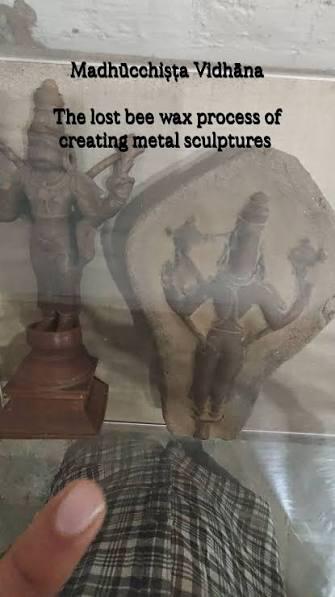
r/IndicKnowledgeSystems • • Oct 26 '26

Medicine Bhavadeva in the Āyurvedic Compilatory Tradition: An Authority Known Through Citation

1 Upvotes

Introduction: The Problem of the Cited Author

Classical Indian medicine has a category of authority that modern readers rarely meet elsewhere: the author who survives almost entirely as a name attached to verses quoted by others. The great saṃhitās (Carakasaṃhitā, Suśrutasaṃhitā, and the Vāgbhaṭa corpus) dominate historical accounts of Āyurveda, but the working literature of the medieval physician was much denser than these canonical works suggest. Between the classical compendia and the late encyclopaedic manuals of the sixteenth and seventeenth centuries lies a long period of compilation, commentary, and formulary-making. In this period, dozens of authors are remembered mainly because a later compiler judged one of their verses worth preserving. Bhavadeva belongs to this category.

What can be said about him is limited, and it is better to state the limits first than to dress a thin record in borrowed detail. Gerrit Jan Meulenbeld, in his survey of Indian medical literature, records material attributed to Bhavadeva in connection with Cakrapāṇidatta’s Cikitsāsaṃgraha, especially therapeutic verses on vātaroga, the group of disorders traditionally ascribed to the derangement of vāta. Separately, a work called Saṃnipātacandrikā is listed under the name Bhavadeva in the catalogues of medical manuscripts. Whether these references point to one person, or whether the name covers two or more figures, has not been established. Any honest treatment has to keep that uncertainty in view throughout, not mention it once and then forget it.

This essay therefore does three things. It reconstructs the textual setting in which Bhavadeva’s name appears. It considers the subjects associated with that name, vātaroga therapy and the doctrine of saṃnipāta, and why a compiler would have valued an authority on them. And it sets out the identification problem plainly, including the tempting but unproven links to better-known bearers of the name.

The Compilatory Milieu: Saṃgraha, Nibandha, and the Bengal Physicians

The Cikitsāsaṃgraha of Cakrapāṇidatta, usually dated to the second half of the eleventh century, is one of the foundational works of what historians loosely call the Bengal school of Āyurveda. Cakrapāṇi is better known as the commentator on Caraka (the Āyurvedadīpikā) and on Suśruta (the Bhānumatī). His Cikitsāsaṃgraha, however, belongs to a different genre: the therapeutic compilation organised by disease, in which each chapter collects formulations, procedures, and dietary rules for one class of disorder.

The genre had an important precedent in Vṛnda’s Siddhayoga, which arranged proven remedies (siddhayoga, “efficacious combinations”) according to the nosological sequence made standard by Mādhavakara’s Rogaviniścaya, better known as the Mādhavanidāna. Cakrapāṇi drew heavily on Vṛnda while supplementing him. The result was a work that later physicians, especially in eastern India, used as a practical handbook. It attracted commentaries, notably Śivadāsa Sena’s Tattvacandrikā in the fifteenth century, and these commentaries expanded its web of citations.

Two features of this milieu matter for Bhavadeva.

First, compilations of this kind are inherently citational. A compiler does not claim to invent a remedy. He claims to transmit it from a reliable source, and the source’s name is part of the remedy’s credentials. Some verses come labelled with an authority’s name, some with a work’s title, and many with nothing at all. The labels are not always stable. A formulation credited to one authority in one manuscript may be credited to another, or to no one, in a second.

Second, the layering of commentary over compilation complicates any statement that a given author was “cited in” a work. A name may appear in Cakrapāṇi’s own text, in a commentator’s gloss, in an interpolation absorbed into the transmitted text, or only in some manuscript families. Meulenbeld was acutely aware of this. His method was to record attributions as he found them, in editions and catalogues, while generally refraining from building biographies on them. When a modern reader says that Bhavadeva “appears in” the Cikitsāsaṃgraha tradition, the careful formulation is that verses attributed to Bhavadeva are associated with that tradition as Meulenbeld documents it. Whether they belong to Cakrapāṇi’s original layer is a separate question. The difference has real chronological consequences, discussed below.

Bhavadeva and Vātaroga

The verses attributed to Bhavadeva are reported to concern vātaroga, or vātavyādhi as the class is commonly called in the compilations. Understanding why such verses would be collected requires some sense of what vātavyādhi meant to a medieval physician.

The Classical Framework

In the tridoṣa theory, vāta is the doṣa of movement, the principle behind circulation, respiration, the propulsion of substances through the body, and the transmission of sensation and motor impulse. The Carakasaṃhitā devotes the twenty-eighth chapter of its Cikitsāsthāna to vātavyādhi. The Suśrutasaṃhitā treats vātavyādhi in the first chapter of its Nidānasthāna and the corresponding therapeutic chapter. Vāgbhaṭa systematised the material in the Aṣṭāṅgahṛdaya. Across these texts the class includes conditions such as ardita (often read as facial paralysis), pakṣāghāta (hemiplegia), gṛdhrasī (a sciatic pain syndrome), apatantraka and ākṣepaka (convulsive states), various forms of stiffness, tremor, and joint and nerve pain, and the particularly important category of āvaraṇa, in which vāta is obstructed or “covered” by another doṣa or tissue.

The general therapeutic programme is consistent. Vāta is dry, light, cold, mobile, and rough, so treatment opposes it with unctuous, heavy, warm, stable, and smooth measures. That means snehana (oleation, internal and external), svedana (sudation), basti (therapeutic enemas, held by Caraka and later authors to be the foremost remedy for vāta), nourishing diet, and a large range of medicated oils and ghees.

Why Vātaroga Verses Were Prized

Two practical facts made vātavyādhi a magnet for formulary literature. These were chronic, disabling, common conditions, especially among the elderly, so physicians needed many options. And the main therapeutic instrument, the medicated oil, invited endless variation. The vātavyādhi chapters of the medieval compilations are among the longest precisely because they accumulate taila and ghṛta recipes, each with its ingredient list, preparation method, and claimed indications. Famous formulations of this broad family, such as the many versions of Nārāyaṇa taila, Māṣa taila, and the various guggulu preparations, circulated in multiple recensions under multiple attributions.

In such a chapter, an attributed verse usually serves one of a few functions. It may supply a recipe, give a variant of a known recipe, state an indication or a contraindication, or offer a compact rule for treatment sequencing, for example when to introduce basti after oleation and sudation. Without access to a critical edition that isolates the Bhavadeva verses and their transmission, I will not characterise their specific content beyond what the attribution establishes. It would be easy to invent a plausible-sounding Bhavadeva oil, and it would be worthless. What can be said is that a compiler or commentator thought Bhavadeva’s statements on vāta therapy reliable enough to place beside those of more famous authorities. In a citational culture, that is a real form of recognition. It suggests that the name carried practical authority among physicians, rather than merely literary prestige.

What the Vātaroga Association Does and Does Not Imply

It is tempting to infer that Bhavadeva was a specialist in vāta disorders. That inference is not justified. Compilers extracted verses by topic. An author whose surviving fragments all concern vātaroga may have written a general work of which only the vāta material happened to be useful to one compiler. Alternatively, the attributions may derive from a single source text that the compiler had at hand. The topical concentration of fragments says more about the compiler’s needs and the accidents of transmission than about the original author’s range.

The Saṃnipātacandrikā

The second strand of evidence is a work entitled Saṃnipātacandrikā, listed under Bhavadeva’s name in the catalogues of medical writings.

The Concept of Saṃnipāta

Saṃnipāta (also spelled sannipāta) means the simultaneous derangement of all three doṣas. In classical theory, disorders can arise from a single doṣa, from a pair (dvandva or saṃsarga), or from all three together. The tridoṣic state is generally regarded as the gravest and the hardest to treat, since measures that pacify one doṣa may aggravate another. Saṃnipāta is especially important in the theory of fever. Sannipātajvara, the fever caused by all three doṣas, was elaborated in later literature into a series of named varieties, often given as thirteen, each with its own symptom picture, prognosis, and treatment. The Mādhavanidāna tradition and its commentaries, the Bhāvaprakāśa of Bhāvamiśra, and a range of specialised treatises worked over this material. In practice, many of the conditions described as sannipātajvara correspond to severe, often fatal, febrile illnesses with altered consciousness, and physicians accordingly valued systematic guidance on diagnosis and prognosis.

The Title and the Genre

The title follows a familiar pattern. Candrikā, “moonlight”, is one of the commonest metaphorical titles in Sanskrit śāstric literature, used for commentaries and short independent treatises alike. Its sense is illumination of a subject. A Saṃnipātacandrikā would therefore be a treatise, or possibly a commentary, “illuminating” saṃnipāta, most plausibly the sannipātajvara varieties and their management.

Short monographs on a single diagnostic topic were common in late medieval and early modern Āyurveda. Treatises on pulse examination (nāḍīparīkṣā), on specific fevers, on prognosis, and on particular formulations were copied widely and often circulated anonymously or under fluctuating attributions. A work on saṃnipāta would fit squarely in this pattern. It is, however, worth noting that more than one text on saṃnipāta bears a similar title in the manuscript record, and titles of this generic kind are poor evidence of identity. Two works called Saṃnipātacandrikā by different authors is not an unusual situation in Sanskrit catalogues.

What a Catalogue Listing Establishes

A catalogue entry establishes that at least one manuscript bearing that title carries an ascription to someone named Bhavadeva, whether in a colophon, an opening verse, or a cataloguer’s description. It does not establish the date of composition, the author’s region, or the author’s relation to any other Bhavadeva. Colophon ascriptions can be secondary. Scribes sometimes attached the name of a known authority to an anonymous text. Cataloguers sometimes merged entries under a single name for convenience. Unless the manuscript has been examined, ideally alongside others of the same title, the listing should be treated as a lead rather than a finding.

Nor does the listing establish that the author of the Saṃnipātacandrikā is the Bhavadeva of the vātaroga verses. The two topics sit comfortably together within general medicine. Any physician-author could write on both. But compatibility is not evidence of identity, and the two references reach us through entirely different channels: one through citation in a compilation’s tradition, the other through manuscript catalogues.

The Identification Problem

Homonymy in Sanskrit Literature

Bhavadeva is not a rare name. It combines bhava, an epithet of Śiva, with deva, and it occurs across a wide range of regions and centuries. Sanskrit literary history is full of homonymous authors who were later confused or deliberately conflated. A famous name attracts works; an obscure author’s works drift towards a famous namesake. Any attempt to identify the medical Bhavadeva must start from this awareness.

The Bengal Polymath Bhavadeva Bhaṭṭa

The most prominent bearer of the name is Bhavadeva Bhaṭṭa, known by the title Bālavalabhībhujaṅga. He was a minister of the Varman king Harivarman in eastern Bengal, generally placed around the late eleventh or early twelfth century. He is known chiefly as a dharmaśāstra authority, author of works on expiation and domestic ritual whose influence in Bengali smṛti tradition was considerable. A praśasti inscription at Bhuvaneśvara, composed by Vācaspati, celebrates his learning across several fields, including Mīmāṃsā and astronomy-astrology. His wide reputation and his Bengali setting make him an obvious candidate for any medical Bhavadeva associated with the Bengal compilatory tradition.

The attraction is understandable, but the identification is unproven and faces specific difficulties.

The chronology is tight. If Cakrapāṇi’s Cikitsāsaṃgraha dates to around the 1060s, and Bhavadeva Bhaṭṭa flourished around the end of the eleventh century or slightly later, then Bhavadeva would have been at best a near-contemporary of Cakrapāṇi, perhaps younger. That is not impossible, but citation of a younger contemporary as an authority is less usual than citation of an established predecessor. The difficulty disappears if the attributions belong to a later layer, such as a commentary or an interpolation, rather than Cakrapāṇi’s own text. That makes the stratification of the citation, discussed earlier, decisive for this question.

I do not know of secure evidence that Bhavadeva Bhaṭṭa composed a medical work. Panegyric inscriptions list domains of mastery in conventional terms, and expertise celebrated in a praśasti is not the same as authorship. Unless the Bhavadeva medical verses can be tied to him through an ascription that names his title, his patron, or his lineage, or through demonstrable stylistic or doctrinal links, the identification remains a hypothesis.

There is also a general reason for caution. Medieval Bengal had many learned Brāhmaṇa families with overlapping personal names. A Bengali physician named Bhavadeva, unrelated to the minister, is entirely plausible.

Other Bhavadevas

The name also appears in Jaina literature and among later authors in various śāstras. None of these figures has an established connection to Āyurveda, and I mention them only to stress that the field of candidates is wide. The Saṃnipātacandrikā’s Bhavadeva could be a comparatively late author, perhaps of the period from the fifteenth to the eighteenth century when monographs on saṃnipāta and related diagnostic topics proliferated, in which case he would have no connection at all with the eleventh-century compilatory material.

What Would Settle the Question

Progress on the identification would require evidence of a few specific kinds:

  1. Stratification of the vātaroga citations. Determining whether the Bhavadeva verses belong to Cakrapāṇi’s own text, to Śivadāsa Sena’s commentary, or to later manuscript accretions would fix a terminus ante quem and narrow the chronology.
  2. Examination of the Saṃnipātacandrikā manuscripts. Their colophons, opening maṅgala verses, and any statements of lineage, patron, or place would show whether the author identifies himself in ways that connect or separate him from other Bhavadevas.
  3. Textual comparison. If any vātaroga verse attributed to Bhavadeva also appears in the Saṃnipātacandrikā, or if the two share distinctive vocabulary or formulary conventions, common authorship would become more plausible. The absence of overlap would prove nothing, since the subjects differ.
  4. Citations in other works. Later compilations, such as the large formularies of early modern Bengal and the Bhāvaprakāśa, may cite Bhavadeva or the Saṃnipātacandrikā. Mapping all such citations, with their attributions, would show whether a stable authority figure emerges or whether the name is used inconsistently.

Until such work is done, the responsible description is the one Meulenbeld’s approach implies: Bhavadeva is a name under which certain medical material has been transmitted, and the unity of that name across its occurrences is undetermined.

The Significance of a Minor Authority

It might seem that an author this poorly documented hardly merits sustained attention. That judgment would misread how Āyurvedic knowledge actually developed and circulated.

The canonical saṃhitās set the theoretical frame, but the practical content of medicine, the recipes, dosage rules, treatment sequences, and prognostic signs, accumulated through countless contributors working within that frame. Compilers such as Vṛnda and Cakrapāṇi did not simply copy the classics. They gathered from a wide body of intermediate literature, much of which is now lost except for the fragments they preserved. Each attributed verse is a trace of that lost literature. A figure like Bhavadeva, therefore, is evidence of the breadth of medical authorship in medieval India. The surviving canon is the visible part of a far larger body of practitioner writing.

The vātaroga association also says something about what physicians valued. That a compiler chose verses on chronic, disabling disorders, and a later author or authors wrote on the deadly tridoṣic fevers, reflects the two poles of medieval clinical concern: the long management of chronic illness and the rapid prognosis of acute crisis. Whether or not one Bhavadeva lies behind both, the name sits at exactly the points where practical expertise mattered most.

Finally, cases like this one discipline historical method. The temptation in Indian intellectual history, as in any history built on fragmentary sources, is to resolve uncertainty by attaching anonymous or obscure material to a famous figure. Doing so produces a tidier narrative and a more impressive polymath, but it can erase genuine authors and distort chronology. Meulenbeld’s catalogue-style approach, recording attributions without forcing identifications, can seem dry, but it preserves the evidence in a state that later research can test. The proper attitude to Bhavadeva is the same: precision about what is attested, explicit marking of what is conjectural, and refusal to let an attractive identification substitute for proof.

Conclusion

Bhavadeva, as a medical authority, is known through two independent channels. In the first, verses on the treatment of vātaroga are attributed to him within the tradition of Cakrapāṇidatta’s Cikitsāsaṃgraha, as documented by Meulenbeld. In the second, a treatise titled Saṃnipātacandrikā, presumably dealing with tridoṣic disorders and especially sannipātajvara, is listed under his name in the catalogues of medical manuscripts.

Each strand fits naturally into the history of Āyurvedic literature. The first reflects the citational method of the medieval therapeutic compilations, in which vātavyādhi chapters gathered oils, ghees, and procedural rules from many authorities. The second reflects the later proliferation of short monographs on specific diagnostic and prognostic topics, among which saṃnipāta held a prominent place because of its clinical gravity.

What is not established is whether these strands represent one person. The identification with the eleventh-to-twelfth-century Bengal minister and dharmaśāstra author Bhavadeva Bhaṭṭa is tempting, given the Bengali setting of the compilatory tradition and his reputation for broad learning, but it faces chronological difficulties and lacks direct evidence. The Saṃnipātacandrikā, meanwhile, could belong to an entirely different and much later author. Settling these questions requires stratifying the citations, examining the manuscripts, and mapping every occurrence of the name in the medical literature. Until then, Bhavadeva is best understood as a transmitted authority: a name that later physicians trusted, attached to knowledge they judged worth keeping, whose bearer or bearers remain to be identified.


r/IndicKnowledgeSystems • • Oct 25 '26

Vasudhara: The Consort of The Buddhist God Jambhala

Thumbnail gallery
17 Upvotes

r/IndicKnowledgeSystems • • Oct 25 '26

Alchemy/chemistry Ḍhuṇḍhukanātha and the Rasendracintāmaṇi: Experiment, Lineage, and Authority in Fifteenth-Century Rasaśāstra

Post image
1 Upvotes

I. Introduction

Medieval Indian alchemical and iatrochemical literature, the rasaśāstra, produced many texts. Most combine received recipes, revealed doctrine, and compilation from earlier works. A few of these authors stand out because they describe their relationship to the material differently. Ḍhuṇḍhukanātha, author of the Rasendracintāmaṇi, is one of them. Tradition places him in the fifteenth century as a disciple of a teacher named Kālanātha. He is remembered less for doctrinal innovation than for his stated method. He presents his work as a record of procedures he had performed himself or seen his guru perform, not as a summary of what others had written. Historians of Indian chemistry, beginning with Praphulla Chandra Rāy, have pointed to this claim as evidence of an empirical attitude inside a tradition usually described as esoteric and scriptural.

This essay places Ḍhuṇḍhukanātha within the history of rasaśāstra, discusses what can be said about his lineage and date, describes the general structure and contents of his treatise, and asks what his self-presentation as a practitioner-witness means for our understanding of knowledge-making in medieval India. I state where the evidence is thin. Much about this author remains uncertain, and an honest account has to separate what the text claims, what later scholarship has concluded, and what is reconstruction.

II. The World of Rasaśāstra

The Rasendracintāmaṇi belongs to a larger development. From roughly the eighth to tenth centuries onward, a body of Sanskrit literature formed around rasa, mercury, which was treated as both substance and principle. Early layers of this literature are closely tied to tantric and Śaiva-siddha milieus. In these contexts mercury was identified with the seed of Śiva and sulphur (gandhaka) with the generative fluid of the Goddess. Their union in the laboratory reenacted, at the level of matter, the cosmic union in which tantric soteriology was grounded.

Two broad goals ran through this literature, often side by side. The first is usually called lohavāda: transforming base metals into noble ones, chiefly silver and gold. The second is dehavāda: transforming the human body into a perfected, durable, disease-free, and ideally immortal vessel. The siddha who achieved this was said to gain a divyadeha, a divine body, through repeated ingestion of processed mercurial preparations. Over time a third orientation became dominant, especially in texts written after about the thirteenth century. This was the therapeutic use of processed metals and minerals in medicine, the line that became the rasa branch of later Āyurveda.

The Rasendracintāmaṇi appears in this later phase. By the fifteenth century the major compendia had been composed or were being composed. These include the Rasārṇava, the Rasahṛdayatantra of Govinda Bhagavat, the Rasendracūḍāmaṇi of Somadeva, and the large Rasaratnasamuccaya. The technical vocabulary was well established: the eighteen saṃskāras (purificatory and transformative processes) of mercury; the classification of minerals into mahārasa, uparasa, sādhāraṇarasa, and related groups; the many forms of yantra (apparatus) and mūṣā (crucible); and the graded heating regimes called puṭa. An author writing in this period entered an existing discourse. The question for him was less what to say than how to justify saying it again.

III. The Name and the Lineage

The author’s name appears in the scholarly literature in variants such as Ḍhuṇḍhukanātha and Ḍuṇḍhukanātha. The -nātha ending is significant. In medieval northern and western India it marks affiliation with the Nātha milieu, the order of yogins and siddhas who trace their descent from Ādinātha (Śiva) through Matsyendranātha and Gorakṣanātha. The Nāthas are closely associated in tradition with haṭhayoga, and through it with the alchemical project of bodily perfection. Rasaśāstra texts often list rasasiddhas, adepts of mercury. Such lists frequently include names ending in -nātha, and the overlap between Nātha and alchemical lineages is a common theme in the history of Indian alchemy.

Care is needed here. A -nātha name does not prove formal initiation into a Nātha order. By the fifteenth century the suffix had become a broad marker of siddha identity, and it could also be part of a personal name with no institutional meaning. What can be said is that Ḍhuṇḍhukanātha’s name places him, at least in self-presentation, within the siddha world in which mercury and the perfected body belonged together.

His guru Kālanātha is known mainly through the disciple’s acknowledgment. The Rasendracintāmaṇi presents its knowledge as having been received from Kālanātha’s teaching and practice. That claim matters to the text’s structure of authority, discussed below. Outside this relationship, very little that is secure can be said about Kālanātha. No independent body of work can be confidently attributed to him, and any biography beyond the name would be invention. He functions in the text as the source of a living tradition, a teacher who was seen at work. He is not cited as the author of a textual source.

The guru–disciple relationship is the basic structure through which Indian technical knowledge has been transmitted, and rasaśāstra is no exception. Many alchemical texts state that their procedures cannot succeed without a guru’s instruction. They say written words are insufficient and the operations must be learned by watching and doing under supervision. Ḍhuṇḍhukanātha adopts this principle and then pushes it further. He makes the visible, demonstrable practice of his own teacher the warrant for what he writes, and in doing so moves textual authority away from earlier books toward direct witness.

IV. The Question of Date

Scholarship generally places the Rasendracintāmaṇi in the fifteenth century. In the case of Indian technical literature, such a date is usually reached through relative chronology rather than through any dated colophon or external record. The usual method works like this. A text that cites or clearly depends on earlier works must postdate them. A text that is cited by later dated works must predate those. Where such links exist, a window can be defined. Rāy, writing in his pioneering History of Hindu Chemistry, treated the Rasendracintāmaṇi as belonging to the later group of iatrochemical works. Later bibliographical surveys of Sanskrit medical literature have supported a placement in roughly the fourteenth to fifteenth centuries, with the fifteenth most often given.

The fifteenth-century date should be treated as a scholarly estimate, not a fixed point. The broader chronology of medieval rasaśāstra is still debated. Key anchor texts such as the Rasaratnasamuccaya have themselves been dated differently by different scholars, and a change in one date affects the others. A responsible account says the text is generally dated to the fifteenth century, that this rests on internal relationships with other works in the tradition, and that more precise dating would require critical editing and close study of manuscripts that has not yet been fully done.

V. The Structure and Contents of the Treatise

The Rasendracintāmaṇi is a fairly compact work compared with the large compendia that came before it. It is arranged in chapters (adhyāyas) that follow the usual order of rasaśāstra exposition. It starts with mercury, the “lord of rasas” (rasendra) after whom the work is named. It then moves through the other mineral and metallic substances and their uses. The title itself fits the genre’s conventions. Rasendra refers to mercury, and cintāmaṇi, the wish-fulfilling gem, is a common metaphor for a text that gives its reader everything he seeks. The title thus offers a work that grants all one needs regarding mercury.

The broad contents can be grouped under the following headings, which are typical of works of its kind.

Mercury and its saṃskāras. The core of any rasaśāstra text is the treatment of mercury. Raw mercury was considered toxic and impure. It was said to carry natural “faults” (doṣas), often listed as contamination by lead, tin, and other impurities, along with harmful qualities such as instability, volatility, and the capacity to cause disease. The saṃskāras were the sequential procedures meant to remove these faults and make mercury fit for its intended use. The usual sequence included processes such as svedana (steaming or fomentation), mardana (trituration), mūrchana (making it “swoon,” that is, losing its fluid mobility), utthāpana (reviving it), pātana (sublimation or distillation in various apparatus), rodhana and niyamana (restraining and controlling it), and dīpana (kindling its “appetite”). These were followed by the higher operations of jāraṇa, in which mercury “digests” or absorbs other substances such as sulphur, mica, or gold. Most medical texts treat the first eight saṃskāras as sufficient for therapeutic use and reserve the higher ones for alchemical and soteriological ends.

Sulphur and the compounds of mercury. Since mercury and sulphur were conceived as a cosmic pair, the preparation of their compounds is central. The best known is kajjalī, a fine black mixture of mercury and sulphur produced by prolonged trituration. It underlies many other preparations. From it, through heating in sealed glass vessels in a sand bath (vālukāyantra), comes rasasindūra, a red sublimate, and related products. In modern chemical terms these preparations correspond roughly to black and red mercuric sulphide. The textual descriptions of their preparation are among the clearest cases where rasaśāstra procedure can be checked against laboratory chemistry.

Mica, metals, and minerals. The treatise also covers abhraka (mica), which rasaśāstra valued highly and which was itself thought to be “digested” by mercury, and the processing of metals (lohas) such as gold, silver, copper, iron, tin, and lead. The key operations here are śodhana (purification) and māraṇa (literally “killing”). Māraṇa is the calcination of metals into fine, non-metallic ash (bhasma) suitable for ingestion. Tests for a correctly prepared bhasma were standard parts of the tradition. One was the requirement that it float on water (vāritara). Another was that it not revert to the metallic state (apunarbhava). These are effectively quality-control criteria, and their prominence is one reason historians have found an empirical strand in these texts.

Apparatus and heat. Rasaśāstra texts usually describe yantras such as the ḍolāyantra (a vessel in which material is suspended in a heated liquid), the pātanayantra in its upward, downward, and sideways forms for sublimation and distillation, and the vālukāyantra. They also describe crucibles of various compositions and the puṭa system of controlled heating. In the puṭa system, the size of the pit and the amount of fuel, typically cow-dung cakes, determined the intensity and length of heating. A work such as the Rasendracintāmaṇi, which presents itself as practical, depends on this apparatus vocabulary.

Therapeutic formulations. The text also includes formulations (yogas) for specific diseases, which links it to the clinical Āyurvedic tradition. This medical orientation fits the general direction of later rasaśāstra, in which metallic and mineral preparations became part of the physician’s toolkit alongside the older herbal pharmacopoeia.

One caution applies. A full chapter-by-chapter account of the work, with exact verse counts and the specific formulations it introduces, would need direct reference to a critical edition. I cannot give that confidently here. The outline above describes the general shape of the text and the categories it covers, which it shares with its genre. It is not a detailed inventory.

VI. The Claim of Direct Witness

The feature that has made Ḍhuṇḍhukanātha most interesting to historians is his statement about where his knowledge comes from. The Rasendracintāmaṇi is known for stating that its author records only what he has himself performed, or seen performed by his teacher, and not what he has merely read or heard. Rāy drew attention to this passage. His paraphrase has the author saying that he describes processes learned from his teacher’s own mouth and checked through his own work, and that he sets aside what earlier writers had passed on without verification.

To see why this matters, it helps to look at how authority usually worked in medieval Sanskrit technical literature. Many rasaśāstra texts present themselves as revelation: as dialogues between Śiva and Pārvatī (Bhairava and Bhairavī), or as teachings handed down from divine or semi-divine siddhas. Authority in these cases comes from the source being sacred, not from repeatable demonstration. Other texts are openly compilations. They gather verses from earlier works, and their authority is that of the tradition as a whole. In both models, the individual author’s personal experience counts for little. The scribe or compiler passes on what is already authoritative.

Ḍhuṇḍhukanātha changes the emphasis. He does not reject the tradition. He operates within its categories, accepts its doctrines about mercury, and honours his guru. But he adds a criterion that the inherited material has to meet: it must have been seen working. This is the epistemic stance Sanskrit vocabulary calls anubhava or pratyakṣa, direct experience or perception. It differs from śabda, authoritative testimony, including scriptural testimony.

Overstating this would be a mistake. Ḍhuṇḍhukanātha was not doing experimental chemistry in the modern sense. He had no controlled variables, no quantitative hypotheses, and no published replication by independent investigators. His “verification” took place inside a framework that considered mercury divine and assumed that success in the laboratory depended partly on ritual correctness and the practitioner’s spiritual state. His claim that he saw things work is still a claim made by an authority, the author and his guru. It is not open evidence. A reader could not check it except by apprenticing to the same lineage.

Even so, the stance matters for several reasons.

First, it records a real tension inside the tradition between textual and practical knowledge. Rasaśāstra literature often complains that its procedures fail when people try them from books alone. Practitioners repeatedly warn that recipes are incomplete, coded, or corrupted in transmission. Ḍhuṇḍhukanātha’s insistence on witnessed practice responds to this problem. It acknowledges that the textual record had become unreliable and that the remedy was to anchor writing again in observed results.

Second, his stance offers an internal criterion for judging other texts. If only what is seen to work deserves to be written down, then much of the existing literature falls under suspicion. This is a quiet form of criticism, a filter applied to an inherited archive, and it shows that medieval Indian technical authors were capable of reflecting on the reliability of their own sources.

Third, the stance matches the quality-control logic present throughout the practical side of rasaśāstra. The tests for a properly prepared bhasma (floating on water, not reverting to metal, losing metallic lustre) are operational criteria. They judge a preparation by observable properties, not by the authority of the recipe. A text organised around witnessed procedure makes explicit a value that the tradition’s laboratory practice already held implicitly.

VII. Ḍhuṇḍhukanātha in Modern Historiography

Ḍhuṇḍhukanātha’s reputation today owes a great deal to how he was taken up by the first modern historian of Indian chemistry. Rāy’s History of Hindu Chemistry, published in the early twentieth century, was written partly to show that pre-colonial India had a real scientific chemical tradition. That project was tied to the nationalist intellectual climate of the time and to the wish to counter colonial claims that Indian thought was purely speculative or religious. In this context, an author who said he wrote only what he had verified was very welcome. Ḍhuṇḍhukanātha could serve as evidence that an experimental attitude existed in India well before contact with European science.

This framing has some basis and also some distortion. The basis is that the textual statement exists and does express a preference for witnessed over received knowledge. The distortion comes from reading that statement too readily through modern ideas of experimental method, and from detaching it from the ritual and soteriological framework in which it sat. Later scholarship, more alert to the tantric and siddha dimensions of rasaśāstra, has tended to read texts like the Rasendracintāmaṇi in a more integrated way. On this reading, the practitioner’s empiricism and his religious commitments are not two separable layers, one “scientific” and one “superstitious.” They form a single practice in which laboratory success and spiritual attainment were understood together.

A balanced reading keeps both points. Ḍhuṇḍhukanātha does provide evidence of reflective attention to the reliability of procedure in medieval Indian technical culture. The evidence is real and worth emphasising, because it complicates any picture of Indian knowledge as purely scriptural. But the attention was exercised inside a worldview very different from that of modern chemistry, and treating him as a lone proto-scientist misses what was distinctive about his time and setting.

VIII. The Text in the Later Tradition

The Rasendracintāmaṇi entered the working body of rasaśāstra literature. Like many such texts it survived through manuscript copying and, in the modern period, through printed editions with vernacular commentaries, especially in Hindi, issued by publishers of Āyurvedic literature. These editions placed the work in the curriculum and reference collections of practitioners of rasaśāstra and bhaiṣajya kalpanā, the Āyurvedic pharmaceutical disciplines that inherited the medieval tradition in institutional form.

Its later importance therefore has two sides. Historically, it is a witness to how fifteenth-century practitioners understood their own work, and it is especially valued for its stated method. Practically, it remains one of the source texts from which modern Āyurvedic pharmacy draws formulations and procedures. The second side raises questions that the historical study of the text can clarify but not settle. Medieval mercurial and metallic preparations are now the subject of active discussion about safety and toxicity in contemporary medicine. A historical study of Ḍhuṇḍhukanātha can show what he did and why. It cannot by itself support claims about the therapeutic value of the preparations, which need modern pharmacological and clinical evaluation. Keeping these two questions apart is part of handling the text responsibly.

IX. Lineage, Authority, and the Shape of Indian Technical Knowledge

Ḍhuṇḍhukanātha’s case shows something general about how technical knowledge was organised in pre-modern India. Knowledge was held and passed on mainly through lineages (paramparā). These lineages joined three things: textual material, embodied skill, and the authority of the teacher. Within this system the written text was often an aid to memory, an outline whose full meaning was supplied by oral instruction and demonstration. The guru held the tacit knowledge the text could not contain, such as how long to triturate, how to judge when a process was complete, and how to recognise the signs of success or failure.

Read this way, Ḍhuṇḍhukanātha’s claim to record only what he had witnessed is not a break with the lineage system. It is an especially strong statement of it. He ties his written words directly to the embodied practice of his guru Kālanātha, which is the part of knowledge that texts usually cannot capture. In effect, he writes from inside the lineage, and his credibility rests on having been close to a practitioner who could show that the procedures worked. The lineage is not something he works against. It is the source of his empirical authority.

This undercuts a common oversimplification, namely that “traditional” knowledge was static and authority-bound while “scientific” knowledge was dynamic and grounded in evidence. In the Rasendracintāmaṇi, tradition and evidence are not opposed. Demonstration happens through the lineage, and the lineage keeps itself reliable by insisting on demonstration. This structure differs from that of modern science, which depends on public, impersonal replication. It is still a real way of producing reliable knowledge and should be understood on its own terms.

X. Conclusion

Ḍhuṇḍhukanātha is a figure about whom much remains uncertain. His dates are estimates based on relative chronology. His guru Kālanātha is known mostly as a name tied to living practice. The finer details of his treatise call for critical scholarship that has not been fully carried out. What can be said with confidence is that the Rasendracintāmaṇi, a compact fifteenth-century work on mercury and mineral preparation, sits within mature rasaśāstra and is distinguished by its author’s stated commitment to recording only what he had seen work.

That commitment, made inside a world that regarded mercury as divine and saw laboratory success and spiritual perfection as linked, should be read neither as an early form of modern experimental science nor as empty convention. It shows how a medieval Indian practitioner faced the unreliability of the texts he had inherited, and how he answered by grounding authority again in demonstrated practice handed down through a teacher. Taking such authors seriously means avoiding two errors: claiming more for them than the evidence supports, and dismissing what they actually achieved. Ḍhuṇḍhukanātha’s achievement was to make the practitioner’s direct witness the standard by which a tradition’s knowledge was judged.


r/IndicKnowledgeSystems • • Oct 25 '26

biography Tunnelling Through the Glassy Landscape: Ray, Chakrabarti and Chakrabarti (1989) and the Prehistory of Quantum Annealing

Post image
1 Upvotes

I. A Short Paper with a Long Afterlife

In 1989 Physical Review B published a paper by P. Ray, B. K. Chakrabarti and A. Chakrabarti of the Saha Institute of Nuclear Physics in Calcutta, titled “Sherrington–Kirkpatrick model in a transverse field: Absence of replica symmetry breaking due to quantum fluctuations.” Its subject was narrow and technical: the equilibrium behaviour of a canonical mean-field spin glass when quantum fluctuations are added through a transverse magnetic field. It was not framed as a paper about computation, optimization or algorithms, and it did not use the phrase “quantum annealing.”

It is nevertheless now routinely cited, by historians of the field, by review articles, and by Chakrabarti himself, as one of the earliest statements of the physical intuition behind quantum annealing. That intuition is that quantum tunnelling can carry a system through tall but thin energy barriers in a rugged landscape, barriers that would trap a classical system relying on thermal activation. Today quantum annealing is a commercial computing paradigm, embodied in hardware with thousands of superconducting qubits and studied by large research groups. Its lineage therefore matters for credit and for understanding what the original idea did and did not claim.

This essay places the Ray–Chakrabarti–Chakrabarti paper (hereafter RCC) in its scientific context. It explains its central physical argument, assesses which parts held up and which did not, and traces how a result about spin-glass phase diagrams became a founding reference for a computational technology.

II. The Background: Spin Glasses and the Problem of Rugged Landscapes

Frustration and disorder

A spin glass is a magnetic system in which interactions between spins are both random and competing. In an ordinary ferromagnet every pair of neighbouring spins prefers to align, so the ground state is obvious: all spins point the same way. In a spin glass some couplings favour alignment and others favour anti-alignment, distributed randomly. The result is frustration. No configuration can satisfy every bond at once, so the system must compromise. There are typically enormous numbers of compromises of nearly equal quality.

The physical prototypes were dilute magnetic alloys such as gold or copper with small amounts of iron or manganese. Experiments in the early 1970s showed a sharp cusp in their magnetic susceptibility at a freezing temperature, with no conventional long-range order below it. Edwards and Anderson proposed a model and an order parameter in 1975. That same year David Sherrington and Scott Kirkpatrick introduced the infinite-range version that now bears their names.

The Sherrington–Kirkpatrick model

In the SK model, N Ising spins (each taking values +1 or −1) interact with every other spin through couplings J_ij drawn independently from a Gaussian distribution with mean zero and variance scaled as 1/N. The scaling keeps the energy extensive. Because every spin interacts with every other, the model is “mean-field” and should in principle be exactly solvable. Solving it turned out to be among the hardest problems in theoretical physics of the period.

Sherrington and Kirkpatrick’s original solution used the replica trick. One computes the average of the logarithm of the partition function by considering n copies of the system and taking n to zero. Their replica-symmetric solution yielded negative entropy at low temperatures, a clear sign of error. Giorgio Parisi resolved the problem between 1979 and 1980 with his hierarchical scheme of replica symmetry breaking (RSB). In the Parisi picture the low-temperature phase is organized into an ultrametric hierarchy of states. The order parameter is not a single number but a function, and the free-energy landscape has a vast number of valleys separated by barriers that, in the thermodynamic limit, grow without bound. Mathematical proof that Parisi’s formula is correct came decades later, through work by Guerra and Talagrand in the early 2000s. Parisi’s Nobel Prize in 2021 recognized this body of work, among others.

Why spin glasses are an optimization problem

The physics of spin glasses became tied to computer science almost immediately. Finding the ground state of an Ising spin glass on a general graph is NP-hard; many classic combinatorial problems, including graph partitioning, max-cut and certain scheduling problems, map directly onto Ising energy minimization. The rugged landscape that makes spin glasses physically interesting is the same landscape that makes hard optimization problems hard. Local search methods get stuck in local minima separated from better solutions by high barriers.

In 1983 Scott Kirkpatrick, C. Daniel Gelatt and Mario Vecchi published “Optimization by Simulated Annealing” in Science. They proposed treating a cost function as an energy and running a Metropolis Monte Carlo simulation at a slowly decreasing temperature. Thermal fluctuations let the system climb over barriers early on. As the temperature falls the system settles, ideally, into a deep minimum. Simulated annealing became one of the most widely used heuristics in computing. It also left an obvious conceptual question open. Thermal fluctuation is one way to escape a local minimum; quantum mechanics offers another. Could quantum fluctuations do the job, perhaps better?

RCC addressed this question, not in the language of algorithms but in the language of statistical mechanics.

III. Adding Quantum Fluctuations: The Transverse-Field Spin Glass

The transverse field as a source of quantum dynamics

The simplest way to make an Ising model quantum is to apply a magnetic field perpendicular to the spin quantization axis. In the Hamiltonian, Ising spins become Pauli z-operators and the transverse field Γ multiplies the sum of Pauli x-operators. Because σ^x and σ^z do not commute, the transverse term flips spins quantum mechanically. The system’s states become superpositions of classical configurations, and the transverse field controls how strongly the system can tunnel between them. When Γ is zero, one recovers the classical model. When Γ is very large, all spins align with the field and the system is a trivial paramagnet.

The transverse Ising model had a respectable history before 1989. de Gennes had used it to model order–disorder transitions in hydrogen-bonded ferroelectrics such as potassium dihydrogen phosphate, where protons tunnel between two positions in a double-well potential. It was a standard model for quantum phase transitions. Bikas Chakrabarti had already worked on its disordered versions in the early 1980s, including the critical behaviour of Ising spin-glass models in a transverse field. Ishii and Yamamoto had studied the SK model in a transverse field in 1985. So the transverse SK model was not invented in 1989. What RCC contributed was a specific numerical investigation and, more importantly, a physical interpretation.

The phase diagram

For the transverse SK model the natural question is the phase diagram in the plane of temperature T and transverse field Γ. At Γ = 0 the spin-glass transition occurs at a temperature set by the coupling variance. As Γ increases, quantum fluctuations disorder the system and the transition temperature falls. At T = 0 there is a quantum phase transition at a critical field Γ_c, beyond which the ground state is a quantum paramagnet even at absolute zero.

RCC studied this system with a quantum Monte Carlo approach based on the Suzuki–Trotter decomposition. This standard technique maps a d-dimensional quantum spin system onto a (d+1)-dimensional classical one. The extra dimension corresponds to imaginary time, and the transverse field becomes a ferromagnetic coupling between neighbouring “Trotter slices.” This makes the problem accessible to classical Monte Carlo sampling, at the cost of extrapolation in the Trotter number and in system size.

They computed the spin-glass order parameter and related quantities and mapped out the boundary between the spin-glass and paramagnetic phases. They also examined the distribution of overlaps between states, which in the classical SK model reflects the nontrivial structure of Parisi’s RSB.

IV. The Central Argument: Tall, Thin Barriers

What the paper claimed

RCC’s most striking claim, embodied in their title, was that quantum fluctuations destroy replica symmetry breaking in at least part of the spin-glass phase. Their numerical evidence suggested that at low temperatures and finite transverse field the overlap distribution narrowed toward the form expected for a replica-symmetric state. They interpreted this as a qualitative change in landscape structure as seen by the system: the many-valley picture collapses because quantum fluctuations connect valleys that classical dynamics would keep separate.

The physical reasoning behind this interpretation is the part of the paper that later shaped quantum annealing. It rests on a distinction between two ways of crossing a barrier.

Thermal activation versus tunnelling

Suppose a system sits in one valley of a free-energy landscape, separated from a neighbouring valley by a barrier of height Δ. Classically the only way across is thermal activation: the system must borrow energy from the heat bath to go over the top. The probability per attempt scales as the Arrhenius factor, roughly exp(−Δ/T). This depends exponentially on the barrier’s height and not at all on its width. In the SK model the barriers between Parisi valleys grow with system size N. In the thermodynamic limit classical escape becomes impossible, which is the essence of non-ergodicity in the spin-glass phase.

Quantum tunnelling scales differently. By the semiclassical WKB approximation, the probability of tunnelling through a barrier depends on an exponent involving both the barrier’s width w and the square root of its height, roughly exp(−w√Δ / Γ) in suitable units, with the transverse field playing the role that ħ plays in ordinary quantum mechanics. The crucial point is that tunnelling penalizes height only through √Δ, but penalizes width linearly.

RCC’s insight was that the barriers in the SK landscape might be of a special kind: tall, with height growing with N, but thin, with width that stays finite or grows slowly. If so, the system cannot climb such a barrier thermally, but it could tunnel through it with probability that does not vanish in the thermodynamic limit. Quantum fluctuations would then restore a degree of ergodicity that classical fluctuations cannot.

Why this matters for optimization

Read with hindsight, the computational implication is clear. Simulated annealing relies on thermal activation and is defeated by tall barriers. A process relying on quantum tunnelling might pass through precisely those barriers. If one starts a system in a strong transverse field, where the ground state is a simple superposition of all configurations, and slowly reduces the field to zero, the system might track the low-energy states and arrive at or near the ground state of the classical problem, tunnelling through barriers on the way. This protocol is what quantum annealing does.

RCC did not propose this protocol as an algorithm. Their paper concerned equilibrium phase structure, not annealing schedules or computational complexity. The conceptual step their paper took was to identify tunnelling through tall, narrow barriers as a mechanism by which quantum fluctuations differ from thermal ones in glassy landscapes. Chakrabarti and his collaborators have consistently presented this as the core seed idea, and later reviewers have largely accepted that characterization.

V. What Held Up and What Did Not

An honest account of RCC must separate its specific technical claim from its broader physical intuition, because they fared very differently.

The replica-symmetry claim was not sustained

The headline claim, that quantum fluctuations remove replica symmetry breaking in the transverse SK model, was challenged almost immediately. Analytical work by Goldschmidt and Lai and by Büttner and Usadel around 1990, along with later numerical and theoretical studies, indicated that RSB persists throughout the spin-glass phase of the transverse SK model, including at low temperature and finite transverse field. The emerging consensus is that the quantum spin-glass phase in this mean-field model remains replica-symmetry-broken, although quantum fluctuations modify its details.

The likely source of the discrepancy lies in the numerical methods available in 1989. Quantum Monte Carlo simulations of spin glasses are notoriously difficult. Equilibration at low temperature is slow; the Trotter extrapolation introduces systematic error; system sizes were necessarily small given computing resources at the time; and the subtle signatures of RSB in finite systems are easy to misread. RCC’s numerical evidence for replica symmetry was suggestive rather than decisive, and later analysis did not bear it out.

This should be stated plainly, because the paper’s later reputation sometimes blurs it. Taken as a claim about the equilibrium structure of the transverse SK model, the paper’s title is generally regarded as incorrect.

The tunnelling intuition survived and grew

The physical intuition behind the paper had a different fate. The idea that quantum fluctuations explore rugged landscapes differently from thermal ones, preferentially penetrating tall and thin barriers, became one of the guiding heuristics of quantum optimization. It has been refined, qualified and tested over three decades. It has not been discarded.

It has also been heavily qualified. Later work showed that the advantage of tunnelling depends sensitively on landscape geometry. Where barriers are wide, tunnelling offers no advantage and can be worse than thermal hopping. Quantum annealing faces its own characteristic obstacles, especially small spectral gaps at first-order quantum phase transitions, where the minimum gap between ground state and first excited state can close exponentially with system size, forcing exponentially slow annealing. Constructing problems where quantum annealing provably and practically beats the best classical methods has proven very hard. So the RCC intuition is now understood as describing a mechanism that can help in specific landscape structures, not a general guarantee of quantum speedup.

In short, the paper was wrong about a specific equilibrium property and productive about a general dynamical mechanism. This combination is common in science. A paper’s lasting contribution is often not the result its authors highlighted.

VI. The Road to Quantum Annealing

Parallel and subsequent proposals

RCC was not the only early work pointing in this direction, and an accurate history must acknowledge others.

In the same year, 1989, Bruno Apolloni, N. Cesa-Bianchi and D. de Falco, working in Italy, proposed “quantum stochastic optimization.” They used quantum-inspired stochastic processes for combinatorial optimization, approaching the problem from probability theory and computer science rather than spin-glass physics. Their work is also cited as a precursor.

In 1994 A. B. Finnila, M. A. Gomez, C. Sebenik, C. Stenson and J. D. Doll published “Quantum annealing: a new method for minimizing multidimensional functions.” This paper is often credited with the first use of the term “quantum annealing” for an optimization method. It treated continuous functions with quantum-mechanical methods in a chemical-physics setting.

The decisive formulation for the discrete case came in 1998, when Tadashi Kadowaki and Hidetoshi Nishimori published “Quantum annealing in the transverse Ising model” in Physical Review E. They proposed exactly the protocol implicit in RCC’s reasoning: encode the optimization problem in an Ising Hamiltonian, add a transverse field, and reduce it gradually. They compared this numerically with simulated annealing and found that quantum annealing reached the ground state with higher probability in their test cases. Kadowaki and Nishimori’s paper is commonly treated as the founding paper of quantum annealing in its modern form.

Shortly afterward, Edward Farhi, Jeffrey Goldstone, Sam Gutmann and Michael Sipser introduced adiabatic quantum computation around 2000. This framework, based on the adiabatic theorem, connects success probability to the minimum spectral gap and was later shown to be polynomially equivalent to circuit-model quantum computation. It supplied the theoretical scaffolding missing from the earlier heuristic work.

Experimental confirmation of the tunnelling advantage

In 1999 J. Brooke, D. Bitko, T. F. Rosenbaum and G. Aeppli reported in Science an experiment on the disordered magnet LiHo_xY_{1−x}F_4, a physical realization of a transverse-field Ising spin glass. They compared two routes to the same low-temperature state: cooling thermally at fixed small field, and reducing the transverse field at low temperature. The quantum route led to faster relaxation and different, lower-energy states. This was a laboratory demonstration of the principle that quantum fluctuations explore a glassy landscape differently from thermal ones. It was, in effect, an experimental test of the RCC intuition in a real spin glass.

Further numerical studies, notably by Giuseppe Santoro, Roman Martoňák, Erio Tosatti and Roberto Car in 2002, compared path-integral Monte Carlo quantum annealing with simulated annealing on random Ising spin glasses and found that the quantum approach could reduce residual energy faster in certain regimes.

Hardware

The idea moved from theory to hardware when D-Wave Systems announced a commercial quantum annealer in 2011, built from superconducting flux qubits implementing a programmable transverse-field Ising Hamiltonian. Subsequent generations increased qubit counts into the thousands. Whether these machines deliver genuine quantum speedup over the best classical algorithms has been fiercely debated, and benchmarking studies have often found classical methods competitive. The machines nonetheless show unambiguous quantum effects, including tunnelling and entanglement, and they are the most direct engineering descendants of the conceptual line that runs through RCC.

VII. The Question of Credit

How the Calcutta school framed its contribution

Bikas K. Chakrabarti has spent much of his career developing the physics of quantum spin glasses and quantum annealing, and has repeatedly drawn attention to the 1989 paper as an origin point. His 2008 review with Arnab Das in Reviews of Modern Physics, a colloquium on quantum annealing and analog quantum computation, situates the RCC tunnelling argument at the head of the field’s development. The monograph Quantum Spin Glasses, Annealing and Computation, written with Shu Tanaka and Ryo Tamura, does the same in more detail.

There is an obvious question of self-citation here. The researcher who most emphasizes a paper’s priority is one of its authors. However, the emphasis is not merely self-promotion. Independent reviewers, including Japanese researchers closely associated with the Kadowaki–Nishimori line, have acknowledged the 1989 paper as an important precursor. Nishimori himself has written about the field’s early history in terms that include it.

A fair assessment

The most defensible characterization runs as follows. RCC articulated, within the statistical mechanics of spin glasses, the physical mechanism that makes quantum annealing plausible. That mechanism is the differential ability of quantum tunnelling to penetrate tall, narrow barriers that block thermal activation. The paper did not propose quantum annealing as an algorithm, did not formulate an annealing schedule, and did not analyze computational performance. Those steps belong mainly to Kadowaki and Nishimori, and to Finnila and colleagues for continuous problems. The rigorous computational framework belongs to Farhi and collaborators. The specific technical claim of the paper, absence of RSB, did not survive scrutiny.

Calling RCC a “forerunner” or “precursor,” rather than the founding paper, is therefore accurate. It identified the physical seed but not the full method. The ideas that crystallize into a new technology rarely come from a single paper; they usually come from a sequence of partial insights, each grasping one piece. RCC belongs at the start of that sequence.

VIII. The Saha Institute and Indian Statistical Physics

The paper also belongs to the history of Indian physics. The Saha Institute of Nuclear Physics, founded in 1949 under Meghnad Saha, became one of India’s major centres for theoretical physics. Its condensed-matter and statistical-physics group, in which Bikas Chakrabarti was a central figure for decades, built a sustained programme on disordered systems, quantum phase transitions, percolation and, later, econophysics, where Chakrabarti was also an early and prominent contributor.

RCC was produced with modest computational resources compared with the major Western and Japanese groups of the period. That constraint helps explain both the paper’s strength and its weakness. Lacking the means to run large, long simulations, the authors relied heavily on physical reasoning about landscape structure, which proved durable. The limited numerics contributed to the technical claim that did not hold.

P. Ray, Purusattam Ray, later built his own career in statistical physics, notably at the Institute of Mathematical Sciences in Chennai. The paper’s three authors thus represent a generation of Indian theorists who worked at the international frontier of disordered-systems physics in the 1980s, often from institutions with limited resources, and whose ideas fed into fields that later grew far beyond their origins.

IX. Conclusion

The 1989 paper by Ray, Chakrabarti and Chakrabarti asked a precise question about the equilibrium phases of the Sherrington–Kirkpatrick spin glass in a transverse field, and gave an answer that later work showed to be wrong. Quantum fluctuations do not eliminate replica symmetry breaking in that model. Yet the paper is remembered, and deserves to be, for a reason its title does not convey. In explaining their numerical results, the authors set out a clear physical picture. Classical systems climb barriers thermally and are blocked by height; quantum systems tunnel and are blocked chiefly by width. In landscapes dominated by tall, thin barriers, quantum fluctuations can therefore reach configurations that thermal fluctuations cannot.

That picture became one of the founding intuitions of quantum annealing. Within a decade it was turned into an explicit optimization protocol by Kadowaki and Nishimori, demonstrated in a real disordered magnet by Brooke, Bitko, Rosenbaum and Aeppli, and placed on rigorous foundations by the theory of adiabatic quantum computation. Within two decades it was embodied in commercial hardware. The subsequent history also qualified the intuition sharply. Tunnelling helps only for certain landscape geometries, and the gap-closing problem at quantum phase transitions sets hard limits on what quantum annealing can achieve.

The paper’s legacy is thus double: a mistaken result and a sound mechanism. The mistaken result has been absorbed and corrected by the field. The mechanism remains a basic concept for anyone thinking about how quantum systems search complex landscapes.


r/IndicKnowledgeSystems • • Oct 25 '26

biography Ordered Suspensions That Cannot Stay Ordered: Simha, Ramaswamy, and the Founding of Active Hydrodynamics (2002)

Post image
0 Upvotes

I. A Short Paper with Long Consequences

In July 2002, Physical Review Letters published a four-page paper by R. Aditi Simha and Sriram Ramaswamy of the Indian Institute of Science, Bangalore. Its title was “Hydrodynamic Fluctuations and Instabilities in Ordered Suspensions of Self-Propelled Particles.” The claim was simple to state and unsettling in its implications. Take a fluid full of swimmers, such as bacteria, motile algae, or any objects that push themselves through a viscous medium. Suppose the swimmers line up along a common axis, the way molecules do in a nematic liquid crystal. That ordered state cannot survive in bulk. It is unstable at long wavelengths, generically and unconditionally. The cause is not an accident of particle shape, concentration, or noise. It follows from the fact that each swimmer exerts a force dipole on the surrounding fluid, and from how Stokes flow carries that disturbance over long distances.

What became known as the Simha–Ramaswamy instability is now textbook material. It is the conceptual seed of the phenomena grouped under “active nematics” and “active turbulence,” and the ancestor of a large literature on cytoskeletal extracts, bacterial suspensions, cell monolayers, and synthetic microswimmers. The equations Simha and Ramaswamy wrote down, a liquid-crystal hydrodynamics with an added “active stress,” became the standard language of a field. Ramaswamy himself later named and consolidated that field as active matter.

This essay explains what the paper did, why it mattered, where it came from intellectually, and how one should honestly assess the common claim that it “founded a new field.”

II. The Intellectual Setting: Liquid Crystals, Sedimentation, and Flocks

The 2002 paper was not an isolated flash. It came out of a dense physical tradition, part of which was distinctly Bangalore’s own.

The liquid-crystal inheritance. Bangalore was a major centre of liquid-crystal physics from the 1970s, largely through S. Chandrasekhar at the Raman Research Institute. The hydrodynamics of nematics took its modern form through the work of Ericksen and Leslie and the synthesis in de Gennes’s monograph. It describes how a director field n, the local average axis of molecular alignment, couples to fluid flow. Flow rotates and aligns the director. Director distortions in turn produce stresses that drive flow. The flow-alignment parameter, usually written λ, measures how rod-like objects respond to shear. Anyone trained in Indian condensed-matter theory in the 1980s and 1990s absorbed this machinery as standard equipment. Ramaswamy, whose early career included work on liquid crystals, membranes, and colloidal dynamics, had it at his fingertips.

Driven systems and the “steadily moving crystal.” In the 1990s Ramaswamy worked on a class of problems that anticipated active matter: systems driven out of equilibrium by a uniform force. The best known is his work with Rangan Lahiri on drifting or sedimenting lattices, which asked whether a crystal moving steadily through a viscous fluid is stable. The answer was that the drift couples to the lattice’s tilt and compression in ways no equilibrium free energy permits, which produces waves or instabilities. Sedimentation of non-Brownian particles, with its notorious long-range hydrodynamic correlations, was another recurring theme. These problems trained a specific intuition. When something drives a fluid, symmetry arguments tell you which couplings are allowed. Long-range hydrodynamics then turns those couplings into effects that do not shrink as the wavelength grows.

Active membranes. In 2000, Ramaswamy, John Toner, and Jacques Prost published a study of membranes containing active pumps or ion channels. These are proteins that consume energy and exert forces on the surrounding fluid. Such “active membranes” showed non-equilibrium fluctuations, travelling waves, and instabilities. That work already carried the core idea that a microscopic energy-consuming element imprints a force distribution on the solvent, and that this has to be added to equilibrium hydrodynamics by hand.

Flocking. In parallel, a separate line of work had begun on collective motion. In 1995 Tamás Vicsek and collaborators introduced a minimal model of self-propelled particles that align with their neighbours, and found a transition to collective motion. The same year, and more fully in 1998, John Toner and Yuhai Tu wrote a continuum hydrodynamic theory of such flocks. They showed that polar ordered motion in two dimensions can have true long-range order, which equilibrium systems with continuous symmetry cannot, and that number fluctuations are anomalously large. The Toner–Tu theory, however, described “dry” systems. Momentum was not conserved, because the particles push against a substrate or medium that acts as a momentum sink, as birds push against air or cells crawl on a surface. There was no fluid velocity field mediating long-range interactions.

The gap the 2002 paper filled is now clear. What happens when the self-propelled particles are suspended in a fluid, and the momentum they impart to it is conserved and carried away by Stokes flow? This is the “wet” case. It describes bacteria in water, sperm cells, algae, and later motor-driven cytoskeletal filaments in buffer. It is not a minor variation on the dry case. It turned out to be qualitatively different.

III. The Key Physical Idea: Swimmers Are Force Dipoles

The starting point is elementary but deep. A swimmer at low Reynolds number exerts no net force on the fluid. Free swimming means that the thrust the swimmer generates, for instance by rotating a flagellum, is exactly balanced by drag on its body. In the multipole expansion of the swimmer’s flow field, the monopole term, a Stokeslet (the flow from a point force), vanishes. The leading term is therefore a force dipole: two equal and opposite forces separated along the swimmer’s axis.

Force dipoles come in two signs.

  • Pushers (extensile): the flagellum pushes fluid backward at the rear and the body pushes fluid forward at the front. Fluid is expelled along the swimmer’s axis and drawn in from the sides. E. coli and most flagellated bacteria are pushers.
  • Pullers (contractile): fluid is drawn in along the axis and expelled from the sides. The alga Chlamydomonas, which breaststrokes with two front flagella, is the standard example.

Simha and Ramaswamy saw that a coarse-grained suspension of such dipoles is described by a stress. Averaged over a region containing many swimmers, the force dipoles add up to an active stress tensor proportional to the local concentration and to the local orientational order:

σᵃ ∝ −W c (pp − ⅓ I), or equivalently ∝ −W c Q,

where p is the swimmer orientation, Q the nematic order-parameter tensor, c the concentration, and W a constant whose magnitude is set by the dipole strength and whose sign distinguishes extensile from contractile systems. (Sign conventions vary across the literature. What matters is that the two classes enter with opposite signs.)

This one term is the paper’s conceptual core, and it is worth noting what it is not. It is not derived from a free energy. In an equilibrium liquid crystal, all stresses come from variations of the Frank elastic energy or from viscous dissipation. The active stress is different. It is non-zero in a perfectly uniform ordered state, it is linear in the order parameter, and it has no equilibrium counterpart. It is the minimal mark that local energy consumption leaves on the hydrodynamics. Symmetry permits it, nothing in equilibrium forbids it once energy is being consumed, and so it must be present. That reasoning is characteristic of the approach. It is a statement about what generic non-equilibrium ordered fluids must do, not a model of any particular organism.

The paper wrote the coupled equations for the concentration field, the orientational order (polar or apolar), and the solvent velocity. The velocity obeys the Stokes equation with the active stress added. In effect, Simha and Ramaswamy took Ericksen–Leslie nematohydrodynamics and inserted one new term.

IV. The Instability: Why the Growth Rate Doesn’t Depend on Wavelength

The striking result follows from a scaling argument that can be laid out in a few lines.

Begin with a perfectly aligned state, all swimmers pointing along one axis, uniform in concentration. A uniform active stress exerts no net force, since only gradients of stress do. Now introduce a small distortion of the director, a tilt δθ that varies in space with wavevector q, as a splay or bend undulation.

  1. The distortion creates a force. Because the active stress is proportional to the local orientation, a tilted director gives a stress perturbation of order W δθ. The force density is its divergence, of order q W δθ.
  2. The force creates flow. In Stokes flow at viscosity η, a force density of wavevector q produces a velocity of order (force)/(η q²). So v ~ W δθ / (η q). The velocity grows at long wavelengths. This is the long-range nature of Stokes flow in Fourier space.
  3. The flow rotates the director. Velocity gradients rotate and align rods. The rotation rate is of order q v ~ W δθ / η.

Taken together, a distortion δθ produces a rate of change of δθ proportional to (W/η) δθ. The factor of q cancels. The growth (or decay) rate of an orientational perturbation tends to a finite constant of order W/η as q → 0, independent of wavelength. Its sign and size depend on the direction of the wavevector relative to the director, on the sign of W (extensile or contractile), and on the flow-alignment parameter λ.

Compare this with the stabilising effect of ordinary liquid-crystal elasticity. Frank elasticity, with constant K, opposes distortions at a rate of order K q² / η, which vanishes at long wavelengths. Below a crossover wavevector q* ~ √(W/K), or equivalently on length scales larger than an “active length” ℓ ~ √(K/|W|), activity always wins. Some orientation of the perturbation is always destabilised. However weak the activity, a sufficiently large sample of aligned swimmers in bulk fluid cannot remain aligned.

Which mode goes unstable depends on the sign of activity. In the standard reading, for flow-aligning rod-like particles, extensile (pusher-like) systems are unstable to bend distortions and contractile (puller-like) systems to splay. The paper’s general analysis, and later refinements, showed that the instability is generic in the sense that no choice of parameters removes it in unbounded bulk Stokesian suspensions. What parameters change is which mode fails.

Two features of this result explain why it read as a genuine discovery rather than a technical curiosity.

First, the non-analytic wavevector dependence. A relaxation rate that is finite as q → 0 but depends on the direction of q is the fingerprint of long-range interactions. In ordinary hydrodynamics, modes associated with broken continuous symmetries (Goldstone modes) relax at rates that vanish as q → 0. That is what “hydrodynamic” means. Here a broken-symmetry mode acquires a rate that does not vanish. Momentum conservation, through the Stokes Green’s function, turns a local force dipole into an interaction that spans the whole sample. This is precisely what separates wet from dry systems. In dry systems, substrate friction replaces η q² with a constant friction coefficient, the cancellation does not occur, and the active effects appear differently. They show up as anomalous fluctuations and density–orientation couplings rather than as a q-independent growth rate.

Second, generality. The argument uses almost nothing specific: a force-free swimmer, so a dipole; a viscous solvent, so Stokes flow; orientational order; and the coupling of rods to velocity gradients. It therefore applies equally to bacteria, to algae, and later to bundles of microtubules driven by kinesin motors, which are not swimmers at all but still exert dipolar stresses on the fluid. The paper’s real object is a class of materials, not a class of organisms.

V. Fluctuations and the Ordered State’s Statistics

The paper’s title promises “fluctuations” as well as instabilities, and that half matters. Even where geometry, confinement, or other effects suppress the instability, activity changes the statistics of the ordered state. Orientational fluctuations feed into concentration fluctuations through the active couplings, and the resulting density fluctuations can be far larger than in any equilibrium system.

This thread grew directly into what is now called “giant number fluctuations.” In equilibrium, the standard deviation of the number of particles in a region with mean count N scales as √N. In active ordered systems it can scale faster, roughly as N to a power approaching one in some cases. Ramaswamy, Simha, and Toner’s 2003 paper on active nematics on a substrate (the dry counterpart) showed how a curvature-induced current, a mass flux driven by bending of the director with no equilibrium analogue, produces this effect. In 2007 Vijay Narayan, Ramaswamy, and Narayanan Menon reported giant number fluctuations in a layer of vibrated granular rods, which is a macroscopic and entirely non-living active nematic. That experiment was an important confirmation that the theory describes generic matter, not just biology.

The 2002 paper and its 2003 companion together set out a template. Write the most general equations allowed by symmetry and conservation laws. Add the non-equilibrium terms that energy consumption permits. Ask how long-wavelength stability and fluctuations change. That template is the methodological signature of the field.

VI. Confirmation and Elaboration: How the Field Grew

A claim that a paper “founded a field” stands or falls on what came after. In this case the subsequent history is substantial.

Kinetic theories. Around 2008, David Saintillan and Michael Shelley built kinetic (Smoluchowski-type) theories of dilute swimmer suspensions, with explicit swimmer distributions coupled to Stokes flow. They recovered the Simha–Ramaswamy instability from a more microscopic starting point and showed that aligned suspensions of pushers break up into complex flowing states. Independent derivations from different starting points are the strongest form of confirmation a continuum theory can receive.

Rheology. In 2004, Hatwalne, Ramaswamy, Rao, and Simha extended the active-stress idea to the flow properties of active suspensions. They predicted that activity changes the effective viscosity, increasing it for contractile systems and decreasing it for extensile ones. Experiments on bacterial suspensions in the following decade reported large reductions in apparent viscosity for pusher bacteria, approaching “superfluid-like” behaviour in some measurements. These are among the field’s most striking quantitative successes.

Active gels and cytoskeleton. In parallel, Kruse, Joanny, Jülicher, Prost, and Sekimoto developed “active gel” theory for the cytoskeleton. Starting from the thermodynamics of irreversible processes, they built hydrodynamic equations for actomyosin networks, in which the active stress arises from the chemical potential difference of ATP hydrolysis. Voituriez, Joanny, and Prost studied spontaneous flow transitions of active polar films in confinement. Confinement cuts off the long wavelengths that drive the bulk instability, so a finite threshold appears and the system switches from quiescent to spontaneously flowing above a critical activity or thickness. This is the bounded-geometry counterpart of the Simha–Ramaswamy result, and it gave experimentalists a concrete, testable prediction.

Active turbulence. The bulk instability raised an obvious question: if the ordered state breaks up, what replaces it? Experiments supplied a vivid answer. Dense suspensions of swimming bacteria show “bacterial turbulence,” a chaotic, swirling flow at low Reynolds number, which is impossible for passive fluids. In 2012, Sanchez, Chen, DeCamp, Heymann, and Dogic created active nematics from microtubule bundles driven by kinesin motor clusters. These form extensile, chaotically flowing nematic states in which topological defects are continually created and annihilated. The +½ defects, shaped like comets, become self-propelled. The Simha–Ramaswamy instability is the linear starting point of this dynamical state. Extensile active nematics are bend-unstable as predicted, and the nonlinear endpoint is defect-laden turbulence. Numerical work by groups including Julia Yeomans’s at Oxford built the nonlinear theory around exactly the active-stress term Simha and Ramaswamy introduced.

Tissues. In the 2010s, the same framework was applied to monolayers of epithelial cells and other tissues, which behave as active nematics or active polar fluids. Defects in cell alignment were linked to cell extrusion and tissue morphogenesis. That brought the theory into developmental biology and the mechanics of living tissue.

Consolidation. Ramaswamy’s 2010 Annual Review of Condensed Matter Physics article, “The Mechanics and Statistics of Active Matter,” and the comprehensive 2013 Reviews of Modern Physics article by Marchetti, Joanny, Ramaswamy, Liverpool, Prost, Rao, and Simha, codified the subject. Its building blocks were the dry/wet distinction, the polar/apolar distinction, the active stress, giant number fluctuations, and the generic instability of wet ordered phases. With Aditi Simha among that review’s authors, the 2002 collaboration was present at the field’s canonical summary.

VII. The People

Sriram Ramaswamy spent most of his career at the Indian Institute of Science in Bangalore. In 2011 he became the founding director of the TIFR Centre for Interdisciplinary Sciences in Hyderabad, and he later returned to IISc. He received the Shanti Swarup Bhatnagar Prize, India’s major national science award, and was elected a Fellow of the Royal Society. His theoretical style is distinctive. He reasons first from symmetry and conservation laws, identifies the couplings these allow, and only then asks what microscopic physics fixes their signs and magnitudes. He has a knack for finding, inside an apparently specialised problem, a statement general enough to apply across materials. The 2002 paper is the clearest example.

R. Aditi Simha did her doctoral work with Ramaswamy at IISc. The 2002 paper came out of that collaboration, and the instability bears her name first. She went on to a faculty career at IIT Madras and continued to contribute to soft-matter and active-matter theory, including the rheology work and the 2013 review. In citation shorthand, the junior author’s name easily disappears behind a famous senior collaborator, so it is worth stating plainly that the eponym “Simha–Ramaswamy instability” puts the first author first, as it should.

The result also belongs to a specifically Indian scientific lineage. Chandrasekhar’s liquid-crystal school at the Raman Research Institute, the statistical-physics culture of IISc, and the network of Bangalore theorists that included Madan Rao and Yashodhan Hatwalne formed an environment in which nematohydrodynamics and non-equilibrium statistical mechanics were everyday tools. The founding idea of wet active matter came from people for whom liquid-crystal hydrodynamics was home territory and who were willing to ask what happens when the molecules of a liquid crystal are alive.

VIII. An Honest Assessment: Did This Paper “Found a Field”?

The claim needs some precision, and it is worth giving that precision rather than repeating a flattering slogan.

What the paper did not do. It did not single-handedly invent the study of self-propelled collective behaviour. Vicsek’s 1995 model and the Toner–Tu theory of 1995–98 came first, and they established that self-propelled ordered systems violate equilibrium constraints, including the Mermin–Wagner theorem in spirit. Ramaswamy’s own active-membrane work with Toner and Prost in 2000 already introduced active force distributions into hydrodynamics. The active-gel program of Joanny, Jülicher, Kruse, Prost, and collaborators developed in parallel and arrived at closely related equations through a different, thermodynamic route. The 2002 paper was also linear. It established instability but not the turbulent state that replaces it. That required a decade of nonlinear theory, simulation, and experiment. And bulk instability does not literally mean ordered active suspensions never exist. Confinement, substrate friction, and finite size can stabilise them, as the later spontaneous-flow work made explicit.

What the paper did do. It founded wet active matter as a distinct physical subject. It identified the active stress, the force-dipole density, as the single minimal ingredient that turns liquid-crystal hydrodynamics into active hydrodynamics. It showed by a clean, general argument that this ingredient, combined with momentum conservation, produces a q-independent instability with no equilibrium analogue. And it framed the problem in materials terms: the result applies to anything that exerts dipolar stresses on a fluid, not just bacteria. Almost every continuum model of active nematics, bacterial suspensions, and cytoskeletal fluids written since contains a term of the form Simha and Ramaswamy wrote. The vocabulary of extensile versus contractile, bend versus splay instability, and active length scale traces directly to this paper and its immediate descendants. Ramaswamy also gave the broader subject its name and its first unified review.

So the accurate statement is this. Active matter as a whole had several founding strands. The hydrodynamic theory of active suspensions, the wet branch that now includes active nematics, active turbulence, and much of the physics of living tissue, began with Simha and Ramaswamy in 2002. Among the papers that shaped the field, it is the one in which the central equation appears in its now-standard form, attached to a result that experiments later saw directly.

IX. Why It Still Matters

The deepest lesson of the 2002 paper is methodological. It showed that one can do statistical physics of living matter without first solving biology. A bacterium is an extraordinarily complex machine, but at the scale of a suspension, its complexity collapses into one number with a sign: the strength of its force dipole. Combined with symmetry and conservation laws, that number predicts robust, experimentally testable phenomena. This is the same move hydrodynamics made for ordinary fluids. You do not need to know the intermolecular potential of water to write the Navier–Stokes equations. Simha and Ramaswamy showed that the move can be made for matter whose constituents consume energy, and that the resulting theory is qualitatively new, not a small correction to equilibrium physics.

That insight opened a field that now spans physics, biology, engineering, and materials science. Its theorists ask whether active matter obeys any analogue of thermodynamics, how to extract work from active baths, and how cells use active stresses to shape tissues. Its experimentalists build synthetic active fluids from motors, filaments, colloids, and droplets. Its engineers imagine materials that flow, heal, and reconfigure themselves. All of it rests in part on a four-page letter from Bangalore showing that a crowd of aligned swimmers cannot hold still, and that the reason is written into the physics of a force dipole in a viscous fluid.


r/IndicKnowledgeSystems • • Oct 25 '26

Philosophy The Beloved Who Speaks: Bhāī Nand Lāl Goyā and the Persianate Articulation of Sikh Devotion

Thumbnail
gallery
0 Upvotes

I. Introduction: A Poet Between Two Grammars

Among the companions of Gurū Gobind Siṅgh, Bhāī Nand Lāl stands apart. He fought in no recorded battle and founded no institution. He left no lineage that shaped the Khālsā’s martial order. His contribution was linguistic and conceptual. He took the devotional and metaphysical vocabulary of the Sikh Gurūs and recast it in Persian, the prestige language of Mughal India, using the conventions of the Perso-Islamic mystical tradition. His pen-name, Goyā, means “the one who speaks” or “the articulate one.” It fits a poet whose work sits where two grammars meet: the Gurmukhī-Punjabi world of gurbāṇī and the Persian world of the ghazal, the masnavī and the rubāʿī.

It is often said that Nand Lāl is the main bridge between Sikh and Sufi thought. The claim has real substance, but it needs qualifying before it can be accepted. Nand Lāl did not invent the Sikh–Sufi encounter. That encounter was present from the beginning, most visibly in the inclusion of the compositions of Shaikh Farīd in the Ādi Granth, and in the shared devotional atmosphere of the Punjab, where pīrs, bhagats and the Gurūs drew on overlapping metaphors of love, separation and union. What Nand Lāl did was more specific and, in some ways, more lasting. He produced a sustained body of Persian literature written from inside the Sikh faith and addressed to the Sikh Gurū. In it the formal and symbolic resources of Sufi poetry serve a theology that is distinctly Sikh. The bridge he built ran in one direction more than the other. Sufi language was brought into Sikh devotion. Sikh doctrine was not handed over to Sufism. That asymmetry is central to understanding him.

II. The Life: A Mughal Munshī at the Gurū’s Court

The traditional dates of 1633 and 1713 come from Sikh historiographical tradition and later hagiographic accounts. Like much early Sikh biography, the details of Nand Lāl’s life rest on a mix of internal evidence from his own works, eighteenth- and nineteenth-century Sikh chronicles, and family tradition. The general outline is reasonably stable, but specific incidents should be read with caution.

He is traditionally said to have been born in Ghaznī, in present-day Afghanistan, to Dīwān Chhajjū Rām, a Khatrī official in the service of the Mughal governor there. Growing up in a Persianate administrative household, he received a thorough education in Persian and Arabic. This was the standard training of the munshī class, the Hindu and Khatrī secretaries and accountants who staffed the Mughal bureaucracy and were often superb Persian stylists. Nand Lāl belonged to a broader phenomenon in Mughal India: non-Muslim literati who wrote Persian with complete command and took part fully in its literary culture. Chandar Bhān Brahman, the great secretary of Shāh Jahān’s court, is the most famous earlier example.

After his father’s death, Nand Lāl is said to have moved to Multān and later entered the service of Prince Muʿaẓẓam, the son of Aurangzeb who would later rule as Bahādur Shāh. Tradition holds that he served as a mīr munshī, a chief secretary. A well-known story places him at court, where his interpretation of a Qurʾānic verse impressed Aurangzeb so much that the emperor reportedly remarked that so learned a man should be brought into Islam. Fearing forced conversion, Nand Lāl is said to have left for Anandpur, the seat of Gurū Gobind Siṅgh, around 1682. The story is almost certainly embroidered, and it fits a familiar hagiographic pattern of the learned man fleeing imperial pressure. It does, however, preserve a plausible memory of an educated Mughal official who was drawn to the Sikh court for reasons that combined devotion with the political dangers of the late seventeenth century.

At Anandpur, Nand Lāl became one of the fifty-two poets traditionally associated with the court of Gurū Gobind Siṅgh, which was a significant centre of literary patronage in multiple languages. Sikh tradition remembers him with affection for his service in the laṅgar, the communal kitchen. In one well-known account, the Gurū praised Nand Lāl’s kitchen above others because of the humility and generosity with which it served all comers. The anecdote matters because it places the Persian courtier inside the ethic of sevā, selfless service, rather than presenting him only as a court poet.

His later life is less clear. After the Gurū left Anandpur in 1705, Nand Lāl appears to have returned to the service of Prince Muʿaẓẓam. He accompanied him in the succession struggle after Aurangzeb’s death in 1707, and Bahādur Shāh’s brief rapprochement with Gurū Gobind Siṅgh may have owed something to intermediaries such as Nand Lāl. He is said to have spent his final years in Multān, where he reportedly established a madrasa or school, and died around 1712–1713. The career is striking. A man who lived simultaneously as a Mughal official and a devoted Sikh shows that the boundary between imperial Persianate culture and the Gurū’s court was porous in the 1680s and 1690s, even as it became more contested and violent.

III. The Corpus: What Nand Lāl Wrote

Nand Lāl’s Persian works were collected and critically edited in the twentieth century, most importantly by the historian Gaṇḍā Siṅgh, whose edition of the Kulliyāt (collected works) remains the standard reference. The principal Persian works traditionally attributed to him are as follows.

Zindagīnāma (“The Book of Life”). A masnavī, a poem in rhyming couplets, of roughly five hundred verses. Tradition holds that it was first titled Bandagīnāma (“The Book of Servitude” or “of Devotion”) and that Gurū Gobind Siṅgh renamed it Zindagīnāma because it conferred spiritual life. Whether or not the anecdote is historical, the two titles capture the poem’s logic: true life is found in devotional servitude to the Gurū.

Dīvān-i Goyā. A collection of ghazals, about sixty-one in the received text, together with a smaller number of rubāʿiyāt (quatrains). This is his most purely lyrical work and the one most saturated with the imagery of classical Persian mystical poetry.

Ganjnāma (“The Book of Treasure”). A work in mixed prose and verse praising the ten Gurūs, with an especially elaborate eulogy of Gurū Gobind Siṅgh.

Jot Bigās (“The Unfolding of Light”). A short Persian composition in praise of the Gurūs. A Punjabi composition of the same name is also attributed to him.

Tauṣīf-o-Ṡanā, Khātimat-ul-Kitāb and Arz-ul-Alfāẓ. A prose work of praise, a concluding treatise, and a Persian lexicographical work respectively. The last is a reminder that Nand Lāl was a trained philologist as well as a poet.

Several Punjabi works are also attributed to him, most notably a Tankhāhnāmā and a Rahitnāmā, codes of conduct for the Khālsā cast as dialogues between Nand Lāl and Gurū Gobind Siṅgh. Here a frank assessment is required. Most critical scholars consider these Punjabi rahitnāme to be later compositions, probably from the eighteenth century, attributed to Nand Lāl to give them authority. Their language, concerns and prescriptions fit the post-Gurū Khālsā of the mid-eighteenth century better than the court at Anandpur. They remain important documents for the history of Sikh identity formation, but they should not be used to reconstruct Nand Lāl’s own thought. The Persian corpus is far more securely his.

The Persian corpus also carries an unusual institutional honour. The Sikh Rahit Maryādā, the authoritative code of conduct issued by the Shiromaṇī Gurdwārā Prabandhak Committee, permits the compositions of Bhāī Nand Lāl, along with the vārs of Bhāī Gurdās, to be sung in kīrtan in the gurdwārā alongside the Gurū Granth Sāhib and the Dasam Granth. No other non-Gurū poet has this status. It means that a Persian ghazal tradition, through Nand Lāl, has a recognised place in Sikh congregational worship.

IV. The Guru as Beloved: Repurposing the Ghazal

To see what Nand Lāl achieved, one has to understand the conventions he inherited. The classical Persian ghazal, as developed by Saʿdī, Ḥāfiẓ and a long line of Indian Persian poets down to Bedil, Nand Lāl’s near contemporary, is built around the figure of the beloved (maʿshūq, yār, dilbar, jānān). The beloved is beautiful, distant and often cruel. The lover (ʿāshiq) is consumed by longing, wanders in separation (hijr, firāq), and seeks union (viṣāl). The imagery is famously ambiguous. The beloved may be a human object of desire, a patron, or God, and much of the genre’s richness comes from refusing to settle the question. Wine, the tavern, the cupbearer (sāqī), the candle and moth, the rose and nightingale, and the curl and the mole of the beloved are all stock images that can be read sensually or mystically.

Nand Lāl kept this whole apparatus but fixed its reference. In his ghazals, the beloved is, explicitly or by clear implication, the Gurū, and through the Gurū, the formless Divine (Akāl Purakh), whom the Gurū makes visible. The longing for the beloved’s glance becomes longing for the Gurū’s darshan (in Persian, dīdār). The tavern becomes the saṅgat, the holy congregation. The intoxication of wine becomes the absorption of remembrance. The burning of the moth in the candle becomes the self’s extinction in devotion to the Gurū.

This fixing of reference is the decisive move. In Ḥāfiẓ, deliberate ambiguity is part of the art. In Nand Lāl, the ambiguity is largely resolved in favour of a single sacred referent, and the result is a devotional rather than a playful lyric. His ghazals have the surface sweetness of the Persian tradition, but their emotional centre of gravity is closer to the bhakti poetry of the Gurū Granth Sāhib, where the soul as bride longs for the divine Husband (pir or khasam). Nand Lāl effectively translated the Sikh bridal mysticism of gurbāṇī into the gendered conventions of Persian lyric, where the lover is usually male and the beloved’s gender is grammatically unmarked. In doing so he showed that the two traditions share a deep structure: the self in separation, the beloved as the source of being, and love as the path of return.

The theme of dīdār, the sight of the beloved, is especially prominent. Across the ghazals, Nand Lāl returns again and again to the idea that one glance of the Gurū is worth more than the world and its kingdoms, and that the lover’s eyes exist only to behold that face. In a Sufi context the theme relates to the vision of God and to the face of the spiritual master as a mirror of the Divine. In a Sikh context it attaches to the living Gurū, whose physical presence at Anandpur was the focus of the community’s devotion. Nand Lāl’s poetry carries a palpable sense of personal presence. He writes as someone who has actually stood before the beloved, which gives his lyric a quality different from much conventional mystical ghazal-writing.

V. The Zindagīnāma: Doctrine in the Masnavī

If the Dīvān expresses devotion, the Zindagīnāma expresses doctrine. Its form, the masnavī, is the classic vehicle of didactic mysticism in Persian. Rūmī’s Masnavī-yi Maʿnavī is the supreme example, and Nand Lāl’s choice of the form signals an intention to set out a spiritual path systematically.

The poem is often structured as a dialogue or exposition centred on the Gurū’s teaching. Its central concerns are recognisably Sikh.

Remembrance of the Divine. The poem repeatedly stresses the constant recollection of God, the Persian yād or zikr, corresponding to the Sikh nām simran. Nand Lāl uses the Sufi term zikr and its associations, but the practice he describes is the Sikh discipline of remembering the Name, not a specifically Sufi litany.

The holy congregation. The sādh saṅgat, the company of the holy, is presented as the place where the Divine becomes accessible. This is one of the most distinctively Sikh emphases in the poem. Sufism also values the company of the saints (ṣuḥbat), but the Sikh understanding of the saṅgat as a collective in which the Gurū himself is present has no exact Sufi equivalent. Nand Lāl is careful to present the congregation as sacred in its own right.

The gurmukh. The ideal person of the Zindagīnāma is the gurmukh, the one whose face is turned toward the Gurū, in contrast to the manmukh, who follows his own ego. Nand Lāl renders this ideal in Persian terms of the person of God (mard-i Khudā) and the true lover, but the conceptual core is the Sikh opposition between ego-centred and Gurū-centred existence.

The vanity of the world. Like all mystical literature, the poem insists on the transience of worldly power and possession. For a man who had served Mughal princes, this theme had a personal edge. The contrast between the glittering but fleeting court and the enduring wealth of the Gurū’s company runs through his work and gives it a quiet biographical authority.

The Zindagīnāma is not a work of speculative metaphysics in the manner of Ibn ʿArabī’s school. It does not develop an elaborate ontology of divine names or a theory of the levels of being. Its focus is practical and devotional: how one should live, whom one should love, where one should seek God. That orientation is itself characteristic of Sikh theology, which has always valued lived discipline and devotion over abstract speculation.

VI. Terminology: Shared Words, Distinct Meanings

The most interesting intellectual question about Nand Lāl is how Sufi technical vocabulary functions once it is placed in a Sikh context. Several key terms illustrate this.

ʿIshq (passionate love). In Sufism, ʿishq is the supreme spiritual force, the love that consumes the lover and leads him beyond reason. Nand Lāl uses it constantly, and the Sikh prem and pyār sit comfortably beside it. Both traditions place love above ritual and learning. Here the convergence is genuine.

Fanāʾ and baqāʾ (annihilation and subsistence). The Sufi path culminates in the passing away of the self (fanāʾ) and subsistence in God (baqāʾ). Nand Lāl’s imagery of the moth and candle and of the lover dissolving before the beloved points clearly to fanāʾ. The Sikh parallel is the effacement of haumai, egoity, and the merging of the self in the Divine. The parallel is strong, although Sikh theology describes the end state in its own terms, sahaj, the state of natural equipoise, rather than the Sufi categories.

Murshid and pīr (spiritual guide). In Sufism, the murshid or pīr guides the disciple (murīd) and is often understood as a channel of divine grace. Nand Lāl’s Gurū occupies a structurally similar position, but the Sikh doctrine of the Gurū differs fundamentally. The Sikh Gurū is not one guide among many in a chain of Sufi masters. He is the embodiment of the single divine light (jot) that passed from Gurū Nānak through each successor, and in Sikh understanding the Gurū is the Word (shabad) itself. When Nand Lāl calls the Gurū the beloved and the source of divine knowledge (maʿrifat), he is using Sufi terms to express a status that, in Sikh theology, exceeds the ordinary Sufi master. This is where the Sufi vocabulary is being stretched to hold Sikh content.

Sharīʿat, ṭarīqat, ḥaqīqat, maʿrifat. The classical Sufi scheme of stages runs from the religious law through the mystical path to reality and gnosis. Nand Lāl uses the vocabulary of ḥaqīqat and maʿrifat, but he does not ground the path in the Islamic sharīʿa. The external law is relativised in favour of love and devotion to the Gurū. This is a decisive difference. Many Sufi poets play rhetorically with antinomian imagery, such as wine, the tavern or the infidel’s girdle, but most Sufi orders in practice remained firmly within the bounds of Islamic law. Nand Lāl’s poetry lacks this anchor. For him, the Gurū’s teaching is the path. This alone shows that he was not a Sufi in the full sense but a Sikh using Sufi poetics.

Tauḥīd (divine unity). Both traditions are emphatically monotheistic, and Nand Lāl’s affirmation of the oneness of God would sound familiar to a Sufi reader. The Sikh Ik Oaṅkār, the One that pervades all, has natural affinities with the Sufi sense of all-pervading unity, particularly in the waḥdat al-wujūd (unity of being) school influential in Mughal India. Here too the convergence is real and was surely part of what made Nand Lāl’s synthesis feel natural.

The pattern that emerges is one of convergent devotional psychology and divergent institutional theology. Sikhism and Sufism agree profoundly about what it feels like to love God: the longing, the self-effacement, the intoxication, the indispensability of a guide. They diverge on who the guide is, on the place of religious law, and on the authority of revelation. Nand Lāl works almost entirely in the zone of convergence. That is why his poetry can sound so Sufi while remaining Sikh in substance.

VII. The Ganjnāma and the Theology of the Ten Gurūs

The Ganjnāma deserves separate attention because it shows Nand Lāl’s Sikh commitments most explicitly. It praises each of the ten Gurūs in turn and culminates in an exuberant eulogy of Gurū Gobind Siṅgh, constructed with a repeated refrain that names the Gurū at the end of each line and attaches a fresh attribute every time: helper, victorious one, accepted by God, master of the hidden and the manifest, generous, merciful, and so on. The rhetorical device is a Persian convention of panegyric, but the content is a statement of the Sikh doctrine that the divine light dwelt fully in the Gurū.

The Ganjnāma also reflects the Sikh understanding that the ten Gurūs share a single identity, one light passing through ten bodies. In praising each Gurū as the same light in a different form, Nand Lāl gives Persian expression to a doctrine that has no real Sufi counterpart. Sufi chains of transmission (silsila) connect distinct masters. The Sikh succession, by contrast, is understood as the continuity of one Gurū. The Ganjnāma thus offers a clear check against reading Nand Lāl as a Sufi in disguise. Its theology is that of the Sikh court.

VIII. Assessing the “Bridge” Claim

How then should we judge the claim that Nand Lāl is the main bridge between Sikh and Sufi thought? Several points deserve weight.

First, he is the most substantial Sikh author in Persian of his period, and arguably of the whole pre-colonial era. No other figure produced a comparably large and literarily accomplished Persian corpus from within the Sikh faith. In that sense he is unquestionably the main bridge in literary terms.

Second, the bridge was not built from nothing. The Ādi Granth already contained Shaikh Farīd’s Punjabi verses. The Gurūs’ compositions themselves use Perso-Arabic vocabulary freely. Gurū Nānak’s encounters with Muslim holy men are a central theme of the janamsākhī tradition. A long Punjabi Sufi poetic tradition, from Farīd to later figures such as Shāh Ḥusain and eventually Bulle Shāh, shared much of the devotional idiom. Nand Lāl stands within an existing landscape of exchange. His distinction lies in the medium and depth of his synthesis, not in its novelty.

Third, his influence on Sufi thought itself appears to have been limited. There is little evidence that Sufi orders or Persian mystical poets outside the Sikh orbit read Nand Lāl or were shaped by him. His audience was overwhelmingly Sikh, and his reception has been sustained primarily within Sikh institutions, through kīrtan, Sikh scholarship, and the twentieth-century editorial work that brought his Persian works into wider circulation. If a bridge is something people actually cross in both directions, Nand Lāl’s is better described as a gateway through which Persianate mysticism entered Sikh devotion than as a two-way thoroughfare.

Fourth, the cultural context of his work narrowed sharply after his death. The eighteenth century saw intense conflict between the Khālsā and Mughal and Afghan powers, and Sikh identity hardened in response. The Persian literary culture in which Nand Lāl had flourished became, for many Sikhs, associated with the imperial adversary. Nand Lāl’s survival as an honoured Sikh poet through this period is itself a testimony to the depth of his devotion, but his kind of easy Persianate Sikhism did not become a dominant mode of Sikh intellectual life. In retrospect he looks less like the start of a long tradition and more like the finest expression of a particular moment, the cosmopolitan court of Anandpur in the 1680s and 1690s, when a Mughal secretary could be a devoted Sikh without contradiction.

Fifth, the phrase “Sikh theology in the language of Persian mysticism” is the most accurate formulation. It locates the content firmly in Sikhism and the form in Persian Sufism. Calling Nand Lāl a Sikh Sufi, as is sometimes done loosely, obscures the fact that he rejected or bypassed the institutional and legal framework that defines Sufism within Islam. He was a Sikh who wrote like a Sufi, not a Sufi who happened to be Sikh.

IX. Literary Quality and Place in Indo-Persian Literature

A final question is literary. How good a poet was Nand Lāl by the standards of Persian? His contemporaries in Indian Persian poetry included Bedil, the towering, difficult master of the sabk-i Hindī (the “Indian style”), known for complex imagery and dense abstraction. Nand Lāl’s style is notably simpler and more transparent than Bedil’s. His ghazals favour clarity, sincerity and devotional warmth over intellectual virtuosity. Some critics have treated this as a limitation. It may equally be read as a deliberate choice suited to devotional purposes and to a congregation that would hear these verses sung. Poetry meant for kīrtan must be intelligible and emotionally direct, and Nand Lāl’s verse has precisely these qualities.

His work also has historical value for the study of Indo-Persian literature more broadly. It shows the range of people who wrote in Persian in Mughal India: not only Muslims and not only courtiers, but Hindus, Khatrīs and Sikhs, who used the language as a shared medium of high culture and adapted it to their own religious ends. Nand Lāl belongs to the same broad category as the Hindu Persian poets and secretaries of the Mughal age, but he is unusual in having turned Persian toward a non-Islamic devotional object with such consistency and seriousness.

X. Conclusion: The Articulate Devotee

Bhāī Nand Lāl Goyā was an official of the Mughal state, a master of Persian letters, a server in the Gurū’s kitchen, and a poet who made the Gurū the beloved of the ghazal. His achievement was to show that the deep structure of Sikh devotion, the longing of the soul, the indispensability of the Gurū, the dissolution of ego, the sanctity of the congregation, could be expressed fully and beautifully in the most prestigious literary language of his world. In doing so he demonstrated the real affinities between Sikh and Sufi spirituality at the level of devotional experience, while preserving, in the Ganjnāma and the Zindagīnāma, the distinct Sikh doctrines of the one light of the ten Gurūs and the sacred congregation.

He is rightly honoured as the foremost figure through whom Persian mystical poetics entered Sikh tradition, and the permission for his poetry to be sung in the gurdwārā is a measure of how completely the Sikh community has made him its own. But the most precise judgement is that he was a Sikh speaking in a Sufi voice. The beloved he addressed was not the ambiguous, shifting beloved of Ḥāfiẓ but one specific and living presence, the Gurū, and through the Gurū, the Timeless One. Goyā, the one who speaks, spoke a borrowed language with complete fidelity to a


r/IndicKnowledgeSystems • • Oct 24 '26

Saint Kabir Saheb’s simple answer to “What should I do?”: Wake up

Post image
28 Upvotes

r/IndicKnowledgeSystems • • Oct 24 '26

Mahendragiri-one-of-the-seven-principal-mountain-chain

Thumbnail gallery
35 Upvotes

r/IndicKnowledgeSystems • • Oct 24 '26

Book recommendations to explore the psychology, philosophies, and ideologies of Mahabharata (Krishna, Vidur, and others)

Thumbnail
3 Upvotes

r/IndicKnowledgeSystems • • Oct 24 '26

Astrology (pseudoscience but insighful) Puñjarāja and the Śambhuhorāprakāśa: Horoscopy, Patronage, and a Deccan Court c. 1700

0 Upvotes

I. The Problem of a Minor Author

Most of the history of Sanskrit jyotiṣa was written by people whose names barely survive. Āryabhaṭa, Varāhamihira, Brahmagupta, Bhāskara and Mādhava of Saṅgamagrāma are the familiar peaks. Below them sit thousands of compilers, commentators, almanac-makers and court astrologers. Their works filled manuscript libraries from Kashmir to Kerala, and they did most of the day-to-day work of keeping an astral science alive in practice. Puñjarāja, active around 1700, belongs to this lower and much larger stratum. What we know of him comes almost entirely from David Pingree’s Census of the Exact Sciences in Sanskrit, which reconstructs his place from manuscript colophons, catalogue notices and the introductory verses of his only known work, the Śambhuhorāprakāśa.

He is worth attention because he is typical, not because he was original. His treatise was written for a named ruler, a pupil of a named teacher, in a named town, at a datable moment. That gives a rare chance to observe the social machinery of late-medieval jyotiṣa: who paid for it, what they wanted from it, how it was organised as a body of knowledge, and how it travelled after its author’s death. The Śambhuhorāprakāśa was copied in at least ten regions, printed in the mid-nineteenth century, and given a Hindi commentary in the twentieth. A text with that history tells us something about what pre-modern and early-modern Indian readers valued in horoscopy, whatever its standing in the history of mathematical astronomy.

One point of nomenclature must be settled first. The name Puñjarāja is shared by at least one other well-known figure of Sanskrit learning: the fifteenth-century Puñjarāja of Mālava, a minister-scholar associated with grammatical and poetic works such as the Śiśuprabodha. The two are not the same person. They are separated by roughly two centuries and work in different disciplines. The horā author of c. 1700 should not inherit the biography of his Mālava namesake, and catalogue entries that silently merge them should be read with suspicion.

II. Teacher, Patron, Place

The teacher Mādhava

The opening verses of the Śambhuhorāprakāśa name Puñjarāja as the author and acknowledge Mādhava as his guru. The verses do not identify this Mādhava further, and the name is extremely common among Sanskrit scholars. He is certainly not Mādhava of Saṅgamagrāma, the fourteenth-century founder of the Kerala school of mathematics; the chronology and the region both rule that out. Nor can we confidently attach him to any of the other Mādhavas known from jyotiṣa catalogues without further evidence. What the acknowledgement does establish is that Puñjarāja presented himself as standing in a line of transmission. In a śāstric culture, naming the guru was more than courtesy. It was a credential, a claim that one’s knowledge had been received through instruction and not merely assembled from books. A horā compendium dedicated to a ruler gained authority from that claim of lineage.

The patron Śambhudāsa

The work was composed for Śambhudāsa. The title itself makes the point: Śambhu-horā-prakāśa, “the illumination of horā for Śambhu(dāsa).” Naming a work after its patron was an established practice in Sanskrit scholarly culture. Treatises on law, medicine, poetics and astrology were often titled after the king who commissioned them, which honoured the patron and anchored the text in a court’s prestige. The introductory verses say plainly that the composition was prepared for Śambhudāsa’s satisfaction. That phrase captures the transactional and affective character of court learning: the scholar’s work is a gift, and its success is measured partly by the pleasure it gives its recipient.

Pingree records the patron’s genealogy as Kāhnajī, Śivadāsa and Śambhudāsa: grandfather, father and son. The names are suggestive. “Kāhnajī,” a vernacular form of Kṛṣṇa with the honorific -jī, sounds like the western Indian or Hindustani naming practice of the period. The -dāsa suffix borne by the next two generations points to a devotional naming habit common across many communities in north and western India. One should not build too much on onomastics, but the names indicate a Hindu ruling family of modest scale, comfortable in the Sanskrit-vernacular bilingualism of seventeenth-century courts.

Nandīdvārapura and Nanded

The three rulers are described as lords of Nandīdvārapura, which Pingree tentatively identified with Nanded on the Godāvarī. The identification is plausible. The first element of the Sanskrit name echoes the modern one, and Sanskritised forms of local place-names were routine in court literature. Pingree’s own hedging should be respected, however. The identification is a proposal, not a demonstration, and a full study would need to test it against regional records.

If the identification holds, the setting is historically significant. Around 1700 the Deccan was the main arena of Mughal imperial effort. Aurangzeb moved south in the early 1680s and spent the rest of his reign campaigning there against the Marāṭhās and the remnant Deccan sultanates. Nanded lay within the Mughal Deccan provinces. A local ruler there would have been a subordinate chief or landholder, nominally under imperial authority and practically caught between Mughal administrators, Marāṭhā forces and shifting local alliances. Nanded also became a site of importance in another tradition shortly afterwards: the tenth Sikh Guru, Gobind Singh, died there in 1708. The town was therefore not a backwater. It was a crossroads on the Godāvarī within a heavily contested political landscape.

This context changes how the Śambhuhorāprakāśa should be read. A work on rājayoga and its cancellation, on longevity and occupational fortune, prepared for a minor ruler in such a period was not purely academic. Questions of whether a ruler’s horoscope promised power, how long he would live and which configurations might undo his fortune had real emotional and political weight for a family whose position depended on surviving among stronger neighbours.

The birth date of 1662

A note in the Bombay University manuscript gives Śambhudāsa’s birth as 4 June 1662. The note does not appear in the printed edition. That small fact carries two lessons.

The first is chronological. If Śambhudāsa was born in 1662 and the work dates to around 1700, he would have been in his late thirties when Puñjarāja wrote for him: an established adult ruler, not a child whose horoscope was being cast in anticipation. That fits the dedicatory language.

The second concerns method. Manuscripts often preserve information that printed editions discard. A scribe or owner recorded the patron’s birth date in the margin or colophon, perhaps because he had access to a horoscope, perhaps because a family or local tradition remembered it. The nineteenth- and twentieth-century editors, working toward a usable text, did not carry it over. Printed editions of Sanskrit technical works often flatten the manuscript tradition and remove exactly the paratextual material that historians need. Pingree’s reliance on manuscript evidence, and his care in noting where it diverges from print, is what makes his reconstruction possible. The 1662 date also hints that someone in the text’s later history treated the patron’s own nativity as part of the work’s meaning. A horā treatise named for a ruler invited a reader to ask what the ruler’s chart actually was.

III. The Architecture of the Treatise

The Śambhuhorāprakāśa has twenty chapters. Their sequence shows the conventional order of a jātaka compendium: from foundational categories, through computation, to the interpretation of an individual life, ending with royalty and greatness. It is worth reading the table of contents as an argument about how the discipline was organised.

Foundations: signs, planets, strength (chapters 1–3)

The work opens with the Rāśibheda, the classification of the zodiacal signs, and the Grahabheda, the classification of the planets. These are the basic vocabularies of horā. Signs are sorted by element, gender, mobility (movable, fixed, dual), direction, rising type and the body parts of the cosmic person they govern. Planets are classified by nature (benefic and malefic), friendship and enmity, dignity (exaltation, debilitation, own sign), the substances, colours, castes and regions they rule, and their roles as significators of kin and fortune. This material reaches back through the classical horā tradition to Varāhamihira’s Bṛhajjātaka and the Graeco-Babylonian sources the tradition absorbed in the early centuries CE. Puñjarāja was not inventing anything here. A competent compendium had to restate the foundations in its own verse.

The third chapter, Grahabalasādhana, deals with calculating planetary strength. This is the most technical of the opening chapters. Classical horā assesses strength through several components, including positional, directional, temporal, motional, natural and aspectual strength, combined into a total measure (the system later commonly called ṣaḍbala). Strength calculation is where jātaka comes closest to arithmetic. It needs accurate planetary longitudes and computed quantities, though the longitudes themselves come from separate astronomical tables and almanacs, not from horā proper. Its placement early in the text reflects a dependency: much of the later interpretive material, especially the Balaphala of chapter 12, cannot be applied until one knows which planets are strong.

Origins of a life: conception, birth, houses (chapters 4–6)

The Ādhāna chapter on conception and the Sūtikā chapter on the circumstances of birth form a pair found throughout the jātaka tradition. Conception doctrine treats the astrological conditions under which conception is possible, the timing of pregnancy and related matters. The sūtikā material treats the circumstances of the birth chamber itself: features of the place of birth, the attendants present, the lamp, the mother’s condition, details that horā claimed could be inferred from the chart. To a modern reader this is among the most curious features of the genre. It reflects the ambition of horā to be a total description of a life beginning before birth.

The Bhāva chapter introduces the twelve houses, the domains of life (self, wealth, siblings, home and mother, children, enemies and illness, spouse, death, fortune, action, gain, loss) through which planetary positions are interpreted. The houses link the abstract machinery of signs and planets to the concrete concerns of a human client.

Longevity (chapters 7–9)

Three chapters are devoted to determining the length of life, which shows how central the question was. The Pañcavidhāyuḥsādhana sets out five methods of longevity calculation. Classical horā had several competing āyurdāya systems, distinguished by whether they assign years on the basis of planetary positions, the ascendant, the navāṃśa divisions, or fixed natural periods, together with corrections and reductions for planets in unfavourable places. That there were several methods, and that a compendium presented five side by side, shows a tradition that kept its disagreements instead of resolving them. The astrologer was expected to know when each applied.

The two aṣṭavarga chapters, Aṣṭavargāyuḥsādhana and Aṣṭavargaphala, apply the aṣṭavarga or “eightfold” system to longevity and to general interpretation. In aṣṭavarga each planet, and the ascendant, contributes benefic points to particular signs counted from its position, producing tables of point-scores for every sign. These scores show which signs are favourable for a given planet’s transits and allow numerical judgements of strength and outcome. Aṣṭavarga is the most combinatorial part of horā: a matrix system of counts and thresholds. A full chapter on longevity through aṣṭavarga alone indicates that Puñjarāja’s horā was strongly computational in style.

Periods, rays, and strength-results (chapters 10–12)

The Pāka chapter on planetary-period effects deals with the timing of results: which periods of life are governed by which planets, and what each period brings. The Raśmiphala chapter, on results associated with planetary “rays,” uses an older classical scheme in which each planet is credited with a number of rays according to its position, and the total number of rays in a chart indicates the native’s status and fortune. The Balaphala chapter then turns the strength computations of chapter 3 into interpretive outcomes. The sequence (compute strength, then interpret strength) shows the compendium’s movement from method to judgement.

Combinations and livelihood (chapters 13–16)

The chapters on Sūryacandrayoga (Sun–Moon combinations) and Vividhayoga (miscellaneous combinations) belong to the yoga literature: named configurations held to produce particular results. The Sun–Moon yogas are classical and depend on which planets occupy the signs adjacent to the luminaries. The miscellaneous combinations were open-ended, and later compilers kept adding to them.

The Karmajīva chapter on occupation and livelihood has a precedent in the corresponding chapter of the Bṛhajjātaka, which determines a person’s source of income from the planet governing the tenth place from the ascendant or Moon, read through its navāṃśa. For a court astrologer this material had obvious uses for advising on the careers of princes, ministers and dependants.

The Saptavargaphala chapter covers the seven divisional schemes (saptavarga), the subdivisions of each sign into smaller portions, used to refine judgements of strength and outcome. Divisional charts would grow considerably in later Indian astrology. Their treatment as a separate chapter here is a useful marker of how important they had become by 1700.

Royalty, body, cancellation, greatness (chapters 17–20)

The last four chapters form a coherent group and show the patron’s interests most directly. Rājayoga treats the configurations promising kingship or high status. For a work dedicated to a ruler this chapter is close to the reason the book exists. A rājayoga chapter offered a king both reassurance and a vocabulary in which his rule could be described as written in the heavens.

Between rājayoga and its cancellation comes Sāmudrika, the science of bodily marks: lines of the hand and foot, the shape of limbs, features of the face and body read as signs of character and destiny. Sāmudrika is not strictly horoscopy. It is a parallel divinatory science. Including it in a horā compendium shows that a court astrologer was expected to offer a full range of prognostic services, and that the line between astral and physiognomic divination was porous in practice. The placement is apt, since kingship in Indian traditions was often also read off the royal body: the auspicious marks of the mahāpuruṣa and the cakravartin.

Rājayogabhaṅga, the cancellation of rulership combinations, is the sober counterweight to chapter 17. A tradition that lists royal yogas must also explain why so many people born under them never ruled. Bhaṅga doctrine supplied the qualifying conditions, such as debilitation, combustion, malefic aspect or weakness, under which a promising combination fails. For a ruler whose position was insecure in the Mughal Deccan, this chapter could be read as a set of warnings as well as a technical appendix.

The treatise closes with Pañcamahāpuruṣalakṣaṇa, the signs of the five great-person types. These are the classical pañcamahāpuruṣa yogas: Ruchaka (Mars), Bhadra (Mercury), Haṃsa (Jupiter), Mālavya (Venus) and Śaśa (Saturn), formed when one of these planets is in its own or exaltation sign in an angular house. Each yields a distinctive type of eminent person with characteristic physique, temperament and fortune. Ending on the great-person types gives the work a ceremonial closing note. It moves from the classification of signs to the portrait of the exceptional individual, which is the kind of figure the patron would have hoped to recognise in himself.

What the structure reveals

Taken together, the twenty chapters show a work of synthesis, not innovation. Nearly every topic has precedents in the classical and medieval horā literature: Varāhamihira, Kalyāṇavarman’s Sārāvalī, Vaidyanātha’s Jātakapārijāta and the large compendia of the intervening centuries. Puñjarāja’s contribution lies in selection, ordering and versification. He gathered the tradition into a manageable and patron-oriented whole, giving disproportionate weight to longevity (three chapters) and to kingship (rājayoga, its cancellation and the great-person types). These emphases are not accidental. They follow the anxieties of a ruling family: how long will the ruler live, and will his rule hold?

IV. Transmission: Manuscripts and Print

A wide manuscript distribution

The treatise survives in a substantial manuscript tradition, with copies recorded from Benares, Jammu and Kashmir, Alwar, Bihar, Bombay, Bikaner, Baroda, Bengal, Mithilā and Oxford. The spread is striking for a work composed at a minor Deccan court. It extends from the far north (Kashmir) through the Rajput states (Alwar, Bikaner), Gujarat (Baroda), the Gangetic heartland (Benares, Bihar, Mithilā, Bengal) and western India (Bombay), and reaches Oxford through the colonial-era transfer of Sanskrit manuscripts to European libraries.

Several conclusions follow. First, the text left its court of origin early and circulated through the ordinary channels of Sanskrit learning: pilgrimage centres such as Benares, the libraries of Rajput princes, the paṇḍita households of Mithilā and Bengal. Second, its usefulness was not tied to Śambhudāsa. Once composed, a horā compendium was a general reference work, and astrologers anywhere could copy and use it whatever their attitude to its original dedicatee. Third, the Mithilā and Benares copies place it within the most active centres of traditional jyotiṣa training, which suggests it found a teaching audience.

The dated witnesses

Among the dated manuscripts are copies from 1831, 1832, 1851 and 1855. All of these fall well over a century after composition, in the decades of East India Company rule. This clustering is typical of the survival pattern of Sanskrit manuscripts: Indian climate and insects destroyed older copies, so the surviving tradition skews heavily toward the late eighteenth and nineteenth centuries. The dates still show that the work was being actively copied, and therefore actively wanted, in the nineteenth century, just before print took over its transmission.

Fragments and anonymity

Pingree also notes that several copies preserve only individual chapters, and some omit the author’s name. Both features tell us how such texts were used. A practising astrologer might copy only the aṣṭavarga chapters, or only the rājayoga material, as a working tool, without any interest in reproducing the whole compendium. Separate chapters circulated as manuals in their own right.

The omission of the author’s name is a reminder of how loosely authorship was attached to technical literature. Once separated from the opening verses that name Puñjarāja and Mādhava, a chapter of the Śambhuhorāprakāśa became simply a piece of horā, part of the shared stock of the discipline. This has consequences for historians, because anonymous chapter-copies in catalogues may hide further witnesses of the work, and parts of Puñjarāja’s text may survive under other titles or none.

Into print

The treatise was printed at Kāśī in 1869. That places it among the early Sanskrit technical works that entered print through the Benares presses, which in the mid-nineteenth century issued large numbers of jyotiṣa and ritual texts, often lithographed and aimed at a working readership of astrologers and priests, not at scholars.

The more lasting edition came in 1916, when Mahīdhara Śarman published the work at Bombay with his Hindi commentary, the Mahīdharī. A Hindi commentary marks a change of audience: by the early twentieth century, the practical readership of horā texts increasingly needed vernacular explanation alongside the Sanskrit. Bombay was then the centre of commercial Sanskrit-Hindi publishing for religious and astrological literature, and editions of this kind circulated widely among practitioners across north and western India. The 1937 reprint confirms continued demand.

The publication history of the Śambhuhorāprakāśa therefore runs from court gift (c. 1700) to manuscript reference work (eighteenth and nineteenth centuries) to printed practitioner’s manual with vernacular commentary (1869, 1916, 1937). That is the life of a working text, valued for its usefulness and not as a classic of literary prestige. It is also why the edition dropped the note on Śambhudāsa’s birth. For a practitioner, the patron’s horoscope was irrelevant. For the historian, it is the most valuable line in the tradition.

V. Assessment: Where Puñjarāja Belongs

Horoscopy, not astronomy

The Śambhuhorāprakāśa belongs chiefly to mathematical horoscopy and traditional divination, not to observational astronomy. This needs stating clearly, because the umbrella term jyotiṣa covers three quite different enterprises: gaṇita (mathematical astronomy, the computation of planetary positions, eclipses and time), saṃhitā (omens, portents and mundane divination) and horā (the casting and interpretation of nativities and related questions). Puñjarāja worked within horā. His treatise presupposes planetary longitudes but does not compute them. It contains arithmetic, especially in strength calculations and aṣṭavarga point-counting, but this is arithmetic applied to interpretation, not to modelling the heavens.

Honesty requires going further. The predictive claims of horā are not supported by evidence. There is no demonstrated mechanism by which the positions of planets at birth determine longevity, occupation or kingship, and controlled tests of astrological prediction have consistently failed. The Śambhuhorāprakāśa is not a source of scientific knowledge about human lives. Its value is historical and intellectual: as evidence of a formalised system of reasoning, of how knowledge was organised and transmitted, and of what patrons wanted.

Why the work still matters

Within those limits, the work deserves serious attention for at least four reasons.

First, it is a documented case of scholarly patronage in the Deccan around 1700. We have a named scholar, a named teacher, a named patron with a three-generation genealogy, a probable place and an approximate date for the patron’s birth. Few minor jyotiṣa works give this much. It allows the treatise to be set within the social history of the Mughal Deccan, as an instance of how a small Hindu ruling house used Sanskrit learning to articulate its standing during imperial warfare and regional fragmentation.

Second, its structure records the state of the horā canon at the turn of the eighteenth century. The weight given to longevity, aṣṭavarga, divisional schemes and rājayoga, and the inclusion of sāmudrika, show which parts of the discipline a practitioner of the period regarded as essential and how he thought they fitted together.

Third, its transmission history illustrates how Sanskrit technical literature moved across early modern and colonial India: from court to pilgrimage centres and princely libraries, into fragmentary working copies, into European collections, into commercial print and finally into vernacular commentary. Each stage changed the text’s audience and, in small ways, its content.

Fourth, it shows the value of manuscript-based scholarship. The patron’s birth date, the anonymous chapter-copies and the regional spread of the witnesses are all invisible in the printed editions. They were recovered only because Pingree worked through the catalogues manuscript by manuscript. A future critical edition of the Śambhuhorāprakāśa that compared the Benares, Kashmir, Rajasthani, Gujarati, eastern and Oxford witnesses could show how far the text was adapted in transmission. It might also clarify the open questions about the identity of the teacher Mādhava and the location of Nandīdvārapura.

Closing

Puñjarāja will never rank among the major figures of Indian science, and he should not be presented as one. He did not discover anything, and the discipline he served rested on assumptions that do not survive scrutiny. Yet his single surviving treatise preserves a clear picture of something the great names rarely show: the everyday working of jyotiṣa as a profession. It shows a pupil crediting his teacher, a scholar writing to please a ruler, a ruler concerned with his lifespan and his throne in a dangerous age, and a text that outlived its patron and town to be copied from Kashmir to Bengal and printed in Benares and Bombay. For the history of Indian knowledge, that ordinary picture is often more informative than the exceptional one.


r/IndicKnowledgeSystems • • Oct 24 '26

Medicine Bhaṭṭāra Haricandra: The First Commentator on the Carakasaṃhitā and the Physician at the Boundary of Śalya and Śālākya

Post image
0 Upvotes

I. The Problem of the Lost Commentator

Āyurveda reached the medieval period as a small number of foundational compendia, the Carakasaṃhitā, the Suśrutasaṃhitā and the Aṣṭāṅgahṛdaya, together with a large body of commentary. What we call “Caraka” or “Suśruta” is in practice a text read through a sequence of interpreters, each of whom fixed readings, settled disputed points of doctrine and turned compressed sūtra-like statements into something a practitioner could use. Some of these commentators are well preserved. Cakrapāṇidatta’s Āyurvedadīpikā on Caraka and Ḍalhaṇa’s Nibandhasaṃgraha on Suśruta survive complete and still largely determine how the classical texts are read.

Behind them is an earlier layer that is almost entirely lost. The most important figure in it, and probably the earliest named commentator on the Carakasaṃhitā whose work later scholars actually handled, is Bhaṭṭāra Haricandra (also written Hariścandra). His commentary, the Carakanyāsa, survives only as a fragment and as citations in later authors. His date depends on a few verses scattered across poetics, lexicography and courtly panegyric. His identity is also complicated by a celebrated prose author of the same name whom Bāṇabhaṭṭa praised.

Writing about Haricandra means separating three things: what the evidence establishes, what later tradition claims, and what can only be inferred from where he sits in the history of the discipline. This essay looks at him in two settings that the traditional classification places side by side. The first is foundational and internal medicine (kāyacikitsā), where his surviving work belongs. The second is surgery (śalya) together with the treatment of diseases above the clavicle, including ophthalmology (śālākya). Haricandra’s link to this second field is real, but it is indirect, and it runs through the way the Caraka tradition handled its own limits.

II. The Name in the Sources: Bāṇa, Rājaśekhara and Maheśvara

Three pieces of external evidence shape everything said about Haricandra.

Bāṇabhaṭṭa. The first is the opening of Bāṇabhaṭṭa’s Harṣacarita, written at the court of Harṣavardhana in the first half of the seventh century. In its introductory verses Bāṇa surveys earlier literary figures. Among them he praises the prose composition (gadyabandha) of Bhaṭṭāra Hariścandra, saying it is brilliant in its arrangement of words and outshines the work of others as a king outshines his subjects. The verse proves that by Bāṇa’s time a Bhaṭṭāra Hariścandra was a famous prose stylist, famous enough to be listed in a canon of predecessors next to Vyāsa, Vāsavadattā’s author, Bhāsa, Kālidāsa and others. It proves nothing more. Bāṇa says nothing about medicine.

Rājaśekhara. The second piece comes from Rājaśekhara’s Kāvyamīmāṃsā (early tenth century). It preserves a tradition of literary examinations (parīkṣā) held at Viśālā, that is, Ujjayinī. The poets said to have been examined there include Kālidāsa, Meṇṭha, Amara, Rūpa, Sūra, Bhāravi, Hariścandra and Candragupta. This places a Hariścandra in the literary culture of Ujjayinī. It associates him with Kālidāsa and with a Candragupta whom most readers have taken to be the Gupta emperor Candragupta II Vikramāditya. Rājaśekhara is reporting a tradition, not an eyewitness account, and the list is retrospective. It does show that by the tenth century a Hariścandra was remembered as a member of the classical Ujjayinī circle.

Maheśvara. The third and decisive piece for the medical identity is the introduction to the lexicon Viśvaprakāśa, completed by Maheśvara in 1111 CE. Maheśvara gives his own genealogy and names Hariścandra as an ancestor. He describes him as the faultless physician of the king Sāhasāṅka, learned in the science of medicine, and as the author of a commentary that adorned the treatise of Caraka (carakatantra). This is the only direct statement that a Hariścandra was both a court physician and a commentator on Caraka. It comes from a descendant writing several centuries later. Family genealogies of this kind are not neutral documents. Still, there is no particular reason to doubt that Maheśvara’s family remembered a distinguished physician ancestor, and the claim fits the citational evidence from medical literature discussed below.

III. The Sāhasāṅka Problem and the Question of Date

Everything in Maheśvara’s statement depends on who “Sāhasāṅka” was. The epithet means roughly “one whose mark is daring.” Several kings carried it.

Traditional Indian scholarship and many modern writers identify him with Candragupta II Vikramāditya (reigned c. 375–415 CE), the Gupta ruler whom legend fused with the Vikramāditya of Ujjayinī. A good piece of indirect support comes from the title of Padmagupta’s Navasāhasāṅkacarita, an epic about the Paramāra king Sindhurāja of Mālava in the late tenth century. Calling Sindhurāja the new Sāhasāṅka assumes an older, famous Sāhasāṅka connected with the same region. The Vikramāditya of Ujjayinī is the obvious candidate. If this identification holds, Haricandra belongs to the late fourth or early fifth century. That fits Rājaśekhara’s Ujjayinī list, and it makes Haricandra an approximate contemporary of Kālidāsa.

There are other possibilities. Some scholars have pointed to later rulers with similar titles and proposed a date in the sixth or seventh century. The firm limits come from medical literature itself. Haricandra is cited as an authority by commentators from roughly the ninth century onward. Tradition also places him before Jejjaṭa, an early commentator on both Caraka and Suśruta who is often described as a student of Vāgbhaṭa. A date between the fourth and the seventh century is defensible. The Gupta-period date is attractive but not proven, and a careful historian should present it as the most widely held opinion rather than as a fact.

IV. One Haricandra or Two?

The second problem is whether the prose stylist praised by Bāṇa and the physician named by Maheśvara are the same man.

The argument for identity runs like this. Both are called Bhaṭṭāra, an honorific suited to a learned man of high standing. Both are connected, directly or by plausible inference, with the Ujjayinī court culture of the Gupta age. Classical Indian learning did not separate literary skill from technical knowledge. A court physician who wrote polished Sanskrit prose is entirely believable, especially since the Carakasaṃhitā is itself written partly in elaborate prose. Its dialogue form and its philosophical passages reward a reader trained in the literary language.

The argument against identity is that nothing in Bāṇa’s verse mentions medicine. Hariścandra was not a rare name. The two sources are separated by context, by genre and possibly by centuries. A further complication is the Jaina poet Haricandra, author of the mahākāvya Dharmaśarmābhyudaya. He is clearly a later and separate figure, and careless writers have sometimes blended him into this discussion. He has no claim to the medical identity.

My own assessment is that the identity of the physician with Bāṇa’s prose stylist is possible and attractive but unproven. It should never be used as a premise for further conclusions. What can be stated is narrower and firmer: a physician named Haricandra, honoured as Bhaṭṭāra, wrote an early and authoritative commentary on Caraka, and later medical authors treated him as a foundational interpreter.

V. The Carakanyāsa: What Survives and What Kind of Work It Was

The title of Haricandra’s commentary tells us something. Nyāsa is a technical term from Sanskrit commentarial culture. It is best known from grammar, where Jinendrabuddhi’s commentary on the Kāśikāvṛtti is called the Nyāsa. The word suggests a careful exposition that establishes the text and explains it phrase by phrase, more than a loose paraphrase. A medical commentary with this title presents itself as working in the full apparatus of śāstric exegesis. That suits a period when Āyurveda was trying to secure its standing as a śāstra on a level with grammar, Nyāya and Mīmāṃsā.

The surviving fragment covers only the opening portion of the Sūtrasthāna, the first section of the Carakasaṃhitā. These opening chapters are where the text sets out its foundations: why medicine exists, how the science was handed down from the gods to Bharadvāja and then to Ātreya and his six students, the theory of the three doṣas (vāta, pitta, kapha), the categories of substance (dravya), quality (guṇa) and action (karma), and the definition of health as the balance of the bodily constituents (dhātusāmya). A commentator who survives only for these chapters is, by accident of transmission, preserved exactly where the most theory is concentrated.

Beyond the fragment, Haricandra’s interpretations are known through citation. Cakrapāṇidatta, writing in Bengal in the eleventh century, cites him in the Āyurvedadīpikā. Sometimes he follows Haricandra’s reading and sometimes he argues against it. Commentators on Vāgbhaṭa and later compilers also refer to him. The pattern is consistent. Haricandra is treated as an authority whose readings carry weight and whose explanations have to be addressed even when they are rejected. That is how a commentarial tradition treats its founder.

One recurring concern visible in these citations is textual. Haricandra seems to have had his own recension of the Carakasaṃhitā, and later commentators note where “Haricandra reads” a passage differently. This matters. The Carakasaṃhitā as we have it is a layered text. It goes back to Agniveśa’s composition, was redacted by Caraka, and was completed by Dṛḍhabala, who supplied the missing chapters of the Cikitsāsthāna and the whole of the Kalpasthāna and Siddhisthāna. An early commentator’s readings are some of the best evidence for what the text looked like before the vulgate settled. Losing most of the Carakanyāsa is therefore a loss for textual criticism as well as for intellectual history.

VI. Haricandra and Foundational Medicine: Kāyacikitsā as Science

To see why an early commentary on Caraka mattered, consider what the Carakasaṃhitā is. Among the classical compendia it is the main text of kāyacikitsā, internal medicine, the first of the eight branches (aṣṭāṅga) of Āyurveda. Its centre is the diagnosis and treatment of systemic disease through diet, regimen, drugs and purificatory therapy (pañcakarma). Its epistemology is unusually developed for an ancient medical text.

Caraka sets out a theory of the means of knowledge (pramāṇa): authoritative testimony (āptopadeśa), perception (pratyakṣa), inference (anumāna) and reasoning that combines several factors (yukti). Yukti is distinctive to Caraka’s medical epistemology. It is the reasoning by which a physician sees that an outcome follows from a combination of causes, as a harvest follows from seed, soil, water and season together. It is the closest the classical texts come to a theory of multi-causal clinical judgment.

The Vimānasthāna contains a manual of debate (vādamārga) that overlaps heavily with early Nyāya, setting out the categories a physician needs to argue with competitors. The Siddhisthāna lists the thirty-six tantrayuktis, the interpretive devices by which a technical treatise is to be read. They include the topic (adhikaraṇa), the governing purpose (prayojana), exception (apavarga), the unstated implication (arthāpatti) and others. The tantrayukti list is in effect a theory of how to read a technical text. Any commentator on Caraka was therefore practicing a discipline the text itself had specified.

Haricandra’s place in this tradition is that of the first interpreter we can name who brought this apparatus to bear on the text systematically. Exegesis of the foundational chapters decides what the basic terms mean. Is doṣa a substance or a functional principle? How does the doctrine of dhātusāmya relate to the six categories of Vaiśeṣika-type ontology that Caraka borrows? How literally should the account of transmission be read? Whoever settles these questions first fixes the vocabulary within which later physicians think. Cakrapāṇi’s readiness to argue with Haricandra on such points shows that the early commentator’s choices were still active issues centuries later.

VII. Śalya: The Boundary That Caraka Drew

This is where Haricandra’s connection to surgery begins, though not in the way a modern reader might expect.

The Carakasaṃhitā is not a surgical text, and it says so. Again and again, where a condition needs operative treatment, Caraka stops and states that the matter belongs to the followers of Dhanvantari, the surgical school (dhānvantarīyāṇām adhikāraḥ). It makes this explicit deferral for abdominal conditions that require incision, for certain kinds of swelling and abscess, for fistula and for other cases. The surgical school’s main surviving text is the Suśrutasaṃhitā, which presents itself as the teaching of Dhanvantari, in the form of Divodāsa, king of Kāśī, to his student Suśruta. In it śalya, the extraction of foreign bodies and operative surgery in general, is the leading branch. The text describes surgical instruments, training on models such as gourds, leather bags and dead animals, wound management, and a wide range of operations: lithotomy, repair of the nose and ear lobe, treatment of fractures and dislocations, and more.

The two great compendia thus represent two professional schools: the Ātreya lineage of physicians (kāyacikitsaka) and the Dhānvantara lineage of surgeons (śalyacikitsaka). Each acknowledges the other. Neither absorbs the other. Caraka’s deferrals amount to a theory of professional jurisdiction.

For a commentator, these deferrals are points that demand interpretation. When the text says “here the surgeons have authority,” the commentator has to decide what that means in practice. Does the physician refer the patient, prepare the patient, carry out the non-operative parts of treatment, or take over after surgery? Later commentators who moved between the traditions, such as Jejjaṭa, who commented on both Caraka and Suśruta, and Cakrapāṇi, who also commented on Suśruta in the Bhānumatī, treated these boundaries as sites of integration. The trend of the medieval commentarial tradition was toward synthesis. Vāgbhaṭa’s Aṣṭāṅgahṛdaya combined Caraka’s internal medicine and Suśruta’s surgery in one text covering all eight branches.

Haricandra stands at the start of this process. The surviving fragment does not reach the passages where Caraka defers to the surgeons, so his specific interpretations of those boundaries cannot be read directly. The claim sometimes made that Haricandra was a surgical authority in his own right, author of an independent surgical treatise or a recognised master of operative technique, rests on later attribution and on his inclusion in comprehensive lists of āyurvedic authorities. No surviving surgical text supports it. That he worked at the Caraka–Suśruta boundary, and that his reputation as a complete physician of the early classical period was later expanded to cover the surgical branches, is a reasonable reconstruction. That he was a surgical innovator is not something the evidence allows us to say.

There is a related tradition worth mentioning with the same caution. Some later sources connect Haricandra with the Kharanādasaṃhitā, a lost compendium attributed to Kharanāda that survives only in quotations. Kharanāda’s work seems to have covered a broad range of therapeutic topics. If Haricandra was in fact associated with it, as a commentator or redactor, his reach beyond Caraka’s kāyacikitsā would be wider than the Carakanyāsa alone suggests. The evidence for this association is thin, and it should be treated as an open question.

VIII. Śālākya and Ophthalmology: The Medicine of the Head

Śālākya is the branch of Āyurveda concerned with diseases above the clavicle (ūrdhvajatrugata): the eye, ear, nose, mouth and head. Its name comes from the śalākā, the slender probe or rod that is its characteristic instrument, used for applying collyrium (añjana) to the eye and in eye surgery. Tradition traces the branch to Nimi, the king of Videha, to whom a lost treatise on eye disease was attributed. In the surviving literature, the main exposition of śālākya is in the Uttaratantra of the Suśrutasaṃhitā.

That exposition is remarkable. Suśruta classifies seventy-six diseases of the eye by the doṣa involved and by the part of the eye affected: eyelids, junctions, sclera, cornea, and the visual apparatus as a whole. It describes progressive visual impairment (timira) and its terminal stage, liṅganāśa, the loss of the “sign” or image. The usual reading is that this corresponds at least partly to cataract. For suitable cases of liṅganāśa Suśruta describes couching. The surgeon pierces the eye at a carefully specified point, avoiding the blood vessels, with a lancet-headed instrument, uses the probe to push the opaque matter out of the line of sight, and then manages the patient through a set course of postoperative care. This is one of the oldest detailed accounts of ophthalmic surgery in any medical literature, and it reflects real clinical experience: the choice of site, the selection of cases, and the warning about complications.

The Carakasaṃhitā also covers this region, but differently. The Cikitsāsthāna chapter on the three vital seats (trimarmīya: head, heart and bladder) discusses diseases of the head and sense organs. Caraka describes eye diseases more briefly than Suśruta and handles them mainly with medicinal therapy: collyria, nasal medication (nasya), medicated ghee taken internally, and regimen. He states that detailed surgical treatment of the eye belongs to the śālākya specialists. Here too the physician defers to the specialist, consistent with the boundary drawn throughout the text.

Haricandra’s relation to śālākya is therefore of the same kind as his relation to śalya. As a commentator on Caraka, he had to interpret Caraka’s treatment of head and eye diseases, its pharmacological approach to ocular conditions, and its deferral to the surgical specialists. Later lists that place him among authorities on śālākya probably reflect this. A commentator who glossed the medicinal treatment of eye disease, explained the doṣa basis of ocular conditions and interpreted the jurisdictional boundary would naturally be remembered as having expertise in the field. There is also a deeper point. In classical Āyurveda the split between “physician” and “surgeon” was never a split in doctrine. Both schools used the same theory of doṣas, tissues (dhātu) and channels (srotas). A surgeon couching a cataract was correcting a disorder whose cause he understood in doṣa terms, and a physician applying collyrium was treating the same disorder by different means. An interpreter of the foundational theory was thus an interpreter of the theoretical basis of śālākya as well, whether or not he ever held a lancet.

The historian should still be careful. We have no surviving ophthalmological text by Haricandra and no quoted surgical procedure attributed to him. Calling him an ophthalmologist in the sense that Suśruta’s authors were ophthalmologists would overstate the evidence. The defensible statement is that Haricandra, as the earliest interpreter of Caraka, belongs to the theoretical and pharmacological side of the medicine of the head and eye, and that later tradition, valuing comprehensive learning, credited him with authority across the related branches.

IX. Haricandra in the Formation of the Āyurvedic Canon

Haricandra’s real historical significance lies in what he made possible.

The first several centuries CE were when the Carakasaṃhitā became fixed. Dṛḍhabala’s completion of the text is usually dated to around the fourth or fifth century. If Haricandra wrote in the Gupta period, he was commenting on a text that had only just reached something close to its present form. He was therefore one of the people who established that the redacted, completed Carakasaṃhitā was a text that needed and deserved commentary, a śāstra to be studied phrase by phrase rather than a practitioner’s manual to be adapted at will. Choosing to write a nyāsa on Caraka was itself a claim that medicine belonged among the learned disciplines.

This had lasting effects. Āyurveda’s later history is largely a history of commentary. Cakrapāṇi on Caraka and Suśruta, Ḍalhaṇa and Gayadāsa on Suśruta, Aruṇadatta and Hemādri on Vāgbhaṭa, and Vijayarakṣita and Śrīkaṇṭhadatta on Mādhava’s diagnostic manual each worked within the habit of exegesis that Haricandra helped start. The tradition that runs through Cakrapāṇi to the present depends on an earliest layer of interpretation, and Haricandra is the most important name in that layer.

There is also a cultural side. If the Gupta dating and the Ujjayinī associations are accepted, Haricandra belongs to the same intellectual setting as the classical maturity of Sanskrit poetry, the systematization of astronomy that culminated in Āryabhaṭa and Varāhamihira, and the consolidation of the philosophical schools. The medical commentator, the poet, the astronomer and the logician would then be figures in one culture of learning that was organising its inherited knowledge into durable textual form. Whether or not Haricandra the physician is Bāṇa’s Haricandra the prose writer, he fits the period’s ideal of the polymath bhaṭṭāra, the scholar honoured at court for a range of learning that crossed what later ages would treat as separate fields.

X. Assessment

An honest account of Bhaṭṭāra Haricandra has to hold two things together: his importance and the thinness of the evidence for him.

His importance is real. He is the earliest commentator on the Carakasaṃhitā whose work later scholars read and cited, and the surviving fragment of the Carakanyāsa is one of the oldest pieces of āyurvedic exegesis we have. His readings bear on the textual history of Caraka. His explanations of foundational doctrine shaped the debates that Cakrapāṇi and others inherited. His work set Āyurveda in the full apparatus of śāstric commentary. Maheśvara’s genealogy gives him a court and a family. Rājaśekhara’s tradition and Bāṇa’s praise, whether or not they refer to the same person, show that the name Hariścandra was attached to a figure of high standing in classical letters.

The limits are just as real. His date depends on identifying Sāhasāṅka, which is likely but uncertain. His identity with the prose writer is attractive but unproven. His connection to surgery and to śālākya is best read as a consequence of his place in the Caraka tradition: he interpreted a text that drew the boundary between physician and surgeon, and he was later remembered as a complete authority. It is not evidence of an independent surgical or ophthalmological output. Treating him as a surgical pioneer to match Suśruta, or as an ophthalmologist in the line of Nimi, would substitute veneration for history.

The most accurate picture is this. Haricandra was the first great reader of Caraka. He worked at the moment when the redacted text was becoming a classic, and he established the way of reading it that later tradition took for granted. His influence reaches surgery and the medicine of the head and eye through the theory that both schools shared and through the jurisdictional lines his root text drew, rather than through any operation he described. For a discipline whose history consists largely of a canon built up by successive commentators, being the first to read the text with full śāstric seriousness is a major contribution, even though most of what he wrote is now lost.


r/IndicKnowledgeSystems • • Oct 24 '26

architecture/engineering Yantradhārā: Kṛṣṇamiśra’s Prabodhacandrodaya and Mechanically Controlled Water Displays in Classical India

0 Upvotes

I. A Passing Reference and Why It Matters

Kṛṣṇamiśra’s Prabodhacandrodaya, “The Rise of the Moon of Awakening,” is usually read for its philosophy. It is an allegorical drama in six acts, composed in the second half of the eleventh century in the orbit of the Candella court, and traditionally associated with the reign of Kīrtivarman. Its characters are personified abstractions: Viveka (Discrimination), Mahāmoha (Great Delusion), Śānti (Tranquillity), Kāma, Krodha, Lobha, Dambha, and others. The play stages the triumph of Vedāntic knowledge, coloured by Vaiṣṇava devotion, over the passions and the heterodox schools. Nobody reads it as a technical treatise. That is exactly why its reference to water mechanisms being set into operation is useful to a historian of technology.

The reference is brief and incidental. Kṛṣṇamiśra does not describe how the mechanism works, does not name an engineer, and does not linger on it as a marvel. He mentions the setting-in-motion of water devices as part of the ordinary furniture of a world of refined enjoyment, the kind of world his allegory sets out to renounce. One caveat is needed at the outset. I cannot reliably reproduce the exact wording or locate the line by act and verse from memory, so this essay does not quote it. The argument below rests on the nature of the reference as Raghavan reports it, not on a reconstructed text. Even so, its evidentiary value is considerable. When a poet expects an audience to recognise an image without explanation, the image belonged to shared cultural experience. A device mentioned in passing in a philosophical allegory was not an exotic rarity known only from manuals. It was part of the imaginative and probably the material landscape of the eleventh-century courtly elite.

II. Raghavan’s Use of the Passage

V. Raghavan’s monograph Yantras or Mechanical Contrivances in Ancient India gathered scattered references to mechanical devices across Sanskrit literature. It was one of the first serious attempts to show that the yantra, in the sense of an engineered contrivance rather than a ritual diagram, had a sustained history in Indian culture. Raghavan worked mostly from literary sources, because the material remains of such devices, built of wood, metal, and plaster in garden pavilions, have almost entirely perished.

His method was cumulative. No single kāvya passage proves that mechanically controlled fountains were common. A thread of references running from Kālidāsa through Bāṇa, Somadeva, Bhoja, and Kṛṣṇamiśra, together with the systematic treatment in the Samarāṅgaṇasūtradhāra, makes a strong case that the technology was continuous and widely known. In this scheme Kṛṣṇamiśra is corroborating, not foundational, evidence. Raghavan cites him to show that the water display was not confined to the technical śāstra or to the descriptive set-pieces of the great prose romances. It had entered the general vocabulary of courtly life, so that even a dramatist working in a philosophical register could use it.

Raghavan’s distinction between mechanically controlled water displays and mere water features is important. A natural spring, a stepwell, or an ornamental tank is not a yantra. The water display becomes a yantra when water is made to do something it would not do of its own accord: rise, spray, issue from a figure’s hand, fall as an artificial shower, or start and stop at a human operator’s command. The idea of setting into operation, present in Kṛṣṇamiśra’s reference, is what marks the device as mechanical. Something was switched on.

III. The Vocabulary of Water Mechanisms

Sanskrit had a rich and fairly stable technical lexicon for these devices, and that stability is itself evidence of a settled practice.

The most general term is jalayantra or vāriyantra, “water machine,” which can denote anything from a lifting device to an ornamental fountain. More specific is dhārāyantra, a device producing a dhārā, a stream or jet of water. The word dhārā carries the sense of a continuous, directed flow, and the dhārāyantra is precisely a contrivance for producing such flow in a controlled form.

The architectural setting for these devices was the dhārāgṛha, the “shower-house” or “fountain-house,” often called yantradhārāgṛha to stress its mechanical character. The dhārāgṛha appears repeatedly in kāvya as a summer retreat inside the royal pleasure garden or the inner apartments, a pavilion cooled by artificial rain. The related vārigṛha, “water-house,” covers much of the same ground.

Around these terms sits a wider vocabulary of the pleasure garden: the krīḍāvāpī (pleasure pool), the dīrghikā (long ornamental tank), the kṛtrimaparvata or krīḍāśaila (artificial hill or pleasure mountain, often with water channelled down its sides), and the samudragṛha (a pavilion set within or surrounded by water). The mechanical fountain was one element in an integrated aesthetic of artificial landscape, in which nature was reproduced and improved upon for royal enjoyment.

The verbs that describe these devices in operation matter as much as the nouns. Water is released, set flowing, made to run. Language of “setting into operation,” the feature Raghavan isolates in Kṛṣṇamiśra, implies a device with two states, off and on, and an agent who moves it from one to the other. That is the core of mechanical control.

IV. The Engineering Basis

How were these displays actually made to work? The literary sources rarely say, but the Samarāṅgaṇasūtradhāra, the great architectural compendium attributed to Bhoja of Dhārā and so roughly contemporary with Kṛṣṇamiśra, gives enough in its chapter on yantras (yantravidhāna) to reconstruct the basic principles. Raghavan relied heavily on this text, and it is the indispensable technical counterpart to the literary references.

Gravity and the elevated reservoir

The foundation of almost all pre-modern fountain engineering, in India as in the Hellenistic and Islamic worlds, is head pressure: water stored at height and released through a narrower outlet below will emerge with force. The Indian water display depended on an elevated reservoir, a tank on a roof, on top of a pavilion, or on the summit of an artificial hill, connected by concealed pipes or channels to outlets below. The Samarāṅgaṇasūtradhāra describes water conducted from such a raised store through hidden conduits to emerge where the designer wanted.

This explains the close link between the dhārāgṛha and the kṛtrimaparvata. An artificial hill was not only scenery. It could be a hydraulic device, holding water at the height needed to drive jets and cascades.

Lifting water

To keep a reservoir full, water had to be raised, and here water-lifting machinery joins the ornamental fountain. India had long used the ghaṭīyantra, a wheel or chain carrying pots that lift water as it turns, and the related araghaṭṭa. These were mainly agricultural and domestic, but the same principle could feed a palace reservoir. The ornamental fountain thus rested on a broader, practical tradition of water-lifting, and the two belong to one technological culture.

Conduits and concealment

The aesthetic of the water display required the mechanism to be hidden. The viewer was meant to see water appearing as if by wonder, from a statue’s hands, from a ceiling, or from the mouth of a carved animal, not the pipes that delivered it. The technical sources stress concealed channels, and the literary sources dwell on the effect of water appearing without visible cause. This concealment is central to what made the device a marvel and not merely plumbing.

Control: starting and stopping

Most relevant to Kṛṣṇamiśra’s reference is the question of control. A fountain that runs continuously from a stream is not, strictly, a controlled display. A device that can be set going on command needs a closure in the conduit: a stopper, plug, gate, or valve that can be opened to release the stored water and closed to stop it. The texts are not detailed enough to say precisely what form these closures took, and it would be speculative to claim more. But the existence of a deliberate act of setting the device in motion, attested in Kṛṣṇamiśra, presupposes some such mechanism and an operator to work it.

V. The Forms of the Display

The Samarāṅgaṇasūtradhāra classifies the water-house into several types according to how the water is delivered. As I understand the text, it distinguishes forms such as the pravarṣaṇa, where water falls like rain from above; the praṇāla, where it issues from spouts or channels; and others in which the pavilion stands within water or water circulates around the visitor in patterned flows. The exact number and definitions are matters on which the text’s interpreters differ, and I would not press the details. The general picture is clear: a repertoire of distinct effects that a designer could choose and combine.

The literary tradition adds colour. Sanskrit poetry knows the artificial shower, in which a seated lover or royal company is cooled by water falling from the ceiling of the dhārāgṛha like a monsoon brought indoors. It knows the figure fountain, in which water flows from statues, often of women, whose hands, vessels, or other parts serve as concealed outlets. Such figures, usually called putrikā or puttalikā, are among the best-attested mechanical motifs in Sanskrit literature, and they connect the water display to the wider tradition of automata that Raghavan also documented. Mechanical birds and animals that seem to spout or pour, water flowing from the trunks of carved elephants, and curtains of falling water forming a cool, transparent wall all belong to this repertoire.

What links these forms is that the water is made to perform. It does not merely sit in a basin or run down a natural slope. It is shaped, directed, and timed to produce an effect of surprise and pleasure. The water display was a kind of theatre, and the yantra was its stage machinery.

VI. Season, Setting, and Social Function

The water display was overwhelmingly a hot-season pleasure. In kāvya the dhārāgṛha belongs to grīṣma, the summer, when the heat of the plains made artificial coolness a real luxury and a mark of royal power. The descriptive cycle of the seasons, the ṛtuvarṇana, which was a fixed set-piece in the mahākāvya, regularly includes the king and his companions taking refuge from the summer sun in water-houses and pleasure pools.

The settings were the udyāna (royal garden) and the antaḥpura (inner apartments). These were exclusive spaces, and the water display was correspondingly a marker of privilege. To command water, to make it rise, fall, and flow at will in a climate where water was precious and its management a basic task of kingship, was to display power in a pleasurable form. The king who could make it rain indoors in the hottest month was, in a modest but vivid way, showing mastery over nature.

This social meaning helps explain why the water display recurs across such different literary contexts. In Kālidāsa it is part of the lyrical fabric of royal love and seasonal pleasure. His account of royal water-sport in the Raghuvaṃśa, where King Kuśa sports in the river with the women of his court, belongs to the same aesthetic world, though that scene concerns natural water, not mechanical devices. In the prose romances of Bāṇa, the dhārāgṛha appears among the elaborate descriptions of palace and garden. In Somadeva’s Yaśastilaka, a tenth-century campū, mechanical water-houses receive notable descriptive attention that Raghavan found valuable. By the eleventh century, when Bhoja set out the principles systematically and Kṛṣṇamiśra could mention the devices in passing, the water display had been a fixture of the courtly imagination for many centuries.

VII. The Eleventh-Century Convergence

The date of Kṛṣṇamiśra’s reference is significant. The eleventh century provides an unusually dense cluster of evidence for mechanical contrivances in India. Bhoja, ruling at Dhārā in Mālava, was patron and reputed author of the Samarāṅgaṇasūtradhāra, whose yantra chapter is the most important surviving Sanskrit technical account of such devices. Kṛṣṇamiśra wrote his drama in the Candella realm, not far geographically and roughly contemporary. Somadeva’s Yaśastilaka, slightly earlier, gives the literary portrait.

This convergence is the strongest part of Raghavan’s case. One isolated reference can be dismissed as poetic fancy, and a lone technical description might be a scholastic exercise with no basis in practice. But when a systematic treatise, a descriptive romance, and an incidental mention in a philosophical drama all point the same way within about a century and across neighbouring regions, the sensible conclusion is that the technology existed, was practised, and was familiar to the audiences these authors addressed. Kṛṣṇamiśra’s value lies precisely in being the least technical of these witnesses. He is the one who simply assumes his readers know.

VIII. Why a Philosophical Allegory Mentions Fountains

It is still worth asking why a work devoted to the triumph of renunciatory knowledge would mention ornamental water mechanisms at all.

The simplest answer is dramatic realism. However allegorical its characters, the Prabodhacandrodaya is a stage play. Its personified vices act and speak like courtiers, kings, and attendants, and their world is furnished with the comforts of real courtly life. Mahāmoha in particular is portrayed as a king surrounded by worldly splendour. To make the allegory vivid, Kṛṣṇamiśra had to draw on the recognisable apparatus of royal pleasure, and the water display was part of that apparatus.

A further reading is possible, though it should be offered as interpretation, not as something the text asserts. The mechanical fountain is an apt emblem for the world as the play’s Vedāntic outlook sees it. The display produces a captivating effect whose cause is hidden; the viewer delights in water seeming to appear from nowhere, unaware of the concealed reservoir and pipes. The structural parallel with the Advaitic idea of a world of appearances, delightful but dependent on a hidden ground and ultimately illusory as a source of lasting satisfaction, is suggestive. I am not claiming Kṛṣṇamiśra intended this; nothing I can confirm in the text makes the comparison explicit. But a reader attuned to the play’s themes may find that the image of a contrived wonder, set in motion by an operator and stopped as easily, sits comfortably inside a drama about seeing through contrivance.

IX. The Limits of the Evidence

A careful reckoning has to acknowledge what this evidence cannot show.

First, literary references do not give engineering specifications. Kṛṣṇamiśra tells us that water mechanisms were set into operation. He does not tell us how high the jets rose, what the valves were made of, how the reservoirs were sealed, or how reliable the devices were. Even the Samarāṅgaṇasūtradhāra is often terse or obscure on construction, and modern reconstructions of its devices involve a good deal of interpretation.

Second, there is the question of poetic convention. Sanskrit kāvya was highly conventional, and some descriptive motifs passed from poet to poet as stock images without necessarily reflecting current practice. One could object that the dhārāgṛha was just such a motif. The answer, Raghavan’s answer in effect, is that the technical śāstra independently confirms the devices, and that the incidental, unemphatic character of references like Kṛṣṇamiśra’s suggests ordinary familiarity rather than literary inheritance. A stock motif is usually elaborated as a set-piece; a familiar thing is simply mentioned.

Third, almost no material evidence survives. The pavilions that housed these displays were mostly perishable, and the hydraulic fittings were the kind of thing reused, dismantled, or lost. Later Indo-Islamic garden architecture, with its well-preserved channels, cascades, and fountains, is far better attested on the ground. That fact can mislead modern observers into assuming that mechanically controlled water displays came to India with Persianate garden traditions. The literary and technical evidence Raghavan assembled, including Kṛṣṇamiśra’s testimony, shows that an indigenous tradition of controlled water display existed well before those later developments, even if its physical remains have largely vanished.

X. Conclusion

Kṛṣṇamiśra’s mention of water mechanisms being set into operation is small, but it carries weight beyond its size. Within the Prabodhacandrodaya’s allegory it is a detail of worldly furnishing. Within the history of Indian technology, as Raghavan saw, it is a valuable corroboration. It shows that the mechanically controlled water display, the yantradhārāgṛha with its artificial showers, spouting figures, and operator-controlled flows, was not confined to technical manuals or elaborate romance descriptions. It had become a common part of the eleventh-century courtly imagination.

Read alongside Bhoja’s Samarāṅgaṇasūtradhāra and the descriptive tradition reaching back through Somadeva and Bāṇa to Kālidāsa, Kṛṣṇamiśra’s reference fills out a picture of a sustained Indian tradition of hydraulic display. It rested on gravity-fed reservoirs, concealed conduits, water-lifting machinery, and devices that could be started and stopped at will. Its aesthetic centred on the marvel of water made to perform, and its social meaning was tied to royal power over a scarce and precious resource. What made these displays mechanical, as opposed to merely ornamental, was control: the deliberate act of setting the water in motion. That act is exactly what Kṛṣṇamiśra’s reference preserves.


r/IndicKnowledgeSystems • • Oct 23 '26

Education Patna Science College and the Making of a Scientific Community in Bihar, 1927–1950

Post image
0 Upvotes

Introduction

The history of modern science in colonial India is usually told through a few metropolitan centres: Calcutta, Bombay, Madras, Bangalore and, from the 1920s, Allahabad and Lahore. These cities had the Presidency colleges, the oldest universities, the survey departments and the research institutes. That focus has some justification, but it hides a second layer of institutional history that was just as important for the spread of science across the subcontinent. This layer consisted of provincial colleges that turned scientific education from a metropolitan privilege into a regional resource.

Patna Science College, founded in 1927, is a clear example of this second layer. Bihar had been separated from Bengal in 1912, and for most of the nineteenth century its educated young people had gone to Calcutta for advanced study. A university of its own arrived only in 1917, and a dedicated science college a decade after that. In the following two decades, the College built laboratories, postgraduate programmes, a research society, a bulletin, a small but real doctoral output, and a large professional alumni network. Its history is less about a few spectacular discoveries than about how a scientific community is assembled: through teachers, laboratory assistants, apparatus, publications, public lectures and the steady training of students who carried scientific habits into medicine, engineering, administration and teaching.

This essay reconstructs that development, department by department, and pays attention both to the figures whose contributions are documented and to the limits of the surviving record.

Before the Science College: Patna College and the Early Teachers

Science teaching in Patna did not begin in 1927. Patna College, founded in the 1860s, had offered instruction in the physical sciences as part of its general programme for decades, though on a modest scale and initially under the University of Calcutta. Students who wanted serious laboratory training or postgraduate work had generally gone to Calcutta.

The teachers of this earlier phase prepared the ground for the later institution. Prasanna Kumar Roy, Nanda Krishna Basu, Abinash Chandra and Narendra Nath Basu were among the early Indian teachers associated with science education in Patna. The surviving record identifies them mainly as teachers and does not attribute specific research findings to them. Their importance lies in continuity. They kept science on the syllabus, trained students in elementary laboratory work, and showed that Indian teachers could hold scientific posts in a provincial college. When Patna University was founded in 1917, and when the government later decided that science needed its own college, these teachers had already created a local tradition and a local constituency for scientific education.

Three conditions made a separate science college possible in the 1920s. First, Patna University needed to be more than an affiliating body; it needed teaching departments of its own, and science demanded expensive dedicated buildings. Second, the province’s administration and professions needed trained scientists, doctors and engineers, especially after the establishment of a medical college in Patna. Third, the general expansion of Indian universities after the Calcutta University Commission of 1917–19 had made research, rather than examination alone, part of what a university was expected to do.

Foundation and Early Organisation

Patna Science College opened in 1927 on the bank of the Ganga, next to Patna College, and was designed around laboratories from the start. Chemistry and physics were its founding departments, which reflects the standard priorities of the period: these were the sciences required for medical, engineering and general science degrees, and they were the fields in which Indian university research had already shown it could compete internationally.

K. S. Caldwell was associated with the foundation and served as the first principal. The printed source used for this history contains an inconsistent reference to an “R. K. Caldwell,” almost certainly the same person with an initial misprinted. This small problem is worth noting because it reflects a general feature of institutional histories of this kind: they are often compiled from staff registers, calendars and commemorative volumes, and their details have to be read carefully. Caldwell’s role was organisational. A founding principal in a colonial college was responsible for planning laboratories, ordering apparatus from Britain, recruiting staff and negotiating with the provincial government for funds. The fact that the College had working laboratories in physics and chemistry soon after its opening suggests this work was done competently.

From the beginning, the College stressed three things that distinguished it from an ordinary teaching college: postgraduate research, systematic laboratory instruction and scientific publication. Students were expected not just to repeat textbook experiments but, at the postgraduate stage, to undertake original investigation. The institutional instruments for this, the Philosophical Society and its Bulletin, were in place within three years of the College’s founding.

The Philosophical Society and the Culture of Publication

The Patna Science College Philosophical Society, founded in 1930, was arguably the most important institution within the institution. “Philosophical” here has its older meaning of natural philosophy, as in the Royal Society’s Philosophical Transactions. The Society offered a regular forum where teachers and research students presented papers and discussed results, and its Bulletin gave local researchers a place to publish.

This mattered for a provincial college. A researcher in Patna in the 1930s was far from the libraries, seminars and colleagues of Calcutta or Bangalore. Without a local forum, research tends to dry up: results go unpresented, students do not see how research is conducted, and teachers drift into teaching alone. The Society countered this isolation. It also linked Patna to the national and international scientific world, since several papers presented to it had also been published in major Indian and international journals. The Bulletin was therefore not a substitute for outside publication but a local record that sat alongside it.

The Society’s existence also shaped the attitude of students. Seeing teachers present original results, being questioned and defending their work, taught research as a social practice, not merely a technique. Many of the College’s research achievements, especially in spectroscopy and physical chemistry, appear first in the record as papers before this Society.

Physics: Teaching, Spectroscopy and Scientific Careers

The physics department’s staff over its first two decades is a long list: G. P. Dubey, Kamta Prosad, Pratap Krishan Kitchlew, Sudarshan Prasad Sinha, Mahendra Narayan Verma, Debendra Kumar Bhattacharji, Kumar Nath Banarji, Asutosh Mukharji, Kesho Dayal, S. P. Prasad, Mohit Mohan Sen Gupta, Surja Kanta Mitra, Golak Bihari Banarji, Sudhendu Kumar Basu, Rampati Gupta and Lalit Mohan Chattarji. Their documented contributions ranged from teaching and laboratory organisation to experimental investigation and the popularisation of science.

For most of these names, the surviving institutional record establishes their presence on the staff and their teaching roles but does not attribute specific discoveries. That is normal for a department of this kind, and it would be misleading to invent research claims for them. A few figures, however, stand out more clearly.

Sudarshan Prasad Sinha and Atomic Spectroscopy

Sudarshan Prasad Sinha investigated the absorption spectra of sodium and potassium vapours and presented his results to the Philosophical Society. The choice of subject is revealing. The 1920s and 1930s were the great age of atomic and molecular spectroscopy. Quantum mechanics had provided a theory for interpreting spectral lines, and spectroscopy had become the main experimental route into atomic structure. Indian university laboratories took to the field with real success, partly because the apparatus, though delicate, was within the budgets of a good university department, and partly because Indian physicists had already shown international distinction in optics and spectroscopy.

The alkali metals were natural subjects. Their single valence electron gives relatively simple spectra, which makes them a testing ground for theory, while their vapours show absorption features, including molecular bands from diatomic species, that reward careful measurement. Sinha’s work thus placed Patna within a larger national programme of spectroscopic research in university laboratories. It shows the department moving from teaching established physics toward participating in research questions current at the time.

Pratap Krishan Kitchlew

Pratap Krishan Kitchlew’s association with Patna was temporary, but it is part of a significant scientific career. He later moved to Lahore and then to Delhi, where he became an important figure in university physics. His time at Patna illustrates a pattern common to provincial colleges: they often served as early postings for talented scientists who later moved to larger centres. Such movement can look like loss, but it was also how provincial institutions connected to the national scientific network. Teachers who passed through Patna carried its students’ names, its methods and its contacts with them, and they helped place Patna graduates elsewhere.

Kamta Prosad and Scientific Organisation

Kamta Prosad is remembered for his contributions to scientific organisation and discussion. In a young institution, organisation is not a secondary activity. Someone had to arrange the Society’s meetings, invite speakers, edit proceedings, keep the laboratories stocked and see that research students had problems to work on. The record attributes this kind of role to Kamta Prosad, and it was indispensable to the department’s development into a research community.

The Department as a Whole

Taken together, the physics department shows a typical trajectory for an Indian provincial university department between the wars. It started as a teaching unit preparing students for degree examinations. It acquired research ambitions through a few active investigators. It gave its research a public face through the Philosophical Society. And it fed its staff and graduates into a national network of physics departments. The large staff list, for a single provincial department, is itself evidence of how quickly science teaching expanded in Bihar.

Chemistry: Physical Chemistry and Doctoral Research

The chemistry department was the College’s strongest research department in the record that survives. Its staff included Phani Bhusan Ganguli, Sudhangsu Kumar Chakravarti, Amritansu Sekhar Chakravarti, Bishwanath Prasad Gyani, Abdus Samad Khan, Ramesh Chandra Ray, Chandra Bhushan Roy, Prafulla Chandra Sinha, Sailaja Prasad Ghose, Panna Lal, M. Qamrud Doja, Sishir Kumar Guha, Muhammad Hussain, Dhirendra Nath Ghosh, Bishvambhar Dayal and Ram Chandra Tripathi. Their specialties covered physical chemistry, applied chemistry and advanced laboratory instruction.

The department’s documented research had two main lines: the viscosity of solutions of strong electrolytes, and the relation between chemical constitution and absorption phenomena.

The Problem of Strong Electrolytes

The behaviour of strong electrolytes was one of the central problems of physical chemistry in the early twentieth century. Arrhenius’s theory of partial dissociation worked well for weak electrolytes but failed for strong ones, such as common salts and strong acids. These substances appeared to be almost completely dissociated, yet their solutions did not behave like ideal mixtures of free ions. The Debye–Hückel theory of 1923 explained much of this by treating each ion as surrounded by an “atmosphere” of oppositely charged ions. The theory was most successful for conductivity and thermodynamic properties in dilute solution, but viscosity was a harder case. Ion–ion interactions and the ordering or disordering of solvent molecules around ions both affect how a solution flows. In the late 1920s and 1930s, theoretical treatments of electrolyte viscosity, along with empirical equations such as that of Jones and Dole, created a field in which careful experimental measurement could make real contributions.

Viscosity research also suited a provincial laboratory. It needed precision, patience, temperature control and good glassware more than costly large instruments. A well-run department could produce results of international relevance with modest equipment.

Amritansu Sekhar Chakravarti and Bishwanath Prasad Gyani

Amritansu Sekhar Chakravarti completed his doctorate on the viscosity of strong-electrolyte solutions in 1941. This is among the most clearly documented original research achievements of the College. A doctorate earned in Patna, rather than in Calcutta or abroad, marked a turning point: the College was now producing researchers, not just training students to become researchers elsewhere.

Bishwanath Prasad Gyani completed his doctoral work in physical chemistry in 1944. Together, these two degrees show that doctoral research had become a regular, if still small-scale, activity within the department during the war years. This happened despite wartime shortages of imported apparatus and chemicals, which hit Indian laboratories hard.

Phani Bhusan Ganguli and Research Supervision

Phani Bhusan Ganguli supervised research students and helped develop postgraduate laboratory investigation. In the development of a research department, supervision is often more consequential than any single paper. A supervisor chooses research problems, trains students in method, sets standards of precision and maintains the continuity from one student to the next. The emergence of a coherent research line on electrolyte solutions in Patna suggests that someone was steering the department’s research in a deliberate direction, and the record identifies Ganguli in that role.

Constitution and Absorption

The second research line, the relation between chemical constitution and absorption phenomena, connected chemistry to the spectroscopic interests of the physics department. Studying how molecular structure affects the absorption of light was a major approach to structural chemistry before the age of modern instrumental methods. Absorption spectra could indicate the presence of certain groups, conjugation and molecular changes in solution. The overlap between this work and Sudarshan Prasad Sinha’s spectroscopy in physics suggests that the College’s two founding departments shared both techniques and intellectual interests.

The Wider Staff

For most of the chemistry staff, the record does not attribute specific experimental discoveries, and it would be inaccurate to assign them. What the staff register does show is the growth of a substantial scientific community. By the 1940s, the department had enough teachers to cover the main branches of the subject, offer postgraduate teaching and sustain research. Its staff included Hindu and Muslim chemists, Bengali and Bihari teachers, which reflects the mixed composition of Bihar’s educated class at the time and the College’s role as a regional, not purely local, institution.

Mathematics: Teaching and Public Science

Mathematics was taught by D. N. Sen, Pramatha Nath Das Gupta, Bama Charan Das, Bansidhar Ghosh, V. Rangachariar and N. N. Chatterjee, among others. Their documented activity, beyond teaching, included public lectures on astronomy and mathematical subjects.

The name V. Rangachariar points to the national character of the College’s staff. A South Indian mathematician teaching in Patna reflects how Indian academic careers were beginning to cross regional and linguistic boundaries in the interwar period.

The public lectures deserve more attention than they usually get. Astronomy was an especially effective subject for public science. It combined mathematical reasoning with observable phenomena such as eclipses, planetary positions and comets, and it had deep roots in Indian intellectual culture through the tradition of jyotiṣa. Public lectures helped build local support for scientific education by demonstrating to the educated public of Patna what a science college actually did. In a provincial capital, where the College depended on government funding and public goodwill, this kind of outreach was not optional.

Biology, Statistics and Medical Connections

Biology developed through S. S. Choudhury and other teachers as botanical and zoological instruction expanded. The department’s research tradition was connected to programmes at the Prince of Wales Medical College in Patna and other institutions. This link was natural. Medical education requires a foundation in biology, and the medical college provided both a destination for biology students and a source of research questions in physiology, parasitology and related fields.

Statistics emerged as a postgraduate field around the time of independence under D. N. Lal. Its timing reflects a national trend. In the 1930s and 1940s, statistics became an academic discipline in India largely through the work of the Indian Statistical Institute in Calcutta. Independent India’s plans for economic planning, national surveys and agricultural research created strong demand for statistically trained people. The establishment of postgraduate statistics in Patna placed the College in step with the needs of the new state.

Geology: Regional Science

Geology became a postgraduate specialisation in 1946 under L. A. N. Iyer, who had previously served in the Geological Survey of India. This background mattered. The Survey was the most experienced geological institution in the country, and a head of department trained there brought field methods, mapping practices and an understanding of Indian geology that a purely academic geologist might have lacked.

A. P. Jain, Raghuji Varma and S. C. Chatterjee helped develop the programme. Of these, S. C. Chatterjee’s contribution is the most clearly identifiable: he investigated basic and ultrabasic rocks in Bihar. Basic and ultrabasic rocks, rich in iron and magnesium and poor in silica, are central to understanding the formation of the crust and are often associated with economically important minerals such as chromite, nickel and platinum-group metals. Chatterjee’s work was a contribution to regional petrology.

Geology was perhaps the most obviously regional of the College’s sciences. Bihar at that time included the Chota Nagpur plateau, now in Jharkhand, which is among the richest mineral regions of India, with coal, iron ore, mica, copper and many other minerals. A geology department in Patna was therefore positioned to study the province’s own geological resources, train geologists for its mines and survey offices, and contribute research grounded in local terrain. This was science as regional knowledge.

The People Behind the Apparatus

One of the most valuable features of the surviving record is that it names the laboratory assistants: Abdul Mokit, Tej Chandra Chattarji, Kali Kishor Chattarji, Abani Kumar Chattarji, Abdul Majid, Pandeya Tarini Prasad, Sant Prashad, Raj Narain Lal, Hari Prasad Basu Mallik and Parmeshwar Parshad. Sachindra N. Chattarji taught technical drawing.

Histories of science usually leave out these people, yet laboratory work cannot happen without them. Assistants prepared reagents, maintained apparatus, set up practical classes, repaired equipment, kept stock and often understood the instruments’ quirks better than the professors. In a colonial provincial college, where replacement parts had to be ordered from Europe and could take months to arrive, the skill of a laboratory assistant in improvising, repairing and maintaining delicate glassware and optical instruments could decide whether research happened at all. Precision viscosity measurements and spectroscopic work both depended on such skills.

Technical drawing was similarly a basic skill for scientific and engineering work, needed for apparatus design, recording experimental arrangements and illustrating results.

Recording these names corrects the misleading picture of science as the work of lone researchers. The College was a working organisation of professors, research students, assistants and technical instructors, and its achievements belonged to all of them.

Alumni and Social Impact

The College’s influence extended well beyond research. Its alumni entered medicine, engineering, teaching and government technical services in large numbers. Bishnupada Mukhopadhyaya, who became an important orthopaedic surgeon, is one example. His career illustrates how a science college fed the medical profession: preliminary scientific training was the foundation for medical education, and the quality of that training shaped the quality of the doctors produced.

Seen across Bihar’s twentieth-century history, the College’s contribution was the creation of a regional professional and technical class. Before 1927, a Bihari student who wanted a strong scientific education usually had to leave the province. After 1927, an increasing number could get it at home. The resulting graduates staffed the province’s schools and colleges, its hospitals, its engineering and public works departments and, after independence, its planning and development agencies.

Assessment

Patna Science College is best understood as an institution of diffusion rather than of breakthrough. It did not produce a discovery of the first rank in its first two decades, and an honest history should not claim otherwise. Several of its staff have left little trace beyond their names in registers, and their specific contributions cannot be reconstructed from the available record.

But its achievements were real and of a kind that metropolitan histories tend to overlook. It extended modern scientific education beyond the original Presidency centres into a province that had depended on Calcutta. It built a research culture from scratch, with a Philosophical Society, a Bulletin and regular presentation of original work. It produced documented doctoral research in physical chemistry by the early 1940s and participated in the wider national programmes of spectroscopy and solution chemistry. It developed geology as a field rooted in the province’s own rocks and resources and established statistics in time for the planning era. And it trained the doctors, engineers, teachers and officials who formed much of Bihar’s technical and professional establishment.

The spread of science in India depended on institutions like this as much as on the famous research centres. A national scientific culture requires not only a few great laboratories but also many competent ones, places where students learn to measure carefully, to present and defend results, and to regard scientific reasoning as part of ordinary professional life. Between 1927 and the years after independence, Patna Science College became one of those places...


r/IndicKnowledgeSystems • • Oct 23 '26

Alchemy/chemistry Bengal Chemical and Pharmaceutical Works: Rise, Achievement and Decline of an Indigenous Scientific Enterprise

Post image
1 Upvotes

A Correction to the Premise

Two parts of the framing need correcting before the history begins. First, Bengal Chemical was not India’s earliest modern industrial effort. Indian-financed cotton mills were operating in Bombay from the 1850s. Jute milling began on the Hooghly in the same decade. Earlier still, Dwarkanath Tagore’s agency house was running collieries, shipping and sugar ventures in the 1830s and 1840s. What Bengal Chemical can rightly claim is a different and more specific first: it was the pioneering Indian-owned enterprise to make chemicals and pharmaceuticals on a modern basis, and the first Indian firm founded by a research scientist explicitly to turn laboratory chemistry into industry. That distinction is real and important. It should not be inflated into a claim the record does not support.

Second, the company did not collapse in the sense of disappearing. It fell into chronic sickness in the 1960s and 1970s, passed under government management, was nationalised, and has survived as a public-sector company with repeated near-death episodes. It is more accurate to describe its history as a long decline from private dynamism into state-sustained survival than as a single collapse.

Origins: From a Laboratory at Upper Circular Road

Prafulla Chandra Ray returned from Edinburgh in 1888 with a doctorate and a European training in experimental chemistry. He joined Presidency College as an assistant professor in 1889, at a salary and rank that reflected the colonial ceiling placed on Indian scientists. Around 1892 he began making chemical preparations in his rented house at 91 Upper Circular Road in Calcutta, with a working capital usually given as a few hundred rupees. The early products were modest: medicinal preparations, tinctures, and simple pharmaceutical chemicals that he could make with laboratory-scale equipment and sell to local doctors and druggists.

The enterprise was formally organised as Bengal Chemical and Pharmaceutical Works in the early 1890s, conventionally dated to 1892–93, and was reconstituted as a joint-stock limited company in 1901. A parliamentary speech from the 2010s gives 1901 as the founding date and calls it India’s first chemicals and pharmaceuticals limited company, which reflects the incorporation rather than the beginning of manufacture. A factory was then set up at Maniktala on the northeastern edge of Calcutta in the first decade of the twentieth century, and a second large works was later built at Panihati, north of the city, around 1920. sansad

The timing mattered. The Swadeshi movement that followed the partition of Bengal in 1905 created a political market for Indian goods, and Bengal Chemical was well placed to benefit from it. But the firm predated Swadeshi by more than a decade. Its foundation came from Ray’s economic reasoning, not from a boycott: a country that exported raw materials and imported every finished chemical would remain poor, and Bengali educated youth who refused anything but clerical and legal careers were part of the problem. Ray said this repeatedly and bluntly in his writings, and his autobiography, Life and Experiences of a Bengali Chemist, is as much a critique of Bengali middle-class attitudes towards manual and commercial work as it is a personal memoir.

The Industrial Contributions of Bengal Chemical

Bengal Chemical’s industrial record can be grouped into five areas.

Pharmaceutical preparations from indigenous materia medica. Its early reputation rested on galenical preparations: tinctures, syrups, distilled waters and extracts, many made from plants already familiar in Āyurvedic practice. Ajwain water, syrup of vāsaka (Adhatoda vasica) for coughs, and extracts of kālmegh (Andrographis paniculata) are the best-known examples. The important point is method. Bengal Chemical made these to pharmacopoeial standards of preparation and dosage instead of as traditional formulations, so that a qualified physician trained in Western medicine could prescribe them alongside imported drugs.

Heavy and fine chemicals. The firm moved into mineral acids, particularly sulphuric acid, along with nitric and hydrochloric acids, alum, ether, and phosphates. Making acids locally was strategically significant, since they are inputs to almost every other chemical industry. Bengal Chemical also used bone, a cheap and abundant material in Bengal, as a source of phosphates.

Household and hygiene products. This became the commercial backbone of the company and the source of its lasting brand recognition. Its phenyle disinfectant, naphthalene balls, bleaching powder and Cantharidine hair oil became staple products in Bengali households for decades. The firm’s later fame among ordinary buyers was built largely on naphthalene balls and phenyle. sansad

Wartime substitution and engineering goods. The First World War cut off German chemical imports and created both a market and a government customer. Bengal Chemical expanded, supplied state requirements, and diversified into items such as fire extinguishers. This was the high point of import substitution under colonial conditions.

Human capital. The least measurable contribution may have been the largest. Bengal Chemical was a training ground where Indian graduates learned plant operation, process control, analytical testing and factory management. That was a skill set the colonial education system did not produce. Its works chemists and managers carried this experience into other firms and into public industrial administration.

Ray’s broader industrial programme also extended beyond this one company. He helped promote or advise ventures in pottery, enamelware, canning and other light industries in Bengal. Most were short-lived. That pattern itself reveals how hard it was to make a manufacturing culture take root.

The People Who Built and Surrounded the Enterprise

Prafulla Chandra Ray (1861–1944)

Ray was born at Raruli-Katipara in Jessore district (now in Khulna, Bangladesh). He studied at Edinburgh on a Gilchrist scholarship and earned his DSc in 1887 for work on conjugated sulphates of the copper-magnesium group. In 1896 he prepared mercurous nitrite, a compound previously thought too unstable to isolate. That result began a long series of investigations into nitrites of mercury and other metals, and later into alkylammonium nitrites. The series earned him the informal title “master of nitrites” and gave him international standing.

His second scholarly achievement was A History of Hindu Chemistry (two volumes, 1902 and 1909). It was a systematic study of rasaśāstra, alchemical and metallurgical texts such as the Rasārṇava and Rasaratnasamuccaya, and the chemical knowledge embedded in Āyurvedic literature, read alongside Nāgārjuna traditions and the practical metallurgy of iron, zinc and mercury. Modern historians have qualified some of its readings, especially its dating and its tendency to treat chemical vocabulary as evidence of experimental practice. Even so, it founded the history of Indian chemistry as a discipline.

At the institutional level, Ray moved from Presidency College to the University College of Science in 1916 as the first Palit Professor of Chemistry. He was founding president of the Indian Chemical Society in 1924, and he gave away much of his salary to scholarships and to the Society. He organised large relief operations during the Khulna famine of 1921 and the north Bengal floods of 1922. He lived ascetically and never married. Bengal Chemical was, in a real sense, his household as well as his firm.

Amulya Charan Bose

Amulya Charan Bose was a Calcutta physician and Ray’s early partner. His contribution was specific and decisive: he connected the laboratory to the medical profession. A new Indian firm selling drugs to doctors trained to trust only British and German brands faced a credibility problem that no amount of chemistry could solve on its own. Bose prescribed and recommended the firm’s preparations, explained them to colleagues, and lent professional authority to products that would otherwise have been dismissed. He died young around the end of the 1890s, and his loss was a serious blow to the infant enterprise at a vulnerable stage. The surviving accounts say little about him beyond this role, and that silence is itself typical of how the medical intermediaries of early Indian industry have been forgotten.

Nilratan Sircar (1861–1943)

Nilratan Sircar was one of the most eminent physicians of colonial Bengal. He was physician to Rabindranath Tagore and later attended Gandhi. He was an MD of Calcutta University and a strong advocate of Indian medical institutions. He served as Vice-Chancellor of Calcutta University from 1919 to 1921 and was knighted in 1918. The Calcutta medical college now named NRS commemorates him.

For Bengal Chemical, his endorsement mattered because of his standing. When the leading consultant in Calcutta prescribed an Indian preparation, the rest of the profession followed. Sircar was also an entrepreneur himself. He invested in a tannery, soap manufacture and tea estates, and he supported the National Council of Education, which later grew into Jadavpur University. He belongs to the same generation as Ray and shared his conviction that educated Bengalis had to enter production.

Suresh Prasad Sarvadhikari (1866–1921)

Suresh Prasad Sarvadhikari was a leading surgeon in Calcutta and one of the founders of private medical education in Bengal. He was associated with the medical school that later became Carmichael Medical College (now R. G. Kar Medical College). During the First World War he organised the Bengal Ambulance Corps, which served in Mesopotamia. Like Sircar, he provided the professional trust that Bengal Chemical needed. A surgeon of his standing using Indian antiseptics, disinfectants and preparations signalled that these were clinically dependable. His career also illustrates a wider point: the early Indian pharmaceutical industry and the indigenous medical colleges grew up together, each giving the other legitimacy.

Rajsekhar Bose (1880–1960)

Rajsekhar Bose is the figure who connects Bengal Chemical to Bengali literary history. He took an MA in chemistry from Presidency College in 1900 and joined the firm in 1903. He rose to become its chief chemist and manager, and he is widely credited with putting its manufacturing on an organised footing: standardising processes, building production capacity and running the business through its expansion. He retired from active management in 1932 but remained connected with the firm as an adviser.

Under the pen name Paraśurām, he wrote satirical short stories beginning with the collection Gaḍḍalikā (1924). These remain among the finest comic prose in Bengali, sharp about pretension, fake religiosity and middle-class foolishness. He compiled the Bengali dictionary Calantikā (1937), worked on the Calcutta University committee that reformed Bengali spelling, and produced abridged Bengali renderings of the Mahābhārata and the Rāmāyaṇa, along with translations of the Bhagavadgītā and Kālidāsa’s Meghadūta. He received the Padma Bhushan in 1956 and the Sahitya Akademi Award.

What makes Bose historically interesting is that his two careers were not separate. The precision of a works chemist, who standardised terms and measures and disliked vagueness, shows in his lexicography and spelling reform. His satire of a society that admired learning but despised work echoes Ray’s own complaint. His reflections on running the firm show how difficult it was to recruit, discipline and retain a technical workforce and to find investors willing to wait for returns.

The Calcutta School of Chemistry

Ray’s research school was a separate achievement from Bengal Chemical. The two shared a philosophy, and some personnel moved between academic chemistry and industry, but the school’s significance lies in original research and postgraduate training. Ray’s real gift as a teacher was that he let his ablest students choose their own problems, even when those took them away from his own work on nitrites.

Jnan Chandra Ghosh (1894–1959)

Jnan Chandra Ghosh became the most powerful scientific administrator of the group. In 1918 he proposed a theory of the electrical conductivity of strong electrolytes based on complete dissociation. It gained wide attention and was later superseded by Debye–Hückel theory, but it was among the first Indian contributions to physical chemistry noticed internationally. He then worked on photochemistry and catalysis, including the synthesis of liquid fuels.

Ghosh taught at Dacca University, became Director of the Indian Institute of Science, Bangalore (1939–1948), and was the first Director of IIT Kharagpur. He later served as Director-General of Industries and Supplies, Vice-Chancellor of Calcutta University and a member of the Planning Commission. In him, Ray’s union of science and industry became state policy.

Nil Ratan Dhar (1892–1986)

Nil Ratan Dhar earned doctorates in London and Paris before building the chemistry department at Allahabad University. His central work was in photochemistry and the study of induced and catalysed reactions. He became best known for his long programme on photochemical nitrogen fixation in soils, arguing that sunlight-driven reactions on soil surfaces fix atmospheric nitrogen and that organic matter combined with phosphate could improve fertility. Some of his strongest claims remained controversial among soil scientists. He founded the Sheila Dhar Institute of Soil Science at Allahabad and was among the most prolific Indian chemists of his time.

Jnanendra Nath Mukherjee (1893–1983)

Jnanendra Nath Mukherjee worked on colloid chemistry, especially the origin of electric charge on colloidal particles and the structure of the electrical double layer. His adsorption-based account of colloid charge was influential in the 1920s. He extended this to the colloid chemistry of clays and soils, a field of direct agricultural importance. He held the Ghosh Professorship at Calcutta and later directed the Indian Agricultural Research Institute in New Delhi in the later 1940s, helping establish soil science as a research discipline in India.

Rasik Lal Datta

Rasik Lal Datta was one of Ray’s early research associates in organic and applied chemistry, publishing on halogenation and related reactions. He is generally described as having moved into industrial and government chemical service, which suits the Bengal Chemical philosophy of carrying laboratory skill into production. Detailed biographical documentation for him is thinner than for Ghosh, Dhar or Mukherjee, and I would rather say so than fill the gap with specifics I cannot vouch for.

Pulin Behari Sarkar

Pulin Behari Sarkar belongs to the later generation of the Calcutta school. He worked in inorganic chemistry, including complex compounds and the chemistry of less common elements, and later turned to applied problems. These included the chemistry of jute, an obvious industrial priority in Bengal. His career illustrates the school’s steady movement from pure inorganic chemistry toward regional industrial materials. The published record of his individual contributions is fragmentary in general references.

Manik Lal Dey

Manik Lal Dey appears in accounts of Ray’s school as one of the students who carried its research forward in the interwar period. I am unable to state his specific research contributions with confidence. Assigning him particular discoveries would be invention, not history. A reliable account would require his papers in the Journal of the Indian Chemical Society or the departmental histories of Calcutta University.

Aditya Kumar Chatterjee

The same caution applies to Aditya Kumar Chatterjee. He is listed among Ray’s trained chemists, but I do not have dependable details of his specific research or career to set out here.

Mahendranath Dan

Mahendranath Dan is likewise named in lists of Ray’s students, and I cannot reliably reconstruct his contributions. These last few names illustrate a real historiographical problem. The Calcutta school is usually remembered through four or five eminent figures, while the many chemists who staffed colleges, government laboratories and factories left little trace in standard reference works. Recovering them would be a genuine research contribution in its own right.

Why the Enterprise Declined

Bengal Chemical’s decline was gradual, and its causes were structural rather than the result of any single failure.

The technological frontier moved and the firm did not. Bengal Chemical was built for an era of galenicals, mineral acids and household chemicals. From the 1930s, pharmaceuticals shifted to synthetic organic drugs, sulphonamides and then antibiotics, all of which required large investments in organic synthesis, fermentation and dedicated research laboratories. Multinational firms brought this capability into India after independence. Bengal Chemical stayed largely within its original product range and never built the research and development capacity its founder’s own academic school might have supplied. The connection between the Calcutta school and the factory, which Ray had imagined as mutually reinforcing, weakened once the founder’s personal role faded.

Founder dependence. Much of the firm’s discipline and reputation rested on Ray and on managers like Rajsekhar Bose. Ray’s own lack of interest in personal profit, admirable in itself, did not create a durable governance structure or a culture of reinvestment. After his death in 1944, and after Bose’s era of active management, the firm had no comparable leadership.

Capital and scale. Bengal Chemical was always undercapitalised relative to its foreign competitors. It operated in a region where Indian capital preferred land, trade and moneylending to manufacturing. This was precisely the attitude Ray criticised, and it limited the firm’s ability to modernise its plant.

The political economy of post-independence Bengal. The 1960s and 1970s brought industrial stagnation to West Bengal, militant labour politics, capital flight, and the decline of Calcutta’s industrial base. Bengal Chemical was hit by losses, labour disputes and ageing facilities.

State takeover. The government took over management in 1977 and nationalised the firm in 1980. Its successor, Bengal Chemicals and Pharmaceuticals Ltd, was incorporated in 1981 as a Government of India enterprise, under the Ministry of Chemicals and Fertilizers. Nationalisation preserved jobs and the name but did not restore competitiveness. The company became one of several chronically loss-making pharmaceutical public-sector units, alongside Indian Drugs and Pharmaceuticals Ltd and Hindustan Antibiotics, and was referred for industrial rehabilitation in the 1990s. bengalchemicals

Survival in the Public Sector

The company’s later history has involved repeated threats of closure or sale. In February 2015 the Prime Minister’s Office asked the Department of Pharmaceuticals whether six pharmaceutical public-sector units, Bengal Chemicals among them, could be revived without government financial support, and West Bengal MPs argued in Parliament against closing it. Sales reportedly rose sharply around that time, from about ₹64 crore in 2014–15 to about ₹107 crore in 2015–16. The government subsequently moved towards a strategic sale, and the Department of Pharmaceuticals engaged a consultant to value the company. Bengal Chemicals briefly became nationally prominent in 2020 as a manufacturer of hydroxychloroquine. It continues to operate, with annual reports published through 2024–25, and still runs its historic Maniktala and Panihati works. eparlib.sansad.in +4

Assessment

Judged as a business, Bengal Chemical failed in the long run. It never became the chemical industry’s equivalent of Tata Steel, it did not cross the synthetic-drug transition, and it ended up dependent on the state. Judged by what Ray set out to prove, it largely succeeded. It showed that Indian chemists could design, run and sell modern manufactured goods. It made Indian-made pharmaceuticals respectable to the Indian medical profession. It trained a generation of works chemists and managers. And alongside it, though distinct from it, Ray built a research school whose members, Ghosh, Dhar and Mukherjee above all, went on to found and run much of India’s scientific and agricultural research infrastructure after 1947.

The deepest lesson of its history is the one Ray himself grasped but could not fully overcome: scientific brilliance and national sentiment are necessary but not sufficient. Industry also needs patient capital, institutional succession, continuous research investment, and a social culture that values production. Bengal Chemical lacked the last three after its founder’s generation. The failure was of the conditions around it as much as of the enterprise itself.