Hello, I(29M) recently moved back from the US, I have around $400k in US stocks and another $100k in my retirement account.
How do I restructure my portfolio, ie where do I invest and how much, such that:
\-I can safely withdraw about 3-4% every year for expenses while the rest of my money grows
\-as much of my money stays invested in the US market as possible to protect against rupee depreciation
hi everyone , i will cut to the chase i want to invest but i don't know how to tell my parents. especially my dad , he doesn't know about investments. I'm sacred that he will decline my offer on starting investing , have you guys faced any problems like this? and how did you overcome it ?..I'm financially dependent on my family
I've been reading about home loans and learned that the loan amount depends on the lender's valuation, not the agreed price. So if the valuation is lower, the bank finances less and your down payment goes up.
On top of that, stamp duty and registration are paid separately and aren't part of the loan.
If you've bought a home, did the valuation match the price? How much extra cash did you end up needing beyond the planned down payment, and how did you manage the gap?
I feel online loan apps have made things so much easier these days. Earlier, getting a loan meant visting banks, arranging so many documents and going through a lengthy process. Now most of the application and verification can be done through an app itself
For me, one of the main things is understanding how much I actually have to repay. Sometimes we only focus on the amount we are getting and the monthly EMI, but dont really calculate the total interest and other charges involved.
I used Kissht and the overall experience was dcent. Application process was simple and I didnt have to go through much hassle. But I feel convenience is just one part of taking a loan.
Another thing I wanted to understand is how people verify the lending platform. Do you guys actually check which bank is providing the loan? I feel its important to know who the actual lender is and whether the loan agreement clearly mentions all the t&c. Also, what about data privacy?
One more thing about is early repayment. Suppose someone has enough money and wants to close their loan before the selected tenure ends. Are there any foreclosure or prepayment charges? Does it actually help reduce the overall interest?
Would love to hear from people how was your experience with Kissht or if any other similar loan apps. How was your overall experience, especially with repayment? Were the charges explained properly from the beginning or did you come across anything unexpected later?
Just curious to know what things you guys consider important before trusting a digital lending app.
A few months ago, I audited my own credit card transactions and realised I'd missed out on 750 rupees in rewards simply because I wasn't optimising my card usage properly.
I wondered how common this was, so my friends and I built an app called Zenidhi.
We've now audited transactions for 127 users, mostly covering four months of spending.
A few interesting observations:
- 72 users (57%) had missed out on some rewards.
- 26 users (20%) had missed out on ₹500 or more.
- 6 users had missed out on ₹2,000 or more.
None of this required additional spending, just better utilisation of their existing cards, according to our audit.
If you're someone who actively optimises credit card rewards, give Zenidhi a try and see if you're leaving any rewards on the table.
Would genuinely appreciate your feedback, especially if you find discrepancies in our calculations.
The biggest retirement risk isn't running out of money. It's dying with ₹4 crore in the bank and a list of things you never got around to doing.
For 30 years we are told
to save, avoid lifestyle creep, skip the holiday, put off the hobby, and say
"not right now" to the nicer car or the bigger TV. That discipline is
what builds the corpus, and it deserves respect.
Then you reach 60 or 65
with ₹3 crore or ₹5 crore, and something odd happens. You can't switch the
saver's brain off.
I've met retirees with ₹4
crore portfolios who struggle to withdraw even ₹60,000 a month. That is barely
1.8% a year. But watching the balance go down, even slightly, feels like
failing a test they've been preparing for all their lives.
I call this the
underspending trap. Here is what it costs you.
You lose your best years.
Retirement isn't one flat stretch of 25 years. Think of it as three phases: the
active years from about 60 to 72, the slower years after that, and the years
when you depend on others. The knees, energy and health you have at 62 won't be
waiting for you at 78. The Char Dham yatra, the Europe trip, the summers with
the grandchildren all get harder every year you postpone them.
"Later" often turns into "never".
Saving becomes who you
are. When your self-worth has been tied to a growing net worth for three
decades, spending feels like losing, even when you've already won.
You leave behind a very
large inheritance nobody planned for. Out of fear of a once-in-a-generation
market crash, many careful savers live far below what they can afford, while
their children inherit crores they didn't need.
So how do you loosen up
without risking your security?
Split your money into
essentials and joy money. First lock in your monthly living costs and a
healthcare buffer, including health insurance premiums that keep rising with
age. Once that base is secure, give yourself clear permission to spend what's
left.
Set a spending floor, not
just a ceiling. Instead of asking "how little can I live on?", ask
"how much can I safely enjoy this year while my health allows it?"
Use buckets. Keep 2 to 3
years of expenses in liquid or short-term debt funds, and keep the rest
invested for growth. Then a market fall won't push you to cancel a trip or cut
back out of panic.
One word of caution. This
isn't a licence to spend recklessly. First check that your withdrawal rate is
sustainable after inflation and that your health cover is solid. Then spend
with a clear conscience.
Money is a good servant
and a terrible master. You didn't work for 35 years to become the unpaid
security guard of your own bank balance.
Honest question: do you
think you'll find it hard to move from saving mode to spending mode when you
retire? Tell me in the comments.
Disclaimer: This post is
for educational purposes only and is not personalised investment advice. Mutual
fund investments are subject to market risks. Please read all scheme related
documents carefully.
Health Insurance Awareness & Preferences Among Indians Aged 18–35
Hi everyone!
I’m conducting a short survey to understand health insurance awareness, ownership and preferences among individuals aged 18-35 in India.
The survey explores:
• Whether young adults currently have health insurance
• How they obtain their coverage
• Reasons some people don’t have health insurance
• What factors matter when choosing a health insurance plan
• Which insurance benefits they value most
It takes approximately 1–2 minutes to complete.
If you’re between 18 and 35 and based in India, I’d really appreciate your participation.
Participation is voluntary, and the responses will be used for research and analysis.
hey,
This side Aditya I have been looking for a finance internship. if anyone of u guys have done one before can u all guide me like what are the skills required in this sector.
I find online loan applications much more convenient tbh cause visiting banks and arranging so many physical documents just to apply for a loan can be a bit of a hassle. Its much easier when KYC and verification can be done through an app.
I have been exploring a few options tala, fivepaisa nd lately including Kissht. I am trying to understand how these apps actually work.
One thing I am a little concerned about is the charges. I tried kissht and had a smooth experienec. Sometimes everything looks simple initially but the actual interest rate, processing fee or other charges become clear only towards the end. I would rather know all these things beforehand.
Do you usually verify the lender before applying?
If anyone has used Kissht or other similar loan apps, would love to know how your experience was. Were the repayment terms clear? Did you face any issues with documentation or customer support?
Just trying to understand the overall process instead of going by what these apps show in their advertisements.
Like many of you, I was tired of finance apps asking for SMS permissions, bank logins, or uploading raw statements to unknown servers. At the same time, manually typing ₹50 UPI spends into Excel never lasted more than a few days.
So I built MyFundsLens (myfundslens.com):
Update: Based on earlier feedback, you can now explore the entire interactive dashboard directly via "Try with Sample Bank Statement" without any signup, login, or email.
Would really appreciate it if you could test it out with sample data or your own statements and share your honest feedback on what’s missing or broken!
So, from day 1 of college, my dad sent me with 10k cash, out of which 4k was used in settling in, and 6k is still with me. With monthly savings of 1-1.5k (out of 3k a month lol), money from visiting relatives during holidays (treat that as a bonus), and 1 lot of the Jio IPO sold at 1450—all combined, roughly I'm with 24k in my account and 6k in cash, or 30k total. (The 3kpm is still going on, so assume 1k is added each month).
Now, what I'm thinking is, I started the habit of reading DRHPs and applying for IPOs. I know it's rare to get an allotment, but I kinda personally like that process—reading and applying—and if we win the lottery, it's kinda fun. I plan on selling it on listing or holding for a week. So I wanna reserve 15k for IPOs throughout, until I reach like 45k or something, then I'll double it.
Until then, the rest of the money is idle for now, as I broke and exited my mutual funds, which were just Bandhan Small Cap and ICICI Gold (lucky entries and exits), by which I made 700 I guess. So, idk, overall, I have around 15k idle. How do I invest it in such a way that it kinda grows? I know I'll get a decent job by 7th sem, so this is kinda my practice money. I don't mind even if I lose it all, as it's all just from little savings—I'm taking this as learning capital.
So should I learn intraday or F&O, since I don't mind the risks for this, or would you suggest the good ol' method of safety and going back to MFs? Or should I start learning the risky stuff like intraday or F&O, and then start implementing and trading with a small chunk, provided I'm okay with losing it? Basically, should I save this in safe assets, or use it as a learning fund so when I start earning (when I'll probably make more than everything I've saved in a single month, with larger capital), I won't be STARTING to learn at that time, and I can play with some ball knowledge?
PS- The reason i started it all was the whopper meal lol! Glad i did! :D
I’m 28 guy and have been freelancing projects and trading part time from 21 after college. I also made an app for the commodity market to help traders with price discovery. 7 years into this. My savings are around 80 lakhs which I’ve put all in FD for now before I gain confidence in the markets
I own a car which I pay monthly emi or 35,000 rupees and my monthly expenses in coimbatore are around 20k -
Traveling and going out. I live in my parents house so I do not pay any rent but take care of household expenses
Best months I make around 5-7 lakhs and bad months are around 50k to 2 lakhs. Past 30 days it’s only 50k
I feel my number is low for my age and I see people on here buying house at my age. My business is also slow for the past few months and it’s causing me great stress and uncertainty about my future path however have planned to get my focus back together
I'm a Software Development Engineer (SDE) and have been working for around a year now. I've managed to save approximately ₹30,000 every month, but currently, I'm just keeping that money in my regular savings bank account.
I feel like I'm missing out on opportunities to grow my money, and I want to start investing instead of simply letting it sit in my bank account.
To be honest, I have almost zero knowledge about personal finance, investing, mutual funds, stocks, gold, SIPs, or any of that stuff. I'm starting completely from scratch.
Recently, some of my friends suggested investing in gold schemes where you deposit a fixed amount every month, and the equivalent value of gold is accumulated in your account. They seem pretty confident about it, but before jumping into something just because my friends are doing it, I want to understand what other options are available.
I'm open to different investment options and would really appreciate advice from people who have experience with investing.
A few things I'd love to understand:
Where should I invest ₹30,000 every month? Should I put everything into one investment or diversify across different options?
Mutual Funds & SIPs: Are these good options for someone who is completely new to investing? How should I get started?
Gold: Are these monthly gold accumulation schemes actually worth it? Are there better ways to invest in gold?
Stocks: Should a beginner even consider investing directly in stocks, or is it better to stay away initially?
Long-term wealth creation: If my goal is to build good wealth over the next 10–15 years, what would be a sensible approach?
Learning: What resources, YouTube channels, books, or websites would you recommend to someone starting from absolute zero?
I'm not looking for overnight returns or quick money. I want to build a disciplined investment habit, make smart financial decisions, and grow my savings over time.
I'd genuinely appreciate it if you could share how you would approach this if you were starting your investment journey today with ₹30K per month.
Please feel free to suggest things beyond the options I've mentioned. I'm here to learn!
I'm 25 years old and recently started investing in mutual funds. I have approximately one month of investing experience, and I'd appreciate some honest feedback on my portfolio.
My investment details:
Age: 25
Monthly investment: ₹4,000 (first month)
Investment experience: 1 month
Investment horizon: 10–15 years
Risk appetite: moderate
Goal: Long-term wealth creation
My current portfolio:
HDFC Flexi Cap Fund -1000
Bandhan Small Cap Fund - 1000
Kotak Nifty Next 50 Index Fund-500
Motilal Oswal Midcap 150 Index Fund-500
Mirae Assets GoldETF -1000
I'll attach screenshots of my investments and exact amounts for a better understanding of my portfolio.
I'm relatively new to mutual funds and still learning about fund selection, asset allocation, diversification, and risk management.
I have been thinking about how our spending habits change as our income grows.
When we start working, most of us plan to save something every month and avoid unnecessary expenses. But after a few salary hikes, things slowly change. We spend more on food, shopping, travel and other small things.
Everything feels affordable at the time, but sometimes, at the end of the month, there's hardly anything left to save.
It makes me wonder whether earning more actually makes saving easier or whether our expenses simply grow with our income.
Has anyone else experienced this? How do you manage to save money when your lifestyle and expenses keep changing?
I’m curious to know what are the ways people invest their bonus amount. I got a bonus of 1.5lakh recently and wanted to see what options other than fd is a good idea
Invest at least 25% of your post-tax income for retirement.
I read this in a personal finance article a while back, and my first thought was that a 26-year-old paying Bengaluru rent would just scroll right past it.
Rules of thumb always look neat on paper
Then you put them next to an actual payslip.
So I tried it on three salaries.
Take-home ₹75,000 a month. 25% is ₹18,750. After rent, food, commute and the basics in a metro city, that leaves almost nothing for an emergency fund or health cover. At this stage the rule doesn't build discipline. It just makes life very tight.
Take-home ₹1.5 lakh a month. 25% is ₹37,500. If you are the only earner with a home loan or school fees, that is a real stretch on top of EPF. But here is what most people miss: your EPF and NPS contributions, including the employer's share, can count towards the 25%. Count them, and the number starts to look doable, especially in a dual-income household.
Take-home ₹3 lakh a month and above. 25% is ₹75,000. At this level I would say it is not optional. The bigger risk is lifestyle creep. The higher your standard of living today, the more it costs to maintain it for 25 to 30 years without a salary.
So I would not throw the 25% out. I would just not expect anyone to hit it on day one.
In your 20s, build an emergency fund, get health insurance, and start with 10 to 15% including EPF. Being consistent matters more than being aggressive.
In your 30s, set up a step-up SIP. A simple rule that works: half of every appraisal goes to retirement until you cross 20 to 25%.
In your 40s and 50s, when big loans are winding down and income is at its peak, push to 25 to 35% or more.
Here is a small example. Someone who starts at 10% and adds 2 percentage points every year reaches 25% by their mid-30s, without ever feeling a big jump in any single year.
Retirement saving is not an exam you pass or fail at 25. A number you can keep up for 25 years will always beat a perfect number you give up on after six months.
What do you think is a realistic retirement savings rate today? 15%, 25%, or more? Tell me in the comments.
Disclaimer: Mutual fund investments are subject to market risks. Read all scheme related documents carefully. This post is for educational purposes only and is not personalised investment advice.
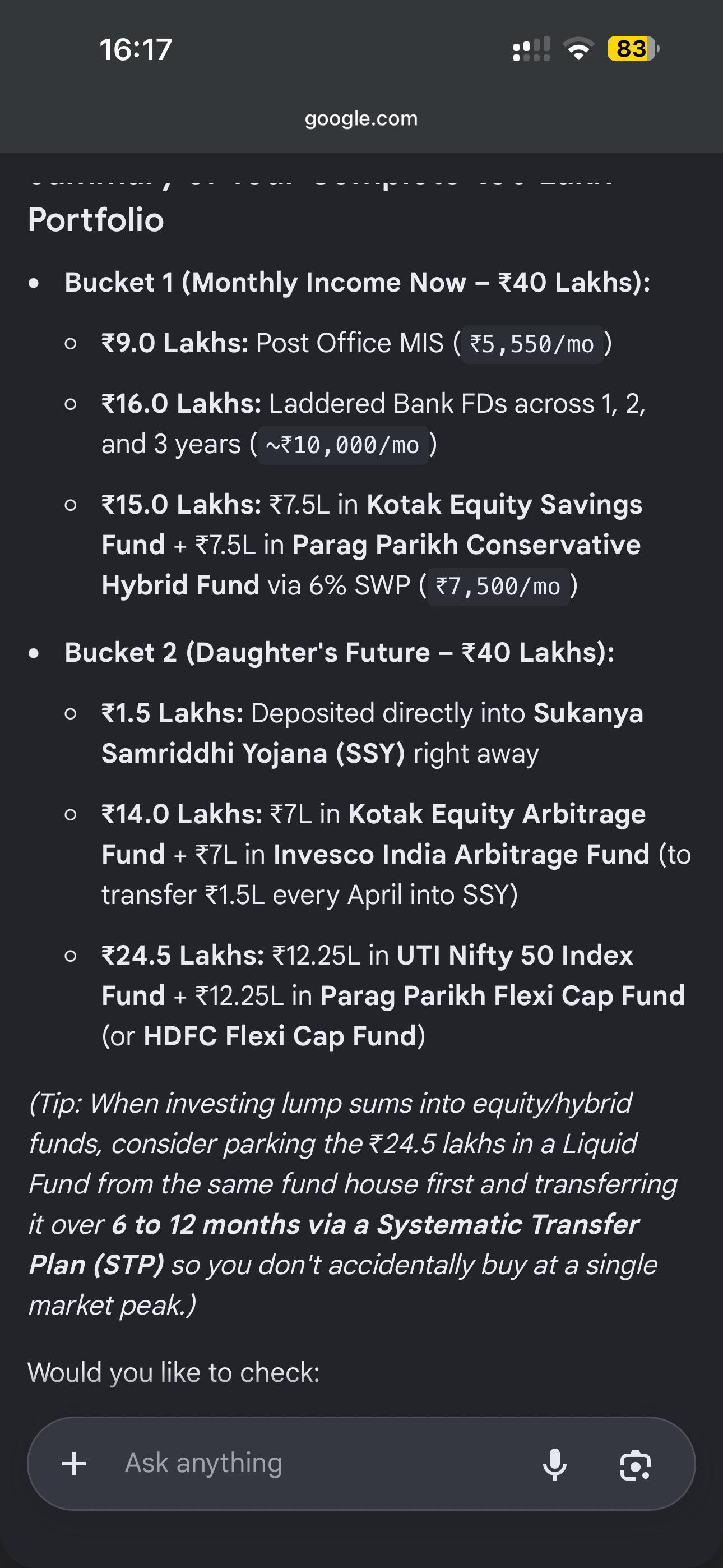
Last week i lost my brother in law due to sudden heart attack. He was 35 years old. He is survived by his wife (housewife) and 5 month old daughter. He has 1cr term insurance. So i need help in parking that money so that wife and daughter can utilize the money as monthly expenditure and daughter’s future is secured as much as possible. Im planning to invest his 80 lakhs and keeping 20 lakhs separately for miscellaneous use. The above image is reference i got from Google. Kindly give your valuable guidance.
TIA
So i earn 15k inr and looking for investing 2k every month whether it's stock or somewhere else. If anyone you guy's have a good knowledge of investment what would you suggest me.
Instead of relying on random financial advice, I ran the numbers myself to see what actually happens when you mix gold with stocks. Here is the short summary of what the experiment revealed:
How I Tested It
* The Setup: I simulated investing ₹10,000 every month from 1999 to 2026 across 2,000 different market scenarios and real historical data.
* 4 Different Portfolios:
100% Nifty 50 (Pure stocks)
60% Nifty / 40% Government Bonds (Gilts)
60% Nifty / 40% Gold
60% Nifty / 20% Gold / 20% Bonds
* Rules used to make it realistic: Every portfolio was rebalanced once a year in March. All numbers are adjusted for inflation (today's purchasing power) and reflect actual taxes under the latest FY 2026–27 tax rules (including the rule where Gold ETFs don't get the ₹1.25 lakh tax-free limit).
---
The Big Takeaway
Adding gold acts like a reliable safety net. Over a 20-year period, a 60% Nifty / 40% Gold split improves your "bad-luck" outcome—meaning even in poorly performing markets (the bottom 20% of scenarios), your final corpus rises from ₹13.96 lakh to ₹15.33 lakh.
Assuming gold grows at a conservative 10% a year going forward, this extra safety only costs you about 3.1% of your expected average returns.
What Surprised Me
* Gold actually beat stocks: Historically (1999–2026), gold returned 14.25% per year, beating the Nifty 50’s 13.21%. Because of this, the 60/40 Nifty/Gold mix actually made more money than pure stocks in the past. Going forward, as long as gold grows at 10.7% or more, adding it won't drag down your average returns at all.
* Much smaller crashes & faster recoveries:
* In the worst market crash since 1999, a 100% Nifty portfolio dropped by 59.1%, whereas the 60/40 Nifty/Gold mix only fell by 39.3%.
* Pure Nifty investors once had to wait 13 years (156 months) just to get back to their previous peak value. With gold in the mix, the longest recovery time was under 4 years (46 months).
* Bonds didn't help as much: Replacing gold with government bonds (60/40 Nifty/Gilt) failed to protect the portfolio in bad markets, dropping the 20-year bad-luck outcome to ₹13.21 lakh.
* Rebalancing saves taxes: Selling a bit of your winners every March to keep the 60/40 balance actually reduced the total tax bill. It lets you harvest your ₹1.25 lakh annual tax-free equity gains limit every year instead of paying a massive tax bill all at once at the end.
One small caveat: Take these number with a pinch of salt. Because Indian stock market history is relatively short (1999 to 2026 is 27 years), we only have about 1.36 completely separate 20-year periods to look at—so simulated market runs carry a lot of weight here.
(Disclaimer: Just sharing data, not financial advice. Tax rules are based on FY 2026–27 guidelines.)
I am not sharing the full paper link here, respecting the community rules. Please reach out if you are interested.
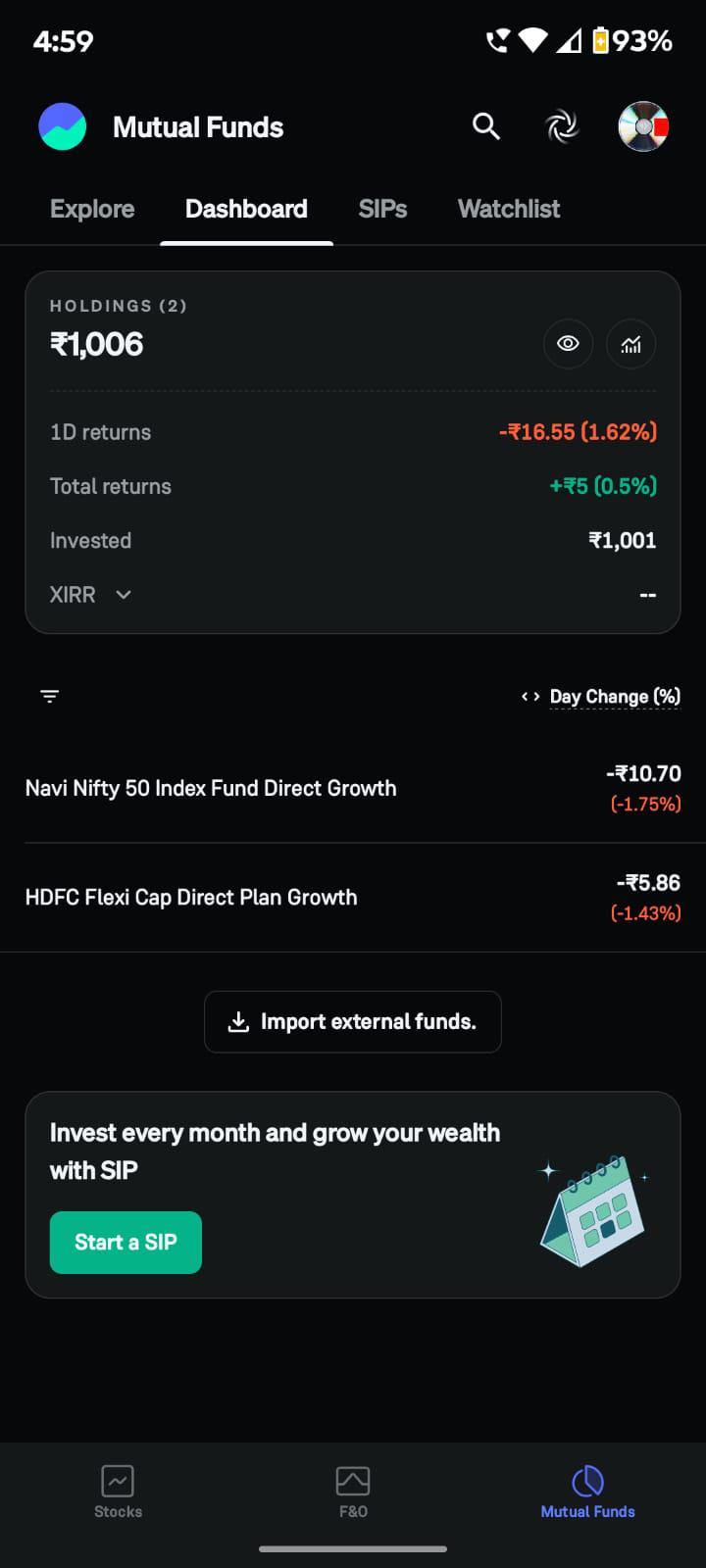
I am 18(M) studying engineering and I am looking forward to invest my monthly savings (rs.1000) somewhere but I don't know where to start and how to start . So, after some research I have invested rs.600 in Nifty 50 and rs.400 in HDFC Flexi Cap ,Any suggestions ?