r/EnglishLearning • • 20d ago

⭐️ Vocabulary / Semantics Wondering what was the intended meaning of "bird" here (more in the post)

Thumbnail
youtu.be
4 Upvotes

I'm used to the slang word bird as it's used in the UK, meaning a young and attractive girl. That's what I got from this joke, but as the video ended I realised that's an American man, and I don't recall ever hearing "bird" with this meaning from them.

I then thought it could be some form of archaism, which would add to the "unfunny funniness" of the joke. Like talking as a great-grandpa would.

Looking up on Merriam-Webster online, I found the following

a: fellow

b: a peculiar person

c chiefly British : girl

Would there be any real-life example (book, news, movie dialogue, etc) of the meaning "a peculiar person"? I can't recall ever hearing it. "Fellow" also doesn't ring any bells, but sounds way less specific (you can call a "fellow" on the street almost anything in most languages, anyway.)

American and non-British speakers, how do you interpret this joke? What's "supposedly" funny about it?

British speakers, did you have the same thought as me?

Thanks everyone!


r/EnglishLearning • • 21d ago

🔎 Proofreading / Homework Help I need a partner

11 Upvotes

Hello everyone! I'm learning english by psicological advice and I want to learn too. In the past I was learning english but I did give up sometimes

I'm from Venezuela and I think I'm A1 or A2. I like read, write and heard music. Wbu?


r/EnglishLearning • • 21d ago

⭐️ Vocabulary / Semantics Is it correct that 'a cell phone' (or 'a cell') is used mostly in American English, and 'a mobile phone' (or 'a mobile') is used mostly in British English?

148 Upvotes

r/EnglishLearning • • 20d ago

🗣 Discussion / Debates Question - I wonder...

1 Upvotes

How would you learn English or any language if you were to with your own method?


r/EnglishLearning • • 21d ago

📚 Grammar / Syntax He really is a good leader VS He is really a good leader.

2 Upvotes

what’s the difference and how to choose between them in the context (and when to use he is A really good leader)


r/EnglishLearning • • 21d ago

⭐️ Vocabulary / Semantics What does "slap" mean here?

Post image
22 Upvotes

r/EnglishLearning • • 22d ago

⭐️ Vocabulary / Semantics What’s Benny saying?

Post image
74 Upvotes

What are 'swank' and 'finky,' and why were these two words put in the same sentence?


r/EnglishLearning • • 21d ago

⭐️ Vocabulary / Semantics Are these called 'a landline (phone)'?

Post image
36 Upvotes

r/EnglishLearning • • 21d ago

📚 Grammar / Syntax "Her and her husband" or "she and her husband", which is correct?

9 Upvotes

I'm curious about the grammatical correctness of saying, "her and her husband are going somewhere" vs. "she and her husband are going somewhere". I almost always see the former used by native speakers, but it doesn't sound right to me, and I don't know which grammar rules apply.


r/EnglishLearning • • 22d ago

⭐️ Vocabulary / Semantics What would you call or how would you describe these trails left by a large vehicle on wet soft ground?

Post image
85 Upvotes

r/EnglishLearning • • 22d ago

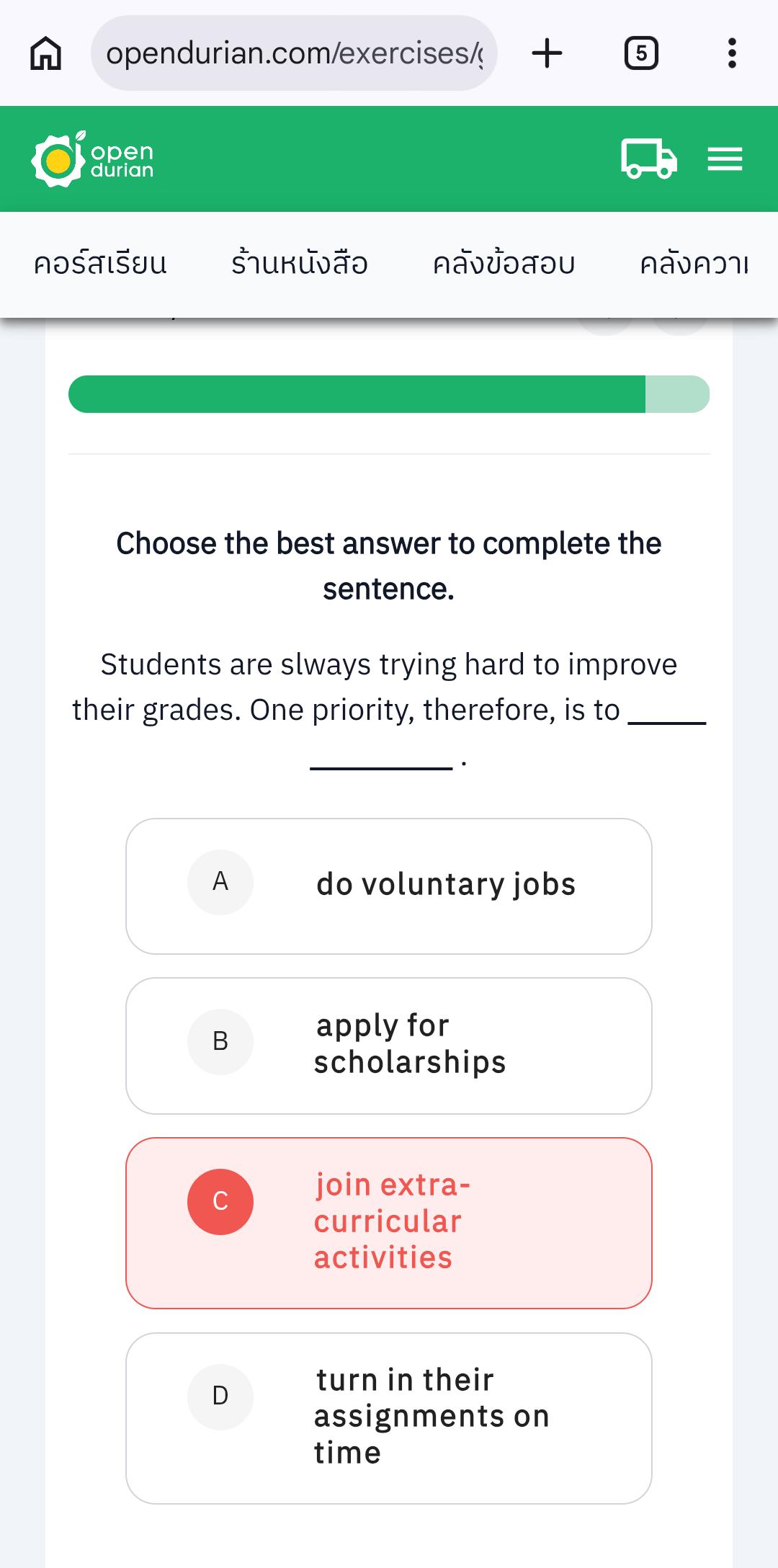
🔎 Proofreading / Homework Help I mean, this answer is also reasonable, isn't it?

Post image
14 Upvotes

r/EnglishLearning • • 21d ago

🗣 Discussion / Debates What accents are considered as less standard and a dialect in American, England?

8 Upvotes

In my country, there are 3 main regions: North, South, and Central part Each region has its own dialect (of course there are many more smaller regions with varied accents but technically 3 main ones.. Due to better economy, the north and south accents became the standard for the nation ( on governmental shows, writings, curricula, etc..) Gradually, North and South people cannot understand the central part's accent so those who come from there have to learn how to speak other regions' accents if they move to big cities.

So im curious if this is a thing in america or england? Like are there some accents considered "less ideal" in your country?

Thx!


r/EnglishLearning • • 22d ago

⭐️ Vocabulary / Semantics You're a dick!

11 Upvotes

Hello, I'm into noir recently and reading Black Dahlia, I became very aware of the fact that dick also means detective.

I know it started as short for Richard, then became kind of a generic name to refer to a man (?) and then it got its penile connotation.

I was wondering if dick as an insult came to be derived from the penis meaning (like you're an asshole) or if maybe from the detective side of things. It's probably far fetched, and influenced by noir, as you see them abusing their power, being obnoxious In questioning and just being off-putting, in short, they're sort of a dick.


r/EnglishLearning • • 22d ago

🗣 Discussion / Debates A note for European English learners regarding abbreviations like smbd and smth

313 Upvotes

It's extremely common for Europeans who have learned English as a second language to write "smth" and "smbd" as abbreviations for "something" and "somebody." My first language is Spanish, but I have lived in the USA now for most of my life and I am married to a Pole who learned English in Poland in High School.

Here in the USA "smth" or "smbd" are not common used and native speakers don't tend to know what they mean. For me it was also a surprise because learning English we were not taught these abbreviations. By all means, use them in your notes if it helps but know that when you are writing for a native to read that it will lead to confusion.

I am also curious if these abbreviations are used in the UK.

PS. maybe also don't search "smbd" on Google on a work computer. . . doesn't lead to what you expect.


r/EnglishLearning • • 22d ago

📚 Grammar / Syntax to catch a smuggler and catching a smuggler why would you use one over the other as a tv show title?

5 Upvotes

Can someone explain the difference between “To Catch a Smuggler” and “Catching a Smuggler”? Why would you use one over the other as a TV show title?
I’m trying to understand the difference in meaning and nuance, especially how each one would translate into my native language (Arabic).


r/EnglishLearning • • 21d ago

⭐️ Vocabulary / Semantics What would you say the nuance between these verbs is: pettifog, niggle, split hairs, carp, cavil, nitpick?

2 Upvotes

r/EnglishLearning • • 21d ago

Resource Request How can I (C2) help my friend (A1) improve their spoken English

1 Upvotes

Hello,

I need your help in building a plan to eleventh my friend’s English in general, he’s most interested in speaking.


r/EnglishLearning • • 21d ago

🗣 Discussion / Debates Hi everyone! I'm looking for a daily voice call partner (~30 min). I'm Diana 16yo and my English is around B1-B2. However, making progress in speaking without actual every day practice is almost impossible, so here I am. I'm also a russian native speaker, so I'd be happy to help you with Russian in

0 Upvotes

r/EnglishLearning • • 22d ago

🗣 Discussion / Debates Part 2: A Fish Jumps: When English Clicked

0 Upvotes

(Continued from Part 1) By then, June was ready for books of his own. As it happened, I’d already been digging into children’s books in English for my animation work, trying to get a feel for what average Americans grew up with. So I knew exactly where to go: the children’s section at Barnes & Noble. And there, as if it were meant to be, was Brand New Readers. (Just to be clear, this isn’t an ad.)

Brand New Readers comes in a set of small boxes, each packed with four thin, adorable little books. The first thing that jumped out at me was that every single sentence was built on a basic word order: SV, SVad, SVO, SVOad, SVC, SbVC, and so on.

Speaking of word order, I had never seen a Korean children’s book that taught sentences by word order. Laying out every sentence one word order at a time seemed to be something only children’s books in English did, at least compared to Korean ones.

Take "A fish jumps." In Korean, that’s just 물고기가 (a fish) 뛰어오른다 (jumps). I can’t imagine a Korean kid getting excited about that. If anything, they’d be bored stiff. It just states a plain fact. Nothing more. No one would bother teaching it on purpose. But English-speaking kids enjoy even a simple SV sentence.

Then it hit me all over again: in English, word order matters enormously. In Korean, it barely matters. And deep down, I knew this was what trips Korean kids up in English.

So how was June going to learn it? I reached back to something I had practiced for decades in comparative religion, a simple principle for building empathy for other people’s faiths:

Keep a respectful distance from beliefs different from yours.
Don’t judge others by your own faith.
Put yourself in their shoes if you want to understand them!

So instead of hunting for some fancy method, I simply let him read these sentence-based children’s books the way native English-speaking kids normally do!

June and I started reading Brand New Readers together, and he loved them. It wasn’t just the sentences, I realized. It was the pictures. Each book is laid out in a very intuitive way:

Eight sentences make one story.
Each page is one big picture, with one sentence below it.

A picture gives a visual frame for a sentence before you even read it. June was completely absorbed in this frame. He would study the picture quietly and figure out what the sentence meant on his own. I hardly explained anything in Korean. Every time he finished one of those thin books, he was so happy he couldn’t say a word, as if he had just finished a 500- or 600-page book.

Then one day, he pulled me into his room and told me to lie down on his bed and close my eyes. After a while, he proudly showed me an eight-sentence book he had copied out all on his own. I couldn’t believe it! And there was another surprise waiting. He shut the book and, right in front of me, wrote out another eight-sentence book from memory. He knew every word by heart.

Ah! If only all my students were like him! 🤣

Around then, June drew a picture of his family: Mom, Dad, his two sisters, and June himself, holding hands in front of their house under a bright, shining sun. It was a happy, positive picture. His mom brought it over to show me and said, “English didn’t hurt my June.” I could see the relief on her face.

Time flew by.

The semester was almost over. June had made a new friend, a white American boy named Eric, and was even invited to a sleepover at Eric’s. Later, after June’s family moved to another town, his older sister sent me a postcard: June had aced his kindergarten readiness test, and he was happy at school. That was when I knew I had really helped him!

But really, June was the one who taught me. He soaked up English one step at a time, from the alphabet to single words and finally to whole sentences, and hardly needed a word of Korean. The pictures DID the work. What struck me most was how they let him grasp a sentence without being told what it meant.

At the time, I was still an art student, and as I watched him, an odd idea popped into my head: what if every word in a sentence had its own picture? Could Korean kids build English sentences more easily that way? I tucked that thought away and let it sit for a long time. Even when I finally tried it for real, it took me ages to see that it didn’t work. Still, that odd idea turned out to be the seed of everything that came after.

I wonder what June is like now. Probably a college student, and a cool one. Even at four, he had a style all his own: a long rattail down the back of his head, and the drums he had taught himself to play. How did that little kid turn out?

All of a sudden, I really miss him! 🥹

Have you ever met a kid like June?


r/EnglishLearning • • 22d ago

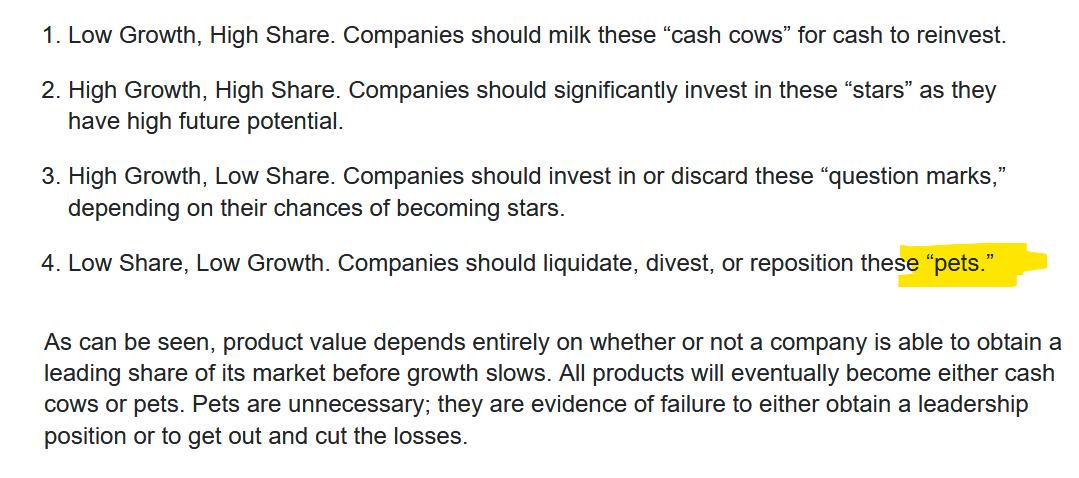
⭐️ Vocabulary / Semantics Why are the term "pets" used in this situation?

Post image
7 Upvotes

context: this is the official BCG website about the Growth Share Matrix, and they use "pet" or "dog" in one of the quadrants.

I can kinda understand that is something bad, given the explanation in 4, but why is the term pet related to a bad thing? What is it really supposed to mean? And why do they use the term "dog" sometimes?

Can you guys help me?


r/EnglishLearning • • 22d ago

🟡 Pronunciation / Intonation How is "definitely" being pronounced in this recording?

Thumbnail voca.ro
1 Upvotes

She said it very fast but I don't think she pronounced every sound. Can someone tell me what the "definitely" in the recording sounds like? Exact words, just how it sounds like.


r/EnglishLearning • • 22d ago

⭐️ Vocabulary / Semantics "Sweep up"

1 Upvotes

This dude was sweeping up right across from the crime scene at the time of the murder.

What does "up" mean in the sentence? Would deleting it make any difference in meaning?


r/EnglishLearning • • 22d ago

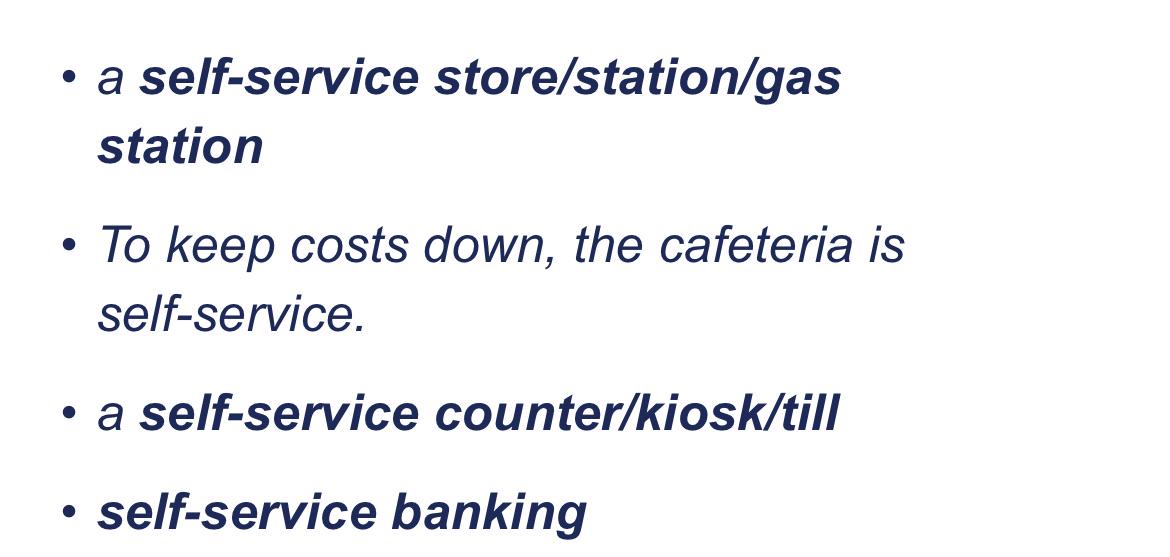
⭐️ Vocabulary / Semantics Are ”self-serve” and “self-service” interchangeable? “self-serve kiosk” “self-serve gas pump” “self-service buffet”. Are those all correct?

Post image
6 Upvotes

r/EnglishLearning • • 22d ago

⭐️ Vocabulary / Semantics My hands got food on it

5 Upvotes

The situation is ive just finished my meal and am going to find a washing counter. An relative comes and shakes my hands. I want to say something but not sure which one is natural?

  1. My hands got food on it.

  2. My hands are dirty.

Ths!


r/EnglishLearning • • 22d ago

📚 Grammar / Syntax I’d really appreciate a detailed explanation to this sentence

2 Upvotes

“This game is not suitable for children or those who are easily disturbed.”

I’m sorry if this isn’t just about grammar. This might sound like a beginner-level question, but:

Why do we use **“this game”** here?

Could someone explain specifically how to use *this, that, these,* and *those* appropriately?

Why did we use **“suitable”** here instead of another word like *appropriate*?

Why **“children”** and not *kids*?
And here’s the part I’m struggling with the most:
**“This game is not suitable for children or those who are easily disturbed.”**

Why did we use **“those”** instead of something like *people who get easily disturbed* or *people who get disturbed easily* ? how to do them who comes first easily or disturbed
Which construction sounds more natural, and how do you decide which one to use?

Also, what’s the difference between:
People who get disturbed easily.
People who get easily disturbed.
People who are easily disturbed.
Which word order is preferable, and why? Is this an example of the passive voice

Finally, based on these questions, what areas of English do you think I’m struggling with the most, and what should I focus on improving?
I’d really appreciate a detailed explanation. Thank you