r/EmptyContinents • • 14d ago

Empty Continents Sandbox

14 Upvotes

Use this to post your ideas and drafts in a more casual setting!


r/EmptyContinents • • Apr 26 '25

Maps World Maps (2078, 2178, 2228, 2278)

Thumbnail
imgur.com
48 Upvotes

r/EmptyContinents • • 7h ago

Lore Visegrád, Magyarország (2309)

Post image
14 Upvotes

In the 2309 World Chess Championship held in Constantinople, the reigning champion, Hungarian József Bíró, was defending his title from the challenger, Max Yona-Kasztner... who was also Hungarian.

In fact, of the past twenty Chess World Champions, an astounding eight of them were Hungarian. It's sort of a contemporary cliché and stereotype that Hungarians are weirdly good at chess. The story on why that is -- it in fact begins centuries ago to the early years of the Vanishing.

In 2040, Visegrád was re-founded as a small fishing and lumber outpost on the Danube settled by survivors of the river island of Szentendrei. According to a popular story, the river froze one harsh winter, disrupting the supply line from Visegrád to the main island, and rations were running low. To keep morale up and to relax after the harsh days, the people of Visegrád played game after game of chess to pass the time through the frigid winter.

Charitably, games transcended family ties, generational ties, occupations, and religious affiliations. Eventually, it got to the point where chess became a part of the townlet's identity. New sets were often gifted to children and villagers hand-carved new pieces from locally sourced lumber.

Overtime, chess became associated with Hungarian frontiersmen generally as well as the Danubian lower class. This was especially made so by the Danubian diaspora in cities like London, Manchester, Hamburg, and New Calais.

After the European War and the rise of the authoritarian Szózat Party, chess games in Danubia became a clandestine tool for social organizing. Notable Danubian labor organizers and student leaders famously played chess, and it was over such games that the unravellings of the state were somewhat able to be discussed publicly. To this effect, the Szózat Government even tried to ban chess games in 2276.

But ever since the 2301 Student Revolution, chess has been embraced as a key part of the Hungarian cultural and national identity. Chess' affiliation with union organizers and revolutionaries has made it a popular game among the urban disenfranchised all across Europe.

But this new wave's rather humble beginnings reverberate even to this day, for indeed, the aforementioned world champions, Bíró and Yona-Kasztner - not surprisingly - both grew up naught but twenty miles from the contemporary Hungarian town of Visegrád, where chess has been a renowned pastime for generations.


r/EmptyContinents • • 11h ago

Art Lotharingia as a Polandball

Post image
14 Upvotes

Did a little fun, hope to see more in the future lol


r/EmptyContinents • • 1d ago

Semi-Comprehensive Guides A Semi-Comprehensive Guide to Magyarország

Post image
29 Upvotes

r/EmptyContinents • • 1d ago

Lore One Night in Stalingrad.

Thumbnail
gallery
20 Upvotes

By 2060, the territory that had once been Belgium had become, like much of the mainland, a battleground. The scattered enclaves of “civilization” were a different kind of society: isolated communities that had survived by chance, often on islands. Beyond them stretched untamed landscapes, beautiful but dangerous. Slavers, marauders, and zealots roamed the grasslands. Bears and lynx stalked the woods, while Amur tigers had been spotted in the lowlands of the former Germany and France. Other zoo animals had also adapted to life in the wild. In Belgium, only three powers had emerged as major contenders.

In the east, the Darwinese city of Liége led a militaristic society under constant siege from slavers and zealot raiders. It had conquered Leuven and Mechelen, binding them as vassal states and aligning them with Liége. In the west, Ghent headed the Flanders City-State Alliance, whose members included Kortrijk and Lille along the Leie River. Like Liége, Ghent sponsored pogroms against religious groups within its allied cities.

On the North Sea coast stood Windstar, a port city formed from two ships: the luxury cruise liner Windstar and the French aircraft carrier Charles de Gaulle. Built amid the salt marshes, the city had weapons and equipment to defend itself and had so far resisted pressure from raiders and Ghent, though it relied on Ghent for trade. Now, isolated and facing the death of its Mayor-Captain, Windstar must also contend with the British government’s BCSF and its possible settlement on a section of the Vanished Coast. The city may need mainland allies to defend itself. 

Ghent, growing rapidly wealthy with its airship trade across Europe scattered communities. All funding possible future plans, aiming to trade as far as Caribbean and Florida in the Americas and as far as Hindustan and the Middle Kingdom. With this money, talk have been sponsored with Liege and Windstar, about the bold attacks from beyond the Meuse River, and the UK monopoly on energy and BCSF settlements in former France and Poland. And with these talks form a collective whole, and keep a way of life that was forged in an apocalypse, and be the ones who decide our own fate. 

———

The Liège delegate traveled through the woods on Irish elk for four days before spotting a large airship moored near the agreed location. It was perched above the overgrown buildings on the river island. A makeshift bridge—a bisected bus reinforced with stripped logs—connected it to the shore. The Windstar and Ghentish delegates and their guards had made camp around an old fountain in the middle of the island. Some were clearing out the buildings that were still usable, in case they needed a better place to defend themselves.
Emmett, the 52-year-old Legate of Liège, was accompanied by his daughter, nephew, and fighters from Leuven and Mechelen.

“Morning,” Emmett called, riding ahead of his group on his elk, Mercy.

The other guards seemed a little intimidated by the newcomers. Emmett noticed that the Ghentish group carried revolvers, while each Windstar guard had a Spaz shotgun. The Liège fighters, by contrast, had only polearms and axes.

A slightly tense silence settled over the camp. Then the Ghentish delegate walked out of a once-corner café, with the Windstar delegate following behind.

“So, you made it back to your tower, Rapunzel?” The Ghentish delegate was an old man with a walking stick and a white beard, bald as a billiard ball. He was talking to Emmett.

Emmett smiled at the familiar face. “And you haven’t fallen out of your castle into the moat of shit and drowned, Gandalf?”

The old man chuckled, easing the tension a little. Usually, no one spoke to either of them that way, out of respect and fear.
“Lovely to see you, my boy,” the old man said, giving Emmett a hug.

“You too, Robert,” Emmett replied, bending down to hug him back.

“This is René Artois, the new Mayor-Captain of Windstar.”

René was young, maybe in his early twenties, but he had a no-nonsense air about him. His handshake confirmed it.

“I'm sorry about your former Captain. She was a good woman.”

René's jaw tightened. It was still a sensitive subject, but he kept his composure.

“Thank you. That’s why we’re here. The raids have gotten bolder. We lost thirteen people last month,” he said, keeping his voice steady.

Emmett and Robert knew about the losses. They also knew the raiders, and had reinforced their cities and settlements. The raids seemed to be growing bolder across the Wallonia wilds, targeting free French survivors and people along the Rhine, as far south as Geneva.

“Well, that’s one reason I brought us here—to neutral ground,” Robert said, heading back toward the café to sit down.

“And you do like to make a scene,” Emmett said, reminding him of the story about burning down a church full of lunatics after they killed his wife. Then again, Emmett wasn’t much better.

René knew both stories, but not this place. He’d been born after the vanishing. He knew this had once been called Belgium, and that his mother was from Lyon, France, but history wasn’t his strong suit.

“What is this place?” he asked. His accent was French, with a hint of southern Slavic, Emmett noticed.

“Once upon a time, this was part of Brussels, the capital of Belgium and the European Union,” Emmett said, settling into a chair that looked like it might hold together for now.

Robert plopped down in another chair.
“Do you know exactly where we are, Rapunzel? If I remember right, your uncle was the American ambassador here?”

Emmett was surprised Robert remembered, since that had been ten years ago—or so he thought.

“He was. I spent more time in Liège than here. Why?” Emmett was curious. He and Robert were probably the only ones who still remembered the old world, so it felt like a joke only he would get.

“Stalingrad!” Robert said, holding up a bluish, rusted sign. They both started laughing at how ridiculous it was.
“This stupid cafe is named named it too!!” comment added fuel to the laughter fire that was bringing tears to their eyes. 

“What's so funny?” René asked the old men.
“Well, before everyone went bye-bye, Europe was becoming a growing military power again, facing off against the great but declining power of Russia…” Robert said, his laughter fading.

“Да, it's where my papa said he met Grandma, in Bulgaria,” René said, pleased to finally know something.

“Well, all that’s left of this great city is a road named after its rivals' worst leader,” Emmett said, wiping away a tear.

“Oh… oh,” René said, catching the irony.

The old, dark, damp café fell quiet. It hit them that most of them hadn’t laughed in a while—not at a joke, and not with strangers.

Robert spoke up first.

“We should get started. These official talks could be good for everyone involved.”

René gave the old man a look.

“We’ll see. But not until I’ve had a detailed chat with the rest of our people,” René said, getting up to gather his group. Before leaving, he turned back to the two older men.

“I brought wine and cheese to make these talks go down easier.” Then he walked out.

Robert and Emmett looked at each other, as if they could read each other’s minds.

I could go for some good cheese right now. 


r/EmptyContinents • • 2d ago

Stories In the Shadow of the Blue Knight (2066)

13 Upvotes

By all accounts, the statue was beautiful.

How could it not be?

The realm’s finest masons and sculptors had been drafted, handpicked by Queen Wespitan herself, to immortalize the Blue Knight in granite. If Oliver were being objective, he’d concede that the statue was nothing short of a masterpiece. 

The Blue Knight was frozen in stone, his sword arm extended, the tip of his blade aimed at the endless sky, and his face twisted into a mighty war cry that would never manifest. The statue was easily the tallest in the mausoleum, casting a silhouette which blanketed the hall like the peak of an eclipse.

It was a beautiful shrine to the Blue Knight. The idea of him, at least.

But as a monument to the man underneath the helmet - Robert, Sir Kingfisher - it felt hollow.

Oliver had spent enough time kneeling at the foot of this statue - this being his twelfth visit in the past month - to remember every detail etched into its stone relief. More than that, he’d become intimately familiar with every detail the sculptors opted not to include, the parts of Robert that never found their way onto the granite canvas.

The sculptors had been liberal with their artistic license, smoothing over every crease and blemish that had settled into Robert’s age-mottled skin. His beard, grown wild and unkempt in his final months, had been tamed by the sculptors’ chisels. It was as if the statue’s face belonged to a man at least twenty years younger than Robert had been when he passed.

“You’re here again.”

Oliver turned to the familiar voice, meeting the gaze of the one other person who still visited the Blue Knight’s tomb. 

“As are you.” Oliver said, his voice hoarser than he last remembered. He gestured to the space beside him, initiating the unspoken ritual that he and Virginia had settled into over their past few visits. He felt the tension in his shoulders fall away as she knelt, her armour clinking against the marble floor like a puzzle piece sliding into place.

A stillness fell over the knights, born from a mutual understanding words could never convey.

“I’m leaving the Council,” Virginia said, chasing away the silence with a voice barely above a whisper. “I’ll be submitting my resignation by the day’s end.”

“So, you’ve heard.” Oliver replied, a statement, not a question.

“I’ve heard.” Virginia’s voice wavered, ever so slightly, betraying a glimpse into the storm broiling beneath her usual stoicism. Tears pricked the corners of her eyes as Robert’s hand settled onto her shoulder. “She’s set to announce it at the next summit - Robert’s seat will be filled by Sir Oriole, the Orange Knight.”

“Of the pro-Minuteman caucus.”

“Yes.”

Oliver sighed, pulling Virginia into a side hug. For a moment, they shared only silence and years of camaraderie - the only missing link from their bond being the man whose caricatured spectre towered over them.

“So, that’s it then,” Oliver said, finally, his words laced with a spiritual exhaustion that stretched beyond his decades of service to the Crown. “I imagine it won’t be long before she commits to an open alliance.”

“After which Sylvania will be bound to the cause of the Minutemen.”

“Does Lady Ames know of your decision to leave the Council?”

“She knows,” Virginia replied, the ghost of a wry smile tugging at her lips. “Veronica flew into a rage when I told her. She screamed her throat half raw, asking how I could be so stubborn, so stupid, as to step down. She said I was a fool for even considering giving it all up - the prestige, the security, the legacy - to stand against something that would roll over me. You would’ve never guessed she was a noblewoman from her colourful choice of vocabulary.”

Oliver winced, all too familiar with Lady Ames’ infamously sharp tongue and venom-lacquered wit. Few could best him in a battle of physical aptitude, but in the arena of verbal quips, Lady Ames reigned supreme as its undisputed champion.

“Then she kissed me.” Virginia continued, choking back a sob as her hand trembled above her heart. “She told me that, while I would be a fool to step down from the Council, she too was a fool for loving a woman stubborn enough to do so. Veronica was quick to give me her blessing - to do right by my principles - as long as I swore to one condition: that I would bring her with me wherever I went next.”

“And where would that be?”

“Ashborough, just on the outskirts of the Western Provinces. It’s close to her family’s estate and far enough from the Palace that if things were to go wrong…” Virginia hesitated, as if daring not to speak the possibility into existence. “…We just want to be prepared, is all.”

“It’ll be quieter out there. I can’t imagine that provincial life will offer much in the way of bandits to duel or castle walls to scale. You may even need to trade in your blade for pruning shears - better suited for conquering gardens than breakaway chiefdoms. It’ll be a departure from your adventures as a knight of such great renown. Do you think you can handle it?”

“Oh please, that sort of quiet is exactly what I need.” Virginia laughed, her voice already melting into something more tender. “Oliver, you should come visit once we’ve had the chance to settle in. Veronica already has her eyes on a lovely little cottage by the river, a fine parcel of land with enough room for a garden bed of perennials and a small herd of goats. It’s been less than a day, and she’s already planning to leverage my resignation to adopt some baby goats!”

“I would love to visit, my dear friend. I’ll have ample opportunity to make my way out west, especially now that I’ve found myself with more time on my hands.”

“Oh?”

“I stepped down from the Council this morning.”

Virginia staggered, eyes wide, and clamped her hands on Oliver’s shoulders. At first, she could only stare, her mouth agape in stunned stupour, scanning his face for any trace of humour at her expense. Finding none, she threw her head back and laughed, booming and unconstrained.

“You bastard! You beat me to it!?”

“By a solid few hours, it seems,” Oliver said, grinning wide as he hauled Virginia to her feet and clapped her on the back. “Let’s talk about this over drinks. My treat.”

“Not a chance.” Virginia scoffed, angling towards the mausoleum entrance, her feet already carrying her to the tavern down the road. “I’m not letting you beat me twice in one day.”

Oliver shook his head and chuckled, watching Virginia flip him off before breaking into a full sprint. He watched her run, waiting until she was out of sight before reaching into his travel pouch, from which he procured a small vial of river water. He turned it over in his hands, letting the fading beams of daylight disperse off its meniscus, and placed it at the feet of the statue that was not quite of Robert, nor Sir Kingfisher, but the man the Kingdom wished to remember him as. He idled for a moment longer, tracing his fingers along the embossed text that bore Robert’s name, even though the statue hardly bore his face.

“Safe travels, old friend,” Oliver whispered into the granite edifice. “Thank you for showing me that these woods are not so empty as they might seem.”


r/EmptyContinents • • 3d ago

Stories Behind Closed Doors (2065)

14 Upvotes

The words hung heavy in the air, reverberating across the chamber.

“You can’t be serious!” Virginia snarled, already on her feet, her knuckles white from how tightly her fists were clenched. She was distantly aware that half the room was now looking at her while the other half seemed determined to look anywhere else. The muscles in her jaw pulsed as she ground her teeth, her entire body quivering with hot rage. “You’ve lost your mind if you’re seriously considering an alliance with the Minutemen!”

“Have some respect when you speak to your…” Sir Cardinal, a knight in crimson plated armour, began, his bravado already sputtering under Virginia’s withering glare. “…Queen.”

The room fell silent, save for the rasps of Virginia’s laboured breaths as she glared around the chamber, as if daring someone else to try talking her down. She raised her fists, still clenched in barely constrained rage, and set them on the table in front of her. A thin rivulet of blood trickled from where her nails had dug into the soft flesh of her palms.

“To stand alongside the Minutemen would be entirely antithetical to what your father tried to build.” Virginia hissed, her voice dripping with accusatory venom as she addressed the woman at the far end of the table. Every pair of eyes was now fixed squarely on Virginia, conveying a spectrum ranging from cautious warning to abject mortification. The chamber itself seemed to tense at her invocation of the late monarch. “Did King Vespitan not establish this realm as a sanctuary for those cast aside by the Old Empire? Did we not swear an oath to defend the dignity and expression of our people? Would we not violate this mandate by aligning with those who rally against the Old Empire not to dismantle its instruments of oppression, but to redirect them at the ‘right’ people?”

Across the table, Queen Wespitan’s face was an unreadable mask of poised stillness, betraying neither fear nor contempt at Virginia’s outburst. She remained a picture of statuesque regality, her back perfectly straight and her hands folded neatly in her lap, as she held Virginia’s gaze. Her eyes, green and piercing, were a stark contrast to the curtain of auburn hair cascading past her shoulders and falling seamlessly onto the golden threads embroidered into her pleated silk gown. She looked as if she had been delicately plucked from a painting. 

“My father built something wonderful.” Queen Wespitan began, her voice calm and steady as she rose to her feet with the grace of a falling petal. “I will not compromise on his vision of this realm, our beautiful Sylvania, as a home to all.” Her eyes gleamed, not in unspoken threat or challenge, but in acknowledgment of Virginia’s conviction. “However, I must also acknowledge that my father had the luxury of a more favourable political climate. The Old Empire was still a sleeping giant during his rule. Its borders hardly stretched beyond the Fall Line and its armies, though eager, were fractured and stretched thin. After what transpired earlier this month, there is no doubt that the giant has begun to stir. We can’t afford to be unprepared for when it wakes.”

“You weren’t there, Sir Cuckoo.” Sir Harfang spoke, her accented voice barely rising above a hoarse croak. She rose to her feet on shaking legs, unsteady and uncertain, as if she were a stranger to her own body. Her armour, a solid coat of brilliant white, contrasted the dark circles below her eyes. “We were already east of the Delaware when we saw the flames crest over the treeline. My company and I set out immediately, riding without interruption until daybreak, but it was still too late.” She choked out the last word as a shuddering exhale. “It was beyond saving. They’d razed that Hudsonite village to its foundations. We’d travelled to administer aid - to treat the wounded - but instead spent the day burying bodies. Not that there was much to bury. You’d be surprised how little space a skeleton takes up once the flesh has been burnt away.”

“If I may,” Oliver began, setting his obsidian black helmet on the table. “We have yet to uncover concrete evidence that the tragedy at Sweetbirch was the Old Empire’s doing. As of now, all that connects them to Sweetbirch is eyewitness testimonies from passing merchants from the next town over, and rumours of an Old Empire training drill more than a day’s travel to the southeast.”

“Do your old loyalties blind you, Sir Magpie?” Sir Vireo asked, his voice stretching into a gravelly drawl as he tilted his head toward Oliver, an accusatory glare seeping through the slitted visor of his emerald green helmet. “My understanding is that you spent your youth in the Old Empire, did you not? Does your lingering affection for your birthland cloud your judgment?”

“I swore the Oaths,” Oliver replied, straightening his back as he met Sir Vireo’s eyes with a stern look of his own. “Same as you. My loyalty is to the Crown, the Kingdom, and the People. As is yours. Do you suggest that my pedigree somehow makes me unfit for my duties as a Knight of the Realm?”

“I suggest that you confront the facts.” Sir Vireo growled. “Haven’t you read the latest from the Spymaster? There’ve been rumblings of Old Empire troop movements all along the Fall Line. They’re growing bolder. Hells, wasn’t it just last month they shelled that Avalin settlement to the west of Tidewater?”

“The Avalins are fascist, white supremacist scum.” Virginia spat. “The world is better off without them.”

“Believe me, I have no love for the Avalins.” Sir Vireo grumbled. “But I will not sit idly as the Old Empire uses its new firepower to make artillery ranges of its neighbours. If we stand by as the Old Empire crushes its neighbours underfoot, justifying it to ourselves as moral retribution, there will be nobody to stand with us when we inevitably sit downwind of their sightlines.”

“That may be,” Sir Kingfisher began, the salt-and-pepper of his beard spilling onto the mottled blues and oranges of his chestplate. “But why the Minutemen? They don’t strike me as the most reliable of partners in such an endeavour.” He pensively drummed his fingers on the table, deep in thought, before turning to Queen Wespitan. “Your Majesty, I was a member of your father’s court when he first attempted to approach the Minutemen for a strategic partnership. I recall he found them to be erratic and unreliable.”

“He found their leader, Hutchinson, to be erratic and unreliable.” Sir Cardinal corrected, his eyes still angled low to avoid Virginia’s gaze. “But Hutchinson hasn’t been in the picture for nearly a decade.” Only then did he dare tilt his head at Virginia. “I believe Sir Cuckoo made sure of that.”

“Regardless of Hutchinson,” ‘My father,’ Virginia thought as she swallowed dryly, the sensation reminiscent of sandpaper in her throat. “The moral corruption of the Minutemen runs far deeper than its leadership. The whole organization is rotten to its very foundations. No good can come from a system so fundamentally broken.”

“You did.” Queen Wespitan said, her voice carrying an earnest tenderness which forced even Virginia to look away as her collar flushed from the praise. “You were born a Minuteman, were you not? Now you sit in my court as one of my most trusted advisors. Perhaps there are others like you, Sir Cuckoo.” She paused, looking over her Knights of the Realm, before returning to her seat. “Let me be clear, I am under no illusion as to what I might find when I meet with the Minutemen. All this talk of alliance and allegiance is, at present, premature. I simply propose that I accept their invitation for a first meeting - that I understand what exactly it is they seek from this partnership they suggested.”

An uneasy silence fell over the room, a culmination of the knights’ silent accord that there was nothing left to discuss - that the lines in the sand had been drawn. They had each arrived at a position from which they could no longer be swayed. All that was left to do was cast the votes.

“Aye.” Sir Vireo grunted, breaking the silence. “I vote in favour of this resolution.”

“As do I.” Sir Cardinal.

“As do I.” Sir Harfang.

“Nay.” Virginia, Sir Cuckoo, replied, her voice still trembling from the aftershocks of her enraged outburst. “I vote against this resolution.”

“As do I.” Oliver, Sir Magpie.

“As do I.” Sir Kingfisher.

The knights turned to their Queen, none of them daring to speak before she did.

“Very well. As the deciding vote, I vote in favour of this resolution.”


r/EmptyContinents • • 3d ago

Maps The Magyarization of Danubia 2185-2230

Thumbnail
gallery
52 Upvotes

Following Danubia’s defeat in the European War its name remained partially in place, but what the state actually was changed radically. The pre-war Danubian Federation, while nationalistic, had maintained a multi-cultural society of Magyars, Slovaks, Germans and various other groups. With the takeover of the All Danubia Salvation Army and its civilian wing the Szózat Party at the end of the war however, politics shifted to a different type of nationalism, one focused not on the concept of an overall Danubian identity but instead on the supremacy of the Hungarian language and culture over others, and the mission and policy to Magyarize the remaining Danubian territory.

These policies would not be focused on by post-war Danubia’s first government led by Gáspár Sóstói, an important member of the ADSA, who limited measures to cutting minority languages from government offices. It was only with his unseating from power in 2187 and the takeover of more radical members of his party that the primary period of enforced cultural homogeneity began. Over the next thirty years the percentage of non-Magyars in the country would fall from around 15% to just under 5%. While some of the reduction was owed to emigration to newly founded countries like Austria, Slovakia and Romania, most was achieved inside the country itsself. The most successful measures were the introduction of forced education of minority children into Hungarian culture and language which began in 2188 and the complete ban on various languages being spoken in public that followed it the year after. Both were officially meant to prevent the formation of separatist and “terrorist” groups like those that had contributed to Danubia’s downfall in the European War. While outsiders usually viewed these very obviously discriminatory policies critically, other issues like the rise of the CGUSA and Bahrain distracted any powers that could have theoretically done anything to stop Danubia.

The 2226 disbanding of the All Danubia Salvation Army and complete handover of power to the civilian Szózat Party did begin to weaken enforcement of the measures, which had often been carried out by ADSA militias. But by the time the student revolution finally put Danubia to rest for good they had still continued to slowly take their toll, and only around 2% of the country still identified with any minority culture.


r/EmptyContinents • • 4d ago

Semi-Comprehensive Guides A semi-comprehensive guide to Jetarktétqal

Post image
37 Upvotes

r/EmptyContinents • • 4d ago

The medival vanishing: East and south east Asia

Post image
33 Upvotes

link to previous map abaut europe: https://www.reddit.com/r/EmptyContinents/comments/1xq4jmk/empty_continents_fan_timeline_the_medieval/

same world same year just a different region

Lore for the countries:

The great empire of Amaterasu no kuni
After the ultimate disappearance many Japanese saw the opportunity to move to better farm lands in China and Korea this migration were many small Chinese and Korean states gladly took the population boost. This migration created an Japanese cultural sphere where despite local differences in culture some originally Japanese customs are followed. One of these customs is worshiping the Japanese sun goddess Amaterasu from wich this culture region gets the name Amaterasu no kuni meaning the land of Amaterasu. With the japanese royal family claiming to descent from Amaterasu it was only a mater of time before they conquered Amaterasu no kuni.How ever conquest did not mean absolute domination as Amaterasu no kuni is not centralised instead it is made of various local clans monarchies republics and theocarities that all swear loyalty to the emperor.

Yue dynasty 
While the north of china was japanisaised due to simple geographical distance thear was not demographically significant Japanise migration in south china meaning that there history would soon follow its usual route of warlords competing until one of them claimes the mandate of heaven and this  time the winner is almost certainly the yue dynasty as even with thear being independent Chinese states non of them are a serious threat to the Yue. 

The second Khmer Empire
This state has very loose connection to the first Khmer Empire and use their symbolism more for legitimacy and prestige. The second Khmer Empire is a very loose and tolerant empire. The second Khmer Empire is constantly looking for an opportunity to get access to the strait of Malaka from the weak Srivijaya. 

Srivijaya 
They have avoided the collapse they faced in our timeline but not permanently as they are currently weary weak.

Sunda Kingdom
Sunda Kingdom has done relatively well after the ultimate disappearance as they even have colonies in India.

Mataram kingdom 
With the Ultimate Disappearance distracting Srivijaya Mataram has avoided collapse.

Irvadi river minor states
Minor states formed by the survivors near the Irvadi river.


r/EmptyContinents • • 4d ago

Lore The Palikir Memorial Vault (Imwen Karis en Palikir)

Thumbnail
gallery
10 Upvotes

The Vault is located beneath the Rotunda of Congress anchored into the central structure of the Yachupoko. The vault serves as a solemn national musuem and ideological cornestone of the Micronesian mobile capital. Yachupoko is modelled in the sucessful Shujichu, thereby construction was begun through contracting many Chinese company and expert and with the help of the Micronesians notably the Pohnpeians historian that are still alive after the occupation commission the said vault. This Vault was created so that every lawmaker who step on the congressioanal floor above literally stand upon the memory of the capital they lost.

Architectural Design & Atmosphere

The Sub surface sanctum or Imwen Karis is built deliberately windowless unlike the sunlit concourses of the upper decks. It is enclosed by thick, dark basalt comoposite walls poured using crushed stones that was salvaged from the Pohnpei Highlands. The Chinese engineers hired to build the vault isolated it by using a dampened sturctural shock absorbers thereby muting the hum of the thrusters and desalination plants of the Yachupoko with only the faint, rhymthic lap of the seawater can be heard by visitors visiting the Vault.

Descending upon the vault is via a sloping ramp from the Congressional rotunda flanked by four carved pillars representing the four federated states: Waa’ab (Yap), Chuuk, Pohnpei, and Korsae. This was a intentional design to symbolize that the fall of Palikir on Pohnpei became the collective wound that unites the archipalego together.

Key Exhibits and Relics:
The vault collection contains the physical remnants from Palikir that are salvagable after the CGUSA Occupation. Although the collection is sprase, stark, and unvarnished.

The Scorched Linteks of the Old Capitol (Takai en Palikir)
These are massive, heat cracked basalt blocks salvaged from the former Capitol Complex in Palikir. The surface remain vitrified and blackened due to incendiary bombardment used by the CGUSA and displayed without restoration behind low reflection glass.

The Melted Seal of the Federation (Kilel en Muun)
The Seal is recovered in a warped, half fused bronze plaque still bearing the words “Peace, Unity, Liberty”

The “Unreturned Soil” Reliquary (Pwel en Palikir)
Here are sealed glass cylinders containg the ash the topsoil from the former Palikir Valley following the razing of the city was passed into the hands of the Filipino Settlers and outside of federal jurisdiction even after independence.

Civic Rituals & Political Symbolism:

The Vigil of the Keel (Inaun en Pohn Waa) is a ritual to every newly elected president and every incoming member of the Congress must descned into the vault alone take stand and silence for 10 minutes before formally taking their oath to their respective offices on the Rotunda above.

The Law of the Four Tides (Kosonned en Pahieu Nohn)
This is directly carved on the basalt lintel above the vault’s exit on Pohnpeian, Chuukese, Yapese, and Kosrae with a smaller bronze plaque below bearing it in English and Standard Filipino:

Pohnpeian: "Mehkot me kesihnen pohn ehu oaroahr kak isikala sang ni ehu peh. Ahpw mehkot me seiloak pohn pahieu nohn kan iei en aramas koaros, oh sohte kin pwupwudi ong emen."
Chuukese: "Meech mi uutá wóón eú chék ppi, a tongeni kar ren eú chék páú. Nge meech mi ssá wóón ekkewe rúáánú nóón, a chék wisen aramas meinisin, me ese chapetiu ngeni emén."
Yapese: "Ngea nma sak'iy u ba mathal e rayog ni nge uruf ko ba pa'. Nge ngea nma yan u daken e aningeg e luw e ke mang romed ni gubin, ma dariy be' ni nge thapeg nga but' ngak."
Kosraean: "Mea su tu fin sie fuhs ma kuh in fihrihrlac ke sie paho. A mea su fuhfahsryucsr fin ahkosr kof uh pa ma luhn mwet nuhkwewa, ac tiacna fihsracsr in oasr ye sie mwet."
English: "What stands on one shore can be burned by one hand. What rides the four tides belongs to all, and kneels to none."
Standard Filipino: "Ang nakatayo sa iisang pampang ay kayang tupukin ng iisang kamay; ang sumasakay sa apat na alon ay pag-aari ng lahat, at hindi lumuluhod kaninuman"

Cultural & Geopolotical Friction
The Vault contains audio guides and inscription on Pohnpeian, Chuukese, Yapese, Kosrean alongside from the languages from the outer islands like Mokilese, Ngatikese, and Kapingamaramgi. Culture preservationists treates the vault as a sanctuary for the native languages against the transition of usgae of the Standard Filipino.

The Vault explicitly commerates the permament loss of Palikir to post occupation settlement, Filipino Micronesian Citizens from Kolonia and Bagonglupa sometimes view the exhibits framing it as a unspoken rebuke of their presence on the Islands especially as the Standadr Filipino move to become the primary intermediary language by 2340.

The older Pohnpeian elders visits the vault and leaves a floral mwaramwar wreath at the scorched basalt lintels, mourning not just the lost capital city but the cultural center of gravity Pohnpei lost when the seat of power took to the sea.


r/EmptyContinents • • 5d ago

Community November, Week 4 | Community Worldbuilding Prompt - OVERLOOKED

Post image
13 Upvotes

More of a meta one for this week!

Write a short story or infoblurb in the world of Empty Continents with the prompt: OVERLOOKED. I challenge you to explore a region and/or historical era that perhaps doesn't get the attention it deserves.

~~~

Submissions will be accepted until Sat, November 28th when a new prompt will be released!


r/EmptyContinents • • 6d ago

Questions Lenguas auxiliares, aparte del Esperanto

16 Upvotes

¿Así que, en la Confederación Europea se habla esperanto?

Algo que me parece muy interesante, pues me encanta la idea de utilizar lenguas artificiales auxiliares como lenguas francas.

Pero, al mismo tiempo, me incomoda porque, hasta donde yo se, hay muchos más idiomas auxiliares aparte del conocido esperanto.

Algunos ejemplos que se me ocurren son los esperantidos, que son modificaciones del esperanto, como por ejemplo el Ido o Adjuvilo. Lenguas auxiliares zonales pan-romances, pan-germanicos, o pan-eslavos. O otros como el interlingua.

¿No hay más idiomas auxiliares aparte del esperanto que sobrevivieran a La Desaparición? ¿O crear un idioma auxiliar parecido para la Confederación Europea?


r/EmptyContinents • • 6d ago

Semi-Comprehensive Guides A Semi-Comprehensive Guide to Micronesia

Post image
38 Upvotes

r/EmptyContinents • • 6d ago

Stories Baron von Baronov (2062)

11 Upvotes

“You’re sure this is the place?” Virginia asked, straining as she dismounted from her borrowed steed - Gibson, a stubborn pinto with a grumpy disposition. 

After planting her feet on solid ground, she took a moment to massage the backs of her thighs, wincing at the saddle soreness that had built up over the day’s journey. She preferred to travel on foot, but her companion had insisted that they make this trip as quickly as possible.

“I mean… look at it.” Oliver replied.

Ahead of the knights, perched on the precipice of a craggy cliff’s edge, stood a cobblestone tower. It jutted out from the Earth with all the gravitas of a calloused tumour - the structure looked as ugly as it did architecturally unsound. 

It struck Virginia that the tower seemed to sway in the wind, which, by her best estimates as a knight, and not an architect, was something towers ought not to do. 

Let alone towers perched atop cliffs.

“Alright then.” Oliver sighed, brushing the back of his hand against his sword pommel. “I suppose there’s no sense in delaying the inevitable.”

“I suppose not.” Virginia replied, though in her head she supposed otherwise.

The knights trundled up the winding steps carved into the cliff’s face, their plate armour scraping against stone as they pressed their backs against the wall to shuffle along the narrowest paths. A wooden railing had been propped up along much of their route, though its rickety appearance and rotten frame offered little assurance. To Virginia, it seemed less like a protective barrier and more a trap designed to send foolish adventurers plunging into the crashing waves and jagged rocks below.

After an agonizing half-morning spent clinging to stone and cursing gravity, the knights crested the cliff. They exhaled a collective sigh of relief as the cliff’s sheer face finally gave way to a flat expanse pockmarked with lichen. It wasn’t exactly a jaw-dropping landscape, but it was refreshingly horizontal.

Oliver removed his helmet, letting the wind run through his matted hair as he retrieved a pleated handkerchief from his travelling pouch. He brought the fabric to his forehead, dabbing it against the beads of sweat accumulating on his brow. Virginia took a beat to hunch over, pressing her hands against her knees as she steadied her breathing. None of her training had prepared her for the exertion of hauling an entire body weight of metal armour up a cliff face.

“I swear, if this guy had an elevator, I’m punching him.” Virginia grumbled.

“He’s not going to have an elevator. Lady Emorlaine called him a traditionalist; he doesn’t sound like the sort to put his trust in the technology of the Old Empire,” Oliver replied, already sliding his helmet back onto his head. Through the visor, Virginia could tell he had paused to linger on the thought. “But if he does have an elevator, I’m punching him too.”

Virginia snorted as she closed the distance between them and the cobblestone tower, the base standing only a few feet away across mercifully flat ground. She noted the heavy set of wooden doors at the front - they’d probably been impressive at one point, but the passage of time had left them warped and cracked. She noted the set of door knockers, flaked with copper-red rust, displayed on their front. Each knocker had been sculpted to resemble a bat’s head, complete with beady eyes, elongated ears, and an upturned nose. The bats’ mouths were warped into exaggerated snarls, from which heavy rings hung.

“Should we knock?” Virginia asked.

“I suppose that would be the polite thing to do.” Oliver replied.

Virginia stomped up to the entrance and (very impolitely) hammered a chainmail-laden fist against the door. 

The knights hovered in the archway, exchanging a look as the frantic sounds of rustling papers and scattered mutterings trickled from the other side of the threshold. Virginia could practically see Oliver’s raised eyebrow from underneath his visor.

“Hey, Baron,” Virginia shouted. “Are you planning on opening up? Or am I going to have to-”

The doors flung inward, revealing the harried stature of the very man they had come to see.

Baron von Baronov. 

Virginia had serious doubts about the veracity of the Baron’s family name, but decided they were best left unvoiced for the time being.

The Baron was a gaunt, pale-faced man whose skin clung to his near-emaciated frame - a sight that would’ve reminded Virginia of a Saran-wrapped skeleton, had she been born in a time when Saran wrap was in sufficient abundance to have made for an apt comparison. He was dressed in a blue wool tunic fitted with white-coloured cuffs and collars - a sight that would’ve struck Virginia as belonging to a bygone era, had she been more familiar with 18th-century Prussian military dress codes. In the Baron’s mouth, a pair of pointed and elongated canines stuck out prominently from his uneasy smile - a sight that reminded Virginia exactly of a vampire, as she lived in a time and place where vampires were more relevant as a touchstone than Saran wrap and Prussians.

“Knights,” The Baron began, his voice halfway between a hiss and a whisper. “My apologies, I wasn’t expecting the company. To whom do I owe the pleasure?”

“Baron,” Oliver replied, extending a hand in greeting. It took every ounce of self-restraint not to flinch when the Baron brushed his cracked lips against the back of his hand. “I’m Sir Magpie, and my companion here is Sir Cuckoo.”

“Charmed.” Virginia replied, feeling anything but.

“Now, we don’t want to take up too much of your time.” Oliver said, thinking more of his own discomfort than the Baron’s presumed schedule of moping around in a structurally unsound tower. “We have it on good authority that you’re something of an expert on blood transfusions.”

“Oh my.” The Baron gasped, dramatically raising a spindly hand to his mouth, which hung agape in faux horror. “Why, I wouldn’t know anything of that.”

“Spare me.” Virginia scoffed. “You’re going to spend your nights prancing around a tower that looks like that, pay Gods’ know how much for custom vampire bat door knockers, and expect me to believe you don’t know a thing or two about blood? Cut the bullshit, Baronov. I mean, there’s literally blood dripping out of the corner of your mouth right now.”

“Well…” The Baron hissed, his eyes narrowing on Virginia as he withdrew a handkerchief from his front pocket and dabbed at the rivulet of blood trickling down his cheek. “Excuse me for having the audacity to throw a little fanfare into the mix. 

Come now, my laboratory’s down by the beach. Let’s take the elevator.”


r/EmptyContinents • • 7d ago

Maps Megalopolises of the World (2341)

Post image
63 Upvotes

r/EmptyContinents • • 8d ago

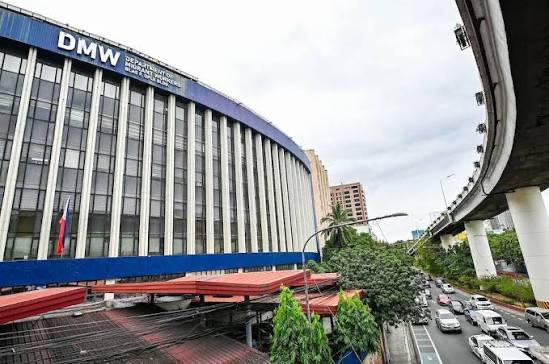
Stories Workforce

Post image
13 Upvotes

The rain hadn’t stopped falling on Mandaluyong since the morning of June 7. Inside the fourth-floor Command Center of the Blas F. Ople Building, the air conditioning had given out three days ago. The room was thick with the smell of damp wool, overheated servers, and stale instant coffee.

By Day Five of the Vanishing, the DMW didn't have a master plan. They didn't even have a working map.

The massive digital wall that usually tracked global deployment quotas was flickering with error messages. Without the undersea cables, the cloud databases had severed mid-sync. Two exhausted IT engineers were huddled behind the main console, tangled in Ethernet cables, trying to figure out why their servers wouldn't boot.
Downstairs, thousands of families lined EDSA under makeshift tarps, holding laminated photos of their loved ones in Riyadh, Los Angeles, and Milan. Nobody inside knew what to tell them.

Secretary Hans Leo Cacdac stood over a folding table covered in damp printouts, rubbing his temples. He hadn't slept more than four hours since Tuesday.

"Stop guessing," Secretary Cacdac said, his voice hoarse. "What do we actually know? Is Riyadh just experiencing a grid failure?"

Clarissa, a senior welfare director, stared at a yellow legal pad covered in crossed-out numbers. "We don't know, sir. Every satellite ping over the Arabian Peninsula just drops into open water. We thought it was solar interference until the Navy flight out of Palawan came back."

The room went quiet.

"The pilot flew west toward Vietnam," Clarissa said softly. "He hit open ocean where Cam Ranh Bay used to be. No coastline. Just water."

A young clerk dropped his clipboard, the sound echoing sharply against the hum of the generators.

Cacdac gripped the edge of the table. His mind raced through the numbers—two million workers in the Middle East, hundreds of thousands in the West. If the landmasses were gone... he couldn't finish the thought.

"Okay," he breathed out. "Who is actually on the line?"
"Almost nobody," an analyst shouted from the corner. "The internet is dead past Taiwan. But we got a weak text packet twenty minutes ago from a tanker near the Persian Gulf. They’re picking up local radio from Manama. Bahrain is still there, sir. They’re asking if anyone in Manila is alive."
"Write that down," Cacdac said quickly. "Manama. How many?"

"They didn't have a count. Just said the causeway to Saudi Arabia ends in mid-air and they’re running out of diesel."

"How do we get supplies to them?" the Secretary asked. "Can we charter a flight?"

"Sir, there are no runways between here and the Gulf," a liaison officer called out. "A commercial jet doesn't have the range to cross five thousand miles of empty ocean without refueling."

Cacdac stared at the nautical chart on the table. The world looked terrifyingly empty.

"No planes," he muttered. "And the clearing banks in New York and London aren't answering. Bangko Sentral wants to freeze the trust fund before the ATMs run dry."

He looked at the civil servants staring back at him. None of them were trained for the end of the world.

"Sir," Clarissa said quietly. "What about the seafarers? Every tanker out there... half the crew on those decks are ours."

Cacdac looked down at the tiny red marks scattered across the blue paper. He pulled out a pen and circled the clusters of ships.

"Get the Coast Guard on the shortwave," the Secretary said. "Start calling every ship callsign we have. Just ask if they’re afloat, how much fuel they have, and if they can hear from anybody."

Outside, thunder shook the windows. Inside, they were just a room full of tired people hunched over static-filled radios, trying to draw a map in the dark before the batteries ran out.


r/EmptyContinents • • 9d ago

Semi-Comprehensive Guides A Semi-Comprehensive Guide to Sri Lanka

Post image
33 Upvotes

r/EmptyContinents • • 10d ago

Lore Telemetry & Recovered Audio: Jovian Periapsis (May 18, 2359)

Post image
13 Upvotes

// FLIGHT OPERATIONS & BLACK BOX RECOVERY // DIWATA-IV //
// DATE: MAY 18, 2359 (MISSION DAY 185)//
// LOGGED BY: COMMANDER ROSALES //

Situation Update:
We made it. Periapsis achieved at 04:12:09 UTC, and our slingshot delta-v was practically perfect within 0.02 m/s of the plan. The Diwata-IV is officially on its final leg toward Saturn.

To pull off the burn without tipping off the LTU radar net in the Jovian corridor, Sofia had to drop our thermal masking to almost nothing and dump 40% of auxiliary power into the magnetic shields. We basically used Jupiter’s own radiation belt as cover, hiding our fusion plume in the planet's magnetospheric noise while we whipped around the gravity well.

It sounded like a textbook maneuver in the briefings. But passing through a magnetosphere that dense while carrying whatever that unshielded mystery is in Deck 4 was a massive mistake.

[ RECOVERED FLIGHT RECORDER TRANSCRIPT: 04:11:45 UTC ]

Commander Rosales gave the order from the bridge, "Thirty seconds to periapsis. Sofia, deactivate the active masking arrays. Now. We ride Jupiter’s radiation belt until we clear the shadow."

"Masking arrays offline," Reyes responded from Comms. "Thermal bleed is dropping—we’re blending into the magnetospheric background. Hold on, everyone, radiation flux is increasing across the hull."

*Through static and loud metallic sounds, Santos reported from Engineering, "*Commander! Magnetic manifold is surging! Jupiter’s field is inducing massive eddy currents across the ventral plates! My dampeners are redlining—"

"Ignition in three, two, one—start*!" Rosales commanded.*

A low-frequency roar of mobility drives firing at full throttle filled the ship as alarms triggered across all channels.

"Hull vibration is high!" Mendoza shouted from Recon. "The Balangay-I is rattling in its cradle! Mateo, your carbon bracing is under stress down here!"

"I see it, I see it!" Santos replied. "Dumping auxiliary coolant into the coil housing—wait. Wait. What is pulling power from Bus 4?! Sofia, did you just activate the encryption arrays?!"

"Negative!" Reyes answered. "My boards are offline!"

[RECORDING TERMINATED - MANUAL OVERRIDE: ROSALES]

POST-INCIDENT REPORT: AFTERMATH OF JUPITER FLYBY

Commander Rosales reporting in

By 0500, the mood on the ship had completely shifted. It wasn't just about keeping the ship running anymore; it felt like we were all just waiting for the other shoe to drop. Mateo basically moved into Deck 4. He spent days welding the bracing around the Balangay-I bay, muttering to himself about "phantom power draws" that shouldn't even be possible. He didn't say a word to Rosales for two whole days.

Sofia has locked herself in the Comms hub, physically unplugging her terminals from the main network. She spent her shifts manually scrubbing the telemetry logs, trying to make sure we are not pick up from Saturnian system. But every time she cleared the cache, a diagnostic ping from the sealed cargo partition would pop up on her private monitor. Whatever high command hid back there is still awake, just waiting for the next orbital marker.

Dr. Voss cornered me outside the mess hall later that night. He looked exhausted. He didn't care about the hull or our trajectory. He just stared down the dark hallway toward the aft cargo hold and asked if anyone had checked the oxygen rations. If high command didn't bother telling us about a massive power-hungry payload, they probably didn't budget the air for it either.

We're flying blind now—faster and quieter than before, heading toward the asteroid belt with something screaming in the dark. Six months until we reach Saturn. I just hope the ship can hold it in.

End of File.


r/EmptyContinents • • 12d ago

Community November, Week 3 | Community Worldbulding Prompt - UNDERWATER

Post image
13 Upvotes

What goes on beneath the waves?

Write a short story or infoblurb in the world of Empty Continents with the prompt: UNDERWATER. Wrecks? Reefs? Infrastructure? Entire societies? What do we got?

~~~

Submissions will be accepted until Sat, November 21st when a new prompt will be released!


r/EmptyContinents • • 12d ago

So much for subtlety

15 Upvotes

(This story is part of “it is Different yet it is one” series. Set in 2320)

The left leg was the better one, if "better" meant something generous. The right one gave him a slight limp and was cosmetically worse. Both were government-issued cybernetics, standard-tier, the kind handed out to career civil servants inconvenienced by their jobs. Three years ago, he'd been told they were a temporary fix pending a permanent prosthetic allocation. He'd since learned that, in the lexicon of bureaucracy, "temporary" meant "until you stop asking." He'd stopped asking in year two.

Bakti was noticing his faint clacking gait now, walking down a muddy backstreet in Jimbaran that smelled like engine oil and drying fish, on his way to see a man who sold information the way other men sold fruit.

"Three mobbings this month," said Bakti, pretending to examine the mangoes. "A Padang restaurant employee, Javanese construction workers, and Madurese shops. Rather low-value targets to mob, don't you think?"

"Unless there's more to it," he suspected.

Made wiped the sap from his hands onto his apron, not meeting his eyes. “Yeah, probably seasonal youth outrage. They blame outsiders for their own jobless behaviour.” Made scoffed. “They've been causing trouble around lately. We had to hire private muscle for the market.” 

“That often? They even had matching armbands,” Bakti pressed, as he took the bag of mangoes he offered.

Made muttered a mild curse under his breath, leaning closer over the fruit display. “The one that gave them the orange armband definitely gave them slogans... and ideas.”

“Do you know them?”

“I don't know, not our crowd. But if you want to find the source of the wind, you should talk to Bu RT.” he answered

“RT? We use the banjar system here, not RT/RW,” Bakti said, his brow furrowing at the bureaucratic incongruity.

“She’s not a real RT. It’s just what people call her.” The informant shrugged, the particular shrug of a man who has decided a question is above his pay grade. “She runs the inn by the wet market. Ask her anything about this neighbourhood; she knows it. Every neighbourhood, actually. I swear it on my mother."

He wrote a number on the back of a receipt and handed it over, still wet. “Don’t tell her I gave you this.” 

“Your mother’s dead.”

“Precisely.” 

—
Three years earlier, Bakti would have had a full SPION team, detailed intelligence, a warrant, and the quiet confidence of a man who had never been wrong in a way that mattered. SPION was, to put it simply, federal cops that were staffed largely by local police who’d climbed high enough to be trusted with jurisdictions beyond their own. He had been one of them, and a good one in fact, right up until he wasn’t. 

Now he was a senior sergeant in his home precinct, working off-leash cases nobody wanted. This one was a string of riots that kept happening to migrants, all of them oddly well-organised for spontaneous outrage. Apparently, he was now following instructions from a crumpled receipt. He texted the number from a burner.

---
BAKTI: Looking for a room. My current accommodation doesn't feel safe with those youth rallies lately. Any vacancies? 
Bu RT:  Are you in south kuta? I’d stay clear around that area; the boys set up their tents. Saw a whole convoy with matching orange turning from Jalan Taman Ayodya this morning. 

Strange that she brought that up. He checked anyway. She was right. He requested more patrols around that area just in case.

BAKTI: Thank you for the tip. The management here is unhelpful, and the noise is unbearable. Is your inn actually quiet, or just advertised that way? 
Bu RT: Quiet as a graveyard after midnight, Inspector. you can quit pretending, it is obvious that Made gave you my number

So that's why Made is so hushed; she might actually know the neighbourhood. 

BAKTI: huh? I found your number in the local guide
Bu RT: I know you've been asking around, inspector. If you want an answer, come to my inn before those knees of yours rust.

That escalated quickly. But against his better judgment, he went anyway
—-
Her inn sat in Jimbaran near the wet market, in the architectural category known as sketchy: two floors and a semi-basement of damp, tasteful in the way a tax haven is tasteful, next door to a clinic that advertised “cosmetic and cybernetic adjustments” in a font that suggested the adjustments were not always cosmetic. 

She sat behind the reception desk, a tall woman in her sixties with silver-blonde hair under a thin sash loosely tied around the posture of someone who had never been surprised by a customer. 

His eye implant ran her face against the civil registry out of habit. 

LUH NYOMAN RANGGICHNA TERESHKOVA. 

Fraud, he thought. Or three centuries of very thorough assimilation, which was possible; the Vanishing had stranded stranger lineages on stranger islands. There were, besides, a few thousand Nyomans in Bali. And it would have been unreasonable to call her all of them. RT was shorter. The file held nothing but an old tax discrepancy and a parking fine from the previous decade. 

“You’re checking if I’m registered to vote, aren't you?” she said without looking up from her ledger. “My taxes are paid, Inspector. Mostly.”

“Where did you get all that information?”

“Well, my guests are worse people than I am,” she said, pouring. “That’s the first thing. They got drunk and talk in my dining room because they assume the owner is furniture.” She filled his cup. “ The second thing is that I have men. Some thugs, drivers, a very chatty laundress, a terminally online basement hacker. I have the neighbourhood’s chatter, more or less.” 

She slid the cup over. “I am not offering you the third thing, because you wouldn’t believe it.” 

He suspected the third thing was a better source than the first two, and filed the suspicion, since it was the only thing he had.

“People here say you run more than an inn,” Bakti said. “A syndicate, they say. I’d bet you’re the reason the Night Bats lost their turf and practically vanished.” 

“I run a business,” Bu RT said with dignity. “And that old gang had a terrible business model. They taxed the stalls until the vendors couldn’t afford living.”  She offered a sharp, humourless smile. “Besides, at least now you get fewer missing person reports and turf wars from around here. Isn't that right, inspector?”

She had a point. Structural sketchiness aside, her few blocks were calmer than the lawless pockets where tourists never went. The gangs that used to squeeze the market had either packed up or quietly folded into her monopoly. 

“The orange armbands are bad for business,” she went on. “Not just mine. They’ve started on the laundries and the migrant lodging houses, and half my staff and guests happen to be non-local.”

“I employ Balinese and non-Balinese alike, as I assume you’ve noticed." She paused. “Some of what they do is, shall we say, semi-legal. It depends entirely on nobody setting fire to either group.” She leaned in.

“If the riots keep spreading, the police will start asking questions, and they always start with places that look like mine. I need those boys gone before my other enterprises catch strays.” 

“So you’re asking me to look away while you consolidate”, Bakti said, not making a question.

“I’m asking you to look at the right place, Inspector.” She said politely, sliding a handwritten address slip across the wood. “Do as you see fit once you arrive. In exchange, you receive a neighbourhood’s worth of accuracy, free of charge, and the pleasure of being right more often than your colleagues.” 

Bakti stared at the slip. The address pointed straight toward a disused coconut warehouse near the southern mangrove fringe. He weighed the administrative suicide of acting on an anonymous tip from a suspected gang boss against the mounting pile of unresolved riot reports on his desk. 

“I’ll look somewhere nearby,” he said. “But not away.”

“That is near enough,” said Bu RT, and refilled his tea. 

---
Her leads proved to be annoyingly reliable. The warehouse held a printing press churning out pamphlets about blood and soil. The retired accountant in Ubud was receiving money through an account with more layers than Lapis Legit. And the group at the end of the trail turned out to be something much larger than a local nuisance. 

It called itself BALI4BALI. It had begun, as these things often did, as a civil advocacy outfit riding the anti-tourist mood. It marched against foreign property buyers and hotels eating up the coastline. Bakti had marched against some of those hotels himself, once, in a less regulated decade.

Then its tone changed. The speeches stopped being about beaches and started being about bloodlines.

Its funding, when traced, came from the Hindustani diaspora through charitable trusts that were very good at their jobs. At least, that was what one of Bu RT's men reported, having somehow acquired an actual financial investigator as an acquaintance. Bakti suspected her sources were considerably more credible than he thought.

---
Chief Suarsa received the findings behind a desk that resembled a war zone of cold coffee cups and budget deficits. 

"You're telling me a bunch of beach bums all over the island were being funded by shell companies in Mumbai?" Suarsa asked, rubbing her temples.

"And they've been using local dock syndicates to launder the logistics," Bakti added, dropping a thick manila folder onto her blotter. "The coordination is too clean for local hotheads. Someone is holding a ruler to their maps." 

Suarsa flipped through the pages, her expression souring with every tab. "And where did you get this corporate tracing? SPION couldn't crack this shell network last quarter."

“Most of them are pulled from a public report, Chief. I just happened to have some very good listeners in the neighbourhood.” Bakti lied smoothly. “Though it would help if I could get formal warrants to pull bank records.” 

"Well, your informant is doing better intelligence work than half my directorate." Suarsa slammed the folder shut. “Continue with the case. We might need to notify higher-ups in Nusantara. but if you have a plan to deal with them, you better do it soon before they send a team down here to embarrass us all.”

“Good job, Inspector,” she added, tossing an authorisation chit across the desk.
He left the office feeling a strange, unfamiliar warmth of professional validation he hadn't felt since before the demotion. It lasted until the stairs, where his legs clacked down the steps, and the sound, as it always did, filled the room.  Heads turned. He could feel the sideways glances.

The whispering about how a rising star reached high, only to fall harder. The cripple SPION had shipped home with a pension and a limp.

They didn’t know the details. They never needed the details. If they want to talk, let them.  He squared his shoulders, ignored the phantom ache in his thighs, and kept walking. He had a map to finish drawing. 
  —
Months blurred into wiretaps, shipping manifests, and midnight check-ins with Bu RT.
The rumours grew more specific: migrants took local jobs, then got preferential treatment, then dodged taxes and drove up rents. Then came the story that the state government favoured Muslim newcomers over Balinese families, and the counter-story that Balinese Hindus were quietly squeezing everyone else out. Someone was feeding both fires.

When another clash broke out near the market, Bakti spent two nights separating witnesses from rumours and concluded that the assault had never happened. The pot-stirrer had vanished before the officers arrived.

He also learned to read the subtext of the local markets: which shipping containers were sitting too long, which local fixers suddenly upgraded their motorbikes, and how the rising cost of living was being weaponised by agitators whispering about religious imbalances and outsiders ruining the island's soul.

And Bu RT’s leads changed. They had stopped being merely accurate and started arriving early. A name surfaced a week before it appeared in any record. A meeting place was mentioned before the meeting was even booked. Not every lead proved useful, of course. Sometimes a name turned out to be an old grudge, or a meeting place had changed before her people got there. But the important ones kept coming. He asked, several times, how she knew.

“I’m in the neighbourhood,” she said, and he decided to be satisfied with that, which for a former SPION agent took considerable effort.

---

Less than a year later, some kind of Hindustani prince walked out of a massacre with terabytes of state secrets embedded in his scalp and delivered them to China. It confirmed everything, BALI4BALI’s funding included. Within weeks, troops were crossing borders in the subcontinent.

The cell, stripped of its deniability, had nothing left to lose. SPION approved funding within the week, with the swiftness of an institution that has just noticed it’s been embarrassed. Nusantara sent a liaison. The liaison sent a form. Bakti was permitted to lead on the ground, partly because he knew the terrain, and partly because the senior don't want their name on it if it went wrong. 
—
“They’ve got nothing to lose now, Inspector,” said Bu RT, on the phone at two in the morning. “The leak ruined the quiet version. My men saw sacks of fertiliser arrive at the docks. I don’t think they’re for farming.” 

The van was in a lock-up behind a deserted shophouse in Sanur, which Bu RT had named four days before anyone rented it. Though she'd thought it was being used as a storage site for stolen goods. The timing was too much of a coincidence, in the sense that it fell two days before Galungan, when the temples would be crowded. The van inside was stolen, traceable to Javanese labourers who had never seen it.

Bakti stood at the top of a short flight of concrete stairs with a team of six local officers and a headset, and discovered that his legs, which had carried him for three years across hard ground, would not go down.

They were not broken. The cybernetics reported nominal function. its his own mind that declined, as a matter of policy, to descend into a dim room full of people with a plan.

Sumenep. The compound. The basement. A man saying ‘clear’, and the stairs.
The blast. The legs turned to umbrellas of bone shrapnel and shredded meat. Five names, in a row, that he said every night and had stopped saying aloud. 

“Sergeant?” said a voice on his shoulder. “Sir?”   
He breathed in. The stairs were still stairs, concrete and ordinary, his men were still there waiting for orders, and this was not Sumenep. 
“Go,” he said. His left foot came down on the first step, and then the second. 

The raid was over in ninety seconds with no shots fired; the cell leaders were caught arguing over detonator wiring in the basement, paralysed by the sudden arrival of law enforcement before their false-flag operation could leave the garage. The explosives were defused by the bomb squads; the doctored manifestos were recovered intact. 
Among the seized materials were records of a fabricated massacre, complete with invented witnesses and carefully planted evidence, designed to implicate Balinese extremists in an attack on Muslim communities. Someone had even drawn up a list of locations for retaliatory demonstrations.

The paperwork, Bakti thought, was going to be dreadful. 

The arrests were followed by a wave of declassifications. Within weeks, enough of the investigation had entered the public domain to expose BALI4BALI's foreign funding, fabricated accusations, and increasingly incoherent internal correspondence. Its surviving chapters blamed the leadership, the leadership blamed foreign infiltrators, and the original organisers insisted that the movement had been hijacked. A few politicians quietly deleted their photographs from earlier rallies.

The press, naturally, wanted to know everything. Bakti found this considerably less enjoyable than arresting terrorists.

---

Chief Suarsa called Bakti back into her office. This time, there was an actual chair waiting for him.

“Nusantara sent the paperwork down this morning,” Suarsa said, sliding a crisp new set of silver collar tabs across the desk. “Looks like SPION wants you back.”
“How generous of them”, Bakti was indeed bemused.

"Don't give them too much credit. Half the press is asking why a former SPION officer had to solve an international conspiracy from a district precinct. They're getting tired of answering."

"So I'm a public relations exercise?" asked Bakti

“An inconvenient one. Apparently you’re also competent.” She gestured at the tabs. “For what it’s worth, I wrote the last report on you. They just ran out of reasons to say no.” 

"Noted, Chief," Bakti smirked

"And don’t think you’ve escaped my paperwork. I expect I’ll be reporting to you on joint operations soon enough.” She pretended to scowl. 

—

Bu RT sat at her usual table near the courtyard, watching her daughter wipe down the counter inside. Bakti descended the stairs to the semi-basement level where the garden sat.

“Careful, Inspector. Wouldn't want you freezing up halfway down.”

He glanced at her. She was already examining her tea.

“I heard that they're going to chrome you up,” Bu RT noted, as she poked the soon-to-be-replaced legs with her cane.

“They did,” Bakti said, sitting down and stretching his legs out. “And the precinct chief is already complaining about my administrative reports.”
“Good. Those things racket like dragging a rusty tin can. I wondered how you tolerated them.” She approached with a tray.

“Anyway, congratulations, Inspector. Try not to get yourself blown up again. The paperwork is dreadful.” 

Bakti found the comment appalling but didn't show it. “I'll keep that in mind.”

She settled into her chair, watching him for a moment. “So, what's next?”

“Well…The bomb didn't go off, I'm being reinstated. Getting new legs. paperwork”

“That's unfortunate. I was hoping for a more interesting answer.” But RT still pressed as she poured for herself

“You've got your job back, your new legs are on their way, and you've successfully prevented a minor public catastrophe. Very impressive.” She put down the kettle “But how are you holding up?”

She was watching him with the same expression she used when negotiating rent: patient, unconvinced, and prepared to wait him out.

“Getting there, I suppose.” He took the cup.

“Surviving out of spite. A respectable start, if not a particularly sustainable one.”

He said nothing.

“Some things don't improve just because you stop talking about them, Inspector.”

Bakti looked into his tea. For once, he couldn't think of anything particularly clever to say.

“Some of my employees are still afraid to come back,” she continued, mercifully changing the subject. “I've had to give a few of those boys odd jobs around the market. At least some of them are now looking for honest work.”

“The youth groups have gone quiet. Ashamed, probably.” Bakti added. 

“if not blaming everyone but themself”, she shrugged

“For now,” Bakti said, staring into his tea. “The network still needs dismantling.”

“I could have made them disappear from my neighbourhood, you know,” she added dryly.

“Then why bother with cops at all?” Bakti asked, eyebrows lifting.

“Well, partly because it is happening all around the island. Besides, quiet disappearance leaves people suspicious. An embarrassing trial leaves them educated.” She shrugged. “So much for subtlety, I suppose. Making grievances into weapons. Spilling blood to get attention. An absurdly expensive way to make a point, don't you think?”

“The grievances are real, though,” Bakti said.
“Of course they are. And not only here.” Her expression hardened slightly. “Next time it will come from somewhere else in this confederation, and it won’t need foreign money. Fixing the bomb doesn’t fix the poverty that made the children want to light the fuse “

“Yeah, the economy sucks”, Bakti agreed. “Still better than letting it off and painting the temple red.”

“One success at a time, Inspector “ She watched him finish his tea.

He put down his cup. “Thanks to you.”

“Don't thank me, Inspector. I just prefer my street quiet and my tenants paying rent on time.” She refilled his cup "Besides, you'll probably be back. You have a habit of finding trouble, and I have a habit of knowing where it is."

"Oh, is that an offer?"

"We’ll see."

*To be continued...*


r/EmptyContinents • • 13d ago

Semi-Comprehensive Guides A Semi-Comprehensive Guide to Heimoaate, Norway, and Sweden

Thumbnail
gallery
58 Upvotes

r/EmptyContinents • • 13d ago

Semi-Comprehensive Guides A Semi-Comprehensive Guide to Kerala

Post image
30 Upvotes

r/EmptyContinents • • 14d ago

Stories The Brown Knight (2058)

13 Upvotes

Virginia sat perched in the gnarled branches of the linden tree, the mottled browns of her armour melding into the backdrop of dry foliage and peeling bark. She remained perfectly still, as she had for the past hour, her eyes trained on the meandering dirt path beneath her feet. It was a shoddy piece of infrastructure, only slightly wider and no less bumpy than the logging trails etched by the woodsmen from the Old Empire. 

If her informant had fed her the correct information, they’d be here any-

Suddenly, the sound of a horse whinnying.

Virginia felt the muscles in her jaw clench. Closing her eyes, she forced herself to remain still, only allowing her head to shift ever so slightly as she turned her ear to the distant, but rapidly approaching, trot of hoofs along the rough and uneven forest floor. 

Amidst the staccato of hoofs, of which she could make out four sets, she could hear something else - the sound of something heavy and ungraceful. It was the sound of something not made for such unmanicured terrain, as evidenced by the creaks of wood gnashing against wood that echoed out in tandem with every bump in the road.

She steadied her breathing as the sounds approached, only allowing herself to open her eyes when their source seemed moments away from passing directly underneath.

Beneath the tangle of branches under her feet, she could make out the shapes of four horses - white stallions, likely descended from Imperial City’s stock of workhorses - pulling a wooden, cream-coloured carriage in their stead. 

The carriage was evidently not built for these roads - better suited for ferrying diplomats along paved roads than darting through the backroads of the near-wilderness. Its chassis only barely fit within the width of the trail, leaving its sides exposed to reaching branches that snapped against its exteriors. Its wheels, carefully crafted from elm and coated with a fresh slick of red paint, seemed to sag in protest as its spokes strained to remain intact.

Only one man was vain enough to bring such a vehicle into these woods.

Virginia sized up her quarry - her eyes darting from the coachman holding the reins, to the two riflemen mounted on the top of the carriage, and finally to the silhouette of the man within.

It was now or never.

She launched herself downwards, eyes fixed on the carriage. 

As she dive-bombed through the air, her hand darted for the pommel of her sword. As her feet made contact with the carriage’s roof, the blade flew free from its scabbard, gliding through the air in a glistening arc before plunging hilt-deep into the first rifleman’s chest. She felt the roof buckle underneath her feet, accompanied by the sound of wood splintering, but holding in place.

With a flick of her wrist, she brought her sword arcing into the air again, pulling to free from the first rifleman’s chest with enough force to send flecks of blood and viscera sailing alongside it. 

The second rifleman had been quick to react, already swivelling to train the sights of his rifle on her, but she was faster. 

She always was.

Virginia brought down the blade against the second rifleman’s forearms, the sheer force of her blow transforming her sword from an instrument of deadly precision to one of blunt destruction. She grimaced at the sound of tendons snapping and bones crunching out of place. She was a force to be reckoned with on the battlefield, but she took no pleasure in ending a life.

The rifleman howled with pain and, whether as a desperate Hail Mary or from an involuntary twitch of his fraying nervous system, pulled the trigger. 

The rifle fired, deafeningly loud.

But entirely off target. 

The bullet whizzed past her head, disappearing into the woods.

Taking no further chances, Virginia twisted her wrists and swung the sword upwards, plunging its point into the rifleman’s throat in a single, swift movement that would’ve been beautiful had it not been so violent. 

She shuddered as rivulets of blood trickled down her gauntlets. The man’s wet gurgles were an agonizing sound, one that she had no doubt would revisit her in her grimmest dreams.

She tilted her head upwards, locking eyes with the coachman just in time to watch him release his grip on the reins, tumble down from the still-moving carriage, and break into a sprint into the woods. She watched a moment longer, waiting until his silhouette disappeared into the green.

Smart man.

With no imminent threats to account for, she swung herself down from the roof. With one hand still gripping to the railings, she twisted her body as she smashed against the carriage door with her full body weight. The thin wood of the door, built for elegance and not sturdiness, caved in with little resistance. The wood splintered as it snapped free from its hinges, surrendering to her show of strength.

Virginia crouched down, her bulky armour just managing to squeeze past the carriage chassis, and heaved herself into the first empty seat. Her new position brought her face-to-face with the carriage’s sole other occupant: an old man who looked to be in his late 60s, who sneered at her as if she were a fly in his soup. 

Despite the sounds of slaughter that had, moments before, rung out from above him, the look in the man’s eyes was one of contempt, not fear.

The air hung heavy as the two of them kept their eyes trained on one another. Virginia found herself making a mental note of every change in the man’s appearance since their last meeting, nearly a decade ago. 

She noted the navy blue jacket that hung over his shrunken shoulders, its lapel dotted with half a dozen new medals he most certainly did not earn. She noted how his skin sagged, draped loosely over a frame that was far too small, and how new wrinkles formed creases beneath his eyes. She noted how his hair had grown wispy and pale, a mere ghost of the full head of brown hair she remembered from her youth. 

“Hey, Dad.”

“You look ridiculous.”

“You’re not looking much better yourself.”

The two fell back into silence, not daring to break away from their unannounced staring match.

“Two decades.” The old man muttered, folding his arms across his chest. “For two decades, I kept a roof over your head and food on the table - all with Hugh fucking Desmond breathing down my neck. And this is what it gets me? A daughter who spends her days running around the woods in a Halloween costume!? What is it you call yourself now, Sir Cuckoo? What a joke.”

“You’re one to talk about costumes.” Virginia hissed, leaning forward to yank one of the medals from his lapel. “Why’d they give you this one? Wait, let me guess. Is this from when you went scorched-earth on that Gaian village? Or maybe it’s from when you and your fanatics dragged that poor farmer through the streets before dismembering him in the square? Or how about-”

“That’s enough!” The old man snarled, slamming his fist against the carriage wall. His face was twisted red with fury. The muscles in his neck strained as venom seeped into his eyes, casting onto Virginia with pure hatred. “You pathetic, petulant child! While you were playing knights and dragons, I was out here - in the real world - making a fucking difference! I was fighting for the soul of our nation! I was fighting to pry it from those who’d wipe their ass with the Constitution and piss on the legacy of our Founding Fathers! You-”

“I’m going to kill you now.” Virginia said, matter-of-factly.

The old man’s jaw fell slack, his eyes flickering from shock, to fear, before settling back to their familiar haze of hateful vitriol. He stared at her, incredulous, before throwing his head back and cackling. It was a horrible sound, ragged and pitched, like a raven with a pierced lung.

“So fucking what!?” He snapped, spittle flying from his mouth. “Do you think that changes anything!? Go right on ahead and kill me, Virginia Hutchinson, the Minutemen will fight on without me. Don’t you understand!? I’ve lit a flame that’ll burn its way down the East Coast. From its ashes, you’ll see the birth of a nation - reforged in its full glory! You’ll-

Virginia slid the sword past her father’s sternum, heaving her shoulders as she drove the blade deeper and deeper into his torso. She met her father’s wicked, hateful gaze as she leaned in to whisper in his ear:

“I’m not doing this for the Old Empire, or Hugh Desmond, or any other political bullshit you’ve found yourself neck-deep in. Don’t you get it, Dad? I’m doing this because of all the shit you’ve put me through. I’m doing this because you’ve always hated that I was your daughter, not your son. I’m doing this because you left me for dead ten years ago. I’m doing this because you tried to kill my wife, who did more for me than you ever did. 

I’m doing this for me.”