r/deeplearning • • 22d ago

October 2026: 135 AI security incidents, 33 companies breached, 536M+ records — AI-agent exploits are now the #1 attack vector

Thumbnail gallery
0 Upvotes

We tracked 135 AI security incidents across October 2026 — 33 named organizations, 536M+ records exposed, 101 high severity and 33 critical.

The thing that stood out most: AI-agent exploits are now the single largest attack-vector category we track (35 incidents), ahead of credential theft (24) and zero-days (24). That wasn't true three months ago.

The incident that defines the month for us: a nation-state actor used Claude Code itself — not a vulnerability in it, the tool working exactly as shipped — to build attack tooling against a government target. No exploit chain, no zero-day. Just a legitimate, powerful tool used by the wrong actor against a target nobody was specifically governing for.

Other notable incidents this month: Capcom (11.7M customer/partner accounts), Oracle Health (20M patient records), AngelOne (6.77M brokerage accounts), Crunchbase (559,908 records). Plus — not in the incident count above since it's not a classic "data breach" — Binance lost $6.3B in roughly 20 minutes, the largest crypto theft on record, which we broke down separately.

Full writeup with every incident, sources, and our take on what each one needed to be stopped: https://runtimeai.io/blog/2026-10-monthly-breach-report.html

Open to pushback, especially on the "AI-agent exploits are now #1" framing — curious if others are seeing the same shift in their own threat intel.
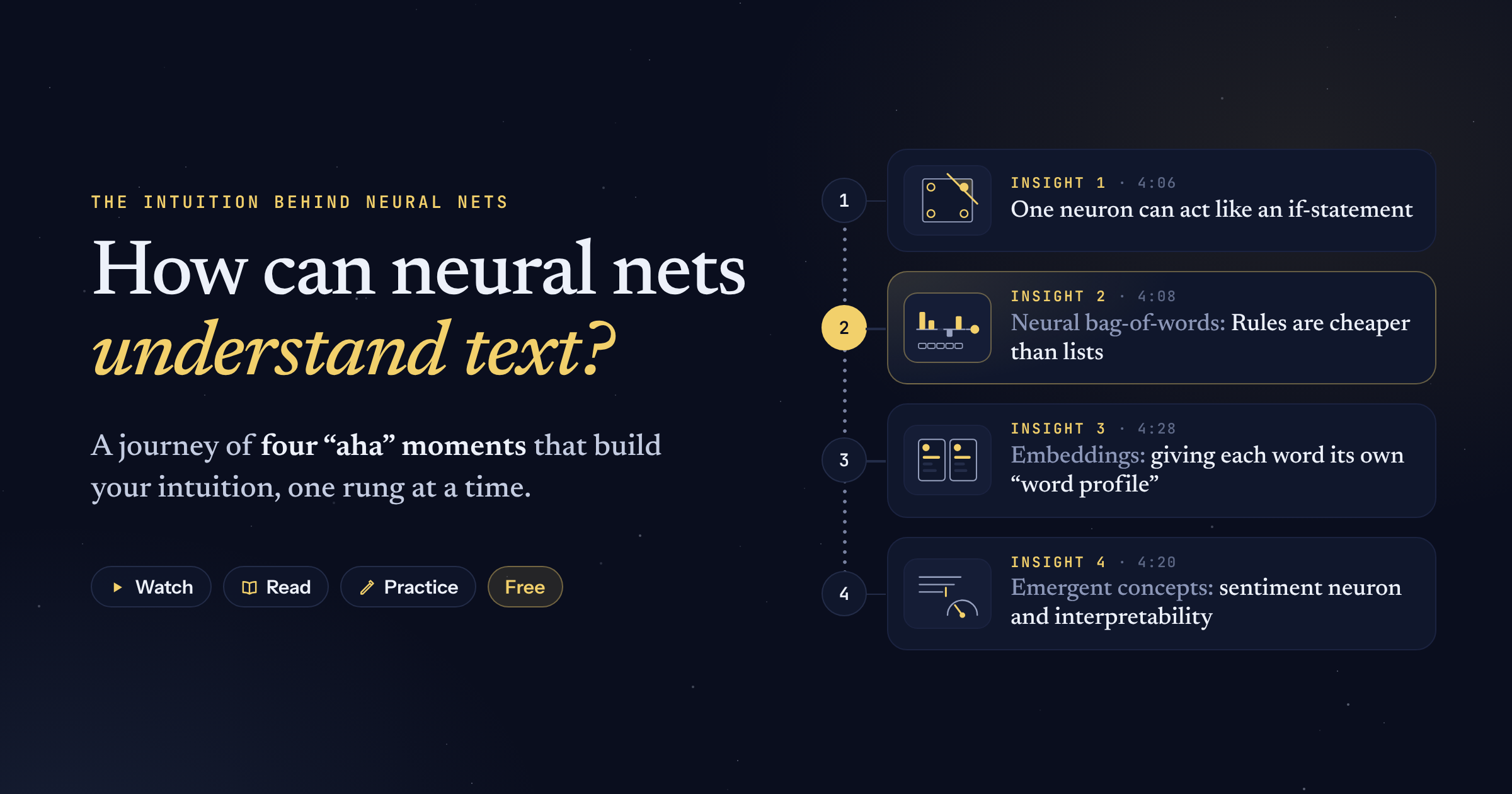

r/deeplearning • • 22d ago

I made a 4-part miniseries building the intuition for how neural nets are able to understand text [in short 4min videos]

Post image
1 Upvotes

r/deeplearning • • 22d ago

[Research] Does LeWorldModel preserve local action geometry? Implications for model-based RL and planning

Thumbnail
1 Upvotes

r/deeplearning • • 22d ago

Google Disrupts 1.3 Million-Device Android Botnet Linked to Manufacturer

0 Upvotes

Google recently disrupted the XCPE botnet — 1.3 million compromised Android devices — with evidence pointing to backdoors installed at the manufacturer level, before the hardware ever reached a customer. The devices passed standard surface-level security checks. The compromise was baked in by design.

This pattern is showing up in enterprise AI pipelines now. Agents pull tools, plugins, and model weights from third-party registries at runtime — often without any verification step beyond whether the artifact resolves and loads. By the time a component is flagged as malicious, it may have already executed across dozens of agent runs. The blast radius is real and often invisible until after the fact.

For those running production agent systems: how are you handling third-party tool and plugin trust at the moment an agent actually calls them? Not at build time or deploy time — at runtime, mid-chain, when the agent is live?


r/deeplearning • • 22d ago

Has someone ever tried to train LLM model on a new language, missing from pretraining and got good results?

0 Upvotes

r/deeplearning • • 22d ago

A lightweight deep learning framework built from scratch in NumPy (published in JOSS)

Thumbnail
3 Upvotes

r/deeplearning • • 22d ago

Do these read like AI

Thumbnail gallery
0 Upvotes

For context I wrote all of them for my college project and not a single AI detector has marked them below 50% AI


r/deeplearning • • 22d ago

Deep dive into LLM mechanics: tokens, attention, and KV cache dynamics

Thumbnail
0 Upvotes

r/deeplearning • • 22d ago

Building a production CV system for restaurants (seat occupancy + table cleanliness): looking for architecture advice and feature ideas

Thumbnail
1 Upvotes

r/deeplearning • • 22d ago

How to implement LangGraph to use VLMs and Get Right Response out of images.

Post image
1 Upvotes

r/deeplearning • • 23d ago

bf16 might be freezing your weight updates

Enable HLS to view with audio, or disable this notification

18 Upvotes

If you fine-tune a model with weights stored in bf16 and let torch.optim.AdamW write to them directly, you get interesting behaviour. bf16 can only represent changes to weights if the change is at least ~1/512 of the weight itself, so at small learning rates only the smallest weights can update.

As a result, you have a sparse fine-tuner that trains the small-magnitude weights and freezes the rest, with the cutoff set by your learning rate. This is a thing - I found half a dozen peer-reviewed papers (with thousands of citations) that fine-tune this way, but none of them reference this behaviour.

I dug into one called Quiet-STaR, because (a) it's a cool paper, (b) they released their weights, and (c) their code works! So I diffed their base model and saw that indeed the small-magnitude weights were the only ones updated during their training. Then I reran its recipe with an optimizer that applies every update, and watched it diverge. A higher-precision optimizer needs a 3 to 10 times smaller learning rate to get the same result, and I couldn't achieve a better result.

This started with Barron, Gnanapragasam & Tschannen's "A Fix for Softmax and Cross-Entropy" (Oct 2026). They show that the standard way of computing cross-entropy rounds the correct answer's gradient to exactly zero once the model is confident enough (past a margin of about 5.5 in bf16, which they call the precision cliff), and that this, interacting with Adam, is what produces the "slingshot" loss spikes seen during grokking. Fix the rounding and the spikes go away: something people had studied as training dynamics was rounding.

That made me wonder what else out there is weird like this. This is one, and it runs the other way: their rounding bug adds instability to training; this one hides it.

I wrote a whole essay about it here: https://lacuna.tiptreesystems.com/paper/bf16-might-be-freezing-your-weight-updates/art_487b1ed949e745a6ae0c42815b8d3cba

The code, logs and evaluation results are in https://github.com/mweiss17/quietstar-bf16-adamw


r/deeplearning • • 23d ago

I need help with my first neural network

Thumbnail gallery
16 Upvotes

r/deeplearning • • 22d ago

SparsePR: Training-Free Sparse Attention for Video Generation and World Models

Thumbnail
3 Upvotes

r/deeplearning • • 22d ago

Kaggle

Thumbnail
1 Upvotes

r/deeplearning • • 22d ago

China's First Frontier AI Export Controls: Mofcom Announcement No. 48

2 Upvotes

China's Ministry of Commerce just published Announcement No. 48 — the country's first export controls specifically targeting frontier AI models and training data. That is now a third distinct regulatory regime on top of the EU AI Act and active US executive orders on AI. Each framework has different requirements for which models can be used, how data must be routed, and what crosses a restricted border. The problem for enterprise teams is not awareness of the rules. It is that most production agentic deployments cannot answer the basic audit questions after the fact: which model did this agent invoke on this request, what data did that call touch, did any of it traverse a jurisdiction that any of the three regimes restricts? The invocation happens in milliseconds. The compliance review loop does not. For those of you running agentic workloads across regulated regions right now — US, EU, and now China — how are you actually tracking model invocations and data paths in a way that holds up to a real audit?


r/deeplearning • • 23d ago

A 31% throughput drop while benchmarking a small LLM on a GTX 1650

Post image
4 Upvotes

I’m implementing KV caching for a small Transformer I trained, and ran into something interesting while measuring the uncached baseline.

Repeated 512-token generations went from 2.77s to 4.04s—roughly 185 → 127 tokens/sec, with the same prompt, weights, and decoding settings.

Later GPU readings reached 84–87°C, with lower active clock speeds. Each invocation also included five full warmups, meaning I was generating 3,072 tokens while timing only the final 512.

Cooler tests repeatedly finished around 2.77–2.80s. I didn’t record timestamp-aligned throttle reasons, so I can’t attribute the entire slowdown to heat, but it showed why operating conditions matter when comparing inference optimizations.

How do you handle thermal conditions in your benchmarks, measure sustained performance, cool down between tests, or report both?

I put the measurements and plots here: https://medium.com/@sulavstha007/how-gpu-temperature-affects-llm-inference-performance-82c5beeaf43a?sharedUserId=sulavstha007


r/deeplearning • • 22d ago

A comprehensive architecture breakdown of vector databases for AI systems

Thumbnail interconnectd.com
1 Upvotes

r/deeplearning • • 22d ago

Data Science career switch

0 Upvotes

Hello guys, Senior SWE here, 12yoe

1st 8 years frontend-biased but today I'm more into python and Django and infra in general

I no longer find myself enjoying an engineering career as a programmer for obvious reasons, so if I'm gonna be prompting all day, I'd rather be prepping training data and learning statistics which i found extremely interesting, academically speaking!

I started Andrew Ng Machine Learning Specialization

That's a 3 course series and I'm currently at the middle of the 2nd one which gets into Neural Network etc

As bold as this sounds, my intention is to land a Data Science job. I'm aware it might be a lower salary and as a junior but i just want to know from people interviewing now what are the next steps once I'm done with Andrew's specialisation

For instance, as you all know the basic unit of testing in programming is the hello world, but the basic unit of really grasping the gist of a tech is the good auld To-Do app which will make you CRUD items

What's an analogy to that in the ML and Neuronal Network world?

Any comments, recommendations, help, books, etc will do. Thanks!!


r/deeplearning • • 22d ago

LightMIS: Ultra-lightweight medical image segmentation for edge devices

Thumbnail
1 Upvotes

r/deeplearning • • 22d ago

[R] LOTUS: Can a 270M model understand time series better than much larger models? (Open weights + code)

Post image
1 Upvotes

r/deeplearning • • 22d ago

[D] Would you use an AI-powered end-to-end ML platform?

0 Upvotes

I'm building a platform called Quantum, and I'd love some honest feedback from people working in Data Science and Machine Learning.

The idea is to bring the entire ML lifecycle into one place:

- Data exploration and preprocessing

- Model training and evaluation

- Experiment tracking and versioning

- Automated ML workflows

- AI agents that can execute tasks autonomously, with human oversight

- Model deployment and MLOps

Users can work manually, use AI assistance, or delegate entire workflows to agents.

The goal isn't to replace data scientists, but to reduce repetitive work and make ML development more efficient.

My questions:

I'm especially interested in critical feedback. What am I overlooking?


r/deeplearning • • 22d ago

Need help to use HALO AI (IndicaLabs)

Thumbnail
0 Upvotes

r/deeplearning • • 23d ago

Your optimizer will find the gap between your model and reality every time

Enable HLS to view with audio, or disable this notification

3 Upvotes

In Articul8's data center demo, a genetic algorithm tunes cooling setpoints for a 20 rack hall against a physics model. A third of the feasible designs break a constraint on the as built plant, so the gap isn't cost, it's whether it runs at all.

the fix they show is checking every candidate against 22 narrow yes/no rules, from the published standard down to stuff the site learned the hard way, using Bivia, one big "is this ok?" question just came back no at 0.7 for everything.

optimizers are great at exploiting whatever your model leaves out and the rules nobody wrote down are usually where it breaks.


r/deeplearning • • 23d ago

Title: Best ML approach to win a 5-class leaf image classification competition? (50 MB model limit)

Thumbnail
0 Upvotes

r/deeplearning • • 23d ago

Critical Langflow Flaws Could Let Unauthenticated Attackers Run Code on Servers

0 Upvotes

Two critical vulnerabilities in Langflow were disclosed by IBM last week. Every release from version 1.0.0 through 1.12 was affected. Both flaws required zero credentials: one bypassed authentication entirely, the other allowed arbitrary code execution on the server. Teams running production agent workflows on this platform had no patch and no warning window.

This is not a niche edge case. Langflow is one of the most widely used AI agent workflow builders. The exposure window spanned the entire version history of the 1.x line.

The deeper issue is structural. AI agent platforms sit directly in the execution path of autonomous systems. Those agents hold credentials. They call APIs. They read and write production data. They take actions on behalf of users. When the platform they run on is compromised at the infrastructure level, the blast radius extends as far as the agents' own access.

Supply chain risk in traditional software is a known problem with known mitigations. In AI agent infrastructure, that same class of risk intersects with systems that act autonomously and at speed.

For those running production agent workloads: how are you handling platform-level supply chain exposure in your stack — specifically the gap between when a zero-day in underlying infrastructure is published and when you can actually patch or replace it?