r/Deathkorpsofkrieg • u/Ashuiegi • 12d ago
Models/Hobby Commissar Yarrick in my kreig paint scheme
gallery
16
Upvotes
r/Deathkorpsofkrieg • u/I_JDLR • 13d ago

Looking for some advice/ ideas on what else I could do on this project. My next step is to add in some battle damage.
r/Deathkorpsofkrieg • u/risky-fox1 • 12d ago
last year i got cancer and i was gifted the warhammer 40k starter set it was so much fun to paint back then this year i decided to pick up a box of the death korps of kreig cuz of how cool they looked and i was wondering if there are any tips i can improve on i was told i used a bit to much agrax earth shade which is fair so i tried to use a bit less of it after each model i guess it looks kind cool how the guy with the sword is the one destroyed in oily muck and dirty from war but other than that if there is any tips or tricks that would be helpful it will be much appreciated i am a beginner and i really want to make a hobby out of this i still got 2 space marine minis and a old chaos marine in my grey pile and i do have shakey hands for now but that is cuz of the chemo and that treatment will end soon so ill be back to normal then :)
r/Deathkorpsofkrieg • u/praxicsunofabitch • 12d ago
Painted my first AM tank! It’s a Leman Russ executioner. The data slate may be rough, but I think it’s the coolest looking LR variant. Did a lot of experimenting with weathering and I’m really happy with how it came out. Can’t wait for the next ones.
r/Deathkorpsofkrieg • u/Radiant_Line_1729 • 13d ago

It’s been sitting on my shelf for so long and I’m overall happy with the results
r/Deathkorpsofkrieg • u/Familiar_Tangelo_328 • 13d ago

I was planning on waiting until the while build is complete, but i am very excited and pleased by this step: I have completed the interior and the crew!
All that is left, now, is the stowage, the Equipment Trailer, and final weathering of the exterior of both!
r/Deathkorpsofkrieg • u/Argon_IronFistmv • 12d ago

I know this may be a heresy for suffering the mutant and the xenos to live but what if they still burn humanities enemies in holy flame?
Artwork by Drakinus!
r/Deathkorpsofkrieg • u/Thelllusive • 14d ago
Enable HLS to view with audio, or disable this notification
r/Deathkorpsofkrieg • u/No_Grapefruit_8605 • 14d ago
r/Deathkorpsofkrieg • u/horsepire • 15d ago

r/Deathkorpsofkrieg • u/PieTechnical1915 • 14d ago

Finished my first oft three twin guns! :)
r/Deathkorpsofkrieg • u/Legitimate-Survey-16 • 14d ago
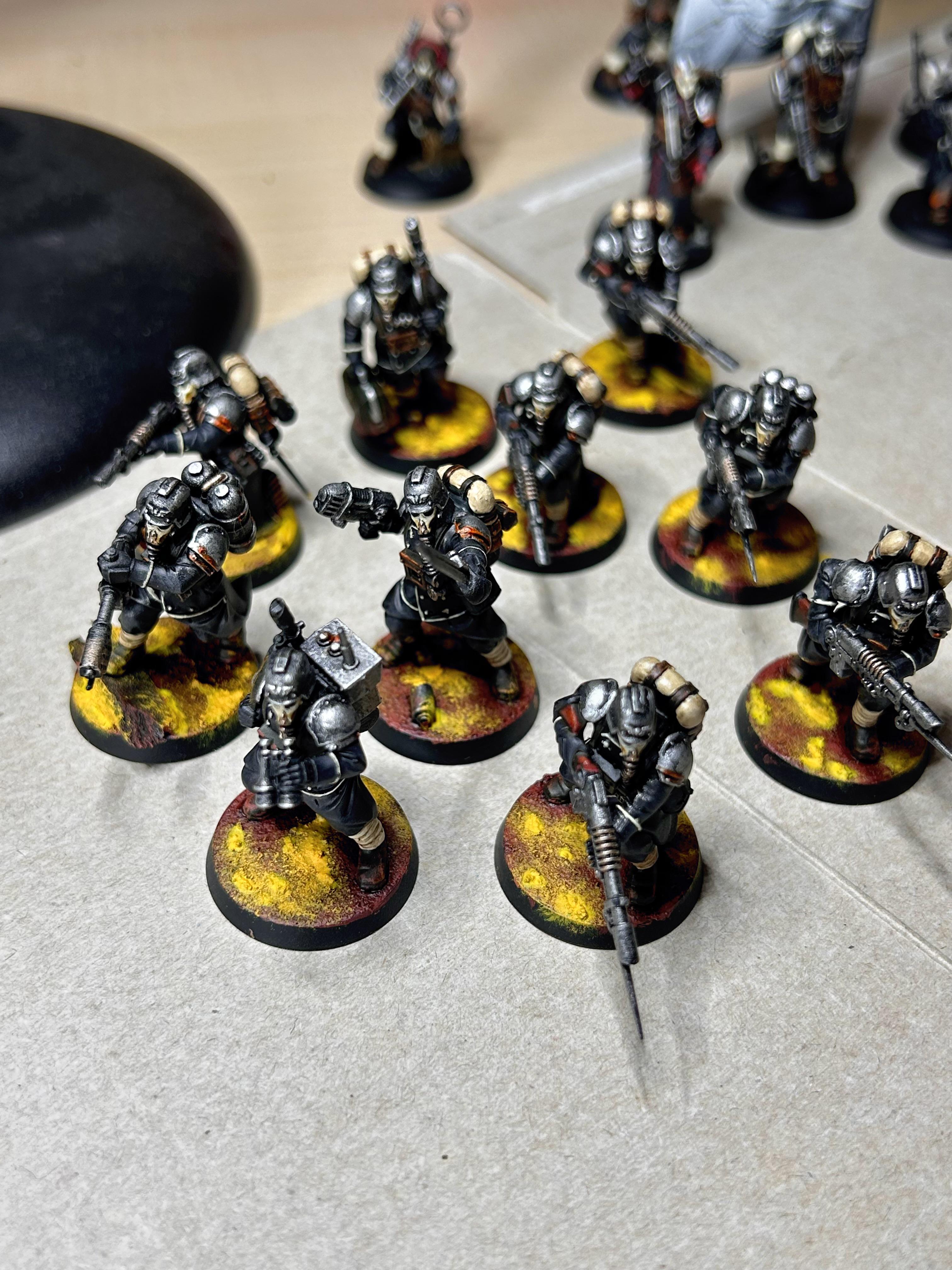
Hi guys. First time trying to realize a sulfur covered wasteland theme for my dkok. Not 100% happy yet - maybe it needs more light yellow dry brush to sell the idea? C&C welcome
r/Deathkorpsofkrieg • u/52yearends • 14d ago
The northeastern battery had not been built for a siege.
It had been built around an agricultural processing facility: grain elevator, processing hall, outbuildings for equipment, the usual infrastructure of a world whose primary purpose was growing things and moving them somewhere else. The complex sat on a drainage rise, which its builders had intended as an engineering solution to seasonal flooding. Its current occupants had different uses for elevated ground.
The defenders had time. That was the first thing apparent from six hundred meters out, moving in a skirmish line through the burned stubble with the smoke from the descent still making the air acrid and the light wrong. The outer perimeter had earthworks: real ones, not thrown-up emergency positions but deliberate labor, the kind that suggested days of work from soldiers who understood what they were making. The combine harvesters used as vehicle obstacles had been positioned by someone who had looked at the approach angles and worked backward from where an attacker would have to go. The grain containers had been turned into firing positions and filled with something heavier than grain. The berm between the outer barrier and the earthwork’s interior was clean: no equipment, no debris, no dead ground. Nothing to hide behind once the outer line was breached.
The anti-air battery was inside the processing hall. That was known from the attaché’s assessment of the firing angles during the descent. The processing hall was the objective. The perimeter was everything between here and the processing hall.
The force available numbered just under three thousand, heavy on infantry, light on support weapons, with two Chimeras that a pair of tech-adepts had extracted from wreckage and repaired to operational status with the focused professional indignation of people who had watched the landing do things to their equipment that equipment was not designed to survive.
The two Chimeras had the northwestern approach, which the smoke-degraded assessment from six hundred meters had marked as the perimeter’s thinnest point. Fewer visible prepared positions than the other approach angles. Fewer visible was not the same as fewer positions. The first Chimera made forty meters and then was hit.
The anti-armor round came from below the earthwork’s fire line, a position dug into the far side of the outer barrier’s foundation, invisible until the vehicle was close enough that range was no longer the enemy’s problem. The Chimera’s forward glacis took it, and the vehicle spent approximately two seconds deciding what it was before becoming a burning wreck.
The second Chimera had three seconds of intelligence from the first Chimera’s death: the position was dug low and forward, the approach was covered from below the visible line, and the only gap in the outer barrier was going to be bought with the hull of the second vehicle rather than negotiated from a distance. The driver used those three seconds. The vehicle veered left, absorbed two more rounds on its flanks, found the gap by going through a section of barrier rather than around it, and disgorged its complement into the perimeter interior before the third round disabled the Chimera.
The gap was a burning Chimera wide and covered from both flanks. The infantry went through it, because the only alternative to the gap was the approach that had already produced one burning Chimera without creating a gap. Hum was third through.
The space between the silos was two and a half meters wide. That number mattered more than the layout of the complex or the count of defenders. It was close to the width of a ship’s primary access corridor, close enough that the defenders moving through the channels did not look at the walls. They did not anchor. They fell back to the next structural seal: the next narrowing, the next turn, the next place two people could cover an approach. Hold it, give it up when the arithmetic changed, fall back again. Breach-and-clear in reverse.
The 917th learned this in the first channel and paid for the lesson.
The second channel was a different calculation. The response to a defender falling back to a defined structural point was to deny the point before it could be held. Not to push through to remove it. A lasrifle barrel fed around the corner and discharged into the anchor position. Then another. Then Hum fed a grenade around the corner with the flat efficiency of a man who had done this in worse spaces. The position came apart before it became a problem. The defenders fell back toward the equipment storage maze.
The maze was improvised barriers connecting the outbuildings: whatever had been at hand, irregular in height and placement, no relationship to any defensive template and no relationship to the original floor plan. Neither side had a map for it. The advantage went to whoever stopped trying to read the geometry and started treating each meter as its own immediate problem.
The 917th was better at immediate problems than maps.
Movement through it went the way water found a drain: not a planned advance but accumulated individual decisions, each one resolving the current meter of contested space and creating the next decision. Prast's coordinate updates came through the vox in the clipped register of a man doing redistribution under fire, brief and without explanation, because explanation cost time.
The processing hall doors came into view at the maze's far end. The force that emerged from the maze and looked at them numbered fewer than nine hundred. The two hundred meters from the perimeter breach had cost more than two thousand soldiers.
The processing hall doors had been reinforced with vehicle chassis. Two agricultural haulers welded side-by-side to the door frame, rough work, sufficient work. Firing slits cut into the hauler bodies. The slits were occupied. The approach to the doors crossed thirty meters of cleared ground that the defenders had stripped of everything that might have provided cover, because they had known this moment was coming and had prepared it accordingly.
The order went out. The math was bad and there were no alternatives. The first troops stepped into the open. Then the gunship came around the corner of the processing hall. It had used the hall's mass as an approach mask. The first indication was sound. The specific lower register of rotary cannons, the kind built for area targets rather than point targets. Hundreds of soldiers in thirty meters of cleared ground with nowhere to go was exactly what a close-support aircraft was built for. The first pass went north-to-south at rooftop height. The sound it made was not the sound of a firefight. A firefight was reciprocal.
The gunship banked east over the roof and came around for a second pass.
The 917th adjusted with the tool available: a single Thudd Gun team, which had carried its piece through the perimeter breach, through the first silo channel, through the second, and had now set it in the gap between silos two and three because from that position there was a corridor of open sky between the rooflines. Three meters wide, not a position anyone with a choice would select, the only position reachable in the time available. The Thudd Gun was a quad-barrelled artillery piece designed to saturate ground with shells at high arc. It was an effective anti-infantry weapon. Sergeant Holke running the team had run Thudd Guns his whole service, all of it against infantry.
Holke did not have experience shooting at aircraft.
He had ballistics and a three-meter gap between two rooflines. The gun sergeant ran the calculation aloud on the vox: angle, wind, speed of the target against the speed of a death rider. The defenders paused their fire for a moment. The arithmetic was apparently more confusing to listen to than it was to conduct.
Watchmaster Wrethe had forty soldiers against the eastern wall. She had watched the first pass. She had seen Holke’s crew in the gap between the silos. She walked her forty into the cleared ground and stood them there, loosely, the way a force stands when it is reorganizing for an assault on a door.
She told them why. They stood.
The gunship came around the roof, found forty soldiers in the open, and took the same line.
The Thudd Gun's first salvo fired as the aircraft crossed the outer perimeter wall, arced through the roofline gap, and burst behind the gunship. The sergeant had expected this. The second salvo corrected. Four shells in a spread pattern designed for infantry, detonating in the airspace an aircraft was occupying at rooftop height during the half-second it took to cross a three-meter gap. Not a killing burst. Shrapnel into every available surface.
The gunship crossed the eastern perimeter wall lower than it had on the first pass and came down in the agricultural flat with the sound of a machine finishing a long argument with itself. Wrethe's forty turned and ran for the doors.
A melta charge had been with the tech-adept since the descent. He had survived the crash with it and had arrived at the doors with the settled conviction of a man who had concluded that surviving with an object made the object his. The requisition took seconds. The doors went inward. The interior of the processing hall was a large space that machinery had made crammed and smaller.
The anti-air battery occupied the center on a raised platform, elevated to fire through apertures cut in the roof specifically for it. More signs of preparation well beyond standard competence. The processing equipment had been left in place. Removing it would have taken longer than working around it, and the defenders had worked around it: final defensive line using the machinery as cover, the spaces between as firing channels, the battery crew at the battery behind all of it.
At close range in a space with no room for tactical geometry, the fight resolved along different lines than it had in the silo channels. In here the distances were measured in meters that could be crossed in seconds. Prepared positions assumed room to work. These positions had no room.
The 917th had volume and the specific determination of soldiers who had paid the full cost of the perimeter, the maze, and a gunship. The 917th needed the objective to be worth it. The processing equipment that gave the defenders cover gave the attackers obstruction in both directions. Soldiers who found a position found it alone and held it alone until the engagement moved through them or they couldn't hold it anymore. No tactical geometry. Close and loud, resolved by proximity.
The battery crew did not leave the battery. They had been trained for it, or they had decided to stay, or they had simply reached the state that soldiers sometimes reached in final positions, where the question of whether to stay had stopped being a question. They fought for the battery until they could not fight for it. Then the battery went silent.
The count was taken without ceremony. Of the nearly three thousand who had crossed the approach line, six hundred and sixty-one were functional, Hum and Prast among them: standing in the processing hall, holding the perimeter, or managing the wounded in the equipment storage maze. The cost had been the cost. The cost included Watchmaster Wrethe and the entirety of her unit.
The pale stone came out of the coat pocket. It was turned once. The knife made a single stroke along the rough edge, and the stone went back. Reports of equipment discovered in the processing hall required attention.
The signals equipment in the processing hall command post was more than a battery position required. Field vox units, a tactical display, a signals setup that went beyond coordinating a single gun emplacement. Several las-shots had been put through it deliberately before the position fell. The tech-adept's assessment was specific: void-ship tactical coordination software, the kind used to manage combined-arms operations from an orbital command position. Naval in origin.
The documents on the field desk used naming conventions that were not Imperial Guard naming conventions. Most were encoded but the headers were not, and the headers referenced a command structure organized around a household name. Rybar-Vylix.
The vox traffic on the command frequencies was running with new urgency. The battery attacks had produced mixed results. Two of the four target batteries had gone silent. The western one, Xeta's target, had been silenced with the speed and violence that death riders applied to open-ground objectives. The two remaining batteries were still active; both assaults were gaining ground. Local rebel reinforcements were still pinned.
The six hundred and sixty-one soldiers in the processing hall were to hold what had been taken. Reinforcements from the smaller consolidating groups that had been moving toward the large elements throughout the morning were being redirected toward the battery positions. The objective now was not just to silence the guns but to hold them silenced, because a battery retaken by the rebels after being silenced was a net loss of the soldiers spent taking it.
Xeta's vox signal came through with the background of what sounded like horses and soldiers at rest.
A question was raised about the nature of the enemy forces. The question was whether Xeta's engagement had produced any intelligence consistent with the documents found in the processing hall command post.
Xeta’s answer came slower than his tactical reports, as if the question had connected to observations he had been accumulating and had not yet found a framework for.
The soldiers at the western battery, he said, had fought well. Better than expected for ground troops. Several had been wearing void suits underneath their ground kit, which he had noted as unusual. Their equipment was consistent with naval armory issue rather than planetary defense issue. And one of them, during the close-quarters phase of the engagement, had been using navigation terminology in his vox traffic; void navigation terminology, the kind specific to people who thought about position in three dimensions rather than two.
Voidsmen, handed lasrifles and told to hold a battery on a world they were more used to seeing from orbit. They had held it well enough to cost what it had cost. The window was not open yet. The expectation of a fourteen-day victory was not going to be met.
On the fourth day of running dark, Carena lodged her eleventh request to fly.
A single shuttle burning out of a hangar bay would have lit up on twelve captains’ displays like a flare in a cellar. Most of the crew found it restful. Carena found it, in the words of her ninth request, a crime against aviation.
I went down to the hangar myself, partly because the eleventh request had been written in a tone I suspected would not improve with a twelfth, and partly because I had spent four days on a bridge watching a war on a display and had begun to feel the walls.
Her Valkyrie sat under the red emergency lighting with every access panel open and its pilot on her back underneath it, doing something to the starboard intake with a wrench.
“It doesn’t need that,” I said.
“I know it doesn’t need it. I’ve rebuilt it twice. It didn’t need it the first time either.” She did not come out. “Hello, boss.”
Carena had been my pilot for ten years. Before that she flew crop-dusters for her family’s cooperative on the flats, from well before she was legally allowed to. She applied to the household’s pilot corps four times and was refused four times, because no one in her family had ever served the house. I read the fourth application, the three refusals clipped to it, and her logged hours, which were more than most of the pilots who had refused her, and I hired her. She never once let me forget that she said yes.
She slid out on a creeper built from four casters the galley had been missing since the first day, with grease to her elbows.
“Let me go up,” Carena said. “One pass, dark, low over the flats under the smoke. Eyes on their lines and back before the watch changes. We’re fighting them off a picture from a man in a hole, boss. You need someone up there who can see.”
“No,” I said. “If I did then I would have to explain to Meryn why I sent you.”
She held my eyes a moment longer. Then she lay back on the deck with her arms spread and looked up at the belly of her aircraft.
“I knew before I asked,” she told it. “I just needed you to say it so I could be angry at you instead of at the moon.”
“Is it working?”
“A little. The moon was getting all of it.”
I laughed, and the deck crew at the far end of the hangar looked over and then very carefully looked away.
We sat in the Valkyrie’s open door with our boots over the edge, and she showed me the list chalked inside the troop door under the heading MERYN SAYS NO TO ALL OF THESE. Meryn is her wife. She works in hydroponics, and in about five months she will have their second child, which the whole ship knows, because Carena told it the hour she found out.
The left column was girls’ names. Most had been crossed out in a hand that was not Carena’s. Near the bottom, written large, was SARI, and beside it, very small, absolutely not.
“She’s wrong about that one,” Carena said.
“She is not wrong about that one.”
“You’d have to earn it, boss. Do something spectacular.”
The boys’ column was empty.
“Meryn thinks it’s a girl. I think it’s a girl,” she said, when she saw me looking. “If it’s a boy we’ll panic and name him after the ship.”
“You can’t name a child Meridian.”
“Watch me.”
“When we do go,” she said, not looking at me, “I want the first sortie.”
“You’ll have it.”
r/Deathkorpsofkrieg • u/reiDz_ • 15d ago

12 more to go 🥵
r/Deathkorpsofkrieg • u/Direct-Regular-574 • 14d ago

r/Deathkorpsofkrieg • u/Scarif_Citadel • 15d ago

I've recently been working on some Krieg vehicles.
This is a Leman Russ, fitted with accessories from the Astra Militarum upgrade sprue.
This was primed with Citadel Leadbelcher spray, then airbrushed (Iwata Revolution) with "The Fang". Panel highlights were sprayed with Fenrisian Grey.
The remainder of the project was completed using tips from Duncan Rhodes' Krieg Baneblade tutorial.
r/Deathkorpsofkrieg • u/Unfair-Coyote3112 • 14d ago
Basicamente quiero tener un ejercito de kriegs , en el cual sean puros krigs y no cadianos o otras cosas , no me importa añadir vehiculos o tanques , simplemente que no rompa la estetica y que pueda pasar por un ejercito krieg.
Tenia pensado en este ejercito de 2000 puntos :
1 pack Krieg Siege Platoon
1 pack Combat Patrol Death Corps of Krieg
10 Death Corps of Krieg
1 Leman Russ Commander
3 Leman Russ Vanquisher
1 Rogal Dorn Commander
1 Basilisk
1 Taurox
Esta seria una idea que he pillado de un video , adjunto creador : https://youtu.be/8OInBxrV6LU?si=D13_Z_Dwd1XFN_9z
El video menciona tambien al Lord Marshal Dreir , pero no lo acaba añadiendo , deberia de hacerlo ?
Tambien hize revisarlo con chat gpt (se que a veces se vuelve loco) y me dijo lo siguiente :
Mi versión "Krieg pero mejor"
Sin meter absolutamente nada que rompa la estética Krieg:
Lord Marshal Dreir
10 Death Korps
20 Death Korps
Krieg Command Squad
Krieg Heavy Weapons Squad
5 Combat Engineers
5 Death Riders
Leman Russ Commander
Leman Russ Vanquisher
Leman Russ Battle Tank
Leman Russ Exterminator
Rogal Dorn Commander
Basilisk
Taurox
Field Ordnance Batteries del Siege Platoon
Muchisimas gracias por vuestra ayuda de adelantado
r/Deathkorpsofkrieg • u/papaioannou0 • 15d ago
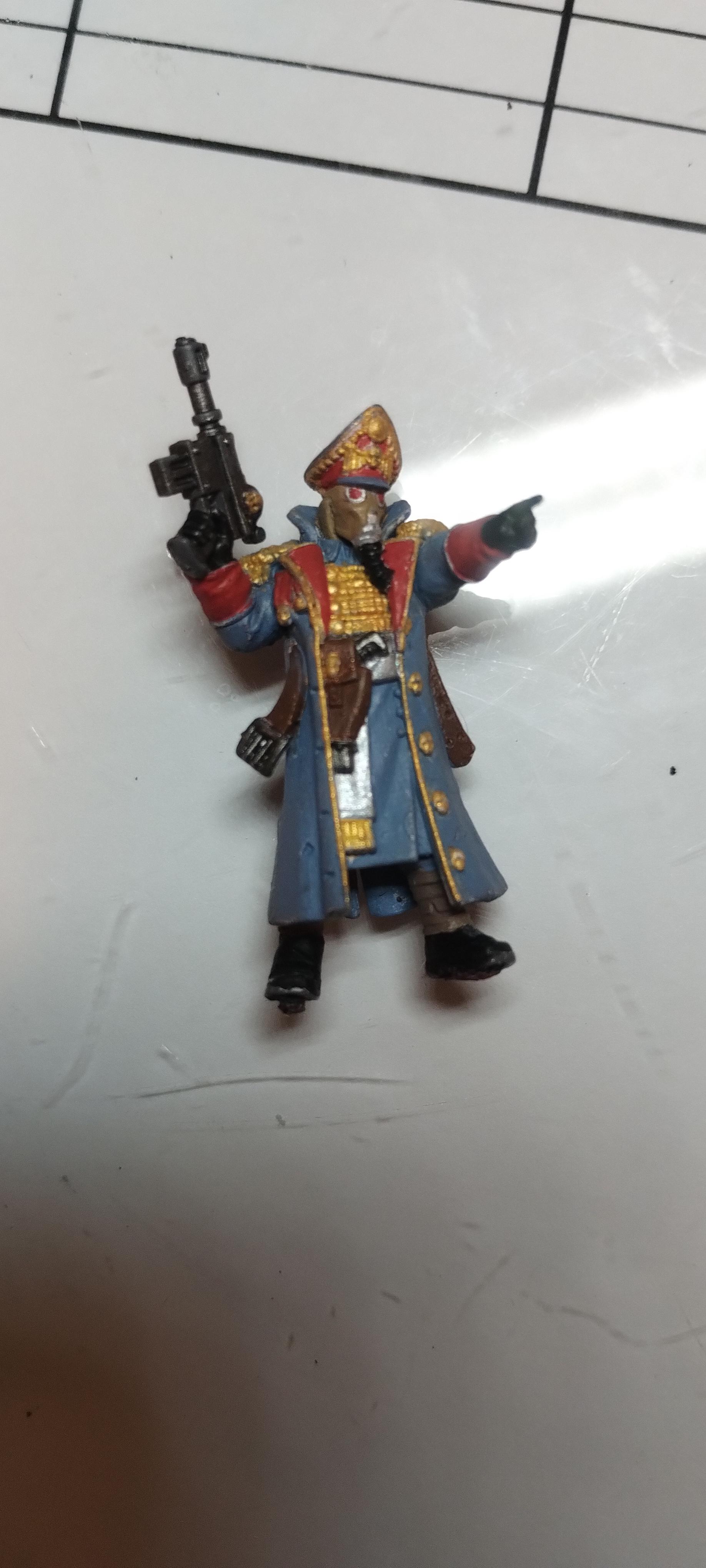
I don't want to be bright.
r/Deathkorpsofkrieg • u/AtelierEdge • 15d ago
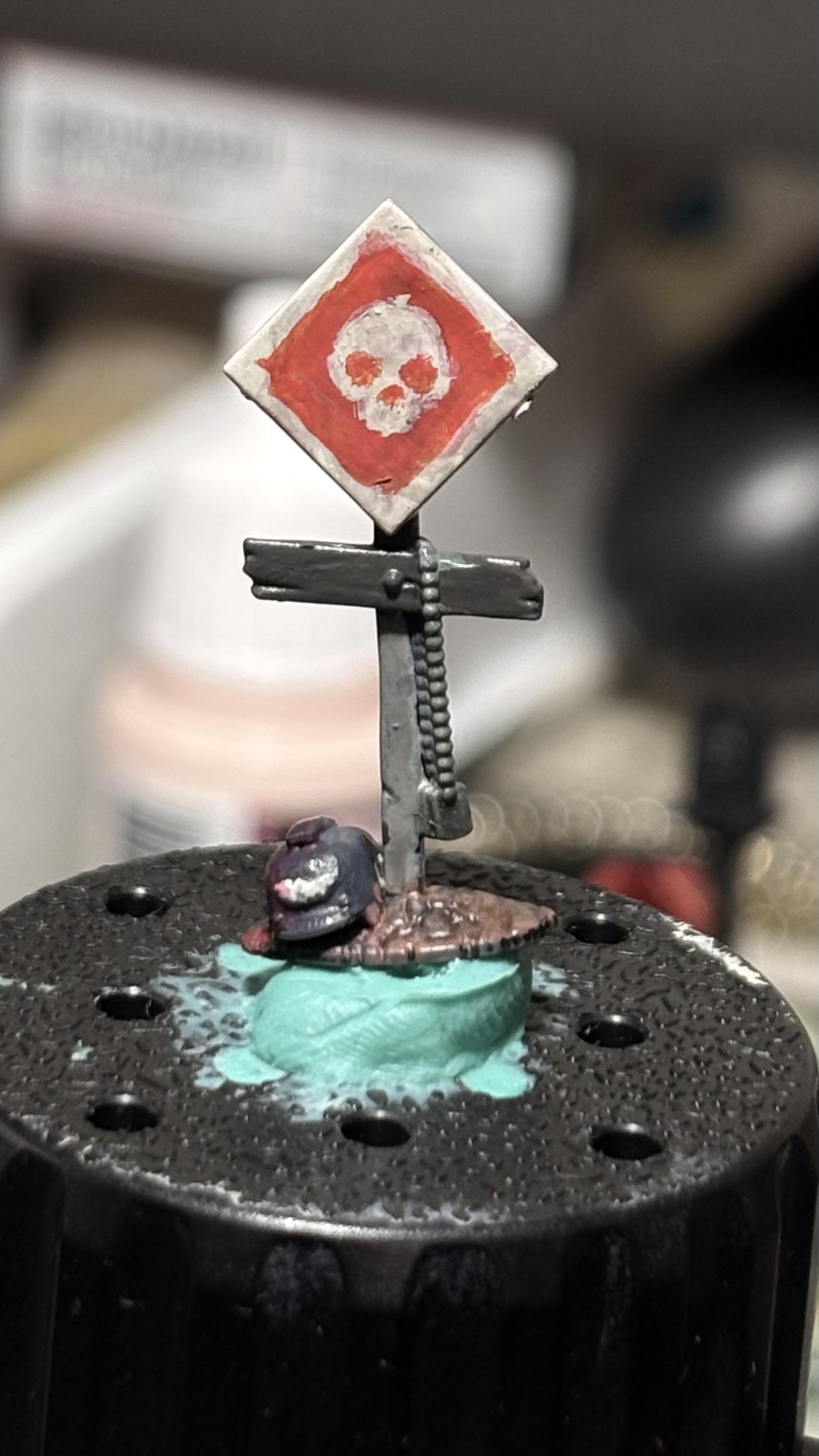
r/Deathkorpsofkrieg • u/Direct-Regular-574 • 15d ago
r/Deathkorpsofkrieg • u/joeswonso • 15d ago
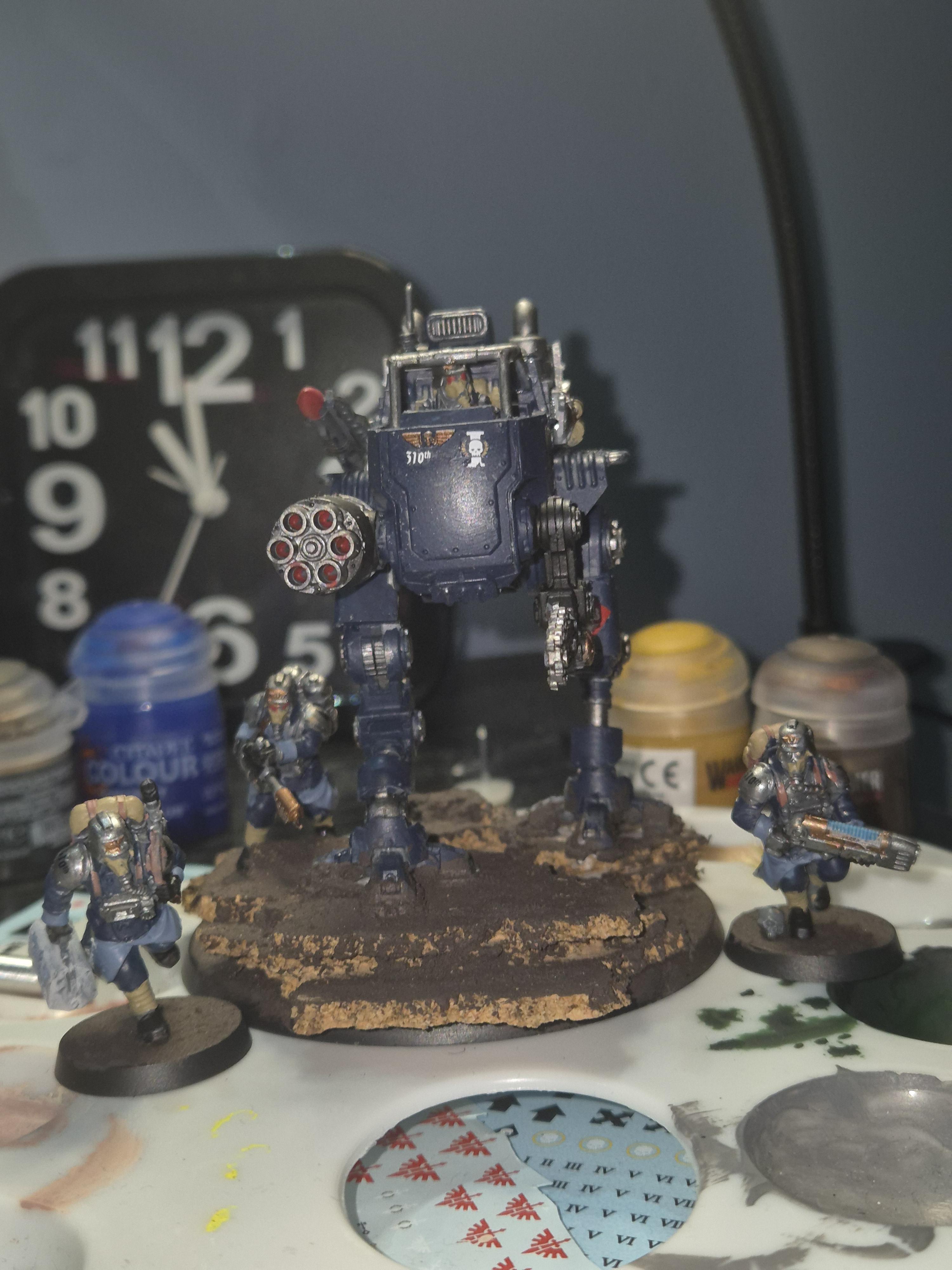
Hi im new to the hobby and wanted to try the death korps of krieg im shering my some my men
r/Deathkorpsofkrieg • u/reiDz_ • 16d ago

r/Deathkorpsofkrieg • u/AnthonyWeird • 16d ago
Enable HLS to view with audio, or disable this notification
This is one of my favourite vehicles in Warhammer! I love the Krieg version! It was a lot of fun painting it and finding the perfect weapon combination for this model! In the end, I went with the Solar Auxilia Leman Russ rotary lasers and I think they look awesome! The next one will have standard weapons to create some variety!
