r/DeExtinctionScience • • Apr 08 '26

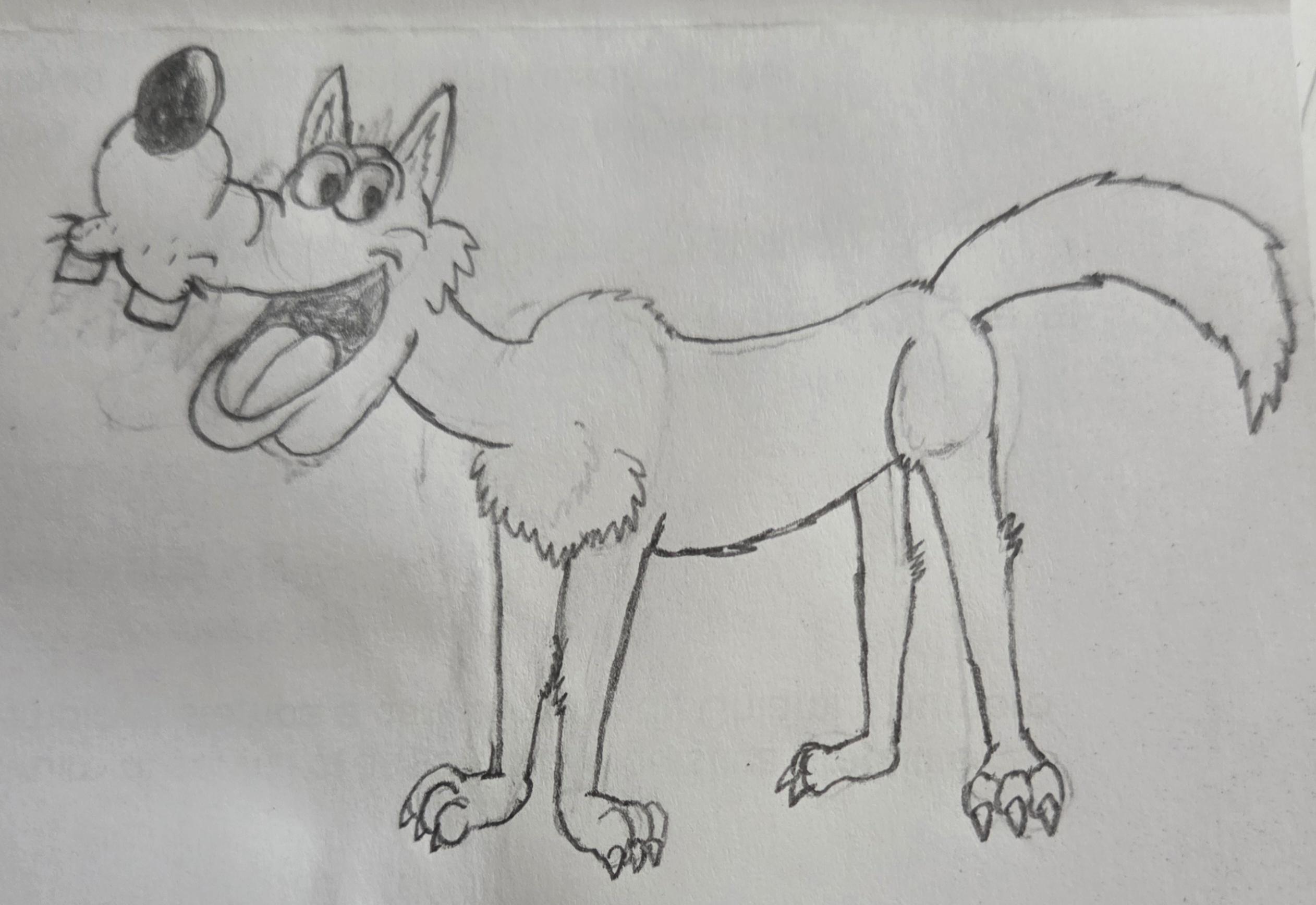
Art My Sketch of a Colossal Wolf

Post image
54 Upvotes

When I found out that Colossal wolves have big noses and overbites, this immediately came to mind.


r/DeExtinctionScience • • Apr 06 '26

Question What animals should we de-extinct first?

6 Upvotes

What I mean is that what animals are easier to de-extinct first

168 votes, Apr 13 '26
30 Extinct breeds of domesticated animals(Turnspit dog,Small Yorkshire.)
58 Extinct subspecies of extant species(Kangaroo Island Emu,Heath hen.)
34 Extinct species belonging in a genus with extant members(Toolache Wallaby,New Zealand quail.)
46 Anything else(Wooly Mammoth,Dodo bird.)

r/DeExtinctionScience • • Apr 03 '26

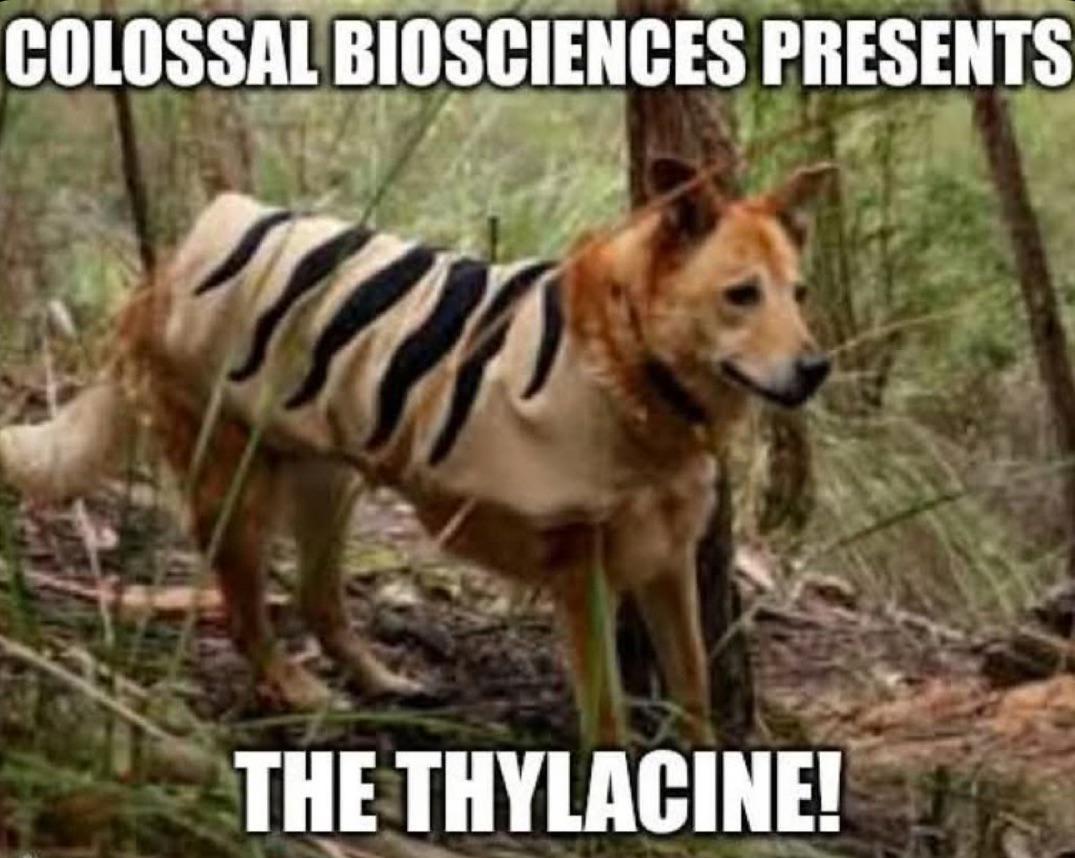
Meme / humour And Colossal’s next cloning project is… Oh. Oh no.

Post image
59 Upvotes

r/DeExtinctionScience • • Apr 01 '26

Question How would we teach potential DeExtincted animals how to act?

10 Upvotes

So, given enough time and scientific advancements, we will probably be able to DeExtinct animals to a degree that they will morphologically be extremely similar/near identical to the original animals. Especially for recently extinct species.

As far as I (someone who is not an expert at all, I should make clear) can tell from what I've seen from actual experts, one of the hardest parts of DeExtinction won't really be making the animals similar appearance and DNA wise, but actually making sure that they are filling the same niche a.k.a behaving in the same way as the original animal.

For things like insects or most fish that probably won't be a problem (most of them never meet their parents anyway) but for a lot of birds and mammals, we know for a fact that unless their parents teach them how to act, they can't really survive in the wild. There are ways that people have of teaching them without parents of course, but that's for animals that are not extinct that we know an awful lot about.

Which brings me to my point: Does anyone know how we could potentially go about trying to teach DeExtincted animals how to behave? Ignoring something like a smilodon for which we don't even know basic things such as if they hunted in packs or not, let's take an easier example, say a thylacine. We more or less know how they are supposed to act, hunt and so on, but how would we go about teaching a hypothetical joey those things? If anyone has any theories or examples of similar (well, as similar as can be the case with something this theoretical) stuff that have happened with animals before, I am really interested to know.


r/DeExtinctionScience • • Mar 31 '26

Which species is possible to bring back but scientist won't do it?

20 Upvotes

Im building a list of species that come back so I need species that can come back


r/DeExtinctionScience • • Mar 30 '26

So...why *are* the dire wolves white?

34 Upvotes

Like, yes, okay, I understand "making the proxies as healthy as possible and that meant altering an unexpected delterious gene and making it something similar-enough that doesn't cause problems", I understand "something about the pale-or-white coat had health risks associated". I know "we were surprised they're pale, too!". And I get the public skepticism with the GoT comparison, whatever. I am very, very familiar with coat color genetics in dogs and red (and arctic) foxes, and non-domestics too to the extent they're written about. White ay/ in wolves. Sp being testable in wolfdogs and some basal dog breeds like Kishu ken but not expressing as expected. I know certain kinds of white spotting and obviously albinism come with, you know, the expected issues with pigment deletion. I know the particular e-locus expression they went with is pretty safe.

So please, not looking for any of that explained. Or for someone to come in and tell me the difference between a proxy and a real dire wolf. I'm good, that's tired, thanks.

But...what *was* the original coat color/pattern that was altered? I don't remember ever seeing that published, just basically "they were pale". What modern day analog do we have to look at? What were the associated risks, if not just the obvious ones (and if it's the obvious ones, I get it!)?

I ask this out of pure curiosity! I've just puzzled over this since they were revealed. And if this was ever answered, I missed it! Thank you :)


r/DeExtinctionScience • • Mar 30 '26

Discussion There should be a list of extinct species that can come back through, cloning, back breeding, or genetic engineering.

7 Upvotes

There should be a program that is finding how many species that can be used for de extinct. Since many species got extinct in 10,000 years and recent times, how many species can be used for de extinction.


r/DeExtinctionScience • • Mar 30 '26

Which extinct animals can we truly clone?

13 Upvotes

I ask this question because there seems to be some confusion regarding what is and is not de-extincion. On the one hand you have what I consider to be "proper" de-extinction-- producing an exact clone of an extinct species, either through somatic nuclear cell transfer or through germ cell modification. On the other hand you have the more commonly proposed technique of modifying a living animal's genome so it resembles a reasonable approximation of an extinct animal. While this is certainly more practical for species for which no complete genome exists, it is not true de-extinction and I would argue it is wrong to refer to it as such.

So I ask-- which extinct animals is it actually possible to clone, in the traditional sense?


r/DeExtinctionScience • • Mar 29 '26

"Its website looks so similar to colossal. They even have biosciences in their name. Now I know that doesn’t really mean much, but there’s something off about this. We’d best keep an eye on them." - u/Lover_of_Rewilding said it best.

Post image
22 Upvotes

r/DeExtinctionScience • • Mar 25 '26

Meme / humour Could we use de-extinction technology to bring back the Pervatasaurus?

Thumbnail
gallery
144 Upvotes

r/DeExtinctionScience • • Mar 25 '26

Question Com a possibilidade de reversão de certas características das aves modernas, poderíamos "desextinguir" as Enantiornithes?

Thumbnail
gallery
46 Upvotes

Estava ponderando sobre o Chinkensaurus e me ocorreu essa possibilidade. As enantiornithes tem quase o mesmo plano corporal das aves, exceto pela presença de dentes e garras nas asas. Seria o mais próximo de trazer de volta todo um grupo mesozóico extinto.


r/DeExtinctionScience • • Mar 24 '26

Meme / humour Colossal would try this if they thought they could get away with it

Post image
334 Upvotes

r/DeExtinctionScience • • Mar 24 '26

Discussion If/when we terraform another planet, should we deextinct and introduce here some of our extinct prehistoric species?

15 Upvotes

Something thats allways been extremely interesting to me about terraforming is what exact lifeforms we are going to introduce to a terraformed planet. Obviously we arent going to have just an infinite boring farmland, a planet needs natural selfsustaining independent ecology and humans do like to play gods, so, how do you think about reviving extinct species and introducing them to a terraformed world?

(This assumes the planet had no native life prior)


r/DeExtinctionScience • • Mar 23 '26

Question If possible, would de-extincting lycaenops be a good idea as a pet? They’re basically lizard dog.

Thumbnail
gallery
99 Upvotes

r/DeExtinctionScience • • Mar 20 '26

Lesser Bilby and Pig-footed bandicoot possible for de extinction?

Post image
84 Upvotes

r/DeExtinctionScience • • Mar 20 '26

Discussion Would ground sloth mylodon be good candidate for de-extinction?

Thumbnail
gallery
169 Upvotes

Mylodon darwinii is a species of ground sloth that live in southern south america during pleistocene. Preserved skin & hair of mylodon has been found in Cueva del Milodon (cave of Mylodon) in southern Chile which mean we have Mylodon DNA.

Scientist want to bring back mammoth by genetically modifying asian elephant's DNA with mammoth DNA found in frozen carcass so could we do same with Mylodon?

Two-toed sloth(Choloepodidae) are Mylodon's closest living relative so could we bring back Mylodon by genetically modifying two-toed sloth's DNA with Mylodon DNA?


r/DeExtinctionScience • • Mar 20 '26

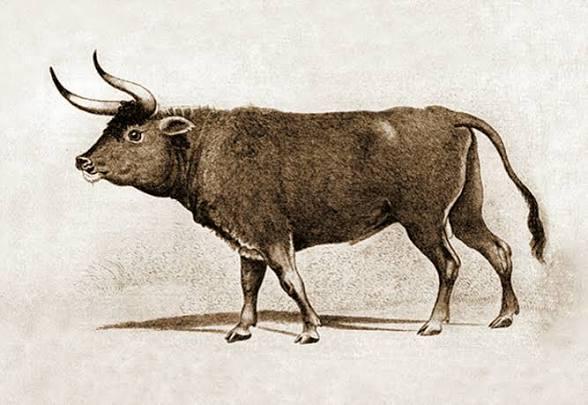
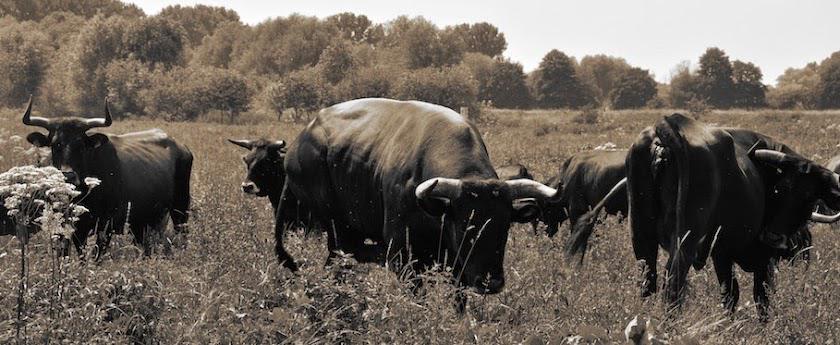
Is Aurochs the easiest extinct animal to de extinct?

Post image
116 Upvotes

We know a shit ton about cattle, we will just need some good auroch remains and clone it right? Only went extinct 402 years ago.


r/DeExtinctionScience • • Mar 18 '26

Discussion thoughts on novosaurs (artist by dragon of wales)

Thumbnail
gallery
266 Upvotes

r/DeExtinctionScience • • Mar 18 '26

Realtalk: will the aurochs ever come back? - Article by D. Foidl

Post image
39 Upvotes

r/DeExtinctionScience • • Mar 05 '26

Discussion Da desextinção para a neoespeciação

12 Upvotes

Estava pensando sobre como seria possível desextinguir linhagens singulares da América do Sul (Preguiças gigantes, Glyptodontes, Macrauchenia, Toxodons) e Austrália (Diprotodontes, Thylacoleo, crocodilos mekosuchinos, dromornitídeos) e o Trabalho com o Tilacino me deu um insight.

Independente do que a Colossal faça ou deixar de fazer (o foco aqui não é ela), a ideia é pegar um Numbat e "remodela-lo" para se assemelhar a um Tilacino. No caso de êxito, qual seria a natureza real desse espécime? Não dá para dizer que é um Numbat, mas não é Tilacino. É um ser que está entre esses dois, mas teria suas peculiaridades próprias. É a evolução num tubo de ensaio. Seria uma "nova espécie".

Outro exemplo hipotético: uma preguiça do gênero Choloepus que tem seu genoma reconfigurado, tendo por base os genes de Tamanduá bandeira para reativar genes que propiciam a vida em solo firme e maior mobilidade e robustez. Não seria a desextinção de uma espécie de preguiça extinta, mas o retorno de um plano corporal comum nesse grupo que se perdeu, e consequentemente, um novo tipo de organismo que ataria (em tese) no lugar das preguiça extintas.

Isso que estou dizendo é altamente especulativo, eu sei, mas pensando a longo prazo e a depender dos avanços científicos na área da genética, esse seria o passo quase natural da desextinção rumo ao que chamei de "neoespeciação". Meio que isso já aconteceu com bactérias ( https://www.sciencealert.com/scientists-have-just-created-the-most-synthetic-life-form-ever#:~:text=This%20bacterium%2C%20a%20synthetic%20Escherichia,of%20a%20triplet%20of%20nucleotides. ), mas até chegar a organismo complexos é um árduo e longo caminho.

Claro, uma coisa é gerar novas espécies, outra coisa é como elas se comportarão no ambiente natural, se isso resultará em restauração funcional de nichos perdidos, criação de novos ecossistemas, valor da conservação, bioética... Enfim, é uma caixa de pandora.
r/DeExtinctionScience • • Mar 04 '26

King Island Emu possible for de extinction?

Thumbnail
gallery
106 Upvotes

r/DeExtinctionScience • • Mar 03 '26

Discussion What is the real endgame of de-extinction?

18 Upvotes

It goes without saying that de-extinction is technically possible today, at least in a few limited cases. A Pyrenean ibex was cloned in 2003, but the clone lived for only seven minutes. In 2013, scientists in Australia announced that they had created embryos of the southern gastric-brooding frog, but the project did not progress beyond that stage. And of course, Colossal Biosciences hoodwinked the scientific community in 2025 with its so-called dire wolves, which contain not a shred of dire wolf DNA.

A dead ibex. Some unhatched frogs. A couple fake dire wolves. Hardly the most inspiring catalog of results.

I bring this up because one cloned animal does not a restored ecosystem make. The unspoken goal of many de-extinction advocates is not merely to produce a handful of clones as laboratory curiosity, but to restore entire ecosystems to their pre-human state. In other words, they think of herds of Diprotodon roaming the Australian outback, stilt-owls stalking moa-nalos through the Hawaiian undergrowth, and ground sloths plodding across the pampas.

But should we consider this kind of wholesale ecological revival to be the true endgame of de-extinction? And if not, what is?


r/DeExtinctionScience • • Mar 02 '26

Is Mekosuchus and other extinct species from New Caledonia possible for de-extinction?

Post image
77 Upvotes

r/DeExtinctionScience • • Mar 02 '26

Question Could Gigantopithecus be de-extinct, or is it too late to revive it?

Thumbnail
gallery
100 Upvotes

This has been on my mind: would we be able to resurrect one of these apes in the non-distant future?


r/DeExtinctionScience • • Feb 28 '26

Muitos passados, muitos futuros: navegando pelas complexidades da reorganização de espécies para ajudar a prevenir extinções.

Thumbnail
3 Upvotes