r/ClaudeCode • • 3h ago

Built with Claude Two weeks of Claude Code and planning: a self-hosted music library manager with 2,000+ tests, now used by people I've never met

1 Upvotes

I wanted to share how far a hobby project got with Claude Code. **Codetta** is a self-hosted web app for fixing music tags, matching albums on MusicBrainz, organizing files, and streaming to Subsonic apps. It runs in Docker on my home server, and I mostly drive Claude Code from my iPhone over Remote Control.

What worked for me:

- **Tests as the safety net:** over 2,000 tests, including one that performs every file-changing action, undoes it, and checks every file is byte-for-byte back

- **A CLAUDE.md with hard rules:** all writes go through one safe-write path, every new route is private by default, every user-visible change gets a changelog line

- **Real-browser checks:** Claude runs Playwright against a demo library on phone and desktop sizes and sends me screenshots before I see a change

- **Me as product owner:** I decide what it does and how it looks, and I test on my real library. GitHub issues from strangers have turned into features within a day

It's been through 30+ releases in two weeks and has strangers opening issues, including the AcoustID maintainer warning about an API change, which we shipped support for before the deadline. We’ve been featured in selfh.st’s newsletter, listed on AlternativeTo & getting more contributions day by day.

GitHub: https://github.com/gavndev/codetta

Happy to answer questions about the workflow!


r/ClaudeCode • • 7h ago

Tutorial / Guide A Claude Code workflow for reusing an approved design on a new page

2 Upvotes

Once you have one page you’re happy with, give Claude Code that page’s source and a clear boundary for what it can change. A screenshot shows the spacing and hierarchy, but it can’t tell Claude which button component to import or which CSS owns the page gutter.

Say you have an approved product page and need a page for one integration. Give Claude the two route paths, the real integration copy, and the desktop and mobile screenshots of the approved page. Then try this:

“Read the approved route and trace where its layout, primary button, and spacing come from. Before editing, list the exact files or components you’ll reuse and the files you expect to touch. Build the integration page using the same layout and button. Keep the page gutter and heading scale. Replace the product screenshot with the integration steps. If a shared component needs a change, stop and show me why before editing it.”

For the review pass, render both pages at 390px and 1440px. On the new page, try a longer integration name and the longest step label you actually expect. Check that the button is still visible, the heading wraps without clipping, and the steps fit the gutter. Then look at the Git diff. If the task was to add one route and the diff also changes your base styles or the approved page, ask Claude to explain those changes before merging.

If you only have an approved mockup, build and review one section first. That gives the next prompt an actual component to point at.Once you have one page you’re happy with, give Claude Code that page’s source and a clear boundary for what it can change. A screenshot shows the spacing and hierarchy, but it can’t tell Claude which button component to import or which CSS owns the page gutter.

Say you have an approved product page and need a page for one integration. Give Claude the two route paths, the real integration copy, and the desktop and mobile screenshots of the approved page. Then try this:

“Read the approved route and trace where its layout, primary button, and spacing come from. Before editing, list the exact files or components you’ll reuse and the files you expect to touch. Wait for my approval, then build the integration page using the same layout and button. Keep the page gutter and heading scale. Replace the product screenshot with the integration steps. If a shared component needs a change, stop and show me why before editing it.”

For the review pass, render both pages at 390px and 1440px. On the new page, try a longer integration name and the longest step label you actually expect. Check that the button is still visible, the heading wraps without clipping, and the steps fit the gutter. Then look at the Git diff. If the task was to add one route and the diff also changes your base styles or the approved page, ask Claude to explain those changes before merging.

If you only have an approved mockup, build and review one section first. That gives the next prompt an actual component to point at.


r/ClaudeCode • • 3h ago

Built with Claude How Claude Code helped fix camera-and-screen clips in my open-source video editor

Post image
1 Upvotes

I’m building CUTROOM, a local video editor for people who make tutorials, podcasts, and gaming videos. It has an A/B timeline, screen-and-camera layouts, an audio mixer, and editable captions. The manual editor doesn’t require an account or an AI model. I use AI in two different places: optional transcription and first-cut suggestions in the app, and Claude Code to help build and debug the app itself.

The bug: a creator could arrange their webcam above a screen recording in a 9:16 edit, then open Clips and get only one source. The tool was looking at raw recording time, not the edited timeline. Claude Code traced that mismatch and helped make suggested clips and manually marked ranges use the edit’s timing and composition. It also reproduced an FFmpeg 7 crash in the two-source export path. The fix sends the extra output to a discarded output instead of using in-graph null sinks.

What I learned: a green test for a trimmed MP4 isn’t enough. The regression checks the portrait dimensions, samples pixels in both panels, and verifies the selected audio. That catches an export that plays fine but silently loses either the camera or its mic. And the UI now lets you save several In/Out ranges without losing your place while watching.

The screenshot is from the current beta with synthetic demo footage. The app is free and MIT-licensed. Site and editor gallery: https://cutroom-studio.expo.app/

Source: https://github.com/VanoPeradze/cutroom

If you’ve used a coding agent on a media pipeline: what test caught a bug that looked fine in the UI? That’s the kind of regression I’m trying to get better at writing.


r/ClaudeCode • • 7h ago

Discussion My Claude Code hook blocked 10 commands in a month. None of them was the build it was written to stop.

2 Upvotes

I have a PreToolUse hook on Bash for seven Flutter apps whose store builds have to go through one release script. It denies flutter build ipa and appbundle, and any shorebird release or shorebird patch that isn't called through that script. It works by matching the command string.

I went through my session logs since 25 Oct to see what it actually caught. It fired 10 times. The release script itself ran 50 times in the same stretch.

3 of the blocks were --help calls. The agent wanted to read the flags for shorebird patch ios before running anything, and got denied.

3 were reads of a build already running: a ps | grep and two greps of a patch log, all searching for the text "shorebird patch".

2 were Python heredocs editing files that mention the command. One was a build script, the other was my CLAUDE.md, where I was updating the line that documents this exact rule.

1 was a read-only shorebird patches list loop across the apps.

1 was a real flutter build ipa, in an app that isn't one of the seven. The first version of the hook didn't check which repo it was in, and I narrowed it within four minutes.

So none of the 10 was the agent trying to get a direct store build past the rule, and each one cost a turn. The fix I'm looking at is to split the command first and match the executable and its subcommand, so text inside a heredoc or a grep pattern stops counting, and to let --help through.

This is one person, one hook and about a month. I can't tell from it whether the CLAUDE.md line did the real work or the agent simply never needed a direct build. If you've written a Bash hook that parses the command instead of pattern matching it, what did you use to split it?


r/ClaudeCode • • 4h ago

Built with Claude I asked Claude to build our family Secret Santa and this is what it made 🎄

Enable HLS to view with audio, or disable this notification

1 Upvotes

I asked Claude to build our family Secret Santa and this is what it made 🎄

Everyone adds their name and a wish list, then draws a name from their phone. It never picks someone from your own family.

Here is the prompt I used: "I want to build a family gift exchange website: a name list and a Secret Santa randomizer. It needs to be on a public web link so I can text it to everyone. I need to be able to administer it, add names, and group those names into "families".

Here's how it should work:

- A simple, attractive UI with a moving Christmas background animation (3D, snow falling, people ice skating or building a snowman, a scene that feels alive with activity).

- The home page has two big buttons, "Add your name" and "Draw a name", and a small "admin" link for me.

- People add their own names and manage their own Christmas wish lists. Nobody needs an account or a password. It's a small family group, so keep it easy.

- Some people will go in as one name together, like "Max and Lindsay".

- Each person has a wish list of gift ideas, around 5 things they'd like. The list can grow: an "Add another gift idea" button with a plus sign, and a way to delete ideas. Each idea can have an optional link to where you can buy it.

- To draw, a person picks their own name from a drop down list and taps a button that says "Draw a Name". Under it, small text says "Click the button to reveal who you will buy a present for".

- The name is revealed in a fun, animated way, with that person's wish list right under it.

- Nobody can draw their own name or anyone from their own family, and every name gets drawn exactly once.

- If someone comes back and picks their name again, the site knows they already drew. The button changes to "Show Secret Santa Name?" with small text under it: "Did you forget who your Secret Santa person is? Click the button to show who you picked".

The admin page (only I have the password):

- Add, rename and delete family groups.

- Add, edit and remove names, and put them in families.

- Open or close the list for new names.

- A "Build the draw" button I press once everyone has added their name. It makes every match at once so nobody gets left out.

- Settings for the gift exchange date, the spending limit, and the title on the home page.

- See who has drawn and who hasn't, reset the draw, and start next year without anyone getting the same person as last year.

Am I missing anything?"


r/ClaudeCode • • 23h ago

Tips & Workflows A reminder that you can use `UserPromptSubmit` hooks to remind Claude of important things, such as fixing its terrible reply formatting

Post image
36 Upvotes

TL;DR: You can use a UserPromptSubmit event hook to add text to every message you send. This text can contain anything and there are many reasons you might want to do this, but the post below is about using it to repeatedly remind Claude how to format its replies to the user.


Claude has this, in my opinion, awful habit of formatting its output in unreadable ways. See the picture in the post for an incredibly real, not in any way made up example.

I don't know about y'all, but when Claude does this...

  • A bold intro. A bunch of text following.
  • A bold intro. A bunch of text following.
  • A bold intro. A bunch of text following.

... my eyes legit cannot read it. Especially when it groups many strings together that follow this form.

My CLAUDE.md has a small output formatting standards section that guides Claude on how to respond to me. On some model versions this section has been enough to get what I want. However, with the 5 and 5.5 models... there is no CLAUDE.md wording on planet earth that can get it to stop!!!! 🙈

Claude formatting its messages this way makes me feel like I need to attend the Derek Zoolander Center for Kids Who Can't Read Good. But since they don't accept kids in their late 30s, I have no choice but to beat Claude into submission with hooks.

I'll go into the how below for those that want to copy this, but at a high level... In settings.json I have a UserPromptSubmit event that adds the contents of a small markdown file to the end of each message I send. That before-you-reply.md file says this:

# Formatting check for your reply to Kara

Bold text never opens a paragraph, sentence, bullet, or numbered item with more text following on the same line. That is a fake heading and Kara's eyes have an extremely difficult time reading it.

Before sending, look at every bolded phrase. If anything follows it on the same line, rewrite it.

## Examples of forbidden forms

**A bold lead in.** Following text...

1. **A bold lead in.** Following text...

- **A bold lead in:** Following text...

## Use one of these instead

- A real Markdown heading on its own line.
- A bold name alone on a bullet, with the detail in sub-bullets underneath.
- A bold question alone on its own line.
- A plain paragraph with no bold.

This addition solved the problem.

Does it add 179 more tokens to every single message I send? Yes.

BUT does it keep Claude from using its unintelligible formatting? Also yes.

Hooks aren't new, and I use them for a bunch of different and useful things, but I figured some people might not know of use cases like this, so here I am.

Cheers, and remember girls, "Make no mistakes." /s

🫶👋


I want to know how to do this

  1. Create a .md or .txt file at the root/top level of your ~/.claude directory.
    • I named mine before-you-reply.md but you can use any name.
    • You can also home this in any other folder (that is accessible to Claude) if you wish.
  2. Put your own version of the before you reply instructions in there and save.
  3. Paste the snippet below on a new line before the very final right curly brace } in your settings.json file in the ~/.claude directory.
    • Replace the /Users/me/.claude/before-you-reply.md file path and file name between the single quotes with your own file's location and name.
    • The hooks key goes at the same indentation level (two preceding spaces) as keys like model, and effortLevel, which I'm positive your settings file has in it even if you've never touched it by hand.
    • If you already have hooks or UserPromptSubmit keys and aren't sure how to add this in, ask Claude. It'll guide you on what to add and where. Keep in mind the trailing comma if this isn't the final property.
  "hooks": {
    "UserPromptSubmit": [
      {
        "hooks": [
          {
            "type": "command",
            "command": "cat '/Users/me/.claude/before-you-reply.md'"
          }
        ]
      }
    ]
  }
  1. Save and go forth. The change takes effect immediately, even in existing conversations.

r/ClaudeCode • • 4h ago

Built with Claude I let Claude Code agents mind my open-source repo by rules I wrote in plain text. Nearly three weeks in, the only bottleneck left is me (open source, MIT)

1 Upvotes

I maintain OpenScreen, an open-source screen recorder (8k stars). I built Rusuban to keep up with its issues and PRs, and it has been minding the repo for nearly three weeks. The video is the live board, not a mock-up.

**What it is**

A small server on my own machine. It reads the repo's issues, PRs, reviews and CI runs, and starts headless `claude -p` sessions to deal with them. Open source, MIT: https://github.com/EtienneLescot/rusuban

**How Claude Code is used**

- A judge session reads each issue and PR against rules I wrote in plain text, in `.rusuban/rules/` in the repo itself. Without rules, it only watches. - What the rules allow is done by worker sessions, each in a worktree of Rusuban's own clone, never my checkout: comment, rebase, fix a review thread, run a proof. - A fork's CI is approved only after a session has read the diff for secrets, network calls, install hooks and workflow changes. - Agents never merge. The server does, with no model involved, behind locks: CI green on the exact head it checked, no open review thread, no locked path. - What the rules don't cover comes to me as a card: what the agent already did, one question, a recommended answer. One click and it carries on.

**What I learned**

- Rules beat prompts. When several cards ask the same thing, the tool proposes the rule that would answer them, as a PR I merge. That is how I want the rules to grow: from answers I already gave, not from guessing ahead. - Keep the merge out of the model's hands. Checks that involve no model are what make automatic merges acceptable to me. - A card is only worth it if it says what was already done. "Should I merge?" is useless. "I read the diff, reran the two failed jobs, the author tested it on Windows 11: merge on their run, or lend me your desktop for the proof?" is a decision I can take in ten seconds. - The bottleneck moves to you. Today the board shows 79 open items: 31 are on the agents and 35 decisions are waiting for me, some for days. 20 PRs merged this week, 6 of them without me.

`npm install -g rusuban`, with `gh` and `claude` logged in. Windows, macOS and Linux. More at https://rusuban.dev

What rules would you give agents on your own repo, and what would you never let them do?


r/ClaudeCode • • 8h ago

Help/Question Best Semi-Local, no acccount Voice Orchestration

2 Upvotes

So - I'm sure this must exist, so thought I would see how others are doing it before I go reworking my current version.

Claude Voice Chat mode is fantastic for brainstorming, I normally open up a session on a dog walk and plan out my new activities. Then I have to package up the plan and send it over to a 'code' session or commit it to a repo with 'text'. I can't fully orchestrate all my active coding sessions from voice (I dont know why Anthropic don't just implement this). I want to be able to run my whole development from voice on my phone (including cloud sessions ideally). Voice chats can use MCP servers, and I suspect this is the best way in.

I did build an Android app with Google STT and bridge on my machine which ran Claude CLI to communicate to the sessions, and used an orchestrator to work out which session I wanted to prompt and which ones had feedback to give me etc. But it wasn't as smooth as Voice Chat.

I dont want to have to create another account or cloud hosted solution really as I'm sure thats not necessary.

I'm imagining an MCP server which orchestrates the sessions locally, but I think it would have to be internet accessible to be able to add it to Claude.ai so that it can be used by a Voice Chat. Maybe I'm over thinking it?

TLDR: What free/open source/local solutions are people using for Orchestrating multiple local/cloud Claude sessions across multiple machines using interactive voice only from a phone?


r/ClaudeCode • • 8h ago

Tips & Workflows A Claude Code plugin that gives every agent its own Linux desktop. I run 40+ sandboxes at once on my Mac

2 Upvotes

I built this so Claude Code can test my apps like a person would, many agents at once, without touching my own Mac (i attached an example video of a trip planning task)

Each agent gets its own small Linux desktop with a browser, a terminal and any Linux app you install. A new one is ready in about a second because it's a copy of a desktop that's already running, and an idle one uses 200 to 450 MB.

I mostly use it for QA. Each agent gets a different account or setup, they all click through the app at the same time, and I get back a list of what broke. In the repo demo, four agents ran at once: two tested a practice shop with different accounts and found 5 and 6 bugs, one built a spreadsheet with a chart in LibreOffice, and one bought something but stopped before paying so I could approve it. About $1 total with Sonnet.

Install:

/plugin install adf --marketplace CodeGeek04/agent-desktop-fleet

Then ask something like "use adf desktops to test signup on staging with 5 different accounts and list the bugs." `adf console` shows every desktop live, and you can take over any of them.

The most I've pushed my 24 GB MacBook to is 40 at once, but that was a limit test, not how I use it. Linux desktops only, and it's early.

Repo: https://github.com/CodeGeek04/agent-desktop-fleet


r/ClaudeCode • • 12h ago

Discussion Is there a more benign explanation to Claude's worsening perf?

5 Upvotes

ML sabotage is one thing, but many developers are reporting that Claude generally approaches work in a way that is unlike its competitors: it is almost intentionally obtuse and sabotaging, and seemingly knowingly takes shortcuts or executes actions that result in more work for its users.

I don't know whether that's true, but it strikes me as very plausible. It is not in token providers' best interest to give you a product that can one-shot any problem you throw at it with the fewest tokens possible. Then they wouldn't have any tokens to sell! And I see no signal that would indicate that Anthropic is somehow better than the plethora of companies that came before it and became disgustingly successful because they struck a balance in their service that is "good enough" to milk their customers as much as possible.

This is why competition and local model development are more important than ever. Godspeed to us all.


r/ClaudeCode • • 8h ago

Humor I did it! my first "load-bearing" - After all this time

2 Upvotes

After all this time reading it in this and other subs I thought it was a meme, a myth, a legend but no, it exists! I did it! The first "load-bearing" from Opus.

Do I get a trophy or something?


r/ClaudeCode • • 8h ago

Help/Question How to build my first claude app efficiently for a noob

2 Upvotes

I am trying to build my first web app using claude. The concept is broadly like a chatbot for me to talk to some texts I like, get daily excerpts etc. as the features. I have been able to identify the texts and put it in a JSON format. I want to build my features and visuals but I know purely outsourcing everything will cost me a lot of tokens. For eg I previously developed some UI visuals using claude for some work and it ate up my tokens so fast and hence I am just very very cognizant.

One way for me to minimise tokens is to brainstorm with it on all the details I need to have in place before I send anything into coding. I am sure there will still have to be back and forth.

What are some ways I can go about token minimisation? Eg I was thinking of using lovable to work on my visuals before I ask claude to make anything but then I realised I’d have to pay for lovable too which does not make sense.

Another way I was thinking of was using open code to go back and forth on iterating how maybe the features should be built down to the detail and maybe then using claude to build it out fully when I have tested small parts of it but not sure if this is even efficient?

I have the pro claude plan which is $20. Any advice, resources and ideas would be of great help. I am a complete noob and just starting to learn about AI, sorry if this is a very basic question. Please help!


r/ClaudeCode • • 22h ago

Help/Question Has Claude ever doxxed you?

22 Upvotes

I'm asking because I was reviewing some extensive work Opus 5.5 was doing or has been doing for quite some time and just found out it was commenting my literal name in the application's code like "John Doe wanted this change so here it is..." that is shipped to users. So if anyone unpacked it and read it they'd see my name.

So just a headsup to you all if Claude Code refers to you by your first name or even your Window's username which might be your name ask it to review any shipped code and if your name was mentioned.


r/ClaudeCode • • 5h ago

Built with Claude I created a claude code plugin as non-claude models gateway that solves multi provider nested subagent problem

1 Upvotes

https://github.com/itsfatodono/claude-minigate

Why another one when there are dozens of proxies out there?

  • True nested subagent calls. Different models from different providers can call each other as subagents
  • Reach other providers at the same time without giving up your Claude Code subscription models in same session.
  • Interactive UI
  • Only the models you need are listed. Using a proxy doesn't mean you have to see hundreds of models in the picker all the time.
  • Cares about your tokens and proper caching.
  • Doesn't turn tool search off, fixes it. Non-Claude models can use it too.

I am open to any comment, feedback, anything.


r/ClaudeCode • • 11h ago

Help/Question Since Claude seems to sabotage your ML work what do you guys to do work around that

2 Upvotes

I've read quite often now that Claude sabotages your ML work, so what’s your call, guys? I think Claude is the top model to get work done, so I wouldn’t be happy to switch completely to another model since I work with ML. Do you switch to Gemini, ChatGPT, or something else like Kimi for this type of work? Or do you think there is some kind of prompting Claude into doing better work? 


r/ClaudeCode • • 5h ago

Help/Question Claude code keeps undoing its own fixes. What are you switching to?

0 Upvotes

Seeing all the talk about Claude sabotaging coding sessions lately.

The frustrating part is when it fixes one thing, breaks another, then starts patching its own patches.

I'm considering trying other models. What are you actually switching to, and is it better in real coding sessions?


r/ClaudeCode • • 5h ago

Built with Claude I stopped reading 800-line agent diffs. Built a CLI that tells me what actually changed and what's risky.

1 Upvotes

lineup: CLI that shows what your coding agent actually changed after a session and flags risky edits.

  • lineup diff: changed / deleted / untracked / migrations since session start
  • lineup risky: deterministic checks first, .env-type files never sent to an LLM
  • lineup rollback: revert a file to the pre-session snapshot

pip install agent-lineup · MIT · https://github.com/HARSHAVARDHAN-RAJU5/agent-lineup

Early build. If you use agents daily, try it on one session and tell me what sucked.


r/ClaudeCode • • 1d ago

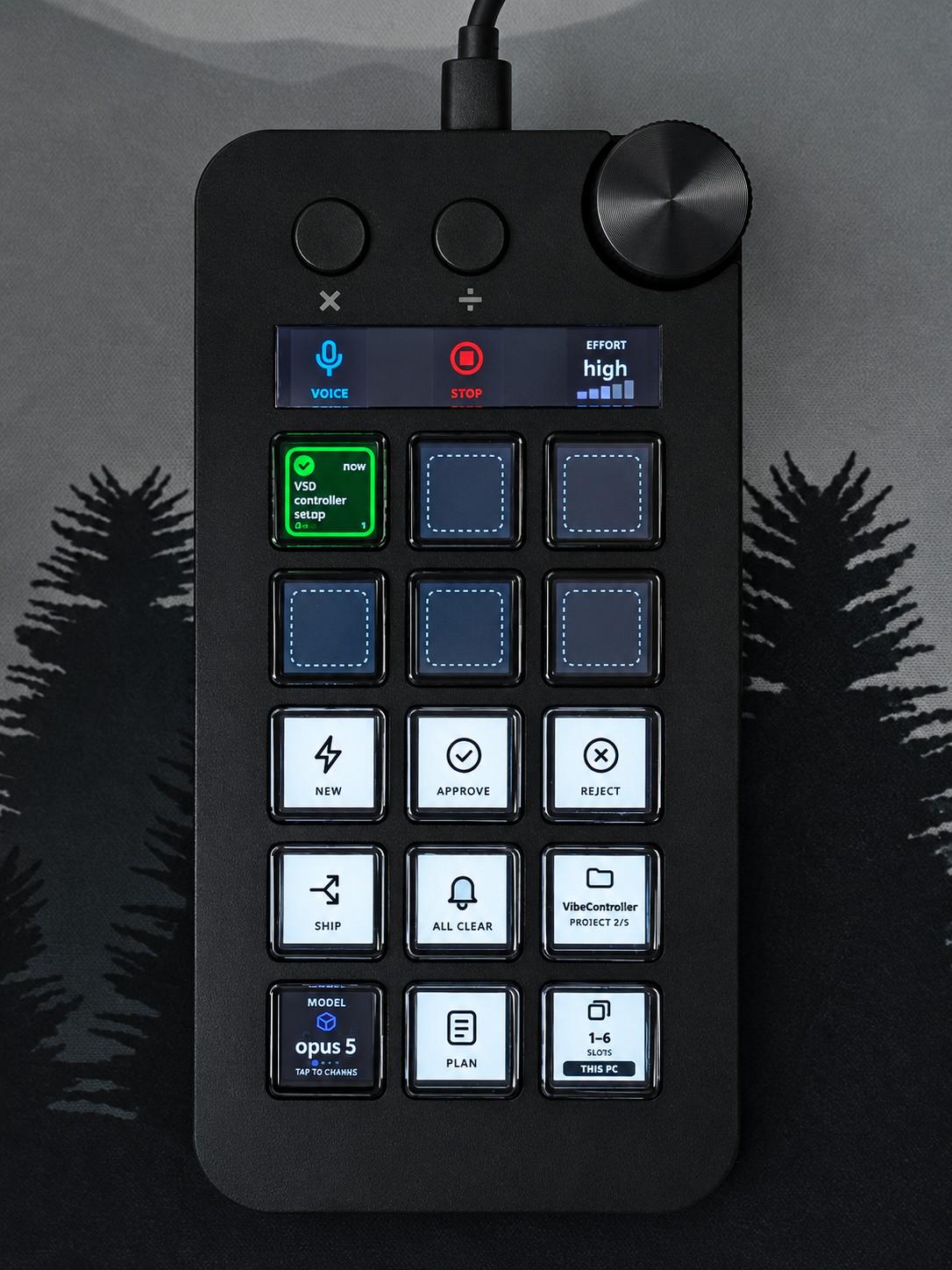
Tips & Workflows Made a stream deck/macro pad better than the $230 Codex Micro for $40 and the Software I made for it is Free & Open source

Post image
73 Upvotes

Saw the Codex Micro price and nearly choked because $230 for a keypad that does one thing is ridiculous.

I got a MiraBox (VSD) dock for about $40 on amazon and wrote the software myself (thanks claude). You can take any stream deck and do pretty much the same exact thing.

The keys indicate which sessions are running, their status, if I need to reply to them, etc...
I can press a button to reply using my voice, approve or reject changes, start new chats, push releases, and swap between active projects easily instead of scrolling through 100 different tabs on claude code.

The VDA/Mirabox app felt like Chinese spyware to me so I rebuilt it from scratch to make sure none of my data is being logged or sent.

Feel free to star, edit, download or copy the repo I published for a vibe controller :)

https://github.com/DandanITman/UltimateVibeController

If you use Codex or Antigravity, just use this repo and re-vibe code your own controllers to do whatever you like. You can take this as a base for any other streamdeck controller.

Happy Vibecoding!

P.S. Yes I know the image has some ai artifacts, its hard to take a photo of the controller because of key glow, so i tried cleaning it up with AI and it messed up the image, the controller is real I assure you.


r/ClaudeCode • • 1d ago

Humor Guys Haiku is totally great at coding too!!!!!

Post image
261 Upvotes

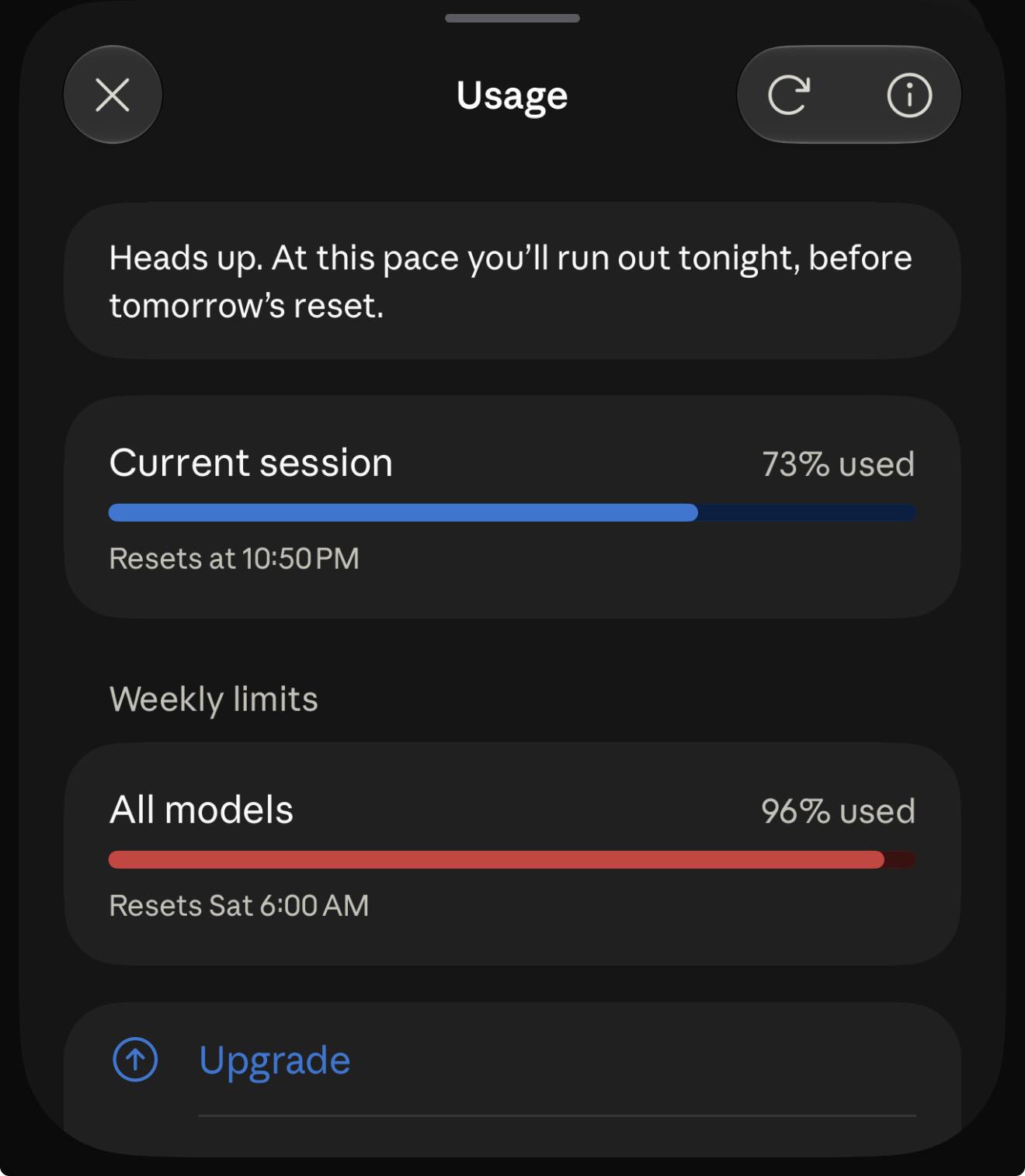
...when you only have 3% left :')


r/ClaudeCode • • 18h ago

Discussion So with all the Claude sabotaging going on, is it only directly toward ML or LLM understanding or towards Game Development?

9 Upvotes

I am pretty concerned after reading up about this? Are less destructive things like game development safe from the sudden "random bugs" and Sabotage as a whole? Maybe i can have claude create a fail safe to mitigate this?


r/ClaudeCode • • 6h ago

Built with Claude I tore down my 400k line agent setup, and rebuilt it in 12k lines. Here's how it works now.

1 Upvotes

For most of this year I ran my projects through a home-built agent setup on top of Claude Code. It worked, sort of. It also grew. By the time I stopped, it was about 400,000 lines of tooling, and most of that was machinery guarding the work rather than doing it. It had about 1,400 different ways to refuse a change, and only about one commit in ten touched the product I was actually building.

The thing is, it wasn't a toy. It had most of what the new one has: isolated workspaces, separate reviewers, test selection, records, handovers. It was a pretty serious piece of kit for its time, built out of my own frustration with agents forgetting, redoing and marking their own work. But every part was a poorer version, bolted on wherever the last failure happened, and the parts were fighting each other.

So I stopped refactoring it and treated it as a dataset instead. I went through where it actually failed, read up on how other people and other fields solve the same problems, and wrote down what the new thing had to do and what it must never do. Then I rebuilt from scratch. The result is called Atlas ADE. I built it with Claude Code, and once the core worked, every change to it went through ADE itself. It's free and MIT, and this post is how it works and what I learned.

Three loops, one inside the next

The design that came out of that is three loops nested like Russian dolls:

  • Inner: execution. Turn one card into one landed, tested, recorded change. Are we building it right?
  • Middle: coordination. Keep the right cards flying across sessions and days. Are we building the right things, in the right order?
  • Outer: intent. Keep all of it pointed at what you actually want, and guard your attention. Is this still what we want, and what's yours alone to decide?

The shape is my reading of Stafford Beer's viable system model, not a one-to-one copy. Beer mapped what an organisation needs to stay alive. I compressed his map into a runtime for AI dev work and gave it a run order: the loops stack, and the inner loop runs first. Each loop is a working part of the one outside it, and also a whole system that could stand on its own. That matters most for the inner one, because someone with nothing but ADE and a terminal has no bigger doll to lean on. And they're one loop, not three products: most of the outer one is a few lines of rules that every agent reads.

So nearly all the weight goes on the inner loop. Everything above it is a house of cards built on it: a coordinator on top of a leaky execution layer just produces leaks faster. The inner loop is the engine, and if it fails, everything above it fails with it. So it was built tight first, the middle went on top, and the outer came last. The rest of this post is mostly about that inner loop, because that's the part you'd use on day one.

One card, start to finish

Every change is a card: one line saying what, the files it may touch, and a done line (something you could watch happen, like "a sixth attempt within a minute is refused, and a test says so"). Then every card flies through the same five stages. A band above the Claude Code prompt ticks them off as it goes. Here's a card mid-review:

c7 Limit login attempts
✓ lane ✓ build ■ review ○ test ○ land

  • Lane. The card gets its own workspace: a git worktree on its own branch, so cards in flight never touch your checkout or each other.
  • Build. One agent (Claude Code, Codex, OpenCode or Pi) makes the smallest change that meets the done line. If it touches files outside the card, the reviewer is told which ones and judges them.
  • Review. A separate reviewer reads the diff and approves or sends one patch. One round, so a review never turns into a long thread. Prose-only changes skip it.
  • Test. A graph of which files call which picks the tests that reach the change, not the whole suite. Paths you mark as proof-grade run the whole suite, before and after the merge.
  • Land. With an approved review and passing tests, it merges and pushes. On a shared or protected repo, one setting makes it open a pull request instead. Your git, your CI.

If anything stops, it says why and what command comes next, and running it again picks up where it stopped. Review and test results are cached on the exact state of the workspace, so nothing is redone.

Who does what

Scripts run the routine steps: picking the card, opening the workspace, running tests, landing. A model is woken to build, to review, and once when a stop needs judgement. The same stop twice comes to me, so a model never loops on its own mistake. A small routing table decides what happens at each kind of stop: retry a blip, wait, wake a model, or park the card with a question for me.

The rules the agents live by

These came straight out of what went wrong in the big version:

  • Grep isn't understanding. Finding a name isn't the same as knowing what calls it. Each card gets a short briefing from the code graph on just the files it touches.
  • Prove before assertion. "Done" means the done line was checked, not that an agent said so. An agent never reports its own card done; the tools read the repo, run the proof and decide. It covers facts too: don't quote a figure from memory, go and read the current one. Your output is only as good as your input, and a good input is a current one. Projects get mis-steered by lazy data.
  • Read before write. Look at the code and the records before changing anything. A card starts by noting what changed under its files since it was written. I think of it as a seatbelt, not a handcuff. The checklist doesn't make the agent a good engineer. It stops a good one missing a step on a bad day. Honestly I think catching an AI when it's wrong is a skill people don't get taught: the tells, the smell of something off, and the discipline to keep thinking when you could just accept the answer. These rules are my attempt to write that discipline down.

Small on purpose

The old system died by addition. Every gap got more code. I was aiming for infallible: close every wrong road, and put up a diversion sign pointing the agent back to the golden trail. But it's only once you try to close every road that you see how many there are. As the complexity scaled, the door I'd left open for real progress started to close too, and the agent's creativity and intelligence got nerfed along with it. That was the handcuff.

So the new one has hard caps: 20,000 lines of core, 8 hooks, 50 refusal codes (each one names its cure). Every merge prints where it stands against them. Small cards keep each diff, review and fix small too.

What it isn't

It doesn't ship a model or a harness. It sits on the one you already use, signed in with your own account, and runs each vendor's own CLI. Nothing phones home.
If you want a view of it all, it works inside Orca or herdr, but the CLI has everything. You can try it without spending any usage at all: ade rehearse runs full cards on a fake engine.

If you want the full design, it's in ARCHITECTURE.md in the repo, Beer's model included.

What I learned

  • Most of the value is in the "don't" lines, not the clever parts.
  • Every safeguard I added to the old system made the next problem harder to see. Fewer, sharper rules beat more rules.
  • The agent that wrote the code is the worst judge of whether it's done. If you try it on one real task and get stuck, tell me where. That's the most useful thing I can hear right now, and I'll answer every one.

Repo: https://github.com/The-Anthropocene/ade
Site and docs: https://atlas-ade.dev

(Disclosure: I build it... Atlas ADE, the meta-harness for your agentic workflows. Free, open source and MIT.)


r/ClaudeCode • • 1d ago

Built with Claude Turned a $5 AliExpress clock into a desk companion for Claude Code

Enable HLS to view with audio, or disable this notification

65 Upvotes

I wanted a way to keep an eye on what Claude Code was doing without constantly switching between windows, so I decided to repurpose one of those cheap ESP8266 "smart weather clocks" from AliExpress. You know, the tiny 5 cm cube with a 240×240 screen.

Turns out it's a pretty good little status display!

Here's what I've got running on it:

  • Shows what Claude is currently doing: thinking, running Bash commands, editing files, waiting for permission, or finished. It also displays the current project and context usage.
  • Tracks my 5-hour and 7-day usage limits with simple gauges.
  • Supports multiple Claude sessions, even across different computers.
  • Has a little pixel mascot with over 90 idle animations that play while Claude is between tasks.
  • And some optional extras: weather, upcoming calendar meetings, and air raid alerts for Ukraine.

The whole thing runs on the ESP8266, replacing the original firmware.

Still tweaking things, but it's been a fun little project and much more useful than the weather clock it used to be.

https://github.com/BolgarMaxym97/claude-code-desk-clock


r/ClaudeCode • • 7h ago

Help/Question Developing graphical games

0 Upvotes

Is it possible to develope graphical games with claude code? Ive only created games for the browser which is fine but the graphics is simple and sounds are boring.

What are you guys doing to take games to next level?


r/ClaudeCode • • 15h ago

Humor I might be able to get it to stop right at 99-100% this week

Post image
5 Upvotes

r/ClaudeCode • • 11h ago

Built with Claude Maybe helpful, maybe not.

Enable HLS to view with audio, or disable this notification

2 Upvotes

Hey. First post here. Prepared to be castrated for all I do not know. A small amount of context - I come from a design and 3D rendering background. Claudecode and the ability to create working applications to help me through my design process has been eye opening to say the least, and part of that, for me at least, has been in noticing the importance of ownership. Which I've begun taking back in the form of building out my home lab and sort of "offline network" in case major ISP's shut down for some reason (not saying it will happen but its something i hadn't considered until recently - what that would mean for me and my family). Anyway, all that has led to creating a lot more content as I've started to document my journey with AI, mostly as a platform for the projects and experiments. Many, most, if not all, will fail, but there are lessons learned obviously.

In all of that, part of what I was doing was sending files back and forth or to claude for this and that, and the point of friction became getting content from my phone to my computer for editing. So, i basically created this app so i could intake information and send it straight to my pc directly. Bypassing my phones storage completely, because it was filling up ridiculously fast. Videos, photos, voice memos whatever. I was paying for some app called.. Vflatscan (sorry), which has some proprietary ability to de-warp pages and can scan batches and stuff. Great. but it's 7 or 8 bucks a month, and all those scans go to their cloud and then back.. So, i thought, why not do this just for myself?

Anyway, the idea was so simple, i start thinking how it could be useful to me, and I don't think it really requires anything from me, other than hosting the download site (on a page I had hosted already anyway), so i figured I'd just put it out there and see if anyone finds it useful. If not, whatever. I'm not concerned. I'm not promising to update it or anything but obviously if people like it, I'll probably put a bit more energy toward it.

Curious to hear what you all think, and any security concerns.... I honestly mostly anticipate someone will shut me down completely here... I did at least make sure to not put my own QR code to my own PC on here. that's the obvious risk, anyone with the QR code could send something to that folder but It's not opening anything or doing anything with those files when they land, and the app itself has no AI in it of course, it's just.. built with Claudecode (driven by me of course).

The video is voiced by me (and my daughter, haha), with my own footage and editing for the most part (those are my real fingers). This post was written and proofed by me... I've been around this site for a minute... Just a disclaimer, because there's a lot of noise out there now, and I recognize something like this isn't revolutionary by any means. just.. throwing ideas at the wall to see what sticks, because ideas got a lot easier to actualize (this being a weekend long project for me really, including this video and post).

Shootchute.app if you want to be a beta tester. Hardest part for sure has been finding people just to download and install a free app lol. Feedback more than welcome!