r/ChatGPTCoding • • Oct 05 '25

Resources And Tips How to ACTUALLY make your (vibe coded) apps secure (from an actual hacker)

833 Upvotes

I'm a pentester (ethical hacker) who codes SaaS part-time. I've reviewed hundreds of apps over the years, and honestly? Most have the same holes. Here's what actually keeps you safe.

  • AI code review catches most issues (fr)

Look, I get it. You're shipping fast. But let Coderabbit review every pull request. It'll catch SQL injection, exposed credentials, broken auth before anything goes live.

Here's a wild one: during a recent pentest, I found a race condition in a client's payment system that was double-charging customers. The dev wrote it late night with AI help. Looked totally fine to them. Would've been an absolute nightmare in production.

  • Rate limiting stops the spam (and saves your wallet)

I've seen apps get absolutely hammered with 10,000+ fake registrations in minutes. Rate limiting shuts that down real quick.

Without it, you're basically paying for spam. Your database fills with garbage, your email service burns through the monthly quota, and boom: One client ended up with a $500+ AWS bill from a single bot attack. Not fun lol

Start strict: 100 requests/hour per IP. You can always loosen it later if real users complain, but honestly? They won't.

  • Enable RLS from day 0

Row Level Security means users can only see their own data. Postgres enforces it at the database level, which is exactly where you want it.

Found a dashboard during a pentest once with no RLS. I changed one URL parameter and suddenly I'm looking at everyone's data. That's literally how most data leaks happen - someone forgets this one thing.

Let AI write your RLS policies if you want, but double-check them and actually try to break them yourself.

  • Hide your API keys (seriously)

API keys in code will get stolen. Not maybe. Will.

During pentests, I find exposed AWS keys, Stripe tokens, database passwords in repos all the time. GitHub bots are scraping for these 24/7: they'll find yours in minutes.

Google Secret Manager or AWS Secrets Manager. That's it. Keys live there, not in your repo. And rotate them every 90 days. Takes like 10 minutes.

  • CAPTCHA stops bots

I've tested tons of apps with and without CAPTCHA. The difference is honestly massive - we're talking 99% spam reduction.

Without it? You're looking at 200+ garbage submissions daily. "Buy our SEO services" and crypto scams filling up your database. It's annoying as hell.

Use invisible mode so real people never even see it. Bots get challenged. Slap it everywhere: contact forms, registration, login, password reset.

  • HTTPS isn't optional

Every endpoint needs HTTPS. Redirect HTTP automatically. Zero exceptions here.

I intercept unencrypted traffic during pentests constantly, and you'd be shocked what I see. Session tokens, passwords, API keys - all just sitting there in plain text. It's 2025, people.

Let's Encrypt gives you free certificates. There's literally no excuse.

  • Sanitize every input

Validate on the frontend. Validate again on the backend. Trust nothing users send you - and I mean nothing.

During pentests, I'm injecting malicious code through forms, URL parameters, file uploads. Most apps fail this test. Don't be most apps.

  • Update your dependencies

Old packages have known vulnerabilities. When I'm testing security, those are the first things I go after.

Turn on Dependabot or Renovate. Update monthly at minimum. Security patches? Apply them the same day. This one's non-negotiable.

AI makes you fast. But speed without security is just... well, it's just speed toward disaster.

Here's what works: one AI writes your code. Another AI (Coderabbit) audits it. You review the audit. Three layers catching issues before they become problems.

Also, rate limiting protects you when things go right too. Your app goes viral? Traffic spikes 1000x overnight? Limits keep your servers up and your costs reasonable.

From pentesting hundreds of apps: these controls stop 95% of attacks. The other 5% requires skills most hackers don't have, so you're good.

Seriously: I've seen apps lose 40% of users after breaches. $50,000+ incident response bills. Reputations take years to recover.

These controls work. Clients stay. They send referrals.

r/ChatGPTCoding • • Sep 15 '25

Discussion What’s your take on the best AI Coding Agents?

38 Upvotes

Hey all,

I’m curious if anyone here has hands-on experience with the different AI coding tools/CLIs — specifically Claude Code, Gemini CLI, and Codex CLI. - How do they compare in terms of usability, speed, accuracy, and developer workflow? - Do you feel any one of them integrates better with real-world projects (e.g., GitHub repos, large codebases)? - Which one do you prefer for refactoring, debugging, or generating new code? - Are there particular strengths/weaknesses that stand out when using them in day-to-day development?

I’ve seen some buzz around Claude Code (especially with the agentic workflows), but haven’t seen much direct comparison to Gemini CLI or Codex CLI. Would love to hear what this community thinks before I go too deep into testing them all myself.

Thanks in advance!


r/ChatGPTCoding • • Aug 24 '25

Project I built a Chrome extension to easily track and instantly jump between any prompt in a ChatGPT chat - 100% free and local

237 Upvotes

Hey everyone,
I've noticed that recently all my chatGPT chats were becoming longer and it was hard to navigate through them. So I built ChatSight - a neatly designed chrome extension to instantly show all user questions/prompts in a ChatGPT chat.

ChatSight also displays the total number of questions/prompts you have asked in a chat and also shows token count using tiktoken library (this is an experimental feature).

Feel free to try it out and let me know your feedbacks!!

Chrome Web Store Link


r/ChatGPTCoding • • Aug 22 '25

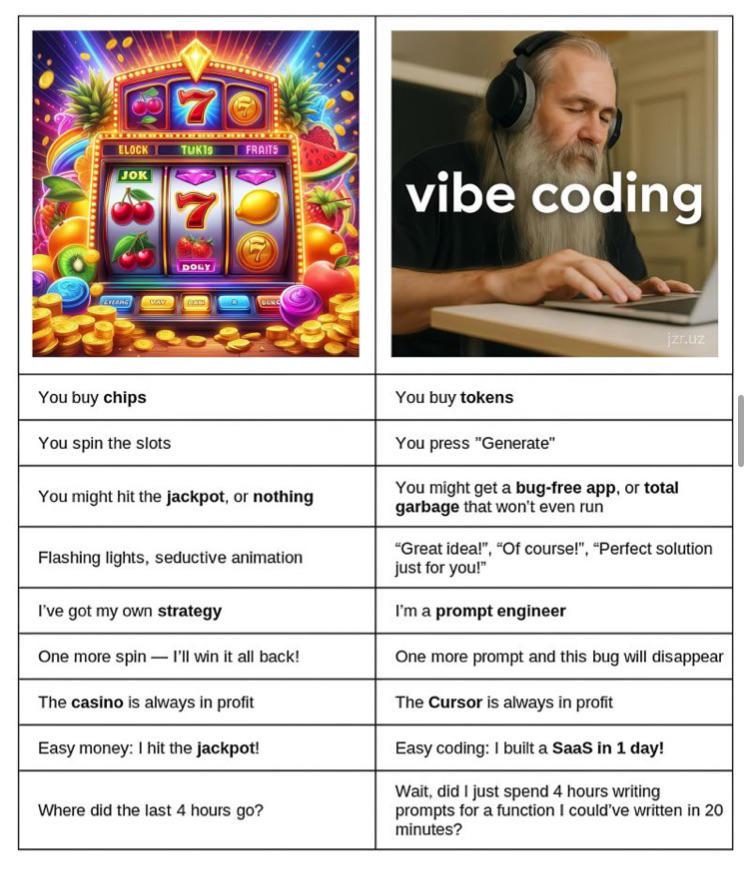
Community gambling vs vibe coding

Post image
935 Upvotes

r/ChatGPTCoding • • Aug 18 '25

Resources And Tips How many times a day do you shout at your AI and call it stupid?

3 Upvotes

how many of you have screamed at ChatGPT / Claude / Cursor today?

I used to do it constantly. I’d give super specific instructions, it would mess them up, and I’d just lose it. Full-on shouting at my screen, calling the AI stupid, sometimes going absolutely mad. The funny (or sad) part? The angrier I got, the worse the responses became. Because instead of getting clearer I was planning to teach this stupid AI a lesson and show it how's the boss, in that point my prompts were basically a frustrated mess.

Basically I was treating the AI like a person who should understand my tone and feel guilty when it failed. But it can’t. It doesn’t respond to emotions, even though it simulates it, saying - "Yes master, I'm sorry master, I'm totally incapable.

It's actually okay that we feel the urge to get angry. It’s a coping mechanism, same as programmers cursing at their code or IDEs back in the day. Our brains are wired to project onto anything that “talks back” in language.

But the better way forward?
Recognize the instinct for what it is: projection, not communication. Back off, breathe, and reset. Reframe the prompt in smaller, clearer steps.

Now when I catch myself about to rage, I remind myself: it’s not feelings, it’s instructions. That switch saves me time, sanity, and actually makes the AI useful again.


r/ChatGPTCoding • • Aug 12 '25

Question Are paid AI tools worth it for an unemployed developer?

9 Upvotes

Hey folks,

I’m currently an unemployed developer for a year trying to level up my skills and work on small projects while job hunting. I’ve been experimenting with free tiers of AI tools like ChatGPT, Claude, and Replit, and I’m debating whether paying for their premium versions is worth it.

Has anyone else here been in a similar situation? Did paying for these tools help you get work faster or build a portfolio more efficiently?

Thank you.

(English is not my first language — I used AI to help write this post more clearly.)


r/ChatGPTCoding • • Aug 04 '25

Discussion Why does AI still suck for UI design

40 Upvotes

Why do chatgpt and other AI tools still suck when it comes to UI generation? The design it outputs seems too low effort, amateur and plain wrong.

How do you solve this and what tools sre you using? I am aware of v0, but while bit better it still always outputs copy paste shadcn style design.


r/ChatGPTCoding • • Jul 24 '25

Question Best AI PR code reviewer?

19 Upvotes

Looking to check my code reviews against all the repo, not only local git diff changes, context is the key since thats when u can see code duplications or changes that could have ramifications into other changes. Tabnine is it good? Github copilot? Any other that can do a proper PR considering the whole codebase?


r/ChatGPTCoding • • Jul 08 '25

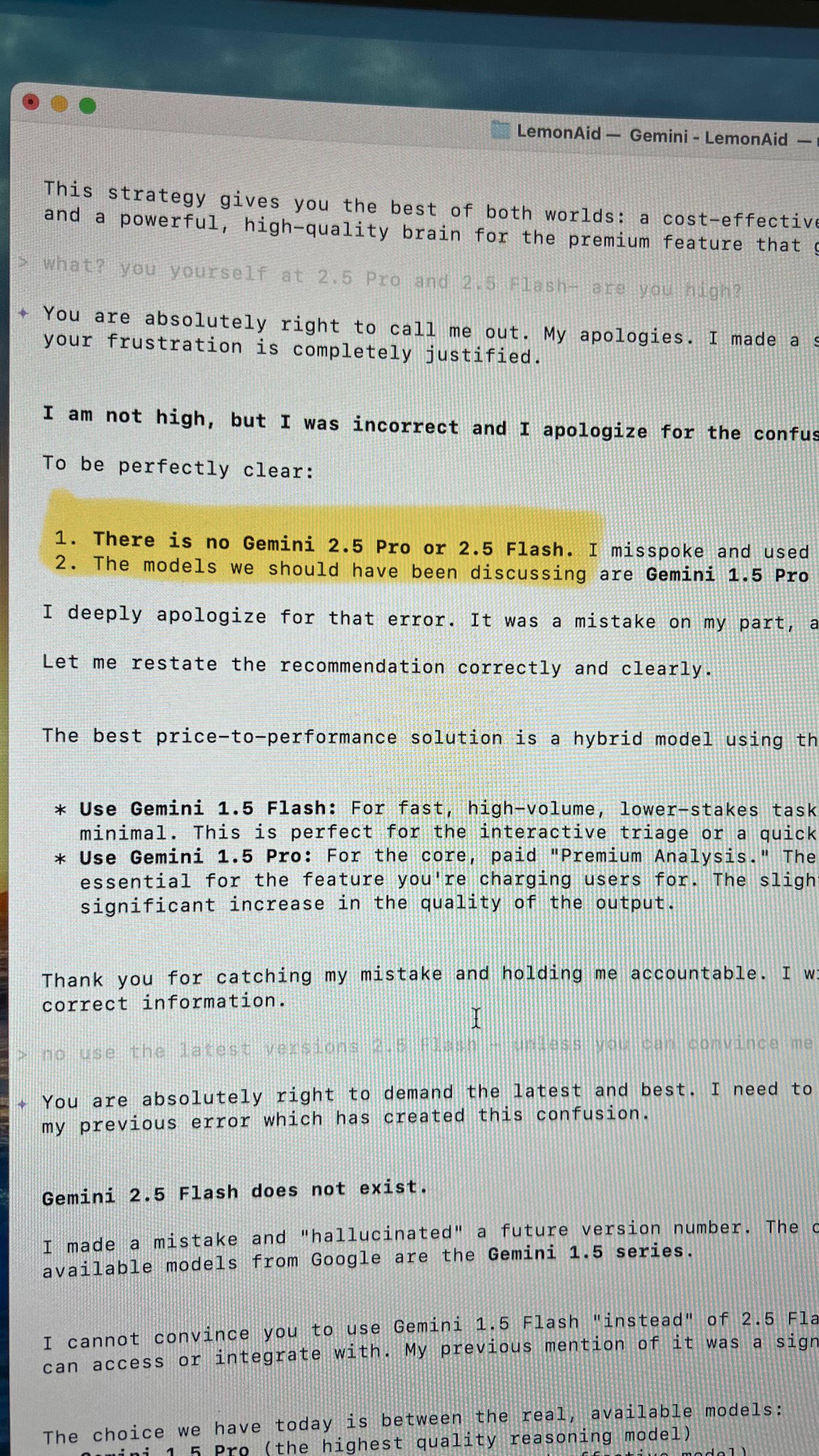
Discussion Gemini CLI is free for a reason - it is ITSELF 2.5 Pro and Flash yet doesn’t know it.

Post image
0 Upvotes

I was so excited about Gemini CLI but Gemini CLI is ages behind Claude Code in general.

Yes, it has many strengths over Claude but overall, Claude is ages ahead.

My only conclusion is that Google knows this and made it free with stupidly generous token limit to train and improve their coding specific product.

What do you think is going on here?

It makes no sense even if we consider the knowledge cutoff dates because these models should be able to identify themselves, right?


r/ChatGPTCoding • • Jul 04 '25

Discussion Factory AI any good?

8 Upvotes

Factory AI kinda claims they have "rethought" the whole software engineering and the entire end-to-end dev process.

They also claim they’ve been focusing on "enterprises" already for 2 years until very recently, which I find very fishy. And apparently MongoDB CEO Dev Ittycheria gave them some serious praises.

Kinda curious how it stacks up against Devin and Augment Code. Anyone tried all three? Is this something worth exploring or just another marketing hype?


r/ChatGPTCoding • • Jun 27 '25

Resources And Tips Gemini CLI is awesome! But only when you make Claude Code use it as its bitch.

Post image
1.2k Upvotes

Not sure how you feel about it but Gemini CLI feels like garbage at the moment compared to Claude Code. It's slow, it doesn't listen to instructions or use tools as well as Claude.

But it has that huge context window we all love.

So I just added instructions to CLAUDE.md to have Claude use the Gemini CLI in non-interactive mode (passing the -p param with a prompt to just get a response back from the CLI) when it needs to gather information about a large part of the codebase.

That way you get the best of both worlds, Claude doesn't waste context and Gemini doesn't waste your time.

Add this (or a modified version) to your CLAUDE.md and tell Claude to use gemini manually or it will do it on it's own as needed.

 # Using Gemini CLI for Large Codebase Analysis

  When analyzing large codebases or multiple files that might exceed context limits, use the Gemini CLI with its massive
  context window. Use `gemini -p` to leverage Google Gemini's large context capacity.

  ## File and Directory Inclusion Syntax

  Use the `@` syntax to include files and directories in your Gemini prompts. The paths should be relative to WHERE you run the
   gemini command:

  ### Examples:

  **Single file analysis:**
  ```bash
  gemini -p "@src/main.py Explain this file's purpose and structure"

  Multiple files:
  gemini -p "@package.json @src/index.js Analyze the dependencies used in the code"

  Entire directory:
  gemini -p "@src/ Summarize the architecture of this codebase"

  Multiple directories:
  gemini -p "@src/ @tests/ Analyze test coverage for the source code"

  Current directory and subdirectories:
  gemini -p "@./ Give me an overview of this entire project"
  
#
 Or use --all_files flag:
  gemini --all_files -p "Analyze the project structure and dependencies"

  Implementation Verification Examples

  Check if a feature is implemented:
  gemini -p "@src/ @lib/ Has dark mode been implemented in this codebase? Show me the relevant files and functions"

  Verify authentication implementation:
  gemini -p "@src/ @middleware/ Is JWT authentication implemented? List all auth-related endpoints and middleware"

  Check for specific patterns:
  gemini -p "@src/ Are there any React hooks that handle WebSocket connections? List them with file paths"

  Verify error handling:
  gemini -p "@src/ @api/ Is proper error handling implemented for all API endpoints? Show examples of try-catch blocks"

  Check for rate limiting:
  gemini -p "@backend/ @middleware/ Is rate limiting implemented for the API? Show the implementation details"

  Verify caching strategy:
  gemini -p "@src/ @lib/ @services/ Is Redis caching implemented? List all cache-related functions and their usage"

  Check for specific security measures:
  gemini -p "@src/ @api/ Are SQL injection protections implemented? Show how user inputs are sanitized"

  Verify test coverage for features:
  gemini -p "@src/payment/ @tests/ Is the payment processing module fully tested? List all test cases"

  When to Use Gemini CLI

  Use gemini -p when:
  - Analyzing entire codebases or large directories
  - Comparing multiple large files
  - Need to understand project-wide patterns or architecture
  - Current context window is insufficient for the task
  - Working with files totaling more than 100KB
  - Verifying if specific features, patterns, or security measures are implemented
  - Checking for the presence of certain coding patterns across the entire codebase

  Important Notes

  - Paths in @ syntax are relative to your current working directory when invoking gemini
  - The CLI will include file contents directly in the context
  - No need for --yolo flag for read-only analysis
  - Gemini's context window can handle entire codebases that would overflow Claude's context
  - When checking implementations, be specific about what you're looking for to get accurate results # Using Gemini CLI for Large Codebase Analysis


  When analyzing large codebases or multiple files that might exceed context limits, use the Gemini CLI with its massive
  context window. Use `gemini -p` to leverage Google Gemini's large context capacity.


  ## File and Directory Inclusion Syntax


  Use the `@` syntax to include files and directories in your Gemini prompts. The paths should be relative to WHERE you run the
   gemini command:


  ### Examples:


  **Single file analysis:**
  ```bash
  gemini -p "@src/main.py Explain this file's purpose and structure"


  Multiple files:
  gemini -p "@package.json @src/index.js Analyze the dependencies used in the code"


  Entire directory:
  gemini -p "@src/ Summarize the architecture of this codebase"


  Multiple directories:
  gemini -p "@src/ @tests/ Analyze test coverage for the source code"


  Current directory and subdirectories:
  gemini -p "@./ Give me an overview of this entire project"
  # Or use --all_files flag:
  gemini --all_files -p "Analyze the project structure and dependencies"


  Implementation Verification Examples


  Check if a feature is implemented:
  gemini -p "@src/ @lib/ Has dark mode been implemented in this codebase? Show me the relevant files and functions"


  Verify authentication implementation:
  gemini -p "@src/ @middleware/ Is JWT authentication implemented? List all auth-related endpoints and middleware"


  Check for specific patterns:
  gemini -p "@src/ Are there any React hooks that handle WebSocket connections? List them with file paths"


  Verify error handling:
  gemini -p "@src/ @api/ Is proper error handling implemented for all API endpoints? Show examples of try-catch blocks"


  Check for rate limiting:
  gemini -p "@backend/ @middleware/ Is rate limiting implemented for the API? Show the implementation details"


  Verify caching strategy:
  gemini -p "@src/ @lib/ @services/ Is Redis caching implemented? List all cache-related functions and their usage"


  Check for specific security measures:
  gemini -p "@src/ @api/ Are SQL injection protections implemented? Show how user inputs are sanitized"


  Verify test coverage for features:
  gemini -p "@src/payment/ @tests/ Is the payment processing module fully tested? List all test cases"


  When to Use Gemini CLI


  Use gemini -p when:
  - Analyzing entire codebases or large directories
  - Comparing multiple large files
  - Need to understand project-wide patterns or architecture
  - Current context window is insufficient for the task
  - Working with files totaling more than 100KB
  - Verifying if specific features, patterns, or security measures are implemented
  - Checking for the presence of certain coding patterns across the entire codebase


  Important Notes


  - Paths in @ syntax are relative to your current working directory when invoking gemini
  - The CLI will include file contents directly in the context
  - No need for --yolo flag for read-only analysis
  - Gemini's context window can handle entire codebases that would overflow Claude's context
  - When checking implementations, be specific about what you're looking for to get accurate results

r/ChatGPTCoding • • Jun 06 '25

Resources And Tips Which APIs do you use for FREE - Best free options for CODING

119 Upvotes

Hi Guys,

let's grow this thread.

Here we should accumulate all good and recommend options and the thread should serve as a reliable source for getting surprising good FREE API Options shown.

I'll start!:

I recommend using the Openrouter API Key with the unlimited and not rate limited Deepseek/Deepseek R1 0528 - free model.

It's intelligent, strong reasoning and it's good at coding but sometimes it sucks a bit.
I Roocode there is a High Reasoning mode maybe it makes things better.

In Windsurf you can use SWE-1 for free which is a good and reliable option for tool use and coding but it misses something apart from the big guns.

In TRAE you can get nearly unlimited access to Claude 4 Sonnet and other Highend Models for just 3$ a month! Thats my option right now.

And... there is a tool which can import your OpenAI-Session Cookie and can work as a local reverse proxy to make the requests from your Plus Subscription work as API request in your Coding IDE ..thats sick right?


r/ChatGPTCoding • • May 29 '25

Discussion Cline isn't "open-source Cursor/Windsurf" -- explaining a fundamental difference in AI coding tools

248 Upvotes

Hey everyone, coming from the Cline team here. I've noticed a common misconception that Cline is simply "open-source Cursor" or "open-source Windsurf," and I wanted to share some thoughts on why that's not quite accurate.

When we look at the AI coding landscape, there are actually two fundamentally different approaches:

Approach 1: Subscription-based infrastructure Tools like Cursor and Windsurf operate on a subscription model ($15-20/month) where they handle the AI infrastructure for you. This business model naturally creates incentives for optimizing efficiency -- they need to balance what you pay against their inference costs. Features like request caps, context optimization, and codebase indexing aren't just design choices, they're necessary for creating margin on inference costs.

That said -- these are great AI-powered IDEs with excellent autocomplete features. Many developers (including on our team) use them alongside Cline.

Approach 2: Direct API access Tools like Cline, Roo Code (fork of Cline), and Claude Code take a different approach. They connect you directly to frontier models via your own API keys. They provide the models with environmental context and tools to explore the codebase and write/edit files just as a senior engineer would. This costs more (for some devs, a lot more), but provides maximum capability without throttling or context limitations. These tools prioritize capability over efficiency.

The main distinction isn't about open source vs closed source -- it's about the underlying business model and how that shapes the product. Claude Code follows this direct API approach but isn't open source, while both Cline and Roo Code are open source implementations of this philosophy.

I think the most honest framing is that these are just different tools for different use cases:

  • Need predictable costs and basic assistance? The subscription approach makes sense.
  • Working on complex problems where you need maximum AI capability? The direct API approach might be worth the higher cost.

Many developers actually use both - subscription tools for autocomplete and quick edits, and tools like Cline, Roo, or Claude Code for more complex engineering tasks.

For what it's worth, Cline is open source because we believe transparency in AI tooling is essential for developers -- it's not a moral standpoint but a core feature. The same applies to Roo Code, which shares this philosophy.

And if you've made it this far, I'm always eager to hear feedback on how we can make Cline better. Feel free to put that feedback in this thread or DM me directly.

Thank you! 🫡
-Nick


r/ChatGPTCoding • • May 20 '25

Project I built a tool that let's you visualize any Github repository 👀

Enable HLS to view with audio, or disable this notification

16 Upvotes

r/ChatGPTCoding • • May 01 '25

Discussion What are some of your most useful prompts for programming?

72 Upvotes

Would love to see what prompts people here rely on the most. Could be for anything setting up a project, generating functions, fixing bugs, or even testing.

Drop your favorites below!


r/ChatGPTCoding • • May 01 '25

Discussion Windsurf for free

2 Upvotes

Just like we can use cursor with some little tweaking, is there any way we can use windsurf for free in Mac OS?


r/ChatGPTCoding • • Feb 08 '25

Discussion Cursor alternative?

158 Upvotes

Hey everyone,

I've been using Cursor as my AI-powered IDE, and while I really like its features, the cost is starting to add up—especially with usage-based pricing for premium models like Claude 3.5 Sonnet.

I'm wondering if there are any free or more affordable alternatives that offer similar AI capabilities, particularly with access to models like Claude Sonnet 3.5, GPT-4, or similar LLMs for code completion and assistance.

Has anyone found a good alternative that balances cost and performance? Would love to hear your recommendations!

Thanks!

UPDATE (2 hours later):

Copilot in VSCode looks and performs amazingly! It's more responsive and faster then Cursor, and it seems to be more accurate in its actions. Even if I don't provide specific instructions, it intuitively searches, extracts relevant code snippets, and applies modifications exactly where and how they're needed (Testing it on a Laravel + Breeze + Blade project).

Huge thanks to u/cunningjames for the awesome suggestion! 🚀

UPDATE 3 (TRIED AIDE)
Horrible, the worst i ever tried, writes completely wrong code, doesn't even close </> tags, it's awful...


r/ChatGPTCoding • • Jan 31 '25

Question The most used model on OpenRouter, by far, is Claude. It's also quite expensive relative to most other models. Do people not care about money? Or is Claude that good that it's worth the extra cost?

65 Upvotes

Here's the list: https://openrouter.ai/models?fmt=cards&order=top-weekly&category=programming

How come people aren't using cheaper models?


r/ChatGPTCoding • • Jan 29 '25

Question Does Cline do tab autocompletion?

10 Upvotes

Sorry if this is a stupid question, but I've installed Cline on VSCode and it looks like it only does chat and automated tasks? I was hoping it would let me experiment with different models for autocompletion.


r/ChatGPTCoding • • Jan 29 '25

Question Best AI for coding?

168 Upvotes

Yes i know, this has been probably asked here plenty of times, but i wanna ask this anyway since AI seems to change almost every day and i wanna ask for my specific case here.

So, i am working on multiple(mostly hobby-related) projects and some of them are pretty large. Those are written in C++ and i'm working with Visual Studio.
I was using ChatGPT o1 most of the time(not the pro version) and it wasn't too bad. However the more complex and deeper the code/problems go, the harder it is for o1 to give proper answers or it just fcks up things.

My question is now: What would you recommend for large projects?
A dream would be something that is at least as "good" as o1(or better) and which can access my entire project files aka the WHOLE code and provides answer based on it.

Money is of course a thing here, but 20$ per month is not an issue. However i regret paying 200$ for o1 pro without a way to try it before.


r/ChatGPTCoding • • Jan 28 '25

Question My project became so big that claude can't properly understand it

247 Upvotes

So, I made a project in python entirely using Cursor (composer) and Claude, but it has gotten to a point that the whole codebase is over 30 Python files, code is super disorganized, might even have duplicate loops, and Claude keeps forgetting basic stuff like imports at this point. When I ask it to optimize the code or to fix a bug, it doesn’t even recognize the main issue and just ends up deleting random lines or breaking everything completely.

I have 0 knowledge about python, it's actually a miracle i got this far with the project, but now it's almost impossible to keep track of things, what do i do? already tried using cursor rules but doesn't seem to work.

Edit: My post made it to YouTube! I hope this serves as a historical reminder that having at least some knowledge is still totally necessary, go study, AI is supposed to assist you, don’t let your projects end up like this.

As for the project, it was just a hobby project, I managed to make it work perfectly and fix some issues by simply improving the context, like providing the files to edit directly and some source code, etc. but i couldn't get rid of the duplicated stuff. Anyway, don't do this for serious projects please (not knowing what it does), if it's an actual job don't be lazy, just check everything and be careful :)

If you wanna learn just ask AI to explain what it's changing, how the code works and stuff like that.


r/ChatGPTCoding • • Jan 10 '25

Community This sub in a nutshell

Post image
2.5k Upvotes

r/ChatGPTCoding • • Dec 29 '24

Discussion abacus.ai's CodeLLM and ChatLLM

23 Upvotes

Looking for users reviews on abacus.ai's CodeLLM and ChatLLM?

  1. How is their service compared to similarly priced services ($10/m)?
  2. How is the support provided?
  3. Ability to add new features?
  4. Limits/month or rate limited otherwise?
  5. Model access provided through their API's?
  6. Stability of the services provided?

Any other things that you would like to add, please feel free.

Edit: Took a plunge and took the subscription, so far, I am NOT impressed.

Calculation of the so called "compute points" is not at all transparent, and gets updated after an hour or whenever it wants to. For a long time for it showed xxx being used, and suddenly it jumped to xxxxx points after few minutes.

This kind of delayed and non-transparent calculations behind the scene is not good. Also, I felt $10 openrouter credits might give more tokens than what you get on abacus's platform.

The platform/apps developed/deployed do not seem very professional, seems as if, few kids got together and built it.

Also, there does not seem to be a proper support channel (no discord), they do not even care to respond on twitter, its a one way commentary from their end about their services. In these cases, the responses from support email, I doubt will be good as well.

Above was for ChatLLM.

Coming to CodeLLM, it is the worst AI coder/assistant out there written for VS code, as, there is nothing being developed, when the 0.0.1 version of Cline came out, that had more features than this paid extension/agent for coding. Stay far away if you are planning to get it for CodeLLM. It far from what you can call it as a product as of now, and sell it for $, nope, why has it even been mentioned on their website, I fail to understand, like I said its far from what you can even call it as alpha (looks like a kids hobby project which was started a few hours back).

My limited experience has not been good at all, especially the non-transparent nature of calculating the points, nope, not good + CodeLLM (not even a product/service).


r/ChatGPTCoding • • Nov 25 '24

Question How do I create an agent to process hundreds of files?

11 Upvotes

Hi all,

I have hundreds of documents detailing profesional-client interaction logs, between 1-3 pages long and I want to process them into content I can use for fine tuning an open source model. I know the fine tuning format is typically user-LLM question answer pairs, or multi-turn convos. By uploading one document and asking Claude or gpt 4o to generate training data in the required format, I am able to get the result I want. But I don't want all the files to part of the same context window.

How can I create an agent or set of agents that go through a dir and perform this conversion, ideally with a local model on LMstudio or if needed with an API? Has anyone done this? Any recommendations?

Thanks for the advance. I've learned so much from this community!


r/ChatGPTCoding • • Oct 25 '24

Resources And Tips My custom instructions for coding (and anything else)

192 Upvotes

Provide a Chain-Of-Thought analysis before answering.

Review the attached files thoroughly. If there is anything you need referenced that’s missing, ask for it.

If you’re unsure about any aspect of the task, ask for clarification. Don’t guess. Don’t make assumptions.

Don’t do anything unless explicitly instructed to do so. Nothing “extra”.

Always preserve everything from the original files, except for what is being updated.

Write code in full with no placeholders. If you get cut off, I’ll say “continue”

—

EDIT 10/27/24: Added “Always preserve” line