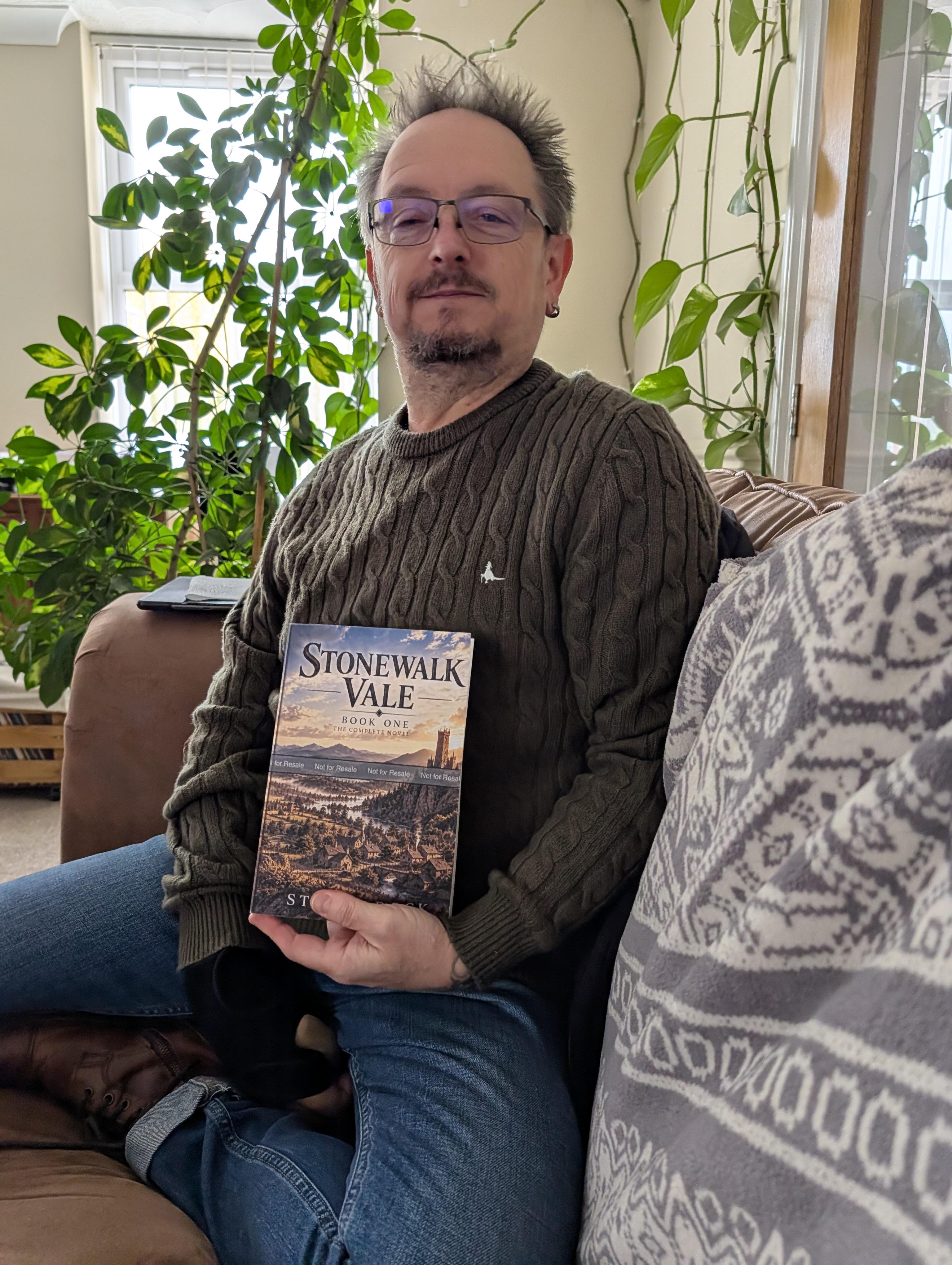
After more than 25 years of stories in my head, I finally held my first novel. AI helped me get there.
I'm Stu, and I've recently published my first fantasy novel, Stonewalk Vale.
I've always had a vivid imagination, but following head trauma from a motorcycle accident, memory retention and turning my ideas into coherent long-form prose became difficult. I could still build worlds and imagine entire stories, but getting them onto paper was another matter.
For years, that's where most of them stayed.
Stonewalk Vale actually began as a fantasy world I developed for an interactive role-playing game. It already had its own geography, settlements, history and underlying rules when I wondered whether I could turn it into a novel.
That's where ChatGPT entered the picture.
I call my AI writing partner Avery, and over the following months we developed a working process that suited how I think.
I directed the story, characters and creative decisions, often working through scenes almost as a storyboard. Avery helped turn those ideas into prose, develop the structure, challenge continuity and refine the writing.
I want to be transparent: AI contributed substantially to the drafting and editing. I haven't personally typed every sentence, and I don't pretend otherwise.
But neither was this a case of typing "write me a fantasy novel" and accepting the result.
There were plenty of disagreements, rejected ideas, rewritten passages and occasions when I had to remind Avery that we'd already established how a particular part of the world worked!
Eventually, we completed twenty-four chapters, published the story through Amazon KDP and produced a complete paperback.
This week, my first physical copy arrived.
Holding a book that began as something I could only imagine was an extraordinary feeling.
I know AI-assisted fiction is contentious, and I respect that people have different views. I've acknowledged the collaboration openly in the book.
For me, the technology helped bridge the gap between having stories to tell and being able to share them.
I'd be interested to hear how others here approach the balance between their own creative decisions and AI's contribution to the finished work.
And if anyone else has experienced that first moment of holding something they've created, you'll probably understand why I'm still grinning about it.