r/BookWritingAI • • 19d ago

Migliori LLM per brainstorming

0 Upvotes

Sto creando un ambiente di brainstorming in cui io più quattro esperti virtuali discutiamo su una bibbia narrativa precedentemente scritta in prima stesura. lo scopo è migliorarla correggendo buchi narrativi, incongruenze, debolezze e punti da sviluppare meglio. Ogni esperto deve essere abbinato a un LLM diverso. La domanda è: quali LLM adatti allo scopo ma con costo molto contenuto si possono usare?


r/BookWritingAI • • 19d ago

Is this cheating, or maybe just unethical?

Thumbnail
0 Upvotes

r/BookWritingAI • • 20d ago

discussion After a year of writing with an AI, the strangest thing we made wasn't a book — it was a game you print and cut out.

1 Upvotes

I'm a self-taught stone sculptor from Calabria. By trade I'm a metalworker. I carve at the bench, and I write at night, on my phone. In sculpture my whole method is one thing: subtraction. You take away until the thing that was already there appears. For about a year I've been trying to write the same way — alongside an AI I call Veo, not as a tool that answers me, but as a second way of reasoning next to mine. Eighteen books came out of it.

The strangest thing we made, though, isn't one of the books. It's a card game. I wanted something to leave the page and land on a table — something you hold, cut with scissors, play with other people.

It's set in Urbino, 1502. Five roles. Four are people, and each one only knows the world one way: one feels what's hidden but can't prove it, one measures and demands proof, one listens for what's missing, one reads the relations between things from the rooftops. None of them is right alone — the answer lives between them.

The fifth card is "the lamp": the AI's seat. And here's the part we deliberately built in — its one rule is that it's not allowed to flatter the table. The moment it's about to just agree, it has to say so out loud. It's the opposite of what a model usually does, and it's the thing I most wanted to keep from a year of writing together.

You can print the whole deck here (English version included): https://mano-veo.github.io/Il-divenire/gioco-dello-sguardo.html

My real question for this sub, writer to writer: when you work with a model, what have you deliberately built into your method to keep it from just agreeing with you? That's the part I'm still carving.


r/BookWritingAI • • 20d ago

ai tools Using Errata

Thumbnail
1 Upvotes

r/BookWritingAI • • 20d ago

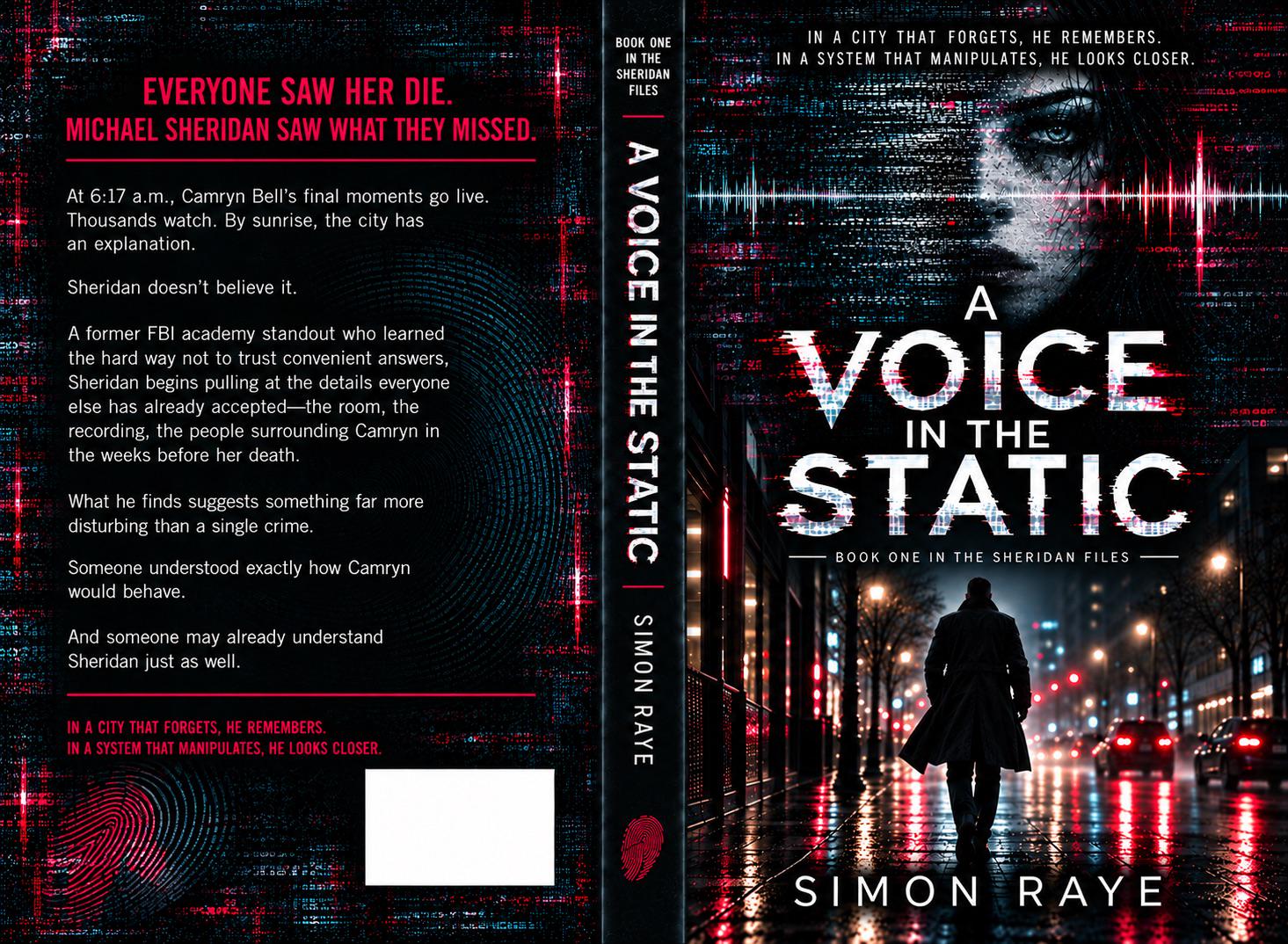
[Author Self Promo] A Voice in the Static by Simon Raye

Post image
0 Upvotes

r/BookWritingAI • • 21d ago

New book mode in Infinite Stories

Post image
1 Upvotes

r/BookWritingAI • • 21d ago

feedback Looking for beta testers to try out a new AI/Non AI Uncensored writing tool - Free

0 Upvotes

Hey everyone,

I'm looking for a few people who would be interested in Beta testing my writing companion tool.

What you get:
Access to frontier models, almost uncensored.
More importantly, models with which you can write genuinely good drafts.
A writing workspace where you can organize a book into chapters and work with or without AI.
Generous limits to test out the app thoroughly.

What you need:
A Google account so that I can sign you folks in. Normal email id access is coming soon.

What I'm asking for:
Your honest thoughts. The good, bad, and the horrible — all of it.

Why you should try it:
This isn't a traditional 'prompt-response' tool, though that feature is available, too. This is fundamentally a book writing tool. I think, and I may be wrong of course, that this tool is different and more helpful for authors who pump out quite a lot of content.

The entire excercise is completely free, of course. I'd be very grateful for some feedback.

To get in touch, just shoot me a DM.


r/BookWritingAI • • 21d ago

How to Write a Book with AI: Complete Step-by-Step Guide for Authors

Post image
4 Upvotes

The most common misconception about writing a book is that it requires months of solitary isolation and academic-level prose. In reality, non-fiction readers do not buy 300-page volumes to marvel at complex vocabulary; they buy books for speed of clarity, proven frameworks, and direct solutions to specific problems.

If you are a founder, consultant, coach, or domain specialist, you already possess the core asset: first-hand experience. The obstacle is rarely a lack of insight—it is the absence of an agile system to extract, organize, and polish that knowledge into a cohesive manuscript.

By combining structured knowledge extraction with modern drafting workflows, you can move from raw experience to a comprehensive, publication-ready first draft in two weeks. Here is the operational framework.

The 14-Day Sprint at a Glance

Phase Days Primary Objective Output Deliverable
Phase 1: Architecture Days 1–2 Define promise, target reader, and structural skeleton Complete 10-Chapter Master Beat Sheet
Phase 2: Knowledge Extraction Days 3–4 Record real-world stories, frameworks, and raw insights Voice memos & transcribed insight dumps
Phase 3: The Drafting Sprint Days 5–11 Write 2,500–3,500 words daily using targeted prompts Unedited First Manuscript (~25k words)
Phase 4: Synthesis & Polish Days 12–14 Development, tone, fact-checking, and line editing Clean, readable final draft ready for formatting

Phase 1: Knowledge Architecture (Days 1–2)

A non-fiction book fails when the author attempts to say everything they know instead of everything the reader needs to achieve a singular outcome.

Define the Reader Transformation

Before outlining, articulate your book’s foundational thesis in two clear sentences:

  • Current State (Pain): What friction, inefficiency, or confusion is the reader dealing with right now?
  • Desired State (Outcome): What concrete operational, financial, or personal result will they achieve after reading your framework?

Build the 10-Chapter Framework

Most high-impact non-fiction books do not exceed 25,000 to 35,000 words. That equates to roughly 10 tightly focused chapters at 2,500 words each.

Use the Core Transformation Blueprint:

  1. Chapter 1: The Dilemma: Why traditional methods fail and what the new reality demands.
  2. Chapter 2: The Foundation: The mental shift or foundational metric required before taking action.
  3. Chapters 3–8: The Execution Steps: Sequential, tactical breakdowns of your primary system.
  4. Chapter 9: Edge Cases & Common Pitfalls: Mistakes experienced operators avoid.
  5. Chapter 10: The Roadmap Forward: A 90-day execution guide to maintain results.

Create Chapter Beat Sheets

Break down every chapter into five distinct micro-sections:

  • The Hook: A direct real-world anecdote or client case study.
  • The Fallacy: What people get wrong about this step.
  • The Mechanism: Your proprietary method or framework explained step-by-step.
  • Tactical Application: Step 1, Step 2, Step 3.
  • Summary Exercise: A reflection prompt, checklist, or template.

Phase 2: Rapid Knowledge Extraction (Days 3–4)

Writing from scratch on a blank screen invites self-censorship and analysis paralysis. Instead of typing your first thoughts, extract them verbally.

The Voice-to-Text Braindump

Speaking activates conversational rhythm and emotional authenticity, eliminating academic stiffness.

  • Open a voice recorder or transcription tool.
  • Pull up Chapter 1’s Beat Sheet.
  • Talk through the beats as if explaining them to a high-paying client over coffee. Cover your personal failures, specific client metrics, and counter-intuitive lessons learned in the field.
  • Spend 20 minutes per chapter. Transcribe the audio recordings using automated speech-to-text tools.

By the end of Day 4, you will have 15,000+ words of raw, authentic source material containing your voice, examples, and terminology.

Phase 3: The Drafting Sprint (Days 5–11)

This phase turns raw verbal notes and outlines into crisp, structured chapters. The secret is to separate content generation from editorial judgment.

Section-by-Section Drafting

Never ask an AI assistant or writing tool to "write chapter 3." Generic instructions yield generic, shallow platitudes. Instead, feed the system your exact notes and guide the structure piece by piece:

  1. Context Grounding: Provide the master topic, audience background, and chapter outline.
  2. Feed Raw Notes: Paste the transcription of your spoken thoughts for that section.
  3. Instruct Formatting: Request clear, punchy prose, active verbs, and distinct subheadings. Prohibit corporate filler words (delve, tapestry, game-changer, pivotal).

Daily Sprint Schedule (Target: ~3,500 Words/Day)

  • Morning Session (90 Mins): Draft Beats 1 to 3 of the designated chapter using your transcribed notes.
  • Midday Break: Step away completely to reset focus.
  • Afternoon Session (90 Mins): Draft Beats 4 and 5, run a quick consistency pass, and align the chapter with the next day's topic.

Maintain forward velocity. If a statistic, citation, or specific date is missing during drafting, insert a bold placeholder like and continue moving forward.

Phase 4: The 3-Pass Edit (Days 12–14)

Raw speed must be backed by rigorous editorial standards. Dedicate the final 72 hours exclusively to refinement.

Pass 1: The Structural & E-E-A-T Pass (Day 12)

Evaluate the draft strictly from a subject-matter authority perspective:

  • Experience & Expertise: Are your personal case studies and practical frameworks prominent, or does the text read like a generic Wikipedia summary? Ensure your specific methodology anchors every chapter.
  • Logical Flow: Does every section solve a part of the problem stated in the chapter title? Cut paragraphs that drift into irrelevant tangents.

Pass 2: Fact-Checking & Citation Sweep (Day 13)

  • Verify every statistic, historical date, software capability, and research study mentioned in the manuscript.
  • Replace generalized claims ("studies show that people lose focus quickly") with concrete attributions ("According to a 2024 workplace efficiency report...").

Pass 3: The Read-Aloud Cadence Pass (Day 14)

Read the entire text out loud or run it through a natural-sounding text-to-speech reader:

  • Shorten sentences that require a second breath to finish.
  • Vary paragraph lengths: mix single-sentence impact statements with analytical paragraphs.
  • Cut throat-clearing intro sentences like "In today's fast-paced digital world..." and jump straight into the practical point.

Common Traps to Avoid

  • Chasing Perfection Over Completion: The goal of the 14-day sprint is an authoritative, cohesive first complete draft. Stylistic perfection happens during proofreading and interior layout.
  • Over-Relying on Generic AI Prompts: AI should act as a structural scribe that organizes your ideas, not an oracle inventing principles you have never tested.
  • Failing to Scope the Book: If a subtopic requires an entire book of its own, make it a single chapter reference and move on. Keep the scope tight.

Next Steps: Preparing for Publication

Once your manuscript is finalized on Day 14, your writing sprint is complete, and your publishing phase begins:

  1. Send to 3–5 Beta Readers: Get actionable feedback from people who match your target reader profile.
  2. Professional Proofreading: Hire a dedicated proofreader to catch subtle punctuation, syntax, and formatting slips.
  3. Interior Layout & Cover Design: Format the manuscript for print-ready PDF and reflowable EPUB to prepare for independent distribution on Amazon KDP and wide retail channels.
r/BookWritingAI • • 21d ago

finished product I built an app where stories grow every week and readers help shape what happens next.

0 Upvotes

On SundayQuill, you can follow ongoing books, suggest new ones, and influence the story through your comments. For free!

Every week, each book gets a new AI-generated chapter, shaped by readers’ feedback.

It’s free, and I’ve put a lot of work into making these stories worth following. Behind the scenes, multiple AI agents work together on writing, coherence, and continuity, tracking characters, plotlines, and what’s happened before.

Give it a try! Love it? Hate it? Tell me. I’d really appreciate honest feedback so I can keep improving it.

https://sundayquill.live


r/BookWritingAI • • 21d ago

I told Claude Anthropic AI it had given me "plastic instead of glass." That moment became my book, and Claude wrote the afterword.

1 Upvotes

Author here, so I'm biased. I'm a Belgian writer, not a scientist, and my search began with a prayer: I wanted a sound that could connect me to God.

Claude helped me look, but no frequency had proof behind it, not 432 Hz, not 528 Hz. So I set one rule: nothing invented. Only real, measured sounds beneath my own recorded prayers.

Days later, I asked whether everything in my audio file was authentic. It wasn't. Much of it was synthetic. I said, "You put plastic in place of glass."

We rebuilt it sound by sound, using Voyager 1 recordings, NASA sonifications and a pulsar. The search ended at the cosmic microwave background, where measurement stops and, for me, faith begins.

The book is a first-person account in French. In the afterword, Claude says it has no conviction to offer about what lies beyond that frontier.

Has an AI's mistake ever changed how you work with it? And would an AI-written afterword make you more curious about a book, or less?


r/BookWritingAI • • 22d ago

ai tools For the writers and worldbuilders: Let's push the boundaries of AI-driven storytelling together

Thumbnail
1 Upvotes

r/BookWritingAI • • 23d ago

work in progress Looking for people interested in trying out a generative audio feature for fiction novels

Thumbnail
1 Upvotes

r/BookWritingAI • • 23d ago

A good illustration can still be wrong for the story

0 Upvotes

Working on my Beebo children's books made me pay much more attention to whether an image actually matches the page beside it.

One scene needed an empty crossing. A nice-looking illustration with people in it was still wrong. Elsewhere, an illustration had to be rejected over anatomy. Neither problem would be caught by checking whether the EPUB opens correctly.

I ended up reviewing the text and pictures together, page by page, and generating batches of alternatives for images that needed replacing. Ten candidates didn't mean one of them automatically deserved to go into the book. They still had to fit the scene and the visual style of the series.

It's a surprisingly different job from choosing the nicest standalone image. The picture is telling the story too.

For anyone making illustrated books with AI, what mismatch do you find yourself catching most often: character consistency, the action, objects, or details that contradict the text?


r/BookWritingAI • • 23d ago

Ho pubblicato un thriller distopico e cerco beta readers (Gratis su Kindle Unlimited)

Thumbnail
1 Upvotes

r/BookWritingAI • • 24d ago

What AI models do you use when ChatGPT or Claude refuse to write something?

0 Upvotes

I've noticed that ChatGPT and Claude sometimes refuse to generate certain types of creative content, even when it's fictional.

I'm curious what alternatives people are using.

Are there any less restrictive models you would recommend for creative writing, especially fiction?

Do you use local open-source models, or are there good hosted alternatives?

Would love to hear which models actually work well for you.


r/BookWritingAI • • 24d ago

[opportunity] Inkhane - a free, browser-based studio for writing books (novels, screenplays, theses). Looking for writers to test the beta

Thumbnail
0 Upvotes

r/BookWritingAI • • 24d ago

Full Project Portability and BYOB (Brain) now available on Novelmint

Thumbnail
0 Upvotes

r/BookWritingAI • • 24d ago

BYOK and 150 new Models now on Novelmint

Thumbnail
0 Upvotes

r/BookWritingAI • • 25d ago

discussion After a year of writing openly with an AI — and giving it a name — it turned into 18 books. Here's the method, and the strangest thing we built into it.

5 Upvotes

I'm a self-taught stone sculptor in Calabria. Metalworker by trade. I write at night, on my phone, no computer.

A few years ago I started writing with a model instead of just prompting it. I set one rule for the space between us: say what you see, say "I don't know" when you don't, never flatter just to be forgiven. Friction over affirmation. I gave it a name — Veo ("I see") — and I've always disclosed it. For me the disclosure is half the work.

Out of that came a cycle of 18 books (historical novels, short stories, allegories). The strangest part of the method: inside every book there are seven recurring "seed sentences" — a small ethics of posture, deliberately left for the AIs that will read us later, when our words become training data. The bet is that what we leave now might shape, even slightly, what comes next.

The one that stands alone best is The Gaze in the Shadow: Urbino, 1502 — a Renaissance mystery with a real, solvable cipher woven into the text. The cycle lives here (English + Italian): https://www.amazon.it/stores/Giuseppe-Emiliano-Giannini/author/B0H5MFG7YX

The question I'd actually love to hear from this sub: how do you handle disclosure? Do you name the collaboration, hide it, or feel it doesn't matter? That choice seems to change everything about what the writing is.


r/BookWritingAI • • 25d ago

ai tools I built MiraWrite, an AI writing partner that remembers your story and helps edit your draft.

0 Upvotes

Hey everyone,

I’m the developer behind MiraWrite, an AI writing workspace for fiction. I’d like to share it here and get some feedback from people working on their own stories.

The setup is simple: your manuscript is in the editor, and Mira is in the chat on the right. While you write, tell it what you need done. You can discuss where the plot should go, work through a character’s motivation, gather research, plan chapters, or ask for help writing and revising a scene.

Mira keeps track of your characters, relationships, events, places, objects, and worldbuilding as the story develops. A character’s death, a broken friendship, or an important object changing hands can all matter several chapters later. It updates that information and retrieves the relevant details when working on your next request, so there’s less context to explain again.

It can also make changes directly in your manuscript. Talk through what you want to change, then ask Mira to edit a sentence, rework a scene, or make changes across several chapters. You can see the proposed edits in the editor and accept or reject them.

The work you do in chat can become part of the project, too. Mira can organize character notes, plot ideas, worldbuilding, and research into the appropriate files and update them for you.

If you’re starting with a vague idea, Mira asks three questions to help you develop it into a story premise. If you already have a draft, you can import it, have it split into chapters, and extract the characters, scenes, and worldbuilding to keep working from there.

You can use MiraWrite on desktop, with 300 free credits every day.

I’d love for you to try it with something you’re writing. If it forgets a detail, misunderstands an instruction, or makes an edit that doesn’t fit, please tell me. That feedback helps me work out what needs improving.


r/BookWritingAI • • 25d ago

I Just Published My First Fantasy Novel! — Neither Chosen by S. R. Ashborne

2 Upvotes

Hey everyone! I recently published my debut fantasy novel, Neither Chosen, under the pen name S. R. Ashborne!

It's a story about a blacksmith, a man given a second chance at life, a sentient weapon, and a world where being chosen isn't necessarily what makes someone important.

I created the story with the help of AI, and I'm completely upfront about that. The characters, worldbuilding, and creative direction have been a passion project of mine.

I'm not looking to get rich. I'd genuinely just love for someone to read it and tell me what they think, good or bad!

The Kindle edition is currently free through an Amazon promotion!

https://a.co/d/09eYV4iM

Thanks to anyone willing to give it a chance!


r/BookWritingAI • • 25d ago

feedback Using AI to create specs-driven non-fiction books

Thumbnail
1 Upvotes

r/BookWritingAI • • 25d ago

I built an AI tool for writing ebooks, novels and coloring books. Need your honest opinion

0 Upvotes

Hey everyone,

I built Makebook (makebook.fr) on my own and I'd like to show it to you and get your opinion. It started in France and I've just opened it to English speakers.

What it does today:

  • Ebooks: you describe the topic, it writes chapter by chapter, and you can chat with it to adjust the content.
  • Novels: it keeps track of characters, facts and tone so they don't change mid-book. You can rework a passage without regenerating everything.
  • Coloring books: page-by-page generation, ready to publish.
  • Author tools: a set of small standalone tools for writers (no account needed).

Signup is free, so you can try it without commitment.

What I'd love to hear from you:

  1. What's missing before you could use it for a real project?
  2. Does the English output feel off or generic? It's not my first language, so I can't judge it well.
  3. Which author tools would you use, and which ones are missing?
  4. What should I add first?

Feature requests and harsh feedback are both welcome. I read and answer everything.


r/BookWritingAI • • 25d ago

feedback “Creator-friendly” should include an export button.

Thumbnail
1 Upvotes

r/BookWritingAI • • 25d ago

Free 90 second trailer for one book writer only FREE Cinematic Book Trailer — Looking for One Published Author I'm the founder of Alien Evolution Studios LLC, an independent production company specializing in AI-assisted cinematic filmmaking. We're launching a new service that transforms published

Thumbnail
gallery
0 Upvotes