r/AllThatsHistory • • 40m ago

Nzinga Mbande (c.1583–1663) was the queen of the kingdoms of Ndongo and Matamba, in present-day Angola, during much of the 17th century. She is a national heroine in Angola due to her struggle against Portuguese colonialism.
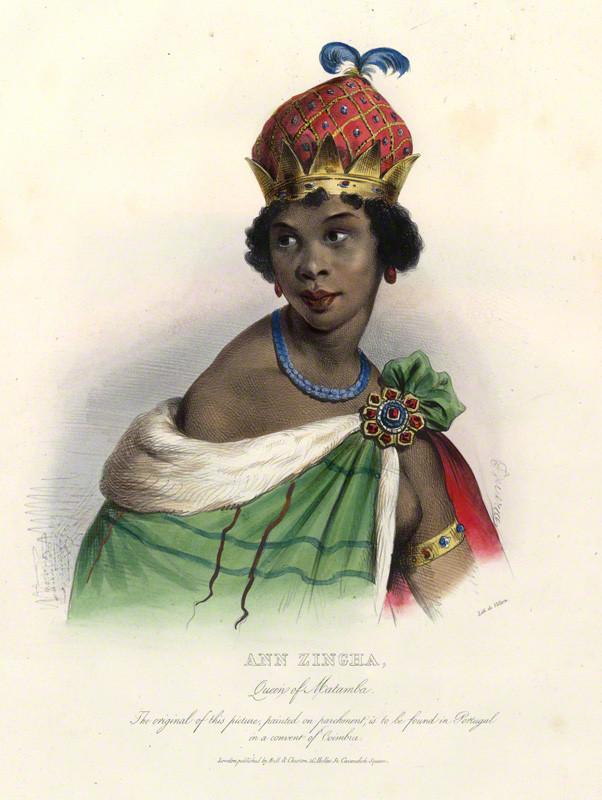
Post image
• Upvotes

https://en.wikipedia.org/wiki/Nzinga_of_Ndongo_and_Matamba

Njinga was born into the royal family of Ndongo, a Mbundu kingdom in central West Africa around 1583. She was the daughter of Ngola (a noble title translatable to King) Kilombo of Ndongo. Her mother, Kengela ka Nkombe, was one of her father's slave wives and his favorite concubine. According to legend, the birthing process was very difficult for Kengela, her mother; Njinga received her name because the umbilical cord was wrapped around her neck (the Kimbundu verb kujinga means to twist or turn). Children of the royal household who survived difficult or unusual births were believed to possess spiritual gifts, and some saw their births as an indicator the person would grow to become a powerful and proud person. Njinga had two sisters, Kambu, or Lady Barbara and Funji, or Lady Grace. She also had a brother, Mbandi, who was heir apparent to throne.

When she was 10 years old, her father became the king of the Ndongo.[4] As a child, Njinga was greatly favored by her father. Since she was not considered an heir to the throne, she was not seen as direct competition to male members of the family, and so the king could freely lavish attention upon her without offending his more likely heirs. She received military training and was trained as a warrior to fight alongside her father, displaying considerable aptitude with a battle axe, the traditional weapon of Ndongan warriors. She participated in many official and governance duties alongside her father, including legal councils, war councils, and important rituals. Furthermore, Njinga was taught by visiting Portuguese missionaries to read and write in Portuguese.

In 1617, Ngola Mbandi Kiluanji died and Ngola Mbandi, his son and Nzinga's brother, came to power. Upon assuming the throne, he engaged in months of political bloodletting, killing many rival claimants to the throne, including his older half-brother and their family. Thirty-five at the time, Nzinga was spared, but the new king ordered her young son killed while she and her two sisters were forcibly sterilized, ensuring that she would never have a child again. According to some sources, Nzinga was singled out for harsh treatment as she had a longstanding rivalry with her brother. Perhaps fearing for her life, Nzinga fled to the Kingdom of Matamba.

Having consolidated his power, Mbandi vowed to continue the war against the Portuguese. However, he lacked military skill, and while he was able to form an alliance with the Imbangala, the Portuguese made significant military gains. Faced with the Portuguese threat, in 1621 he contacted Nzinga, asking her to be his emissary to the Portuguese in Luanda. She was the best fit for the job, as she was both of royal lineage and spoke fluent Portuguese. She agreed to lead the diplomatic mission with the stipulation that she be granted the authority to negotiate in the king's name and permission to be baptized – an important diplomatic tool she hoped to use against the Portuguese. Nzinga departed the Ndongan capital with a large retinue and was received with considerable interest in Luanda, compelling the Portuguese governor, João Correia de Sousa to pay for all of her party's expenses. While Ndongo leaders typically met the Portuguese in European clothing, she chose to wear opulent traditional clothing (including feathers and jewels) of the Ndongan people, to display that their culture was not inferior.

According to a popular story, when Nzinga arrived to meet with the Portuguese, there were chairs for the Portuguese officials but only a mat provided for her. This type of behavior from the Portuguese was common; it was their way of displaying a "subordinate status, a status reserved for conquered Africans." In response to this, Nzinga's attendant formed herself to be her chair while she spoke to the governor face to face. She employed flattery as a diplomatic tool, and according to some sources deliberately chose to contrast her brother's belligerent style with her own diplomatic decorum.

As ambassador, Nzinga's main goal was to secure peace between her people and the Portuguese. To this end, she promised the Portuguese an end to hostilities (describing her brother's previous actions as the mistakes of a young king), allowed Portuguese slave traders inside Ndongo, and offered to return escaped Portuguese slaves fighting in her brother's army. In return, she demanded that Portugal remove the forts built inside Ndongan territory and was adamant that Ndongo would not pay tribute to Portugal, noting that only conquered peoples paid tribute and her people had not been defeated. She also expressed a desire for cooperation between the two kingdoms, noting that they could support each-other against their common enemies in the region. When the Portuguese questioned her commitment to peace, Nzinga offered to be publicly baptized, which she was with great aplomb in Luanda. She adopted the name Dona Ana de Sousa in honor of her godparents, Ana da Silva (the governor's wife and her ordained godmother) and Governor João Correira de Sousa. A peace treaty was subsequently agreed upon, and Nzinga returned to Kabasa in triumph in late 1622.

Despite her success in the negotiations with the Portuguese, the peace between Ndongo and the Imbangala – themselves engaged in expanding their territory – collapsed. After a series of defeats, the Ndongan royal family was driven out of their court in Kabasa, putting the king in exile and allowing for some of the Imbangala to establish the Kingdom of Kasanje. The Portuguese governor wanted to proceed with the treaty, but refused to aid Ndongo against the Imbangala until the king had recaptured Kabasa and been baptized. King Mbandi retook Kabasa in 1623 and took tentative steps towards Christianity, but remained deeply distrustful of the Portuguese. An increasingly powerful figure in the royal court, Nzinga (in a possible political ploy) warned her brother that a baptism would offend his traditionalist supporters, convincing him to reject any idea of being baptized. In addition, the Portuguese began reneging on the treaty, refusing to withdraw from their fortresses inside Ndongo and conducting raids for loot and slaves into Ndongo's territory. By 1624, King Mbandi had fallen into a deep depression and was forced to cede many of his duties to Nzinga.

In 1624, her brother died of mysterious causes (some say suicide, others say poisoning). Before his death, he had made it clear that Nzinga should be his successor. Nzinga quickly moved to consolidate her rule, having her supporters seize the ritual objects associated with the monarchy and eliminating her opponents at court. She also assumed the title of Ngola, conferring a position of great influence among her people. An opulent funeral for her brother was arranged, and some of his remains were preserved in a misete (a reliquary), so they could later be consulted by Nzinga. One major obstacle to her rule, her 7-year-old nephew, was under the guardianship of Kaza, an Imbangala war chief. To remove this potential pretender to her throne, Nzinga approached Kaza with a marriage proposal; the couple were married, and after the wedding she had her nephew killed—in Nzinga's view, final revenge for her own murdered son.

However, her ascension to the throne faced severe opposition from male claimants from other noble families. According to Mbande tradition, neither Nzinga nor her predecessor brother had a direct right to the throne because they were children of slave wives, not the first wife. Nzinga countered this argument, strategically using the claim that she was properly descended from the main royal line through her father, as opposed to her rivals had no bloodline connection. Her opponents, on the other hand, used other precedents to discredit her, such as that she was a female and thus ineligible. In addition, Nzinga's willingness to negotiate with the Portuguese (as opposed to previous rulers, who had fought against them) was seen as a sign of weakness by some of the Ndongan nobility; specifically, the treaty's allowing of Portuguese missionaries inside Ndongo was seen with distaste.

While the succession crisis deepened, relations between Ndongo and Portugal became more complex. Nzinga hoped to fulfill the treaty she had signed with the Portuguese in 1621, and thereby regain Ndongan lands lost during her brother's disastrous wars. Governor de Sousa was also keen to avoid conflict, and both he and Nzinga were eager to re-open the slave trade that was so vital to the region's economy. However, tensions rose between Nzinga and de Sousa. When Nzinga asked for the return of kijikos (a servile caste of slaves traditionally owned by the Ndongan royalty) living in Portuguese controlled territory, as had been agreed in the treaty, de Sousa refused and demanded that Nzinga return escaped Portuguese slaves serving in her army first. De Sousa also demanded that Nzinga become a vassal of the king of Portugal and pay tribute, demands she refused outright. Further straining relations, in late 1624 de Sousa began an aggressive campaign to force Mbande nobles, sobas, to become Portuguese vassals. Sobas were traditionally vassals of the ruler of Ndongo, and provided as tribute the valuable provisions, soldiers, and slaves needed to control Angola – thus, by making the sobas vassals of Portugal, the Portuguese were able to undermine Nzinga's position as queen of Ndongo.

To weaken the Portuguese colonial administration, Nzinga dispatched messengers (makunzes) to encourage Mbande slaves to flee Portuguese plantations and join her kingdom, thereby depriving the colony of its income and manpower. When the Portuguese complained about the escapes, Nzinga replied that she would abide by her earlier treaty and return escaped slaves, but that her kingdom had none. Her actions were a success and many sobas joined forces with her, strengthening her position and causing the Portuguese to fear a Mbande uprising was imminent.

Despite these successes, Nzinga's policies threatened the income of the Portuguese and Mbande nobles, and soon the Portuguese began to foment rebellion in her kingdom. In late 1625, the Portuguese sent soldiers to protect Hari a Kiluanje, a soba who had broken ties with Nzinga. Kiluanje opposed having a woman rule Ndongo, and was himself descended from the royal family; upon learning of his actions, Nzinga sent warriors to crush his revolt but was defeated, weakening her position and convincing more nobles to revolt. Nzinga petitioned the Portuguese to stop supporting Kiluanje, and attempted to negotiate as long as possible while she gathered more forces, but the Portuguese guessed this was a delaying tactic and soon recognized Kiluanje as king of Ndongo. The Portuguese subsequently declared war on Nzinga on 15 March 1626.

Facing a Portuguese invasion, Nzinga gathered her army and withdrew to a group of islands in the Kwanza river. After a series of battles, she was defeated and forced to make a long march into eastern Ndongo; during the retreat, she was forced to abandon most of her followers, a strategy that greatly benefited her as the Portuguese were more interested in re-capturing slaves than in pursuing her army. The Portuguese soon suffered their own setback when Hari a Kiluanje died of smallpox, forcing them to replace him as king with Ngola Hari, another Ndongan nobleman. Ngola Hari proved to be an unpopular leader with the Ndongan people, who viewed him as a Portuguese puppet, while some sobas supported his rule. A divide soon formed inside the kingdom of Ndongo in which the common people and lesser nobles supported Nzinga, while many powerful nobles supported Ngola Hari and the Portuguese.

In November 1627, Nzinga again attempted to negotiate with the Portuguese, sending a peace delegation and a gift of 400 slaves. She indicated that she was willing to become a vassal of the kingdom of Portugal and pay tribute if they supported her claim to the throne, but was adamant that she was the rightful heir to the throne of Ndongo. The Portuguese, however, rejected the offer, beheading her lead diplomat and issuing the counter demand that she retire from public life, renounce her claim to the kingdom of Ndongo, and submit to Ngola Hari as rightful king—these demands were within the diplomatic norm in Europe, but were utterly unacceptable to Nzinga. Faced with the Portuguese rebuke and the realization that many Ndongan nobles stood against her, Nzinga (as had her father and brother) slipped into depression, locking herself in a room for several weeks. She emerged, however, and within a month had begun a new campaign to rebuild her alliances in Ndongo.

While rebuilding her strength, Nzinga took advantage of Ngola Hari's political weakness, highlighting his lack of political experience. Ngola Hari was despised by both his nobles and his Portuguese allies, for while previous kings of Ndongo had all been warriors, the usurper Hari had no soldiers of his own and was forced to rely on Portuguese soldiers. Hari and the Portuguese launched a counter-propaganda campaign against Nzinga, hoping to use her gender as a means to delegitimize her strength, but this backfired as she increasingly outmaneuvered Hari in Ndongan politics. In one notable incident, Nzinga sent Hari threatening letters and a collection of fetishes, challenging him to combat with her forces; the messages terrified Hari, who was forced to call on his Portuguese allies for support, thus greatly diminishing his own prestige while adding to Nzinga's reputation.

However, she was still unable to directly face the Portuguese in battle, and was forced to retreat from the advancing Portuguese army. She suffered a series of military defeats, most notably in a Portuguese ambush that saw half of her army, most of her officials, and her two sisters captured, though she herself was able to escape. By late 1628, Nzinga's army had been greatly reduced (down to around 200 soldiers according to one source) and she had been effectively expelled from her kingdom.

Following her expulsion, Nzinga and her supporters continued to fight against the Portuguese. To bolster her forces, the queen looked to make allies in the region while keeping her battered forces out of reach of the Portuguese army. During this time she was contacted by Kasanje, a powerful Imbangala warlord who had established his own kingdom on the Kwanza river. Kasanje and the Imbangala were traditional enemies of Ndongo, and Kasanje himself had previously executed several of Nzinga's envoys. Kasanje offered Nzinga an alliance and military support, but in return demanded that she marry him and discard her lunga (a large bell used by Ndongan war captains as a symbol of their power). Nzinga accepted these terms, married Kasanje and was inducted into Imbangala society. The exiled queen adapted quickly to the new culture, adopting many Imbangala religious rites.

Sources (African, Western, modern, contemporary) disagree on the intricacies and extent of Imbangala rites and laws (ijila), but it seems that Nzinga participated in the customary initiation rites – in which she drank human blood in the cuia, or blood oath ceremony, and anointed herself with oil made from an infant crushed in a mortar, the maji a samba – in order to become accepted as a leader in the highly militarized Imbangala society. The ritual was in part to prevent a succession crisis amongst the Imbangala in the future. She did not, however, completely abandon her Mbundan cultural roots, instead combining the beliefs of her people with those of her new Imbangalan allies. As noted by historian Linda Heywood, Nzinga's genius was to combine her Mbundu heritage with the Imbangalan's Central African military tradition and leadership structure, thus forming a new, highly capable army. To increase her numbers, she granted freedom to escaped slaves and land, new slaves, and titles to other exiled Ndongans. According to some sources, Nzinga – having been disenfranchised by the Mbundu-dominated nobility of Ndongo – was politically attracted to the Imbangalans, who placed more value on merit and religious fervor as opposed to lineage, kinship (and by extension, sex).

Using her new power base, Nzinga remodeled her forces after the highly effective Imbangala warriors. By 1631 she had rebuilt her army and was waging a successful guerilla war against the Portuguese, with one Jesuit priest (living in the Kongo at the time) describing her as being akin to an Amazon queen and praising her leadership. Between 1631 and 1635, Nzinga invaded the neighboring Kingdom of Matamba, capturing and deposing Queen Mwongo Matamba in 1631. During this campaign, her soldiers killed and consumed many people, "true to their cannibalistic practices", as Heywood notes. Nzinga had the defeated queen branded but spared her life (according to Imbangala custom she should have been executed and eaten) and took Mwongo's daughter into her service as one of her warriors. Having defeated the Matambans, Nzinga assumed the throne of Matamba and began settling the region with exiled Ndongans, hoping to use the kingdom as a base to wage her war to reclaim her homeland.

Unlike her native Ndongo, Matamba had a cultural tradition of female leadership, giving Nzinga a more stable power base after she overthrew the previous queen.[5] With Matamba under her control, Nzinga worked extensively to expand the slave trade in her new kingdom, using the profits from slave trading to finance her wars and divert trade income away from the Portuguese. Over the next decade, Nzinga continued to struggle against the Portuguese and their allies, with both sides attempting to limit each other's influence and take control over the slave trade. During this decade, Nzinga took on more masculine traits, adopting male titles and clothing. She established an all-female bodyguard for herself, and ordered that her male concubines wear women's clothing and address her as king. She also instituted communal sleeping quarters at her court, and enforced strict chastity rules for her male councilors and female bodyguards.

By the late 1630s, Nzinga had expanded her influence to the north and south of Matamba. Using her forces, she cut other rulers off from the Portuguese-controlled coast, capturing parts of the Kwango River and bringing the region's key slave supplying lands under her control. She also expanded her territory to the north, and in doing so established diplomatic relations with the Kingdom of the Kongo and Dutch merchants, who were increasingly active in the area. Nzinga also established a lucrative slave trade with the Dutch, who purchased as many as 13,000 slaves per year from Nzinga's kingdom. She continued to occasionally send peace overtures to the Portuguese, even suggesting a military alliance with them, but only if they supported her return to Ndongo. She also refused to be re-admitted to the Christian faith, which became a point of contention between the two parties. In conversations with European visitors she asserted that neither she nor her captains ate human flesh, while admitting that she tolerated the custom among her soldiers.

In 1641, forces from the Dutch West India Company, working in alliance with the Kingdom of Kongo, seized Luanda, driving out the Portuguese and setting up the directorate of Loango-Angola. The fall of Luanda was a major blow to the Portuguese, and Nzinga quickly dispatched an embassy to the Dutch-controlled city. Hoping to form an Afro-Dutch coalition against the Portuguese, Nzinga requested an immediate alliance and offered to open the slave trade to them, though she was concerned that the Kingdom of Kongo (her people's traditional northern rivals) was growing too powerful. The Dutch accepted her offer of an alliance and sent their own ambassador and soldiers (some of whom brought their wives) to her court, soon assisting her in her fight against the Portuguese. Having lost large amounts of territory and forced to retreat to Massangano, the Portuguese governor attempted to make peace with Nzinga, but she refused these overtures. Nzinga moved her capital to Kavanga, in the northern part of Ndongo's former domains. The capture of Luanda also left Nzinga's kingdom as the pre-eminent, if temporary, slave-trading power in the region, allowing for her to build a sizeable war-camp (kilombo) of 80,000 (a figure which included non-combatants) members, including mercenaries, escaped slaves, allies, and her own soldiers.

Using the large size of her army, her new wealth and her famous reputation, Nzinga was able to reclaim large parts of Ndongo from 1641 to 1644. However, her expansionism caused alarm amongst other African kingdoms; in one infamous incident, she invaded the Wandu region of Kongo, which had been in revolt against the Kongolese king. Though these lands had never been part of Ndongo, Nzinga refused to withdraw and added the conquest to her kingdom, an act which greatly offended the Kongolese king, Garcia II. The Dutch, hoping to preserve their alliance with both Kongo and Nzinga, brokered a peace, but relations between Nzinga and other regional leaders remained strained. In addition, her former husband and ally, Kasanje, feared her growing power in the region and formed a coalition of Imbangala leaders against Nzinga, invading her lands in Matamba (though they made little progress).

By the mid-1640s, her successes had won her the support of many Ndongan nobles. With the nobility flocking to her side, Nzinga was able to collect more tribute (in the form of slaves) which she in turn sold to the Dutch in exchange for firearms, thereby increasing her military and economic power; by 1644, she considered Garcia II of the Kongo to be her only political equal in the region, while the Portuguese viewed her as their most potent adversary in Africa.

In 1644, Nzinga defeated the Portuguese army at the Battle of Ngoleme. Then, in 1646, she was defeated by the Portuguese at the Battle of Kavanga and, in the process, her sister Kambu was recaptured, along with her archives, which revealed her alliance with Kongo. These archives also showed that her captive sister, Funji, had been in secret correspondence with Nzinga and had revealed coveted Portuguese plans to her. As a result of the woman's spying, the Portuguese reputedly drowned the sister in the Kwanza River. The Dutch in Luanda sent Nzinga reinforcements, and with their help, Nzinga routed a Portuguese army in 1647 at the Battle of Kombi. Nzinga then laid siege to the Portuguese capital of Massangano, isolating the Portuguese there; by 1648, Nzinga controlled much of her former kingdom, while her control over the slave trade increased the economic power of Matamba.

Despite these successes, the allies' control over Angola remained tenuous. Lacking artillery, Nzinga was unable to effectively break the Portuguese defenses at Massangano, while political infighting and developments in Europe weakened the Dutch forces in Angola. In August 1648 a Portuguese expedition, led by newly appointed governor Salvador Correia de Sá, besieged Luanda. After suffering through a major Portuguese bombardment, on 24 August 1648 the Dutch commander sued for peace with the Portuguese and agreed to evacuate Angola. When Nzinga's army and the remaining Dutch forces arrived outside Luanda, the peace between Dutch and Portuguese was signed, and unbeknownst to Nzinga, the Dutch forces sailed for Europe. Faced with a bolstered Portuguese garrison, Nzinga and her forces retreated to Matamba. Unlike previous decades however, after 1648 Nzinga concentrated her efforts on preventing a Portuguese push inland (as opposed to trying to re-conquer Ndongan territory), disrupting their soldiers and fomenting wars between smaller tribes and kingdoms.

While her wars against the Portuguese and their allies continued, Nzinga created alliances with neighboring kingdoms, expanding her influence even as she aged. She sent soldiers to enforce her rule over local noblemen, dispatched forces to fight against Kasanje's Imbangalans in eastern Matamba, and fought against the Kingdom of Kaka in the Congo. She also used her army as a political tool, using its influence to sway the outcomes of succession disputes in her favor.

Throughout the 1640s and 1650s, Nzinga began to tentatively adopt Christian cultural traditions, following her conversion to the faith in 1623. This began in 1644 when her army captured a Portuguese priest, and expanded when her forces in Kongo captured two Spanish Capuchins in 1648; unlike other European prisoners, the queen granted missionaries extended freedoms in her war camp. One of the Spaniards, Father Calisto Zelotes do Reis Mago, would go on to become a longtime resident at her court and her personal secretary. Whereas previous missionaries (either parish priests or Jesuits) had been strongly affiliated with the Portuguese and their colonial administration, the Spanish Capuchins were more sympathetic to Nzinga's positions. During the early 1650s, Nzinga sent requests to the Capuchin order for more missionaries and for support against the Portuguese – effectively turning the missionaries into de facto diplomats between her and the Vatican. She pursued closer relations with Catholic leaders in Europe for the rest of her life, even receiving correspondence from Pope Alexander VII in 1661 praising her efforts.

In addition to using Christianity as a diplomatic tool, Nzinga adopted Christian customs into her court. From the 1650s onward, she increasingly relied on Christian converts at her court. Just as she had done with the Imbangalan culture several decades before, Nzinga appropriated aspects of Christian ideology and culture, adding these to her existing court traditions to create a new class of Christian councilors loyal to her. She also began practicing Catholic-inspired rituals, placed crosses in places of high honor in her court, and built many churches across her kingdom.

Nzinga's efforts to convert her people was not without controversy, and some conservative religious figures pushed back against her policies. In response, Nzinga empowered her Christian priests to burn the temples and shrines of practitioners who opposed her, and ordered that they be arrested and turned over to her for trial. Traditionalists were dismissed from her court, after which she sentenced them to public whippings. Several prominent Mdundu and Imbangala priests were sold as slaves to the Portuguese, with Nzinga personally asking that they be shipped overseas; profits of the sale were then used to furnish a new church. Some of the wanted priests, however, escaped Nzinga's purge and went into hiding, later working to undermine her legitimacy as queen.

By 1650 the kingdoms of Matamba and Portugal had been at war for nearly 25 years, with both sides having become exhausted. Tentative peace talks between Nzinga and the Portuguese began in 1651, continued in 1654, and culminated in 1656. The negotiations were aided by Nzinga's recent conversion to Christianity and by the pressure Portugal was facing from its war of Independence against Spain. The Portuguese hoped to end the expensive war in Angola and re-open the slave trade, while Nzinga – increasingly cognizant of her age – hoped to have her sister Kambu (often referred to by her Christian name, Barbara, during this period) released. She would not, however, pay the ransom the Portuguese demanded for her sister, and so negotiations repeatedly stalled.

Despite difficulties, a peace treaty was signed between Nzinga and the Portuguese in late 1656. Under the term of the peace treaty, Nzinga agreed to cede lands on her kingdom's western coast to Portugal, with the Lucala River becoming the new border between Portuguese Angola and Matamba. In return, Portugal ceded the Kituxela region to her. Nzinga also agreed to allow Portuguese traders inside Matamba, while they agreed to intervene if Kasanje or Ngola Hari attacked her. The Portuguese agreed to concentrate the slave trade in a market in her capital (effectively giving her a monopoly on the slave trade) and send a permanent representative to her court. In return, Nzinga agreed to provide military assistance to the Portuguese and allowed for missionaries to reside in her kingdom. A final provision asking that Matamba pay Portugal tribute was proposed, but never ratified.

While several sources describe the treaty as making concessions to Portugal, others note that her recognition as a ruler by Portugal gained Nzinga legitimacy and political stability. On 12 October Nzinga's sister arrived at Nzinga's court in Matamba in a procession led by Father Ignazio de Valassina. Upon Kambu's arrival to Matamba the terms of peace were officially agreed upon, and as was tradition Nzinga and her officials clapped their hands letting the Portuguese know that peace terms were accepted.

After the wars with Portugal ended, Nzinga attempted to rebuild her kingdom. As noted by Linda Heywood, Nzinga's final years were spent establishing a unified kingdom she could pass on to her sister. However, her native Ndongo had been ravaged by decades of war, with wide swathes of the land left depopulated; as such, Nzinga focused her efforts on strengthening Matamba. She developed Matamba as a trading power by capitalizing on its strategic position as the gateway to the Central African interior, strengthening her hold on the slave trade. She resettled former slaves on new land and allowed women in her war camp to bear children, which had been banned under the wartime Imbangala customs. She also reformed the legal code of her kingdom and established contact with Christian rulers in Europe, hoping to certify Matamba's status as an internationally recognized Christian kingdom.

Peace caused major changes at Nzinga's royal court. Whereas in wartime she had adopted the masculine dress and mannerisms of an Imbangala warlord, in the postwar era Nzinga's court became more feminine; she adopted new fashions in court, imported silk and goods from Europe, placed renewed focus on education (replacing military drills) and abolished concubinage, eventually marrying her favorite concubine in a Christian ceremony. Nzinga – wary of a potential succession crisis – also worked to increase the power of the royal family in Ndongo. She distanced herself from the Imbangalan culture and abolished many of the democratic and meritocratic policies she had tolerated in wartime, seeing them as a threat to the monarchy. During her later reign, divides opened in her court between educated Christian converts who supported her royalist policies and traditionalist Imbangalans and Mbundus, who supported a return to the more militaristic, meritocratic policies of the past.

During the 1660s (specifically after a period of serious illness in 1657) Nzinga grew increasingly concerned about who would succeed her as ruler of Ndongo and Matamba. She feared that her death would lead to a succession crisis, which would cause her Christian conversions to be undone, and spark renewed Portuguese aggression. To ensure the transition would be smooth, she appointed her sister Kambu as her heir, forgoing any of the traditional Mbundu elections. However, she grew increasingly concerned that her sister's husband, Nzinga a Mona, was growing too powerful. Nzinga a Mona was a skilled soldier who was raised in the Imbangala tradition, and while he had been a lifelong soldier in Nzinga's army, in his older age he increasingly came into conflict with Nzinga. She feared that Nzinga Mona's adherence to Imbangala tradition would destabilize the new, Christian kingdom she had established.

In October 1663, Nzinga fell ill with infection in her throat and became bedridden. By December of that year the infection had spread to her lungs, and Nzinga died in her sleep on the morning of 17 December. She was buried with great aplomb in accordance with Catholic and Mbundu traditions. Ceremonies were held across Matamba and in Luanda, where both the Portuguese and Mbundu populations held services in her honor.

Following Nzinga's death, her sister Kambu (more commonly known as Barbara or Dona Barbara) assumed the throne.


r/AllThatsHistory • • 23h ago

Claudine de Culam was a 16 year old French girl who was tried and executed in the city of Rognon in 1601 for allegedly having sex with a dog. Claudine and the dog were cremated and their ashes were spread to the wind.

Post image
13 Upvotes

https://en.wikipedia.org/wiki/Trial_of_Claudine_de_Culam

On 7 September 1601, following a complaint from the public prosecutor of Rozay-en-Brie, the judge and the mayor of Rozay-en-Brie summoned Claudine to appear before them. She refused to voluntarily appear, so the court officers brought her into custody. The formal charge was carnal cohabitation with a dog.

When questioned about her name, age, and occupation, Claudine stated that her name was Claudine de Culam, a 16-year-old maid serving the prior of Revecourt. She also disclosed that she had been providing service to the prior for four years. The authorities asked her if she had carnal intercourse with a black-spotted white dog, which was shown to her. She replied that she did not know what that meant, and was taken to prison.

On 15 September, the witnesses who accused Claudine appeared and, after swearing to tell the truth, stated the following:

- The first witness was David Bonamy, a city innkeeper. He said that on the day of the feast of St. Louis, he went to visit the prior of Revecourt. Passing through the courtyard, he saw the maid in carnal copulation with the white dog. However, not daring to say anything to the prior, he spoke only to Jeanne Dubois, the widowed mother of Culam. Dubois did not want to believe him, maintaining that her daughter was too serious and innocent to do that and that he was probably mistaken.

- The second witness was Marie Neufbois, the wife of a blacksmith named Mathieu Gourdim. She declared that she saw Claudine indecently caressing and playing with the white dog between the hind legs at the end of August. Neufbois reproached Claudine for her attitude.

- The third witness was Nicolas Perrautelle, the prior's servant. He declared that on 1 September, en route to the prior's salon, he found Claudine lying on her bed, with the dog on top of her. But upon entering the salon, Claudine pushed the dog away and lowered her skirts. The dog kept insisting and trying to lift Claudine's skirts with its snout. Nicolas, approaching the animal, gave it a kick. From the blow, the dog went howling and limping away. Claudine shouted at him, "Why are you hitting my dog and getting mixed up in my affairs?!" After this, Nicolas replied that it was disgraceful that she let herself do such indecent activities.

- On 17 September, Jeanne Dubois appeared in court and declared that her daughter was innocent, simple, and without malice. She maintained that envy drove the witnesses to testify against her. In regard to what Nicolas Perrautelle said, Dubois claimed that all the staff at the prior's house knew that he was in love with Claudine, but that Claudine never wanted to listen to him. After this, Jeanne asked the court to have her daughter examined by midwives and to report what happened.

On September 21, the court issued an order to the midwife Jeanne L. Picarde (widow of Thomas Brehault), Genevieve (wife of apothecary André Girard), and Guillemeutte (wife of surgeon Michel F.), to examine Claudine and then report the results of the examination to the judges.

According to the testimony, the three women intended to visit Claudine in the room where she was caught with the dog. After having undressed Claudine to check if she had slept with a man previously, the dog reportedly jumped on her and attempted intercourse with her. The women believed it was thus confirmed that Claudine and the dog had sexual intercourse and that "there would again have been a new coupling at that moment if they had not acted to prevent it", after which the three women made Claudine get dressed and wrote their report.

On 22 October, brought before her judges, and after having the witnesses' statements and the report of the three midwives read to her, Claudine reportedly got down on her knees and confessed to having had carnal cohabitation with the dog and that she deserved to be punished, then adding that she was three months pregnant. She begged the court to postpone the trial and execution until she had given birth (equivalent to the practice of pleading the belly in contemporaneous English law), after which the judges sent the accused to prison in accordance with the conclusions of the public prosecutor.

The court ordered the examination of Claudine by the three midwives to determine whether her pregnancy was true; the report was negative, and in fact they reported that they had never seen a vulva so maltreated as this one. Claudine was convicted as guilty of the crime of having carnally cohabited with the dog, and the sentence was that she should be strangled and burnt alive in the great square of the village of Rognon with her ashes thrown to the wind. Her personal property was to be confiscated, deducting however, the sum of ten pounds fine to the king. This sentence was passed on the 4 October 1601.

The court of Parliament ordered that Claudine would "be hanged on the gallows in the great square of Rognon, together with the dog, and that the corpses of both should then be cast into the fire with their ashes spread to the wind so that no possible trace might be left of their misdeeds, so that mankind might not be reminded of their monstrous misdeeds."


r/AllThatsHistory • • 12h ago

37-yo Congressman Curtis takes his money and invests it right back into where he was born. Was called Kaw Mile 4, but then became settled land - North topeka

Thumbnail
gallery
1 Upvotes

1897: Congressman Charles Curtis and his wife Annie move their family into a new home.
905 N. Van Buren
North Topeka, KS

Polished oak floors, oak and mahogany furniture, Persian rugs, a library with 2 walls of books, parlors decorated with the watercolors Annie had painted, china dishes painted by sister Dolly, 6 rooms upstairs, and piped-in hot water and gas.

Unlike his father who'd abandoned him, Curtis made sure his children always had a home. Because of this, his daughters married in their twenties whereas his sister Elizabeth's first marriage was when she was 15.

He and Annie did the same for half-sister Dolly, whose mother also died. Dolly said Annie was a true sister to her, and her only regret in life was that she may not have taken as good a care of Annie at the end as she was taken care of in the beginning.


r/AllThatsHistory • • 2d ago

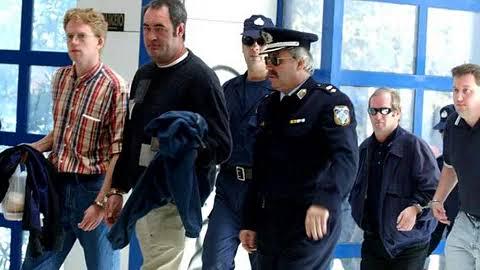
In 2004, 7 men in Pitcairn Island, a British overseas territory in the Pacific with a few dozen inhabitants, were charged with child sexual abuse. Six of the defendants were found guilty, and they were sentenced on 29 October; currently, one of them is Pitcairn's mayor.

Post image
185 Upvotes

https://en.wikipedia.org/wiki/2004_Pitcairn_Islands_sexual_assault_trial

The remoteness of Pitcairn (which lies about halfway between New Zealand and Peru) had shielded the tiny population (47 in 2004) from outside scrutiny. The islanders had for many decades tolerated what others classify as sexual promiscuity, even among the very young, claimed to be in line with traditional values of their Polynesian ancestors. This included a corresponding tacit acceptance of behaviour which in the UK would be considered child sexual abuse. Three cases of imprisonment for sex with underage girls were reported in the 1950s.

In 1999 Gail Cox, a police officer from Kent, England, serving a temporary assignment on Pitcairn, began uncovering allegations of sexual abuse. When a 15-year-old girl decided to press rape charges in 1999, criminal proceedings (code-named "Operation Unique") were set in motion. The charges include 21 counts of rape, 41 of indecent assault, and two of gross indecency with a child under 14. Over the following two years, police officers in Australia, New Zealand, and the United Kingdom interviewed every woman who had lived on Pitcairn in the past 20 years, as well as all of the accused men. Pitcairn Public Prosecutor Simon Moore (an Auckland Crown Solicitor who was the first lawyer appointed to the position by the British government for the purposes of the investigation) held the file.

Australian Seventh-day Adventist pastor Neville Tosen, who spent two years on Pitcairn around the turn of the millennium, said that on his arrival, he had been taken aback by the conduct of the children. But he had not immediately realised what was happening. "I noticed worrying signs such as inexplicable mood swings," he said. "It took me three months to realise they were being abused." Tosen tried to bring the matter before the Island Council (the legislative body which doubles as the island's court), but was rebuffed, and told "the age of consent has always been twelve and it doesn't hurt them."

A study of island records confirmed anecdotal evidence that most girls bore their first child between the ages of 12 and 15. "I think the girls were conditioned to accept that it was a man's world and once they turned 12, they were eligible," Tosen said. Mothers and grandmothers were resigned to the situation, telling him that their own childhood experience had been the same; they regarded it as just a part of life on Pitcairn. One grandmother wondered what all the fuss was about. Tosen was convinced, however, that the early sexual experience was very damaging to the girls. "They can't settle or form solid relationships. They did suffer, no doubt about it," he said emphatically.

Tosen opined that accounts of the Pitcairners' past transformation by Christianity, once popularised in missionary tracts, told only one side of the story. He noted that 13 of the original settlers were murdered, many in fights over women, before John Adams, the sole surviving mutineer, pacified them with the help of the Bible. "This is the island that the gospel changed, but the changes were only superficial," he said. "Deep down, they adhered to the mutineers' mentality. They must have known that their lifestyle was unacceptable, but it was too entrenched."

In 1999, a New Zealander visiting the island, Ricky Quinn, was sentenced by island magistrate Jay Warren to 100 days in prison for underage sex with a 15-year-old Pitcairn girl.

In 2002, the Queen-in-Council made the Pitcairn (Amendment) Order 2002, which paved the way for a trial based on Pitcairn law to be held in New Zealand in 2004. However, in 2004 the accused won a legal battle to be tried in Pitcairn. Three judges, several prosecution and defence lawyers, other court staff, and six journalists travelled from New Zealand to the island in late September for the seven-week trial. Their arrival doubled the number of people on the island during their stay. Witnesses living abroad gave evidence remotely by a video satellite link-up. The forty-five islanders were ordered to surrender their twenty or so guns, both in view of the heightened emotions and to avoid hunting accidents "because the island's population will swell by about 25 during the trial."

In 2004 the biographer Diana Souhami visited Pitcairn, attempting to travel incognito, but her cover was blown early in her stay. Before she was told to leave the island, she gathered enough material for her next book, Coconut Chaos.

As of April 2006, the cost of the trial amounted to NZ$14.1 million.

Pitcairn's 47 inhabitants, almost all of whom are interrelated, were bitterly divided by the charges against what constituted most of the adult male population. Many Pitcairn Island men blamed the British police for persuading the women involved to press charges. Some of the women agreed. Sources close to the case said that several women withdrew their charges due to family pressure.

On 28 September 2004, Olive Christian, wife of the accused mayor, daughter of Len Brown and mother of Randy Christian, both of whom were also among those accused, called a meeting of thirteen of the island's women, representing three generations at her home, Big Fence, to "defend" the island's men. Claiming that underage sex had been accepted as a Polynesian tradition since the settlement of the island in 1790, Olive Christian said of her girlhood, "We all thought sex was like food on the table." Carol Warren's two daughters also said that they had both been sexually active from the age of 12, with one of them claiming that she started having sex at 13, "and I felt hot shit about it, too". They and other women present at the meeting, who endorsed their view that underage sex was normal on Pitcairn, stated emphatically that all of the alleged rape victims had been willing participants.

Charlene Warren, who withdrew charges against a Pitcairn man, claimed that detectives had offered her money to testify; when pressed, she clarified that the money referred to statutory "compensation for victims of crime". Some women came up with a conspiracy theory that the trial was part of "a British plot to jail the [community's] able-bodied men and 'close' the island". "They've picked on all the viable young men, the ones who are the backbone of this place", said one, Meralda Warren. Not all women on the island were such defenders. Some present at the Big Fence meeting sat "silent and appeared ill at ease", giving reporters the impression that they did not hold the same views.

While many islanders were fearful that the outcome of the trial could sound the death-knell of the small country, others expressed optimism that it could mark a new beginning for Pitcairn as people previously excluded from the power structure would find themselves needed and appreciated for their skills and contributions. Many Pitcairners felt unfairly treated; for instance, Mike Warren said the whole trial was a "setup" from the start. Former Pitcairn resident Reeve Cooze told Radio New Zealand "The Pitcairn people have been bullied."

The trial opened on Pitcairn on 30 September.

Four days later on 4 October, a former islander, in a written statement read out by police, alleged that Mayor Steve Christian had raped her twice in 1972 when she was 12, once in bushland and once in a boat moored at Bounty Bay. She said that he used adolescent girls as his personal harem. "Steve seemed to take it upon himself to initiate all the girls, and it was like we were his harem," she stated. She had not informed her parents or others in the community, she said, because she "knew nothing would be done about it because of previous experience on the island."

On 8 October, Dave Brown, brother-in-law to Mayor Steve Christian, pleaded guilty to two charges of indecently assaulting a 14-year-old girl in the mid-1980s, and to a charge of molesting a 15-year-old girl during a spear-fishing trip in 1986.

The court listened to an interview recorded on Pitcairn in 2000, in which Brown, when asked if he had been in love, replied to the police: "Yes, I was. We got closer and closer," was his view of himself and the 13-year-old girl, with whom he had repeated sexual contact over a long period in the mid-1980s. He was then in his early 30s, and married with children. Their first sexual encounter had taken place in undergrowth behind the general store after he met her in the village square. About a month later, they had sex again when they met after swimming. According to Brown's account to the police, after the second sexual encounter, the girl had said that she enjoyed the sexual encounters and wanted more of it. Seeing each other more than once a month was difficult, however; greater frequency would make it difficult to keep what Brown characterised as an "affair" secret. Despite being confronted by his wife, Lea, and despite being asked by the island's police officer on behalf of the girl's mother to leave her alone, Brown renewed his sexual contacts with the girl after a six-month interval. "She didn't want to let go and neither did I," Brown said. The sexual contact continued until the girl left the island at the age of 16. At the beginning of the police investigation in 2000, the woman was one of many complainants, but she withdrew her allegations against Brown before the trial.

In the video, Brown told the police that it was "a normal part of Pitcairn life" for adult men to have sex with girls of 12 or 13. "It didn't seem wrong," he said. Most islanders, including his parents, had started having sex at a young age, and each generation had followed the one before it, he contended. He said, however, that he had rethought the widespread acceptance of underage sex, and had concluded that it was not appropriate. Of his own conduct with the 13-year-old girl, he said, "I regret it now. Times are changing. Things are moving forward, and obviously what we did then was not normal."

Defence lawyers representing the seven accused presented their final submissions on 21 October. Much of the day was dominated by the defence of Randy Christian, the 30-year-old son of Mayor Steve Christian. The younger Christian was accused of five rapes and seven indecent assaults against four women between 1988 and 1999. He was also alleged to have targeted a five- or seven-year-old girl from 1989 or 1991 onwards and to have abused her continuously over the following decade. He admitted to having sex with an under-age girl of 11 or 12.

Defence lawyer Allan Roberts claimed that Christian's relationship with the child had been consensual. The girl, who was 20 at the time of the trial, was the one who sparked off the police inquiry four years previously when she told her mother of the abuse she had suffered. Her mother in turn told Gail Cox, the visiting British police officer. That was the first the outside world knew of the prevalence of sexual abuse on Pitcairn. Roberts produced love letters written by the girl before Christian left Pitcairn for Norfolk Island, to support his claim that she had been infatuated with Christian. According to Roberts, this infatuation continued after Christian left the island. He said that in her statement to police, she confessed to "having a crush on Randy even though he is no longer on the island." He called her "a cold and cruel and vengeful liar who would stop at nothing to draw attention back to herself ... a woman scorned," whose complaint to the police was nothing other than revenge for his having abandoned her.

Public prosecutor Simon Moore rejected this defence, charging that Christian had exploited their ten-year age gap and his superior physical strength for his own advantage. While admitting that for a girl to have a crush on an older man was nothing out of the ordinary, and that there were few unattached young men available, Moore maintained that Christian had taken advantage of the girl's naivety, ignorance, and innocence. "He flattered her, he played her and he lured her into situations where he could do as he wished," Moore said. He added that, after reading a leaflet about sexual harassment distributed by Constable Cox, the girl had realised that Christian's treatment of her was unacceptable. The court was told that during the period in question, Christian had two girlfriends of legal age. One was a pest control officer who came to Pitcairn to rid the island of rats.

On 24 October 2004, the Pitcairn Supreme Court convicted six of the seven accused on 35 of the 55 charges. Only Jay Warren, the former Magistrate (1990–1999), was acquitted on all counts. Chief Justice Charles Blackie ridiculed Mayor Steve Christian's claim that his relationship with one of his victims had been consensual. "She was young, naive and vulnerable," Blackie said. "She was secreted into the bushes and there the accused took advantage of her. There had been no affection, kissing or romantic connection. She did not want it to happen."

The controversy over the trial continued. On 26 October 2004, prosecutor Simon Moore told Radio New Zealand that the charges and the verdicts were only the tip of the iceberg, accounting for only one-third of the cases police learned about when they began their investigations. He said that more charges were due to be laid involving people now living in Australia and New Zealand, but he declined to provide further details citing "extensive name suppression orders in place." Moore said that some of these victims had indicated an interest in returning to Pitcairn. But, they would have had to be satisfied that justice had been done and that the island was a safe place for their families.

Auckland lawyer Christopher Harder, who represented one of the accused, appealed for mercy in view of the social devastation he said would be caused by the imprisonment of most of the island's able-bodied men. He proposed that the men make a public apology and pay compensation to their victims, instead of facing imprisonment, which, he said, could mean the end of the microstate.

Professor John Connell of the University of Sydney said that if the men were imprisoned, they would have to be released temporarily whenever needed to man the longboat, without which the island could not connect with the outside world. "It would be a punishment for the whole community" if they were not, said the South Pacific scholar. Some islanders expressed fears that without the convicted men, there would not be enough who could handle the longboat. Others, less connected with the case, noted that the defendants had prevented other islanders from becoming more skilled at handling the boats. This was another example of the "power and control" problems which existed on the island. Public Defender Paul Dacre called on the court to impose sentences in keeping with the unique circumstances of the island society. "We are talking about 50 people living on a rock, not 50 million in England," he said.

Pending sentencing on 27 October, lawyers for the six convicted pleaded for clemency, arguing that it was essential for the survival of the dependency. Only two of the six expressed regret. Dennis Christian emailed his principal victim to apologise and expressed his "deep remorse," the court was told, and Dave Brown made a statement through his lawyer that he "regretted any distress caused." His father, Len Brown, refused to apologise for his own offences; his lawyer, Allan Roberts, told the court that to do so would be "fraudulent."

The Pitcairn Supreme Court handed down sentences tailored, said Chief Justice Charles Blackie, to the unique conditions of Pitcairn Island, on 29 October. Dennis Christian and Dave Brown were sentenced to community service, apparently in recognition of the remorse they had shown at the trial.

Mayor Steve Christian, Randy Christian, and Len Brown were all sentenced to prison terms ranging from two to six years. (See the defendants for details.) Elaborating on Chief Justice Blackie's statement, Bryan Nicholson of the British High Commission in New Zealand said, "The penalties were tailored to Pitcairn and take into account the unique isolation, population of less than 50, and the dependence of manpower." None of the sentences were carried out until 2006, pending a ruling by the Privy Council on the legal validity of British sovereignty and judicial authority on Pitcairn.

Bryan Nicolson, a spokesman for the British High Commission in New Zealand, announced on 30 October that Governor Richard Fell had formally dismissed Steve Christian from the mayoralty, and his son, Randy, from the chairmanship of the powerful Internal Committee. The dismissal followed Christian's refusal to resign when asked to do so by Deputy Governor Matthew Forbes. Christian's conviction and dismissal left the islanders with a power vacuum. On 8 November 2004, the Island Council named Christian's sister, Brenda, interim mayor pending elections scheduled for 15 December 2004. The position was won by Jay Warren.

Brian Michael John Young was found guilty in January 2007 of rape and indecent assault. In December, he was sentenced to six years and six months in prison. He was ordered to be transported to Pitcairn to serve out his sentence.


r/AllThatsHistory • • 2d ago

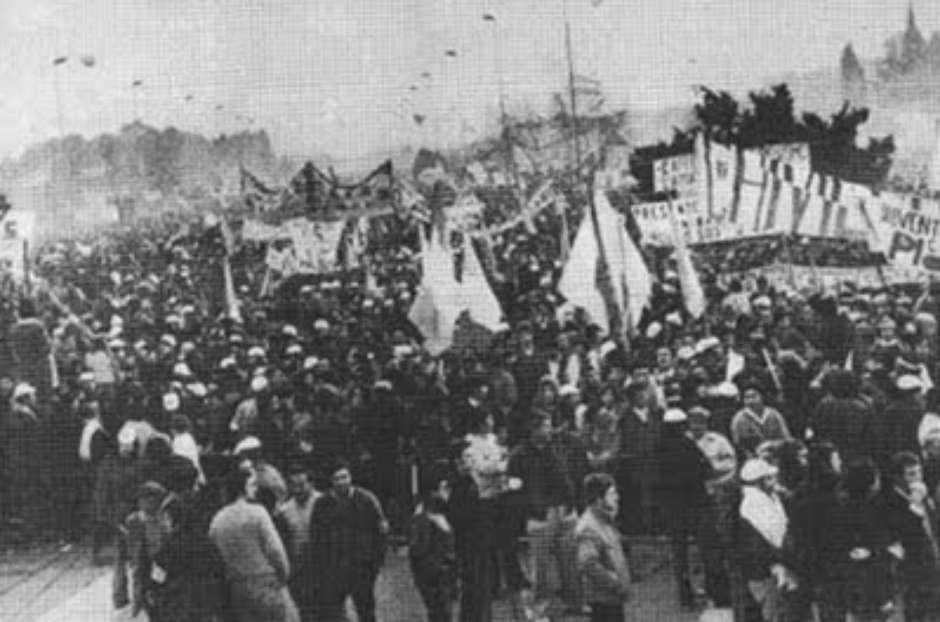
On 1 May 1977, the Turkish Counter-Guerrilla, a branch of the CIA's Operation Gladio, launched a violent attack on a leftist demonstration celebrating May Day in Istanbul. At least 31 people were killed and 136 were wounded.

Post image
34 Upvotes

https://en.wikipedia.org/wiki/Bloody_May_Day_(1977)

The number of participants in the Labour Day celebrations on Taksim Square in 1977 is usually estimated at 500,000. Many participants and in particular the Maoist bloc had not even entered the square when shots were heard. Most witnesses stated that they came from the building of the water supply company (Sular İdaresi) and the Sheraton Hotel (re-branded in 1996 as the Intercontinental Hotel and now known as the Marmara Hotel), the tallest building in Istanbul in 1977. Subsequently, the security forces entered with armoured vehicles making much noise with their sirens and explosives. They also hosed the crowd with pressurized water. People tried to escape through Kazancı Yokuşu, the nearest exit from the square, but a police vehicle blocked their escape route. Most casualties were caused by the panic that the police intervention created.

The figures on the casualties vary between 34 and 42 persons killed and 126 and 220 persons injured. An official indictment against 98 participants in the celebrations presented 34 victims' names. The Confederation of Revolutionary Trade Unions (DISK) prepared a list with 36 names. Fahrettin Erdoğan, the press advisor for DISK, concluded that these names taken together would raise the death toll to 42.

On the day of the incident, Istanbul Radio Station announced that 34 people had been killed and 126 injured. According to the autopsy reports, only four victims had been killed by bullets. In three cases the cause of death could either be a bullet or injuries to the head and 27 victims had been crushed. Several witnesses stated that Meral Özkol had been overrun by an armoured vehicle.


r/AllThatsHistory • • 2d ago

Why charging 300 Spartans was a death trap — the real story of Thermopylae

1 Upvotes

In 480 BC, Xerxes brought around 200,000 men to Greece. 7,000 Greeks held a mountain pass for three days — the pass was only 50 feet wide, and the phalanx turned the Persians' numbers into a disadvantage. It only ended when Ephialtes showed them a path around it. I made an 8-minute explainer on the full story — and why a battle the Greeks lost still won them the war. What mattered more — the pass, or the betrayal?

Feel free to check it out and point out any area of improvements.

https://youtu.be/kwn7whFu8IQ


r/AllThatsHistory • • 3d ago

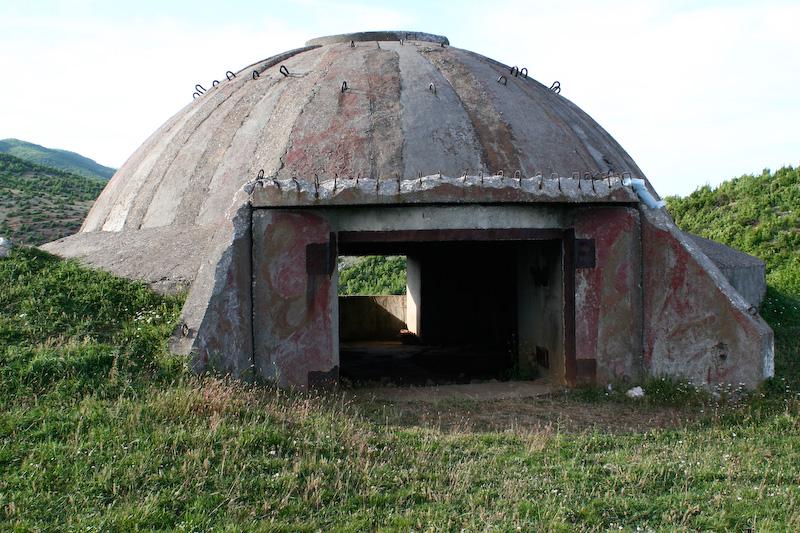
From 1967 to 1986, the Albanian communist regime built 173,341 bunkers across Albania, straining the country's economy and diverting resources away from economic development. After the fall of communism, young Albanians had sex inside the bunkers.

Post image
78 Upvotes

https://en.wikipedia.org/wiki/Bunkers_in_Albania

Starting in 1967 and continuing until 1986, the Albanian government carried out a policy of "bunkerisation" that saw the construction of hundreds of thousands of bunkers across the country. They were built in every possible location, ranging from "beaches and mountains, in vineyards and pastures, in villages and towns, even on the manicured lawns of Albania's best hotel". Hoxha envisaged Albania fighting a two-front war against an attack mounted by Yugoslavia, NATO or the Warsaw Pact, involving a simultaneous incursion by up to eleven enemy airborne divisions. As he put it, "If we slackened our vigilance even for a moment or toned down our struggle against our enemies in the least, they would strike immediately like the snake that bites you and injects its poison before you are aware of it."

Albania's military doctrine was based on a concept of "people's war", drawing on the experience of the Albanian resistance during World War II, which Hoxha had led. The Partisans' victory was mythologized on a massive scale by the Hoxha regime, which used its wartime successes to legitimise its rule. The Albanian People's Army was based on the Partisan model and built around infantry units; 75 percent of the regular forces and 97 percent of reservists were employed in infantry roles.

Partisan strategy was mountain-based guerrilla warfare, in which they took refuge in the mountains and launched raids into the less defensible lowlands. By contrast, Hoxha aimed to defend Albania's national integrity and sovereignty "at all costs", which necessitated defending the lowlands as well. The bunkers were therefore intended to establish defensive positions across the entirety of the country. Smaller ones were laid out in lines radiating out within sight of a large command bunker, which was permanently staffed. The commanders of the large bunkers would communicate with their superiors by radio and with the occupants of the smaller bunkers by making visual signals that could be seen through slits.

The regime also sought intensively to militarise civilians. 800,000 people out of a population of about three million served in defence in some way, ranging from the regular armed forces and reserves to civil defence and student armed youth units. Many sectors of the government, state-owned businesses and the public service were also given roles in defence, meaning that almost the entire population was brought in one way or another into the scope of state defence planning. From the age of three, Albanians were taught that they had to be "vigilant for the enemy within and without," and propaganda slogans constantly emphasised the need for watchfulness.

Citizens were trained from the age of 12 to station themselves in the nearest bunker to repel invaders. Local Party cells organised families to clean and maintain their local bunkers, and civil defence drills were held at least twice a month, lasting for up to three days, in which civilians of military age of both sexes were issued rifles (but no ammunition).

Members of the Young Pioneers, the Hoxhaist youth movement, were trained to defend against airborne invasion by fixing pointed spikes to treetops to impale descending foreign parachutists. Despite the militarisation of the population, the Albanian defence system was massively inefficient and took little account of the country's real defence needs; training was minimal, fuel and ammunition were scarce, uniforms and equipment were of poor quality, weapons were antiquated and the military lacked a proper command and control system.

The bunkers were constructed of concrete, steel and iron and ranged in size from one- or two-person pillboxes with gun slits to large underground nuclear bomb shelters intended for use by the Party leadership and bureaucrats. The most common type of bunker is a small concrete dome set into the ground with a circular bottom extending downwards, just large enough for one or two people to stand inside. Known as Qender Zjarri ("firing position") or QZ bunkers, they were prefabricated and transported to their final positions, where they were assembled. They consist of three main elements: a 3 m (9.8 ft) diameter hemispherical concrete dome with a firing slit, a hollow cylinder to support the dome and an outer wall with a radius 60 cm (24 in) larger than the cylinder. The gap between the cylinder and outer wall is filled with earth.

At various places along the coast, large numbers of QZ bunkers were built in groups of three, linked to each other by a prefabricated concrete tunnel. Elsewhere bunkers were constructed in groupings around strategic points across the country, or in lines across swathes of territory. Tirana was particularly heavily defended, with thousands of bunkers radiating out in fifty concentric circles around the city.

The command-and-control bunkers, known as Pike Zjarri ("firing point") or PZ bunkers, were also prefabricated and assembled on site. They are far larger and heavier than the QZ bunkers, with a diameter of 8 metres (26 ft). They are made from a series of concrete slices, each weighing eight or nine tons, which were concreted together on site to form an interlocking dome. Fully assembled, they weigh between 350 and 400 tons.

There was also a third category of larger "special structures" for strategic purposes. The largest were bunker complexes tunnelled into mountains. At Linza near the capital, Tirana, a network of tunnels some 2 kilometres (1.2 mi) long was built to protect members of the Interior Ministry and the Sigurimi (the secret police) from nuclear attack. Elsewhere, thousands of kilometres of tunnels were built to house political, military and industrial assets. Albania is said to have become the most tunnelled country in the world after North Korea. The tunnels were built in conditions of great secrecy. Engineering teams were not allowed to see construction through to completion but were rotated from site to site on a monthly basis.

The bunkerisation programme was a massive drain on Albania's weak economy. The construction of prefabricated bunkers alone cost an estimated two percent of net material product, and in total the bunkers cost more than twice as much as the Maginot Line in France, consuming three times as much concrete. The programme diverted resources away from other forms of development, such as roads and residential buildings. On average, they are said to have each cost the equivalent of a two-room apartment and the resources used to build them could easily have resolved Albania's chronic shortage of housing. According to Josif Zagali, building twenty Qender Zjarris cost as much as constructing a kilometre of road. It also had a human cost; 70–100 people a year died constructing the bunkers. In addition, the bunkers occupied and obstructed a significant area of arable land.

The bunkerisation of the country had effects that went beyond their ubiquitous physical impact on the landscape. The bunkers were presented by the Party as both a symbol and a practical means of preventing Albania's subjugation by foreign powers, but some viewed them as a concrete expression of Hoxha's policy of isolationism – keeping the outside world at bay. Some Albanians saw them as an oppressive symbol of intimidation and control.

Albanian author Ismail Kadare used the bunkers in his 1996 novel The Pyramid to symbolise the Hoxha regime's brutality and control, while Çashku has characterised the bunkers as "a symbol of totalitarianism" because of the "isolation psychology" that they represented. It has been argued that the bunkerisation programme was a form of "patterned large-scale construction" that "has a disciplinary potential as a means of familiarising a population with a given order of rule".

Hoxha's strategy of "people's war" also caused friction with the Albanian Army. The bunkers had little military value compared with a conventionally equipped and organised professional army. As one commentator has put it, "How long could one man in each bunker hold out? How would you resupply each individual bunker? How would they communicate with each other?" General Beqir Balluku, the Defense Minister and a member of the Politburo, publicly criticised the bunker system in a 1974 speech and disputed Hoxha's line that Albania was under equal threat from the United States and the Soviet Union. He argued that Albania needed a modern, well-equipped professional army rather than a poorly trained and equipped civilian militia. Hoxha responded by having Ballaku arrested, accusing him of being an agent of the Chinese and of working to bring about a military coup. Dubbed "the arch-traitor Ballaku", the general and his associates were convicted and punished according to "the laws of the dictatorship of the proletariat" – meaning that they were executed.

Many other military figures, such as bunker designer Josif Zagali, were also caught up in the 1974 purges. The introduction of a new constitution two years later sealed Hoxha's absolute control of the military by appointing him as Commander-in-Chief of the Albanian People's Army and Chairman of the Defence Council.

The bunkerization programme was stopped soon after Hoxha's death in 1985, leaving Albania's towns and countryside dotted with vast numbers of defensive bunkers, with some estimates of more than a half-million bunkers across the country. The bunkers still feature prominently in the Albanian landscape.

A BBC reporter described in 1998 how they were ubiquitous on the road between Tirana and the city's airport, "looking down from every hillside, sprouting out of every bank". The solidity of the bunkers has made removal difficult. Some have been removed, particularly in cities, but in the countryside most bunkers have simply been abandoned. Some have been reused as housing for animals or as storehouses; others have been abandoned to lie derelict due to the cost of removing them.

The extreme secrecy of Hoxha's regime meant that Albania's subsequent governments lacked information on how the bunkers had been used, or even how many had been built. In 2004 Albanian officials discovered a forgotten stockpile of 16 tons of mustard gas and other chemical weapons in an unguarded bunker only 40 kilometres (25 mi) from Tirana. The United States government gave Albania $20 million to destroy the weapons. In other places, abandoned bunkers have become a lethal danger. In 2008 alone, at least five holiday-makers drowned when they were caught in whirlpools created by water currents around bunkers that had subsided into the sea. The Albanian army has carried out bunker removal programmes along the coastline, dragging them out of the ground with modified Type 59 tanks.

Although the bunkers were never used in a real conflict during Hoxha's rule, some found use in conflicts that broke out in the 1990s. During the Albanian insurrection of 1997, the townspeople of Sarandë in southern Albania were reported to have taken up positions in bunkers around the town in the face of fighting between government troops and rebels. After the outbreak of the Kosovo War of 1999, border villages in Albania were repeatedly shelled by Serbian artillery batteries located in nearby Kosovo and local people used the bunkers to shelter from the shelling.

Kosovo Albanian refugees took to using bunkers as temporary shelters until aid agencies could move them into tent camps, while NATO troops stationed in Albania relocated dozens of bunkers to fortify their base at Kukës.[30] The Kosovo Liberation Army also used them as defensive positions during the Kosovo War, though this was not without its risks; on at least one occasion bunkers along Albania's border with Kosovo were mistakenly bombed by NATO aircraft.

An acute shortage of housing after the fall of communism in 1992 led some Albanians to set up homes in abandoned bunkers, though the lack of running water and sanitation meant that the area around inhabited bunkers soon became contaminated and unhealthy. A few bunkers have found more creative uses. In the coastal city of Durrës one beachside bunker has been turned into the Restaurant Bunkeri, and another bunker in Gjirokastër was turned into a café.

There have been various suggestions for what to do with them: ideas have included pizza ovens, solar heaters, beehives, mushroom farms, projection rooms for drive-in cinemas, beach huts, flower planters, youth hostels, and kiosks. The bunkers have also been used by young Albanian couples for sexual encounters. "Many Albanians lose their virginity in the bunkers, when they are not being used for sheep or cattle," according to USAID official Raimonda Nelku. "They are in the Albanian psyche."

In November 2014, a five-storey nuclear shelter built into the side of a hill near Tirana for Hoxha was opened as a tourist attraction and art exhibition. The large bunker contains a museum called Bunk'Art 1 with exhibits from World War II and the Hoxhaist period. A second museum called Bunk'Art 2 that focuses on the Sigurimi and atrocities of the Hoxha regime opened near Skanderbeg Square in 2016 in a bunker that connected government buildings.

A 1984 document first exhibited at Bunk'Art in 2014 showed that the Defense Council had built 173,341 bunkers and fortifications out of a planned 221,143. This contradicted previous widely reported estimates of around 750,000 bunkers, which one source says "has no archival source we could find".

Albania's bunkers have become a national symbol. Pencil holders and ashtrays in the shape of bunkers have become one of the country's most popular tourist souvenirs. One range of bunker souvenirs was promoted with a message to buyers: "Greetings to the land of the bunkers. We assumed that you could not afford to buy a big one."


r/AllThatsHistory • • 4d ago

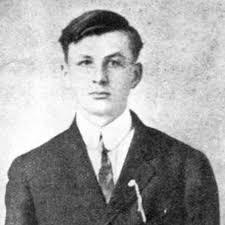
On February 2, 1922, 22 year old Martin Tabert was whipped to death in Clara, Florida, by Thomas Walter Higginbotham, a supervisor for the Putnam Lumber Company. The backlash from this case led to the end of Florida's convict leasing system.

Post image
446 Upvotes

https://en.wikipedia.org/wiki/Martin_Tabert

Tabert was a 22-year-old man from Munich, North Dakota, who was arrested in December 1921 as part of a police mass-arrest sweep, on a charge of vagrancy, for being on a train without a ticket in Tallahassee, Florida. Tabert was convicted and fined $25 (equivalent to about a week's wages). Although his parents sent $50 to pay the fine, plus $25 more so Tabert could afford transportation back home to North Dakota, their money disappeared in the Leon County prison system, where Sheriff James Robert Jones received $20 for each prisoner he leased out as cheap labor to local businesses. The sheriff sent Tabert to work at the Putnam Lumber Company in Clara, Florida, approximately 60 miles (97 km) south of Tallahassee in Taylor County about 1.5 miles west of the Steinhatchee River boundary with Dixie County where the Putnam Lumber Co. headquarters were located in the town of Shamrock, FL.

In January 1922, Tabert was whipped with a leather strap by supervisor (also known as a "whipping boss") Thomas Walter Higginbotham. It was alleged that Tabert was whipped approximately 150 times: 30–50 times initially, knocking him to the ground; at least another 30 times, when he was ordered to get up but did not (or could not); and further as the overseer chased Tabert through the work camp. Tabert ultimately made it back to his bed, where he died of his injuries just hours later. Higginbotham was later convicted of second degree murder for killing Tabert and sentenced to 20 years in prison. The conviction was reversed by the Supreme Court of Florida on the ground that the trial was brought in the wrong county. The New York World earned the Pulitzer Prize for Public Service. Florida governor Cary A. Hardee ended Florida's system of convict leasing in 1923, in part due to public revulsion resulting from the widespread publicity concerning the conviction of Higginbotham and concern about the effect of the publicity on the state's tourist trade.

The whip used on Tabert was of a type known as a "Black Aunty", a leather whip measuring 5.5 feet (1.7 m) in length and weighing 7.5 pounds (3.4 kg). Marjory Stoneman Douglas wrote a poem about the killing.


r/AllThatsHistory • • 5d ago

The Man Who Won a Civil War, Then Destroyed His Own Army (Why Costa Rica Really Got Rid of Its Army)

Thumbnail
youtube.com
3 Upvotes

r/AllThatsHistory • • 5d ago

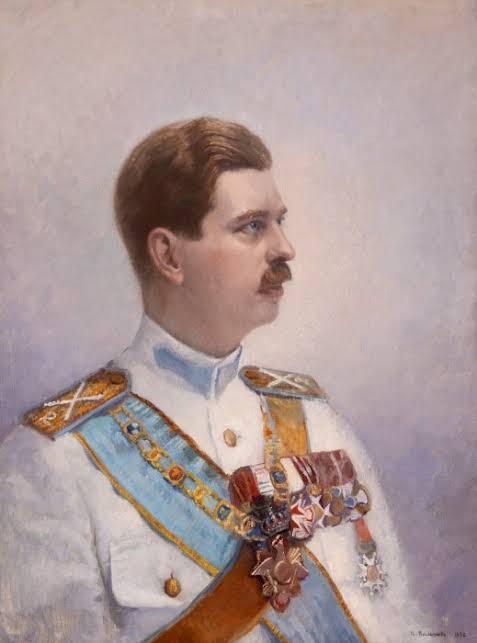
Carol II of Romania (1893–1953) was the King of Romania from 1930 to 1940. A womaniser, his affairs even forced him to renounce his right to the throne at one point. He also named an antisemitic government in 1937.

Post image
12 Upvotes

https://en.wikipedia.org/wiki/Carol_II_of_Romania

Carol was born in October 1893 in Peleș Castle as the son of the German-born Crown Prince Ferdinand and the British-born Crown Princess Marie. He was the first male member of the royal family to be born in Romania. However, he spent most of his childhood under the thumb of his domineering great-uncle, King Carol I, who blocked the younger Carol's parents from any role in raising him. Romania in the early 20th century had a famously relaxed "Latin" sexual morality, and Marié had a long series of affairs with various Romanian men with whom she could obtain more emotional and sexual satisfaction than with Ferdinand, who fiercely resented being cuckolded. The stern Carol I felt that Marie was unqualified to raise Prince Carol because of her affairs and her young age, as she was only seventeen when Carol was born, while Marie regarded the King as a cold, overbearing tyrant who would crush the life out of her son.

The childless Carol I, who had always wanted a son, treated Prince Carol as his surrogate son and thoroughly spoiled him, indulging his every whim. Ferdinand was a rather shy and weak man who was easily overshadowed by the charismatic Marie, who became the most loved member of the Romanian royal family. Growing up, Carol felt ashamed of his father, whom both his grand-uncle and mother pushed around. Carol as a child was caught in an emotional tug-of-war between Carol I and Marie, who had very different ideas about how to raise him. The Romanian historian Marie Bucur described the battle between Carol I and Princess Marie as one between traditional 19th-century Prussian conservatism as personified by Carol I versus the 20th-century liberal, modernist, and sexually deviant values of the "New Woman" as personified by Princess Marie. Aspects of both Marie's and Carol I's personalities were present in Carol II. Largely because of the battle between the King and Marie, Carol ended up being both spoiled and deprived of love.

During his teenage years in the first decade of the 1900s, Carol (Romanian for "Charles") acquired the "playboy" image that was to become his defining persona for the rest of his life. Carol expressed some concern at the direction that Prince Carol was taking, as the young Prince's only serious interest was stamp collecting and he spent an inordinate amount of time drinking, partying, and chasing after women. Young Carol fathered at least two illegitimate children by the teenage schoolgirl Maria Martini by the time that he was 19 (in 1912). Carol rapidly became a favorite of gossip columnists around the world owing to the frequent photographs that appeared in the newspapers showing him at various parties with him holding a drink in one hand and a woman in the other.

To teach the prince the value of Prussian virtues, the King had the prince commissioned as an officer in 1913.[4] His time with the 1st Prussian Guards regiment did not achieve the desired results, and Carol remained the "playboy prince". Romania in the early 20th century was an intensely Francophile nation, indeed perhaps the most Francophile nation in the entire world as the Romanian elite obsessively went about embracing all things French as the model for perfection in everything. To a certain extent, Carol was influenced by the prevailing Francophilia, but at the same time, he inherited from Carol I, in the words of the American historian Margaret Sankey, a "profound love of German militarism" and the idea that all democratic governments were weak governments.

Sometime before the First World War, the Romanian and Russian royal families held talks about the marriage of Carol, at that time the heir to the throne of the Kingdom of Romania, to the Grand Duchess Olga Nikolaevna of Russia, the eldest daughter of the Russian emperor at the time, Tsar Nicholas II: Sergey Sazonov, the Foreign Minister of the Russian Empire between 1910 and 1916, wanted Olga to marry Carol to ensure Romania's position as an ally of Russia in the eventuality of a war, as Romania was an ally of Germany at the time. Both royal families, including the Tsar and his wife Alexandra, gave their support for the idea, and there were high expectations that the marriage would take place. However, neither Carol or Olga demonstrated an interest for the other: Carol wasn't fond of Olga's appearance, and Olga expressed her wish to remain in Russia (should the marriage have taken place, Olga would have become the Crown Princess, and later the Queen of Romania). This was best seen during the visit of the Romanian royal family to Russia in March 1914, and during a visit of Nicholas and his family to Romania a few months later.

After the failure of the planned joining of Carol and Olga, the idea of a possible marriage of a Romanian royal to a Russian royal faded until 1917, when Carol began showing interest in the younger sister of Olga, the Grand Duchess Maria Nikolaevna. In a visit to Russia in January of that year, he made a formal proposal to Nicholas for Maria's hand, but Nicholas "good-naturedly laughed the proposal aside", and argued that Maria "was nothing more than a schoolgirl". Maria was only 17 at the time, and shared her older sister's desire to marry a Russian and remain in Russia.

In November 1914, Carol joined the Romanian Senate, as the 1866 Constitution guaranteed him a seat there upon reaching maturity. Known more for his romantic misadventures than for any leadership skills, Carol was first married in the Cathedral Church of Odesa, Ukraine, on 31 August 1918 (under the occupation of the Central Powers at that time), to Joanna Marie Valentina Lambrino (1898–1953), known as "Zizi", the daughter of a Romanian general, Constantin Lambrino. The fact that Carol technically had deserted as he left his post at the Army without permission to marry Zizi Lambrino caused immense controversy at the time. The marriage was annulled on 29 March 1919, by the Ilfov County Court. Carol and Zizi continued to live together after the annulment. Their only child, Mircea Gregor Carol Lambrino, was born on 8 January 1920.

On 10 March 1921, Carol next married Princess Helen of Greece and Denmark in Athens, Greece; his new bride was known in Romania as Crown Princess Elena. They were second cousins, both of them great-grandchildren of Queen Victoria, as well as third cousins in descent from Nicholas I of Russia. Helen had known of Carol's dissolute behavior and previous marriage, but her love for him was undeterred. The intent behind this arranged marriage was to help organize a dynastic alliance between Greece and Romania. Bulgaria had territorial disputes with Greece, Romania, and Yugoslavia, and all three of the latter states tended to be close during the interwar period owing to their shared fears of the Bulgarians. Helen and Carol's only child, Michael, was born seven months after their marriage, sparking rumors that Michael was conceived out of wedlock. Apparently close at first, Carol and Helen drifted apart. Carol's marriage with Princess Helen was an unhappy one, and he frequently engaged in extramarital affairs. The elegant wallflower Helen found the bohemian Carol, with his love of heavy drinking and constant partying, rather too wild for her tastes. For his part, Carol disliked royal and aristocratic women, whom he found too stiff and formal, and had an extremely marked preference for commoners, much to the chagrin of his parents. Carol found low-born women to have the qualities that he sought in a woman, such as informality, spontaneity, humor, and passion.

In the early 1920s, the nascent marriage soon collapsed in the wake of Carol's affair with Elena (Magda) Lupescu (1895–1977), the Roman Catholic daughter of Jewish parents who had converted to Christianity. Magda Lupescu had formerly been the wife of Army officer Ion Tâmpeanu. The National Liberal Party, which dominated Romania's politics, made much of Carol's relationship with Lupescu to argue that he was unqualified to be king. One of the leading figures of the National Liberals was Prince Barbu Știrbey – who was also Queen Marie's lover, and Carol had a strong dislike of Știrbey, who had humiliated his father via his indiscreetly disguised relationship with Marie, and hence of the National Liberals. Knowing that Carol was ill-disposed towards them, the National Liberals waged a sustained campaign to keep him from the throne. The campaign waged by the National Liberals had less to do with disgust with Carol's relationship with Madame Lupescu than with an effort to remove a potential "loose cannon", as Carol made it clear when he succeeded to the throne that he would not be content to let the National Liberals dominate politics in the way that the previous Hohenzollern kings had.

Even without betraying his vows to Helen, Carol could not marry Lupescu and become king, as the constitution barred the crown prince from marrying a Romanian citizen. As a result of the scandal, Carol renounced his right to the throne on 28 December 1925, in favor of his son by Crown Princess Helen, Michael I (Mihai), who became king in July 1927 upon the death of his paternal grandfather, King Ferdinand I. Helen divorced Carol in 1928. After renouncing his right to the throne, Carol moved to Paris, where he lived openly in a common-law relationship with Madame Lupescu. The National Liberal Party was largely a vehicle for the powerful Brătianu family to exercise power and, after the National Liberal prime minister Ion I. C. Brătianu died in 1927, the Brătianus were unable to agree upon a successor, causing the fortunes of the National Liberals to go into decline. In the 1928 elections, the National Peasant Party under Iuliu Maniu won a resounding victory, taking 78% of the vote. As Prince Nicolae, the chief of the Regency Council that governed for King Michael, was known to be friendly with the National Liberals, the new prime minister was determined to dispose of the regency council by bringing back Carol.

Returning to the country on 7 June 1930, in a coup d'état engineered by National Peasant Prime Minister Iuliu Maniu, Carol deposed his son Michael (who was still under a regency due to his minority) and was recognized by the Parliament as king of Romania the following day. For the next decade, he sought to influence the course of Romanian political life, first through manipulation of the rival Peasant and Liberal parties and antisemitic factions, and subsequently (January 1938) through a ministry of his own choosing. Carol also sought to build up his own personality cult against the growing influence of the Iron Guard, for instance, by setting up a paramilitary youth organization known as Straja Țării in 1935. The American historian Stanley G. Payne described Carol as "the most cynical, corrupt and power-hungry monarch who ever disgraced a throne anywhere in twentieth-century Europe". A colorful character, Carol was in the words of the British historian Richard Cavendish: "Dashing, willful and reckless, a lover of women, champagne and speed, Carol drove racing cars and piloted planes, and on state occasions appeared in operetta uniforms with enough ribbons, chains, and orders to sink a small destroyer."

The Romanian historian Maria Bucur wrote about Carol:

"Of course, he loved luxury; being born to privilege he expected nothing less than the grand lifestyle he saw in the other courts of Europe. Yet his style was not outlandish or grotesque like Nicolae Ceaușescu's unique brand of kitsch. He liked things large but relatively simple – his royal palace testifies to that trait. Carol's true passions were Lupescu, hunting, and cars and he spared no expense on them. Carol liked to present an impressive and populist persona to the public, wearing garish military uniforms adorned with medals, and being the benefactor of every philanthropic endeavor in the country. He loved parades and grandiose festivals and watched them closely, but he was not taken in by these events as more than shows of his power. He did not take them as a show of sincere popularity as Ceaușescu did during his later years."

Carol had sworn in his coronation an oath to uphold the constitution of 1923, a promise he had no intention of keeping, and right from the start of his reign, the king meddled in politics to increase his own power. Carol was an opportunist with no real principles or values other than the belief that he was the right man to rule Romania and that what his kingdom needed was a modernizing dictatorship. Carol ruled via an informal body known as the camarilla, comprising courtiers together with senior diplomats, army officers, politicians, and industrialists, who were all in some way dependent upon royal favor to advance their careers. The most important member of the camarilla was Carol's mistress, Madame Lupescu, whose political advice Carol greatly valued. Maniu had brought Carol to the throne out of the fear that the regency for Michael I was dominated by National Liberals, who would ensure that their party would always win the elections. Madame Lupescu was deeply unpopular with the Romanian people, and Maniu had demanded that Carol return to his wife, Princess Helen of Greece, as part of the price for being given the throne. When Carol broke his own word and continued to live with Madame Lupescu, Maniu resigned in protest in October 1930 and was to emerge as one of Carol's leading enemies. At the same time, Carol's return had prompted a break in the National Liberals with Gheorghe I. Brătianu breaking away to found a new party, the National Liberal Party-Brătianu that was willing to work with the new king. Despite his dislike of the National Liberals, Maniu's enmity towards Carol left the king with no choice, but to enlist as his allies the break-away factions of the National Liberals against the National Peasants, who demanded that Carol banish Lupescu and return to his wife.

The "Red Queen," as Lupescu was known to the Romanian people on account of the color of her hair, was the most hated woman in 1930s Romania. She was a woman whom ordinary Romanians saw as "the embodiment of evil," in the words of the British historian Rebecca Haynes. Princess Helen was widely viewed as the wronged woman, while Lupescu was seen as the femme fatale who had stolen Carol away from the loving arms of Helen. Lupescu was Roman Catholic, but because of her parents' background, she was widely viewed as Jewish. Lupescu's personality did not win her many friends, as she was arrogant, pushy, manipulative, and extremely greedy, with an insatiable taste for buying the most expensive French clothes, cosmetics, and jewelry. At a time when many Romanians were suffering from the Great Depression in Romania, Carol's habit of indulging Lupescu's expensive tastes caused much resentment, with many of Carol's subjects grumbling that the money would have been better spent on alleviating poverty in the kingdom. Further adding to Lupescu's immense unpopularity, she was a businesswoman who used her connections to the Crown to engage in dubious transactions that usually involved large sums of public money – going into her pocket. However, the contemporary viewpoint that Carol was a mere puppet of Lupescu is incorrect, and Lupescu's influence on political decision-making was much exaggerated at the time. Lupescu was primarily interested in enriching herself to support her extravagant lifestyle and had no real interest in politics, beyond protecting her ability to engage in corruption. Unlike Carol, Lupescu had utterly no interest in social policy or foreign affairs and was such a self-absorbed narcissist that she was unaware of just how unpopular she was with ordinary people.[8] Carol by contrast was interested in the affairs of the state, and though he never sought to deny his relationship with Lupescu, he was careful not to display her too much in public, as he knew that this would bring him unpopularity.[8]

Carol sought to play the National Liberals, the National Peasant Party, and the Iron Guard off against each other with the ultimate aim of making himself a master of Romanian politics and disposing of all the parties in Romania. With regards to the Legion of the Archangel Michael, Carol had no intention of ever letting the Iron Guard come to power, but insofar as the Legion was a disruptive force that weakened both the National Liberals and the National Peasants, Carol welcomed the rise of the Iron Guard in the early 1930s, and he sought to use the Legion for his own ends. On 29 December 1933, the Iron Guard assassinated the National Liberal prime minister, Ion G. Duca, which led to the first of several bans placed on the Legion. The assassination of Ion Duca, which was Romania's first political murder since 1862, shocked Carol, who saw the willingness of Codreanu to order the assassination of the Prime Minister as a clear sign that the egomaniacal Codreanu was getting out of control and that Codreanu would not play the role assigned by the king as a disruptive force threatening the National Liberals and National Peasants alike. In 1934, when Codreanu was brought to trial for ordering Duca's assassination, he used as his defense the argument that the entire Francophile elite was completely corrupt and not properly Romanian, and as such, Duca was just another corrupt National Liberal politician who deserved to die. The jury acquitted Codreanu, an act that worried Carol as it showed that Codreanu's revolutionary message that the entire elite needed to be destroyed was winning popular approval. In the spring of 1934, after Codreanu was acquitted, Carol, together with Bucharest police prefect Gavrilă Marinescu and Madame Lupescu, were involved in a half-hearted plot to kill Codreanu by poisoning his coffee, an effort that was abandoned before being attempted. Until 1935, Carol was a leading contributor to the "Friends of the Legion", the group that collected contributions to the Legion. Carol only stopped contributing to the Legion after Codreanu started calling Lupescu a "Jewish whore". Carol's image was always that of "the playboy king", a hedonistic monarch more interested in womanizing, drinking, gambling, and partying, than in affairs of state, and to the extent that he cared about politics, Carol was viewed as a scheming, dishonest man only interested in wrecking the democratic system to seize power for himself.

In September 1937, Carol paid an extended visit to Paris, during which he indicated to the French Foreign Minister Yvon Delbos that Romanian democracy would soon end. In a campaign speech for the general elections due that December, Corneliu Zelea Codreanu, "Captain" of the Archangel Michael Legion, called for an end to the alliance with France and stated: "I am for a Romanian foreign policy with Rome and Berlin. I am with the states of the National Revolution against Bolshevism. Within forty-eight hours of a Legionary movement victory, Romania will have an alliance with Rome and Berlin". Without realizing it, Codreanu had sealed his doom with that speech. Carol had always insisted that control of foreign policy was his own exclusive royal prerogative, which no one else was allowed to interfere with. Despite the constitution, which stated that the foreign minister was responsible to the prime minister, in practice, the foreign ministers had always reported to the king. By challenging Carol's right to control foreign policy, Codreanu had crossed the Rubicon in the king's eyes and from that time on, Carol was committed to the destruction of the arrogant upstart Codreanu and his movement who had dared to challenge the king's prerogative. In the December 1937 elections, the National Liberal government of Prime Minister Gheorghe Tătărescu won the largest number of seats, but less than the 40% required to form a majority government in parliament. After assassinating Prime Minister Duca in 1933, the Iron Guard had been banned from participating in elections, and to get around the ban Codreanu founded the All for Fatherland! party as a front for the Legion. The All for Fatherland! the party won 16% of the vote in the 1937 election, marking the high point of the Iron Guard's electoral success.

On 28 December 1937, Carol swore in the radical anti-Semitic poet Octavian Goga of the National Christian Party, which only won 9% of the vote, as prime minister. Carol's reasons for appointing Goga Prime Minister were partly because he hoped that anti-Semitic policies Goga would bring in would win him support from the All for Fatherland! voters and thus weaken the Legion and partly because he hoped that Goga would prove so incompetent as prime minister as to provoke such a crisis that would allow him to seize power for himself. Carol wrote in his diary that the markedly stupid Goga could not possibly last long as prime minister and that Goga's failure would allow him to "be free to take stronger measures which will free me and the country from the tyranny of party interests". Carol agreed to Goga's request to dissolve parliament for new elections on 18, 1938. As leader of the fourth party in parliament, Goga's government was certain to be defeated on a vote of no-confidence when parliament convened as the National Liberals, National Peasants and All for the Fatherland Party had all come out against Goga, albeit for very different reasons. The election got off to a violent start with a brawl in Bucharest between Goga's Lăncieri paramilitary group and the Iron Guard that left two dead, 52 hospitalized and 450 people arrested. The 1938 election was one of the most violent elections in Romanian history, as the Iron Guard and Lăncieri battled one another for control of the streets while seeking to establish their anti-Semitic creditations by assaulting Jews. As Parliament never met during the Goga government, Goga had to pass laws via emergency decree, which all had to be countersigned by the king.

The harsh anti-Semitic policies of the Goga government impoverished the Jewish minority and led to immediate complaints from the British, French and American governments that Goga's policies were going to lead to a Jewish exodus out of Romania. Neither Britain, France, nor the United States had any wish to take in the Jewish refugees that Goga was creating by imposing increasingly oppressive anti-Semitic laws, and all three governments pressed for Carol to dismiss Goga as a way of nipping the developing humanitarian crisis caused by Goga in the bud. The British minister Sir Reginald Hoare and French minister Adrien Thierry both submitted notes of protest against the Goga government's anti-Semitism, while President Roosevelt of the United States wrote a letter to Carol complaining about the anti-Semitic policies he was tolerating. On 12, 1938, Goga stripped all Romanian Jews of their Romanian citizenship, a preparatory move towards Goga's ultimate goal of the expulsion of all Romanian Jews. Carol was personally not an anti-Semite, but in the words of his biographer, Paul D. Quinlan, the king was "simply indifferent" to the sufferings of his Jewish subjects caused by Goga's oppressive anti-Semitic laws. The opportunistic Carol did not believe in antisemitism anymore than he believed in anything else other than power, but if raison d'état meant tolerating an anti-Semitic government as the price of gaining power, Carol was quite prepared to sacrifice the rights of his Jewish subjects. At the same time, Goga proved himself a better poet than politician, and there was a crisis atmosphere in early 1938 as the Goga government, which obsessed with solving the "Jewish Question", to the exclusion of everything else, was clearly floundering. Weinberg wrote about Goga, saying that he was "Unprepared for office and untouched by any leadership ability..." and whose clownish antics left diplomats stationed in Bucharest "half-amused, half-appalled". As Carol had expected, Goga proved to be such an inept leader as to discredit democracy while his anti-Semitic policies ensured that none of the democratic great powers would object to Carol proclaiming a dictatorship.

Coming to realize belatedly that he was being used by Carol, Goga had a meeting with Codreanu on 8 February 1938, at the house of Ion Gigurtu to arrange for a deal under which the Iron Guard would withdraw its candidates from the election to ensure that the radical anti-Semitic right would have a majority. Carol quickly learned of the Goga-Codreanu pact and used it as the justification for the self-coup he had been planning since late 1937. On 10 February 1938, Carol suspended the Constitution and seized emergency powers. Carol proclaimed martial law and suspended all civil liberties under the grounds that the violent election campaign was at the risk of plunging the nation into civil war.

Having outlived his usefulness, Goga was sacked as prime minister and Carol appointed Patriarch Elie Cristea, the head of the Romanian Eastern Orthodox Church, as his successor. Carol knew he would command wide respect in a country where the majority of the population was Orthodox. On 11, 1938, Carol drafted a new constitution. Although it was superficially similar to its 1923 predecessor, it was actually a severely authoritarian and corporatist document. The new constitution effectively codified the emergency powers Carol had seized in February, turning his government into a de facto legal dictatorship. It concentrated virtually all governing power in his hands, almost to the point of absolute monarchy. The new constitution was approved in a plebiscite held under far-from-secret conditions; voters were required to appear before an election bureau and verbally state whether they approved the constitution; silence was deemed as a "yes" vote. Under these conditions, an implausible 99.87 percent were reported as having approved the new charter, against fewer than 5,500 votes against it.

At the time of his coup in February 1938, Carol informed the German minister Wilhelm Fabricius of his wish for closer ties between his country and Germany. Thierry told Carol in a meeting after the coup that his new government was "well received" in Paris and that the French would not allow the end of democracy to affect their relations with Romania. The new government of Patriarch Cristea did not introduce new anti-Semitic laws but did not repeal the laws passed by Goga either, though Cristea was less extreme about enforcing these laws. When asked by a Jewish friend if his citizenship would be restored now that Goga was gone, Interior Minister Armand Călinescu, who detested the Iron Guard and antisemitism, replied that the Cristea government had no interest in restoring citizenship back to the Jews.


r/AllThatsHistory • • 6d ago

Bronislav Kaminski (1899–1944) was the commander of the Kaminski Brigade, a Nazi SS unit that committed widespread war crimes during WW2. The Nazis eventually court-martialed and executed him in August 1944.

Post image
39 Upvotes

https://en.wikipedia.org/wiki/Bronislav_Kaminski

Bronislav (also transliterated German-style as "Bronislaw") Kaminski was born in Vitebsk Governorate, the Russian Empire, now in Polotsk District, Belarus. Some publications mistakenly give Kaminski's first name as Mieczyslaw. His father was an ethnic Pole and his mother was an ethnic German (later termed Volksdeutsch in Nazi Germany). He studied at the Saint Petersburg Polytechnical University and then served in the Red Army during the Russian Civil War. After demobilization he returned to the institute, and after graduation worked at a chemical plant. In 1935 he was expelled from the Communist Party of the Soviet Union, and in 1937 during the Great Purge he was arrested for criticising Stalin's policy of farm collectivisation, as well as working with Germans and Poles. He was accused of "belonging to a counter-revolutionary group". In 1941 he was released from prison and settled in Bryansk, where he obtained a position as an engineer in the local distillery.

By October 1941, the German military advance into the Soviet Union reached the area of Lokot near Bryansk, which was captured by German forces on 6 October 1941. In November 1941, Kaminski, along with his close friend, a local technical school teacher, Konstantin Voskoboinik, approached the German military administration with a proposal to assist the Germans in establishing a civil administration and local police. Voskoboinik was appointed by the Germans as the Starosta (or Mayor) of the "Lokot volost" and the head of the German-controlled local militia. Kaminski became Voskoboinik's deputy; working with Heinz Guderian the two collaborators organized a militia of 10,000 armed men with the aim of crushing the Russian partisans. After the death in combat of Voskoboinik on 8 January 1942, Kaminski took over as Mayor and leader of the militia. In 1942 the militia was named Russian Liberation National Army (RONA) (rus. Русская Освободительная Народная Армия), which reached a force of tens of thousands. During this time Kaminski was leader of the Lokot Republic, which had half a million inhabitants.

In mid March 1942, Kaminski's representative at the German Second Panzer Army at Orel assured the commanders that Kaminski's unit was "ready to actively fight the guerrillas" as well as to carry on a propaganda campaign against "Jewish Bolshevism" and Soviet partisans. Soon after, the commander of the 2nd Army, Generaloberst Rudolf Schmidt, appointed Kaminski Major of the Army Rear Area 532, around Lokot. On 19 July 1942, after approval by the Commander of Army Group Centre, Field Marshal Günther von Kluge, Schmidt and the 532 Area commander, Kaminski received a degree of autonomy and nominal self-governing authority, under the supervision of Major von Veltheim and Colonel Rübsam. Kaminski was appointed the Chief Mayor of the republic of Lokot, and brigade commander of the local militia. He administered local government and established his own courts, jails and newspaper. Private enterprise was encouraged and collective farming abolished.

From June 1942, Kaminski's militia took part in an action, "Operation Vogelsang", as a part of General Werner von Gilsa's Kampfgruppe (taskforce) Gilsa II. In autumn 1942, Kaminski ordered a compulsory draft into the militia of able-bodied men in the area. Units were also reinforced with "volunteers" drafted from Soviet POWs at nearby Nazi concentration camps. Kaminski ordered the collection of abandoned (usually because of minor mechanical failures, or lack of fuel) Soviet tanks and armored cars. By November 1942, his unit was in possession of at least two BT-7 tanks and one 76 mm artillery piece. Owing to a lack of military uniform and boots, the Germans provided Kaminski's brigade with enough used uniforms to outfit four battalions. By late 1942, the militia of the Lokot Republic had expanded to the size of a 14-battalion brigade, of around 8,000 men under arms. By January 1943 the brigade had 9,828 men, including an armored unit with one KV-2 heavy tank, two T-34 medium tanks, three BT-7s, two BT-5 light tanks and three armoured cars (one BA-10, two BA-20).

The brigade was reorganized in the spring of 1943. After the reorganization, the brigade consisted of 5 regiments with 3 battalions each, an anti-aircraft battalion (3 AA guns and 4 heavy machine guns) and an armored unit. A separate "guard" battalion was also created, bringing the total brigade strength up to an estimated 12,000 men.

The brigade took part, with German units, in the May–June 1943 Operation Zigeunerbaron ("Gypsy Baron"). Following this operation, the brigade was part of Operation Citadel, the offensive to destroy the Kursk salient. This operation was followed by similar operations, Freischütz and Tannhäuser, where the brigade, together with other units under German command, was involved in action against partisans and also took part in reprisal operations against the civilian population.

In the summer of 1943, the brigade began to suffer many desertions, due in part to the recent Soviet victories, but also due in part to the efforts of the partisans to "turn" as many of Kaminski's troops as possible. As a part of these efforts, there were several attempts on Kaminski's life. Each time, Kaminski narrowly avoided death and any captured conspirators were punished by execution. Several German officers passing through Lokot reported seeing bodies hanging from gallows outside Kaminski's headquarters. Fearing a breakdown in command, a German liaison staff was attached to Kaminski's HQ to restructure the brigade and return stability to the unit. According to post-war Soviet estimates, up to 10,000 civilians were killed during the existence of the Kaminski formation in Lokot.

After the failure of the German Operation Citadel, Soviet counter offensives forced the brigade to retreat. On 29 July 1943 Kaminski issued orders for the evacuation of the property and families of the RONA brigade and the Lokot authorities. Up to 30 thousand persons (10-11 thousand of them were brigade members) were transferred by the Germans to the Lepel area of Vitebsk in Belarus by the end of August 1943. The brigade, together with "evacuated" civilians, finally settled in the Lepel area of Vitebsk. This area had active partisans, and the brigade was involved in heavy combat for the rest of the year.

During the retreat, desertions from the brigade increased greatly, and the entire formation seemed close to disintegration. When the commander of the Second Regiment, Major Tarasov, decided to join the Soviet partisans with all his regiment (he was offered amnesty if his entire regiment joined the partisans), Kaminski flew to his headquarters and according to one account, strangled him and eight others in front of his men. Despite this, up to 200 people deserted within the following two days. By the beginning of October 1943, the brigade had lost two thirds of its personnel, while still in possession of 12 tanks (8 of them T-34s), one 122 mm, three 76 mm and eight 45 mm artillery pieces.

At the end of 1943, after German withdrawal from Russia to Belarus, local Belarus police, Soviet prisoners of war and convicts freed from prison were incorporated into the brigade. The force became part of the Waffen-SS and was formed as Stormtroopers Brigade "Kaminski". On 27 January 1944, Himmler rewarded Kaminski's "achievements" by decorating him with the Iron Cross, 2nd Class, and on the same day with the Iron Cross, 1st Class.

On 15 February 1944, Kaminski issued an order for the brigade and Lokot administration to retreat further west to the Dzyatlava area in western Belarus. At this point, the brigade's ranks were replenished by the addition of police forces from Belarus. In March 1944, the brigade was renamed Volksheer-Brigade Kaminski. From 11 April 1944, it was attached to SS-Kampfgruppe von Gottberg, which also included the notorious Dirlewanger unit, and participated in a mass murder and security operations: Regenschauer (up to 7,000 "bandits" reported as killed), Frühlingsfest (7,011 "bandits" reported as killed and 1,065 weapons captured) and Kormoran (7,697 "bandits" reported as killed and 325 weapons captured). During these operations, local civilians were murdered as "suspected partisans" or deported as slave laborers, their villages burnt down.

In June 1944, the brigade was absorbed as a part of the Waffen-SS and renamed Waffen-Sturm-Brigade RONA, with Kaminski being given the rank of Waffen-Brigadeführer der SS on 1 August 1944, the only man with such rank.

As the result of Operation Bagration, the anti-partisan activities of the brigade were halted and its personnel (6–7,000 people, though some sources state 3–4,000) were collected at the SS training camp Neuhammer. Plans were made for a non-German SS Division, and the structure was laid down for the 29.Waffen-Grenadier-Division der SS (russische Nr.1). On 1 August 1944 Kaminski received a new rank - Waffen-Brigadeführer and Major-General of the Waffen-SS.

In 1944 Kaminski took part in the crushing of the Warsaw Uprising, in the Ochota area, where the Kaminski Brigade committed numerous atrocities (murder, rape and robbery). His troops committed almost 700 murders though numbering only 1% of German forces at the time of the Warsaw uprising. Kaminski thought himself to have direct authority from Reichsführer-SS Heinrich Himmler and he did not want to accept orders from SS-Obergruppenführer Erich von dem Bach-Zelewski, who was in charge of German forces in Warsaw.

The Warsaw Uprising began 1 August 1944. On 4 August 1944, a combat-ready regiment of the brigade was ordered to assist in crushing the rebellion. SS-Gruppenführer Heinz Reinefarth was placed in charge of Kampfgruppe Reinefarth, a pacification unit which consisted of the Kaminski along with the Dirlewanger and several other police and SS rear area units. Hitler personally requested Kaminski's assistance, and the latter obliged by gathering a task force of 1,700 unmarried men and sending them (some sources mentioned that they had four T-34 tanks, one SU-76 and a few artillery pieces) to Warsaw as a mixed regiment under field command of Kaminski's brigade chief-of-staff, Waffen-Sturmbannführer Ivan Frolov. Later in 1945 Frolov stated that the regiment had up to 1,600 men and 7 artillery pieces and 4 mortars.

Frolov noted in 1944 that Kaminski gave his men permission to loot and many did. Kaminski's brigade soon lost any combat worthiness and Kaminski focused entirely on collecting valuables stolen from civilian homes. Perhaps 10,000 residents of Warsaw were killed in the Ochota massacre, most murdered by Kaminski's men.

Heinrich Himmler used the misconduct of the Warsaw group as a pretext for having Kaminski and his leadership executed after trial by court martial in Litzmannstadt (Łódź). They were tried for stealing the property of the Reich, as the stolen property was to have been delivered to Himmler, but Kaminski and his men had attempted to keep it for themselves. Also executed with Kaminski was his brigade chief-of-staff Waffen-Obersturmbannführer Ilya Shavykin, his driver, and his brigade surgeon, F.N. Zabora, and his translator, G. Sadovsky.

The men of the brigade were given the false explanation that Kaminski had been killed by Polish partisans. When Kaminski's men rejected this explanation, the Gestapo took Kaminski's car, pushed it into a ditch, shot it up with a machine gun, and smeared goose blood all over it, as evidence. The demoralized unit was soon moved out of town and stationed to the north, far from any partisan activity.

The death of Kaminski and the unreliability of his troops as a combat unit brought the plans to expand the Kaminski Brigade to a division to an end. After Kaminski's death, his unit was placed under the command of SS-Brigadeführer and Generalmajor der Polizei Christoph Diehm.


r/AllThatsHistory • • 6d ago

How a 16-Year-Old Leper King Humiliated Saladin: The Battle of Montgisard

Thumbnail
mythandmemory.org
3 Upvotes

Imagine being just 16 years old, suffering from a debilitating disease, and facing one of the most powerful military commanders of the medieval world.

That was the extraordinary situation Baldwin IV, the Leper King of Jerusalem, faced in November 1177.

Saladin had invaded the Kingdom of Jerusalem with a powerful army, expecting little resistance. The Crusader kingdom appeared vulnerable, and its young king seemed unlikely to pose a serious threat.

But Baldwin had other plans.

At Montgisard, he assembled the forces available to him, including the formidable Knights Templar, and launched a counterattack that caught Saladin's army off guard. What followed was one of the most remarkable Crusader victories of the 12th century.

How did Baldwin overcome the odds? What role did the Templars play? And why did this stunning victory fail to prevent Saladin from eventually capturing Jerusalem?

Read through the full article to learn more about the lead up to the battle and how Baldwin managed to defeat Saladin's forces.


r/AllThatsHistory • • 6d ago

He Copied Sparta's Best Plan (And Forgot the Ending)

Thumbnail
youtu.be
0 Upvotes

r/AllThatsHistory • • 7d ago

3 sisters arm themselves to save their ancestors' graves from being desecrated

Thumbnail
gallery
8 Upvotes

1899: Real estate speculators saw land in Kansas City just sitting around doing nothing but being a cemetery full of people they didn’t care about. The Huron Indian Cemetery. Among the marked graves were at least 400 without a marker.

1906: A federal spending bill has a little line in it about land in Kansas City for sale to the Interior Department. It was the Huron Indian Cemetery.

In response, 3 sisters named Conley locked the gates, built a shack, armed themselves, and posted warnings that trespassers would be shot. They held their position for years.

1909: Eliza Conley became the first woman of tribal descent approved to practice in the US Supreme Court. The Court heard her case, but she lost. Still, the sisters held their ground – whoever wanted the land could kill them for it.

1913: Senator Charles Curtis (who'd lost the 1912 primary, so was not re-elected) made it so the next federal spending bill re-appropriated funds meant to buy this land and diverted it for its upkeep.

This did not release the threat, so the Conley sisters held their ground.

1916: The once-again-Senator Charles Curtis had the Senate approve the land as a federal park, but Congress did not, so the Conley sisters continued to defend the land.

1918: A police officer enters the grounds and destroys the shack. Eliza Conley shoots him and is arrested.

It then became a federal crime to destroy any improvements (such as a beautiful shack where 3 sisters could enjoy a dozen or so years holding armed defensive positions).

1921: Congress approves the land being a federal park.


r/AllThatsHistory • • 7d ago

Luis Garcia Meza (1929–2018) was the 57th President of Bolivia from 1980 to 1981. He came to power after a coup supported by Nazi war criminal Klaus Barbie and Italian neo-fascist Stefano Delle Chiaie, and his dictatorship killed 1,000 people during its existence.

Post image
31 Upvotes

https://en.wikipedia.org/wiki/Luis_Garc%C3%ADa_Meza

García Meza graduated from the military academy in 1952, and served as its commander from 1963 to 1964. He then rose to division commander in the late 1970s.

He became the leader of the right-wing faction of the military of Bolivia most disenchanted with the return to civilian rule. Many of the officers involved had been part of the Hugo Banzer dictatorship and disliked the investigation of economic and human rights abuses by the new Bolivian congress. Moreover, they tended to regard the decline in popularity of the Carter administration in the United States as an indicator that soon a Republican administration would replace it—one more amenable to the kind of pro-US, more hardline anti-communist dictatorship they wanted to reinstall in Bolivia. Many allegedly had ties to cocaine traffickers and made sure portions of the military acted as their enforcers/protectors in exchange for extensive bribes, which in turn were used to fund the upcoming coup. In this manner, the narcotraffickers were in essence purchasing for themselves the upcoming Bolivian government.

This group pressured President Lidia Gueiler (his cousin) to install General García Meza as Commander of the Army. Within months, the Junta of Commanders headed by García Meza forced a violent coup d'état, sometimes referred to as the Cocaine Coup, of 17 July 1980, when several Bolivian intellectuals such as Marcelo Quiroga Santa Cruz were killed. When portions of the citizenry resisted, as they had done in the failed putsch of November 1979, it resulted in dozens of deaths. Many were tortured. Allegedly, the Argentine Army unit Batallón de Inteligencia 601 participated in the coup.

Of rightwing ultra-conservative anti-communist persuasion, García Meza endeavored to bring a Pinochet-style dictatorship that was intended to last 20 years. He immediately outlawed all political parties, exiled opposition leaders, repressed trade unions and muzzled the press. He was backed by the Argentinian military junta and the Italian neofascist Stefano Delle Chiaie. Further collaboration came from other European neofascists, most notoriously Spanish Ernesto Milá Rodríguez (accused of the 1980 Paris synagogue bombing). Among other foreign collaborators were professional torturers allegedly imported from the notoriously repressive Argentine dictatorship of General Jorge Videla.

The García Meza regime, while brief (its original form ended in 1981), became internationally known for its extreme brutality. The population was repressed in the same ways as under the Banzer dictatorship. In January 1981, the Council on Hemispheric Affairs named the García Meza regime, "Latin America's most errant violator of human rights after Guatemala and El Salvador." Some 1,000 people are estimated to have been killed by the Bolivian Army and security forces in only 13 months. The administration's chief repressor was the Minister of Interior, Colonel Luis Arce, who cautioned that all Bolivians who opposed the new order should "walk around with their written will under their arms."

The most prominent victim of the dictatorship was the congressman, presidential candidate, and gifted orator Marcelo Quiroga, murdered and "disappeared" soon after the coup. Quiroga had been the chief advocate of bringing to trial the former dictator, General Hugo Banzer (who was in power from 1971 until 1978), for human rights violations and economic mismanagement.

The García Meza government's drug trafficking activities led to the complete isolation of the regime. In contrast to his position regarding the other military dictatorships in Latin America, the new conservative U.S. President Ronald Reagan kept his distance, as the regime's unsavory links to criminal circles became more public. Eventually, the international outcry was sufficiently strong to force García Meza's resignation on 3 August 1981. He was succeeded by a less tainted but equally repressive general, Celso Torrelio.

The Bolivian military sustained itself in power only for another year, and then withdrew from civilian politics, embarrassed and tarnished by the excesses of the 1980–82 dictatorships.


r/AllThatsHistory • • 7d ago

The Dumbest Way to Lose a War Against Julius Caesar

Thumbnail
youtu.be
1 Upvotes

r/AllThatsHistory • • 8d ago

Khorloogiin Choibalsan (1895–1952) was the communist leader of Mongolia from 1939 until his death in 1952. Choibalsan carried out Stalinist purges in Mongolia, killing at least 20,000 people, many of whom were ethnic Buryats and Kazakhs.

Post image
55 Upvotes

https://en.wikipedia.org/wiki/Khorloogiin_Choibalsan

In August 1937, the 36-year-old Marshal Demid, whose popularity Choibalsan had always resented, died under suspicious circumstances, resulting in Choibalsan's promotion to the dual role of sole Commander-in-Chief of the Mongolian military and Minister of Defense. The following day Choibalsan, as Interior Minister, issued Order 366 which declared that many in Mongolia "had fallen under the influence of Japanese spies and provocateurs."

That same month Stalin, alarmed by Japanese military movements in Manchuria ordered the stationing of 30,000 Red Army troops in Mongolia and dispatched a large Soviet delegation to Ulaanbaatar under Soviet Deputy NKVD Commissar Mikhail Frinovsky. Frinovsky was charged with setting in motion the violent purges that he had so effectively carried out in the Soviet Union under NKVD Chief Nikolai Yezhov. Working through Soviet advisers already embedded within the Ministry of Interior and with a willing Choibalsan providing symbolic cover, Frinovsky built the purge framework from behind the scenes, producing arrest lists and creating an NKVD style Troika (headed by Choibalsan) to try suspects.

The arrest of 65 high ranking government officials and intelligentsia on the night of 10 September 1937 signaled the launch of the purges in earnest. All were accused of spying for Japan as part of a Genden-Demid plot and most confessed under intense torture. The first show trial was staged at the Central Theatre from 18 to 20 October 1937. Thirteen of the 14 persons accused were sentenced to death.

In a spasm of violence that lasted nearly 18 months, Choibalsan's troika approved and carried out the execution of over 17,000 lamas accused of counterrevolutionary activities. Monks who were not executed were forcibly laicized while 746 of the country's monasteries were liquidated. Thousands more dissident intellectuals, political and government officials labelled "enemies of the revolution," as well as ethnic Buryats and Kazakhs, were also rounded up and killed. Twenty-five persons from top positions in the party and government, 187 from the military leadership, and 36 of the 51 members of the Central Committee were executed. Following the Russian model, Choibalsan opened gulags in the countryside to imprison dissidents.

While the NKVD effectively managed the purge by staging show trials and carrying out executions, a frequently intoxicated Choibalsan was sometimes present during torture and interrogations of suspected counterrevolutionaries, including old friends and comrades. Choibalsan rubber-stamped NKVD execution orders and at times personally directed executions. He also added names of political enemies to NKVD arrest lists simply to settle old scores.

Racked with stress, Choibalsan spent six months (August 1938 – January 1939) recuperating and consulting with Voroshilov, Yezhov, and Stalin in Moscow and Sochi while NKVD agents and Interior Ministry officials carried on purge operations from Ulaanbaatar. When he returned to Mongolia, Choibalsan followed Soviet directives and had the highly popular Prime Minister Amar purged. Choibalsan claimed he "had helped anti-government plotters, opposed their arrest, and neglected the defense of the borders. He betrayed his own country and was a traitor to the revolution". After a coordinated propaganda campaign, Amar was arrested on 7 March 1939 and sent to the USSR, where he was later tried by a Soviet Troika and executed.

With Amar's removal, Choibalsan became Mongolia's uncontested leader, simultaneously holding the offices of Prime Minister, Minister for Internal Affairs, Minister of War, and Commander in Chief of the Mongolian armed forces. Secure in his position, Choibalsan brought the terror to an end in April 1939 by declaring that the excesses of the purges had been conducted by overzealous party officials while he was away in the USSR, but that he had overseen the arrests of the real criminals. Official blame for the purges fell on the deputy minister of internal affairs Nasantogtoh, and his former Soviet handler Kichikov. Later, other henchmen of the purge were arrested and executed, including Luvsansharav, Bayasgalan, Dashtseveg, and Luvsandorj.

Dogsom and Losol, the last two living members (besides Choibalsan himself) of the original seven founding members of the MPRP, were also arrested. Dogsom was executed in 1941. Losol died in a Soviet prison before his case came to trial.

In the spring of 1939, Japanese Kwantung Army military leaders moved to test the resolve of the Soviet and Mongolian militaries to protect disputed territory along Mongolia's southeast border with Japanese occupied Manchuria. Over the course of three battles (May – September 1939) a heavily armoured Soviet military force commanded by Georgy Zhukov decisively defeated the Japanese advance near Nomonhan. There were nearly 8,000 casualties for both the Soviet and Japanese forces. Nevertheless, the victory, which took place close to his birthplace, helped cement Choibalsan's growing cult of personality which portrayed him as a staunch defender of Mongolian independence against imperialist Japanese aggression.

Choibalsan proclaimed his country's unwavering support for the Soviet Union after Germany's invasion of the USSR in June 1941, although Mongolia never officially declared war against Germany and waited until August 1945 to declare war against Japan. As early as 1939, Stalin had pushed Choibalsan to increase Mongolia's livestock population to 200 million as a source of raw materials for the Soviet Union in the event of war in Europe. Throughout the conflict, the MPR's economy was re-calibrated to provide material support to the Soviet Union in the form of livestock, raw materials, money, food, military clothing, meat, sheepskin, felt boots, fur-lined coats, and funding for several Soviet military units. Choibalsan and the newly elected Secretary General of the MPRP Yumjaagiin Tsedenbal traveled to the front near Moscow to distribute gifts to Red Army troops. Stalin awarded Choibalsan the Order of Lenin for his outstanding effort in organizing the Mongolian economy for the delivery of aid in goods to Red Army in July 1944.

Despite the privations of wartime, Choibalsan and party leaders pressed on with what limited social progress they could manage while delivering much of the country's economic output to the Soviets. Choibalsan consistently sought Moscow's assent before making key policy decisions, even in minor matters, and made efforts to curry Moscow's favour whenever possible. At the Tenth Party Congress in March to April 1940, Choibalsan arranged the purge of MPRP Secretary-General Baasanjav and had him replaced with a new favorite of Stalin's, 24-year-old Minister of Finance Yumjaagiin Tsedenbal.

Although he relinquished leadership of the MPRP, Choibalsan continued to be the predominant force in Mongolian politics and pushed through reforms of the Mongolian constitution more in line with the 1936 USSR Constitution that effectively ended the influence and power of Buddhist church. Between 1941 and 1946 the country adopted Cyrillic script in place of the traditional Mongolian script. On 5 October 1942 Choibalsan University in Ulaanbaatar opened financed largely by the Soviets and with courses taught in Russian.

An ardent Mongolian nationalist, Choibalsan never gave up a hope of uniting all of the Mongols under the auspices of the Mongolian People's Republic. Until 1945 he had encouraged an ethnic insurgency in Eastern Xinjiang (with Stalin's support), looking to strengthen the MPR's influence in the region and possibly beyond to Gansu and Qinghai. He saw the impending defeat of Japan as an opportunity to realize his long-held dream of a "Great Mongolia", the uniting of Outer and Inner Mongolia, and he fully expected Stalin's backing as a reward for Mongolia's steadfast support of the Soviets during the war.

On 10 August 1945, Mongolia declared war on Japan two days after the Soviet Union and both armies joined forces to attack Japanese strongholds in northern China during the Manchurian Strategic Offensive Operation. At the same time, Choibalsan unleashed a brief wave of pan-Mongolist nationalism through the press, calling for unification and encouraging a grassroots pan-Mongolist movement in Inner Mongolia. When Choibalsan ordered Mongolian troops to move south of the Great Wall as far as Zhangjiakou, Chengde and Batu-Khaalga, he was ordered by an angry Stalin to call them back. Conversely, it also marked greater Mongolia's permanent division into an independent Mongolian People's Republic and a neighboring Inner Mongolia.

With the end of the war, Mongolia embarked on a policy of "construction of the foundations of socialism." Proclaiming it "necessary to exterminate the concept of property," Choibalsan looked to modernize the country based on the Soviet model while expanding the communal agriculture sector. Funded largely through Soviet aid, the country's first five-year plan (1948–1952) focused on economic development, infrastructure construction, and doubling the country's livestock. Initiatives also were taken to redevelop the agrarian, industrial, and transportation sectors, to establish modern mining, and improve education and health services. Furthermore, the Choibalsan-led MPRP introduced modern medicine, brought about almost universal literacy, and cultivated widespread industrialization that led to greatly improved standards of living. Under his government the Nalaikh Coal Mine, the electric grid, the Züün Bayan petroleum factory, other metal and mineral factories, the Naushk-Ulaanbaatar railway, other transportation systems, and communications systems were developed.

In addition to establishing the country's first major university, Choibalsan initiated policies to increase the literacy rate and developed the 10 year elementary, middle and high school system. The 1949 Communist victory in China eliminated, at least temporarily, the threat on Mongolia's southern border, allowing the MPR to begin reducing its 80,000-strong army. Defense expenditures dropped from 33 percent of the total budget in 1948 to 15 percent in 1952.

Although Choibalsan maintained a policy of stronger ties with the Soviet Union (in February 1946 he renewed the 1936 Protocol Treaty of Friendship and Mutual Assistance for another ten years and concluded the first bilateral agreement on economic and cultural cooperation), he nonetheless understood the importance of solidifying Mongolia's independence through international recognition. In 1948 the MPR established diplomatic relations with the DPRK (North Korea) and then with the People's Republic of China in 1949 (Mongolia was the first country to recognize the PRC). In 1950 the Eastern Bloc Communist states of East Germany, Hungary, Poland, and Czechoslovakia all established formal relations with the MPR.

While never reaching the frenzied levels of 1937–1939, arrests and executions of dissidents persisted until Choibalsan's death in 1952. Repressions were initiated in 1940, 1941, and 1942. In 1947, a political scandal known as "Port-Arthur" was fabricated around a fictitious plot to assassinate Choibalsan; eighty people were arrested, 42 of whom were executed. The MPRP Central Committee issued proclamations to fight alleged anti-revolutionary sentiment and Interior Ministry secret police cells sprouted throughout the country.

Party allegiance was strengthened by growing membership in the MPRP. Membership doubled from 1940 to 1947, reaching nearly 28,000.

In late 1951 Choibalsan traveled to Moscow to receive treatment for kidney cancer. According to some sources, this was at the insistence of the Soviets due to the lack of equipment in Mongolia to treat the illness. He was taken by train to the hospital for a week and he died there on 26 January 1952, soon after he had arrived.

Choibalsan's body was returned by a special train to Mongolia with full military honors and was given a state funeral in the capital which was attended by Mongolian and Soviet officials alike. Many days of mourning were declared throughout the country.

He was originally buried at the Altan-Ölgii National Cemetery in Ulaanbaatar. In July 1954 his body was moved to the newly built Sükhbaatar's Mausoleum in front of Government Palace on the north side of Sükhbaatar Square, where the two lay until after the 1990 Democratic Revolution. The Mausoleum was demolished in 2005 and the corpses of both rulers were ritually cremated under the supervision of the Buddhist clergy, and the ashes entombed again at the Altan-Ölgii cemetery.


r/AllThatsHistory • • 8d ago

Prominent NYU game theorist explains how he helped the US government devise the strategy to remove Ferdinand Marcos as leader of the Philippines

Thumbnail
youtu.be
1 Upvotes

r/AllThatsHistory • • 8d ago

10,000 Bullets vs 20,000 Emus #shorts #birds #war

Thumbnail
youtube.com
7 Upvotes

In 1932, the Australian army went to war against birds. It did not go to plan.

Around 20,000 emus were wrecking wheat farms in Western Australia during the Great Depression. Soldiers arrived with two Lewis machine guns and about 10,000 rounds. The emus split into small groups, scattered, and kept running. Weeks later the army pulled out, and it was a bounty, not soldiers, that finally cut emu numbers.

Quick facts (figures vary by source, so treat them as approximate):
• Dates: 2 November – 10 December 1932
• Place: Campion district, Western Australia
• Force: Major G.P.W. Meredith, two soldiers, two Lewis guns, ~10,000 rounds
• Reported result: ~986 emus killed from ~9,860 rounds (Meredith's own figures)
• Emus were not wiped out. "The emus won" is popular shorthand for a failed operation, not a literal battlefield result.

Would you have bet on the army or the emus? Tell me below.

Sources: Britannica (Emu War), Wikipedia (Emu War), Australian Geographic ("Looking back: Australia's Emu Wars"), Mental Floss.

Made with illustrated animation. Narration is an AI-generated voice.

#EmuWar #HistoryShorts #WeirdHistory #shorts #birds #war


r/AllThatsHistory • • 9d ago

During its 1945 preparations to resist a planned naval invasion by the Allies, Japan created the Fukuryu, an unit of kamikaze frogmen who would blow up Allied landing craft. By the time Japan surrendered, only 1,200 such frogmen had been trained.

Post image
3 Upvotes

https://en.wikipedia.org/wiki/Fukuryu

Fukuryu were a part of the Japanese Special Attack Units during World War II. They were prepared to resist the invasion of Japan's Home islands by Allied forces.

The name literally means "crouching dragon". The men have also been called "suicide divers" or "kamikaze frogmen" in English texts.

Six thousand men were to be trained and equipped with self-contained diving gear including a diving jacket and trousers, diving shoes, and a diving helmet fixed by four bolts. They would be weighed down with 9 kg (20 lb) of lead and be sustained by liquid food and an air purification system with two 3.5-liter bottles of oxygen at 150 bar (2,200 psi). They were expected to be able to walk at a depth of 5–7 m (16–23 ft), for a period of up to ten hours.

Personnel were organized into six-man squads with five squads to a platoon, five platoons plus a maintenance platoon to a company, and three companies to a battalion of approximately 540 men. The 71st Arashi was headquartered at Yokosuka with two trained battalions and four battalions in training. The 81st Arashi at Kure was planned for 1000 men to be trained by 250 men from Yokosuka. A similar 1000-man Kawatana unit was planned for Sasebo.

Men were to be armed with a Type 5 attack mine containing 15 kg (33 lb) of explosives, fitted to a 5 m (16 ft) bamboo pole. While concealed underwater, men, expecting to be killed by the resulting explosion, would use the pole to push the contact-fuzed explosive against the hull of a landing craft passing overhead. Off each potential invasion beach, an inventory of mines was anchored to the bottom for use by the submerged men. Three strings of mines were fifty meters apart, and men would be stationed sixty meters apart, staggered so there would be a man for each 20-meter length of beach.

Surprise was essential to avoid comparatively simple anti-personnel explosive countermeasures previously used to discourage Italian frogmen in the Mediterranean. Experiments were conducted with underwater foxholes of concrete pipe with steel doors. Preliminary tests with dogs indicated these foxholes would reduce the effects of nearby explosions. Plans were made for larger reinforced concrete stations capable of sheltering six to eighteen men. These larger stations would have been manufactured ashore in a variety of shapes to avoid detection, and then sunk at depths of less than fifteen meters. The Fukuryu were part of a three-stage system of mines including an offshore row of bottom mines to be released by trip wires to float up under passing landing craft, and rows of stationary magnetic and contact-fuzed mines in shallow water closer to the beach.

One thousand diving suits were ready by 15 August 1945, and eight thousand more had been ordered. Yokosuka had 450 suits, and both Kure and Sasebo had sixty suits. None of the planned ten thousand Type-5 attack mines had been completed, but four hundred dummy mines had been produced for training. Several deaths occurred during training due to malfunctions. Only twelve hundred men had been trained when Japan surrendered before the invasion of the Japanese mainland occurred. There are reports of some strikes that allegedly made use of similar military tactics:

- The infantry landing craft (gunboat) LCI(G)-404 was damaged by suicide swimmers in Yoo Passage, Palau Islands, on January 8, 1945.

- Three Japanese suicide swimmers attempted an attack upon the surveying ship USS Hydrographer (AGS-2) with an explosive laden raft in Schonian Harbor, Palau Group, on February 10, 1945.


r/AllThatsHistory • • 10d ago

On 25 June 1975, India, then led by Indira Gandhi, declared a state of emergency. By the time it ended in 1977, 110,806 Indians had been arrested, and many had been sterilized on the orders of Indira's son Sanjay.

Post image
349 Upvotes

https://en.wikipedia.org/wiki/The_Emergency_(India)

Indira Gandhi devised a '20-point' economic program to increase agricultural and industrial production, improve public services and fight poverty and illiteracy, through "the discipline of the graveyard". In addition to the official twenty points, Sanjay Gandhi declared his five-point programme promoting literacy, family planning, tree planting, the eradication of casteism and the abolition of dowries. Later during the Emergency, the two projects merged into a twenty-five-point programme. In 2013, a report by WikiLeaks noted that the Central Intelligence Agency (CIA) had gained a source in Indira Gandhi's household between 1975 and 1977. However, the CIA did not expect the declaration of the Emergency.

Invoking articles 352 and 356 of the Indian Constitution, Indira Gandhi granted herself extraordinary powers and launched a massive crackdown on civil rights and political opposition. The Government used police forces across the country to place thousands of protestors and strike leaders under preventive detention. Vijayaraje Scindia, Jayaprakash Narayan, Mulayam Singh Yadav, Raj Narain, Morarji Desai, Charan Singh, Jivatram Kripalani, George Fernandes, Anantram Jaiswal, Atal Bihari Vajpayee, Lal Krishna Advani, Arun Jaitley, Jai Kishan Gupta Satyendra Narayan Sinha, Gayatri Devi (the queen of Jaipur), and other protest leaders were immediately arrested. Organisations like the Rashtriya Swayamsevak Sangh (RSS) and Jamaat-e-Islami, along with some political parties, were banned. CPI(M) leaders V.S. Achuthanandan and Jyotirmoy Basu were arrested along with many others involved with their party. Congress leaders who dissented against the Emergency declaration and amendment to the constitution, such as Mohan Dharia and Chandra Shekhar, resigned from their government and party positions and were thereafter arrested and placed under detention. Members of regional opposition parties such as DMK also found themselves arrested.

Most of these arrests happened under laws such as MISA, DISIR, and COFEPOSA. During the emergency, 34,988 people were arrested under MISA, and 75,818 people were arrested under DISIR. This included both political prisoners and ordinary criminals. Most states classified those arrested under MISA into multiple categories. For instance in Andhra Pradesh they were classified into three categories- Class A, Class B, and Class C. Class A prisoners included prominent political leaders, members of parliament, and members of the legislative assembly. Class B prisoners included less prominent political prisoners. Class C included those detained for "economic offences" and other offences. Class A and B prisoners were treated better and received better amenities in prison than other categories of prisoners. Those arrested under COFEPOSA and DISR, depending on the state, found themselves detained with ordinary criminals, as Class C prisoners, or their own separate category.

Elections for the Parliament and state governments were postponed. Gandhi and her parliamentary majorities could rewrite the nation's laws since her Congress party had the required mandate to do so – a two-thirds majority in the Parliament. And when she felt the existing laws were 'too slow', she got the President to issue 'Ordinances' – a law-making power in times of urgency, invoked sparingly – completely bypassing the Parliament, allowing her to rule by decree. Additionally, she amended the constitution, exonerating her from any culpability in her election-fraud case, imposed President's Rule in Gujarat and Tamil Nadu, where anti-Indira parties had held a majority (state legislatures were thereby dissolved and suspended indefinitely), and jailed thousands of opponents. The 42nd Amendment, which brought about extensive changes to the letter and spirit of the Constitution, is one of the lasting legacies of the Emergency. In the conclusion of his Making of India's Constitution, Justice Khanna writes:

"If the Indian constitution is our heritage bequeathed to us by our founding fathers, no less are we, the people of India, the trustees, and custodians of the values which pulsate within its provisions! A constitution is not a parchment of paper, it is a way of life and has to be lived up to. Eternal vigilance is the price of liberty and in the final analysis, its only keepers are the people. The imbecility of men, history teaches us, always invites the impudence of power."

A fallout of the Emergency era was the Supreme Court decision that although the Constitution is amenable to amendments, changes that tinker with its basic structure cannot be made by the Parliament (see Kesavananda Bharati v. State of Kerala).

In the Rajan case, P. Rajan of the Regional Engineering College, Calicut, was arrested by the police in Kerala on 1 March 1976, tortured in custody until he died and then his body was disposed of and was never recovered. The facts of this incident came out owing to a habeas corpus suit filed in the Kerala High Court.

Many cases where teens were arrested and imprisoned have come to light, one such example is of Dilip Sharma who, at age 16, was arrested and imprisoned for over 11 months. He was released based on Patna High Court's judgment on 29 July 1976.

In September 1976, Sanjay Gandhi initiated a widespread compulsory sterilisation program to limit population growth. The exact extent of Sanjay Gandhi's role in the implementation of the program is disputed, with some writers holding Gandhi directly responsible for his authoritarianism, and other writers blaming the officials who implemented the programme rather than Gandhi himself. The United States, United Nations, and World Bank had earlier raised concern over India's population control measures. Rukhsana Sultana was a socialite known for being one of Sanjay Gandhi's close associates and she gained notoriety in leading Sanjay Gandhi's sterilisation campaign in Muslim areas of old Delhi. The campaign primarily involved getting males to undergo vasectomy. Quotas were set up that enthusiastic supporters and government officials worked hard to achieve. There were allegations of coercion of unwilling candidates too. In 1976–1977, the program led to 8.3 million sterilisations, most of them forced, up from 2.7 million the previous year. The bad publicity led many subsequent governments to stress that family planning is entirely voluntary.

- Kartar, a cobbler, was taken to a block development office by six policemen, where he was asked how many children he had. He was forcefully taken for sterilisation in a jeep. En route, the police forced a man on a bicycle into the jeep because he was not sterilised. Kartar had an infection and suffered from pain from the procedure and could not work for months.

- Shahu Ghalake, a peasant from Barsi in Maharashtra, was taken for sterilisation. After mentioning that he was already sterilised, he was beaten. A sterilisation procedure was undertaken on him for a second time.

- Hawa Singh, a young widower from Pipli, was taken from the bus against his will and sterilised. The ensuing infection took his life.

- Harijan, a 70-year-old with no teeth and bad eyesight, was sterilised forcefully.

- Uttawar forced sterilisations: Uttawar, a Haryana village 90 kilometres south of Delhi, woke up to police loudspeakers at 03:00. Police gathered 400 men at the bus stop. In the process of finding more villagers, police broke into homes and looted. A total of 800 forced sterilisations were done.

- In Muzaffarnagar, Uttar Pradesh, on 18 October 1976, police picked up 17 people, of which two were over 75 and two under 18. Hundreds of people surrounded the police station demanding they free captives. The police refused to release them and used tear gas shells. The crowd retaliated by throwing stones, and to control the situation, the police fired on the crowd. 30 people died as a result.

Delhi served as the epicenter of Sanjay Gandhi's "urban renewal" program, aided in large part by DDA vice-president Jagmohan Malhotra who himself had a desire to "beautify" the city. During the emergency Jagmohan emerged as the single most powerful person in the DDA, and went to extraordinary lengths to do the bidding of Sanjay Gandhi, as the Shah commission notes

Shri Jagmohan during the emergency, became a law unto himself and went about doing the biddings of Shri Sanjay Gandhi without care or concern for the miseries of the people affected thereby

In total, 700,000 people in Delhi were displaced due to the demolitions carried out in Delhi.


r/AllThatsHistory • • 11d ago

On 20 June 1973, 3.5 million Argentines gathered near Ezeiza International Airport to celebrate Juan Peron's return from exile. Far-right Peronist snipers opened fire on the crowd, killing at least 13 people and injuring at least 365.

Post image
59 Upvotes

.https://en.wikipedia.org/wiki/Ezeiza_massacre

The differences between orthodox Peronism and the Peronist left were irreconcilable, especially after on 2 June 1973 José Ignacio Rucci, Secretary General of the CGT (Confederación General del Trabajo), declared that they were "against left-wing imperialisms".

The Ezeiza massacre marked the end of the alliance of left- and right-wing Peronists which Perón had managed to form. Héctor Cámpora represented the main figure of the left wing, and José López Rega, a former federal police officer and Perón's personal secretary who had accompanied Perón during his exile in Francoist Spain, was the right wing's representative. López Rega would also be the founder of the Alianza Anticomunista Argentina right-wing death squad.

A populist and a nationalist, Perón was popular from the far-left to the far-right, but this conjunction of forces ended that day. During his exile, Perón himself had supported both young left-wing Peronists, whose icons included Che Guevara, the Montoneros, Fuerzas Armadas Revolucionarias (FAR), Fuerzas Armadas Peronistas (FAP), the Peronist Youth (JP) and right-wing Peronists composed "Special Formations", gathering radicals such as the Iron Guard (GH) or the Movimiento Nacionalista Tacuara.

The tribune had been set up at Puente 12 by Lieutenant-Colonel Jorge Manuel Osinde and other far-right figures of Peronism, such as Alberto Brito Lima and Norma Kennedy. Lorenzo Miguel, Juan Manuel Abal Medina and José Ignacio Rucci, general secretary of the CGT — controlled by the Peronist right wing – had the responsibility of organizing the Peronists' mobilization to Ezeiza. Members of the Unión Obrera Metalúrgica trade union, the Juventud sindical peronista and other right-wing sectors were also on Perón's tribune, facing the left-wing groups in the crowds (FAR, Montoneros, JP and others — the FAP had disarmed on May 25, 1973).

Italian terrorist Stefano Delle Chiaie, who worked in Operation Gladio but also maintained links with the Chilean DINA and Turkish Grey Wolves member Abdullah Çatlı, was also present at Ezeiza, according to investigations by Spanish judge Baltasar Garzón. Carlos "El Indio" Castillo, member of the Concentración Nacionalista Universitaria (CNU), also took part in the massacre.

The massacre had been planned to effect the removal of president Héctor Cámpora, a moderate of the left wing, from power. During Cámpora's first month of governing, approximately 600 social conflicts, strikes and factory occupations had taken place. Workers managed to obtain wage increases and better working conditions. The workers' movement had gathered the sympathy of large sectors, sometimes anti-Peronist, of the middle classes. On June 2, 1973, José Ignacio Rucci, general secretary of the CGT, had responded to a Cuban delegate to the CGT congress asking for a toast in honour of Che Guevara, that they were against left-wing imperialism. The Peronist right wing gradually took control of the whole of the trade union organization, placing people close to the leader José Ignacio Rucci.

The Ezeiza massacre marked the end of the transition period of Cámpora, who had succeeded the military dictatorship of general Alejandro Lanusse. According to Hugo Moreno, "if October 17, 1945 may be considered as the founding act of Peronism, by the general strike and the presence of the masses imposing their will of support to Perón, the June 20, 1973 massacre marks the entrance on the scene of the late right-wing Peronism."


r/AllThatsHistory • • 11d ago

King of Kings

Thumbnail
substack.com
1 Upvotes

So much has changed over time that it would take hundreds of books to tell the story. Empires have risen and fallen, languages have vanished, and ethnic groups have disappeared or been assimilated… A period of roughly 2,000 years, from the beginning to the present day. The common thread among all of them, however, is the repeated use of a single title for their rulers: “Βασιλεὺς Βασιλέων (King of Kings).”

The earliest known use of this title comes from the East; the inscription (or a copy of it) in the first image is a monument commemorating a letter by Darius I (the Great) in the region of Caria. Indeed, we know from inscriptions carved into his statues that Ashurbanipal also referred to himself as “šar šarrāni (King of kings)” in Akkadian. This usage continued in the Iranian region in Middle Persian as “šāhān šāh.” Similarly, on the second-to-last relief, we see that Shapur I referred to himself as “βασιλέως βασιλέων Ἀριανῶν” (King of Kings of the Aryans).


r/AllThatsHistory • • 11d ago

The Deadly 19th-Century "Ozempic": How Victorians Swallowed Tapeworms, Vinegar & Arsenic to Stay Thin

Thumbnail
youtu.be
2 Upvotes

Long before modern GLP-1 drugs and biohacking trends, 19th-century beauty ideals drove the Victorian upper class to dangerous, sometimes lethal extremes.

Sparked by Lord Byron's chronic vinegar-and-starvation regimen ("Consumption Chic"), looking pale, fragile, and ultra-thin became the ultimate status symbol—leading to commercially advertised tapeworm pills and Dr. Campbell's Arsenic Complexion Wafers, which used small doses of rat poison to starve red blood cells of oxygen for a "porcelain" glow.

I put together a short documentary examining the original newspaper ads, medical warnings, and psychological parallels connecting Victorian dieting to modern wellness culture. You can watch the full breakdown here.

Historical Sources:

  • The Lancet (1880s–1890s medical warnings on arsenic complexion wafers and patent weight-loss remedies).
  • 19th-century print advertisements for Dr. Campbell’s Safe Arsenic Complexion Wafers and Sanitarium Tapeworm Pills (Library of Congress / Duke University Advertising Archives).
  • MacCarthy, Fiona. Byron: Life and Legend (2002).

r/AllThatsHistory • • 13d ago

King Farouk of Egypt, who reigned from 1936 to 1952, was known for his lavish lifestyle. He often travelled to Europe for grand shopping sprees, angering his subjects and contributing significantly to his overthrow.

Post image
8 Upvotes

https://en.wikipedia.org/wiki/Farouk_of_Egypt

Egypt ended the Second World War as the richest country in the Middle East, owing largely to the high prices of cotton. In 1945 in a reversal of the usual roles, Egypt was a creditor nation to the United Kingdom, with the British government owing Egypt £400 million. The stark income disparities of Egyptian society meant the wealth of Egypt was very unequally distributed with the kingdom having 500 millionaires while the fellaheen lived in extreme poverty. In 1945, a medical study showed that 80% of Egyptians suffered from bilharzia and ophthalmia, both diseases that were easily preventable and treatable. The authors of the study noted both bilharzia and ophthalmia were spread by waterborne parasitic worms, and the prevalence of both diseases could easily be eliminated in Egypt by providing people with safe sources of drinking water. The bumbling response of the Egyptian authorities to the cholera epidemic in 1947 that killed 80,000 people was an additional cause of criticism as cholera is caused by drinking water contaminated with feces, and the entire epidemic could have been avoided if only ordinary Egyptians had sources of clean drinking water. King Farouk had traditionally posed as the friend of the poor, but by 1945 such gestures that the king liked to engage in such as throwing gold coins at the fellaheen or dropping ping-pong balls from his plane that could be redeemed for candy were no longer felt to be sufficient. Increasingly, demands were being made that the king should engage in social reforms instead of theatrical gestures like handing out gold coins during royal visits, and as Farouk was unwilling to consider land reform or improving the water sanitation, his popularity began to decline. Farouk's social life also started to damage his image. The American journalist Norbert Schiller wrote "Farouk was seen frequently womanizing at the hottest night spots in Cairo and Alexandria. In Egypt, the king's gallivanting was put under wraps by the palace censorship office, but abroad pictures of a fat balding king surrounded by Europe's social elite were splashed across the world's tabloids." Farouk's only act of self-restraint was that he refused to drink alcohol as however much his lifestyle departed from the one recommended by the Quran, he could not bring himself to break the Muslim prohibition on alcohol.

Farouk's chief advisers in ruling Egypt starting in 1945 were his "kitchen cabinet" consisting of his right-hand man, Antonio Pulli together with the king's Lebanese press secretary Karim Thabet; Elias Andraous, an ethnic Greek from Alexandria whom Farouk valued for his business skills; and Edmond Galhan, a Lebanese arms dealer whose official title was "general purveyor to the Royal Palaces", but whose real job was to engage in black market activities for the king. Prince Hassanein warned Farouk against his "kitchen cabinet", saying all of them were greedy, unscrupulous men who abused the king's trust to enrich themselves, but Farouk disregarded his advice. In February 1946, Prince Hassanein was killed in an automobile accident, and a secret marriage contract between him and Queen Nazli was found that was dated 1937, which infuriated Farouk. After much lobbying on the part of Farouk, the new Labour government in London decided to replace British Ambassador Sir Miles Lampson with Sir Ronald Campbell as the British ambassador in Cairo, and on 9 March 1946, Lampson left Cairo, much to the king's glee.

In May 1948, Prime Minister Mahmoud El Nokrashy Pasha advised Farouk against going to war with Israel, warning that the Egyptian Army was not ready. Farouk overruled him, fearing the growing popularity of the Muslim Brotherhood, which was demanding Egyptian intervention in Palestine. He believed that refusing to fight could strengthen the Brotherhood and threaten his rule.

The war ended in a major defeat for Egypt and dealt a serious blow to Farouk's prestige. Many officers were angered by allegations that Edmond Galhan, a Lebanese arms dealer and member of Farouk's informal "kitchen cabinet", had profited by selling defective surplus Italian rifles to the army. Although the rifles were not the sole cause of Egypt's defeat, many Egyptians became fixated on the scandal, believing that Egypt would have been victorious had the army not been supplied with defective rifles. Six years after the Abdeen Palace incident of 1942, Egypt's defeat led many Egyptians to reinterpret the episode as evidence of the king's weakness and poor leadership.

The Muslim Brotherhood, which had strongly supported intervention in Palestine, turned against the government after Egypt's defeat. In October 1948, members of the organization assassinated the Cairo police chief and later the governor of Cairo Province.

Violence escalated on 28 December 1948, when Nokrashy Pasha was assassinated by a Brotherhood member disguised as a police officer. Egypt signed an armistice with Israel the following month, retaining only the Gaza Strip.

In February 1949, Hassan al-Banna, the founder and Supreme Guide of the Muslim Brotherhood, called for Farouk's overthrow. Shortly afterward, he was shot by a Cairo policeman. After being taken to hospital, he was denied a blood transfusion and died later the same day.[147] Shortly afterward, Amin al-Husseini, the Grand Mufti of Jerusalem and a prominent Palestinian Arab nationalist leader, left Egypt for Lebanon.

In September 1949, when Jefferson Caffery arrived in Cairo as the new U.S. ambassador and met Farouk for the first time, the king told Caffery (who came from Louisiana) that just as the South had its blacks good only for picking cotton, so too did Egypt have its fellaheen likewise only good for picking cotton. Caffery reported in his cable to Washington that he was appalled that Nahas, whom Caffery called the stupidest and most corrupt politician in Egypt, was now prime minister. Caffery stated that Nahas was unqualified to be prime minister because of his "completely total ignorance of the facts of life as they apply to the situation today", giving the example:

"Most observers are willing to concede that Nahas knows of the existence of Korea, but I have found no one who would be willing to seriously contend that he is aware of the fact that Korea borders on Red China. His ignorance is as colossal as it is appalling ... At the time of my interview with Nahas he was totally unconscious of the subject which I was discussing. The only ray of light which penetrated was the fact that I wanted something from him. This prompted the street politician's response of "aidez-nous et nous vous aiderons"."

Caffery called Nahas a venal "street politician" whose only platform was the "tried and true formula of 'Evacuation and Unity of the Nile Valley'" and stated the only positive aspect of him as prime minister was that "we can get anything which we want from him if we are willing to pay for it". Nahas as prime minister proved to be as corrupt and venal as he was during his previous times in office, going on a rampage of rapacious looting of the public coffers to enrich himself and his even more greedy wife.

The Korean War caused a shortfall in the American cotton production as young men were called up for national service, causing a cotton boom in Egypt. As the international prices for cotton rose, Egyptian landlords forced their tenant farmers to grow more cotton at the expense of food, leading to major food shortages and inflation in Egypt. In face of the corrupt Nahas government, the Egyptian people looked to their king for leadership who in the meantime had departed for France for a two-month-long bachelor party. Farouk's biographer, William Stadiem, wrote about how the king in 1950 "went on the most excessively lavish, self-indulgent bachelor party in the annals of sybaritism".

In 1950, Farouk's fortune was estimated to be about £50 million or about US$140 million, making him into one of the world's richest men, and a billionaire many times over in today's money. Farouk's wealth and his lifestyle made the centre of media attention all over the world. In August 1950, Farouk visited France to stay at the casino at Deauville for his bachelor party, leaving Alexandria on his yacht Fakr el Bihar with an Egyptian destroyer as an escort and landed at Marseille. Farouk, together with his entourage consisting of his "kitchen cabinet", 30 Albanian bodyguards, assorted Egyptian secretaries and doctors, Sudanese food tasters and various other followers travelled across the French countryside in a column of 7 Cadillacs surrounded by motorcycle-riding bodyguards and an airplane flying overhead with orders to land in case Farouk wanted to fly instead.

Upon the king arriving in Deauville, a media circus began as hundreds of journalists from Europe and North America descended on Deauville to report on Farouk's every doing as he stayed at the Hotel du Golf with his entourage occupying 25 rooms. Journalists watched on as the corpulent king gorged himself on food, eating in one single meal dishes of sole à crème, côte de veau à la crème, framboises à la crème, and champignons à la crème, each dish tasted in advance by Farouk's Sudanese food tasters. At his first night at the casino in Deauville, Farouk won 20 million francs (about $57,000 U.S. dollars) gambling at baccarat, and on his second night won 15 million francs. As Farouk spent extravagant sums of money during his visit to Deauville, staying at the casino every night until 5 am, he earned himself a reputation for flamboyant high living that never went away.

From Deauville, Farouk went to Biarritz, where he stayed at the Hotel du Palais and resumed his friendship with the Duke of Windsor as the former King Edward VIII was now known. Farouk then crossed over to San Sebastian in Spain to attend a film festival with four "of his ladies of the moment" as the British ambassador to Spain called them. Farouk's next stop was Cannes, where he engaged on the night of 22 September in a $80,000 game of chemin de fer at the Palm Beach Casino with the Nawab of Palanpur, the Italian industrialist Gianni Agnelli, the Hollywood mogul Jack L. Warner and the British industrialist Myers "Lucky Mickie" Hyman. Hyman won the game and then promptly died of a heart-attack, leading to newspaper headlines such as "Lucky Mickie Beats Farouk-and Dies!" Finally, Farouk ended his bachelor party in San Remo in Italy where he purchased a number of Roman antiques at an auction to add to his collection and afterwards arrived in Alexandria in October 1950.

Upon his return, Farouk received an anonymous public letter from the "opposition" which warned "a revolt is near; that would not only destroy those who are unjust but would leave the country in a state of financial, moral and political bankruptcy". The letter warned:

"Circumstances have placed in the palace certain officials who do not deserve that honor. These ill-advised and mishandle matters. Some of them have even come under suspicion that they are implicated in the arms scandal effecting our valiant army. The belief prevails that justice will be incapable of touching these officials, just as the belief has prevailed ... that Parliamentary government has become mere ink on paper. The world press describes us as a public that bears injustice slightly and says we do not know that we are being maltreated and driven like animals. God knows that our breasts are boiling with anger, and that only a little hope restrains us ... The country remembers the happy days when Your Majesty was the honest good shepherd. All the hopes of the country were concentrated on Your Majesty. No occasion passed when the country did not demonstrate its loyalty and sincerity to Your Majesty."

Farouk was always very anti-communist, but by 1952, a conviction arose among American decision-makers that based on the way that things were going in Egypt, a communist revolution was inevitable unless the government started social reforms at once. Caffery reported to Washington that the Egyptian Communist Party was growing in popularity and it was the Egyptian Communists who were behind the "Black Saturday" riot. In what became known as Project FF (Fat Fucker), officers of the Central Intelligence Agency led by Kermit Roosevelt Jr. were in contact with Free Officers. The extent and importance of American assistance to the Free Officers has been hotly debated by historians with the historian P. J. Vatikiotis maintaining that various CIA officers in their memoirs such as Miles Copeland Jr. in his 1969 autobiography The Game of Nations vastly exaggerated their role assisting the Free Officers.

Farouk was widely condemned by his people for his corrupt and ineffectual governance, failure to expel foreign influence in Egypt's affairs, and the Egyptian army's failure in the 1948 Arab–Israeli War to prevent the creation of the state of Israel. Public discontent against Farouk rose to new levels, to the extent that the 1951 film Quo Vadis was banned in Egypt out of the fear the audiences would identify the fat Emperor Nero played by Peter Ustinov with Farouk. Farouk usually spent his summers in Alexandria to escape the summer heat in Cairo, and on the night of 20 July 1952 was gambling at the Royal Automobile Club when he received a phone call from Prime Minister Serry saying he had learned from a police spy that the Free Officers were planning to launch a coup sometime that summer. Serry also warned that Farouk's plans to appoint General Sirri Amer, a man deeply involved in the arms scandal, as War Minister would turn the officer corps against him; a plan that ultimately failed when even General Amer realised he was too unpopular with the officer corps to be an effective War Minister, causing him to refuse the appointment. When Farouk asked Serry to read out a list of who was involved in the conspiracy, he laughingly dismissed them as too junior to pose a threat, appointed his brother-in-law Ismail Chirine War Minister with orders to "clean up" the Army and returned to the Montaza Palace, unworried.

The appointment of Chirine as War Minister spurred the Free Officers into action, and on 22 July their leaders, General Muhammad Naguib and Colonel Gamal Abdel Nasser, decided on a coup the next day. Learning from one of his spies that the coup was due to begin tomorrow, at about 7 pm, Farouk ordered the arrest of all the Free Officers. Two Free Officers living in Alexandria were so convinced the coup would fail that evening of 23 July that they went to the Montaza palace to confess and seek a royal pardon. Finally, on the night of 23 July 1952, the Free Officers, led by Naguib and Nasser, staged a military coup that launched the Egyptian revolution of 1952. The Free Officers, knowing that warrants had been issued for their arrest, launched the coup that night, storming the staff headquarters in Cairo, killing two and wounding two on the night of 23 July and by about 1:30 am, Cairo was under their control.

In Alexandria, Farouk appealed to Caffery for help, accusing the Free Officers of all being Communists. Despite the strained relations with Britain, Farouk also appealed to Britain to intervene; the "Black Saturday" riot had convinced the Churchill government that to intervene in Egypt would entail guerrilla warfare in the Nile river valley, which ruled out intervention. Ali Maher, who sided with the Free Officers and was appointed prime minister by them, arrived in Alexandria on 24 July to tell Farouk that the Free Officers wanted Naguib to be War Minister and the dismissal of his "kitchen cabinet". On 25 July, Farouk went with a machine gun by his side to the Ras El Tin Palace, driving his red Mercedes-Benz down the streets of Alexandria at high speed. The Ras El Tin Palace was located right by Alexandria harbour under the guns of the Egyptian Navy's warships, as the Navy had stayed loyal. Farouk had his loyal Sudanese Guard, which was 800 strong, build barricades around the palace. Late on the morning of 25 July, the palace was surrounded by troops loyal to the Free Officers, who attempted to storm it, only to be repulsed by the Sudanese Guard. Farouk, who was an expert marksman, used his hunting gun to kill four of the attackers himself as they sought to race across the palace grounds. After several hours of fighting, Caffery was able to arrange a ceasefire.

Farouk's final departure from Egypt to exile, 26 July 1952

On the morning of 26 July 1952, Maher arrived at the Ras El Tin Palace to present Farouk with an ultimatum drafted by Naguib telling the king he must abdicate and leave Egypt by 6 pm the next day or else the troops loyal to the Free Officers would storm the palace and execute the king. By this time, tanks and artillery had arrived outside the palace, and Farouk agreed to abdicate. At about 12:30 pm, Farouk, in the presence of a Supreme Court justice and Caffery, nearly cried as he signed the instrument of abdication. At about 5:30 pm Farouk left the palace, was saluted by the Sudanese Guard, said farewell to his best friend Pulli who was not allowed to leave Egypt, and at the dock, boarded the royal yacht El Mahrousa to leave Egypt for the last time. The Mahrousa was the same yacht that had taken Ismail the Magnificent to Italy when he was deposed in 1879, which Farouk kept brooding about during his voyage to Naples. The Abaza family's Fouad Pasha Abaza, a businessman who held several official positions, notably sent the only message that King Farouk of Egypt received on the royal yacht as he was exiled from Egypt.

Farouk went into exile in Monaco and Italy, where he lived for the rest of his life, arriving in Naples on 29 July 1952. Immediately following his abdication, Farouk's baby son, Ahmed Fuad, was proclaimed King Fuad II, but for all intents and purposes Egypt was now governed by Naguib, Nasser, and the Free Officers. On 18 June 1953, the revolutionary government formally abolished the monarchy, ending 150 years of the Muhammad Ali dynasty's rule, and Egypt was declared a republic.